
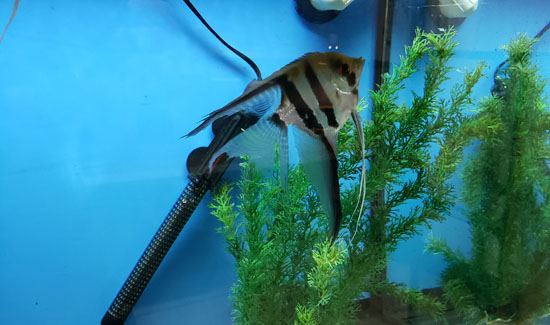
Freshwater Angelfish, sometimes called tropical angelfish are quite a popular and common fish in the freshwater fishkeeping hobby. They become large and can be the centerpiece of many fish tanks. There is nothing like a mated pair of angelfish swimming side-by-side in a fish tank. They are part of the cichlid family but look a little different with their unique arrow shaped bodies. You can find Freshwater Angelfish for sale at most pet stores and online. This guide will help provide more information on freshwater angelfish and the proper care to keep these fish happy.
Aquarium Requirements
There are fish in the saltwater hobby that are also called Angelfish. They have a much different shape from this species and aren’t related. I wanted to point that out for newer fish keepers. Technically speaking, there are both freshwater and saltwater angelfish but these Angelfish live ONLY in freshwater.
How Big do Angelfish Get?
Due to its unique body size an Angelfish should be kept in an aquarium no smaller than 30 gallons but a 55-gallon tank is even better for their size. Taller aquariums are preferred because these fish can grow to be roughly 8″ tall and 6″ long. They need plenty of room to turn and maneuver and anything smaller just doesn’t cut it.
Aquarium Decorations
Angelfish love having driftwood in their enclosure which helps soften and acidify the water. These fish also love heavily planted aquariums with quite a bit of open space for them to swim. They have long, showy, and delicate fins so it is important to find a balance of open swimming space and decorations.
Water Parameters
Freshwater Angelfish are quite hardy and easy to care for. They can handle a nice range of water parameters. The following are ranges that Angelfish are typically kept in:
- Temperature Range: 75-82° F
- KH Range: KH 1-5
- pH Range: pH 5.8-7.0
These fish do best in waters that are little more acidic. That is partly why they do very well in planted aquariums. Make sure fish kept with angelfish have the same or similar water parameter requirements.
What do Freshwater Angelfish Eat?
The Angelfish is not a very picky eater but they should be given a variety of foods. They are omnivorous so providing both algae and meaty food will be very beneficial to them. Remember to adjust the food size appropriately depending on the size of the fish. Also, like many other fish, an angelfish will attempt to eat anything that will fit into its mouth. Be mindful of keeping small fish and shrimp with a full-grown angel because they can become a quick snack. Freshwater snails and larger fish should be perfectly fine around angelfish.
Tank Mates for Angelfish
Freshwater Angelfish types vary in color, shape, and size. There are Zebra Veil Angelfish, Blue Angelfish, Koi Angelfish, and much more. Each should do just fine with one another, it all depends on your preference in color.
Angelfish are considered semi-aggressive but are a more peaceful cichlid species. They usually will become aggressive when fighting for territory and mates. As stated above, they have the potential of eating smaller fish and shrimp but do fine with larger fish. Other than that, they don’t usually bother with anything else. They do great with Discus fish, Parrotfish, larger tetras, Denison Barbs, and many other fish.
When angelfish are small they are commonly kept in larger groups. Once they become larger and mature, they will begin to pair off from one another. It is important to identify a pair and house them together in their aquarium because once they decide to lay their eggs, the pair will bully and fight any other fish to protect the eggs. It is possible to purchase a pair directly from a store, or just have one or two angelfish in an aquarium together but once it is time for them to breed no more than 2 should be housed in a fish tank.
How to Breed Freshwater Angelfish
Angelfish are quite commonly bred in the aquarium hobby. They will lay quite a bit of eggs and will defend them with their lives! To breed angels, you first need a pair. Once they are paired up, it is important to provide a flat piece of decor for them to drop their eggs on. The piece can be something like a piece of slate. It should be placed in an area with moderate flow. The eggs require flow to help prevent fungus growth which can ruin the batch. If everything is suitable for the angelfish, the female will drop the eggs and they will adhere to the piece of slate, and the male will follow behind and fertilize the eggs.
There are many opportunistic fish in the aquarium lurking and waiting. Once they spot eggs they may try and eat them. The angelfish will do their best to protect their brood. After hatching it is important to feed the fry baby brine shrimp until they can eat crushed flake food.
Final Notes
Angelfish are wonderful fish that are pretty easy to care for. A pair can be a gorgeous centerpiece for many large aquariums. Their long fins and gentle movement give them a majestic appearance. They are quite easy to breed and for a cichlid are pretty docile. There are many breeders out there with many different variations available such as the Veil Angelfish, Koi Angelfish, Marble Angelfish, and more! Check them out and consider picking up a pair of your favorite!