Clown Tang – Complete Care Guide
Categories:
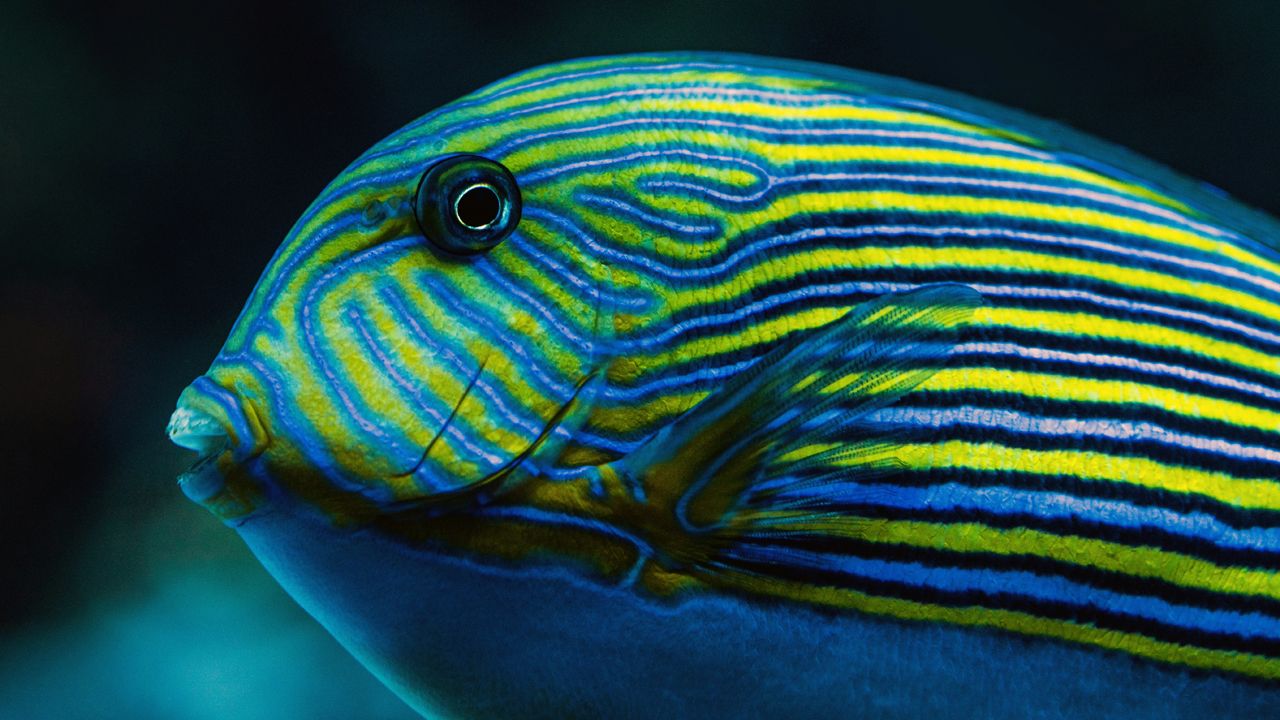
Clown Tangs (Acanthurus lineatus) are an incredibly gorgeous species of saltwater fish. They are predominantly yellow with eye-catching sky-blue horizontal streaks throughout their bodies. They’re not commonly found in this hobby because they require pristine water parameters, high oxygen levels, and can become aggressive as they grow. Many aquarists don’t want to risk their aquarium falling apart due to the Clown Tang’s personality. The Clown Tang also grows to 1’3″, so it needs a large aquarium to be happy. This guide will discuss the general care needs of the Clown Tang, including this fish’s aquarium requirements, dietary needs, and more.
Aquarium Requirements
The Clown Tang gets large; as stated earlier, they grow to about 1’3″ when fully grown. When they get this size, they should be kept in at least a 250-gallon aquarium. Tangs are very active fish, so the Clown Tang will require plenty of open space for swimming. Most fish find a nook, crevice, or cave to hide in during the night. So an assortment of live rock is important for this fish as well. Clown Tangs enjoy high-flow areas of water. You’ll likely have this covered with a variety of powerheads in a 250+ gallon fish tank. You’ll often see them ride the current of the powerhead.
Are Clown Tangs Reef Safe?
Clown Tangs are, for the most part reef-safe. Their diet does not consist of coral or saltwater invertebrates. However, there may be an off chance that your Clown Tang may begin nipping at coral. This is believed to be because they are lacking a nutrient that the coral may provide. Many fish keepers suggest feeding more seaweed to help alleviate this. Many different tang species can go on a coral feasting frenzy, but it is an incredibly rare occurrence. I had a Blue Hippo Tang that had a bad streak of nipping zoanthids. It went through a phase of doing so and then just stopped and went back to normal.
Water Parameters
This fish species has similar water parameters requirements to most other saltwater fish. The only difference is the Clown Tang does best under pristine water conditions. Other fish are a little more forgiving on water quality, although we all strive to provide the best water quality for our fish and corals. The aquarium’s water temperature should be between 72 – 78°F (22.2 – 25.6°C). The dKH levels should be between 8 – 12. The fish tank’s pH should be between 8.1 and 8.4 sg. This should be easily achieved with water changes. Lastly, the aquarium’s salinity should be anywhere between 1.020 and 1.025. These should be easily achievable with an appropriately sized heater and consistent water changes. If you’re shopping for a heater check out 6 Best Heaters For Freshwater & Saltwater Fish Tanks.
Food & Diet
Clown Tangs, like other tangs are herbivorous. Their diet will primarily consist of algae or some other form of seaweed. Many fish keepers feed their tangs algae every day but do consider the negative effect on water parameters if you do so. You’ll have to fine-tune your feeding schedule based on your aquarium’s needs. Feeding algae every other day may be an option but I’d supplement that by feeding the aquarium pellet food, flake food, and/or protein-rich frozen foods on days when algae isn’t provided.
Tank Mates
Clown Tangs have a reputation for being brutes. A lot of fishkeepers are fearful of adding them into a fish tank due to their personalities. There seems to be a consensus that this fish is usually fine when it’s small, but gets quite a bit more aggressive as it grows. It can become incredibly aggressive towards other tangs and fish that are similar in shape. Every fish is unique, and you may get a model Clown Tang, but it holds this reputation for a reason.
Breeding
Due to their aggressive behavior, more than one should not be kept in an aquarium, this makes breeding impossible.
Final Notes
If you’re looking to minimize the risk of a fish becoming aggressive and terrorizing your fish tank, you should probably stay away from the Clown Tang. They’re gorgeous fish but hold a reputation for becoming incredibly aggressive as they get larger. Many other tangs will likely be better choices for your aquarium. Clown Tangs are gorgeous fish, but the risk is not always worthwhile. There are plenty of other beautiful tangs you can add to your aquarium that may not be as aggressive.