Tag: 30 gallon

  • 5 Great Saltwater Fish for a Nano Reef!

    5 Great Saltwater Fish for a Nano Reef!

    A nano reef is typically considered to be 30 gallons or less. The smaller the aquarium the larger the possibility of swinging water parameters. It is not recommended to add large fish or too many fish in a nano aquarium. Nano reef systems are a challenge but a rewarding experience. This guide will list 5 fish species that will do great in small reef aquariums.

    1. Hector’s Goby

    The Hector’s Goby is a fantastic addition to any reef system. It is a very peaceful fish and it will not bother any fish or invertebrate. It will graze on hair algae that grow in the aquarium and also feast on small worms in the fish tank.

    This goby maxes out at about 3″ in length and it will be perfectly happy living in an aquarium that is a minimum of 10 gallons. They do require a fair amount of live rock with plenty of crevices and hiding spots. They will seamlessly weave in and out of rock looking for food and algae to graze on.
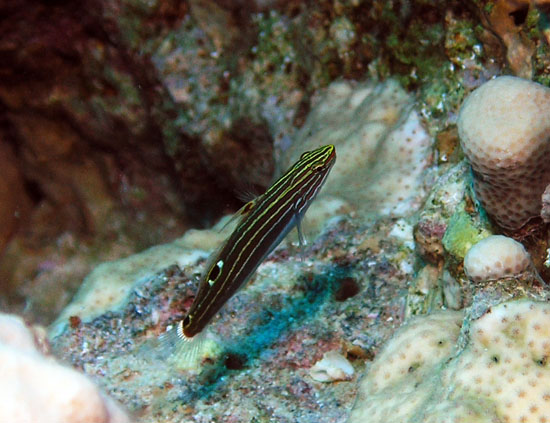
    Image by Rob on Wikimedia

    Their pattern work and coloration are beautiful! They have alternating red/black and yellow stripes running down from head to tail, they have round blotches of black along their dorsal fins and hints of orange around their fins as well.

    They are omnivorous so providing a variation of algae based food and meaty food such as mysis shrimp is important. They will spend much of their time looking for food in rocks and sand. As a final note, Hector’s Gobies are completely reef safe!

    2. Ocellaris Clownfish

    Everyone knows about the clownfish due to the movie Finding Nemo. Since the release of the movie, clownfish were ferociously taken out of the oceans because many parents wanted “Nemo” at home for their kids. Luckily, the reef-keeping community has successfully found ways to breed clownfish and they are tank-bred to help prevent plucking them out of the ocean.

    Ocellaris clowns, like the Hector’s Goby, max out at around 3″ in length. Having a pair of clownfish is great! The female clownfish (dominant) will be a bit larger than the male. Ocellaris clownfish are perfect for nano reefs because they happily live in aquariums of 20 gallons or larger.

    Besides the common orange clownfish, there are many different variations of ocellaris clownfish due to the extensive breeding that has exploded in the hobby. There are now black & white, snowflake, platnium, and many other clownfish that can be picked up from retailers and online breeders. Also, many captive bred clowns will not willingly host in anemones but can be trained to do so. Check out this guide for tips on how to get a clownfish in an anemone.

    Like many marine fish, the clownfish is omnivorous and will happily take any food provided. A rounded diet of veggies and meaty foods is recommended. They will happily take pellet, flakes, and frozen meat foods. These are incredibly hardy fish and excellent for a new marine hobbyist.

    3. Yellow Clown Goby

    Yellow Clown Gobies are oddly shaped but very enjoyable fish. They always seem to perch themselves in weird positions on rocks, glass, and corals. They’re a very fun and unique fish but great for a nano reef tank. Although they are small, their yellow vibrant bodies makes them pop in any reef system.
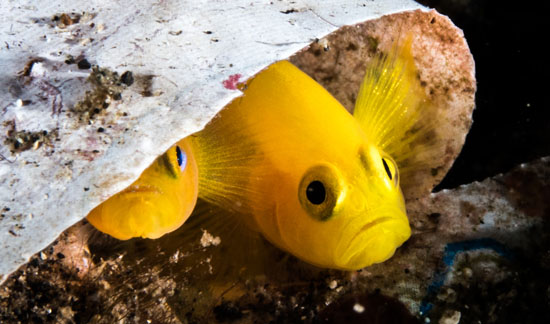
    Image by Rickard Zerpe on Wikimedia

    These fish are small, and they stay small. They max out at about 1.5 inches and are content with calling an aquarium that is 10 gallons or larger home. Clown Gobies are reef safe with most polyp corals but be mindful with keeping them SPS corals because there is a possibility of them nipping at them. They should not bother any other fish except other clown gobies in small enclosures.

    Yellow Clown Gobies are carnivorous fish. It is important to provide them with a variation of mysis shrimp, brine shrimp, and other meaty foods. Learn more about this fish by checking out the Yellow Clown Goby – Complete Care Guide.

    4. Firefish

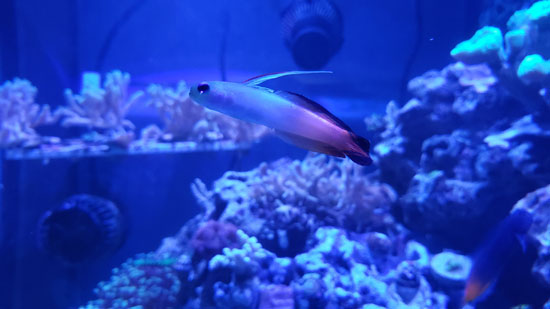
    The Firefish is a fantastic fish to add to a reef aquarium. Their vibrant white, red, and purple coloration is gorgeous! They have an enlarged dorsal fin which looks like a sabre which adds to their awesomeness!

    The Firefish will be around 3″ when they are fully grown. They are perfectly content with living in an aquarium that is 20 gallons or larger. They are completely reef-safe and will spend a good portion of the day hovering above the live rock waiting for food. It is recommended to provide them with a nice porous rock because they will dart into the holes when startled. They are known to be jumpers so a lid over the tank is also a good idea to have.
    Firefish are carnivorous. So providing a mixture of different types of meaty food is recommended. They will love brine shrimp (live or frozen) and mysis shrimp. Providing frozen food is much easier for fish but feeding them live brine shrimp is always a fun activity.

    5. Two Spot Goby

    This isn’t a very common goby that is kept in a reef aquarium but I believe this is a great fish to own. Two Spot Gobies have a very unique coloration and body shape. They are primarily white with blotches of brown, black, and yellow to help camouflage into sand. They have an incredibly large jaw and do a fantastic job sifting through sand.

    These fish get to be about 3″ in length when they are fully grown. They do well in aquariums 10 gallons or larger. It is very important to provide them with a nice deep sand bed because they will burrow into it. They also require lots of sand to sift through.
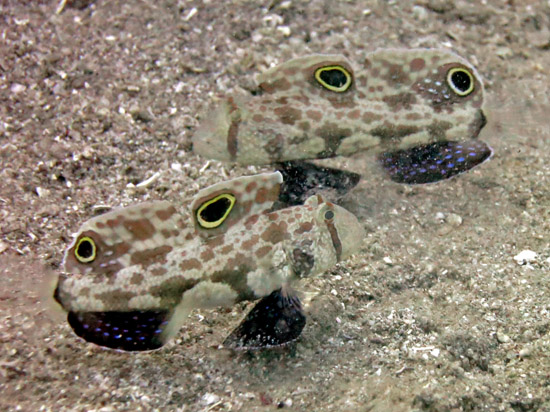
    Image by Lakshmi Sawitri on Wikimedia

    The Two Spot Goby is carnivorous so like many other fish on this list, it’s important to feed them meaty food. It is also a good idea to supplement your aquarium with live copepods to help give them more options if they are picky eaters. Take a look at the Two Spot Goby – Complete Care Guide for more information on this fish.

    Final Thoughts

    All of these are fantastic for a reef aquarium. Some are more common than others and there are plenty more that will do great that aren’t listed. Keep in mind that these fish should not all be crammed together into a nano aquarium. It is recommended to pick one or two depending on the appropriate aquarium size. Adding too many fish will cause water parameters to swing more often and aggression may be seen due to the lack of space. Hopefully, this guide has provided to insight into great nano fish for small reefs.

  • The Fish With Personality – Bicolor Blenny

    The Fish With Personality – Bicolor Blenny

    Reef aquariums are all very unique. The fish kept in these aquariums all have very interesting personalities and are a blast to observe. Their vibrant colors pop and are adored by many. Bicolor blennies are fantastic fish to keep in a reef aquarium. What they may lack in “vibrant” color they make up for in personality. These fish are common in the marine hobby and are sometimes overlooked as a new aquatic companion. Their very simple dark blue and orange coloring gives them an interesting appearance. One fantastic trait that they have is they will poke their heads out of rocks or perch on rocks just scoping out the surrounding area.

    Bicolor Blenny Keeping Requirements

    Luckily for us, these fish are not very hard to keep. I would not keep a bicolor blenny in an aquarium smaller than 30 gallons. Also, having a lot of live rock and crevices where this fish can hide and perch is a must! Their perching and environment scanning is a large portion of their personality! They max out at about 4″ in length so having holes and crevices of varying sizes is beneficial for them.

    Bicolor blennies are primarily herbivorous so should be fed greens such as algae pellets, flakes, and algae sheets. They should also be given frozen fish food like mysis shrimp and/or brine shrimp from time to time. They are not picky eaters so they will easily accept a variety of foods. Although this is not very common, if underfed, these fish can sometimes pick on corals such as fleshy clams and stony corals. Be mindful of that when keeping this fish. They will help assist in controlling hair algae that may grow on live rock.

    These fantastic fish are normally quite peaceful and keep to themselves. At the time of this writing, the one I have at home does not think my hand is friendly so will nip and attack from time to time, otherwise, it does not bother anything else. On occasion, they may go into battle with other blennies and gobies. If the aquarium is large enough each fish will find its territory and things should settle. I would not normally keep more than one type of blenny of similar size, shape, and color to help deter any aggression.

    Final Thoughts

    Bicolor blennies are excellent fish for any reef system. As long as they are fed well, they will do remarkably in your aquarium. They’re not the best algae eaters, for that look into getting a lawnmower blenny, but they will help cut down what’s in the fish tank already. They are hardy fish with great personalities!

  • The Amazing Electric Blue Crayfish

    The Amazing Electric Blue Crayfish

    The Electric Blue Crayfish, sometimes known as the Florida Crayfish has popped into popularity in the freshwater aquarium keeping hobby. Their remarkable vibrant blue color sticks out like a sore thumb in any aquarium. They’re quite easy to care for as long as certain conditions are met. This guide will go into more detail on proper crayfish care.

    Water Parameter Requirements

    Like many invertebrates, these crayfish need good water conditions. Your water should not have any ammonia and nitrites. It is almost impossible to have a reading of 0 nitrates due to decomposing food and fish waste so having a nitrate reading of 10 or less shouldn’t be a problem. The goal is to keep very stable water conditions for your wonderful crayfish!

    A few other water parameters that should be mentioned are pH, water temperature, and water hardness. They are quite versatile animals and they do well in a wide range of water conditions. They will do just fine in pH levels ranging from 6.5 – 7.5. They shouldn’t have a problem with water temperatures ranging from 65 – 75 degrees Fahrenheit but catching the temperature in the middle is ideal. Lastly, a water hardness level ranging from 3 to 10 dkh is just fine for these large invertebrates. An API Freshwater Master Test Kit and an API GH & KH Test Kit are great to have on hand for any aquarium.

    Crayfish Care

    An electric blue crayfish is pretty easy to care for. I wouldn’t recommend keeping them in anything smaller than a 30-gallon aquarium because they will be 4″ – 6″ long when they are fully grown! They have a life span of 5 to 6 years as long as they are living under stable water conditions. Be mindful that these invertebrates will shed their exoskeleton as they grow out of it!

    Electric Blue Crayfish are not picky eaters. They will eat just about anything that comes their way whether it’s flake food, pellets, or anything else. I would recommend dropping a few algae wafers to keep them busy and fed. Be cautious as to what fish to add to the aquarium because a slow fish or fish that lingers at the bottom of the aquarium will become a quick meal for the crayfish.

    I would not keep them with live plants. I have heard quite a bit of horror stories of these invertebrates taking plants, uprooting them, and munching on the leaves. I would recommend keeping them with plastic plants and decorations with caves varying in size. In their natural habitat they burrow so imitating a “burrow” is ideal for this creature. Otherwise, they do not require much else.

    Animals that can be kept with Crayfish

    This is a gray area because a lot of things can become a meal for the crayfish but there are fish that do much better at staying alive in the same enclosure than others. I would not keep fish that dwell at the bottom of the aquarium or that are slow. For example, keep these guys away from slow-moving Goldfish and bottom-dwelling Cory Catfish.

    Fast-moving fish that spend most of their time in the center of the aquarium or at the top are ideal for a crayfish enclosure. Danios are great because they move incredibly fast. Certain rainbowfish are incredibly fast and hang out at the center of the aquarium. You cannot go wrong with hatchet fish because they stick to the top of the fish tank. Be mindful of the fish you add with a crayfish! Snails should be okay to have with crayfish and are useful for keeping algae away from your aquarium.

    Final Thoughts

    Electric Blue Crayfish are a fantastic animal to keep. Watching them move their legs, collect food, and dart away backward from time to time is a fun experience. They have a good personality and are easy to care for! If you’re thinking of setting up a new 30-gallon (or larger) aquarium, check these out!