Tag: algae

  • How To Remove Green Hair Algae in Saltwater Aquariums

    How To Remove Green Hair Algae in Saltwater Aquariums

    Green Hair Algae removal can be one of the most frustrating experiences in this hobby. Unfortunately, there is no cure-all solution to remove hair algae from your fish tank. The “cure-all” methods often band-aid the problem temporarily, but it will return if not removed at the source. Removing hair algae takes time. You’ll likely not see a change overnight, but with time, patience, and persistence, Green Hair Algae can mostly be eradicated from an aquarium. A combination of manually removing the hair algae and following the steps below will help remove it.

    This article will discuss some of the common reasons Green Hair Algae may wreak havoc on your saltwater fish tank, and once the problem is diagnosed, solutions will be provided to prevent it from coming back. This article should help to remove hair algae from a reef tank or fish-only saltwater aquarium.

    How Old Is Your Aquarium?

    Before continuing consider this. Many new(ish) saltwater aquariums go through a phase. Aquarists may experience this phase between 3 and 6 months, but it can happen sooner or not at all. During this phase, a large algal bloom may occur throughout the aquarium. The intensity of the algae growth varies but I have seen some very green aquariums, completely covered in hair algae or other species of algae.

    If you’re at this stage, the only thing to do is try to manually remove as much Green Hair Algae as possible. I do not recommend removing or cleaning rocks. Leave the rocks alone and use your hands to remove the hair algae. I have managed to use a turkey baster to help suck up algae off rockwork. As long as you do not feed the algae with many more nutrients, it should choke itself out and die out on its own.

    Nutrient Imbalanced Aquarium

    An imbalance of nutrients can be the cause of your algal issues. Green Hair Algae will use whatever free nutrients are in the water and can dominate the aquarium because of it. Algae is also very efficient at consuming nutrients. It’s important to keep an eye on the nitrate and phosphate levels in your fish tank. Focus more on eradicating phosphate levels, because Green Hair Algae uses that more for growth. You feed your aquarium, and your fish poop it’s expected to have trace amounts of both nitrates and phosphates but you do not want high levels of either.

    If you have an aquarium full of hair algae or a refugium with macroalgae, you may read 0 nitrates and 0 phosphates when you test your water. This could be because the algae consumes the nutrients before they become testable. I recommend testing your water with the API Reef Master Test Kit (Affiliate Link). It gives you test solutions for nitrates, phosphates, calcium, and carbonate hardness. If you cannot get your phosphate levels under control, consider looking into a Media Reactor, like the Aquatop Media Reactor (Affiliate Link). You can place different filter media such as PhosBan, PhosGuard, or GFO Phosphate Reducers to help get your phosphates to more manageable levels. Follow the instructions, and slowly lower your phosphate levels.

    How Much Are You Feeding?

    The more we feed, the more nutrients that are introduced into the water. It’s very important to not overfeed your aquarium. We are all guilty of doing so because it’s one of the most exciting aspects of keeping fish. Keep an eye on the portions you give your fish. Guarantee that what you give them is being eaten and not lost in the live rock or sucked up by the filtration system. The best solution to removing nutrients from your aquarium is through water changes. You can easily remove nitrates, phosphates, and food debris by changing the dirty aquarium water and introducing fresh saltwater.

    What Type of Water Are You Using?

    This can be very important for the types of nutrients that are introduced into your aquarium. If you’re using tap water for your water changes, you may be adding a cocktail of nutrients that help promote algae growth. You don’t really know how clean your tap water is. Providing clean water during water changes and water top-offs guarantees you are not introducing nitrates, phosphates, copper, or other contaminants that may be in tap water.

    If possible, I recommend doing water changes and topping off your aquarium with RO water. Small RO units are fairly cheap. For example, the AQUATICLIFE RO Buddie can be purchased from Amazon. You’ll only need a sink that can accept a screw-on adapter and to change the unit’s filters every few months. If you do not have access to RO water or don’t want to buy an RO unit, many stores and fish stores sell RO or distilled water.

    Are You Changing The Water Too Much?

    Again, changing water, especially with tap water can add too many new nutrients into your fish tank that algae will soak up. If you test your nitrates and phosphates, and the results aren’t at dangerous levels, consider taking a step back and cutting down on water changes for a couple of weeks to see if your tap water is introducing unwanted contaminants. You can also test your tap water for nitrates and phosphates with the API test kit suggested above the same way you test aquarium water.

    Does Your Filter Need Cleaning?

    The filter is the place where debris, excess food, and other gunk go to rest. Think back to the last time your sponges and media have been replaced. Physically look at the sponges to see if there is a build-up of brown sludge on them. If so, it might be time to give your filter a cleaning. I’ll often rinse off dirty sponges in old aquarium water instead of replacing them outright. I do this to remove the sludge and gunk from the sponge. However, I can put the sponge back into the aquarium to not lose the beneficial bacteria growing on it. Unfortunately, some sponges are too far gone and need replacing.

    Light Schedule and Intensity

    The next thing I recommend looking at is your lighting schedule. The duration and intensity of your light schedule will affect photosynthetic opportunities for corals and algae. We want to provide plenty of light for our coral, but not too much light that encourages algae to take over. It might be a good idea to cut down on your photoperiod. There is no way to exactly determine what light schedule you should be on. This will be determined by the type of light you have, the strength of the light system, and the type of coral you are growing.

    Light From Window

    Sometimes an aquarium gets set up a little too close to a window. Aquariums close to a window may be getting too much ambient light causing algae to grow. The best solution for this is to hang up a blackout curtain over the window so light doesn’t reach the fish tank. This is the most practical solution for this unless you opt-in to moving the aquarium to a space with little to no ambient lighting.

    Not Enough Clean-Up Crew

    Check to see how much clean-up crew you have hanging around in the aquarium. If your water parameters are in a safe range, consider leveling up your clean-up crew. Their population will drop over time in a saltwater fish tank, so they’ll likely need to be replenished at some point. Maybe that time is now for your aquarium.

    A healthy clean-up crew can mean the difference between a thriving aquarium, and one that may be consumed with algal issues. A clean-up crew can consist of a variety of critters. Utilizing each is important because everything has a niche that needs filling. There are many options to choose from, you can check out my article Saltwater Aquarium Clean-up Crew for some ideas.

    Final Notes

    This guide is meant to discuss how to remove green hair algae from your aquarium. I have provided the most common reasons you’ll see hair algae blooming in your fish tank, and a handful of solutions to help eradicate it. I try to find the cheapest and most natural route to eradicate nuisance algae. These solutions will also help you continue good husbandry of your saltwater aquarium. I do not like using chemicals in fish tanks unless I really have to. If I can’t tackle the problem at the source, it’s likely the algae will come back over time. Hopefully, this guide helps you recover from a green-haired algae takeover. Remember to be patient and expect to fight this until you find the root of the problem.

  • 8 Great Ways to Help Remove Hair Algae in Aquariums

    8 Great Ways to Help Remove Hair Algae in Aquariums

    For some, hair algae is one of the worst nightmares someone can go through in this hobby. It can very quickly take over a fish tank if not kept in check. Once it is around, it can be fairly challenging to remove. Luckily, there are different ways to help eradicate this plant. The tips and tricks in this article should work for both fresh and saltwater aquariums.

    One of the most biggest reasons hair algae takes over, is not ideal water parameters. It will also keep coming back very quickly if water parameters are not maintained at the proper levels. There is no set in stone way on “How to get rid of hair algae”. You will more than likely use each of the following tips. If you want to learn about common reasons algae takes over an aquarium, check out this guide!

    Water Testing & Water Changes

    Whether you are working with a reef tank, freshwater aquarium, cichlid tank or other aquariums, the first thing you should do is check your water parameters. I would really test to see what your nitrate and phosphate levels are. Algae feeds off of these nutrients. Removing hair algae from a reef tank or freshwater aquarium will be much easier once our nitrates and phosphates read zero! One of the main reasons these parameters spike is overfeeding. Consider cutting down on how much you feed your fish and begin conducting more frequent water changes.

    I normally recommend smaller water changes and almost never do more than 25% at a time. Larger water changes could be dangerous for aquariums with high nitrate and phosphate levels. The sudden change in water quality may be bad for your fish, so I normally recommend smaller but more frequent water changes until your parameters reach ideal conditions.

    You can test your water using API Freshwater or Reef Master Test Kits. If you pickup the Freshwater Master Test Kit you will also have to purchase the Phosphate Test Kit separately. If you don’t want the Master Test Kits you can snag the Phosphate Test Kit & Nitrate Test Kit by following the links.

    Physically Remove Hair Algae

    While you are conducting your water changes, it might be a good idea to also take out some of your decorations and give them a good scrub. I usually have a system to avoid removing beneficial bacteria from your aquarium.

    • First: Have two buckets and fill them with aquarium water from your water change
    • Second: Place decorations in the first bucket and use a clean toothbrush to scrub off any hair algae
    • Third: Once most or all hair algae is removed, splash your decoration in the 2nd bucket to give it a good rinse
    • Fourth: Reinsert your decoration into your aquarium

    This method is usually easier to conduct in freshwater aquariums because decorations are more easily moved around. Live rock in saltwater aquariums normally doesn’t get moved around. For Live Rock, I will normally turn off my circulation pumps for a few minutes and physically pluck whatever hair algae I can. Do your best to grab every piece of algae floating around before turning on your circulation pumps! Dispose of whatever algae you remove.

    Add More Cleanup Crew into Your Aquarium

    Once your water parameters are in check, it’s time to introduce and/or add more cleanup crew into your aquarium. You want to wait to add these because cleanup crew such as snails and hermit crabs are far more sensitive to higher nitrates and phosphates compared to fish. I personally would not add fish either until the water is ideal. There are many different animals you can add into both fresh and saltwater aquariums to fight hair algae. For freshwater aquariums consider adding:

    • Snails (nerite, mystery, ramshorn)
    • Shrimp (amano, Neocaridina)
    • Plecos (bristlenose, clown)
    • Otocinclus (great for nano aquariums)
    • Live-bearers (guppies, mollies, swordtails)

    Make sure that whatever you add is compatible with your other fish and water parameters. You wouldn’t want to add shrimp into a cichlid tank because they will quickly become food! Also, certain invertebrates (mostly snails) have a possibility of breeding and taking over the aquarium. Mystery & Ramshorn snail breeding is very common in the aquarium. Nerite snails can breed but their offspring will not be viable in freshwater. You can check out this guide to see some fantastic freshwater algae eaters.

    Saltwater aquariums can have a large assortment of invertebrates and fish that will help remove algae. The following animals might help remove hair algae from your saltwater aquarium:

    • Blennies
    • Tangs
    • Rabbitfish/Foxface
    • Snails (Trochus, Turbo Snails)
    • Crabs (Emerald, hermit)

    There are definitely more algae eating fish & animals available in the hobby. I am listing some of the most common. Make sure the animals you choose to help clean algae are compatible with one another and compatible with the aquarium size! If you want to see some really great algae eaters for a reef aquarium check out this guide.

    Turn Down the Lights

    We love looking at our aquariums, and we may or may not leave our lights on for a little too long. Algae thrives on longer light periods. Consider cutting down you photoperiod to combat hair algae. Your fish tank should go through a day and night cycle. This gives your aquarium time to “rest”. Overall, your aquarium’s health should benefit from a more natural photoperiod. If you cannot keep with a set on/off cycle consider getting a timer for your fish tank. This removes the hassle and gives a consistent day/night cycle for your fish tank.

    Cut Down on Feeding

    Overfeeding will cause nitrate and phosphate levels to spike. Sometimes to very high levels. Cutting down on feeding will help stop water parameters from worsening. If you combine minimizing feeding and increasing water changes, you should be able to slowly bring down nitrate and phosphate levels! You can continue to feed your fish daily, just lower the amount of food that’s added into the fish tank. Once things are under control, you can test increasing feeding regimes. Also, closely monitor how much food you give your fish. Guarantee that what you put in is eaten. Otherwise, remove any extra food!

    Replenish Your Carbon & GFO

    Another way on how to get rid of green hair algae is to update your carbon and GFO. Standard carbon usually lasts a month and should be replaced afterwards. I know sometimes we can forget to swap it but it is definitely a great way to lower nitrate and phosphate levels. GFO (Granular Ferric Oxide) is more commonly used in saltwater aquariums but it can be used in freshwater aquariums as well if you have a reactor. GFO helps remove phosphates in the aquarium, which is important because we want to cut off the algae’s nutrient supply. You can also use Phosguard by Seachem instead of GFO to help remove phosphates in your aquarium.

    Add Plants into the Aquarium

    You can add plants into freshwater aquariums and macroalgae into saltwater aquariums to help keep the aquarium from getting overrun by nuisance algae once again. Macroalgae & freshwater plants will compete with hair algae for nutrients which will overall drive down nutrient levels in the aquarium. This may not work if you do not want plants in your fish tank or have animals that will eat your plants. Macroalgae is also normally kept in a refugium, so it’s not always possible to grow macroalgae due to space limitations.

    Treat your Aquarium with Chemicals

    This is usually my last resort. I do my best to avoid using chemicals in my aquariums. Usually chemicals are a Band-Aid to a much deeper problem. It is better to identify why the algae is growing and remove the source of the problem instead of using chemicals as a quick fix. A chemical called Algaefix can help with removing algae from an aquarium but I have read very polar opinions on it. Many hobbyists have stated that it has caused their fish to act weird and others believe it also killed their fish. This could be because Algaefix depletes the amount of oxygen in the fish tank but I cannot say for sure. Use chemicals with caution and really monitor your aquarium’s behavior if you use it.

    Final Notes

    There is no ideal way on how to deal with hair algae. Every aquarium is unique and will require finessing to get it right. Using a combination of these suggestions should really help combat hair algae and prevent it from coming back. Remember, in this hobby patience is key, so take your time and remove the hair algae correctly instead of trying to find the easy way out!

  • 5 Wonderful Algae Eaters for Freshwater Aquariums

    5 Wonderful Algae Eaters for Freshwater Aquariums

    Finding the right algae removing crew can be hard, especially for aquariums that are smaller. This guide will focus on a broad spectrum of algae eaters. There will be information on fish, snails, and invertebrates. In my opinion these critters are some of the best at removing algae. Before continuing reading through this guide, check out common causes for algae growth in freshwater aquariums here.

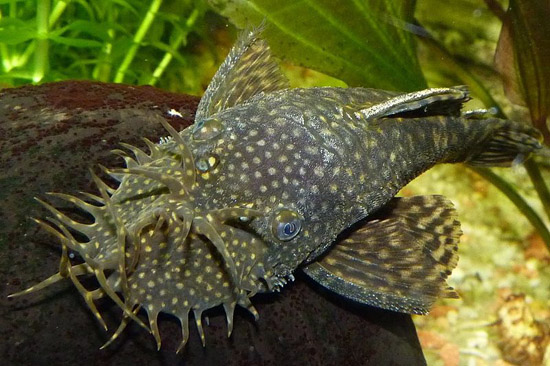
    1. Bristlenose Pleco

    There are many different plecos that can be purchased for a freshwater aquarium but I feel the bristlenose pleco is one that is an excellent algae eater and it also doesn’t get incredibly large.

    The bristlenose pleco, also known as the bushy nose pleco, is a fantastic algae eater for aquariums that are 30 gallons or larger. They should not get any larger than 5″ in length unlike the common pleco that can reach sizes over a foot in length. Providing places to hide is important for this pleco to give it some privacy. A piece of driftwood is a good choice in decor that will provide cover for this fish.

    This fish is omnivorous and not a picky eater at all. The bristlenose pleco should easily sniff out food that falls onto the substrate and slurp it up quickly. Otherwise, they will most likely be clinging onto decor and plants eating algae that may be growing on them.

    They are quite easy to breed in captivity. Males when grown will have large bristles between its eyes and tip of its mouth. On the other hand, females will have small whiskers near her mouth. When mating the female will dispense her eggs on driftwood or other flat surfaces and the male will guard the eggs. It will take roughly 10 days for the fish to emerge from the eggs. Once the babies begin to swim it is highly recommended to move them into a separate aquarium so they can mature.

    The bushy nose pleco does best in aquarium temperatures ranging from 75 – 79 degrees Farenheit, KH levels between 6 and 10, and pH levels between 6.5 and 7.5. They’re a fantastic fish to have that works hard to keep algae at bay!

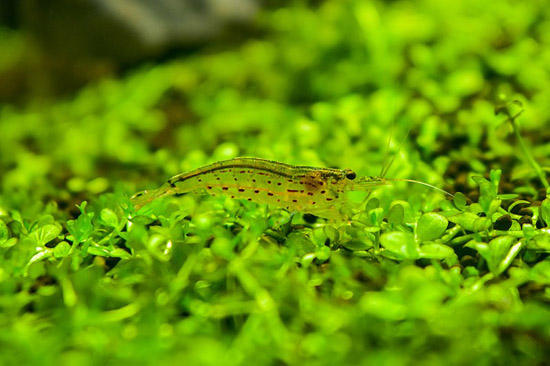
    2. Amano Shrimp

    Amano shrimp, for freshwater shrimp standards, are the tanks of algae eating. They do an excellent job rummaging through different areas of the aquarium eating algae that is growing and also consuming leftover food that fish may not catch during feeding times. They’re not the most colorful of animals but they’re great to look for and observe in the aquarium. They’re gaining more and more popularity in the freshwater hobby due to their size and ability to eat algae in smaller aquariums where plecos may be too large.

    Image by Atulbhats on wikiMedia

    Amanos are beasts! They grow to be about 2″ in size when they’re fully grown. Regardless for their size, they are recommended for aquariums 10 gallons or larger. Like stated above, they’re great for aquariums that are just too small for larger plecos. Providing plenty of hiding spaces is great for Amano Shrimp. and be sure to have a well established aquarium because invertebrates are far more intolerant of unstable water conditions compared to fish.

    This species of shrimp is omnivorous. They will happily nibble on algae, flakes or any other food that comes their way. They’re not picky at all when it comes to eating.

    Amano shrimp are incredibly hard to breed in captivity. It is not common at all for it to happen. It is quite a challenge to bring up young amano shrimp from egg to adulthood so we will not get into that in this article.

    These beautiful shrimp are fantastic for freshwater aquariums and they are also tolerant of aquariums with a little bit of salt in them. They should do perfectly fine in brackish water aquariums. Please only house them with peaceful fish that will not bother or try to eat amano shrimp. These fish are very versatile and do well in water temperatures ranging between 60 and 80 degrees Fahrenheit, KH levels between 3 and 10, as well as pH levels ranging from 6.0 – 7.5. They’re quite hardy for a species of shrimp and live a long life of 2 – 3 years!

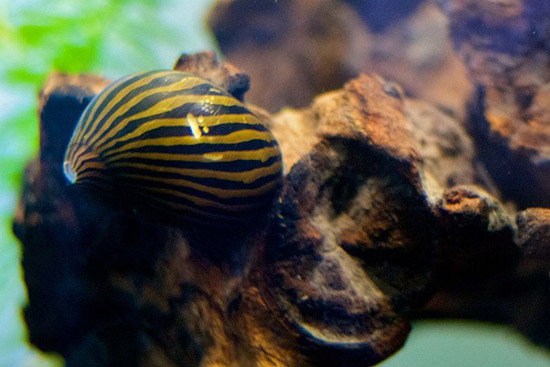
    3. Nerite Snail

    Nerite snails are a remarkable species of snail to add into a freshwater aquarium. For the amount of algae removal a snail can achieve, the nerite snail probably does it the best. They will help remove algae from glass, substrate, plants, and everything in between. They come in very nice tiger striped or dotted patterns so they’re a nice looking snail to add into a fish tank.

    This species of snail will not be seen larger than 1 inch in size. They stay very small and are very easy to care for. An established aquarium is a good idea to have and remember copper is lethal to them and all other invertebrates. Most snails are great for aquariums as small as one gallon or larger. This species of snail like to wander so there is a chance that they will make their way out of the aquarium if the opportunity arises.

    Nerite snails are herbivorous and if on the rare occasion your fish tank does not have any algae in it, providing algae based food to keep your snail fed should be considered. Feeding nerite snails is not a very common occurrence but keep in mind they may need some food if your fish tank is spotless!

    The nice things about nerite snails is that they will not infest your aquarium with millions upon millions of spawns. They only successfully produce offspring in brackish water. They are perfectly fine being kept in freshwater as adults. The young benefit from having higher pH levels and more calcium in the water levels to promote shell growth.

    Nerite snails are pretty hardy for invertebrates. They do great in water temperatures ranging from 65 to 80 degrees, KH levels that float between 12 and 18, and pH levels between 6.5 and 8.3. They will not tolerate high levels of nitrates and as stated above, copper is lethal to them. Overall, they are fantastic for freshwater aquariums, brackish water fish tanks, and planted tanks.

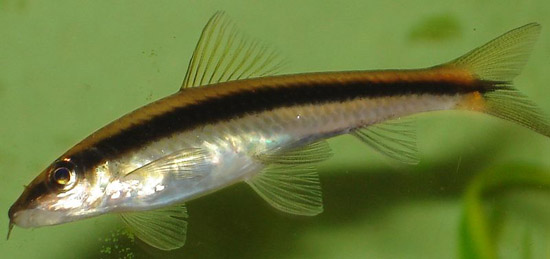
    4. Siamese Algae Eater (Flying Fox)

    The Siamese Algae Eater sometimes known as the flying fox is an excellent algae eater for many different planted tanks. What they lack in vibrant color is definitely made up by its ability to eat large amounts of algae in an aquarium. This fish species is primarily gray/silver with a long black strip that runs the length of its body. The flying fox are recommended to be kept in small groups. They do much better together than alone.

    It is rare to find a flying fox that reaches its full length of 6″. It is more commonly found at a max length of 4.5 inches. Because of their size and desire for algae the siamese algae eater should be kept in aquariums that are 30 gallons or larger. This will give them more space for forage for algae and once grown provide plenty of space for them to explore and swim. Driftwood, rocks and broad leaf plants are recommended to have in the aquarium because this fish will perch on top of them and also graze on the algae growing there.

    Image by Ark on wikiMedia

    This fish is omnivorous so it will take in just about any food offered but it does an excellent job removing algae from aquariums. It should be fed bloodworms, flakes food, and pellet food.

    There is very little to no information on breeding habits of the flying fox.

    This fish is a little more sensitive to higher nitrate levels so a well established and stable fish tank should be available before introducing this fish. They do great in water temperatures ranging from 75 to 79 degrees Fahrenheit, KH levels between 5 and 10, and pH levels between 6.5 and 7.0. They’re an excellent fish to have and are very interesting to observe.

    5. Otocinclus

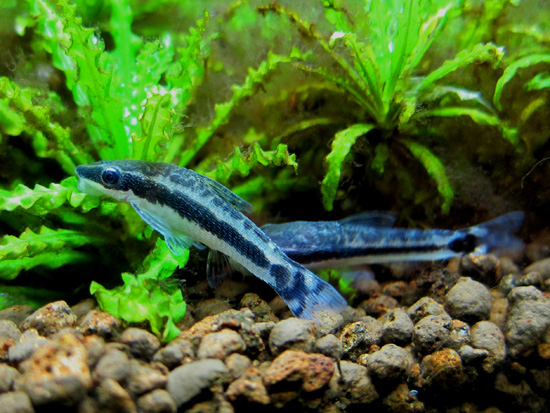
    Otocinclus is a very small algae eater that is sometimes overlooked when on the hunt for something that can help maintain an aquarium. These little fish are small, but in large numbers are great at helping maintain smaller aquariums. They will cling onto many different surfaces with their black and white bodies and go about their day munching on algae.

    Ottos are incredibly small and they will not normally grow larger than 2 inches in length. They’re an excellent little fish for nano aquariums. They do perfectly well in aquariums 10 gallons or larger. Keeping a little school of 6 or more ottos is highly recommended. Providing rock work and driftwood will create surfaces for algae to grow to give this fish something to graze on. It will also create places for this fish to hide in times of stress.

    Image by Cisamarc on wikiMedia

    It can be easily concluded that this fish is herbivorous. It will primarily feed on the algae that is growing in the aquarium but if none is available it is recommended to throw algae wafers or algae flakes into the fish tank for this fish to nibble on.

    Otocinclus does not normally breed in captivity. A varied and diet full of nutrients will be required to even consider having these fish breed. Rising water temperatures are a common occurrence to influence fish to begin mating. You can consider very slowly raising the water temperature to around 79 degrees Fahrenheit to help motivate this fish to mate. After providing this fish with nutrient rich foods, raising water temperatures, and having perfect water parameters the fish may breed!

    Ottos are very peaceful fish and should not bother any other fish in an aquarium. They will thrive in aquariums with water temperatures ranging from 74 to 79 degrees Fahrenheit, KH levels between 6 and 10, and pH levels between 6.8 and 7.5. They’re a fun fish to observe and great when kept in schools!

    Final Thoughts

    Choosing the best algae eaters for your aquarium could be a challenge and hopefully this guide will give you a little insight on 5 fantastic critters that are great for cleaning up algae in freshwater aquariums. I would even recommend having a mixture of some of these if your aquarium has the space. There are definitely other fish that will destroy algae but I believe these are some of the best!

  • Common Causes of Algae Blooms in Freshwater Aquariums

    Common Causes of Algae Blooms in Freshwater Aquariums

    Freshwater aquariums are usually the first step for anyone entering the fish-keeping hobby. It is quite rewarding setting up an aquarium and watching it thrive. Unfortunately, sometimes things don’t go our way and the fish tank experiences a rise in algae growth. This guide will talk about common reasons why algae overtake your aquarium and some remedies for it. Besides changing out carbon, this guide will help teach algae management without using chemicals.

    High Nutrient Levels

    One of the first things to do when trying to figure out why there algae is taking over your aquarium is to test your water parameters. Assuming this is an established aquarium, we will primarily be testing for phosphates and nitrates. I would recommend using API’s Freshwater Master Test Kit for nitrates and other parameters and API’s Phosphate Test Kit for phosphates.

    High levels of nitrates and phosphates can cause algae to grow out of control and it can become dangerous for fish as well. To remedy high levels of nutrients in your water there are a few things that can be done.

    First, make sure you are not over-feeding your fish. If you see food reaching the substrate, you are most likely overfeeding your fish. I normally feed my fish once a day and rarely twice a day.

    Second, to remove the nutrients out of your aquarium we will be required to do water changes. If your nitrate levels and phosphate levels are very high, I would recommend doing smaller water changes over a longer period of time. This will help prevent your system from going into shock. Instead of doing a 25% water change in one day, do 10% or less every other day until your water parameters stabilize. Doing so will hopefully gradually drop your nitrate and phosphate levels.

    Make sure your filter media is also renewed. It is normally recommended to change out activated carbon once a month or (if applicable) Chemi-Pure every 3 months. All this will help lower your nutrient levels to help prevent algae growth.

    Cut Down on Lighting

    Too much light can also be a big problem in aquariums. I would not recommend more than 8 hours of lighting per day in a freshwater aquarium. If there is an algae problem and your water parameters are not the problem, lighting might be the cause of the algae growth. When setting up your fish tank, it should be far away from windows to prevent sunlight from reaching the aquarium. Too much natural and artificial light will cause algae to flourish!

    Cut your light schedule to 6 hours for a few days to see if that changes anything. The fish won’t be bothered by the change in lighting so don’t worry about that. Keep an eye on any live plants that may be growing in the aquarium. I would recommend testing water parameters before trying this.

    Not Enough Cleanup Crew to Manage

    Another problem freshwater aquariums have is not having enough clean-up crew to combat the naturally growing algae and eventually, it overwhelms the system.

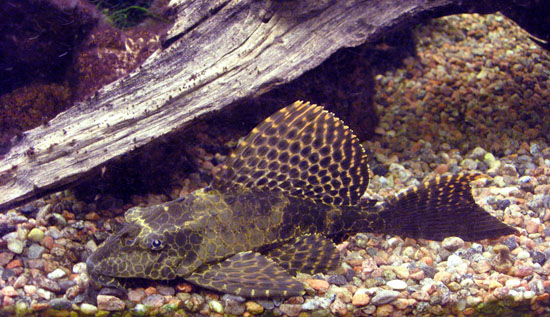
    As long as your water parameters are stable and at a healthy level you can counteract the algae that will eventually grow in your aquarium by adding snails, shrimp, and plecos. For large amounts of algae, plecos are usually the go-to due to their size and eating habits compared to a snail. Unless a freshwater predatory tank is being kept, it is recommended to have all three types of algae grazers. In a predatory setting, plecos are usually kept and will most likely not be eaten.

    Image by Soulkeeper on Wikimedia

    For smaller aquariums, a clown pleco or a handful of Ottocinclus are usually the preferred species, and in larger aquariums Bristlenose Plecos are commonly used. Bear in mind common plecos can get to be about 2 feet in length!

    I normally recommend Mystery Snails or Nerite Snails. Nerite Snails will not be able to successfully reproduce in freshwater so they are the perfect choice if you are afraid of a potential snail infestation.

    For heavy-duty algae grazing Amano Shrimp are a great choice due to their size but many hobbyists add smaller shrimp such as the cherry shrimp due to their wonderful coloring. Many shrimp are required to help combat algae blooms.

    Bare in mind that in order to successfully keep invertebrates such as shrimp and snails, your water parameters should be quite stable. Inverts are very sensitive to fluctuations in water parameters.

    Final Thoughts

    High nutrient levels, overfeeding, too much lighting, and not enough algae eaters are a few very common reasons why algae can take over an aquarium. One could be the root of the problem, or a combination can be causing algae to thrive. Chemicals will only band-aid the problem, it is important to get to the source of the problem and correct it. Only use chemicals to remove algae as a last resort! Hopefully, this guide has helped point you in the right direction to removing algae. Take a look at 8 Great Ways to Help Remove Hair Algae to learn of some tips and tricks on how to get algae from thriving in your aquarium.