Walking through the aisles looking at the countless fish available can be quite overwhelming, especially for new fish keepers. There are a lot of fish to choose from and
This guide is a general list of freshwater fish that I find to be fantastic for 55-gallon aquariums. Not every fish listed here are compatible with the other. I would recommend conducting further research on each fish species before making a decision. This list is based on personal opinion, and there may be other fish that readers may prefer for a 55-gallon fish tank.
1. Angelfish

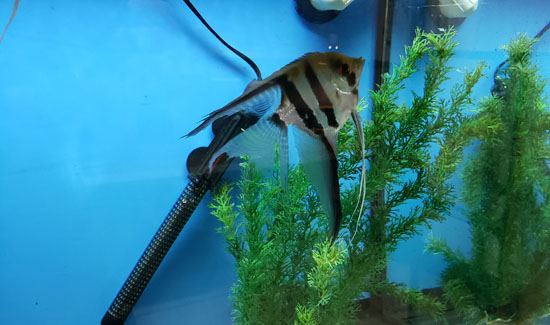
Freshwater Angelfish are a fantastic choice for a 55-gallon aquarium. They are often kept as centerpiece fish in freshwater planted aquariums, and the height of the 55-gallon makes them excellent candidates to showcase their beauty. Unlike most other fish on this list, Angelfish are often kept in pairs as adults (one male and one female). They come in an assortment of colors from silver, gray, orange, and brown, to name a few.
How Big Do Freshwater Angelfish Get?
The unique thing about Freshwater Angelfish is that they are much taller than longer. They can get anywhere between 6″ and 8″ tall, but will only be between 4″ long. The height of a 55-gallon is great for this reason. Larger aquariums are always recommended, but this is a great starting point.
Are Angelfish Aggressive?
Yes, freshwater Angelfish can be aggressive. Once they reach adulthood, males may become very territorial of their female counterparts and will fight other males for the right to breed. That is why I recommend only keeping a pair in an aquarium. They generally become aggressive when it’s time to breed.
2. Bosemani Rainbow Fish
The colorations on Bosemani Rainbow Fish make them excellent candidates for a 55-gallon freshwater fish tank. Dominant males are light blue and silver at the front half of their body and vibrant orange at the back half. Females do not get as vibrant colorations but are beautiful in their own way. They are peaceful schooling fish and can be a beautiful centerpiece in an aquarium when kept in larger schools. Bosemani Rainbows and other rainbowfish add a lot of extra movement in an aquarium.
Do Bosemani Rainbows Like High Flow?
Bosemani Rainbows can tolerate some higher flow but do best with medium to low flow because they come from lake habitats. They are not often seen around fast-moving waters. A return pump from a canister filter or flow from a hang on back filter should not bother these fish. However, be sure a rest area is provided if your aquarium has some high flow.
Do Bosemani Rainbows Eat Plants?
Bosemani Rainbows may nip on plants with feathery leaves. I would keep them away from plants such as Cabomba, Hornwort, and others with similar leaf shapes. They will do great with plants such as Anubias, Amazon Swords, Java Fern, and many other broadleaf plant species.
3. Cardinal Tetra
Cardinal Tetras are great choices for any aquarium that is 10 gallons or larger. They’re on this list because an enormous school of them in a 55 gallon aquarium would be a sight to see. Although similar to Neon Tetras, I prefer Cardinal Tetras over Neon Tetras because their blue and red colorations pop more.
How Many Cardinal Tetras in a 55 Gallon Tank?
The answer to this type of question is always, “It depends”. A few things must be considered before deciding how many Cardinal Tetras to add to your aquarium. Cardinal Tetras’ bio-load is very small, but having a good filtration system and live plants will benefit the health of your fish. Also, other aquarium inhabitants will determine how many Cardinal Tetras can be added. You can house between 30 and 40 Cardinal Tetras in a 55 Gallon aquarium if they’re the only fish in the fish tank. This number will decrease of course if there are other fish in the aquarium.
Can Cardinal Tetras Live with Neon Tetras?
Both of these species of fish are very peaceful and will do perfectly fine in an aquarium together. They are similar enough that they may decide to school with one another. I prefer the slightly more vibrant colors of the Cardinal Tetra, so I’d only add them into a fish tank, but I still love the look of Neon Tetras.
4. Congo Tetra
Congo Tetras are incredibly beautiful schooling fish with shimmering orange, silver, and green coloration. Words cannot describe how wonderful these fish look. Just like most tetra species, you will want to keep a minimum of 6 Congo Tetras in an aquarium to form a small school, but more is always recommended. In a 55-gallon fish tank, I would recommend anywhere between 15 and 20 to make these fish the centerpiece of the aquarium.
How Big Do Congo Tetras Get?
Congo Tetra size when fully grown is around 3 inches. They are one of the larger tetra species available for sale in this hobby. Other large tetra species include Black Skirt Tetra, White Skirt Tetra, Bleeding Heart Tetra, and a few others. However, in my opinion, the color of the Congo Tetra sets it apart from the others.
Are Congo Tetras Aggressive?
The Congo Tetra is a fairly peaceful fish. They will likely not bother other fish, but they will probably show aggression toward one another. Having larger schools is recommended to spread the aggression around which, as contradicting as it sounds, may help with alleviating overall aggression.
5. Odessa Barb
I have always dreamed of having a large group of Odessa Barbs in a fish tank. The contrast of the dark and deep red males and silver females would look great in a 55-gallon planted aquarium. They grow to about 3 inches and have a similar body shape and temperament to the Tiger Barb. The Odessa Barb made this list because it is not as common as Tiger Barbs, and has a very unique coloration.
Are Odessa Barbs Aggressive?
Odessa Barbs are considered to be semi-aggressive. Similar to Tiger Barbs, this fish species may nip on the long fins of slower-moving fish. Providing a lot of plants, and hiding spots will benefit both Odessa Barbs and other fish that may fall victim to this nipping fish.
Do Odessa Barbs School?
One way to help alleviate aggression towards other fish is to house Odessa Barbs in larger schools. They will be more interested in picking on each other rather than other fish. Larger schools will also spread the aggression out so one specific Odessa Barb is not being targeted.
6. Denison Barb

Denison Barbs are beautiful silver-colored fish with black, and red horizontal streaks on their body. Their torpedo-shaped bodies look amazing while moving through water. Denison Barb’s max size is about 5″ when fully grown so are excellent choices for a 55-gallon fish tank. Anywhere between 4 and 6 individuals should do well in a 55-gallon fish tank, but upgrading their aquarium is always recommended.
Are Denison Barbs Aggressive?
Denison Barbs are one type of barb that is not aggressive. They should generally keep to themselves and aren’t known to bother other fish in a freshwater aquarium. In a well-planted 55-gallon fish tank they may outcompete other fish for food because of their active and fast-moving nature.
Are Denison Barbs Hardy?
When introduced into a well-established freshwater aquarium, Denison Barbs should be hardy. From experience, it seems as though larger Denison Barbs are hardier than smaller ones. However, this will differ for each fish, whether they were wild caught or captive bred, and living conditions before purchasing.
7. Redtail Shark

If you’re looking for unique color patterns on fish, look no further than the Redtail Shark. You rarely see a fish that is almost completely black with a splash of red on its tail. The Redtail shark will do best in a 55-gallon or larger aquarium filled with a variety of plants, driftwood, and caves. Plenty of decorations will be needed to help curb the aggression of this fish species because it is known to get territorial.
How Big do Redtail Sharks Get?
Redtail Sharks get to a max size of about 4″. They do not get incredibly large but can get aggressive toward other tank mates. It is recommended to keep them of similar size. Also, this should be the only shark in the fish tank.
8. Corydoras
You could never go wrong with the bottom-dwelling Corydoras. There are just too many to choose from so they have all been lumped into a group for this article. Corycats are fantastic bottom-dwelling community fish. They love to shoal in groups of 6 or larger and come in a variety of colors and personalities.
Do Corydoras Eat Algae?
Corydoras do not eat algae. For this, I recommend a species of Pleco, like the bristlenose, snails, or shrimp. Corycats will need to be fed like any other fish in the aquarium. They may do well being fed sinking pellet food or algae wafers. Regardless, they are great fish to have because they will scurry around the bottom of the aquarium searching for leftover food.
9. Agassizi Cichlid
The Agassizi Cichlid is a striking species of cichlid with red, silver, and blue colorations throughout its body. They will do great in a 55-gallon aquarium filled with dense foliage as well as open areas for swimming. Also, providing areas with fine gravel or sand will benefit the Agassizi Cichlid. Although it grows to only about 3″, this fish species can be aggressive and will become territorial if you have a breeding pair.
What Do Agassizi Cichlids Eat?
This fish species is carnivorous, so they will do best with a combination of high-protein pellet food, Mysis Shrimp, Brine Shrimp, and Bloodworms. Keep in mind that these cichlids do best with great water conditions so a balance of good feeding and water changes will become crucial for their health.
10. Kribensis Cichlid
Similar in shape and color to the Agassizi Cichlid, the Kribensis Cichlid is also an excellent choice for a 55-gallon aquarium. This fish has vibrant blue, red, and silver colorations, and will grow to about 4″ when fully grown. Kribensis are omnivores so they will do well eating a variety of pellet food, flake food, and a mixture of frozen meats.
Are Kribensis Aggressive?
Like most cichlids, Kribensis Cichlids will become territorial, especially when they are breeding and laying eggs. It is important to provide a lot of dense foliage, driftwood and rocks to create boundaries in territories. Regardless of their aggression, its incredibly hard to pass on such a beautiful fish.
Can Kribensis Live With African Cichlids?
Due to their preference for water parameters, I would not recommend keeping Kribensis with African Cichlids. They do better in planted aquariums with lower pH and water hardness levels. Even though they can be aggressive, they will likely struggle to hold their own against most mbunas. If you’re interested in other African Cichlids, check out my list of the 10 Most Popular African Cichlids.
Final Notes
Hundreds of different species of fish will do great in a 55-gallon aquarium. I can cover just about all of them, but we would be here all day. This list showcases some of my favorite fish that I feel will do great in 55-gallon fish tanks. As stated earlier, not all of these species are compatible with each other. If you’re content with this list, consider taking a look at the 9 Best Bottom Feeder Fish for Freshwater Aquariums.