Tag: aquarium

  • Snowflake Eel – Complete Care Guide

    Snowflake Eel – Complete Care Guide

    Snowflake Eels (Echidna nebulosa) otherwise known as Starry Moray or Snowflake Moray Eel, are interesting animals kept in aquariums. They are commonly found in predatory tanks but are occasionally added into reef tanks! This guide will give insight on Snowflake Eel aquarium requirements, feeding, and other information for anyone interested in this fish.

    Fish Information

    Snowflake Eels are incredibly easy to care for. They are very hardy and an excellent introductory eel for new hobbyists. They are considered semi-aggressive and are nocturnal predators usually hunting and ambushing crustaceans such as shrimp and crabs. In an aquarium, it is common to see them poke their heads out of rocks during feedings. They use two sets of jaws to grab prey and drag it down into their gullet during feeding. Be cautious when keeping this fish in a reef tank because it consumes crustaceans. It may knock corals over since it stays inside and very close to live rock. The Snowflake Eel will be roughly 2 feet (60cm) in length when it is grown in captivity. It is possible for them to be larger in the wild.

    Aquarium Requirements

    When fully sized, the Snowflake Eel should be kept in fish tanks that are 50 gallons or larger. A well covered top is needed because this fish is known to be one of the best escape artists. Because of its size and temperament, the eel should have quite a bit of live rock with varying hole sizes. This will give it room to move around, hide when threatened, and provide similar habitat it experience in the wild.

    Snowflake Eels do best in water temperatures ranging from 72 – 78 degrees Fahrenheit, dKH levels between 8 and 12, pH levels ranging between 8.1 and 8.4 and lastly salinity levels between 1.020 and 1.025 sg. As stated before, they are quite hardy and have a nice range of water parameters they can tolerate.

    Food & Diet

    Snowflake Eels are carnivorous animals and require a nice range of foods. There is a wide variety of food that it can eat such as:

    A Snowflake Eel can also be handfed but caution must be taken because they can give a powerful bite! It is best to start handfeeding when the moray is small to minimize risk of getting bitten or at least to receive a smaller bite. It is a predator so it may mistaken your fingers for a quick snack!

    Tank Mates

    The Snowflake Moray Eel can be kept with fish that are larger in size and that won’t easily fit into the eel’s mouth. They should do fine with coral, snails, anemones and sea urchins, but not crustaceans such as crabs, lobsters and shrimp. Keep in mind that this species of eel will become quite large so fish that are larger than its mouth at first, may not be in the future.

    Eels are commonly kept in larger aquariums with bigger and sometimes more aggressive fish. They are commonly kept with tangs, large angelfish, lionfish, foxface, groupers and large wrasses.

    It is possible to keep 2 Snowflake Eels in a marine tank together. The eels should be introduced at the same time and they should also be similar in size. Snowflake Eels are cannibals and if the opportunity to eat a much smaller eel arises, it will do so! I would personally not keep 2 Snowflake Eels in a fish tank together unless it is 150 gallons or larger. They are quite territorial and larger aquariums will give them more room to create their own territory.

    Breeding

    Breeding Snowflake Eels has not really been conducted in captivity because of their mating rituals, inability to distinguish between male and female, and rarity in acquiring a mating pair.

    Final Comments

    Snowflake Eels are a fantastic fish for a saltwater aquarium. They all have very unique personalities and are quite active moving within the live rock scaping of your aquarium. Be mindful of the fact that eels are escape artists and if a well sealed lid is not provided there is a high possibility of them jumping out!

    Image by Michael Bentley on wikiMedia

  • Standard Glass Aquarium Sizes

    Standard Glass Aquarium Sizes

    Different aquarium tank sizes are purchasable in stores and online. The larger the aquarium becomes, the thicker the glass needs to be to hold in the aquarium’s pressure. Simultaneously, the weight also increases due to the amount of water inside. This chart provides information on the dimensions, empty weight, and roughly estimated full weight of the most common standard glass aquariums available. Fish tank sizes will determine what species of fish, reptile or, amphibian you’ll be able to keep. If you own a fish tank and do not know its dimensions, check out the Aquarium Volume Calculator which will help show you how many gallons your aquarium is.

    Small Aquariums

    Small aquariums are quite commonly kept on office desks, countertops, aquarium stands, and many other surfaces. Regardless, furniture weight limitations should always be considered when setting up an aquarium. Small aquariums should not have a problem being kept on the second story of a house because they are not incredibly heavy when full.

    The challenge with keeping smaller aquariums, especially for newer hobbyists, is that the aquarium is more prone to swinging water parameters. For example, feeding a little too much food or keeping to many fish that produce a lot of waste can cause nitrates and phosphates to skyrocket which interrupts the aquarium’s balance. It is very important to monitor the water parameters of smaller aquariums closely. The incredibly small 5 gallon aquarium is great for counters and small spaces but will be the hardest to maintain due to its small size. The larger the aquarium is, the more resilient it is to swinging parameters because of the increased volume of water inside.

    In fish tanks on this scale, it is normally recommended to also keep only smaller species of fish. Tetras, betta fish, pea puffers and rasboras are a few freshwater fish that can be kept in fish tanks of this size. Also, marine animals such as; gobies, coral, anemones and much more can also thrive in small aquariums. Great amounts of fish keeping experience is recommended before attempting to keep saltwater fish in these nano systems.

    Aquarium SizeDimensionsEmpty WeightFull Weight
    5 Gallons16″x8″x10″7 lbs~62 lbs
    10 Gallons20″x10″x12″11 lbs~111 lbs
    15 Gallons24″x12″x12″21 lbs~170 lbs
    15 Gallons (tall)20″x10″x18″22 lbs~170 lbs
    20 Gallons24″x12″x16″25 lbs~225 lbs
    20 Gallons (long)30″x12″x12″25 lbs~225 lbs

    Medium Aquariums

    Medium sized aquariums may be a bit harder to place on countertops or tables. They will most likely need a designated aquarium stand in order to be stable. Fish tanks between 29 and 40 gallons are excellent sizes for new hobbyists. They’re not incredibly large which may cost quite a lot of money, they don’t take up an incredible amount of space unlike a 150 gallon aquarium, and swinging water parameters are much smaller as compared to a small 5 gallon aquarium.

    The weight of 55 and 65 gallon aquariums should not be taken lightly. Weight should be really considered when placing these larger sized fish tanks in older homes and on upper stories of homes. Most homes should be able to sustain the weight of these fish tanks but it is definitely better to double check rather than have a fish tank crashing through your ceiling.

    Fish tanks at this size can house larger freshwater fish, like larger species of gourami, goldfish, and medium sized cichlids. Clownfish, dwarf angels, and wrasses are a few examples of marine fish that would do well in saltwater aquariums at this size.

    29 Gallons“30×12″x18”40 lbs~330 lbs
    30 Gallons36″x12″x16″48 lbs~350 lbs
    40 Gallons36″x18″x17″58 lbs~458 lbs
    55 Gallons48″x12″x21″78 lbs~625 lbs
    65 Gallons36″x18″x25″126 lbs~772 lbs

    Large Aquariums

    75 Gallons“48×18″x21”140 lbs~850 lbs
    90 Gallons48″x18″x25″160 lbs~1050 lbs
    125 Gallons72″x18″x23″206 lbs~1400 lbs
    150 Gallons72″x18″x29″308 lbs~1800 lbs
    180 Gallons72″x24″x25″338 lbs~1900 lbs
    210 Gallons72″x24″x29″343 lbs~2180 lbs

    Last, are the large aquariums. It is not recommended to keep these aquariums on the upper story of houses due to their immense weight. Fish tanks that are 125 gallons or larger may also need additional reinforcement on floors in order to be safely placed inside of a home. Water parameters are much easier to control in fish tanks this size and these aquatic enclosures will also allow fish keepers to house fish of many different sizes.

    Large freshwater animals such as oscars, peacock cichlids, and eels can be housed in fish tanks this large. There are many more types of marine fish that can be kept in aquariums this large, such as: tangs, rabbitfish, and puffers. There are many more fresh and saltwater creatures that can be considered. I only wanted to name a few to give an idea as to what can happily thrive in fish tanks of this caliber.

    Big aquariums unfortunately come with a cost. The glass itself will cost more because of its thickness and size. Also, aquariums of this size will most likely require more lighting, different filtration, and circulation of some sort. All of this will lead to larger water and electric bills. Please take that into consideration when setting up aquariums of this size.

    Final Notes

    Medium sized aquariums are a great place for new aquarists to dip their toes in the hobby. Even fish tanks that are 20 gallons are a safe bet for starter fish keepers. Anything smaller may get a little more challenging because of swinging water parameters and anything larger may become overwhelming with cost, especially for anyone just starting their first fish tank. At the end of the day, jumping in and enjoying the hobby is all that matters!

  • Chili Rasbora – Full Care Guide

    Chili Rasbora – Full Care Guide

    The Chili Rasbora (Boraras brigittae), sometimes called the Mosquito Rasbora, is a incredibly small fish, with vibrant colors, that enjoy schooling in large groups. Originally found in Indonesia, it has swept through the aquarium hobby and is loved by many fish keepers. Primarily red and orange in color, this little fish strikingly pops in well planted aquariums. This guide will provide information on Chili Rasbora care and breeding habits.

    Fish Information

    Chilli Rasbora do not get larger than .8 inches (2 cm). It is the perfect fish for aquariums that are 5 gallons or larger. A school should contain 6 individual fish or more. 6 to 10 Chili Rasbora should do well in a 5 gallon fish tank. Although the Chili Rasbora remains incredibly small, its colorful body and habit of schooling create beautiful movement and liveliness in a densely planted aquarium.

    Like many other rasbora species, this one primarily spends its time in the middle and top of the aquarium. It will occasionally swim at the bottom of the fish tank.

    Aquarium Requirements

    The Chili Rasbora is a tropical fish that does well in a large temperature range. It can survive in water temperatures between 68 and 82 degrees Fahrenheit, but 75 and 78 degrees Fahrenheit is the ideal range where it will thrive. It enjoys KH levels between 3 and 12 dKH and lastly does great in acidic water that has pH levels ranging between 4.0 and 7.0.

    This species of fish suffers terribly in new aquariums so only add them into already well established fish tanks. Once introduced and settled, they are quite hardy.

    Because of its small size, keep this fish in slow moving waters. They will be thrown around the aquarium when caught in fast moving currents. Providing many live plants and great filtration is ideal for this fish.

    Food & Diet

    The Chili Rasbora is small and remains small its whole life. It is very important to feed it food that it will be able to fit into its mouth. There are many options to offer this fish to provide it with a varied diet. Flake food can be taken and crushed into powder which makes it small enough for this fish to consume. Micropellets can be fed with little problems because they are designed for tiny fish like Chili Rasbora. Also, feeding daphnia, brine shrimp, and cutting up bloodworms are fantastic options to give this fish a varied diet. Providing many different food options will keep this fish vibrant and healthy.

    Tank Mates

    Chili Rasbora are easily outcompeted for food. Take pre-caution when choosing tank mates. The Chili Rasbora do exceptionally well with other small and peaceful fish in the aquarium. Do not keep them with larger or more dominate fish such as:

    • Platys
    • Mollies
    • Swordtails
    • Betta Fish
    • Angelfish
    • Large Mouthed Fish (Cichlids, Goldfish)

    Keeping Chili Rasbora in larger fish tanks is more than possible. They will thrive with fantastic fish such as:

    • Tetras (ember, neon, cardinal, green neon)
    • Rasboras (harlequin, green kubotai)
    • Endler’s Livebearers
    • Guppies
    • Celestial Pearl Danios
    • Corycats
    • Dwarf Gouramis

    The amount of fish that can be kept in an aquarium are determined by the number of plants in the fish tank, filtration, and physical size of the aquarium. A densely planted aquarium will be able to keep more fish happy over a sparsely planted one. A stronger and better filter will go a long way in allowing you to keep more fish in the enclosure. Larger aquariums aid in keeping water parameters stable when a fish tank is heavily populated. Regardless, do not cram too many fish in a fish tank.

    Shrimp and snails should do perfectly fine with Chili Rasboras even in 5 gallon aquariums. In fish tanks this small it is important to closely monitor water parameters because they are more prone to swinging which can be detrimental to both fish and invertebrates.

    Breeding

    Chili Rasbora will openly breed and produce offspring in aquariums. The males may become a bit more territorial during breeding periods and will also deepen its red and black coloring. After successfully breeding a female will appear rounder than the male and not pregnant females.

    Eggs will be laid on plants and decorations and will not be cared for by either parent. The best chance for survival for the fry are in heavily planted aquariums. The plants will provide the much needed cover the fry will need to reach adulthood. The parents are sometimes observed to eat the fry once they hatch from their egg.

    Final Comments

    The Chili Rasbora is fantastic for aquariums both large and small but fill the micro aquarium niche very well for keepers that do not have the space or money to spend on large aquariums. Their vibrant colors stand out in aquariums so they will always be able to be observed. Check them out if you get a chance!

    Image by JoKrimmel on wikimedia

  • 5 Wonderful Aquariums to visit in the United States!

    5 Wonderful Aquariums to visit in the United States!

    Aquariums are a great place to explore the underwater world without needing scuba gear and being able to stay dry. A lot can be learned at an aquarium such as conservation efforts being conducted to help save aquatic habitats and information about fish and where they are originate from. Aquarists can find inspirations for their aquariums at home, jobs to provide professional experience in fish husbandry and animal keeping, and some aquariums provide courses for professional development in the field. In this article, we will go over 5 fantastic aquariums that can be visited in the United States.

    Monterey Bay Aquarium

    Located in Monterey, California, the Monterey Bay Aquarium sits right on the Pacific Ocean’s doorstep. The main goal of this aquarium is to inspire conservation of our oceans! There are 2.3 million gallons of water here that house roughly 35,000 animals from over 550 different species.

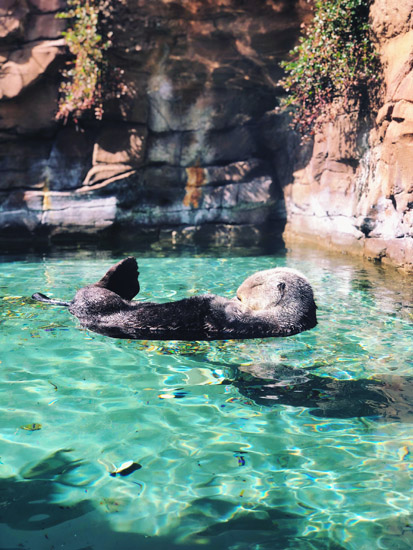
    One hot attraction to check out at the Monterey Bay Aquarium is the sea otter exhibit. This exhibit can be viewed above ground and underwater. So sea otters can be observed swimming and playing in the water and also lounging on the surface enjoying the sun’s rays! The sea otters at the Monterey Bay Aquarium are all rescued and without rescue they would have not survived in the wild. If you cannot make your way to see these otters in person, check out the live cam footage of the sea otters at the Monterey Bay Aquarium.

    There are many other animals and exhibits to explore at this aquarium. Green sea turtles can be seen swimming in the Open Sea exhibit where they are surrounded by many other marine wildlife. Hammerhead sharks, Tufted Puffins and many other wildlife can also be found inside this exhibit. There are other exhibits that show off kelp forests, coral reefs, wharfs, and the ocean sandy floor!

    If you’re in the Monterey Bay area, check out this aquarium and become 1 of over 2 million annual visitors! This is a great aquarium with a lot to offer. Hours and closures are subject to change due to the ongoing Covid-19 pandemic.

    Shedd Aquarium

    The Shedd Aquarium sits along side Lake Michigan in Chicago, Illinois. It is the second aquarium we will talk about in this article. The Shedd has roughly 5 million gallons of water with about 32,000 animals inhabiting the aquarium. Although it sits nowhere near saltwater, the Shedd Aquarium has a vast collection of saltwater animals including beluga whales, white sided dolphins, stingrays, and much more. The Shedd supports research to help save the critically endangered beluga whale population in Alaska.

    One of Shedd Aquarium’s most iconic exhibits is the Caribbean Reef. This enormous 90,000 gallon aquarium is cylindrical in shape and able to be viewed almost completely around. This giant fish tank shows off some wonderful creatures that can be found in the Caribbean such as stingrays, sharks, and angelfish! There is always motion in this aquarium and from time to time a scuba diver can be seen cleaning the enclosure to help visitors enjoy the view.

    There are many other animals and exhibits that can be seen at the Shedd Aquarium. The Abbott Oceanarium houses beluga whales, pacific white-sided dolphins, and sea otters. The Wild Reef exhibit is home to many different reef dwelling creatures, lurking sharks swimming in an enormous aquarium, and so much more! Other exhibits such as the Amazon Rising, Ricers, and Oceans can be found very close to the entrance. Follow this link to check out all other exhibits available!

    If you’re in Chicago, the Shedd Aquarium, Planetarium, and Field Museum should be visited on the Museum Campus along Lake Michigan. Due to the Covid-19 pandemic hours and closures are expected to change!

    Georgia Aquarium

    The Georgia Aquarium located in Atlanta Georgia is probably the most iconic and well known aquarium in the United States. Being the largest in the country, this aquarium has over 10 million gallons of fresh and saltwater that holds thousands of animals such as whale sharks, manta rays, hammerhead sharks and so much more! The largest tank in the Georgia Aquarium is roughly 6.3 million US gallons and holds the largest fish in the world!

    The whales sharks can be viewed in the Ocean Voyager exhibit. There are over 50 other species of fish that are housed with these giants. This exhibit allows you to walk through a 100 foot tunnel that is completely surrounded by water to fully get immersed. There will be plenty of opportunities to see all the marine fish that reside in this exhibit.

    Another fantastic exhibit is the Dolphin Coast, where guests can sit and observe a presentation where dolphins do tricks while trainers educate the crowd with marine facts. Although there are many more exhibits at the Georgia Aquarium the last that will be highlighted is the Tropical Diver exhibit that has roughly 164,000 gallons of water and houses over 200 different coral species.

    Check out the Georgia Aquarium website to see other exhibits and animals that can be seen during your visit. Hours and closures may vary due to the Covid-19 pandemic!

    National Aquarium

    The National Aquarium located in Baltimore, Maryland is a non-profit aquarium that holds over 2.2 million gallons of water and over 20,000 animals residing in these waters. The goal of the National Aquarium is to inspire conservation of the world’s aquatic treasures. The National Aquarium showcases many different types of exhibits that have freshwater, saltwater, and enclosed habitats for wildlife like pythons and birds.

    The National Aquarium contains exhibits devoted to the Atlantic bottlenose dolphin. This dolphin exhibit gives visitors the opportunity to observe feeding and training of the animals! The dolphins will hopefully be moved to a 50 million gallon sanctuary in fall 2020. Another wonderful exhibit is the Atlantic Coral Reef. This exhibit is roughly 335,000 US gallons that houses many different species of animal like stingrays, sharks, and groupers.

    There are many other exhibits that can be found here, on the National Aquarium website. The Blacktip Reef, Upland Tropical Rain Forest and Australia: Wild Extremes are a few more exhibits guests can visit when visiting this beautiful aquarium. Poison dart frogs, blue-crowned motmot, and various marine fish are a few animals that can be found throughout these exhibits. Openings and hours may vary due to the Covid-19 pandemic so please check the National Aquarium website for more information!

    New England Aquarium

    The New England Aquarium located in Boston, Massachusetts was originally opened in June 20, 1969. After a few changes and updates, it has become the aquarium you see today. Not having the monstrous 1 million gallon plus aquariums that others have does not stop the New England Aquarium from being remarkably interesting. It still manages to cater to roughly 1.3 million guests that come from all over. Many of these guests come to visit to see a very remarkable fish tank.

    The fish tank in question is the Giant Ocean Tank that is a whopping 200,000 gallons. Where it lacks in gallons it surely makes up for in size. This fish tank is 40 feet wide and four-stories tall! You definitely get your exercise in visiting this aquarium. The main attraction in this exhibit is Myrtle the green sea turtle. This sea turtle enjoys life in this aquarium with many other marine fish, eels, and other sea turtles! This fish tank is themed after the Caribbean coral reef. It is a very unique and very tall fish tank and a must-see when visiting Boston.

    Other exhibits at this aquarium include a 9,000 gallon Indo-Pacific Coral Reef that reaches far up from the floor to ceiling and houses many different marine fish such as yellow tangs, butterflyfish, foxface, and many more. Another exhibit is the Amazon Rainforest that holds many different tropical fish like the neon tetra, anacondas, and poison dart frogs! The Amazon Rainforest contains over 4,500 gallons of water! If you are interested in learning about other exhibits at this aquarium check out their website here.

    The hours of opening and closures may change due to the Covid-19 pandemic so please check the New England Aquarium website for information on the matter.

    Final Notes

    There are many different aquariums around the United States and the world. This list is only to showcase a few of the many out there. They are all very unique and all have their own twist in the aquarium keeping world. Regardless, it is highly recommended to visit these aquariums!

  • 5 Great Aquarium Plants for Low Light Aquariums

    5 Great Aquarium Plants for Low Light Aquariums

    With so many plant options in the aquarium keeping hobby it can become challenging deciding which plants are great for different types of aquariums. Each plant has its own requirements but there are a few that are fantastic for light aquariums. Before we dive into the list we should consider what else a plant needs. Aquarium lights that release a kelvin rate between 5000k and 6500k is what is usually recommended for planted fish tanks. Also consider the compatibility of fish with your plants. Some fish will nibble or tear up your plants so it’s important to know what you have. Water parameters should be considered. Soft and acidic water are important criteria that need to be met in order for your plants to thrive. Lastly, providing artificial CO2 and fertilizing your aquarium with supplemental nutrients may be important factors at keeping your plants alive.

    Once all livestock, lighting type, and water parameters are up to par for plant needs, it is time to start looking at plants to keep in a low light aquarium. This guide will give insight on 5 plants that are great for these type of aquariums.

    Anubias

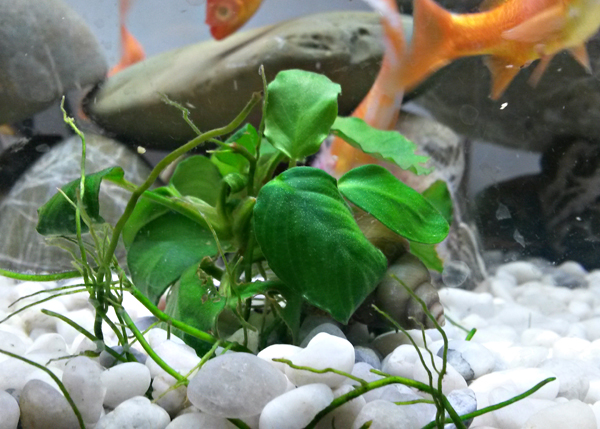
    This plant is usually my go to for low light tanks, aquatic jarrariums, and tall paludariums. It is such a cool plant. Anubias does not need to be planted! It can be wedged into gaps in driftwood or placed in between rocks. Try not to crush the roots and bulb when placing this plants between rocks.

    Image by Colamc on wikimedia

    Anubias barteri, Anubias coffeefolia, and Anubias nana are probably some of the most common species in this genus. Out of the three, Anubias nana remains the smallest and is more commonly used as a foreground plant. Given enough time, these plants will grow in what look like bushes all over the aquarium with their broad leaves. They’re a fantastic plant to have and excellent for beginner plant keepers. For a more in depth guide to keeping anubias happy follow this link.

    Java Fern

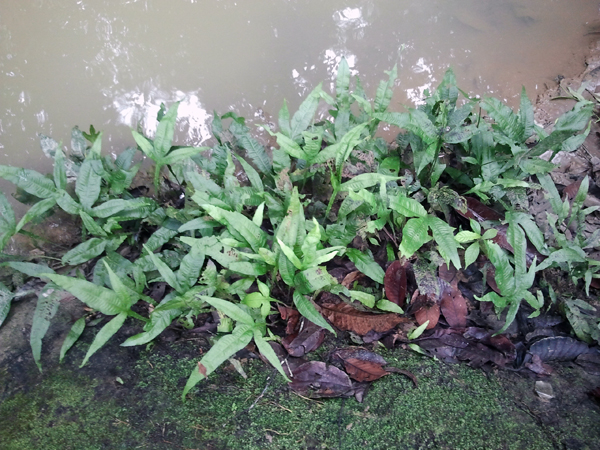
    Java fern is a fantastic low light requiring plant. Its long broad leaves are excellent for the background/midground for low maintenance and low light fish tanks. Java fern care is quite similar to the care of anubias. It does not require to be planted and fairs well being wedged into rocks and driftwood. It can stick out of the water because it is amphibious plant and it will primarily spread through rhizomes. The rhizomes themselves should not be buried because they will recede and rot away over time. It is recommended to keep the rhizomes just above the substrate and just bury the roots.

    Image by Fhurzan on wikimedia

    There are two common types of java fern. The regular java fern and java fern windelov. The normal java fern plant has very broad leaves while windelov has far more wispy and laced leaves. Otherwise they are quite similar plants. Both do well in aquarium temperatures around 60 and 80 degrees Fahrenheit, grow well in pH levels ranging from 5.5 and 8.0, and do well in low to moderate light!

    One final bonus of java fern is that it is one of few plants that can handle being in an aquarium with brutes like South American cichlids. Like with most cichlids its never a guarantee plants will make it but they fare the best in an aquarium with large cichlids.

    Java Moss

    Java moss is remarkable for low light aquariums. It is probably the most hardy moss species that is kept in the aquarium hobby. Java moss carpets decor like rock work and driftwood but it does not normally carpet the substrate in your fish tank. This is excellent to use in aquascapes and grows fairly easily under low light conditions.

    Image by Buchling on wikimedia

    To grow java moss, a string can be used to attach it to a piece of decoration or if it’s possible, it can be wedged into cracks or gaps in decor. It will very quickly attach and begin spreading. It is great to have because some fish will lay eggs in it, it’s a haven for shrimp, and it adds a different kind of life to rocks and other aquarium decor.

    Java moss does well in temperatures ranging between 60 and 80 degrees Fahrenheit and pH levels between 5.5 and 8.0.

    Crypts

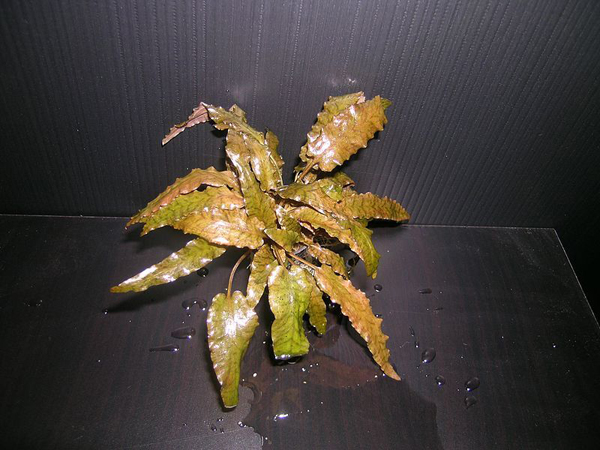
    What would a low light aquarium list be without crypts. Specifically, I like to point out Crpytocoryne wendtii and Cryptocoryne beckettii. Both of these plants do very well in low to moderate light aquariums. Their leaf colors will both depend on the amount of lighting that is provided as well as nutrients available in the water. Stable water parameters are a must for this plant because it is possible to rotting at the roots if water conditions are not stable. Under healthy water conditions, this plant will release runners in the substrate and spread to different parts of the aquarium. Overall, this plant is quite hardy and grows very well in the mid-ground of an aquarium.

    Image by S. Tanaka on wikimedia

    This plant enjoys being in water temperatures ranging between 75 and 80 degrees Fahrenheit, KH levels between 3 and 8, and lastly pH levels around 6.0 and 8.0. This is quite a versatile plant and excellent for low light aquariums as well as for anyone new to aquarium keeping.

    Moss Balls

    Moss balls aka marimo balls are very easy to care for in aquariums. They thoroughly enjoy low to moderate lighting and normally dwell at the bottom of an aquarium. It is not desirable to keep them in very bright areas of the aquarium. Marimo balls grow incredibly slow, it may take a few years before you see any difference in size.

    When introducing into an aquarium, marimo balls should be rinsed in aquarium water before being added. There is a possibility of them floating once placed into the aquarium. They will naturally fall to the bottom of the aquarium eventually but the process could be sped up a little by giving them a squeeze under water.

    Image by bryan on wikimedia

    If shrimp and other invertebrates are in the aquarium, do not be surprised if you see them gathered on the marimo ball from time to time. They enjoy eating any leftover food that may get caught within. Propagating this moss ball is incredibly easy. Simply take it out of the aquarium and cut it in half. To help maintain the shape, wrap cotton thread around the ball.

    Marimo balls enjoy being in aquariums with temperatures ranging from 70 to 80 degrees Fahrenheit, KH levels floating between 3 and 8, and pH levels between 6.8 and 7.5.

    Amazon Sword

    Amazon swords are a popular plant in the aquarium hobby. They grow incredibly large and dominate the aquarium with this size. This plant should be kept in the background of the aquarium. Amazon swords are not as easy to care for compared to java fern, crypts, marimo balls, or anubias but they are still a fantastic plant to keep in an aquarium. Normally seen in taller aquarium this plant does great alone or in groups. I personally would not keep this plant in a 10 gallon aquarium or even aquariums that are not taller than 18 inches.

    To keep them happy and healthy amazon swords should receive iron rich supplements. They do best in water temperatures between 72 and 80 degrees Fahrenheit, KH levels between 3 and 8, and pH levels between 6.5 and 7.5.

    Final Notes

    Low light aquarium plants are a great starting point for new hobbyists looking to dip their toes in live plants. From easiest to hardest to care for (in my opinion) is the marimo ball, java moss, anubias, java fern, crypt, and lastly the amazon sword. Start with the easiest like the low light aquarium moss stated in the list and move on to anubias and so on. Aquarium keeping requires patience and taking your time will save you a lot of headaches in the long run.

  • 5 Fantastic Freshwater Fish for 10 Gallon Aquarium

    5 Fantastic Freshwater Fish for 10 Gallon Aquarium

    Setting up a fish tank is a very fun and rewarding process. Making it your own work of art is definitely a long term endeavor. Deciding what fish to introduce into your aquarium is part of the process and probably the most exciting part of it all. This guide will help showcase some of the many freshwater fish that can happily reside in a 10 gallon aquarium. If you haven’t already setup a freshwater aquarium, check out this guide.

    Harlequin Rasbora

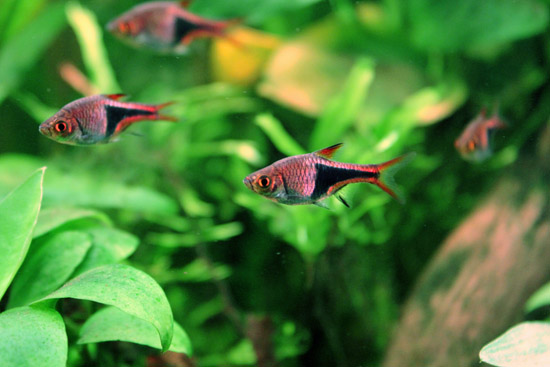
    To begin, I would like to introduce you to the harlequin rasbora, sometimes known as the t-bone rasbora. This rasbora has the iconic black pork chop shape displaying from the middle to the back of its body. Besides that, it has a beautiful copper/red toned body that stands out in an aquarium.

    This fish is small and will be around 2″ in size when it is fully grown. Due to its schooling habits, it is recommended to have around 8 – 10 beautiful rasboras in an aquarium together. They normally do a great job closely schooling together and will fill the middle to top of your aquarium with life!

    Male and females can be distinguished from one another by observing the bottom part of their “pork chop” pattern. The males will have a straight tip at the bottom and females will have a more rounded tip. Females will also be a little bit larger than the males. These fish will successfully breed inside of a well planted aquarium. They require broad leaved plants in order to do so. Plants like the Anubias are excellent option to have in the aquarium. If one or many are available, the rasbora will potentially lay eggs on the underside of the broad leaf.

    This species of fish are omnivorous. Providing a nicely ranged diet of pellet, flake, and frozen meat foods will keep this fish happy. They enjoy temperatures ranging from 72 – 78 degrees Fahrenheit, KH levels around 6 – 10, and pH levels in between 6.0 and 6.5. These fish are excellent choices for heavily planted aquariums.

    Threadfin Rainbowfish

    Threadfin Rainbowfish may not be as common as the harlequin rasbora but regardless it is an interesting fish to add into a freshwater 10 gallon aquarium. Their colors aren’t as vibrant as fish like the neon tetra but they can get a beautiful blue, gray, red, and black coloration on them. Males will have long threadlike appendages that reach out from their anal and dorsal fins. If you think their colors are lacking, the fins and shape surely make up for it.

    This fish species maxes at 2″ in size and are perfect for a planted aquarium 10 gallons or larger. They enjoy being in schools and I would recommend 5 to 8 individuals in a 10 gallon aquarium. 5 in an aquarium that is fairly open without too many decorations and 8 in a heavily planted aquarium.

    Like stated before the males will have the long threadlike appendages protruding out of their dorsal and anal fins. The females will not. This is the easiest way to distinguish the two. Also, males will most likely be far more vibrant in color compared to the females. These fish have the possibility of laying eggs in an aquarium.

    Threadfin rainbows are omnivorous creatures and benefit from having a large range of food. Due to their small mouth sizes it is recommended to feed them smaller pellets and meaty food. Flake food will work as well! This species of fish do well in water temperatures ranging 72 – 78 degrees Fahrenheit, KH levels between 7 and 10 and pH levels between 6.0 – 7.2.

    Male Betta Fish

    Male betta fish are very common fish in the freshwater aquarium hobby. They are often kept in large bowls without filtration due to their ability to acquire their own oxygen. They can and should be kept in larger aquariums than a bowl to keep them even happier. The betta fish has a fantastic personality and interacts well with humans. You can’t take it out and play with it but they know when it’s dinner time and will swim up to the glass to greet you. They have many different colors and a wide variation in fin shapes. I will be broadly providing information about bettas here.

    Most betta species reach a max size of 2.5 inches. There may be a little variation dependent on their fin lengths. They should be the only betta kept in an enclosure. They may be kept with other fish but be sure the others will not nip at the betta’s fins and because the betta could nip at fish with long fins as well. Female bettas can be kept in an aquarium together but they do not have as pronounced fins.

    blue male betta fish

    Males and females should only be housed temporarily if they are breeding. The male will build a bubble nest and the female will lay her eggs in it. Once that occurs, the female should be removed. The male will tend to the eggs until they hatch. Once hatched very small food should be given to the newly hatched fry. Foods such as baby brine shrimp and crushed flakes should be provided.

    Betta fish are carnivorous fish. Their diets should consist mostly of protein rich foods such as bloodworms, brine shrimp, or protein heavy pellet food. Due to their diets the aquarium might see spikes in undesirable water parameters so testing the water should be a common occurrence. The betta fish also thrives in water temperatures between 75 and 80 degrees Fahrenheit, KH between 0 and 25, and pH levels ranging from 6.0 – 8.0.

    Endler’s Livebearers

    Endler’s Livebearers continue to gain traction and popularity in the freshwater aquarium keeping hobby. Their vibrant assortment of colors make them a wonderful addition to any aquarium. They are fantastic to add if you are looking for lively fish for the middle to top of the aquarium.

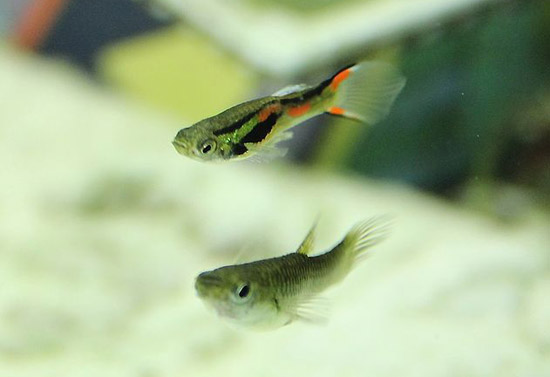
    endler's livebearers in fish tank
    Image by Usien on Wikimedia

    These fish normally start off very small, usually purchased when they are less than an inch in length. They will grow to be roughly 2 inches in sizes when they are fully grown. Keeping around 6 – 8 in a 10 gallon fish tank is suitable with the understanding that this species of fish breeds like no tomorrow and 6 fish can easily turn into 20 then 50 and so on. Proper housing for the new offspring will be required.

    Endler’s livebearers are as their name suggests, live bearers. They do not lay eggs but instead their offspring come out of their womb very well and alive. Treat them like any other platy, guppy, or swordtail when for breeding purposes. They do not require anything special.

    This species of fish is omnivorous and would love a nice variety of foods. Like stated above, pellet, flake, and frozen meat foods will provide all the variety this fish needs to obtain its nutrients. Keep in mind they are usually sold very small so flake food might need to be crushed a little for them to enjoy it. They do best in water temperatures ranging from 75 – 80 degrees, KH levels ranging between 10 and 30, and pH levels with a wide range of 5.5 – 8.0.

    Cardinal Tetra

    Last but not least on this guide is the beautiful cardinal tetra. Do not mistaken this fish with the neon tetra. They look incredibly similar but the cardinal tetra’s red stripe runs from its eyes to tail and it lacks that white area near its stomach. This fish is more for expert fish keepers because they’re a little more finicky than other fish.

    cardinal tetra in planted tank
    Image by Elma on Wikimedia

    When they are full grown, cardinal tetras reach a size of 2 inches. They are perfect for densely planted aquariums of 10 gallons or larger. I would keep a school of 6 to 8 cardinal tetras in a 10 gallon aquarium. They are quite an active little fish and their vibrant colors add to their beauty.

    It is possible to breed cardinal tetras in an aquarium but it is not very common. They require very specific water parameters to successfully breed. Specifically dH levels between 1 and 2 and pH levels as low as 5 and 6.

    Just like many of the other fish in this list, cardinal tetras are omnivores and benefit from a range of food. Starting off with flake food is a good idea until this fish is able to consume larger pellets. Brine shrimp is always recommended as well as bloodworms! This is a fantastic fish with colors that can drop jaws!

    Final Thoughts

    This is just a small list of fish that will do well in 10 gallon aquariums. I wanted to choose fish with vibrant colors or very unique fin shapes and designs. Hopefully this list helps provide information needed to help choose some cool freshwater fish for 10 gallon fish tanks. If you already have the fish, check out information on low light freshwater plants you can add to your fish tank!

  • 5 Great Saltwater Fish for a Nano Reef!

    5 Great Saltwater Fish for a Nano Reef!

    A nano reef is typically considered to be 30 gallons or less. The smaller the aquarium the larger the possibility of swinging water parameters. It is not recommended to add large fish or too many fish in a nano aquarium. Nano reef systems are a challenge but a rewarding experience. This guide will list 5 fish species that will do great in small reef aquariums.

    1. Hector’s Goby

    The Hector’s Goby is a fantastic addition to any reef system. It is a very peaceful fish and it will not bother any fish or invertebrate. It will graze on hair algae that grow in the aquarium and also feast on small worms in the fish tank.

    This goby maxes out at about 3″ in length and it will be perfectly happy living in an aquarium that is a minimum of 10 gallons. They do require a fair amount of live rock with plenty of crevices and hiding spots. They will seamlessly weave in and out of rock looking for food and algae to graze on.

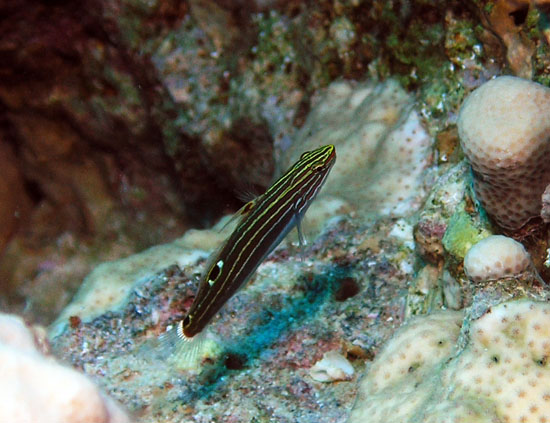
    Image by Rob on Wikimedia

    Their pattern work and coloration are beautiful! They have alternating red/black and yellow stripes running down from head to tail, they have round blotches of black along their dorsal fins and hints of orange around their fins as well.

    They are omnivorous so providing a variation of algae based food and meaty food such as mysis shrimp is important. They will spend much of their time looking for food in rocks and sand. As a final note, Hector’s Gobies are completely reef safe!

    2. Ocellaris Clownfish

    Everyone knows about the clownfish due to the movie Finding Nemo. Since the release of the movie, clownfish were ferociously taken out of the oceans because many parents wanted “Nemo” at home for their kids. Luckily, the reef-keeping community has successfully found ways to breed clownfish and they are tank-bred to help prevent plucking them out of the ocean.

    Ocellaris clowns, like the Hector’s Goby, max out at around 3″ in length. Having a pair of clownfish is great! The female clownfish (dominant) will be a bit larger than the male. Ocellaris clownfish are perfect for nano reefs because they happily live in aquariums of 20 gallons or larger.

    Besides the common orange clownfish, there are many different variations of ocellaris clownfish due to the extensive breeding that has exploded in the hobby. There are now black & white, snowflake, platnium, and many other clownfish that can be picked up from retailers and online breeders. Also, many captive bred clowns will not willingly host in anemones but can be trained to do so. Check out this guide for tips on how to get a clownfish in an anemone.

    Like many marine fish, the clownfish is omnivorous and will happily take any food provided. A rounded diet of veggies and meaty foods is recommended. They will happily take pellet, flakes, and frozen meat foods. These are incredibly hardy fish and excellent for a new marine hobbyist.

    3. Yellow Clown Goby

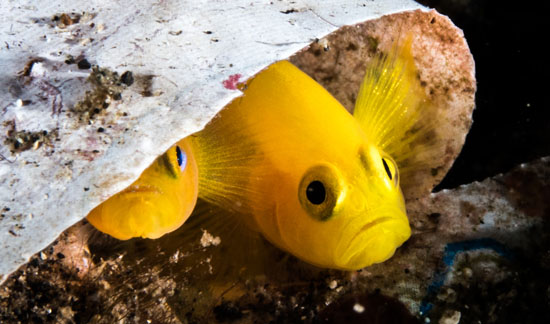
    Yellow Clown Gobies are oddly shaped but very enjoyable fish. They always seem to perch themselves in weird positions on rocks, glass, and corals. They’re a very fun and unique fish but great for a nano reef tank. Although they are small, their yellow vibrant bodies makes them pop in any reef system.

    Image by Rickard Zerpe on Wikimedia

    These fish are small, and they stay small. They max out at about 1.5 inches and are content with calling an aquarium that is 10 gallons or larger home. Clown Gobies are reef safe with most polyp corals but be mindful with keeping them SPS corals because there is a possibility of them nipping at them. They should not bother any other fish except other clown gobies in small enclosures.

    Yellow Clown Gobies are carnivorous fish. It is important to provide them with a variation of mysis shrimp, brine shrimp, and other meaty foods. Learn more about this fish by checking out the Yellow Clown Goby – Complete Care Guide.

    4. Firefish

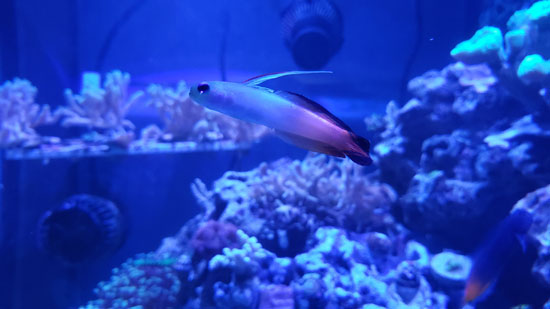
    The Firefish is a fantastic fish to add to a reef aquarium. Their vibrant white, red, and purple coloration is gorgeous! They have an enlarged dorsal fin which looks like a sabre which adds to their awesomeness!

    The Firefish will be around 3″ when they are fully grown. They are perfectly content with living in an aquarium that is 20 gallons or larger. They are completely reef-safe and will spend a good portion of the day hovering above the live rock waiting for food. It is recommended to provide them with a nice porous rock because they will dart into the holes when startled. They are known to be jumpers so a lid over the tank is also a good idea to have.

    Firefish are carnivorous. So providing a mixture of different types of meaty food is recommended. They will love brine shrimp (live or frozen) and mysis shrimp. Providing frozen food is much easier for fish but feeding them live brine shrimp is always a fun activity.

    5. Two Spot Goby

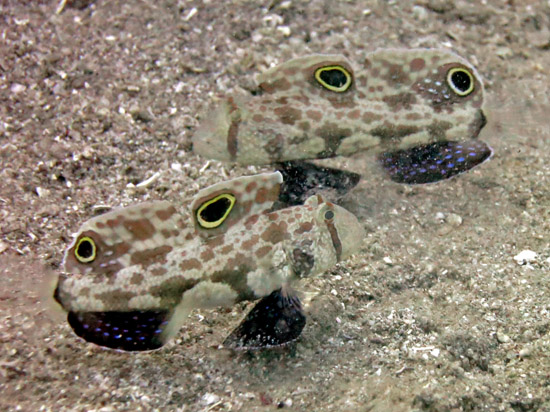
    This isn’t a very common goby that is kept in a reef aquarium but I believe this is a great fish to own. Two Spot Gobies have a very unique coloration and body shape. They are primarily white with blotches of brown, black, and yellow to help camouflage into sand. They have an incredibly large jaw and do a fantastic job sifting through sand.

    These fish get to be about 3″ in length when they are fully grown. They do well in aquariums 10 gallons or larger. It is very important to provide them with a nice deep sand bed because they will burrow into it. They also require lots of sand to sift through.

    Image by Lakshmi Sawitri on Wikimedia

    The Two Spot Goby is carnivorous so like many other fish on this list, it’s important to feed them meaty food. It is also a good idea to supplement your aquarium with live copepods to help give them more options if they are picky eaters. Take a look at the Two Spot Goby – Complete Care Guide for more information on this fish.

    Final Thoughts

    All of these are fantastic for a reef aquarium. Some are more common than others and there are plenty more that will do great that aren’t listed. Keep in mind that these fish should not all be crammed together into a nano aquarium. It is recommended to pick one or two depending on the appropriate aquarium size. Adding too many fish will cause water parameters to swing more often and aggression may be seen due to the lack of space. Hopefully, this guide has provided to insight into great nano fish for small reefs.

  • 3 Easy to Care For Aquatic Plants for Freshwater Fish Tanks

    3 Easy to Care For Aquatic Plants for Freshwater Fish Tanks

    From Plastic To Live Plants

    Having a thriving freshwater-planted aquarium is what many hobbyists strive to achieve. It is an incredible learning curve from owning a fish tank with fake plants and decor to a lush underwater garden filled with live plants. Many different measures must be considered when adding live plants into an aquarium. Primarily lighting requirements and a plant’s supplementary needs. Before really diving into all the different aquatic plants that are available check out the 3 plants that I believe are excellent for beginner plant growers. If you’re a pro at keeping plants and want to test your skills, check out 4 Beautiful Expert-Level Plants.

    1. Anubias

    There are many different varieties of anubias out on the market ready to be scooped up by aquarium keepers. Most, if not all, are incredibly hardy and do well in mid to low-light fish tanks. The anubias usually does quite well without any special fertilization or CO2 systems. They don’t even need to be put into the substrate.

    Image by Colamc on wikimedia

    The anubias can easily be put into driftwood or wedged in between rocks. They’re excellent starter plants for beginner-planted tank keepers. The plant has very broad leaves and helps create a unique structure in an aquarium setting. Check out this guide on anubias care.

    2. Java Fern

    Java fern is an excellent starter plant for aquarium keepers. They are a great mid-ground plant that will do perfectly well living in moderate to low lighting, just like the anubias. Java fern is considered an “amphibious” plant because it can live partially or fully submerged. This plant spreads mainly through rhizomes and can happily take over parts of your aquarium if not managed properly.

    Image by Fhurzan on wikimedia

    Finding plants that do well with South American cichild’s lively personalities is sometimes hard but java fern should do alright with those gloriously tough fish. It can also be placed on driftwood or in between rocks although it is not as commonly done as with the anubias.

    3. Crypts

    Cryptocoryne otherwise known as crypts are also a fantastic and easy-to-grow plant for a beginner dipping their toes in planted fish tanks. Cryptocoryne Wendtii is more or less the one I am specifically talking about. This plant grows very well in low to medium lighting and it spreads wonderfully through rhizomes.

    Image by S. Tanaka on wikimedia

    I had one that spread rhizome from one side of the aquarium to the other. Its leaf coloration will range from green to red to brown which is dependent on how much light it receives and amount of nutrients in the water. It is a plant with a lot of variability and will add quite a bit of personality into your aquarium.

    Final Thoughts

    These 3 species of plants can do very well with as little as good lighting, a substrate, like Eco Complete Planted Substrate, and fish waste! If they are in your aquarium and they seem to not be doing well test your water with an API Freshwater Master Test Kit to make sure your water parameters fall within your plant’s range.

    Depending on the amount of fish in your aquarium, there may not be enough natural fertilizer (fish poop) to keep your plants happy so consider providing some liquid fertilizer such as Seachem Flourish which is an all-around supplement for plants, and Seachem Flourish Excel which is a CO2 supplement. There are many other fertilizers out there but this is a good start for supplementation. Read the instructions carefully because adding too much Flourish will cause algae blooms and too much Flourish Excel can cause harm to your fish because it is practically CO2 in a bottle!

    Image by úlfhams_víkingur on wikimedia

  • Setting Up a GloFish Specific Aquarium

    Setting Up a GloFish Specific Aquarium

    Setting up an aquarium can be as simple or as complicated as you would like to make it. This will be an in-depth guide on how to set up a fish tank specifically for Glofish Tetras and/or Glofish Danios. This guide is primarily for beginner aquarists who are dipping their toes into the hobby or for parents who need guidance on setting up an aquarium for their children. For some quick information on GloFish check out this guide!

    We will be using a 20-gallon aquarium as a point of reference for this setup guide. A fish tank this large will allow you to keep a few more fish and a larger water volume will help keep water parameters stable. Under normal circumstances, an inch of full-grown fish per gallon is the recommended ratio for keeping fish in an aquarium. GloFish Tetras and GloFish Danios max out at 2.5 inches. This will allow you to keep either 8 tetras or danios. This is great because both are schooling fish and it’s recommended to keep at least 6 to consider it a school.

    Equipment Required

    No matter what type of aquarium you set up, you’ll likely need at least one piece of equipment to keep it running. Once you become a pro, you are welcome to change things up and tweak the equipment to your liking. However, if you’re new to fish tank keeping, I recommend following along to learn about the equipment I recommend for your fish tank.

    Aquarium Heaters

    We will need a heater. The 75-watt Eheim fully submersible heater or the Fluval M100 Submersible Heater are great choices. These heaters are fully submersible so you can easily hide them behind the decor. Also, they can be calibrated to the desired temperature using the dial at the top. As with any piece of equipment, it can come faulty or become faulty over time. I highly recommend purchasing something like the Penn-Plax Therma Temp Floating Thermometer to keep an eye on the temperature in case your heater decides to fault out. If you need more heater suggestions, take a look at some of the Best Heaters for Freshwater & Saltwater Fish Tanks!

    Filtration System

    A good filter is always recommended. My preferred filter for a setup like this is the Aquaclear 30 Power Filter. I like this one because it has three different compartments where filter media can be added. It comes included with a sponge, carbon, and biomax. First, the sponge catches debris. The sponge will require replacement eventually but rinsing it in aquarium water during water changes will keep it going for a while.

    Second, the carbon absorbs nutrients and will need to be changed once a month. Lastly, the biomax creates a bacteria haven which is important to aid in keeping a stable aquarium. These can be swapped out with other filter media but they are also perfectly fine to use for your Glofish aquarium. Unlike other filters, this one maximizes the space to assist in keeping your water clean!

    Aquarium Lighting

    Blue lights are what will make your Glofish pop in color. We will need a light that can be set to just blue lights to make your fish glow! Fancy lights can get expensive. Luckily there are budget lights that should do the trick for this kind of setup. The Hygger 18w Aquarium LED Light will provide you with both normal lights (to help live plants grow) and a setting to let only the blue lights shine.

    If you want to go all out and splurge on a more elaborate light the Current USA Satellite Plus Pro LED Fixture is a great choice. It comes with a controller which allows you to program the lights and also use preset settings to create different effects like cloud cover and storms. Purchasing this light will also give you the ability to grow more difficult plants in your aquarium if you ever decide to go that route.

    Optional Equipment

    Aquarium Air Pump

    An air pump is not a requirement but it adds a cool effect to the aquarium. Connecting it to compatible decorations or creating an enormous bubble wall creates a more unique aquarium experience.

    Auto Feeders

    Auto feeders are not usually something I recommend but they are also an option for anyone who travels and isn’t always home to feed the fish. I don’t normally recommend them because they will at times overfeed or dump most of the food at once which can create terrible spikes in phosphates and nitrates in your aquarium which can be terrible for your fish.

    Decorations for GloFish Aquarium

    The next thing on the list for setting up a GloFish tank is the decorations. My recommendation for a GloFish aquarium is dark gravel with little hints of coloring. Either completely black gravel or one with a little bit of color. If you plan on keeping plants, a deeper gravel bed will be needed, but otherwise, an inch-deep gravel bed should do just fine. For a 20-gallon fish tank, you’ll probably need anywhere between 10 and 20 lbs. of gravel.

    Image by Jim Zamichieli on wikimedia

    Since we are putting an aquarium together specifically for GloFish having fake plants that will glow under blue lights is recommended. These plants will give the aquarium an “out of this world” feeling. Loading the aquarium with quite a few fake plants is great!

    Adding some hardscape into your aquarium is important. Adding just plants won’t give structure to your fish tank. It is important to have something solid to create a nice structure and shape. Things like rocks, driftwood, sunken ships, and others are fantastic ways to bring your fish tank to life.

    Other Must Have Items

    There are a handful of items that I would recommend having ready to go while setting up your aquarium.

    Test Kits

    The API Ammonia Test Kit and API Freshwater Master Test Kit are important because your new aquarium will be going through the nitrogen cycle. The cycle goes through and once completed will provide the bacteria required to keep your fish safe. The cycle begins with a spike of ammonia. Then that converts to nitrites and lastly, the nitrites get converted to nitrates. You’ll likely know the Nitrogen Cycle is completed when you test for 0 Ammonia and Nitrites and you’ll likely see a hint of Nitrates. The nitrogen cycle normally lasts 6 weeks but the process can be sped up to about two weeks by using a bacteria starter, or media of some sort from an established aquarium.

    Aquarium Water Conditioner

    A water conditioner, like API’s Tap Water Conditioner, is useful to remove chlorine from the water before adding it to the aquarium. Large amounts of chlorine are bad for your aquarium’s inhabitants. API’s water conditioner is fairly straightforward. You will only need to add water conditioner to the water being added. If you change out 5 gallons of water, you only need to add water conditioner for 5 gallons worth of water. You do not need to add water conditioner for the full 20 gallons of aquarium water.

    Gravel Vacuum

    A gravel vacuum, like the Laifoo Aquarium Siphon, will be a must-have when water changes are conducted. The gravel vacuum is probably one of the easiest ways to remove water and clean your gravel. This one specifically is nice because it has a siphon ball which will help create a siphon. This will help you avoid getting a mouthful of water if you decide to start a siphon manually.

    Net, Food, Glass Cleaner

    A net and food are pretty self-explanatory. The net is to make adding the fish into the aquarium easier and the food of course is to feed the fish. Lastly, the glass cleaner will be very useful for cleaning the glass! Algae will form on the glass over time so having an aquarium-safe sponge is beneficial. I sometimes use an old gift card to clean my glass, or I treat myself by using a Melamine Sponge to clean hard-to-reach spots in the fish tank.

    Setup Process

    To begin, place your aquarium in its desired location. Gently begin adding gravel into the aquarium. Be sure not to drop the gravel from great heights because the glass could shatter.

    Since the fish tank is empty, it’s okay to add water conditioner before or after the water is put into the fish tank. While filling the aquarium to about 30% of the water capacity begin brainstorming where to put your aquarium decorations and heater. Once 30% water capacity is reached, begin placing your decorations, and be sure to wedge your hardscape decor a little bit so it is firmly in its place.

    After your decorations are in place fill your aquarium with water to about 90% capacity and place your power filter in the center back of the fish tank. Having it in the center will provide the best performance and circulation. Also, now would be the time to add the heater. Turn the dial to the desired temperature (76 – 78 degrees Fahrenheit) place it and angle it to your preference but be sure it is submerged underwater. Test out the filter and make sure it runs correctly. Once the filter begins to work continue filling the water until the fish tank is filled. Then turn on the heater and set up the light fixture.

    I normally recommend allowing the aquarium to run for at least 24 hours. I do this to make sure all of the equipment is running properly and also just to make sure there are no leaks in the aquarium. I would add API Quick Start to your aquarium. This contains nitrifying bacteria that will be necessary for your new aquarium. It will hopefully speed up the nitrogen cycle and will make your aquarium safer for new arrivals.

    Final Thoughts

    API Quick Start should help you get through your Nitrogen Cycle quickly. I would recommend looking into the Nitrogen Cycle before beginning any sort of aquarium setup. You are working with live animals, so it is important to conduct the proper research before deciding whether to keep them in your home. Unfortunately, many people forget that.

    Lastly, look into adding some snails and/or shrimp to add a clean-up crew after your Nitrogen Cycle has completed. They’re great at eating algae and uneaten food! Otherwise, I hope this guide helps with setting up a brand-new GloFish aquarium!

    Image by Robert Kamalov on wikimedia

  • The Alien Like Pearly Jawfish

    The Alien Like Pearly Jawfish

    The pearly jawfish sometimes known as a Yellowhead Jawfish is a very unique marine fish. The white coloring on the body, yellow head, and enormous black/blue eyes make this fish a wonder in a saltwater aquarium. It acts a little different from a goby but is quite a wonderful sand-sifting animal.

    Jawfish Requirements

    Like many burrowing fish, the pearly jawfish tends to miraculously jump out of the saltwater aquarium. Having a well-sealed aquarium is recommended for this fish due to its acrobatic skills.

    When first introduced into the aquarium this fish is quite shy and may get out-competed for food. To guarantee it was eating, I used a long pipette to spot-feed the Yellowhead Jawfish in my home aquarium. At first was timid with the instrument but realized that food came out of it. A Jawfish that is eating is a good sign!

    A minimum of 30 gallons is recommended for this fish as well as having a deep sand bed because they love to burrow deep into the sand. The sand should be very fine so they can put it into their mouth to move around. It is also very recommended to have your live rock touching the bottom glass/acrylic of your display tank. This is important because depending on how the jawfish burrows it can cause the rock to shift which can lead it to fall or crushing the jawfish underneath.

    These fish are fairly hardy and should take to eating and will happily eat any food provided. A mixture of pellet food, flake food, and meaty food should be given. They will sometimes bolt out of their burrow, grab food, and swim back into their den. They have quite a unique personality.

    It will grow to be about a max size of 4″ which is why they require to have a deep sand bed of no less than 4″. This jawfish is a very passive fish and will not bother any other fish. It may get bullied by other burrowing fish so be aware.

    Pearly jawfish are perfectly reef safe and will not any coral. Be aware of any coral that may be in your sand bed because there is a chance this fish will completely cover it with sand. There have been many occasions where I had to dig out coral from a 1/2″ of sand because my jawfish decided sand belonged there.

    Jawfish Hi-jinx

    One funny thing this fish does is it will sometimes build a “fortress” around its burrow. It will collect small pebbles and snail shells and build a small wall. It will try to fight off hermit crabs and snails that may try to get into its home. It will take mouthfuls of sand, swim a few inches away from its burrow, and spit it all back out. They’re a very enjoyable fish to observe and a great addition to a reef aquarium.

    Final Thoughts

    This fish in my opinion is an incredible addition to anyone’s saltwater aquarium. They have a very unique appearance, they are pretty hardy, and they have incredible personalities. They will eat anything and do a pretty good job of keeping your sand clean because of their sand-tossing abilities. Besides keeping it from jumping and making sure it eats, you can’t go wrong with a pearly jawfish!

  • Wonders of GloFish

    Wonders of GloFish

    GloFish are genetically modified fish that have found their way into the aquarium hobby. The original goal was to modify the fish’s gene so its florescence sparks up when it comes in contact with pollutants in water systems. The fish ended up in the aquarium business and now GloFish can be purchased for your aquarium!

    Types of GloFish

    At the time of this writing, four different species of fish have a pronounced fluorescent gene: Zebra Danio, White skirt Tetra, Tiger Barb, and Red-Tailed Shark. These fish come in a variety of colors and can be found at most pet stores.

    GloFish can be added to a normal aquarium or be in their own “GloFish tank.” I think the effect of their florescence is much cooler in their fish tank. The brightly colored fish, decorations that glow under blue light, and black gravel are a great combination for a GloFish Setup. Keep in mind that research should be conducted on the requirements of each fish before purchase. For example, the Zebra Danio and White Skirt Tetra Glofish are peaceful and perfect for a community tank but the Tiger Barb and Red-Tailed Shark GloFish are considered semi-aggressive and should be in a larger aquarium with different types of fish that can handle aggression.

    GloFish Aquarium Setup Requirements

    For the most part GloFish aquariums can be setup like any old fish tank. They will need gravel, decorations, heaters, a filter and light. As mentioned before, if setting up a GloFish specific aquarium, it is recommended to have decorations that will glow under a blue light. They will add an “out of this world” feeling. LED lights that have a blue light setting are perfect for this type of aquarium build. The blue light is what will give the fish their glow. Other than the lighting and decorations, you would setup a GloFish tank like any other freshwater aquarium. Most keepers do not add live plants because they do not do well under blue lighting. For more information on how to setup a freshwater aquarium, check out this guide.

    Maintenance & Feeding

    GloFish are kept almost like any other fish. The main difference is the lighting that is used to enjoy them. Feeding should be just like any aquarium fish. They should be fed once or twice a day and should be given a variety of food such as pellet food, flakes, and frozen meats.

    Maintenance should also be similar to a normal aquarium. A gravel vacuum should be used to siphon the gravel and about 10% of the water should be replaced weekly to keep the water refreshed and to remove nitrates and phosphates. Having a freshwater test kit handy and testing the water will help guide you to proper aquarium care.

    Final Thoughts

    Every aquarium is unique and GloFish aquariums are a new branch of the hobby with a very quirky style to them. The fish themselves have been around for years and the company behind them keeps adding more fish species and colors for consumers to enjoy.

  • Setting Up a Simple Freshwater Aquarium

    Setting Up a Simple Freshwater Aquarium

    This guide will help brand-new aquarists set up their first freshwater aquarium. This article is relevant for aquariums that are 10 – 30 gallons in size. Aquariums come in all shapes and sizes, with different decorations, plants, filtration systems, and more. This will be a very basic setup guide to help new fish keepers get started. We will cover the steps needed for the actual setup and equipment that can be used for the aquarium.

    Equipment Needed

    To begin, the main equipment needed to keep an aquatic system running are the glass enclosure, heater, filter, and light. These are must-haves, especially if you are just starting. An air pump adds more oxygen but it should not be necessary for this type of setup because the filter will provide enough oxygen for fish to thrive.

    • A submersible heater, like the Aqueon Pro Series Heater, is an excellent option for heating your aquarium because it is made by a very popular brand and is built incredibly well. If you’re not interested in the Aqueon Pro Series Heater, check out some of the Best Submersible Heaters for Freshwater and saltwater Aquariums.
    • A hang-on-the-back filter, such as the Aquaclear Series (power filter) is also a great choice for a filtration system because it allows for chemical, mechanical, and biological filtration. You can check out other Hang-on-back Filters by following the link.
    • LED lights, such as the NICREW ClassLED Aquarium Lights are a good budget light that will open the door for aquatic plants in the future. They provide great lighting, usually last years, and don’t use too much electricity. Make sure the size of the LED light matches the length of your fish tank.

    Decorating & Jump Starting Your Aquarium

    Having a nice gravel bed is a great way to make your fish tank pop! I prefer dark gravel, like this one on Amazon, because that will make the colors of the fish tank stand out more. For first-time aquarists, I usually recommend black aquarium gravel. Just remember to rinse the gravel before putting it into your fish tank. Do not use soap, just water. Adding 1 lb. of gravel for every gallon of water will create a nice deep gravel bed, adding a nice look to an aquarium. However, it’s not necessary to add that much.

    Purchasing decorations is a great idea! There are many different types of decorations such as plastic plants, driftwood, pirate ships, and so on. If you enjoy Halloween, take a look at some Halloween-inspired aquarium decorations. The types of decorations are limitless. I recommend Easy to Care for Live Plants and driftwood to give a natural look, but to each their own.

    A few other things needed for a new aquarium are an API Freshwater Master Test Kit, water conditioner, gravel vacuum, net, and fish food (flake food and pellets), and glass cleaner (sponge or magnetic).

    Setup Process

    The setup process is the fun part of it all. Once you have all your tools and equipment, it’s time to finally put together your new aquarium. I will continue by discussing aquarium placement and decoration recommendations below.

    Aquarium Placement

    Once everything is purchased and ready to go it is time to start setting up the aquarium. Find a location in the house away from windows and air/heating vents. Windows provide more sunlight than needed which will cause algal blooms to occur and air/heating vents may cause temperature fluctuations in the aquarium which is not desirable.

    Adding Gravel & Water

    Gravel and decorations should be rinsed before placing into the enclosure. Once that is done begin by gently putting the gravel at the bottom of the aquarium. Place the water into a bucket and add water conditioner to remove chlorine from it. Usually, 1 drop of water conditioner is added per gallon of water but it may vary so double-check the instructions on the bottle you are using. The water temperature does not matter so much right now but try to eyeball the temperature to be around 74° – 78° Fahrenheit. Fish will not be added yet so an exact temperature isn’t necessary. Repeat these steps until the aquarium is roughly 50 – 75% full and begin adding the decorations.

    Placing Decorations, Equipment & Final Touches

    Push the base of the decorations to the bottom of the gravel bed. This will give it a solid foundation and will help prevent it from moving when cleaning the enclosure. Place the heater and set the temperature to around 76 -78 degrees Fahrenheit. Place the filter in its proper location. Continue to fill up the aquarium to about 90% and test to see if the filter runs. I usually recommend letting the aquarium run for about 12 – 24 hours just to make sure all the equipment runs properly and to ensure there are no leaks. Before adding fish, read up on the Nitrogen Cycle, and the highly recommended fishless cycle.

    Purpose of API Freshwater Master Test Kit

    I will explain the reasoning behind purchasing the other items for your aquarium. The API Freshwater Test Kit is important. The aquarium will go through the nitrogen cycle. The cycle will help create a safe environment for fish and invertebrates. The cycle begins with a spike of ammonia (from waste). The ammonia will convert to nitrites after a week or two. You will use the test kit to follow along. Visible signs of nitrites will appear. After 5-6 weeks, the nitrites should convert to nitrates. When using the test kit, the ideal spot to be in is to test for 0 ammonia and nitrites and have just a hint of nitrates. The nitrogen cycle normally lasts 6 weeks but the process can be sped up to about two weeks by using a bacteria starter.

    Use of Water Conditioner

    A water conditioner is useful to remove the chlorine from the water before adding it to the aquarium. Large amounts of chlorine are not good for fish or invertebrates so removing them is a bonus. Some people allow their water to sit in a bucket for 24 hours before adding it to their fish tank but to be safe the water conditioner is the way to go!

    Supplies For Aquarium Maintenance

    The gravel vacuum will be a must-have when doing maintenance on your aquarium. After creating a siphon, the gravel vacuum will allow water to flow down the tube and into an external bucket. The flow is slow enough to help collect food particles and fish waste but it should not suck up the gravel that was recommended earlier in the article. Using a gravel vacuum makes water changes a breeze.

    The net and food are pretty self-explanatory. The net is to make adding the fish into the aquarium easier and the food of course is to feed the fish.

    Lastly, the glass cleaner will be very useful for cleaning the glass! Algae will form on the glass over time so having an aquarium-safe sponge is beneficial.

    Final Notes

    Aquarium building can be fun while still keeping it simple. Once experience levels increase the hobby can branch out to far reaches. Starting with an easy-to-care-for 10-gallon aquarium creates a good foundation for what could be a lifelong hobby in the future.

  • Neon Tetras – The Schooling Fish

    Neon Tetras – The Schooling Fish

    Neon Tetras are probably one of the most well-known freshwater fish in the hobby. Their vibrant colors pop and stand out from the green background of a planted aquarium. They’re straightforward to acquire and on the cheaper end regarding cost. They’re gorgeous little fish that love to be in schools. This article will provide general information for Neon Tetras.

    Requirements

    Neon tetras are small and stay that way. They max out at a size of around 1.25″. They are perfectly comfortable in an aquarium of 10 or more gallons. Having a large school for them is a requirement. They do not do well alone. A minimum of six neon tetras are recommended but even more, are preferred! They are not picky eaters, but small food must be considered that will fit into their mouths. They will happily eat micro pellets, flake food, or bloodworms. They can live in waters with a temperature between 68° and 78° Fahrenheit but do best at temperatures between 76° and 78° Fahrenheit. These fish are very peaceful and will not bother other fish in an aquarium. Having a well-established aquarium will help these little aquatic animals thrive!

    Due to their smaller size and docile personality, these fish should be kept with other peaceful fish. It is not recommended at all to keep them with larger Cichlids, predatory fish, or aggressive fish. If they are, they will become a quick meal for the larger fish or be beaten up and pushed around by the aggressive fish. Other peaceful and smaller fish are the best neighbors for Neon Tetras.

    Photo by Tan Meng Yoe on wikimedia commons

    More Information

    After working at a pet store for many years I noticed that many people would like Neon Tetras to be the first fish in their aquarium. From experience, this is usually a death sentence for this fish. Neon tetras are not hardy at all. They’re not expensive so it’s an attractive choice for a first fish. Many hobbyists use the first fish in the aquarium to jump-start their nitrogen cycle.

    To quickly sum it up, a new aquarium cycles through three stages. An ammonia stage, a nitrite stage, and ends at the nitrate stage. Fish produce ammonia through their waste and it gets converted to nitrates by bacteria. At low levels, nitrates are less toxic to fish than ammonia and nitrites. The nitrogen cycle transitions through each stage which is very hard on neon tetras. Once, the aquarium runs through this cycle it is safer to introduce the neon tetras. There is plenty of fish that do much better through the cycle such as a smaller species of danio, red phantom tetra, Serpae Tetra, and many others. It is preferred to use a hardy fish for the nitrogen cycle.

    Final Thoughts

    Having a school of Neon Tetras weaving in-between plants, driftwood, and other decorations is a wonderful sight. They’re peaceful and easy to care for once in an established aquarium. Mixing them with other peaceful animals is wonderful and they will do well with shrimp and snails. If you’re looking for other blue colored fish for your fish tank, check out 11 Blue Freshwater Fish for Your Aquarium.

    Photo by H. Krisp on wikimedia commons

  • The Vastness of Aquatic Enclosures!

    The Vastness of Aquatic Enclosures!

    Aquarium Hobby at a Glance

    There are many different types of aquarium-like enclosures a person can have in their home.  They range in all sorts of sizes and levels of difficulty but they are all unique in their own way. From micro enclosures like jarrariums to enormous saltwater aquariums and ponds, there is a niche for everyone! We will broadly talk about many different enclosures for aquatic animals and the level of difficulty of maintaining these enclosures. We will also talk about basic designs and variety in setups.

    Aquatic Jarrariums

    One of the easiest and probably cheapest enclosures for aquatic critters is what is called a jarrarium. A jarrarium can be very simple but also very complex. There are two main types of jarrarium, open or closed. One requires the lid to remain open for oxygen to exchange with water, allowing you to feed the inhabitants, clean the glass, and change the water if it becomes overgrown with algae. The closed jarrarium is filled with inhabitants and sealed in hopes that it will become a self-sustaining system. If built correctly closed systems can be self-sustaining for a few years.

    Eco-Sphere

    The most important and expensive item needed for these types of setups is good glass containers that can hold water. For the most barebone jarrarium, a glass container is needed but the only additional material needed is a scoop of water and substrate from your local pond or lake. These water bodies usually are fully loaded with tiny critters such as dragonfly nymphs and snails. This type of jarrarium is called an eco-sphere. Once the water is scooped out, it’ll be quite murky in appearance, but give the loose substrate time to settle at the bottom of the container and it should clear up. Most people do not add any critters into an eco-sphere but instead observe what type of wildlife comes out of the substrate. Eco-spheres help give an insight into many different critters that are in a person’s local water systems. Many of these eco-spheres are short-lived but a great educational piece for kids and adults.

    Open Jarrarium

    A regular jarrarium usually consists of a soil part, a substrate part, and then the decor that is placed on top. This type of jarrarium usually takes a bit more planning. The use of live plants and mosses is almost a necessity to help intake nutrients in the water, help prevent algal blooms, and provide oxygen for the animals within. Also, live plants are far more beautiful than their plastic counterparts (in my opinion). The livestock is pretty limited for jarrariums. It is usually limited to shrimp, snails, and possibly a betta fish if the jar is large enough. Shrimp come in many gorgeous colors, varieties, and sizes but on the other hand, be careful with snails because some can infest your newly built jarrarium. The jarrarium placement is very important. Changing room temperatures can harm the critters in their enclosure. Most aquatic animals prefer stable water parameters, such as stable temperatures, otherwise, they can be stressed which can lead to death. The amount of light is also a factor to think about. Too much direct sunlight will cause algal blooms and also raise water temperatures and too little will cause your plants to wither away and die. Consider using an artificial light source such as a CFL light above the jarrarium.

    In my opinion, jarrariums are a very fun, easy, and cheap way to get into the world of aquarium keeping. The cost could be as little as just needing to purchase a glass container, but it can still become a very diverse and unique ecosystem. Some jarrariums look like works of art and are gorgeous pieces of decor in a person’s home or office.

    Freshwater

    Next along the lines is freshwater keeping. There are hundreds of different types of freshwater systems a person can put together and it can get a little overwhelming to think about. Different critters require different pH levels, water temperatures, and so on. Also, thinking about live plants will determine the species of fish you can keep. In my opinion, the most important factor to determine the type of fish that can be kept together is the size of the aquarium, and once the size is determined, you can get into deciding what species of fish will be comfortable in that size of an enclosure. I have been in this hobby for ages and worked in the industry. It is terrible seeing fish brought into the store that has damaged or misshapen bodies because they were forced to live in an aquarium that was too small for them.

    From experience, a fish won’t stop growing because of the size of the aquarium. The fish’s growth will be stunted and it will cause its overall health to decline. Anyway, once the aquarium size is chosen the next step is to decide on the fish and decor. To start, many choose the simple route of plastic plants and rocky decor which is perfectly fine, but others will decide on getting more in-depth and setting up an aquarium with live plants and mosses. Putting live plants into an aquarium opens up a new can of worms and potentially increases in difficulty of keeping the aquarium running successfully.

    For ease and simplicity, many fish keepers begin their freshwater journey with fake plants, decor, substrate, hang on the back filter, and a simple LED light. This is the standard aquarium and the easiest route that can be taken. Once interest in the hobby continues, things can branch into more unique niches. Instead of a hang-on-the-back filter, maybe use a canister filter or no filter at all! Instead of a regular old light, a person can try using more intense lights that will give the ability to sustain plant life in the aquarium. The unique alterations that can be made are limitless but we will not be getting into the elaborate details in this article.

    Paludariums

    Paludariums are a little different from a standard aquarium. A paludarium has both a land mass and a water body inside of a glass box. This opens up many doors for hobbyists because now animals such as semi-terrestrial crabs, frogs, or other critters can be added into an enclosure. This type of setup requires a little more knowledge and work to put together. There is quite a bit of planning that must be done before creating a paludarium.

    Unfortunately, the limited size of the paludariums does not allow for species mixing. For example, mixing fiddler crabs with fire-belly toads. There is a great chance they may become territorial in such a small space, see one another as potential food, or just compete for food within the enclosure. This could lead to stressful situations for the animals and possibly put them in dangerous situations.

    There are many things to consider when setting up a paludarium such as: What animal will you be keeping? Do you want water filtration? Do you want a waterfall setup? How deep do you want the water body? How much landmass? What plants do you want to keep? What kind of fish? The questions go on and on, but I am trying to get your mind thinking of some of the considerations that need to be taken for a paludarium.

    Setting up and keeping a paludarium running is more difficult than setting up a freshwater aquarium. It takes far more planning to get the design right and deciding what terrestrial and aquatic animals to put it can be a challenge.

    Terrarium/Vivarium

    Many people use these terms interchangeably but there is a difference between the two. A terrarium is designed to primarily raise plants and a vivarium is used to house an animal. A terrarium can have animals but it can just be a glass enclosure filled with unique and exotic plants. On the other hand, a vivarium is designed to house and recreate an animal’s habitat. Common animals that are placed in vivariums are Dart frogs, geckos, and frogs. Vivariums and terrariums do not have a water body to house fish and other aquatic animals but a vivarium may have a water dish for the critters to drink from. They can be microhabitats or enormous enclosures that fill a whole room’s wall. Terrariums and vivariums are easier to set up and maintain than a paludarium but are a little harder to keep than a freshwater aquarium.

    Saltwater

    There is a lot of intimidation for aquarists that are thinking of transitioning into keeping saltwater aquariums. I would not set up a saltwater aquarium as a beginner hobbyist. I would gain knowledge about a freshwater aquariums, dip my toes in live plants, and research saltwater aquarium setups and keeping. Once all that experience and knowledge is gained, only then would I consider setting up a saltwater aquarium. Keeping a saltwater aquarium is not that hard. Keeping it well is where the challenge is and the cost of setup and maintaining it is what scares many away. Try freshwater and if you enjoy fish keeping consider setting up a saltwater aquarium.

    The two primary niches of keeping saltwater aquariums are reef tanks or fish only. Many who set up reef aquariums are doing it to end up growing coral in their aquarium. There are many critters in the saltwater hobby that are not compatible with reef aquariums. For example, pufferfish wholeheartedly love devouring hermits and snails that would normally be found in a reef. Parrot fish will graze down your stony coral with ease. There are starfish and urchins that will also destroy a reef system. These are just a few examples of incompatibilities between animals. Decide what fish you would like in your aquarium and that will determine whether a reef tank is good for you.

    Fish Only Aquarium Setup

    Fish-only aquariums will not have corals and may or may not do well with crustaceans. Predatory aquariums are usually why hobbyists do not build a reef aquariums. Common critters that are put into fish only systems are angelfish, lionfish, eels, pufferfish, parrotfish, wrasses, stingrays, and many more. This type of setup will need a large filter because of the dietary needs of most of the animals. A sump system is recommended with a very good protein skimmer. Usually predatory aquariums and fish only setups are large (125+ gallons). This is because many of your predatory fish get very large.

    Reef Aquarium Setup

    Reef aquariums are quite different. They need good lights for corals, they will have crustaceans, and they can be very small or very big. I would still recommend a sump system with a protein skimmer for reefs but I would also look into setting up a refugium in your sump for additional filtration. Larger systems are easier to maintain but there is quite a fondness for nano reefs as well.

    There are many different types of coral which broaden the spectrum even more. SPS corals need pristine water conditions so are usually kept in an SPS reef aquarium, while other corals like zoas and leathers do need specific parameters and can be put into a mixed reef or a species-specific aquarium of their own.

    There are hundreds of different reef-compatible fish and crustaceans. I will not be going into the details of this because there are so many. Think of the type of fish you would like and research what size fish tank it requires and whether it is reef safe. Also, check the temperament of the fish. Many are very peaceful but others will get territorial. These are the main parameters for these fish.

    Saltwater aquariums will easily cost an aquarists hundreds to thousands of dollars to set up. Reef systems are especially costly due to the lighting needs and the addition of quite a bit of live rock. That is why making sure this hobby is for you is important before walking down this path. Saltwater aquariums are for hobbyists who know a thing or two about aquariums and understand how water systems work.

    Ponds

    Ponds are not as common in the hobby as the others. Many people do not have a yard large enough for a pond. Regardless, they are a great place to relax. The primary fish kept in a pond is a koi fish. They are very similar to goldfish but are usually longer and grow larger. Their colors are magnificent! Other animals that may naturally come around ponds are frogs and turtles.

    Ponds also can have different plant matter growing in them. Lillies and floating water lettuce are two that come to mind that is quite commonly found in home ponds. They are a nice addition and provide cover for your fish from predators such as raccoons and herons. Also adding a little bit of green color never hurt.

    There are many things to consider when setting up a pond. They can get quite expensive. Picking a location is important. More sunlight will lead to more algae growth in your pond but also too much shade may cause other plants from flourishing inside. During the initial setup, choosing a pond liner is very important. A durable liner may cost more at first but will hopefully prevent leaks from happening which will save you money and stress in the long run. A waterfall feature will add great aeration to the pond but a pond pump costs a lot of money! Think about other aerating fixtures to get oxygen into your system.

    The following is more dependent on where you live. In the United States, the Midwest goes through four seasons. Pumps need to be shut off for the winter, koi need to be either taken inside or fattened up for the winter, springtime will lead to pond cleaning, and so on. The pond needs to be deep enough for fish to be kept in there through winter. These are obstacles that need to be overcome in the Midwest but it’s not as big of a problem in warm states like Florida or Arizona.

    Ponds are wonderful! They are a great place just to cool down and enjoy nature in your backyard but they are quite difficult to maintain and can be costly. The chance of losing a fish to predators is unfortunate but it’s a risk that is taken by pond keepers due to its beauty! Quite a bit of research and preparation should be conducted before setting up a pond!