
A Brief Summary of Bottom Dwellers
Bottom Feeders are the backbone of a lot of aquariums. These fish are the janitors or part of the cleanup crew in your fish tank. There are many different kinds of species of bottom dwelling fish. They all come in different shapes, sizes and nuances. This article will discuss some of the best bottom dwelling fish for freshwater aquariums. The fish here will vary in species, aggression, colorations and more.
1. Cory Catfish
You can’t start a bottom dweller list without Cory Catfish. I lumped them all together because (in my opinion) all Cory Cats are great. These beautiful shoaling fish are excellent bottom feeders. They love sitting at the bottom of the substrate, waiting for food or they’ll swim around scavenging. They’re fun fish with amazing personalities and are incredibly friendly so they’re perfect for community fish tanks. There are two species of Cory that I will highlight because of unique characteristics they possess.
Pygmy Cory
The first Cory Catfish I wanted to highlight is the Pygmy Cory. The unique characteristic this fish has is in the name. The Pygmy Cory is a small fish and it remains fairly small its whole life. You will likely never see see one larger than 1.5 inches (~3.2 cm). Because of it’s max size being so small, this fish is excellent for fish tanks that are 10 gallons or larger. A fish tank this large will allow you to create a shoal that is at least 6 corys strong. Larger shoals are always better so the more corys you can keep the happier they will be.
Emerald Green Cory
The Emerald Green Cory is the second fish I would like to highlight. This fish’s unique characteristic is its coloration. There are green fish available purchase but it’s not as common as blue, red and silver colorations. The Emerald Cory’s green color is vibrant and very well looks like an emerald! Unlike the Pygmy Cory Catfish, the Emerald Green Cory grows to have a max size of 3.5 inches. They require at least 30 gallons of water to be happy. Similarly to other Cory Cats, this species of fish requires to be in a shoal of at least 6 fish to be happy.
2. Bristlenose Pleco
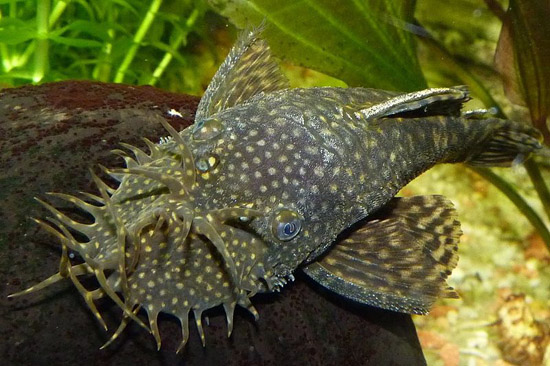
The Bristlenose Pleco, sometimes called the Bushy Nose Pleco, is a fantastic fish to add to fish tanks that are 30 gallons or larger. The Bristlenose Pleco is a fantastic algae eater which does not get incredibly large. It will grow to be roughly 6 inches in size but does a great job eating algae at every stage of life. If this pleco runs out of algae to eat, you will have to supplement it with algae wafers or other foods. The Bushy Nose Plecostomus has a unique feature to it. The males of this species grow a face full of whiskers. On the other hand, the females grow much smaller whiskers. It’s a unique but incredibly cool feature of this fish. You can find different variants of Bristlenose Pleco for sale in stores and online. You can find them in regular, albino, red and other varieties.
3. Kuhli Loach
The Kuhli Loach is a long “noodle like” fish that is very popular in the hobby. This fish species spends a lot of its time scavenging for food along substrate and is an excellent bottom feeder. A Kuhli Loach’s max size will be around 4-5 inches. This makes it perfect for aquariums that are 20 gallons or larger. They love to burrow so having sand in the aquarium is incredibly beneficial for them. Overall, they are a very peaceful fish and does well with other community fish like tetras, rasboras, and other fish. They can get territorial with other Kuhli Loaches so I would recommend adding 5 extra gallons of water for each additional loach.
If you’re looking to remove pest snails, you will have to look at other loaches. Unlike other loach species, you will rarely see a Kuhli Loach eat snails. However, it is possible for these loaches to eat smaller species of shrimp. If you really want to keep shrimp with this loach, Amano Shrimp and other larger shrimp have a better chance of survival. If you’re looking for ways to remove pest snails, check out this guide, which shows different methods of controlling and removing nuisance snails.
4. Clown Loach
Clown Loaches are a fantastic bottom feeder, if you have the room to house it! Although it is a very slow grower, the Clown Loach size maxes at 1 foot! They require at least a 100 gallon fish tank once they are fully grown. If you can house one, I highly recommend it. They have very cool colorations and interesting personalities. This fish species will spend quite a bit of time foraging for leftover food and invertebrates in a fish tank. That’s right, the Clown Loach is an excellent invertebrate hunter. There is no snail or shrimp that is safe from this fish! If you have an infestation of snails, consider getting a Clown Loach or for smaller tanks, get a Yoyo Loach which is further down this list!
5. Otocinclus

Otocinclus are incredible bottom feeders that are an excellent addition to nano fish tanks. They do great in fish tanks that are 10 gallons or larger. Ottos love being in groups. I would keep a minimum of 6 in a fish tank but more is always recommended. Otocinclus eat brown algae as well as green algae. They’re fantastic fish to own and having a group of them adds a liveliness into the fish tank. The one drawback to this fish is that they can be very sensitive. They’re not known to be hardy fish and even in established fish tanks sometimes struggle. With that in mind, be cautious when adding Ottos into your fish tank.
6. Yoyo Loach
If you need a pest snail hunting fish, Yoyo Loaches might be what you’re looking for. This fish is an excellent invertebrate hunter and will take down snails and shrimp. Keep that in mind if you have snails and shrimp you want to keep in the tank. With their very interesting colorations and pattern work, a Yoyo Loach should be kept in fish tanks that are 30 gallon or larger. They will spend their days hunting inverts and consuming whatever food makes its way down to the substrate.
7. Redtail Shark

Knowing that Redtail Sharks aren’t always the kindest fish in the fish tank, you have to admit that their colorations are beautiful! A lot of people miss out on keeping Redtails because of their temperament, which is understandable. This fish can take over the fish tank and pick on everything inside. If you’re lucky, they can be incredibly peaceful and keep to themselves. Redtail Sharks will definitely be more aggressive towards bottom dwelling fish. I would not recommend keeping them with Cory cats, Plecos, and most other bottom feeders. This fish can potentially pick on other fish even outside of their territory. Be vigilant when keeping Redtails.
Redtail Sharks get to be 4 inches in length. This might not seem very big but their aggression can make up for it. If you are thinking of keeping this fish, I would suggest housing it in aquariums 55 gallons or larger. Also, provide it with plenty of plants, hiding places of varying sizes and other nooks and crannies it can hide in. Providing all of this may help in keeping the Redtail Shark’s aggression down a bit. You can find Redtail Sharks for sale at most pet stores and online!
8. Clown Pleco
The Clown Pleco is a unique species of bottom feeder. Along with algae and leftover food, much of the fish’s diet is driftwood! It’s a unique quirk, and you may even hear it munching on wood from outside the aquarium. A Clown Plecos size maxes at around 4 inches. It is great for fish tanks that are 20 gallons or larger. Some hobbyists do not keep Clown Plecos because of the amount of waste they produce due to their unique diet. If you’re interested in learning more about this fish, check out the Clown Pleco Complete Care Guide!
9. Hillstream Loach
I had to add the Hillstream Loach also known as the Reticulated Hillstream Loach into this list. Not as much for it’s ability to be an excellent bottom feeder but because its overall appearance. The Hillstream Loach has a very flat body which helps it stay put in fast flowing waters. In the wild it lives in fast moving, highly oxygenated and cooler waters. Your aquarium should mimic the appearance of a river, with strong filtration and possibly a powerhead/circulation pump to provide fast currents for this fish. Hillstream Loach care might limit what can be mixed with it. Regardless, this is a very fascinating and rewarding fish to keep in a fish tank!
Final Notes
There are many other bottom feeders that will do very well in a fish tank. I wanted to name off some of the best and unique that I have come across. If you have bottom dwelling fish that you love, let me know! I am always happy to learn more and spread the information along.
