Tag: clownfish

  • 5 Great Saltwater Fish for a Nano Reef!

    5 Great Saltwater Fish for a Nano Reef!

    A nano reef is typically considered to be 30 gallons or less. The smaller the aquarium the larger the possibility of swinging water parameters. It is not recommended to add large fish or too many fish in a nano aquarium. Nano reef systems are a challenge but a rewarding experience. This guide will list 5 fish species that will do great in small reef aquariums.

    1. Hector’s Goby

    The Hector’s Goby is a fantastic addition to any reef system. It is a very peaceful fish and it will not bother any fish or invertebrate. It will graze on hair algae that grow in the aquarium and also feast on small worms in the fish tank.

    This goby maxes out at about 3″ in length and it will be perfectly happy living in an aquarium that is a minimum of 10 gallons. They do require a fair amount of live rock with plenty of crevices and hiding spots. They will seamlessly weave in and out of rock looking for food and algae to graze on.
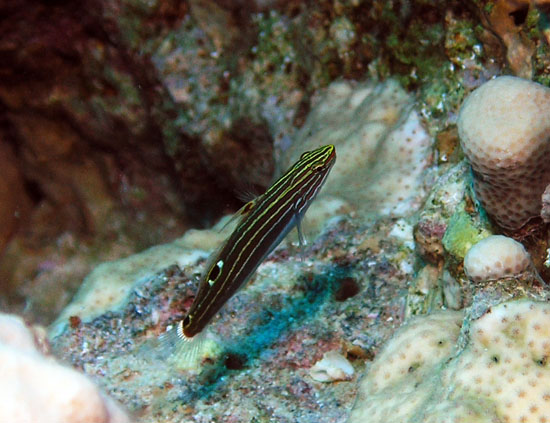
    Image by Rob on Wikimedia

    Their pattern work and coloration are beautiful! They have alternating red/black and yellow stripes running down from head to tail, they have round blotches of black along their dorsal fins and hints of orange around their fins as well.

    They are omnivorous so providing a variation of algae based food and meaty food such as mysis shrimp is important. They will spend much of their time looking for food in rocks and sand. As a final note, Hector’s Gobies are completely reef safe!

    2. Ocellaris Clownfish

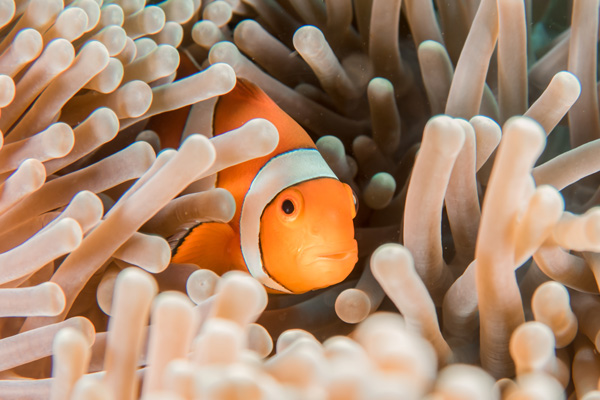
    Everyone knows about the clownfish due to the movie Finding Nemo. Since the release of the movie, clownfish were ferociously taken out of the oceans because many parents wanted “Nemo” at home for their kids. Luckily, the reef-keeping community has successfully found ways to breed clownfish and they are tank-bred to help prevent plucking them out of the ocean.

    Ocellaris clowns, like the Hector’s Goby, max out at around 3″ in length. Having a pair of clownfish is great! The female clownfish (dominant) will be a bit larger than the male. Ocellaris clownfish are perfect for nano reefs because they happily live in aquariums of 20 gallons or larger.

    Besides the common orange clownfish, there are many different variations of ocellaris clownfish due to the extensive breeding that has exploded in the hobby. There are now black & white, snowflake, platnium, and many other clownfish that can be picked up from retailers and online breeders. Also, many captive bred clowns will not willingly host in anemones but can be trained to do so. Check out this guide for tips on how to get a clownfish in an anemone.

    Like many marine fish, the clownfish is omnivorous and will happily take any food provided. A rounded diet of veggies and meaty foods is recommended. They will happily take pellet, flakes, and frozen meat foods. These are incredibly hardy fish and excellent for a new marine hobbyist.

    3. Yellow Clown Goby

    Yellow Clown Gobies are oddly shaped but very enjoyable fish. They always seem to perch themselves in weird positions on rocks, glass, and corals. They’re a very fun and unique fish but great for a nano reef tank. Although they are small, their yellow vibrant bodies makes them pop in any reef system.
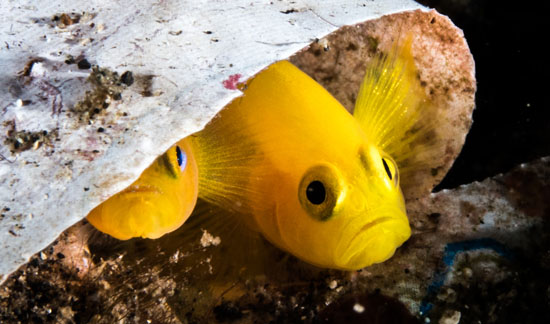
    Image by Rickard Zerpe on Wikimedia

    These fish are small, and they stay small. They max out at about 1.5 inches and are content with calling an aquarium that is 10 gallons or larger home. Clown Gobies are reef safe with most polyp corals but be mindful with keeping them SPS corals because there is a possibility of them nipping at them. They should not bother any other fish except other clown gobies in small enclosures.

    Yellow Clown Gobies are carnivorous fish. It is important to provide them with a variation of mysis shrimp, brine shrimp, and other meaty foods. Learn more about this fish by checking out the Yellow Clown Goby – Complete Care Guide.

    4. Firefish

    The Firefish is a fantastic fish to add to a reef aquarium. Their vibrant white, red, and purple coloration is gorgeous! They have an enlarged dorsal fin which looks like a sabre which adds to their awesomeness!

    The Firefish will be around 3″ when they are fully grown. They are perfectly content with living in an aquarium that is 20 gallons or larger. They are completely reef-safe and will spend a good portion of the day hovering above the live rock waiting for food. It is recommended to provide them with a nice porous rock because they will dart into the holes when startled. They are known to be jumpers so a lid over the tank is also a good idea to have.
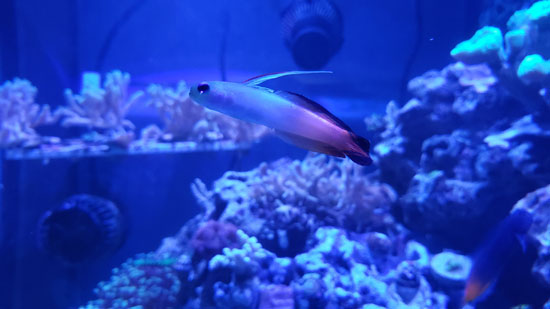
    Firefish are carnivorous. So providing a mixture of different types of meaty food is recommended. They will love brine shrimp (live or frozen) and mysis shrimp. Providing frozen food is much easier for fish but feeding them live brine shrimp is always a fun activity.

    5. Two Spot Goby

    This isn’t a very common goby that is kept in a reef aquarium but I believe this is a great fish to own. Two Spot Gobies have a very unique coloration and body shape. They are primarily white with blotches of brown, black, and yellow to help camouflage into sand. They have an incredibly large jaw and do a fantastic job sifting through sand.

    These fish get to be about 3″ in length when they are fully grown. They do well in aquariums 10 gallons or larger. It is very important to provide them with a nice deep sand bed because they will burrow into it. They also require lots of sand to sift through.
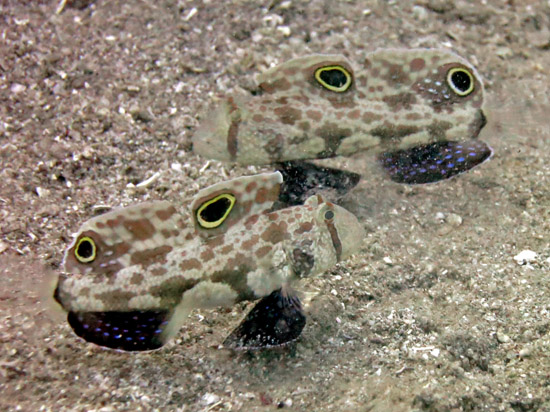
    Image by Lakshmi Sawitri on Wikimedia

    The Two Spot Goby is carnivorous so like many other fish on this list, it’s important to feed them meaty food. It is also a good idea to supplement your aquarium with live copepods to help give them more options if they are picky eaters. Take a look at the Two Spot Goby – Complete Care Guide for more information on this fish.

    Final Thoughts

    All of these are fantastic for a reef aquarium. Some are more common than others and there are plenty more that will do great that aren’t listed. Keep in mind that these fish should not all be crammed together into a nano aquarium. It is recommended to pick one or two depending on the appropriate aquarium size. Adding too many fish will cause water parameters to swing more often and aggression may be seen due to the lack of space. Hopefully, this guide has provided to insight into great nano fish for small reefs.
  • Ocellaris Clownfish for beginners

    Ocellaris Clownfish for beginners

    Clownfish Information

    The ocellaris clownfish is one of the first fish saltwater hobbyists add to their aquarium. They’re hardy, easy to care for, and popular beyond belief but sometimes go by another name (Nemo). They can become territorial so if a hand is in the aquarium, don’t be surprised to feel a pinching bite from a clown.

    There is a pretty common fact that some may not know. Clownfish are born male and the dominant one in the pair becomes the female. Another interesting bit of info is that female clowns become larger than males. If a female passes away, the male will pair with another female or find another male and will fight for dominance to become a female. If/when a male turns into a female it cannot transform back into a male. Only one pair of clowns is recommended for a fish tank. Any more and there will most likely be quite a bit of fighting which stresses the fish out or can cause harm to them. If one of the fish passes away, it is best to replace it with one of a similar size. For example, try not to introduce a 4″ clown with a 1.5″ clown and hope they pair.

    Many new hobbyists begin their saltwater journey with the common ocellaris clown. Once experience is gained and saltwater aquarium knowledge grows, people find interest in the rarer species of clownfish. Such as snowflake clowns or black ocellaris. There are many other variants of ocellaris clowns to choose from. This guide was made to provide a complete care guide to keeping clownfish.

    Aquarium Requirements

    Ocellaris Clownfish can grow to a size of roughly three inches. It’s not recommended to keep clowns in aquariums smaller than 20 gallons, due to their length at adulthood. Clownfish have very similar water parameters to most other saltwater fish which are:

    • Temperatures between 72 and 78 degrees Fahrenheit
    • dKH levels between 8 and 12
    • pH between 8.0 and 8.4
    • Salinity levels between 1.020 and 1.025 sg.

    Providing these water parameters is key to keeping a clown happy but keeping them stable is also important for their long-term health.

    It is beneficial to provide live rock in the aquarium so your fish has places to hide when stressed. An anemone is a fantastic addition but it is not mandatory to have for your clownfish.

    Anemone Hosting

    Be aware that many tank-raised clownfish will not automatically go into an anemone and host In it. Sometimes it is quite tricky to get them to do so. There are a few things to try to get them to host in an anemone.

    First, if the fish is already in the aquarium, place a video or image of clownfish swimming in anemones against the glass. This may give them the urge to try and do the same. They may see other clowns safely swimming through anemones and instinctively be drawn to them.

    clownfish in anemone

    Second, if the anemone is in an established aquarium, and new clownfish are being introduced, try to put the netted clownfish into a translucent tube. Make sure the tube is wide enough so the clowns can safely travel through it. Also, be sure the end of the tube is almost touching the anemone. When the fish make their way down, it will force them to come into contact with the anemone which may cause them to host in it.


    Third, give it time. Sometimes clownfish will naturally make it’s way to an anemone and host it. I have had them a host in many other things such as frogspawns, torch coral, and green star polyps. Clowns are oddballs but they figure it out eventually.


    Lastly, it’s ok if the clowns don’t host in an anemone. It is remarkable to see them spend all day rubbing against the anemone’s tentacles, feeding it, and just doing their thing but if they are being very stubborn and won’t host, it is not worth stressing them out more than necessary.

    Clownfish Food & Diet

    They should readily eat any type of food offered such as flakes, pellets, or frozen food. Providing different types of food will assist in giving your fish a well-rounded diet! If for some reason your clownfish does not want to eat, try mixing your food with garlic or garlic extract. You can read about feeding garlic to your fish here.

    Tank Mates

    Clownfish do well with most saltwater fish but do not keep them with fish that will try to eat them such as eels, groupers, lionfish, and most other predatory fish. Instead, try to keep clownfish with more peaceful fish such as:

    • Dwarf Angelfish
    • Tang
    • Gobies
    • Chromis
    • Wrasse

    Most types of marine fish are compatible with clowns. Clownfish are also completely reef safe and will not bother coral or invertebrates! They may occasionally attempt to host euphyllia or other coral with tentacles.

    Breeding Clownfish

    If a bonded pair finds an aquarium suitable there is a chance of them laying eggs and producing offspring. Eggs are commonly eaten by other animals in the aquarium without human intervention. Clownfish will often breed in a display tank with no additional work required.

    Building clownfish breeding tanks are pretty straightforward. Many breeders use a 10-gallon aquarium for a pair of clowns. Connect the breeding tank to a sump for filtration. The aquarium itself should be bare bottom with only a clay pot (3 – 5 inches) or pieces of clay tile. The sump should have a heater, protein skimmer, and live rock.

    Keeping water parameters pristine is very important. Also, feed your clownfish a variety of foods at least twice a day to increase their body size to prepare them for breeding. Temperatures can sit around 78 to 80 degrees to motivate your clownfish to breed.

    Egg Care

    It will take roughly 6 to 8 days for your eggs to hatch! Before eggs hatch prepare live food to give them something to eat right after hatching. Feed live rotifers when eggs first hatch then baby brine shrimp after a few days of growth. Setting up a hatching tank will make it easier to care for your eggs and fry. Clownfish eggs will always hatch at night and require total darkness.

    Set up your hatch tank with a heater, sponge filter, and air stone. Seed your sponge in the breeding tank a few weeks before putting it into the hatching tank. Also, be certain that the aquarium, heater, and air stone are cleaned well with hot water before setting up.

    Place the aquarium in a dark location and completely cover all sides with black construction paper or anything that will block out the light. Cover the light that’s on the heater with black electrical tape. Provide a light but be sure to have it incredibly dim because too bright light can kill newly hatched fry.

    Hatch Day

    On hatch day, remove the eggs from the breeding tank and place them into the hatching tank. Before that, make sure the heater’s temperature is the same as the breeding tank. Keep your hatch tank light schedule the same as the breeding tank schedule.

    Place the eggs into the breeding tank and adjust the air stone so that air is flowing over the eggs. This is crucial because eggs need movement to stay alive. A few hours after the lights go out, the eggs should hatch. A very dim flashlight can be used to check.

    Begin feeding live rotifers many times a day and check the water parameters to make sure that ammonia, nitrates, and phosphates do not spike. Fry are very sensitive to water parameter changes so keeping things low and stable is important!

    Final Notes

    Clowns are very fun fish with unique personalities. They’re great as introductory fish into saltwater aquariums but also amazing animal companions in the long term. They can get territorial but the little nibbles are worth dealing with. If you’re looking to learn about other saltwater fish, check out the growing list of care guides for saltwater fish.