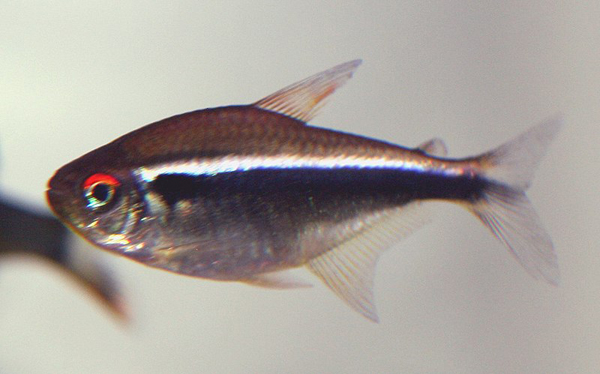
Finding the best tank mates for your aquarium can be a challenge. Not all fish get along well, some get incredibly large, and some are downright aggressive. This list contains what I believe are some of the worst fish that people add to their community tank. Many of these fish are mistaken for community fish, or start off without issue but become problematic in an aquarium as they grow. This list is just my opinion, others may have different experiences which differ from mine.
1. Red Tail Shark

The Red Tail Shark is the first on the list that many incorrectly identify as a community fish. After years of working at a fish store, I have learned that people radiate towards Red Tail Sharks. Many people love the unique coloration of this fish.
Red Tail Sharks are fantastic fish. They’ll happily search for and find food that’s on the substrate and they’ll also consume algae on different surfaces including plants. The problem with Red Tails is their temperament. They can be territorial and will bully fish. They do better in a semi-aggressive aquarium. I’ve seen them succeed with peaceful fish, but I do not recommend taking the risk of adding them into one.
Alternative to Red Tail Sharks
Not many fish can replace a Red Tail Shark’s unique red and black color. However, plenty of fish utilize the same space as this fish that are also peaceful. The following are two fish examples that may fill the same space that a Red Tail Shark uses in an aquarium.
Corydoras
Corycats are fantastic bottom-dwelling fish. There are many different species of Corydoras, but they’re all peaceful fish that do best in shoals. They won’t bother other fish and will spend most of their time perched at the bottom of the fish tank waiting for food. I don’t think I have met anyone who regretted adding Corydoras to their community aquarium.
Siamese Algae Eater
If you’re looking for a fish that has a similar shape to a Red Tail Shark, check out the Siamese Algae Eater. It’s an active but great fish to add to a community fish tank. Siamese Algae Eaters are a fantastic choice for fighting algae and can be a great addition to your community tank’s clean-up crew. They’ll grow to about 6 inches when fully grown but don’t often bother other fish. If algae issues are plaguing your aquarium, take a look at Common Causes of Algae Blooms in a Freshwater Aquarium. There might be something going on in the fish tank that should be taken care of before adding more fish, and it’s important to diagnose what is happening.
2. Bala Shark

The appearance and personality of a small Bala Shark can be misleading. They do great in schools, have a bright silver color, and are very active. These are all fantastic criteria in a fish. The downside is the size they reach when they’re fully grown. Bala Sharks grow to be about 14 inches (35 cm) when they’re adults. With this size comes a great appetite and small community fish will likely become food. Besides the appetite, you’ll need a large aquarium once your Bala Sharks grow. I recommend at least a 150-gallon fish tank to provide room for a school of them.
Bala Sharks are gentle giants. They shouldn’t bother fish that they don’t see as food. They can technically be kept with larger tetras and other large peaceful fish. If it doesn’t fit into their mouth, the Bala Shark should leave it alone.
Alternative to Bala Sharks
There are many fish that are vibrant in color, are active, but are more peaceful and won’t get nearly as large as this fish.
Denison Barbs
Denison Barbs are peaceful fish that will do great in a larger community aquarium. They only grow to around 4.5 inches which is much easier to handle for your average fishkeeper. They also enjoy swimming in schools of at least 6 individuals.
Rainbowfish
There are a variety of rainbowfish to choose from. My favorites are the Neon Dwarf Rainbow and the Boesemani Rainbow. Both are very active fish, great schoolers, and very vibrant in color.
3. Common Pleco (Suckermouth Catfish)
I do not recommend purchasing Common Plecos unless you know someone with a large fish tank or plan on setting up a larger aquarium soon. They’re great at eating algae but they will be just shy of 2 feet in length when they’re fully grown. Many fish tanks cannot appropriately house them their whole lives. Unfortunately, this fish often finds its way into lakes, rivers, and streams because negligent aquarium keepers release them once they get too large. They can dominate waterways because they are an invasive species in certain parts of the world and wreak havoc on the fish populations.
Alternative to Common Pleco
There are plenty of fish that will happily eat algae. There are also great invertebrates that help control algae in a fish tank. If possible, try to avoid getting a Common Pleco and look to other avenues for algae-eating fish. Besides the options listed below, check out 9 Best Bottom Feeders Fish For Freshwater Aquariums.
Bristlenose Pleco
Bristlenose Plecos are a classic alternative to the enormous Common Pleco. This fish species grows to about 6 inches when it’s fully grown. Male Bristlenose Plecos also acquire a face full of “bristles” which adds to their charm. They’re great fish to have to keep algae away.
Freshwater Invertebrates
You may get away with a clean-up crew of freshwater invertebrates. In large numbers, different species of shrimp and snails may fill the niche that a Common Pleco usually holds.
4. African Cichlids

Many people see the vibrant colors of African Cichlids and want them in their community tank. I do not recommend keeping African Cichlids in a peaceful community aquarium. They are aggressive and can dominate most fish that are in the aquarium. African Cichlid’s water parameter needs do not match what is commonly put into a community aquarium. Most African Cichlids require very hard water with high pH levels. The African Cichlid does best with other African Cichlids.
Alternative to African Cichlids
The colorations of African Cichlids compete with the vibrant colors of saltwater fish. Finding an alternative to these fish’s color is incredibly hard in a freshwater aquarium. A lot of cichlid species are also deemed semi-aggressive and are not often suggested for community fish tanks. You’ll often run the risk of having your cichlids become aggressive in an aquarium, especially if they decide to spawn.
Scarlett Badis
One alternative that resembles a cichlid without aggressive tendencies is the Scarlett Badis. This fish species is quite peaceful and is considered to be timid. They’re micro-predators and will spend their day searching for small shrimp, scuds, copepods, and other tiny invertebrates. Scarlet Badis have vibrant red colors and make for an eye-catching addition to a peaceful community tank.
5. Pea Puffers

Pea Puffers are amazing fish. They have wonderful personalities and (in my opinion) display a different type of intellect compared to other fish. It’s hard to explain Pea Puffers unless you’ve kept them. Unfortunately, this fish species can be aggressive and are notorious fin nippers. I’ve seen them nip on small, big, peaceful, and aggressive fish. They just don’t care which makes them less than ideal candidates for community fish tanks.
Besides their nippy personalities, Pea Puffers are often filled with parasites, partly because of the foods they eat. The parasites must be treated otherwise your Pea Puffer will slowly lose the battle to the parasite. Also, Pea Puffers can be challenging to keep due to their picky diets. I’ve had some that eat live snails and shrimp. I’ve had others that only eat live shrimp and different ones that only eat live snails. The goal is to get them to eat frozen bloodworms, but that’s not always possible.
Alternative to Pea Puffers
It’s hard for me to think of an alternative for Pea Puffers. The amount of personality and quirks you get in such a small package is hard to replicate. The following fish are just suggestions that might vaguely replace the charm of this fish.
Betta Fish
The Betta is much bigger than a Pea Puffer and they look nothing alike. I chose them solely as an alternative to Pea Puffers due to their personalities. I love the personality of Betta Fish. They explore the aquarium, are curious, seem to recognize you when you’re around the fish tank, and are all-around great fish to keep.
Bumblebee Goby
If you’re looking for something small, that stays small like a Pea Puffer, check out the Bumblebee Gobies. They’re incredibly tiny, bottom-dwelling fish that are usually peaceful and great candidates for a community tank. They will claim a spot in the aquarium and defend it from other fish. Be mindful because they can get mischievous and nip long-finned fish like Bettas.
6. Tiger Barbs

I remember growing up, and not knowing much about Tiger Barbs and mistakingly adding a handful into an aquarium. Little did I know that Tiger Barbs would chase and pester other fish for an assortment of reasons. They’re beautiful fish, and I love seeing aquariums with large schools of them, but they’re not a great choice for community tanks because of their fin-nipping habits.
Alternative To Tiger Barbs
The color and stripe patterns of the Tiger Barb are iconic and it’s there aren’t many fish that can match that. I have listed a handful of fish that should do well in community aquariums but are not as aggressive as Tiger Barbs.
Other Barbs
There are quite a few barbs that are considered peaceful and aren’t as nippy as Tiger Barbs. Hexazon Barbs look the most similar and should not bother other species of fish if they’re in large enough schools. Besides that, Rosy Barbs, Gold Barbs, Snakeskin Barbs, and Cherry Barbs are other species of barbs that are excellent options for community tanks.
Medium Sized Tetras
If you like the shape of Tiger Barbs, there are a few medium-sized tetras that vaguely resemble them. Check out Black/White Skirt Tetras, Bleeding Heart Tetra, Candycane Tetras, and Pristella Tetras. These five options slightly resemble Tiger Barbs, are great schooling fish, but they’re far more peaceful.
7. Goldfish
Goldfish come in a variety of shapes, sizes, and colors. At the end of the day, most goldfish have similar traits. First, Goldfish get big and require large fish tanks or ponds to be happy long-term. Second, Goldfish are great candidates for cool water aquariums. Lastly, Goldfish are incredibly messy fish. They produce more poop than one can imagine and need great filtration and water changes to keep the water parameters in check.
Alternative to Goldfish
If you’re looking for large orange fish that can do well in community tanks, you might want to consider Swordtails. They’re peaceful fish that come in many colors, including vibrant orange. Males have a beautiful “sword” on their tail which adds to their charm. Be mindful because they are livebearers and if males and females are present, you may get a plethora of Swordtails over a short period.
8. Columbian Shark
I’ve seen quite a few people who wanted to add Columbian Sharks to their community tanks. Columbian Sharks are one fish that I believe should not be kept in the hobby. I say this because many novice fishkeepers get these fish without knowing how to fully care for them.
Columbian Sharks have a unique quirk. They’re technically brackish water fish but are often sold as freshwater fish. They might be fine in freshwater aquariums when they’re small. However, they slowly need to be transitioned from freshwater to brackish water, and converted to full saltwater as they get larger.
9. Giant Danio
Giant Danios aren’t necessarily bad options for a community fish tank. They’re great fish that bring a different energy into an enclosure. Their charm is how active they are in the fish tank. They swim, all the time. I’m not sure if they ever stop. Unfortunately, their charm is also their downfall. Giant Danios’ active personalities can passively scare other fish, especially during feeding time. They hog food so you’ll have to spend time distracting these fish to feed your other fish.
Alternative to Giant Danio
Giant Danios can be kept successfully in freshwater community tanks. They’re not necessarily my go-to option because of their incredibly active personalities. However, it’s all about preference in this hobby, and there is no single correct option. If you enjoy Giant Danios, it never hurts to give them a try in your fish tank.
Small Danio Species
If you’re looking for an active fish that won’t be as big of a bully as the Giant Danio, consider getting Zebra Danios. They’re much smaller and are very active. As a bonus, they are often incredibly cheap at fish stores.
10. Dwarf Gourami

Dwarf Gouramis have jaw-dropping colors and have a very unique appearance to them. They’re probably one of my favorite freshwater fish, but I don’t keep them. They can be great in a community tank, but I avoid them because they are sensitive. Sadly, a combination of inbreeding and a virus (Iridovirus) is wreaking havoc on the species making them incredibly hard to keep for long periods. You may get a great specimen that does great its full life, but most often, you’ll get one that slowly fades away and dies over time.
Alternative to Dwarf Gourami
It’s unfortunate that Dwarf Gouramis can be affected by such a detrimental disease. Luckily for us, there is a smaller species of Gourami that is not affected by the virus. The Honey Gourami is the species I usually choose when shopping around for Gouramis.
Honey Gourami
Honey Gouramis are pretty much a bite-sized version of the Dwarf Gourami. They have shy personalities but are an excellent choice for a community tank. Honey Gouramis can do well with others of their species and are often kept in pairs. However, I recommend avoiding keeping them with other types of Gouramis, like Dwarf Gouramis and fin-nipping fish.
Final Notes
There are countless freshwater fish that are available to choose for your aquarium. Researching a fish’s husbandry needs and compatibility with other fish is incredibly important. Unfortunately, the internet is loaded with a range of opinions. This includes the information I am providing. I am fairly knowledgeable about many fish due to my long history of keeping fish and time spent working at fish stores. I do my best to research fish I may not have a complete understanding of. If you have experiences with fish and would like to share don’t hesitate to reach out. I am always looking to add more content to this website.
What’s The Deal with Danios?

Roseline Shark – Complete Care Guide
Roseline Shark Information The Roseline Shark or sometimes known as the Roseline Torpedo Shark, Roseline…

10 Best Aquarium Plants For Beginners