Tag: complete care guide

  • African Butterflyfish – Complete Care Guide

    African Butterflyfish – Complete Care Guide

    African Butterflyfish Information

    The African Butterflyfish is an oddly shaped but very beautiful freshwater fish available in the aquarium keeping hobby. It is unique because it sits right under the water’s surface, resembles a butterfly/bird, and can actually glide a little if it jumps out of the aquarium. As a disclaimer, please do not allow this to happen! The African Butterfly grows to be about 5 inches so it does not get incredibly big but may try and eat anything that will fit into its mouth. This article will go over aquarium requirements, food & dietary needs, compatible tank mates and breeding habits of the African Butterfly Fish.

    Aquarium Requirements

    The African Butterfly Fish spends most of its time just under the water’s surface. An aquarium with slower water movement is best suited for this fish. This can be hard to achieve because filtration systems naturally create varying rates of water movement.

    Because of its adult size, an African Butterfly should not be kept in an aquarium smaller than 30 gallons. To keep more African Butterfly Fish, you should also consider providing even more space. Although they are usually mild tempered, they can get a little aggressive so providing plenty of space should deter most aggression.

    African Butterfly Fish are unfortunately excellent jumpers (and gliders). A well fitted lid is a must in the aquarium. Otherwise, this fish has a good chance of escaping. Furthermore, provide plants that reach close to the water surface. This will give this fish places to hide when startled or stressed.

    This species of fish is hardy regarding temperature but the pH in the aquarium will need fine tuning. The African Butterfly Fish does best in the following water parameters:

    • Temperature: 75°-86° F
    • pH: 6.5-7.5
    • KH: 1-10

    Luckily, the pH requirement is neither incredibly acidic or basic. It sits right around neutral which should be fairly easy to achieve. Be careful when using buffers to lower or raise pH. Overdosing certain buffers can cause your system to crash with a sudden drop or increase in pH levels. Stability in water is very important to keep your fish and system healthy!

    Food & Diet

    This species of fish is carnivorous. It waits right under the water’s surface for prey to come close or fall in the water and the prey quickly becomes a meal. However, the African Butterfly Fish food type provided by you, as a keeper, can vary. This fish species can eat bloodworms, brine shrimp, Mysis shrimp, Beef Heart and much more meaty foods found in pet stores. If you are feeling adventurous, you can step outside and catch flies and moths to feed your African Butterfly Fish. Be careful because foods caught outside can bring parasites, bacteria and diseases into your fish tank. It is really fun watching the African Butterfly eat.

    Tank Mates

    African Butterfly Fish’s tank mates should be both for the most part be larger in size and peaceful. This species of fish will try eating anything that will fit into its mouth. Smaller fish such as: tetras, rasboras and guppies are not recommended. Furthermore, hatchet fish use the same space as the African Butterfly Fish and also not recommended. I have heard success stories of keeping smaller species of fish with African Butterfly Fish, but it’s always a big risk to do so.

    African Butterfly Fish do great with larger and peaceful fish such as Severums, Angelfish, Rainbowfish, Denison Barbs and Blood Parrots. They will get harassed by aggressive cichlid species like Jack Dempseys, Tiger Oscars and so on. Be mindful of the species you add with this fish. Some may either be too aggressive, too small, or live in incompatible water parameters.

    Breeding

    You will need a few things to successfully breed African Butterfly Fish. You will of course need a male and female willing to breed. I would highly recommend adding Salvinia, which is a floating plant, in the aquarium that has the breeding adults. The eggs will more than likely float to the top of the aquarium and the plants will help protect them.

    The breeding African Butterfly Fish will need to go through a “natural” breeding season. We will recreate the breeding season in an aquarium setting. The two key factors to successfully breeding this fish species are water level changes and water temperature changes. The temperature should sit between 77° and 80

    The breeding African Butterfly Fish will need to go through a “natural” breeding season. We will recreate the breeding season in an aquarium setting. The two key factors to successfully breeding this fish species are water level changes and water temperature changes. The temperature should sit between 77° and 80° F. The more important thing to do is to lower the water level a few inches. Some aquarists lower the water level to where only a few inches are left. This will be impossible in an aquarium with other fish.

    Once water levels are lowered, wait a few days and you should see the fish breed. Increase water levels and if you’re lucky you will see your fish release eggs. I would recommend scooping the eggs up and putting them into their own containers. Otherwise, the adults will eat them. Once the eggs hatch, they must be consistently fed live baby brine shrimp until they are old enough to eat other foods.

    Final Notes

    African Butterfly Fish are very interesting and unique fish that are great additions to specific aquarium types. They have certain requirements that may not work well with all fish. Breeding is fairly easy for these fish but keeping the young alive may be a challenge. If you’re ever at a pet store, check out African Butterfly Fish. Also, take a look at Atparium for more information on fish, reptiles, crustaceans and more!
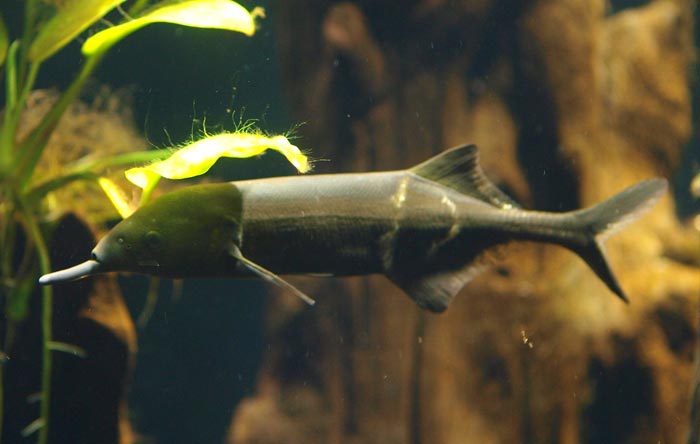
    Image by Vassil on WikiMedia

  • Elephant Nose – Complete Care Guide

    Elephant Nose – Complete Care Guide

    Elephant Nose Information

    The Elephant Nose is a very unique fish that is sometimes forgotten about in this hobby. It’s easy to skip out on a fish that doesn’t have flashy colors and hides a good portion of the day. However, you should really look passed that and check out this oddball! The Elephant Nose is an oddly shaped fish with a part of it’s body that looks like an elephant’s trunk. It uses this trunk to look for food, for self defense and communication. Furthermore, this fish releases very weak electrical signals (like sonar) to help find food.

    Be patient with the Elephant Nose because they are incredibly shy and reclusive animals. They will often dart and hide into caves to avoid contact with humans. Overtime and with a lot of patience it should get more comfortable with you. It will grow to be about 9 inches in length when fully grown but will still find ways to hide from you.

    Aquarium Requirements

    Elephant Nose does best in aquariums that are 50 gallons or larger. Because of their length as adults, I would personally keep them in nothing smaller than a 75 gallon aquarium. They do great in planted aquariums filled with rocks and wood where they can hide to get away from the commotion of the aquarium. Many hobbyists will purchase a clear plastic tube to mimic a cave. This gives the Elephant Nose cover but still allows you to view it. This species of fish also does best with fine gravel over large stones or sand.

    Like with many other fish, I would recommend providing a cover or lid for the aquarium because this fish can potentially jump out of the aquarium. That not the most common escape artist but there’s always a possibility.

    Although it has a fairly decent range of water parameters that it can be kept in, the Elephant Nose should be kept in the following ranges:

    • Water Temperatures between 73° and 80° Fahrenheit
    • pH Levels between 6.5 and 7.0
    • KH levels between 0 and 10

    At the end of the day water stability is probably one of the most important aspects of an aquarium. Be very mindful of how stable your water is.

    Food & Diet

    Elephant Nose are carnivorous fish. As a result, you should provide frozen food such as bloodworms and Mysis shrimp. Furthermore they will love eating cut up earthworms as well as pellet and flake food. Only give brine shrimp as an occasional treat because it is not very rich in nutrients. I would recommend providing a variety of foods to give Elephant Nose a broad spectrum of nutrients.

    Tank Mates

    The Elephant Nose does well with larger and peaceful fish. They will not do well with fish that are smaller such as Neon Tetras, Harlequin Rasboras, Ember Tetras and many others. They will do great with fish such as:

    • Denison Barbs
    • Angelfish
    • Blood Parrots
    • Rainbowfish
    • Black/White Skirt Tetras

    All these fish are larger so should not become a snack for the Elephant Nose. They are also peaceful and should not harass the Elephant Nose. There are many other fish that will do well with this species, I only named a few to give some ideas.

    The Elephant Nose is not recommended to be kept with other fish that give off electrical currents. Specifically, it is not recommended to keep multiple Elephant Nose fish or Ghost Knifes with this. The electrical currents that these fish release will cause stress to the others. The battling electrical currents will over time lower the fish’s health which will cause it to die.

    Breeding

    Breeding Elephant Nose is incredibly difficult if not impossible in an aquarium setting. The fish is highly aggressive to another fish of the same species. The dominant fish will pick on the weaker one until the weaker of the two dies. On top of that, it is practically impossible to distinguish whether an Elephant Nose is male or female.

    Final Notes

    The Elephant Nose is an incredibly unique fish that can be kept in the aquarium keeping hobby. It is an amazing talking point and anyone interested should really look into getting one. The interesting shape and colorations of this fish will keep you enjoying every moment of owning it.

    Image by OpenCage on wikiMedia

  • Rope Fish – Complete Care Guide

    Rope Fish – Complete Care Guide

    Rope Fish Information

    Rope Fish are a very unique species of fish in the aquarium hobby. This fish has similar characteristics to eels but are instead more closely related to Bichirs. This freshwater fish has a interesting feature. It will gulp fresh air from the water’s surface using its modified swim bladder. Furthermore, Rope Fish are very curious fish with fantastic personalities, that is when you get to see them. They are nocturnal and will more than likely be more commonly seen moving at night. In the wild, they use the cover of night to hunt their prey. Although they lack great eyesight, they still manage to hunt and take down prey such as insects, amphibians and crustaceans. This guide will go over the many characteristics and needs of Rope Fish. I will discuss aquarium requirements, food & diet, compatible tank mates, and breeding habits of the Rope Fish.

    Aquarium Requirements

    Although Rope Fish are not “beefy” animals, they still should be kept in aquariums that are 50 gallons or larger because what they lack in width they make up for in length. Rope Fish can reach lengths larger than a foot. Furthermore, they are social animals and ideally should be kept with other Rope Fish. Similar to eels, Rope Fish are amazing escape artists so it is highly recommended to keep a good lid on the aquarium. They could find some pretty small holes to jump through.

    Rope Fish love to dwell in aquariums that are heavily planted, with many nooks and crannies for it to hide in. Besides plants, branching and regular driftwood should be provided for this fish to give it varying spaces to hide. They love to move along the substrate so keep in mind that the substrate should be easy to traverse. The best would be fine gravel or sand for parts of the aquarium. Rope Fish are often found in slow moving waters in the wild, so your aquarium’s water flow should be very gentle to replicate that.

    Since your Rope Fish loves to dwell in aquariums with plants, your water parameters should reflect that. They will do best in the following parameters:

    • Temperature between 72° and 82° Fahrenheit
    • pH Levels between 6.0 and 7.5
    • KH levels between 8 and 22

    They have a fairly large range that will keep them happy. With many if not all fish, keeping stable water parameters is key to keeping your fish healthy.

    Food & Diet

    Rope Fish are carnivorous animals and should be fed foods rich in proteins. When they are smaller, foods such as bloodworms and tubiflex worms are great choices. Once the Rope Fish grows, foods such as worms, crickets, other insect larvae and beef heart are excellent sources of protein for the Rope Fish. Live foods are beneficial for this fish but frozen bloodworms and beef heart can be purchased at most pet stores. Remember to thoroughly thaw the food before feeding your Rope Fish.

    Tank Mates

    Rope Fish are very peaceful animals. However, like most fish, they are also opportunistic. With this in mind Rope Fish should not be kept with anything that can fit into their mouths. I would not recommend keeping them with fish such as Cory Cats, Neon Tetras and anything with that similar size. They will do great with fish such as:

    • Denizon Barbs
    • Angelfish
    • Severums
    • Blood Parrots
    • Rainbowfish

    These fish are larger in size so they will not be mistaken for food by the Rope Fish. They also are fairly peaceful for fish their size. I would not recommend keeping Rope Fish with larger and more aggressive fish like Red Devil Cichlids, Jack Dempsey Cichlids, and many others. Lookup different fish species here to find out what could potentially be compatible with Rope Fish.

    Breeding

    I personally do not have experience breeding Rope Fish in a home aquarium. I also know that doing so is incredibly hard. Just like many other fish, first you will need a male and female for breeding. Your aquarium should mimic the Rope Fish’s natural habitat as well as possible. Once that is setup and ready to go, slowly increase the temperature of your water to re-create the breeding season for this fish. Once waters are warmed, you may get lucky and see the Rope Fish breed. If you see any eggs laid around the aquarium, I would suggest removing them from the parent’s aquarium and putting them in their own to hatch.

    Final Notes

    Rope Fish are incredibly unique looking animals. They’re very gentle, peaceful, and charismatic fish that could be fantastic additions to a niche aquarium. Provide them with proper care and you may have an aquatic friend that can live 15+ years!

    Image by Trougnouf on wikiMedia

  • Goldfish – Complete Care Guide

    Goldfish – Complete Care Guide

    Goldfish Information

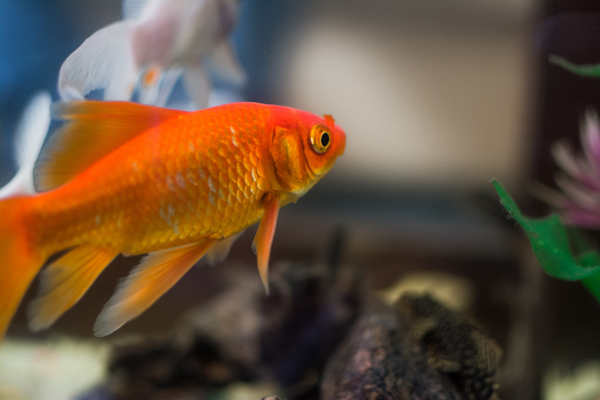
    Carnival season always brings an influx of goldfish into the house. They’re a hot prize; as a kid, I have fallen victim to bringing one home. Not to say there is anything wrong with goldfish, but the care was not what I expected. Many believe a goldfish will do fine in any old fish bowl. Humans have done this for decades, but it’s not good for the goldfish and will cause headaches over time. Goldfish are messy and create lots of waste. They are also vibrant orange with great personalities and a thrill to keep as pets.

    To start, goldfish do not have a stomach to store food. What does not get digested pretty much comes out of the body as waste. This can cause problems in a small enclosure such as a fish bowl. The smaller the body of water the more prone it is to parameter changes, especially in a bowl that most likely does not have a filter. A pooping goldfish will increase the levels of ammonia, phosphates, nitrates, and other unwanted chemicals in a small enclosure.

    Goldfish can get fairly large and the idea that a fish will only grow to the size of its enclosure is just a myth. The truth is, a fish’s growth will be stunted, leading to stress, possible bodily deformities, and a shortened life span. A goldfish can grow larger than 12″ (30.48 cm).

    Goldfish Fish Tank Requirements

    When it is fairly small, starting a goldfish in a 20-gallon aquarium is alright, but be mindful that it will grow, and upgrading the aquarium will be necessary, eventually. Goldfish should have a good filtration system such as a canister filter but a larger hang-on-the-back filter may suffice. If you’re in the market for a hang-on-the-back filter check out 7 Best Hang On the Back Power Filters for Freshwater Aquariums. Luckily goldfish are perfectly happy at room temperature so a heater is likely, not necessary to keep them thriving. The water parameters needed for goldfish are:

    • Water Temperature 65°-75° F
    • KH: 4-20
    • pH: 6.5- 7.5

    Goldfish Food & Diet

    Goldfish are a species of carp and are omnivores that will try to eat just about anything that fits into their mouths. They also have the potential of eating plants in an aquarium. There are a few plant species that should survive being in an aquarium with goldfish, such as java fern due to its bitter-tasting leaves. Check out some easy-to-care-for plants, which will likely be fine with goldfish. Some goldfish will still do their best to destroy or uproot live plants in their enclosure. It’s great if you find plants that do well with goldfish, but if you cannot, plastic plants should suffice. They also love to spend a part of their day sifting through the gravel looking for leftover food or algae that may be building up down there. Lastly, goldfish should easily accept pellet and flake food.

    Large Goldfish

    Tank Mates for Goldfish

    Due to their aquarium requirements, slow movements, and ability to inhale many small fish, goldfish are rarely recommended to be kept with anything besides goldfish or koi. Besides eating smaller fish or getting picked on by more aggressive fish, goldfish also prefer being in cooler water, unlike many other tropical fish species. Koi are an exception because they both have similar aquarium requirements. You can easily find goldfish for sale online or in a pet store.

    Breeding Goldfish

    Goldfish can be a little harder to breed compared to fish such as livebearers. They need specific water parameters and an excellent diet before breeding. To help the goldfish begin breeding, gradually change its diet from pellet or flake food to a more meaty diet with brine shrimp and bloodworms. This mimics the start of spring which is their mating season.

    The next step is dependent on already existing water temperatures but the fish tank needs to gradually increase in water temperature. The end goal is to reach a water temperature between 68 and 74 degrees Fahrenheit. A gradual increase is important because quickly swinging temperatures can be dangerous for fish.

    To identify a female goldfish, look at her overall shape which should be smaller and rounder than males. Also, a female’s pectoral fins should be smaller and rounder than males. A male’s pectoral fins should normally be longer and pointier.

    Once mated, the female will most likely lay her eggs on something solid such as a rock or decoration. Do your best to provide different types of hard surfaces so your female goldfish has many options for where to lay her eggs.

    Final Notes

    Overall, goldfish are immensely hardy fish with great personalities. There are quite a few people that enjoy keeping them as pets as well as breeding them with other goldfish. They come in many different shapes and colors so there may be a goldfish out there for anyone! Take a look at ATParium, you can find guides and more information on fish, fish tanks, paludariums, and more!