With so many plant options in the aquarium keeping hobby it can become challenging deciding which plants are great for different types of aquariums. Each plant has its own requirements but there are a few that are fantastic for light aquariums. Before we dive into the list we should consider what else a plant needs. Aquarium lights that release a kelvin rate between 5000k and 6500k is what is usually recommended for planted fish tanks. Also consider the compatibility of fish with your plants. Some fish will nibble or tear up your plants so it’s important to know what you have. Water parameters should be considered. Soft and acidic water are important criteria that need to be met in order for your plants to thrive. Lastly, providing artificial CO2 and fertilizing your aquarium with supplemental nutrients may be important factors at keeping your plants alive.
Once all livestock, lighting type, and water parameters are up to par for plant needs, it is time to start looking at plants to keep in a low light aquarium. This guide will give insight on 5 plants that are great for these type of aquariums.
Anubias
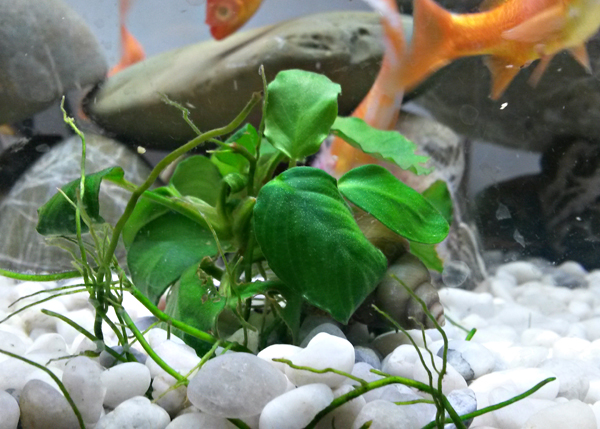
This plant is usually my go to for low light tanks, aquatic jarrariums, and tall paludariums. It is such a cool plant. Anubias does not need to be planted! It can be wedged into gaps in driftwood or placed in between rocks. Try not to crush the roots and bulb when placing this plants between rocks.

Anubias barteri, Anubias coffeefolia, and Anubias nana are probably some of the most common species in this genus. Out of the three, Anubias nana remains the smallest and is more commonly used as a foreground plant. Given enough time, these plants will grow in what look like bushes all over the aquarium with their broad leaves. They’re a fantastic plant to have and excellent for beginner plant keepers. For a more in depth guide to keeping anubias happy follow this link.
Java Fern
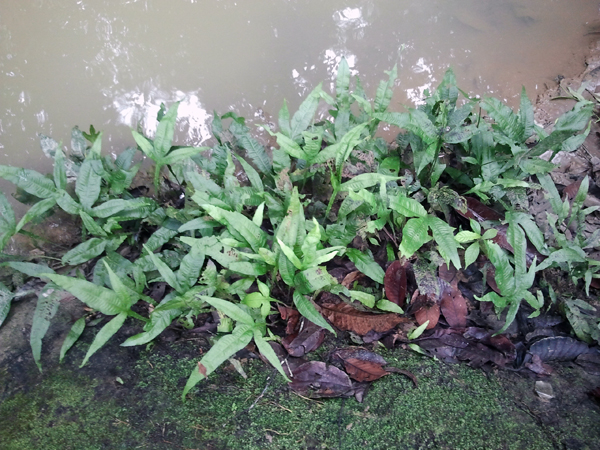
Java fern is a fantastic low light requiring plant. Its long broad leaves are excellent for the background/midground for low maintenance and low light fish tanks. Java fern care is quite similar to the care of anubias. It does not require to be planted and fairs well being wedged into rocks and driftwood. It can stick out of the water because it is amphibious plant and it will primarily spread through rhizomes. The rhizomes themselves should not be buried because they will recede and rot away over time. It is recommended to keep the rhizomes just above the substrate and just bury the roots.

There are two common types of java fern. The regular java fern and java fern windelov. The normal java fern plant has very broad leaves while windelov has far more wispy and laced leaves. Otherwise they are quite similar plants. Both do well in aquarium temperatures around 60 and 80 degrees Fahrenheit, grow well in pH levels ranging from 5.5 and 8.0, and do well in low to moderate light!
One final bonus of java fern is that it is one of few plants that can handle being in an aquarium with brutes like South American cichlids. Like with most cichlids its never a guarantee plants will make it but they fare the best in an aquarium with large cichlids.
Java Moss
Java moss is remarkable for low light aquariums. It is probably the most hardy moss species that is kept in the aquarium hobby. Java moss carpets decor like rock work and driftwood but it does not normally carpet the substrate in your fish tank. This is excellent to use in aquascapes and grows fairly easily under low light conditions.

To grow java moss, a string can be used to attach it to a piece of decoration or if it’s possible, it can be wedged into cracks or gaps in decor. It will very quickly attach and begin spreading. It is great to have because some fish will lay eggs in it, it’s a haven for shrimp, and it adds a different kind of life to rocks and other aquarium decor.
Java moss does well in temperatures ranging between 60 and 80 degrees Fahrenheit and pH levels between 5.5 and 8.0.
Crypts
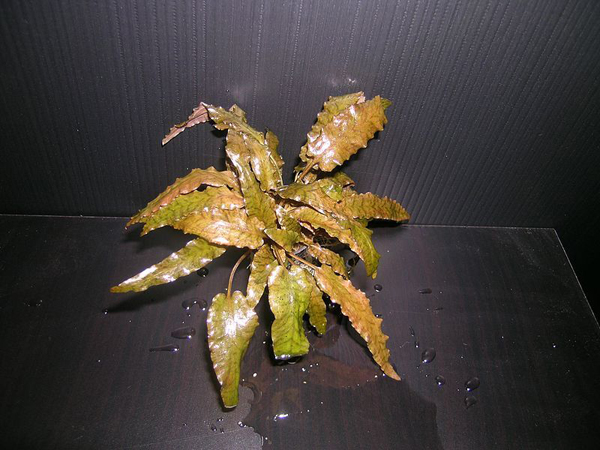
What would a low light aquarium list be without crypts. Specifically, I like to point out Crpytocoryne wendtii and Cryptocoryne beckettii. Both of these plants do very well in low to moderate light aquariums. Their leaf colors will both depend on the amount of lighting that is provided as well as nutrients available in the water. Stable water parameters are a must for this plant because it is possible to rotting at the roots if water conditions are not stable. Under healthy water conditions, this plant will release runners in the substrate and spread to different parts of the aquarium. Overall, this plant is quite hardy and grows very well in the mid-ground of an aquarium.

This plant enjoys being in water temperatures ranging between 75 and 80 degrees Fahrenheit, KH levels between 3 and 8, and lastly pH levels around 6.0 and 8.0. This is quite a versatile plant and excellent for low light aquariums as well as for anyone new to aquarium keeping.
Moss Balls
Moss balls aka marimo balls are very easy to care for in aquariums. They thoroughly enjoy low to moderate lighting and normally dwell at the bottom of an aquarium. It is not desirable to keep them in very bright areas of the aquarium. Marimo balls grow incredibly slow, it may take a few years before you see any difference in size.
When introducing into an aquarium, marimo balls should be rinsed in aquarium water before being added. There is a possibility of them floating once placed into the aquarium. They will naturally fall to the bottom of the aquarium eventually but the process could be sped up a little by giving them a squeeze under water.

If shrimp and other invertebrates are in the aquarium, do not be surprised if you see them gathered on the marimo ball from time to time. They enjoy eating any leftover food that may get caught within. Propagating this moss ball is incredibly easy. Simply take it out of the aquarium and cut it in half. To help maintain the shape, wrap cotton thread around the ball.
Marimo balls enjoy being in aquariums with temperatures ranging from 70 to 80 degrees Fahrenheit, KH levels floating between 3 and 8, and pH levels between 6.8 and 7.5.
Amazon Sword
Amazon swords are a popular plant in the aquarium hobby. They grow incredibly large and dominate the aquarium with this size. This plant should be kept in the background of the aquarium. Amazon swords are not as easy to care for compared to java fern, crypts, marimo balls, or anubias but they are still a fantastic plant to keep in an aquarium. Normally seen in taller aquarium this plant does great alone or in groups. I personally would not keep this plant in a 10 gallon aquarium or even aquariums that are not taller than 18 inches.
To keep them happy and healthy amazon swords should receive iron rich supplements. They do best in water temperatures between 72 and 80 degrees Fahrenheit, KH levels between 3 and 8, and pH levels between 6.5 and 7.5.
Final Notes
Low light aquarium plants are a great starting point for new hobbyists looking to dip their toes in live plants. From easiest to hardest to care for (in my opinion) is the marimo ball, java moss, anubias, java fern, crypt, and lastly the amazon sword. Start with the easiest like the low light aquarium moss stated in the list and move on to anubias and so on. Aquarium keeping requires patience and taking your time will save you a lot of headaches in the long run.