Tag: firefish

  • Helfrichi Firefish – Complete Care Guide

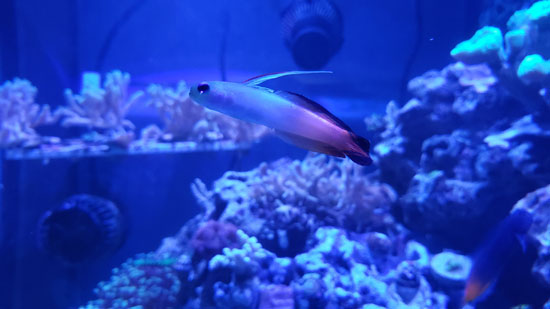
    The Helfrichi Firefish, sometimes called the Helfrichi Dartfish, is a species of fish that is incredibly peaceful, with gorgeous purple, lavender, and yellow colorations throughout its body. Although their dorsal fin does not grow as long as other Firefish species, they are still fantastic fish to keep in a saltwater fish tank. The cost of this fish may scare away some potential buyers, but this could be just the right fish for a certain person. This guide will cover the aquarium needs, food & dietary requirements, and tank mate suggestions for the Helfrichi Dartfish.

    Aquarium Requirements

    Helfrichi Firefish grow to 2.5″ and will do great in saltwater fish tanks that are 20 gallons or larger. They will spend most of their time hovering near and around live rock. I recommend providing them with plenty of rockwork, with different-sized holes so they can choose which crevice to call home.

    Like many species of dartfish, the Helfrichi Firefish is known to jump out of fish tanks when frightened. Something as basic as the lights turning on can cause this fish to dart up and out of the aquarium. I recommend providing a well-fitted lid to help prevent this fish from jumping out of the aquarium.

    Water Parameters

    Keeping water parameters in check is very important to maintaining a healthy ecosystem in a glass/acrylic box. Whether it’s coral or fish, they will not do well if their parameters are swinging constantly, or are out of their normal range. The following are the water parameters that the Helfrichi Firefish will thrive under.

    • Water Temperature: 72°-78° F
    • dKH: 8 – 12
    • pH: 8.1 – 8.4
    • Salinity: 1.020 – 1.025 sg

    Consider getting a High Range pH and KH test kit to test for pH & dKH. Keeping your temperature between 72° and 78° can be accomplished with a heater. Take a look at my guide which showcases some great aquarium heaters. Lastly, I would pick up a Refractometer from Amazon to keep an eye on your salinity levels. If calibrated correctly, refractometers are much more accurate compared to a hydrometer which loses accuracy due to salt buildup on the dial. Check out Different Salinity Reading Tools For Saltwater Fish Tanks to get an idea of other salinity testing devices available.

    Are Helfrichi Firefish Reef Safe?

    Yes, the Helfrichi Firefish is reef-safe. It is a carnivore that consumes microorganisms in rockwork or that are free-floating, but it will not bother coral or other desirable invertebrates.

    Food & Diet

    Due to its carnivorous diet, the Helfrichi Dartfish should be fed an assortment of protein-rich foods. They should readily take Brine Shrimp, Mysis Shrimp, and other frozen fish food. I suggest also feeding them the NewLife Spectrum Marine Formula. Providing a variety of foods gives them a wider range of nutrients, which will aid in keeping them healthy.

    Tank Mates

    Helfrichi Firefish are generally very peaceful fish. They do best with other peaceful fish. They will do great with Chromis, Dwarf Angels, Blennies, Clownfish, Sand Sifting Gobies, Tangs, and many other species of fish. I would be careful when keeping them with fish that use the same space in the aquarium. So I would be a little cautious with Dottybacks, Wrasses, and other similar types of fish. Also, I would not recommend keeping them with aggressive fish or fish that can eat them. So fish such as Eels, Groupers, Triggers, Lionfish, and large Angelfish.

    You can also keep Helfrichi Firefish alone or as a pair. Due to their cost, I would not recommend buying groups and trying to have them “sort it out” amongst themselves.

    Breeding

    Successfully breeding and raising young is either incredibly hard or impossible in a typical home reef tank or saltwater aquarium. I do not have experience breeding Helfrichi Firefish. However, there are plenty of discussions available among fish keepers. Here is a great forum post on reef2reef that discusses how to distinguish between males and females so you can find a pair.

    Final Notes

    There are many different species of Firefish available. The Helfrichi is the most expensive, but some might say it’s the most beautiful. They are gorgeous fish and could be an excellent addition to many reef tanks. If you have any experience with this fish, please don’t hesitate to share it with me.
  • 11 Best Saltwater Fish for 20 Gallon Tank

    Many different species of fish are available to keep in a saltwater aquarium. Searching the internet to find the perfect fish can be an incredible challenge. The amount of information out there can make your head spin. This guide will help you get closer to finding the right fish for your saltwater fish tank. Although many of these fish will not be compatible with one another in such a small fish tank, you’ll at least get an idea of the many fish to choose from.

    1. Firefish

    firefish swimming

    Firefish are relatively common and a more popular fish found in saltwater aquariums. They are peaceful fish that hang out above live rock and will dart into the rockwork when startled. They are generally timid fish and choose to hide when stressed. They are known to be jumpers, so keeping a well-fitted lid on your fish tank is highly recommended.

    There are a few different species of Firefish, the most common ones are the Firefish (Nemateleotris magnifica) and Purple Firefish (Nemateleotris decora). Less common species of Firefish are the Helfrichi Firefish (Nemateleotris helfrichi) and the Exquisite Firefish (Nemateleotris exquisita). Generally, each species will have similar water parameter requirements and grow to similar sizes.

    2. Clown Goby

    citrin clown goby

    The Clown Goby is an interesting fish and is often found resting on corals and rockwork for minutes to hours at a time. They are generally very docile and should not bother other fish in the aquarium. However, they may battle it out amongst themselves in smaller fish tanks. They are generally reef-safe but will nip and bother many stony corals such as Acropora, and possibly others.

    There are a few different types of Clown Gobies available. The Citrinis Clown Goby (Gobiodon citrinus), is also known as the Citrin Goby or the Yellow Clown Goby. This species, as the name suggests has a yellow coloration to it. Next, is the Green Clown Goby (Gobiodon atrangulatus), which has a mosaic of green, orange, and yellow colors on its body. There is also the Black Clown Goby (Gobiodon strangulatus). This species has a black/blue color to it. Last, is the Panda Goby (Paragobius lacunicolus), which has a yellow and orange body with black fins. You can click on any of their names to check out their complete care guides.

    3. Neon Goby

    Neon Gobies (Elactinus oceanops) are incredibly small saltwater fish that would do great in a 20-gallon aquarium. They have black, white, and vibrant blue horizontal stripes on their body. They will generally not bother other species of fish in an aquarium, but they become territorial and will likely pick fights with their own species.

    In the wild, they pick parasites off other fish, but that’s not always possible in an aquarium. Because of this, the Blue Neon Goby should be fed a variety of Mysis Shrimp, Brine Shrimp, and other frozen foods made for carnivores. They should also be fed at least once a day, but twice a day is optimal.

    4. Mexican Barnacle Blenny

    Mexican Barnacle Blennies (Acanthemblemaria macrospilus) are communal saltwater fish and a great choice for a 20-gallon saltwater aquarium. Although they are not as active as most other fish, they’re still a fantastic option. Mexican Barnacle Blennies spend most of their time poking their heads out of crevices in rocks, waiting for food to be put into the aquarium. They will then quickly dart out of the rock and grab the food. The fun part about keeping this fish species is trying to find where they are hiding.

    5. Possum Wrasse

    The Possum Wrasse, sometimes called the Pygmy Wrasse, is an excellent choice for a 20-gallon aquarium because of their unique shape, coloration, and peaceful nature. On top of that, they will hunt for nuisance worms and other microorganisms that may be problematic in your aquarium. They should not bother coral in the aquarium.

    There are two types of Possum Wrasse available. The Yellow Banded Possum Wrasse (Wetmorella nigropinnata) and White Banded Possum Wrasse (Wetmorella albofasciata). Both have similar temperaments and dietary needs. However, the coloration and patterns of both species are different. Check out the Yellow Banded Possum Wrasse – Complete Care Guide for more information on this fish.

    6. Yasha White Shrimp Goby

    Yasha White Ray Shrimp Goby

    The Yasha Goby (Stonogobiops yasha) is an excellent sand-sifting fish for a 20-gallon saltwater aquarium. They have beautiful white, orange, and red colors throughout their bodies and they only grow to about 2.5″. As a bonus, similar to a Watchman Goby, you can pair a Yasha Goby and Pistol Shrimp together to create a symbiotic relationship. There’s nothing better than watching a goby standing guard, while the pistol shrimp is working hard excavating.

    Unfortunately, this goby isn’t as common in the hobby as many other species of goby. With patience, you’re likely to find one for sale from time to time.

    7. Yellow Watchman Goby

    Watchman Goby

    Yellow Watchman Gobies (Cryptocentrus cinctus) are fantastic sand sifters for 20-gallon aquariums. They create burrows along rockwork and spend most of their time excavating and protecting them. The Yellow Watchman Goby is a great fish to pair with a pistol shrimp, but beware because this fish is known to jump out of aquariums. You’re welcome to learn more about this fish by taking a look at the Yellow Watchman Goby – Complete Care Guide.

    8. Pink Streaked Wrasse

    The Pink Streaked Wrasse (Pseudocheilinops ataenia) is another gorgeous fish that is a great choice for a saltwater aquarium. It is reef-safe and only grows to 2.5″. This species of wrasse has blue, red, and yellow colorations with horizontal streaks spread across its body. Unlike similarly looking Sixline Wrasses, this species should not be aggressive towards other fish. You can learn more about this fish by checking out the Pink Streak Wrasse – Complete Care Guide.

    9. Deepwater Candy Basslet

    If you have deep pockets and a cool water aquarium, check out the Deepwater Candy Basslet (Liopropoma carmabi). This gorgeous fish has predominately yellow and pink/lavender horizontal streaks. It will grow to about 2.5″ in length and will do best with varying pieces of live rock to use for cover. It is generally peaceful and is mostly reef-safe, but crustaceans that fit into its mouth may become a meal for this fish.

    10. Swissguard Basslet

    The Swissguard Basslet (Liopropoma rubre) is a gorgeous red, black, and orange saltwater fish with horizontal stripes throughout its body. It grows to about 3″ at full size when it is fully grown. It does best with live rock with plenty of caves and crevices to hide in because this species is known to be fairly shy. It is generally reef safe but may pick on smaller crustaceans.

    11. Royal Gramma Basslet

    The Royal Gramma Basslet (Gramma loreto) is a vibrant purple and yellow saltwater fish that will do great in a 20 gallon reef tank. It is considered a great beginner fish due to its hardy nature. This species of fish does best in aquariums with an assortment of live rock that it can use for cover. It will protect its territory from other fish.

    Final Notes

    Hopefully, this list gives you a good idea of the assortment of fish that can be kept in a 20-gallon saltwater aquarium. As a disclaimer, you cannot cram all these fish into a single 20-gallon fish tank. Many of them will not do well together in such a small fish tank, because of potential territorial disputes. This list is made to showcase what’s out there, and more research is needed to figure out what will do well together. If you already have your saltwater fish tank stocked with fish, check out some fantastic Clean Up Crew Options for Saltwater Aquariums!

  • 5 Great Saltwater Fish for a Nano Reef!

    5 Great Saltwater Fish for a Nano Reef!

    A nano reef is typically considered to be 30 gallons or less. The smaller the aquarium the larger the possibility of swinging water parameters. It is not recommended to add large fish or too many fish in a nano aquarium. Nano reef systems are a challenge but a rewarding experience. This guide will list 5 fish species that will do great in small reef aquariums.

    1. Hector’s Goby

    The Hector’s Goby is a fantastic addition to any reef system. It is a very peaceful fish and it will not bother any fish or invertebrate. It will graze on hair algae that grow in the aquarium and also feast on small worms in the fish tank.

    This goby maxes out at about 3″ in length and it will be perfectly happy living in an aquarium that is a minimum of 10 gallons. They do require a fair amount of live rock with plenty of crevices and hiding spots. They will seamlessly weave in and out of rock looking for food and algae to graze on.

    Image by Rob on Wikimedia

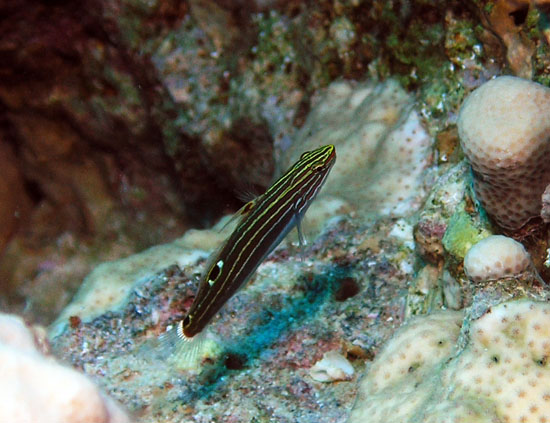
    Their pattern work and coloration are beautiful! They have alternating red/black and yellow stripes running down from head to tail, they have round blotches of black along their dorsal fins and hints of orange around their fins as well.

    They are omnivorous so providing a variation of algae based food and meaty food such as mysis shrimp is important. They will spend much of their time looking for food in rocks and sand. As a final note, Hector’s Gobies are completely reef safe!

    2. Ocellaris Clownfish

    Everyone knows about the clownfish due to the movie Finding Nemo. Since the release of the movie, clownfish were ferociously taken out of the oceans because many parents wanted “Nemo” at home for their kids. Luckily, the reef-keeping community has successfully found ways to breed clownfish and they are tank-bred to help prevent plucking them out of the ocean.

    Ocellaris clowns, like the Hector’s Goby, max out at around 3″ in length. Having a pair of clownfish is great! The female clownfish (dominant) will be a bit larger than the male. Ocellaris clownfish are perfect for nano reefs because they happily live in aquariums of 20 gallons or larger.

    Besides the common orange clownfish, there are many different variations of ocellaris clownfish due to the extensive breeding that has exploded in the hobby. There are now black & white, snowflake, platnium, and many other clownfish that can be picked up from retailers and online breeders. Also, many captive bred clowns will not willingly host in anemones but can be trained to do so. Check out this guide for tips on how to get a clownfish in an anemone.

    Like many marine fish, the clownfish is omnivorous and will happily take any food provided. A rounded diet of veggies and meaty foods is recommended. They will happily take pellet, flakes, and frozen meat foods. These are incredibly hardy fish and excellent for a new marine hobbyist.

    3. Yellow Clown Goby

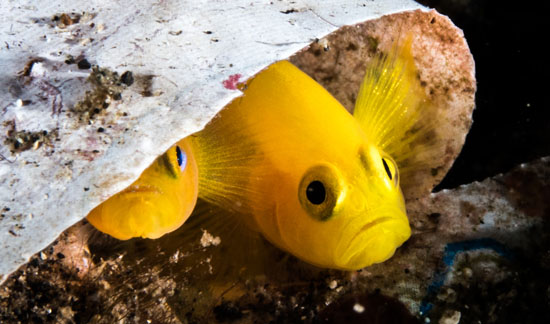
    Yellow Clown Gobies are oddly shaped but very enjoyable fish. They always seem to perch themselves in weird positions on rocks, glass, and corals. They’re a very fun and unique fish but great for a nano reef tank. Although they are small, their yellow vibrant bodies makes them pop in any reef system.

    Image by Rickard Zerpe on Wikimedia

    These fish are small, and they stay small. They max out at about 1.5 inches and are content with calling an aquarium that is 10 gallons or larger home. Clown Gobies are reef safe with most polyp corals but be mindful with keeping them SPS corals because there is a possibility of them nipping at them. They should not bother any other fish except other clown gobies in small enclosures.

    Yellow Clown Gobies are carnivorous fish. It is important to provide them with a variation of mysis shrimp, brine shrimp, and other meaty foods. Learn more about this fish by checking out the Yellow Clown Goby – Complete Care Guide.

    4. Firefish

    The Firefish is a fantastic fish to add to a reef aquarium. Their vibrant white, red, and purple coloration is gorgeous! They have an enlarged dorsal fin which looks like a sabre which adds to their awesomeness!

    The Firefish will be around 3″ when they are fully grown. They are perfectly content with living in an aquarium that is 20 gallons or larger. They are completely reef-safe and will spend a good portion of the day hovering above the live rock waiting for food. It is recommended to provide them with a nice porous rock because they will dart into the holes when startled. They are known to be jumpers so a lid over the tank is also a good idea to have.

    Firefish are carnivorous. So providing a mixture of different types of meaty food is recommended. They will love brine shrimp (live or frozen) and mysis shrimp. Providing frozen food is much easier for fish but feeding them live brine shrimp is always a fun activity.

    5. Two Spot Goby

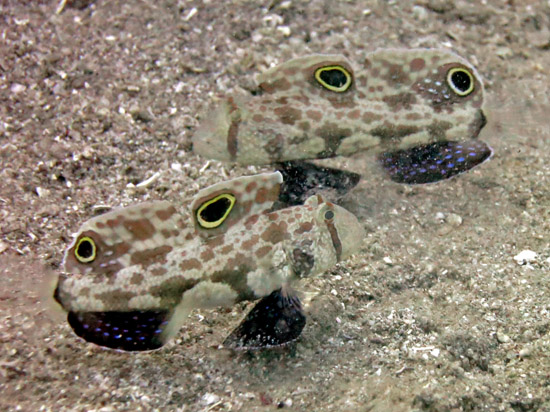
    This isn’t a very common goby that is kept in a reef aquarium but I believe this is a great fish to own. Two Spot Gobies have a very unique coloration and body shape. They are primarily white with blotches of brown, black, and yellow to help camouflage into sand. They have an incredibly large jaw and do a fantastic job sifting through sand.

    These fish get to be about 3″ in length when they are fully grown. They do well in aquariums 10 gallons or larger. It is very important to provide them with a nice deep sand bed because they will burrow into it. They also require lots of sand to sift through.

    Image by Lakshmi Sawitri on Wikimedia

    The Two Spot Goby is carnivorous so like many other fish on this list, it’s important to feed them meaty food. It is also a good idea to supplement your aquarium with live copepods to help give them more options if they are picky eaters. Take a look at the Two Spot Goby – Complete Care Guide for more information on this fish.

    Final Thoughts

    All of these are fantastic for a reef aquarium. Some are more common than others and there are plenty more that will do great that aren’t listed. Keep in mind that these fish should not all be crammed together into a nano aquarium. It is recommended to pick one or two depending on the appropriate aquarium size. Adding too many fish will cause water parameters to swing more often and aggression may be seen due to the lack of space. Hopefully, this guide has provided to insight into great nano fish for small reefs.