Tag: live

  • 3 Easy to Care For Aquatic Plants for Freshwater Fish Tanks

    3 Easy to Care For Aquatic Plants for Freshwater Fish Tanks

    From Plastic To Live Plants

    Having a thriving freshwater-planted aquarium is what many hobbyists strive to achieve. It is an incredible learning curve from owning a fish tank with fake plants and decor to a lush underwater garden filled with live plants. Many different measures must be considered when adding live plants into an aquarium. Primarily lighting requirements and a plant’s supplementary needs. Before really diving into all the different aquatic plants that are available check out the 3 plants that I believe are excellent for beginner plant growers. If you’re a pro at keeping plants and want to test your skills, check out 4 Beautiful Expert-Level Plants.

    1. Anubias

    There are many different varieties of anubias out on the market ready to be scooped up by aquarium keepers. Most, if not all, are incredibly hardy and do well in mid to low-light fish tanks. The anubias usually does quite well without any special fertilization or CO2 systems. They don’t even need to be put into the substrate.
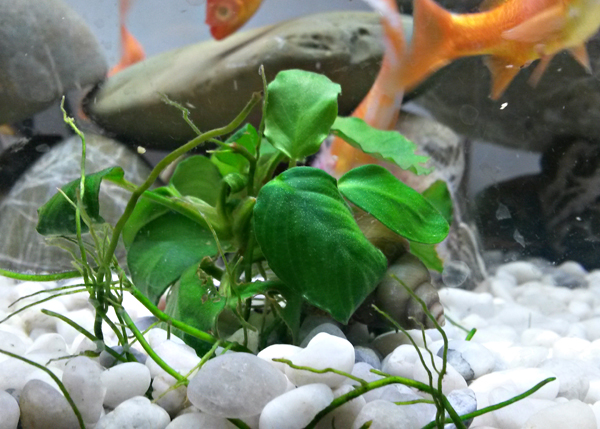
    Image by Colamc on wikimedia

    The anubias can easily be put into driftwood or wedged in between rocks. They’re excellent starter plants for beginner-planted tank keepers. The plant has very broad leaves and helps create a unique structure in an aquarium setting. Check out this guide on anubias care.

    2. Java Fern

    Java fern is an excellent starter plant for aquarium keepers. They are a great mid-ground plant that will do perfectly well living in moderate to low lighting, just like the anubias. Java fern is considered an “amphibious” plant because it can live partially or fully submerged. This plant spreads mainly through rhizomes and can happily take over parts of your aquarium if not managed properly.
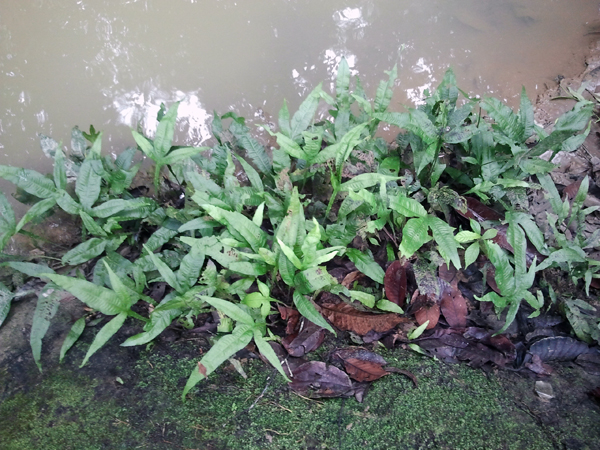
    Image by Fhurzan on wikimedia

    Finding plants that do well with South American cichild’s lively personalities is sometimes hard but java fern should do alright with those gloriously tough fish. It can also be placed on driftwood or in between rocks although it is not as commonly done as with the anubias.

    3. Crypts

    Cryptocoryne otherwise known as crypts are also a fantastic and easy-to-grow plant for a beginner dipping their toes in planted fish tanks. Cryptocoryne Wendtii is more or less the one I am specifically talking about. This plant grows very well in low to medium lighting and it spreads wonderfully through rhizomes.
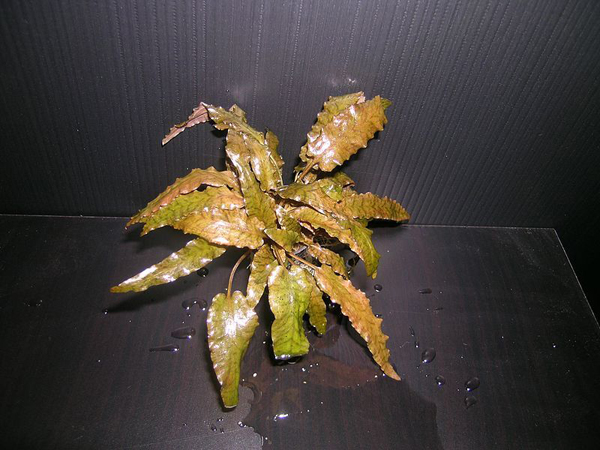
    Image by S. Tanaka on wikimedia

    I had one that spread rhizome from one side of the aquarium to the other. Its leaf coloration will range from green to red to brown which is dependent on how much light it receives and amount of nutrients in the water. It is a plant with a lot of variability and will add quite a bit of personality into your aquarium.

    Final Thoughts

    These 3 species of plants can do very well with as little as good lighting, a substrate, like Eco Complete Planted Substrate, and fish waste! If they are in your aquarium and they seem to not be doing well test your water with an API Freshwater Master Test Kit to make sure your water parameters fall within your plant’s range.

    Depending on the amount of fish in your aquarium, there may not be enough natural fertilizer (fish poop) to keep your plants happy so consider providing some liquid fertilizer such as Seachem Flourish which is an all-around supplement for plants, and Seachem Flourish Excel which is a CO2 supplement. There are many other fertilizers out there but this is a good start for supplementation. Read the instructions carefully because adding too much Flourish will cause algae blooms and too much Flourish Excel can cause harm to your fish because it is practically CO2 in a bottle!

    Image by úlfhams_víkingur on wikimedia

  • The Easy to Care for Anubias

    The Easy to Care for Anubias

    Anubias is a fairly easy-to-keep plant that can be found in many different freshwater aquariums. This is an excellent starter plant for most hobbyists dipping their toes into live-planted tanks. Personally keeping anubias in my aquarium has helped me realize how easy it is to keep. One of the most common of the anubias species is Anubias barteri. This guide is meant to cover anubias plant care in your freshwater fish tanks.

    Anubias Keeping Requirements

    As stated previously, this plant does not require much of anything to stay alive. Although they prefer moderate lighting they still do well in both low-light and high-light situations. They may grow incredibly slowly in low-light aquariums but shouldn’t perish. They will also grow quicker in brighter light fish tanks but they may be plagued with algae growth on their leaves. They should do fine with a light that ranges from 1 – 3 watts per gallon.

    These plants are excellent for your typical freshwater community tank because the water parameter anubias needs line up roughly with the aquarium requirements. They require a temperature ranging from 72° – 82° F, KH levels between 3 and 7, and pH levels between 6.5 and 7.5. It is quite a versatile plant that is accepting of a broad water parameter spectrum.

    Image by Colamc on wikimedia

    Fertilizer and CO2 systems are recommended for live plants but they are not a requirement for this one. Proper gravel such as Eco-Complete by CaribSea and fish waste should provide the supplements this plant needs. As a bonus aquarium inhabitants such as fish and invertebrates will provide much of the CO2 for this plant. Good gravel and decent lighting go a long way for anubias.

    Anubias Plant Placement

    Anubias is one species of aquatic plant that does excellent growing outside of substrate too. Many aquarists will wedge their anubias in between driftwood and/or rocks. The plant will snag most nutrients straight out of the water column. Personally, this is my preferred method of keeping this plant. It makes propagating easier and I feel this allows the rhizome and roots to breathe a little bit better. Be sure not to crush the roots under the rocks. A simple wedging should suffice. Many hobbyists use a rubber band to keep the plant attached to driftwood and then remove the band once it is attached.

    Propagating Anubias

    Propagation is quite easy as well! The easiest way to propagate is to verify the plant has at least 8 or more leaves. Using aquarium scissors from an Aquascaping Tool Kit, you can cut the rhizome in a way where half the leaves are on one cut rhizome and the rest are on the other. Then decide where to put the newly propagated anubias and the task is complete! It shouldn’t need much more than that.

    Final Thoughts

    Anubias plant care is fairly straightforward. This makes them an excellent plant for first-time keepers. I love using them for low-maintenance betta aquariums. They do not require much and the betta will use the leaves as a place to rest and it’s so much fun to observe. They’re excellent plants for the foreground, midground, and background of any aquarium. They’re a very appealing plant that is very rewarding to grow. If you are new to plant keeping, consider checking out 3 Easy to Care For Aquatic Plants for Freshwater Fish Tanks.

    Image by Ji-Elle on wikimedia