Tag: nano

  • Black Clown Goby – Complete Care Guide

    The Black Clown Goby (Gobiodon strangulatus) as the name suggest, is an all black saltwater fish. It is generally a peaceful fish that spends its time perched on rocks, coral, glass, or equipment in the aquarium. It does not sift through sand like other species of goby. This carnivorous fish is fairly easy to care for, and this guide will cover the Black Clown Goby’s aquarium requirements, food and dietary needs, compatible tank mates, and more.

    Aquarium Requirements

    Black Clown Gobies only grow to a max size of 1.5 inches. It is possible to keep them in a 10 gallon aquarium or larger. I usually recommend at least a 20 gallon aquarium for beginners due to the sensitivity of saltwater fish and water parameters swings. The aquarium should be full of varying sized live rock that the fish can perch on. I would recommend keeping a lid on the fish tank because this species can jump out.

    Water Parameters

    Water parameters and keeping them stable is very important to having a healthy fish tank. Most saltwater fish have similar water parameter requirements, but there are some exceptions to this. The following are the parameters that the Black Clown Goby will need.

    • Water Temperature: 72°-78° F
    • dKH: 8 – 12
    • pH: 8.1 – 8.4
    • Salinity: 1.020 – 1.025 sg

    Consider getting a High Range pH and KH test kit to test for pH & dKH. Keeping your temperature between 72° and 78° can be accomplished with a heater. Take a look at my guide which showcases some great aquarium heaters. Lastly, I would pick up a Refractometer from Amazon to keep an eye on your salinity levels. If calibrated correctly, refractometers are much more accurate compared to a hydrometer which loses accuracy due to salt buildup on the dial. Check out Different Salinity Reading Tools For Saltwater Fish Tanks to get an idea of other salinity testing devices available.

    Is the Black Clown Goby Reef Safe?

    Just like other species of Clown Goby, Black Clown Gobies are mostly reef safe. A single Clown Goby may not disturb SPS coral, but a breeding pair likely will. This species may lay eggs under branching stony coral, like Acropora, which may recede the skin of the coral. The only other note is that they will likely rest on coral which could cause the polyps to close, which could stress the coral out. They should not bother invertebrates in the aquarium.

    Food & Diet

    I mentioned earlier that this fish species is carnivorous. In the home aquarium they should be fed a variety of protein rich foods. I recommend providing them with Mysis Shrimp, Brine Shrimp, and other types of meaty foods that can be found online and at pet stores. Black Clown Gobies will also benefit from getting supplemented with a high quality flake food and a high quality pellet food. I enjoy using the New Life Spectrum All Purpose Flake Food and the New Life Spectrum Marine Pellet Formula for my saltwater aquariums.

    Tank Mates

    The Black Clown Goby is a peaceful fish and should not bother others in the aquarium. They will be perfectly fine with Dwarf Angels, Clownfish, Wrasses, Tangs, Foxfaces, Rabbitfish, Butterflys, Basslets, other gobies, and many other fish. However, be cautious when adding them with other rock dwelling fish. Other species may bully Black Clown Gobies away from their rocky territory.

    Black Clown Gobies can also be kept in pairs, if you have an appropriately sized aquarium. Up to four individuals should work in a 40 gallon or larger aquarium. Do not keep an odd number of fish because one of the three will likely be picked on quite a bit.

    Breeding

    It is likely that Black Clown Gobies will breed in the aquarium. They will lay eggs on different surfaces like cables, rock, and glass, to name a few. I have not personally bred this species before, but there is a fantastic forum post on Marine Breeding Initiative, that discusses the process in great detail, mentioning things that went well, and areas that did not succeed.

    Final Notes

    There are many different species of goby in this hobby. Most of us are looking for a sand sifting species to help maintain a clean sand bed. If you’re looking for something different, really consider the Black Clown Goby. If this species doesn’t catch your attention, there are plenty of other saltwater fish available for you.

  • Green Clown Goby – Complete Care Guide

    Green Clown Goby – Complete Care Guide

    The Green Clown Goby (Gobiodon atrangulatus), sometimes called the Green Warpaint Clown Goby, is a gorgeous green and red saltwater fish. Similar to other species of clown goby, this one does not sift through sand but instead spends its day perched on rocks and corals waiting for food to come its way. A full grown Green Clown Goby will be about 1.75 inches, which makes them an excellent choice for a nano aquarium. This Clown Goby care guide will discuss aquarium requirements, dietary needs, tank mates, breeding, and more about the Green Clown Goby.

    Aquarium Requirements

    As stated earlier, this species of fish only grows to about 1.75″ when fully grown. They can be kept in saltwater fish tanks that are 10 gallons or larger. Green Clown Gobies love to perch on rocks and corals, so their aquarium should have plenty of live rock of varying sizes for them to rest on. If you can’t find any at your local fish store, consider taking a look at the Live Rock on Amazon. They will also use this rock as cover when startled or stressed. Besides live rock, I would also recommend a lid for your aquarium to prevent this fish from jumping out.

    Water Parameters

    The Green Warpaint Goby has similar water parameter requirements to most saltwater fish in this hobby. It is important to keep these water parameters stable and within range to keep your fish, invertebrates, and coral happy. The following parameters are what this species of fish thrive in.

    • Water Temperature: 72°-78° F
    • dKH: 8 – 12
    • pH: 8.1 – 8.4
    • Salinity: 1.020 – 1.025 sg

    Consider getting a High Range pH and KH test kit to test for pH & dKH. Keeping your temperature between 72° and 78° can be accomplished with a heater. Take a look at my guide which showcases some great aquarium heaters. Lastly, I would pick up a Refractometer from Amazon to keep an eye on your salinity levels. If calibrated correctly, refractometers are much more accurate compared to a hydrometer which loses accuracy due to salt buildup on the dial. Check out Different Salinity Reading Tools For Saltwater Fish Tanks to get an idea of other salinity testing devices available.

    Is the Green Clown Goby Reef Safe?

    The Green Clown Goby is generally reef safe. I say generally because they can cause damage to SPS coral, especially Acropora when they are breeding. In the wild, they lay their eggs on the underside of SPS coral. This will cause the coral tissue to recede. They will likely do the same to your SPS coral in the aquarium. Otherwise, they should not bother any soft coral, zoanthids, or invertebrates.

    Food & Diet

    This species of fish requires a protein-heavy diet because it is carnivorous. It is up to you whether you feed these fish frozen foods or freeze-dried foods but I recommend providing them with Brine Shrimp, Mysis Shrimp, and many other types of meaty foods. They should easily accept other types of food like flake food and pellet food. I recommend feeding them New Life Spectrum All Purpose Flake Food and New Life Spectrum Marine Formula Pellet Food. Your Clown Goby and most other saltwater fish will benefit from these foods.

    Tank Mates

    Green Clown Gobies are very peaceful fish and should not bother anyone else in the aquarium. I recommend keeping them with many different types of fish such as Dwarf Angels, Tangs, Foxfaces, Clownfish, Rabbitfish, Basslets, Blennies, Chromis, and much more. You have to be careful with fish that use the same space of the aquarium, like Blennies, Basslets, and other rock-dwelling fish. It shouldn’t be a problem in a large enough fish tank.

    They may become territorial with other Clown Gobies in smaller aquariums, but pairs can be kept together if you’re fine with them possibly breeding in the aquarium. I would not keep odd numbers of this fish species because there will likely be a lot of fighting between the three. In a 40 gallon aquarium, you could likely get away with keeping up to 4 individuals.

    Breeding

    Clown Gobies will likely breed in your saltwater fish tank if you keep a pair. I have not personally bred them, but there is a great forum post on Marine Breeding Initiative that discusses the process of successfully breeding your Clown Goby from egg to adulthood.

    Final Notes

    The Warpaint Goby is a fantastic and uniquely colored fish to add to a saltwater aquarium. They have a very docile nature and can sit on rocks and corals for minutes to hours. It’s very entertaining to observe them move about their day. It’s also not very common to see a green fish like this. However, if this fish isn’t for you, consider taking a look at many other saltwater fish available in this hobby.

    Image by Dr. Oliver Schneider on wikiMedia

  • Citrinis Clown Goby – Complete Care Guide

    Citrinis Clown Goby – Complete Care Guide

    The Citron Goby, sometimes called the Citrinis Clown Goby, or Citrin Goby, is a beautiful yellow and blue saltwater fish. They’re small fish that will only grow to about 2 inches. They are generally very peaceful and should not bother other fish in the aquarium, but they may fight amongst themselves. Citrin Gobies will often sit motionless on rocks, glass, and sand beds for minutes to hours. This article will go deeper into this Clown Goby’s aquarium requirements, dietary needs, tank mates, and more.

    Aquarium Requirements

    Due to their small size, a Citrin Goby can be kept in a 10-gallon aquarium, but I would recommend at least a 20-gallon aquarium. Unlike many species of goby, this one does not sift sand but instead hangs out on rockwork, coral, glass, and other hard surfaces. A lot of live rock of varying sizes is recommended for keeping these fish. Sometimes it is hard to find at your local fish store, so consider checking some out Live Rock on Amazon. I also recommend purchasing a well-fitted lid for your aquarium because Clown Gobies can jump out.

    Water Paramaters

    Most animals kept in captivity, do best when you mimic their natural habitat in their enclosure. The same stands for the Clown Goby. Providing them with proper water parameters will help them live a long and happy life. Their water parameters are similar to most saltwater fish, which are listed below.

    • Water Temperature: 72°-78° F
    • dKH: 8 – 12
    • pH: 8.1 – 8.4
    • Salinity: 1.020 – 1.025 sg

    Consider getting a High Range pH and KH test kit to test for pH & dKH. Keeping your temperature between 72° and 78° can be accomplished with a heater. Take a look at my guide which showcases some great aquarium heaters. Lastly, I would pick up a Refractometer from Amazon to keep an eye on your salinity levels. If calibrated correctly, refractometers are much more accurate compared to a hydrometer which loses accuracy due to salt buildup on the dial. Check out Different Salinity Reading Tools For Saltwater Fish Tanks to get an idea of other salinity testing devices available.

    Is The Citrin Goby Reef Safe?

    For the most part, the Citrin Goby is reef safe. However, stony coral can be in danger of this fish when it is breeding. This goby species lay its eggs on the underside of branches of SPS coral. This can cause the tissue of the SPS coral to recede. Their favorite to do this with is Acropora, but many species of stony coral are not safe. They should be fine with soft coral and most invertebrates.

    Food & Diet

    This species of fish is carnivorous. Their diet should match what they consume in the wild. It is best to feed Citrin Gobies Brine Shrimp, Mysis Shrimp, and other types of protein-rich foods. My personal preference is thawed frozen fish food, but freeze-dried food can work as well. Also, I recommend providing Clown Gobies with high-quality flake food such as the New Life Spectrum All Purpose Flakes, and protein-rich pellet food like the New Life Spectrum Marine Formula, to provide a variety and cover more nutritional bases.

    Tank Mates

    The Citrin Goby will do well with most friendly saltwater fish species. I would recommend them with Dwarf Angels, Tangs, Foxfaces, Clownfish, Rabbitfish, Basslets, Blennies, Chromis, and much more. I would be weary of keeping them with large fish, and fish with large mouths, like Anglers, Groupers, Eels, and others. They can make lunch out of this fish very easily. Also, Citrin Gobies are often peaceful, but other fish may be territorial around rockwork. Be aware that they may get picked on when entering other fish’s territory.

    In appropriately sized aquariums (minimum 40 gallons), small groups of Clown Gobies can be kept together. If you’re keeping the same species, I would recommend 2 or 4 individuals so they can pair off. I do not recommend odd numbers because one of the groups will likely get bullied, stressed, and even killed. Keep in mind that if you keep more than one in your aquarium, there’s a chance that they will breed and wreak havoc on your SPS coral.

    Breeding

    If you have a breeding pair of Clown Gobies in your aquarium, they may spawn on their own without any human intervention. However, getting the eggs to successfully hatch and grow into adulthood will be the bigger challenge. Especially when many other opportunistic fish are waiting to eat the eggs. I do not personally have experience breeding this species, but here is a forum post on Marine Breeding Initiative that archives the process someone took to get eggs to hatch.

    Final Notes

    Citrinis Clown Gobies are unique-looking fish with an interesting personality. It’s incredibly fun watching them perch on rocks and corals waiting for food to come their way. Their leisurely and peaceful personalities make them excellent candidates for community saltwater fish tanks. However, be cautious because they may mess with your Acroporas and other SPS corals. If you’re not sold on the Citrinis Clown Goby, check out other species of saltwater fish for your aquarium.

  • Red Phantom Tetra – Complete Care Guide

    Red Phantom Tetra Facts

    Red Phantom Tetras, as the name suggests, are beautiful red fish with a black-tipped dorsal fin. They are freshwater schooling fish and great additions to many community aquariums. They look similar to other tetra species such as the Bleeding Heart Tetra and Serpae Tetra. It is best to keep this species in groups of 6 or more. This guide will detail the Red Phantom Tetra’s aquarium requirements, dietary needs, compatible tank mates, and more.

    How Big Do Red Phantom Tetras Get?

    The Red Phantom Tetra will be about 1.5″ – 2″ in length when fully grown.

    Are Red Phantom Tetras Fin Nippers?

    Red Phantom Tetras should not nip on other fish species when they are in large enough groups, but there is always a possibility. If their school is too small, they may resort to bullying and nipping on the fins of other fish. Red Phantoms are also less commonly known as fin nippers compared to the similarly looking Serpae Tetra, which has a reputation for nipping on the fins of other fish.

    Aquarium Requirements

    To make them comfortable and give them the best chance at thriving in your fish tank, Red Phantom Tetras should be kept in 20-gallon aquariums or larger. They will also do best in a well-planted fish tank with a variety of rocks and driftwood to provide cover when stressed. Driftwood also releases tannins over time which can help soften your water and lower its pH. The side effect is that it may also tint your aquarium brown. Consider checking out Coral Driftwood and/or Spiderwood which are some of my favorite looking types of wood. You can follow the link which will take you to their store page on Amazon!

    Although Red Phantom Tetras aren’t commonly known as jumpers, I would still recommend placing a well-fitted lid on the fish tank to truly prevent it from happening. Most fish can potentially jump out of the aquarium when they are startled.

    Water Parameters

    Water parameters are an important aspect of keeping your fish happy. Every fish species has specific water parameters they do best with. The following are the parameter ranges for the Red Phantom Tetra.

    • Temperature: 72°F – 78°F
    • Water Hardness: 4 – 8 KH
    • pH: 5.5 – 7.5

    Keeping your water parameters within this range doesn’t always guarantee your fish will succeed in your aquarium, but it will help give it the best chance. You can keep your temperature stable with a heater and thermostat. Check out what are in my opinion, the 6 best Heaters for Freshwater and Saltwater Aquariums! Furthermore, to know what kind of water you have, you’ll have to purchase testing kits. My go-to testing kits are the API Freshwater Master Test Kit and API GH & KH Test Kit. The master test kit lets you test for pH, ammonia, nitrites, and nitrates. The GH & KH test kits will help you figure out what the hardness levels of your aquarium are.

    Food & Diet

    Red Phantom Tetras are omnivores and often readily consume any type of food introduced into the aquarium. I would recommend providing a variety of different food to give them a well-rounded diet. They should consume frozen daphnia, bloodworms, and brine shrimp with no problems. I would also provide them with flake foods such as the New Life Spectrum All Purpose Flakes and Omega One Mini Pellets.

    Tank Mates

    This species of fish is generally very peaceful and will mostly spend time tightly and loosely schooling with other Red Phantom Tetras. They should do perfectly fine with most other community fish like Neon Tetras, Mollies, Platies, Rasboras, Corydoras, and many other peaceful fish. In a large enough aquarium, they should also be fine with different species of Ram, Angelfish, Rainbowfish, and Barbs.

    I would not recommend keeping them with African Cichlids, and other aggressive and large fish like Oscars, Jack Dempsey, Pike Cichlid, and other similar types of fish. Anything that can easily fit a Red Phantom Tetra into its mouth should be avoided.

    Can I Keep Red Phantom Tetras With Shrimp?

    Red Phantom Tetras will not actively hunt shrimp. However, many fish are opportunistic eaters so there is a possibility that they may try. Most adult shrimp’s exoskeletons will protect them from becoming a meal, but they are vulnerable when they molt because they shed their hard battle armor. Also, newborn shrimp and very small shrimp can become food for Red Phantom Tetras.

    If you’re looking to mix these two, I would recommend providing an abundance of hiding spots like caves and well-planted sections where the shrimp can take refuge.

    Breeding

    Before discussing breeding, you have to know how to tell the difference between male and female Red Phantom Tetras. The easiest way to do this with this species it to look at their dorsal fins. Males will have a much large dorsal fin compared to the female. During spawning, the males should also pop in color more than the female does.

    This fish species should breed on their own in a well-established aquarium. It is best to keep them in slightly acidic water to encourage breeding. You will see males courting the females in the aquarium when it’s time to breed. They do not care for their eggs. Instead, they scatter them throughout the aquarium and leave the eggs to develop on their own. Some aquarists will put their spawning Red Phantom Tetras into a breeding tank to release their eggs. Once the eggs are released, the breeders are removed from the breeding fish tank. This way, the eggs have the highest chance of survival because the parents and other fish will not prey on the eggs.

    Final Notes

    Red Phantom Tetras are wonderful fish and likely the peaceful counterpart of the Serpae Tetra. They’re fantastic fish to add to a community aquarium and will add a striking red color to the environment. Larger schools of these are always preferred to get the full effect of this fish species. However, if the Red Phantom Tetra isn’t for you, consider checking out a few other Red Tropical Fish for your Freshwater Aquarium!

  • Ember Tetra – Complete Care Guide

    Ember Tetra – Complete Care Guide

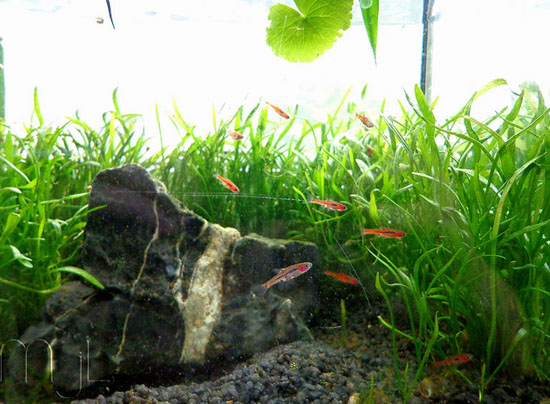
    Ember Tetras are beautiful red/orange freshwater fish that can be kept as a pet. They are perfect choices for nano fish tanks due to their small size. They’re peaceful schooling fish that greatly add to most community aquariums. This fish species is excellent if you’re looking to fill your aquarium with tiny fish. This guide will cover Ember Tetra care. It will discuss this specie’s aquarium requirements, food & diet, compatible tank mates, and breeding habits.

    Aquarium Requirements

    Ember Tetras are very peaceful fish that stay very small. They will be about an inch in length when fully grown. This makes them excellent candidates for nano aquariums as a centerpiece schooling fish or a schooling fish that blends into the background of a large aquarium. A well-planted aquarium with various rocks and driftwood makes the perfect enclosure for Ember Tetras.

    How Many Ember Tetras in a 10 Gallon Tank?

    A minimum of 6 fish are recommended to be considered a school. You should be able to successfully keep between 10 to 15 Ember Tetras in a 10-gallon fish tank. The max size of Ember Tetras and their incredibly small bio load gives you some flexibility regarding population sizes in a fish tank.

    Water Parameters

    Learning the water parameters for your aquarium is important to its success. Fish like the Ember Tetra are found in the tropical waterways of South America. This type of water is much different than what can be found in Lake Tanganyika, which has much harder and calcium-rich water. The following are water parameter ranges that will help you successfully keep Ember Tetras.

    • Temperature: 72° – 77°F
    • pH: 5.5 – 7.0
    • Water Hardness: 4 – 8 KH

    Based on the water parameters you can see that Ember Tetras do best in softer and acidic water. Some homes have naturally soft and acidic water, but there are many homes such as ones with wells that do not. Often well water is rich in calcium and other minerals that cause a spike in pH levels and hardness. An easy way to test for this is through the use of an aquarium test kit. I recommend purchasing an API Freshwater Master Test Kit and API GH & KH test kit. With these test kits, you can keep an eye on your aquarium’s pH, General Hardness (GH), Carbonate Hardness (KH), ammonia, nitrites, and nitrates.

    Food & Diet

    Ember Tetras stay incredibly small, they may not be able to consume the large fish food that is often provided. They will do great with frozen daphnia, brine shrimp, and Mysis Shrimp. Traditional pellet food may be a little large for them to consume, so I recommend feeding them Ultra Fresh Tropical Micro Pellets and flake food such as New Life Spectrum All Purpose Flake Food. In the wild Ember Tetras eat a variety of foods so it is important to provide the same experiences in the aquarium.

    Tank Mates

    Ember Tetras, like most peaceful fish, will do fantastic with most other peaceful community fish. Keeping them with Tetras, Rasboras, Corycats, Honey Gouramis, Endlers Livebearers, Guppies, and other community species, should be successful.

    Due to their size, I would not recommend keeping Ember Tetras with large fish, fish with large mouths, and fin nippers. Their small size and peaceful temperament do not allow them to hold their own against more aggressive fish. You will want to keep them with community fish that will not harass Ember Tetras.

    Breeding

    A large enough school will provide you with both males and females. In a well-established and healthy aquarium, Ember Tetras should breed on their own without much intervention. However, getting eggs to hatch before getting eaten and having your fry develop into adulthood will be the challenge.

    Ember Tetras scatter their eggs throughout the aquarium after spawning. The eggs are adhesive and will stick to many different surfaces in the fish tank. To provide the best chance for the eggs, a heavily planted aquarium will be needed to provide hiding places for the eggs to adhere to. I recommend many different plant species, especially things like java moss that grow dense which may create cover for eggs. A lot of plants will also benefit from providing cover for the fry once they hatch.

    Eggs and fry are likely to get eaten by most other inhabitants of the aquarium. Keeping your Ember Tetras in a species-only aquarium will help cut down on the die-off. For more information on breeding, check out real life experiences of breeding Ember Tetras on Fishforums.

    Final Notes

    If you enjoy nano fish tanks and micro fish, Ember Tetras might be an excellent choice for you. They are small, stay small, have a nearly non-existent bio-load, and generally are great fish to keep. Their red/orange colorations will pop in a well-planted aquarium and maybe just the final touch you need for your fish tank. If you’re not sold on Ember Tetras, consider checking out other Red Tropical Fish for your Freshwater Fish Tank.

  • Chili Rasbora – Full Care Guide

    Chili Rasbora – Full Care Guide

    The Chili Rasbora (Boraras brigittae), sometimes called the Mosquito Rasbora, is a incredibly small fish, with vibrant colors, that enjoy schooling in large groups. Originally found in Indonesia, it has swept through the aquarium hobby and is loved by many fish keepers. Primarily red and orange in color, this little fish strikingly pops in well planted aquariums. This guide will provide information on Chili Rasbora care and breeding habits.

    Fish Information

    Chilli Rasbora do not get larger than .8 inches (2 cm). It is the perfect fish for aquariums that are 5 gallons or larger. A school should contain 6 individual fish or more. 6 to 10 Chili Rasbora should do well in a 5 gallon fish tank. Although the Chili Rasbora remains incredibly small, its colorful body and habit of schooling create beautiful movement and liveliness in a densely planted aquarium.

    Like many other rasbora species, this one primarily spends its time in the middle and top of the aquarium. It will occasionally swim at the bottom of the fish tank.

    Aquarium Requirements

    The Chili Rasbora is a tropical fish that does well in a large temperature range. It can survive in water temperatures between 68 and 82 degrees Fahrenheit, but 75 and 78 degrees Fahrenheit is the ideal range where it will thrive. It enjoys KH levels between 3 and 12 dKH and lastly does great in acidic water that has pH levels ranging between 4.0 and 7.0.

    This species of fish suffers terribly in new aquariums so only add them into already well established fish tanks. Once introduced and settled, they are quite hardy.

    Because of its small size, keep this fish in slow moving waters. They will be thrown around the aquarium when caught in fast moving currents. Providing many live plants and great filtration is ideal for this fish.

    Food & Diet

    The Chili Rasbora is small and remains small its whole life. It is very important to feed it food that it will be able to fit into its mouth. There are many options to offer this fish to provide it with a varied diet. Flake food can be taken and crushed into powder which makes it small enough for this fish to consume. Micropellets can be fed with little problems because they are designed for tiny fish like Chili Rasbora. Also, feeding daphnia, brine shrimp, and cutting up bloodworms are fantastic options to give this fish a varied diet. Providing many different food options will keep this fish vibrant and healthy.

    Tank Mates

    Chili Rasbora are easily outcompeted for food. Take pre-caution when choosing tank mates. The Chili Rasbora do exceptionally well with other small and peaceful fish in the aquarium. Do not keep them with larger or more dominate fish such as:

    • Platys
    • Mollies
    • Swordtails
    • Betta Fish
    • Angelfish
    • Large Mouthed Fish (Cichlids, Goldfish)

    Keeping Chili Rasbora in larger fish tanks is more than possible. They will thrive with fantastic fish such as:

    • Tetras (ember, neon, cardinal, green neon)
    • Rasboras (harlequin, green kubotai)
    • Endler’s Livebearers
    • Guppies
    • Celestial Pearl Danios
    • Corycats
    • Dwarf Gouramis

    The amount of fish that can be kept in an aquarium are determined by the number of plants in the fish tank, filtration, and physical size of the aquarium. A densely planted aquarium will be able to keep more fish happy over a sparsely planted one. A stronger and better filter will go a long way in allowing you to keep more fish in the enclosure. Larger aquariums aid in keeping water parameters stable when a fish tank is heavily populated. Regardless, do not cram too many fish in a fish tank.

    Shrimp and snails should do perfectly fine with Chili Rasboras even in 5 gallon aquariums. In fish tanks this small it is important to closely monitor water parameters because they are more prone to swinging which can be detrimental to both fish and invertebrates.

    Breeding

    Chili Rasbora will openly breed and produce offspring in aquariums. The males may become a bit more territorial during breeding periods and will also deepen its red and black coloring. After successfully breeding a female will appear rounder than the male and not pregnant females.

    Eggs will be laid on plants and decorations and will not be cared for by either parent. The best chance for survival for the fry are in heavily planted aquariums. The plants will provide the much needed cover the fry will need to reach adulthood. The parents are sometimes observed to eat the fry once they hatch from their egg.

    Final Comments

    The Chili Rasbora is fantastic for aquariums both large and small but fill the micro aquarium niche very well for keepers that do not have the space or money to spend on large aquariums. Their vibrant colors stand out in aquariums so they will always be able to be observed. Check them out if you get a chance!

    Image by JoKrimmel on wikimedia

  • Betta Fish – Complete Care Guide

    Betta Fish – Complete Care Guide

    Betta Fish Information

    Betta fish, also known as the Siamese Fighting Fish, has been in the fish-keeping hobby for quite some time. They are colorful, beautiful, but highly territorial fish with outstanding personalities. They’re a great introductory fish for children and adults due to their ease of keeping. They do not require too much space, have gorgeous colors, and have wonderful personalities. They also have a nice long life of 3 – 5 years when living under healthy conditions. There are also so many more varieties of betta fish compared to 10-15 years ago. You can find betta fish for sale both online and in person. They are very common fish sold at pet stores.

    Betta fish may seem dull at a pet store but are very charismatic fish! They will recognize their owner and often swim up to the glass to greet you. With practice, they can even learn tricks. They’re wonderful animals and we will continue this article by going over different requirements for keeping betta fish.

    Aquarium Requirements

    There are a few misconceptions about a betta fish aquarium. People think bettas do perfectly fine living in a cup of water. That is not the case. Although they are fairly easy to care for they should be kept in something larger than a cup! Our recommendation to keep a betta happy and healthy is to keep it in an aquarium or fish bowl of 5 gallons or more. This will provide enough swimming space. I always recommend more space if you can provide it. Betta fish accessories and decorations can be used to provide your betta fish with a refuge when stressed.

    Betta fish do best with a filtration system in the fish tank. Usually, an aquarium with a hang on the back filter should suffice. If they are being kept in a round bowl, look into providing a sponge filter for their filtration. Check out 7 Best Hang On the Back Power Filters for Freshwater Aquariums to get an idea of great hang on the back filters for your betta.

    This beautiful fish will thrive with a large range of water parameters:

    • Temperature: 75° – 86° F
    • KH: 0 – 25
    • pH: 6.0 – 8.0

    Bettas are very versatile fish that thrive in a nice range of water parameters. It is important to provide good filtration and a heater to try and keep parameters as stable as possible. Stability in water is very important to keep fish alive. Help keep nitrates and phosphates down by adding live plants! There are many great starter plants for new fish keepers such as Anubias, crypts, and java fern. Check out 3 Easy To Care for Aquatic Plants for more information.

    Betta Food & Diet

    Betta fish aren’t very picky with food. Most importantly, monitor how much you feed your fish to prevent overfeeding. Extra food that falls to the bottom of your aquarium will break down and may cause spikes in nitrates and phosphates. Betta fish will happily eat flake food, pellet food, and an occasional treat of bloodworms and/or brine shrimp. Watching a betta eat their food is always the best part of keeping them.

    Tank Mates for a Betta Fish

    Most people know this but still needs to be mentioned. There should only be one male betta in an aquarium. Males will most likely fight until one dies. From experience, it is not wise to keep male and female bettas in a small enclosure unless they are breeding. On the other hand, although female bettas are not as vibrant and colorful, they should be able to coexist with one another in the same fish tank.

    blue and orange betta fish

    Betta fish should be ok with other peaceful such as tetras, rasboras, and cory cats in aquariums that are 20 gallons or larger. The fish that are kept with bettas should not have flashy colorations. Besides showing aggression towards other bettas and fish that look similar to it. I would also avoid keeping bettas with fish that are known to be fin nippers.

    Betta fish and snails should peacefully co-exist in an aquarium. Bettas may try to eat baby snails but larger ones should do well. They will spend their day cleaning algae off decorations, and glass, and munching on leftover food that may fall to the bottom of the aquarium. These invertebrates are perfect for aquariums with limited space.

    Keeping Betta fish and shrimp is a little risky. Bettas should do fine with larger shrimp, such as the Amano Shrimp. However, small shrimp such as Neocaridina may become a meal for your betta. It all comes down to the temperament of your betta.

    Betta Breeding

    Breeding betta fish in a freshwater aquarium is very possible but will still require quite a bit of work. First, you must set up two aquariums that will house the male in one and the female in the other. Give your fish time to settle into their new home for a few months. Once preparations to breed begin, a breeding tank should be set up with a divider installed to begin introducing the male and female. The fish tanks should be cycled before introducing the breeding pair.

    The breeding tank should be roughly 80 degrees Fahrenheit with a sponge filter installed and a handful of places for the bettas to hide. It is not recommended to add gravel because the eggs may be lost in the substrate.

    Feed foods that are very nutritious for a week or so before adding them into the breeding tank. The best foods are live bloodworms but you may be able to get away with frozen foods such as bloodworms and brine shrimp. At the same time start raising food for the baby bettas if breeding is successful. Live baby brine shrimp is recommended to feed betta fry.

    Prepping for the Act

    After that, it’s time to introduce the male and female into the breeding tank. Keep the divider in place and place the male on one side and the female on the other. Observe their interactions for a few days to make sure they are interested in one another. The male will show off his colorations and fins while the female will sort of look like she is bowing down. If there is interest, the male should begin building a bubble nest that may take a couple of days to complete.

    Turn off the filtration and remove the divider separating the two fish. Once together, the male will most likely show a little completely normal aggression. Observe their behavior and make sure the male isn’t seriously hurting the female. Once settled, they will swim under the nest and move very close to each other. The female will begin releasing eggs which will drop to the bottom of the aquarium. The male will pick the eggs from the bottom of the fish tank and place them into the bubbles.

    Once the female stops releasing eggs, it is recommended to remove her because the male will most likely begin attacking her. The male will care for the eggs until they hatch. Do not turn the filtration on because the betta babies will most likely get sucked into it. Once the fry begins swimming around in the fish tank, the male can be removed and it’s ok to begin feeding fry baby brine shrimp. It is recommended to feed the fry twice a day.

    Filtration can be turned back on around two weeks after the fry hatch but restrict the flow of the filter if possible. Once males begin fighting, separate the fighters and place each one in its own aquarium.

    Final Notes

    Overall, bettas are a great starter fish for anyone who is looking to dip their toes into the aquarium-keeping hobby. They are fairly easy to maintain and can live a nice long life and create a bond with their keeper. Their variety of shapes and sizes add to their already remarkable personalities! They have attitude but are great fish. Take a look at our article on setting up a very straightforward freshwater aquarium here.