Tag: otocinclus

  • 9 Best Bottom Feeder Fish for Freshwater Aquariums

    9 Best Bottom Feeder Fish for Freshwater Aquariums

    A Brief Summary of Bottom Dwellers

    Bottom Feeders are the backbone of a lot of aquariums. These fish are the janitors or part of the cleanup crew in your fish tank. There are many different kinds of species of bottom dwelling fish. They all come in different shapes, sizes and nuances. This article will discuss some of the best bottom dwelling fish for freshwater aquariums. The fish here will vary in species, aggression, colorations and more.

    1. Cory Catfish

    You can’t start a bottom dweller list without Cory Catfish. I lumped them all together because (in my opinion) all Cory Cats are great. These beautiful shoaling fish are excellent bottom feeders. They love sitting at the bottom of the substrate, waiting for food or they’ll swim around scavenging. They’re fun fish with amazing personalities and are incredibly friendly so they’re perfect for community fish tanks. There are two species of Cory that I will highlight because of unique characteristics they possess.

    Pygmy Cory

    The first Cory Catfish I wanted to highlight is the Pygmy Cory. The unique characteristic this fish has is in the name. The Pygmy Cory is a small fish and it remains fairly small its whole life. You will likely never see see one larger than 1.5 inches (~3.2 cm). Because of it’s max size being so small, this fish is excellent for fish tanks that are 10 gallons or larger. A fish tank this large will allow you to create a shoal that is at least 6 corys strong. Larger shoals are always better so the more corys you can keep the happier they will be.

    Emerald Green Cory

    The Emerald Green Cory is the second fish I would like to highlight. This fish’s unique characteristic is its coloration. There are green fish available purchase but it’s not as common as blue, red and silver colorations. The Emerald Cory’s green color is vibrant and very well looks like an emerald! Unlike the Pygmy Cory Catfish, the Emerald Green Cory grows to have a max size of 3.5 inches. They require at least 30 gallons of water to be happy. Similarly to other Cory Cats, this species of fish requires to be in a shoal of at least 6 fish to be happy.

    2. Bristlenose Pleco
    bristlenose pleco
    Image by JanRehschuh on wikiMedia

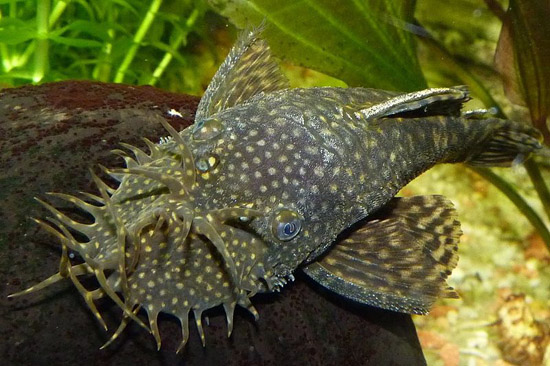
    The Bristlenose Pleco, sometimes called the Bushy Nose Pleco, is a fantastic fish to add to fish tanks that are 30 gallons or larger. The Bristlenose Pleco is a fantastic algae eater which does not get incredibly large. It will grow to be roughly 6 inches in size but does a great job eating algae at every stage of life. If this pleco runs out of algae to eat, you will have to supplement it with algae wafers or other foods. The Bushy Nose Plecostomus has a unique feature to it. The males of this species grow a face full of whiskers. On the other hand, the females grow much smaller whiskers. It’s a unique but incredibly cool feature of this fish. You can find different variants of Bristlenose Pleco for sale in stores and online. You can find them in regular, albino, red and other varieties.

    3. Kuhli Loach

    The Kuhli Loach is a long “noodle like” fish that is very popular in the hobby. This fish species spends a lot of its time scavenging for food along substrate and is an excellent bottom feeder. A Kuhli Loach’s max size will be around 4-5 inches. This makes it perfect for aquariums that are 20 gallons or larger. They love to burrow so having sand in the aquarium is incredibly beneficial for them. Overall, they are a very peaceful fish and does well with other community fish like tetras, rasboras, and other fish. They can get territorial with other Kuhli Loaches so I would recommend adding 5 extra gallons of water for each additional loach.

    If you’re looking to remove pest snails, you will have to look at other loaches. Unlike other loach species, you will rarely see a Kuhli Loach eat snails. However, it is possible for these loaches to eat smaller species of shrimp. If you really want to keep shrimp with this loach, Amano Shrimp and other larger shrimp have a better chance of survival. If you’re looking for ways to remove pest snails, check out this guide, which shows different methods of controlling and removing nuisance snails.

    4. Clown Loach

    Clown Loaches are a fantastic bottom feeder, if you have the room to house it! Although it is a very slow grower, the Clown Loach size maxes at 1 foot! They require at least a 100 gallon fish tank once they are fully grown. If you can house one, I highly recommend it. They have very cool colorations and interesting personalities. This fish species will spend quite a bit of time foraging for leftover food and invertebrates in a fish tank. That’s right, the Clown Loach is an excellent invertebrate hunter. There is no snail or shrimp that is safe from this fish! If you have an infestation of snails, consider getting a Clown Loach or for smaller tanks, get a Yoyo Loach which is further down this list!

    5. Otocinclus

    Ottocinclus on driftwood

    Otocinclus are incredible bottom feeders that are an excellent addition to nano fish tanks. They do great in fish tanks that are 10 gallons or larger. Ottos love being in groups. I would keep a minimum of 6 in a fish tank but more is always recommended. Otocinclus eat brown algae as well as green algae. They’re fantastic fish to own and having a group of them adds a liveliness into the fish tank. The one drawback to this fish is that they can be very sensitive. They’re not known to be hardy fish and even in established fish tanks sometimes struggle. With that in mind, be cautious when adding Ottos into your fish tank.

    6. Yoyo Loach

    If you need a pest snail hunting fish, Yoyo Loaches might be what you’re looking for. This fish is an excellent invertebrate hunter and will take down snails and shrimp. Keep that in mind if you have snails and shrimp you want to keep in the tank. With their very interesting colorations and pattern work, a Yoyo Loach should be kept in fish tanks that are 30 gallon or larger. They will spend their days hunting inverts and consuming whatever food makes its way down to the substrate.

    7. Redtail Shark

    red tail shark swimming
    Image by Astellar87 on wikimedia

    Knowing that Redtail Sharks aren’t always the kindest fish in the fish tank, you have to admit that their colorations are beautiful! A lot of people miss out on keeping Redtails because of their temperament, which is understandable. This fish can take over the fish tank and pick on everything inside. If you’re lucky, they can be incredibly peaceful and keep to themselves. Redtail Sharks will definitely be more aggressive towards bottom dwelling fish. I would not recommend keeping them with Cory cats, Plecos, and most other bottom feeders. This fish can potentially pick on other fish even outside of their territory. Be vigilant when keeping Redtails.

    Redtail Sharks get to be 4 inches in length. This might not seem very big but their aggression can make up for it. If you are thinking of keeping this fish, I would suggest housing it in aquariums 55 gallons or larger. Also, provide it with plenty of plants, hiding places of varying sizes and other nooks and crannies it can hide in. Providing all of this may help in keeping the Redtail Shark’s aggression down a bit. You can find Redtail Sharks for sale at most pet stores and online!

    8. Clown Pleco

    The Clown Pleco is a unique species of bottom feeder. Along with algae and leftover food, much of the fish’s diet is driftwood! It’s a unique quirk, and you may even hear it munching on wood from outside the aquarium. A Clown Plecos size maxes at around 4 inches. It is great for fish tanks that are 20 gallons or larger. Some hobbyists do not keep Clown Plecos because of the amount of waste they produce due to their unique diet. If you’re interested in learning more about this fish, check out the Clown Pleco Complete Care Guide!

    9. Hillstream Loach

    I had to add the Hillstream Loach also known as the Reticulated Hillstream Loach into this list. Not as much for it’s ability to be an excellent bottom feeder but because its overall appearance. The Hillstream Loach has a very flat body which helps it stay put in fast flowing waters. In the wild it lives in fast moving, highly oxygenated and cooler waters. Your aquarium should mimic the appearance of a river, with strong filtration and possibly a powerhead/circulation pump to provide fast currents for this fish. Hillstream Loach care might limit what can be mixed with it. Regardless, this is a very fascinating and rewarding fish to keep in a fish tank!

    Final Notes

    There are many other bottom feeders that will do very well in a fish tank. I wanted to name off some of the best and unique that I have come across. If you have bottom dwelling fish that you love, let me know! I am always happy to learn more and spread the information along.

  • 5 Wonderful Algae Eaters for Freshwater Aquariums

    5 Wonderful Algae Eaters for Freshwater Aquariums

    Finding the right algae removing crew can be hard, especially for aquariums that are smaller. This guide will focus on a broad spectrum of algae eaters. There will be information on fish, snails, and invertebrates. In my opinion these critters are some of the best at removing algae. Before continuing reading through this guide, check out common causes for algae growth in freshwater aquariums here.

    1. Bristlenose Pleco

    There are many different plecos that can be purchased for a freshwater aquarium but I feel the bristlenose pleco is one that is an excellent algae eater and it also doesn’t get incredibly large.

    The bristlenose pleco, also known as the bushy nose pleco, is a fantastic algae eater for aquariums that are 30 gallons or larger. They should not get any larger than 5″ in length unlike the common pleco that can reach sizes over a foot in length. Providing places to hide is important for this pleco to give it some privacy. A piece of driftwood is a good choice in decor that will provide cover for this fish.

    This fish is omnivorous and not a picky eater at all. The bristlenose pleco should easily sniff out food that falls onto the substrate and slurp it up quickly. Otherwise, they will most likely be clinging onto decor and plants eating algae that may be growing on them.

    They are quite easy to breed in captivity. Males when grown will have large bristles between its eyes and tip of its mouth. On the other hand, females will have small whiskers near her mouth. When mating the female will dispense her eggs on driftwood or other flat surfaces and the male will guard the eggs. It will take roughly 10 days for the fish to emerge from the eggs. Once the babies begin to swim it is highly recommended to move them into a separate aquarium so they can mature.

    The bushy nose pleco does best in aquarium temperatures ranging from 75 – 79 degrees Farenheit, KH levels between 6 and 10, and pH levels between 6.5 and 7.5. They’re a fantastic fish to have that works hard to keep algae at bay!

    2. Amano Shrimp

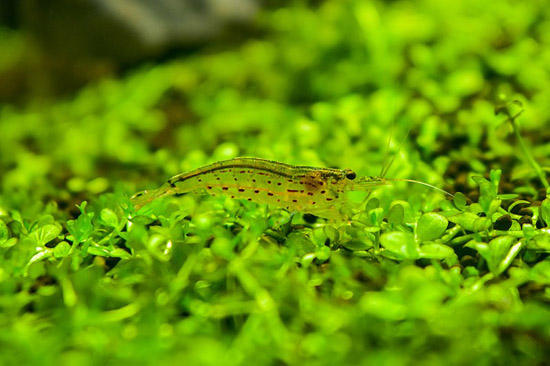
    Amano shrimp, for freshwater shrimp standards, are the tanks of algae eating. They do an excellent job rummaging through different areas of the aquarium eating algae that is growing and also consuming leftover food that fish may not catch during feeding times. They’re not the most colorful of animals but they’re great to look for and observe in the aquarium. They’re gaining more and more popularity in the freshwater hobby due to their size and ability to eat algae in smaller aquariums where plecos may be too large.

    Image by Atulbhats on wikiMedia

    Amanos are beasts! They grow to be about 2″ in size when they’re fully grown. Regardless for their size, they are recommended for aquariums 10 gallons or larger. Like stated above, they’re great for aquariums that are just too small for larger plecos. Providing plenty of hiding spaces is great for Amano Shrimp. and be sure to have a well established aquarium because invertebrates are far more intolerant of unstable water conditions compared to fish.

    This species of shrimp is omnivorous. They will happily nibble on algae, flakes or any other food that comes their way. They’re not picky at all when it comes to eating.

    Amano shrimp are incredibly hard to breed in captivity. It is not common at all for it to happen. It is quite a challenge to bring up young amano shrimp from egg to adulthood so we will not get into that in this article.

    These beautiful shrimp are fantastic for freshwater aquariums and they are also tolerant of aquariums with a little bit of salt in them. They should do perfectly fine in brackish water aquariums. Please only house them with peaceful fish that will not bother or try to eat amano shrimp. These fish are very versatile and do well in water temperatures ranging between 60 and 80 degrees Fahrenheit, KH levels between 3 and 10, as well as pH levels ranging from 6.0 – 7.5. They’re quite hardy for a species of shrimp and live a long life of 2 – 3 years!

    3. Nerite Snail

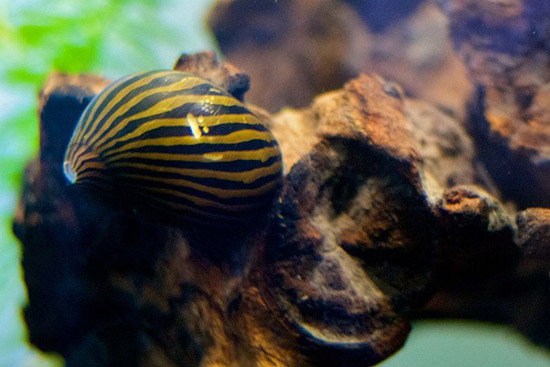
    Nerite snails are a remarkable species of snail to add into a freshwater aquarium. For the amount of algae removal a snail can achieve, the nerite snail probably does it the best. They will help remove algae from glass, substrate, plants, and everything in between. They come in very nice tiger striped or dotted patterns so they’re a nice looking snail to add into a fish tank.

    This species of snail will not be seen larger than 1 inch in size. They stay very small and are very easy to care for. An established aquarium is a good idea to have and remember copper is lethal to them and all other invertebrates. Most snails are great for aquariums as small as one gallon or larger. This species of snail like to wander so there is a chance that they will make their way out of the aquarium if the opportunity arises.

    Nerite snails are herbivorous and if on the rare occasion your fish tank does not have any algae in it, providing algae based food to keep your snail fed should be considered. Feeding nerite snails is not a very common occurrence but keep in mind they may need some food if your fish tank is spotless!

    The nice things about nerite snails is that they will not infest your aquarium with millions upon millions of spawns. They only successfully produce offspring in brackish water. They are perfectly fine being kept in freshwater as adults. The young benefit from having higher pH levels and more calcium in the water levels to promote shell growth.

    Nerite snails are pretty hardy for invertebrates. They do great in water temperatures ranging from 65 to 80 degrees, KH levels that float between 12 and 18, and pH levels between 6.5 and 8.3. They will not tolerate high levels of nitrates and as stated above, copper is lethal to them. Overall, they are fantastic for freshwater aquariums, brackish water fish tanks, and planted tanks.

    4. Siamese Algae Eater (Flying Fox)

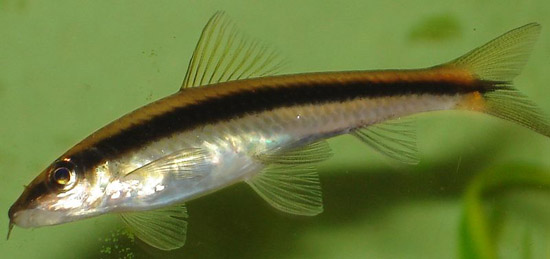
    The Siamese Algae Eater sometimes known as the flying fox is an excellent algae eater for many different planted tanks. What they lack in vibrant color is definitely made up by its ability to eat large amounts of algae in an aquarium. This fish species is primarily gray/silver with a long black strip that runs the length of its body. The flying fox are recommended to be kept in small groups. They do much better together than alone.

    It is rare to find a flying fox that reaches its full length of 6″. It is more commonly found at a max length of 4.5 inches. Because of their size and desire for algae the siamese algae eater should be kept in aquariums that are 30 gallons or larger. This will give them more space for forage for algae and once grown provide plenty of space for them to explore and swim. Driftwood, rocks and broad leaf plants are recommended to have in the aquarium because this fish will perch on top of them and also graze on the algae growing there.

    Image by Ark on wikiMedia

    This fish is omnivorous so it will take in just about any food offered but it does an excellent job removing algae from aquariums. It should be fed bloodworms, flakes food, and pellet food.

    There is very little to no information on breeding habits of the flying fox.

    This fish is a little more sensitive to higher nitrate levels so a well established and stable fish tank should be available before introducing this fish. They do great in water temperatures ranging from 75 to 79 degrees Fahrenheit, KH levels between 5 and 10, and pH levels between 6.5 and 7.0. They’re an excellent fish to have and are very interesting to observe.

    5. Otocinclus

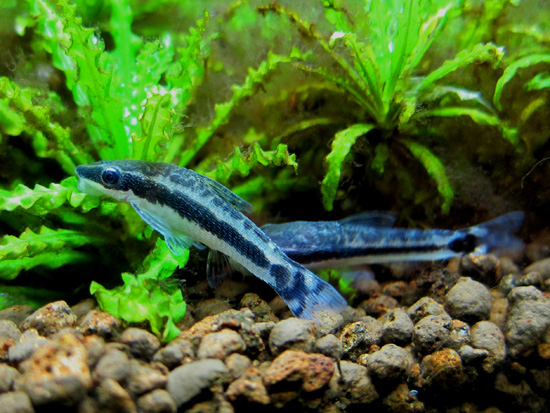
    Otocinclus is a very small algae eater that is sometimes overlooked when on the hunt for something that can help maintain an aquarium. These little fish are small, but in large numbers are great at helping maintain smaller aquariums. They will cling onto many different surfaces with their black and white bodies and go about their day munching on algae.

    Ottos are incredibly small and they will not normally grow larger than 2 inches in length. They’re an excellent little fish for nano aquariums. They do perfectly well in aquariums 10 gallons or larger. Keeping a little school of 6 or more ottos is highly recommended. Providing rock work and driftwood will create surfaces for algae to grow to give this fish something to graze on. It will also create places for this fish to hide in times of stress.

    Image by Cisamarc on wikiMedia

    It can be easily concluded that this fish is herbivorous. It will primarily feed on the algae that is growing in the aquarium but if none is available it is recommended to throw algae wafers or algae flakes into the fish tank for this fish to nibble on.

    Otocinclus does not normally breed in captivity. A varied and diet full of nutrients will be required to even consider having these fish breed. Rising water temperatures are a common occurrence to influence fish to begin mating. You can consider very slowly raising the water temperature to around 79 degrees Fahrenheit to help motivate this fish to mate. After providing this fish with nutrient rich foods, raising water temperatures, and having perfect water parameters the fish may breed!

    Ottos are very peaceful fish and should not bother any other fish in an aquarium. They will thrive in aquariums with water temperatures ranging from 74 to 79 degrees Fahrenheit, KH levels between 6 and 10, and pH levels between 6.8 and 7.5. They’re a fun fish to observe and great when kept in schools!

    Final Thoughts

    Choosing the best algae eaters for your aquarium could be a challenge and hopefully this guide will give you a little insight on 5 fantastic critters that are great for cleaning up algae in freshwater aquariums. I would even recommend having a mixture of some of these if your aquarium has the space. There are definitely other fish that will destroy algae but I believe these are some of the best!