Tag: peaceful

  • Black Ghost Knife – Complete Care Guide

    Black Ghost Knife – Complete Care Guide

    Black Ghost Knife Information

    The Black Ghost Knife fish is a very unique but incredibly interesting fish found in the hobby. Although it is a carnivorous animal, this gorgeous fish is more on the shy side, especially when first introduced into an aquarium. Once acclimated to the fish tank, it can become more active but that is subjective because this fish is nocturnal and is more active at night.

    Black Ghost Knives do not really have significant teeth, if any at all, but instead have a beak. They use this beak to grab prey and consume it. This tropical fish is not recommended to be kept by amateur fish keepers because of a few traits they possess.

    One very unique trait of the Black Ghost Knife is the way it commonly finds food. It has an organ that is electrically charged. Kind of like a sonar and it uses that to find food in the wild or in a fish tank. Also, they do not have scales and are more prone to becoming infected with disease and illnesses. Under ideal conditions this fish can grow to sizes well over a foot in length (approximately 18 inches). These are a few reasons this fish is not recommended for anyone just starting with fishkeeping. This guide will go into detail on keeping Black Ghost Knife fish.

    Aquarium Requirements

    Because of its size once it reaches adulthood, the Black Ghost Knife should be kept in an aquarium that is at least 150 gallons. Length in an aquarium is important but really consider the width as well, especially for this fish. It is long and skinny so providing it with a wide aquarium is ideal!

    As stated above, this animal is carnivorous. Its diet will consist of protein rich food. As a result, keeping this fish will require a good filtration system to help maintain proper water parameter levels. Luckily, it should not really bother plants in an aquarium and the plants can help a little with maintenance! Regardless, keeping up with water changes will help keep this fish healthy. It does best in water parameters with the following ranges:

    • Water Temperature: 73 – 82 degrees Fahrenheit
    • KH 0 – 10
    • pH 6.5 – 7.0

    The Black Ghost Knife fish is a pretty shy fish. It will hide in nooks and crannies within the aquarium for most of the day. I really recommend providing it with many different types of places to hide. Also, providing a lot of shade with plants will keep this fish happy because it prefers lower light. It will most definitely try to hide under driftwood, rocks or even wedge itself in-between plants. Fishkeepers can place an appropriately sized, clear plastic tube into the aquarium to view this fish during the day when it is hiding. Beware of sharp or jagged decorations. This fish is more prone to getting infections from scratches because it lacks scales!

    Food & Diet

    Being carnivores, you can easily assume the types of food this fish can eat. Foods such as bloodworms, brine shrimp, and flake food should work well for the Black Ghost Knife when it is small. Once it grows, foods such as squid, krill and earthworms are fantastic to feed this animal. Be mindful of the invertebrates you add into your aquarium with this fish around because they may become a snack!

    <script async src="https://pagead2.googlesyndication.com/pagead/js/adsbygoogle.js"></script>
    <ins class="adsbygoogle"
         style="display:block; text-align:center;"
         data-ad-layout="in-article"
         data-ad-format="fluid"
         data-ad-client="ca-pub-8588085402939015"
         data-ad-slot="5445868760"></ins>
    <script>
         (adsbygoogle = window.adsbygoogle || []).push({});
    </script>

    Tank Mates

    It is not recommended to keep incredibly small fish with Black Ghost Knife fish. Little fish may become a quick meal for this carnivore. On the other hand, overly aggressive fish and fish that nip and bite shouldn’t be kept with Black Ghost Knife fish. This species of Knife fish do best with peaceful fish that are larger than it. Black Ghost Knife fish are compatible with fish such as:

    • Peaceful Cichlids (Angelfish, Discus, Geophagus)
    • Cory Cats
    • Plecos
    • Clown Loaches

    Remember, if it can fit into the Ghost Knife’s mouth it can most certainly become dinner.

    I do not recommend keeping two Knife fish together. Whether that’s the Black Ghost Knife or other species. Mostly due to their large size when they’re full grown but they may also become aggressive towards one another. If you’re considering adding two into your fish tank, really make sure the aquarium is large enough.

    Breeding

    I will not dive into how to breed Black Ghost Knife fish because it is incredibly challenging. The hardest part of breeding is acquiring a mature mated pair. Also, if you’re interested in breeding this fish, know you’ll most likely need a large pond or a very large fish tank.

    Final Notes

    The Black Ghost Knife is a gorgeous fish and hopefully its unique requirements do not scare you away from keeping it. It is definitely a commitment and your aquarium’s design should revolve around it but its appearance and personality are definitely worth the challenge! If you have personal experiences with this fish or have your own advice, please share it in the comments below!

    Featured image by: Vassil on wikiMedia Commons

  • What’s The Deal with Danios?

    What’s The Deal with Danios?

    Danios are quite well known with experienced aquarium keepers but sometimes fall under the radar for newer aquarists. These fish are quite hardy and are excellent for new hobbyists. Although I do not recommend cycling a fish tank with just fish, many people turn to Danios to do just that. They’re cheap and like I said before, very hardy.

    Danio Information

    Many different types of danio can be kept in an aquarium. My personal favorites are the zebra danio and pearl danio. They maintain a smaller size but for being such a cheap fish have a little bit of color to them. Other types of danio that can be purchased are the large giant danio which should be kept in an aquarium with a minimum of 30 gallons, glowlight danio which stays quite small and does well in a 10-gallon aquarium, many longfin forms of a few of these fish, and lastly the GloFish variants of the zebra danio for anyone interested in GloFish. These fish enjoy being in groups of 5 or more so keep that in mind when purchasing them.

    Many hobbyists build aquariums for tranquility and calmness. The one downside to Danios is that they provide just the opposite. These fish are highly active and zip around the fish tank constantly. They have an endless supply of energy it seems. They love heavily planted aquariums that also have open spaces for them to swim through. For the most part, they do find in faster moving water as well as very still water.

    Longfin Zebra Danio by Marrabbio2 on wikimedia

    From experience, danios are quite aggressive eaters and will dart up to the water’s surface to grab food that is given to them. They are not picky eaters and will gladly eat bloodworms, flake food, or pellets. Giant Danios especially have quite an appetite.

    The water parameters range for each species but for the most part, they all range and do well in temperatures ranging 70 – 75 degrees Fahrenheit and pH levels ranging from 6.5 – 7.0. Some Danio species do quite well in temperatures as warm as 78 degrees Fahrenheit and pH as low as 6.0. Be sure to check what is right for the species you are interested in.

    Final Thoughts

    Danio fish are quite wonderful for new aquarium hobbyists and also fish keepers who are looking for movement in their aquarium. I prefer the smaller Danio species because they do not dominate the aquarium as much as the giant danio. These are peaceful fish and are perfect for a community aquarium but their active personalities and aggressive feeding behaviors may get in the way of other fish.

    Celestial Pearl Danio by Gedanken.welten on wikimedia

  • Some Information on Black Neon Tetras

    Some Information on Black Neon Tetras

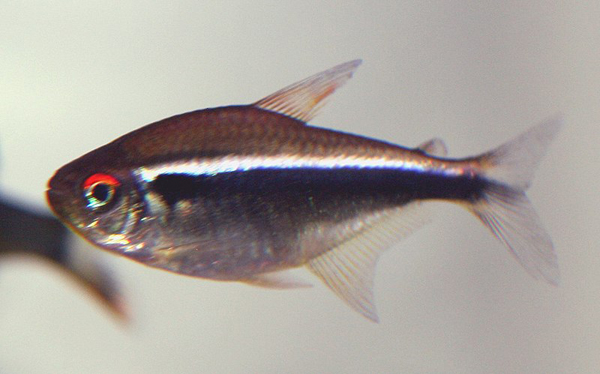
    Black neon tetras are usually overshadowed by the more well-known Neon Tetra. These fish should catch the eye of aquarium keepers though. They may not have that vibrant blue and red coloring but instead have a black and white bar running down their body which is quite remarkable itself. These fish look fantastic in a well-planted aquarium. If you’re ever browsing through a fish store be sure to check them out!

    Black Neon Tetra Requirements

    Black neon tetras are much more hardy than neon tetras. They are more resilient to changing water parameters such as increased levels of nitrates and pH, but remember that not providing stable parameters can lower the health or possibly kill any fish over time.

    These fish are quite easy to keep happy in an established aquarium. They are community fish and should be kept in a school of a minimum of six other black neon tetras. They have been seen schooling with other similarly shaped tetras so mixing may be a possibility. Black Neons max out at 1.5″ which is a little bit bigger than a neon tetra. They do well in an aquarium that is a minimum of 10 gallons.

    Image by Debivort on wikimedia

    The black neon tetra are not picky to food. They will happily eat flake food, pellets, and or frozen meaty food such bloodworms, brine shrimp, or Mysis Shrimp. They are omnivorous so providing a wide range of food is beneficial to their health. They will not eat live plants in an aquarium! Remember to only feed your fish enough so the food does not end up at the bottom of the aquarium. Uneaten food can become a big problem for an aquarium if left unchecked because it will raise the phosphate and nitrate levels.

    Black neon tetras are best kept in water that is between 72 and 77 degrees Fahrenheit. They also do perfectly well in water with a pH between 5.5 and 7.0. They have quite a large range of water conditions they can live in so they will do well with many other tropical fish.

    Final Thoughts

    Black neon tetras are a great addition to most community tanks. They are peaceful, and small, but have a unique color pattern to them. They are quite abundant in the hobby and can be found at most pet stores. These fish are quite inexpensive as well, usually costing between $1.49 and $1.99.

    Image by Juan R. Lascorz on wikimedia

  • Denison Barb – The Peaceful Barb

    Denison Barb – The Peaceful Barb

    With the large variety of fish that can inhabit a fish tank, it can become overwhelming trying to decide the right ones to put inside to inhabit the enclosure. Especially when hearing about barbs (more specifically) tiger barbs have a reputation for being brutes and aggressive in an aquarium. There are more barbs that are also aggressive but there are some that are nice and gentle. Specifically, the Denison Barb.

    Temperment & Size

    Denison barbs sometimes known as Rose Line sharks look like a dominating force inside of an aquarium but they are one of the most beautiful and gentle animals you can keep. It is of course not recommended to keep them with little fish like neon tetras or ember tetras because they will become lunch, but they’re perfectly welcome in a community aquarium filled with larger peaceful fish.

    Photo by Anandarajkumar at wikimedia

    These fish love to be in larger groups preferably 5 or more fish. Also, do not forget to keep a good lid on your aquarium because these fish are known to be jumpers! Because of their love for being in groups and active personalities, I would not recommend putting this fish in anything smaller than 50 gallons of water.

    The Denison Barb is different from your typical barb. This fish is far longer and more streamlined. They are normally found in fast-moving streams in the wild and appreciate higher oxygen levels in an aquarium. They also grow to be about 4 to 6 inches when they are full-grown.

    Feeding & Aquarium Requirements

    The Roseline Shark will happily take most foods and giving them a large variety of food only benefits them. They will gladly eat bloodworms, fish flakes, pellet food, and algae flakes/wafers/pellets. They are safe to keep with live plants and will not go out of their way to eat them! They’re omnivorous fish so giving them many options will keep them happy!

    They enjoy an enclosure with a pH between 6.8 – 7.8 and temperatures ranging from 60 – 77 degrees Fahrenheit. They should be right at home with other tropical fish because for the most part, their water parameter needs are quite similar. Overall, they are quite easy to care for as long as they are introduced into an established aquarium.

    Final Thoughts

    Denison barbs are incredibly active fish and are insanely beautiful with their gray black and red coloring. They will make any aquarium seem more vibrant and bring new life to the setup. Keep them in nice groups and feed them a variety of food and they should be happy for quite some time! 

    Photo by Anandarajkumar at wikimedia

  • Neon Tetras – The Schooling Fish

    Neon Tetras – The Schooling Fish

    Neon Tetras are probably one of the most well-known freshwater fish in the hobby. Their vibrant colors pop and stand out from the green background of a planted aquarium. They’re straightforward to acquire and on the cheaper end regarding cost. They’re gorgeous little fish that love to be in schools. This article will provide general information for Neon Tetras.

    Requirements

    Neon tetras are small and stay that way. They max out at a size of around 1.25″. They are perfectly comfortable in an aquarium of 10 or more gallons. Having a large school for them is a requirement. They do not do well alone. A minimum of six neon tetras are recommended but even more, are preferred! They are not picky eaters, but small food must be considered that will fit into their mouths. They will happily eat micro pellets, flake food, or bloodworms. They can live in waters with a temperature between 68° and 78° Fahrenheit but do best at temperatures between 76° and 78° Fahrenheit. These fish are very peaceful and will not bother other fish in an aquarium. Having a well-established aquarium will help these little aquatic animals thrive!

    Due to their smaller size and docile personality, these fish should be kept with other peaceful fish. It is not recommended at all to keep them with larger Cichlids, predatory fish, or aggressive fish. If they are, they will become a quick meal for the larger fish or be beaten up and pushed around by the aggressive fish. Other peaceful and smaller fish are the best neighbors for Neon Tetras.

    Photo by Tan Meng Yoe on wikimedia commons

    More Information

    After working at a pet store for many years I noticed that many people would like Neon Tetras to be the first fish in their aquarium. From experience, this is usually a death sentence for this fish. Neon tetras are not hardy at all. They’re not expensive so it’s an attractive choice for a first fish. Many hobbyists use the first fish in the aquarium to jump-start their nitrogen cycle.

    To quickly sum it up, a new aquarium cycles through three stages. An ammonia stage, a nitrite stage, and ends at the nitrate stage. Fish produce ammonia through their waste and it gets converted to nitrates by bacteria. At low levels, nitrates are less toxic to fish than ammonia and nitrites. The nitrogen cycle transitions through each stage which is very hard on neon tetras. Once, the aquarium runs through this cycle it is safer to introduce the neon tetras. There is plenty of fish that do much better through the cycle such as a smaller species of danio, red phantom tetra, Serpae Tetra, and many others. It is preferred to use a hardy fish for the nitrogen cycle.

    Final Thoughts

    Having a school of Neon Tetras weaving in-between plants, driftwood, and other decorations is a wonderful sight. They’re peaceful and easy to care for once in an established aquarium. Mixing them with other peaceful animals is wonderful and they will do well with shrimp and snails. If you’re looking for other blue colored fish for your fish tank, check out 11 Blue Freshwater Fish for Your Aquarium.

    Photo by H. Krisp on wikimedia commons