Tag: reef

  • Supplies to Setting up a 20 Gallon Saltwater Reef Tank

    Supplies to Setting up a 20 Gallon Saltwater Reef Tank

    Setting up a reef tank may be intimidating for some, but it is a fun and rewarding process, especially if you already have experience with fish keeping. Starting a reef tank, especially larger ones, will have a high upfront cost, but running one successfully should not cost too much more than a freshwater aquarium. This article will discuss the supplies that are either needed and/or optional for setting up a 20-gallon saltwater fish tank. The list will be similar to supplies necessary for a 10-gallon tank, with a few additions.

    Before we begin the list, check out this list of very cool fish that can be kept in a 20-gallon nano reef tank. Not every fish on the list is compatible with one another but it is great to see the variety of fish species available.

    List of Supplies Needed for Aquarium

    If you’re looking to make life easier for yourself, consider picking up an all-in-one aquarium, like the JBJ AIO Rimless 20-gallon, Red Sea Max NANO Cube Complete Reef System, or Waterbox Cube 25 Peninsula Nano AIO Aquarium, to name a few. These three are made to be all in one saltwater fish tanks, but can also be used for freshwater. Prices will vary on all in one fish tanks because each will give you varying amounts of supplies and equipment. For example, the Red Sea Max Nano comes with just about everything hardware-wise to build an aquarium, with a stand included. The Waterbox Cube is a little more barebones and only comes with the aquarium glass and built-in sump filtration system.

    Whether you decide on an all in one aquarium, or purchase an open-top fish tank, I will still cover everything you need to get started. I’ll cover the following equipment and supplies, and let you know whether they are a necessity or optional for your fish tank.

    • Filtration
    • Lighting
    • Hardscape (live rock and sand)
    • Aquarium
    • Water changing
    • Misc. Supplies

    Filtration (needed)

    Filtration will help stabilize your water parameters as well as add necessary flow into your reef tank. With the combination of proper husbandry, your aquarium can thrive for years. On an aquarium this size, you should be able to get away with using a hang on back filter. I would recommend an Aquaclear 70 or larger. Fluval Aquaclear filters are my choice for HOB filters because of their large chamber which is almost entirely customizable. Check out Fluval Aquaclear HOB Filter – Specs, Dimensions, etc. for more information on these filters.

    At a minimum, I would have your filter loaded with AQUANEAT Bio Sponge Filter Pads and Aquaclear BioMax. The filter pads will trap debris and other waste products, and the BioMax provides ample surface area for beneficial bacteria to colonize and grow.

    Filtration (recommended)

    If possible, I would recommend converting the large chamber into a refugium. A refugium is a space in the aquarium that allows algae to grow. It’s a little more work at first because you will need a separate light fixture to grow algae, but long term it’ll help a lot once you get macroalgae, like chaeto, growing in there. Macro algae will consume waste like nitrates and phosphates.

    If you’re not interested in setting up a small refugium in your HOB filter, I recommend Chemi-pure Blue or some form of Activated Carbon media to help remove undesirable contaminants from your water. I would also include the Bio Sponge Filter Media Pad and BioMax listed above. This media and weekly water changes will help keep your water in excellent condition.

    Protein Skimmer (optional)

    At this point, a protein skimmer is likely not needed for your 20 gallon reef tank. I wanted to add it to the list because it is an option. Protein skimmers are great at removing a lot of excess nutrients from the water, but this can be replaced with larger water changes. On a nano fish tank, like a 20 gallon, you’ll only be replacing an extra couple of gallons when conducting water changes. A Protein skimmer is fantastic for larger fish tanks, since you may need to change out anywhere between 10 and 20 gallons per water change. If you’re interested in protein skimmers, there are some internal protein skimmers, like the AQUATICLIFE 115 Mini Internal Protein Skimmer that should get the job done.

    Lighting (needed)

    If you’re looking to grow coral, you will need some type of lighting designed for coral. You do not need a high-end light to grow many different types of coral. There are plenty of budget-friendly lights that will successfully grow coral, but many species of coral, like SPS will require more intense lighting to thrive. You’re welcome to go all out with the Radion G6, which is one of the best LED lighting for reef tanks, or go with something easier on the wallet.

    The NICREW 150W Aquarium LED Reef Light should do very well with a 20-gallon long due to its long spread. It has a max spread of 30″ x 30″ at a depth of 28″. It’s plenty of lighting for a 20-gallon fish tank. I recommend purchasing the NICREW Controller with this light fixture so you can easily program your lights to ramp up and down on their own.

    Heater (needed)

    Most saltwater critters will do best in aquariums with a temperature range between 72°F – 78°F. I would recommend going even further and keeping the water temperature between 76°F and 78°F. It is the heater’s job to get it to that temperature and keep it there. My recommendation for heaters is the Aqueon Pro Heater, it has some of the best quality and its overall build and design are what make it stand out. If you’re shopping around for aquarium heaters, check out the 6 Best Heaters for Freshwater and Saltwater Fish Tanks. If there is anything that will malfunction in an aquarium, it’ll likely be a heater. So It’s good to keep an eye on it and guarantee it is working as it should. I would purchase a thermometer to do so.

    Hardscaping With Live Rock & Live Sand (needed)

    Some sort of hardscape is needed for your 20 gallon reef aquarium. Some fish keepers enjoy an aquarium with more open space while others love to load their reef tank with live rock. I usually recommend about 20 lbs. of live rock for a 20-gallon reef tank. At the end of the day, it’s your choice how much you decide to use. Just remember that live rock is an important part of your aquarium, it houses countless amounts of beneficial bacteria. It also is the home for your fish and the surface your coral will use to grow and spread. If you don’t have a local fish store near you with live rock, check out the Carib Sea Base Rock and/or Nature Ocean Base Rock for live rock.

    Aquarium (needed)

    You will need an aquarium to house all of your rock, sand, fish, and coral. If you’re purchasing an Aqueon or Marineland open-top aquarium, you can choose either a 20 20-gallon high or 20 20-gallon long aquarium. I would choose a 20-gallon long because it’s shallower, which will require less intense lighting for your coral. Also, you get more length out of the aquarium, which could theoretically give you more space for corals and frags. At the end of the day, it’s all about your preference and available space. You can check out the dimensions of these aquariums and many other fish tanks here.

    Water Changing (needed)

    Conducting water changes will be a standard practice with your reef tank. Depending on your system, stocking, and feeding regime, you may need to conduct water changes weekly or every other week. Every system is a little different so it’s important to learn about the nuances and needs of yours. The following are a list of cleaning supplies that I recommend for your 20 gallon reef tank.

    Clean Water

    For the most part, tap water is not going to cut it for a reef tank. If you use tap water, you’re likely going to contaminate your tank with extra nutrients that will cause algal blooms and lower the success of your coral. If possible to set up, I recommend setting up an RO System for your aquarium. A very common and popular brand is the RO Buddie. It’s nice and compact and will create 50 gallons of water per day. You will not need this much daily but it’s nice to have the capacity. If you cannot set up an RO Unit for your fish tank, the next best thing is to purchase distilled water from your local grocery store.

    Saltwater Reef Salt (needed)

    Marine aquariums require a “special” kind of salt. You cannot use table salt or regular aquarium salt for your saltwater fish tank. You will need something like Instant Ocean Reef Crystals, Red Sea – Coral Pro Salt, or many other marine aquarium salts out there. There are a lot of different brands available, I currently use the Red Sea – Coral Pro Salt for my reef, but it’s all about preference. I also recommend purchasing a measuring cup to accurately measure the amount of salt needed when you’re conducting water changes.

    Refractometer (needed)

    We will use a refractometer to verify the proper amount of salt is mixed and that your aquarium has the correct salinity. A well-calibrated refractometer, like this one from Amazon. This tool is very simple to use. You place a little bit of water on the end and look through the eyepiece. You’ll see a color change when looking through the eyepiece, likely a change from blue to white. Where the two colors meet is where your salinity is. You will want your aquarium to be between 1.024 and 1.028 sg. Do your best to keep the salinity stable in your aquarium.

    I would avoid hydrometers for reef tanks. They’re great and easy to use at first, but if they are not properly cleaned and rinsed, calcium deposits build up on them and will lead to inaccurate salinity readings.

    Siphon Hose & Bucket (needed)

    A siphon hose will be great to remove water from your aquarium. You can get a simple Aqueon Aquarium Siphon, a fancy Laifoo Aquarium Siphon, or any other gravel siphon available out there. Besides siphon hoses, you will need buckets to conduct water changes. I recommend having a few 5-gallon buckets and 2-gallon buckets on hand, especially ones with measurements labeled on the side.

    Other Supplies

    Coral Food (recommended)

    Coral are animals, some benefit from getting fed, while others need to be fed to thrive. I recommend feeding corals a variety of foods. My personal favorites are Polyp Lab Reef-Roids and Reef Chili. I will also supplement the coral with the Red Sea Reef Energy Plus AB+. You can make life a little easier by mixing the food with aquarium water in a cup and using a Coral Feeder Syringe to suck up the food then spot feeding the coral. This will help you successfully target feed your coral, to make sure they are getting the food you provide.

    Coral Rx (recommended)

    Parasites and nuisance microorganisms will likely be growing within coral. It’s good to dip your coral to remove parasites before adding them to your reef tank. There are many different types of coral dips available. Here is a great guide from some pro reef keepers on different dips and dosages used.

    Coral Fragging Tools & Frag Plugs (optional)

    Coral grow in many different ways. Some will branch out, others slowly encroach onto surrounding rocks. Regardless, having a coral frag kit around will help you frag the coral. Fragging consists of cutting chunks of rock that hold your coral, splitting coral up by cutting them, or breaking off pieces of coral and transplanting them onto frag plugs. The DDP Coral Frag Kit may come in handy when this time comes. Many stony corals will likely need a more heavy-duty tool like a band saw to create clean cuts and prevent excess damage. Once corals are fragged they will need to be placed on a piece of rock or frag plug to keep them from floating away.

    Super Glue (recommended)

    When you are fragging plugs, you will have to adhere them to something hard, like a rock or frag plug. Super Glue can be used to stick the coral onto these types of surfaces. There are many types of Super Glues on the market, but I recommend Gorilla Glue Super Glue Gel for this task because it runs less and seems less messy than many other glues.

    Water Test Kits (needed)

    All brand-new fish tanks will have to go through the Nitrogen Cycle. If your aquarium is seeded with filter media from an already established fish tank, your Nitrogen Cycle may be very short. Keeping an eye on the Nitrogen Cycle is very important. You will want to test for ammonia, nitrites, and nitrates throughout your cycle. Coral and marine fish are expensive, so it’s important to complete the nitrogen cycle before adding any livestock into the fish tank. After your cycle is complete you will want to continue testing for nitrates, phosphates, carbonate hardness, and pH.

    You’ll be able to check your pH, Ammonia, Nitrites, and Nitrate levels using the API Saltwater Master Test Kit. This kit will help you keep an eye on your water parameters while your aquarium goes through the Nitrogen Cycle. API has made these tests very easy to follow with the instructions. Sometimes the colored results are a little hard to distinguish, but you’ll get a good idea of your water parameter levels. Once you gain some experience and start working with coral, you’ll want to test for things like magnesium which will require more elaborate test kits. Red Sea and Salifert are two companies that make excellent magnesium test kits for aquariums.

    Final Notes

    There is a lot to digest from this article. Startup costs for saltwater aquariums are fairly high, but it becomes easier once you get the ball rolling. There are a million different ways to setup an aquarium. Certain equipment and supplies are must haves and others, like the fragging kit, can be held off on. The reef tank supply list shown in the article is what has worked for me, and I hope it is a good resource for you as well. This hobby is an investment and patience is also a necessity when working with aquariums. The process of setting up a reef tank is shown below to give you an idea of what to expect.

  • Banggai Cardinal – Complete Care Guide

    Banggai Cardinal – Complete Care Guide

    Banggai Cardinalfish Information

    Banggai Cardinals also known as the Kaudern’s Cardinalfish are fairly common saltwater fish with a very unique body shape and color pattern. These hardy fish are usually some of the first fish purchased for a saltwater aquarium because they are fairly inexpensive and not too finicky. They will grow to be around 3 inches in length when they are fully grown but should be kept alone or in pairs when keeping them in smaller aquariums. This guide will go into detail about the needs of this fish.

    Aquarium Requirements

    Kaudern’s Cardinalfish do not require an incredible amount of space and a pair (male/female) will do well in saltwater fish tanks that are 30 gallons or larger. They may become aggressive if two males are kept together. It is possible to keep them in small groups when the aquarium is 100 gallons or larger but be mindful of potential aggression. The Banggai Cardinal has similar water parameter requirements to most other saltwater fish which are:

    • Temperatures (72-78 degrees Fahrenheit)
    • dKH levels between 8 and 12
    • salinity levels between 1.020 and 1.025 sg
    • pH levels between 8.1 and 8.4

    Just like most other fish in an aquarium, the Kaudern’s Cardinal prefers having quite a bit of live rock with holes and caves of varying size. This will give the fish spots to hide when it stressed and also a place to go when the lights are off. More hiding spaces will help settle some territorial disputes as well.

    Food & Diet

    The Banggai Cardinalfish is a carnivore so providing meaty food such as mysis shrimp is a must. There are many other feeding options such as, spirulina brine shrimp, pellet food and flake food. This fish may be a little picky when it comes to feeding on pellets and flakes so pay close attention to what the Banggai Cardinal eats.

    Tank Mates

    Banggai Cardinals are fairly peaceful and will primarily fight over territories with others of its species or similarly shaped fish like pajama cardinals. They are slow moving fish so sharing a tank with other peaceful fish is the best route to successfully keep this fish. They normally do well with:

    • Clownfish
    • Dwarf Angels
    • Anthias
    • Basslets
    • Blennies
    • Gobies
    • Tangs

    The Kaudern’s Cardinalfish is completely reef safe. It should not bother any coral or invertebrate in the aquarium. Also, like stated earlier, they will do well as a male and female pair in smaller fish tanks but should be fine in small groups when fish tanks become 100 gallons or larger.

    Breeding

    Banggai Cardinalfish are fairly easy to breed but some work must be done in order to keep the fry alive. To begin, a pair must be found in order to breed successfully. It is hard to find the sex of males and females because they look very similar. When hunting for a pair of cardinals, observe their behavior in the fish tank. In a group, the dominant male will push away any competition and spend a lot of time with one other fish, the female. Keep an eye out for that when looking for a pair.

    Once paired, keeping the male and female happy and fed will increase your chances of acquiring babies. Providing an urchin in the aquarium is not mandatory but it is beneficial to giving them the feeling of being in the wild.

    The male will hold the babies in his mouth so making sure the male is well fed before holding the brood in his mouth is very important. The male will not eat as it is holding the offspring. The female will be the primary defense for the male when he is in this vulnerable state.

    Once the fry leave the male they may spend their time in-between an urchin’s spines. They will most likely perish if there are other fish in the aquarium. Also, it is very important to have live baby brine shrimp ready to feed the offspring once they leave the males mouth. It is important to feed the babies multiple times a day.

    Final Notes

    Banggai Cardinalfish are very interesting and easy to care for fish. They may not be for everyone but they’re fantastic for anyone who loves their unique shape and color pattern. It is one of the few fish in the saltwater hobby that can quite easily breed in captivity and growing a brood to adulthood is always exciting!

  • Coral Banded Shrimp – Complete Care Guide

    Coral Banded Shrimp – Complete Care Guide

    Banded Shrimp Information

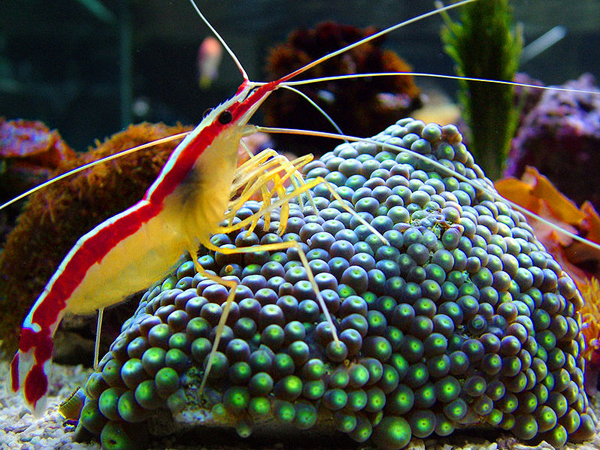
    The Coral Banded Shrimp sometimes called the boxing shrimp is a popular crustacean that is kept in saltwater aquariums due to their very interesting body shape and remarkable color patterns. This shrimp is commonly found with red, yellow and white colorations but there are other species that come in different variations of colors such as blue, yellow and gold.

    The male is normally smaller than a female at adulthood. When fully grown, The Coral Banded Shrimp will grow to be roughly 3 inches in length excluding its antennae. A few other species coral banded are a hair smaller and are roughly 2 inches in length when full sized. Coral Banded Shrimp can live about 2 to 3 years which allows for plenty of enjoyment for aquarium keepers!

    As far as crustaceans go, this shrimp is quite hardy but beware because, like any other invertebrate, it is very sensitive to high nitrate levels and copper.

    Aquarium Requirements

    A Coral Banded Shrimp should be kept in aquariums that are 30 gallons or larger. For a shrimp, they become quite large and require a bit more space for their unique bodies and antennae. Also, provide many different sized caves this shrimp can enter to keep the Coral Banded Shrimp comfortable.

    Just like many other marine fish and crustaceans the Coral Banded Shrimp does best with the following water parameters:

    • Temperature: 72 – 78 degrees Fahrenheit
    • dKH between 8 and 12
    • pH between 8.1 and 8.4
    • Salinity between 1.023 and 1.025 sg.

    Providing these water parameters should help keep your shrimp quite happy. A well fed shrimp and one that is living in proper aquarium water parameters will help its molt and growth.

    Food & Diet

    The Coral Banded Shrimp is both a scavenger as well as a hunter. This invertebrate is a carnivore and found searching the fish tank for food. It will hunt for tiny bristleworms, copeopods, parasites & dead tissue on fish. They do a great job as exterminators, removing pesky bristleworms so they do not overrun the fish tank.

    Image by Rickard Zerpe on wikiMedia

    In the home aquarium, this shrimp will happily accept any food that may come its way. It will eat flake food, pellets and meaty food. It is not a picky eater at all but more of an opportunist.

    Tank Mates

    These shrimp do quite well with most peaceful saltwater fish. Do not keep Coral Banded Shrimp with invertebrate eating animals and a few other types of creatures such as:

    • Groupers
    • Pufferfish
    • Lionfish
    • Eels
    • Triggers
    • Slow moving fish (mandarins, clown gobies)
    • Non Reef Safe Wrasses
    • Other Shrimp

    Coral Banded Shrimp are considered to be reef safe but can sometimes nip at coral. Normally if they are fed they shouldn’t bother picking at coral but there is always a slim chance they will. They should also be kept singularly unless a definite pair can be found.

    Breeding

    Breeding this shrimp is usually quite unsuccessful in an aquarium setting. To increase the possibility of successful breeding, a pair must be found first. Even then it is incredibly difficult or almost impossible to successfully breed them in captivity. Their larvae must be suspended in the water with their food which is hard due to pumps and water circulation propellers.

    Final Notes

    Coral Banded Shrimp are a interesting creature that can be kept in a home aquarium. They sometimes get a bad reputation for eating fish, shrimp or nipping at coral but regardless should be considered for a reef or peaceful fish tank.

    Image by Brian Jeffery Beggerly from S’pore on wikiMedia

  • Snowflake Eel – Complete Care Guide

    Snowflake Eel – Complete Care Guide

    Snowflake Eels (Echidna nebulosa) otherwise known as Starry Moray or Snowflake Moray Eel, are interesting animals kept in aquariums. They are commonly found in predatory tanks but are occasionally added into reef tanks! This guide will give insight on Snowflake Eel aquarium requirements, feeding, and other information for anyone interested in this fish.

    Fish Information

    Snowflake Eels are incredibly easy to care for. They are very hardy and an excellent introductory eel for new hobbyists. They are considered semi-aggressive and are nocturnal predators usually hunting and ambushing crustaceans such as shrimp and crabs. In an aquarium, it is common to see them poke their heads out of rocks during feedings. They use two sets of jaws to grab prey and drag it down into their gullet during feeding. Be cautious when keeping this fish in a reef tank because it consumes crustaceans. It may knock corals over since it stays inside and very close to live rock. The Snowflake Eel will be roughly 2 feet (60cm) in length when it is grown in captivity. It is possible for them to be larger in the wild.

    Aquarium Requirements

    When fully sized, the Snowflake Eel should be kept in fish tanks that are 50 gallons or larger. A well covered top is needed because this fish is known to be one of the best escape artists. Because of its size and temperament, the eel should have quite a bit of live rock with varying hole sizes. This will give it room to move around, hide when threatened, and provide similar habitat it experience in the wild.

    Snowflake Eels do best in water temperatures ranging from 72 – 78 degrees Fahrenheit, dKH levels between 8 and 12, pH levels ranging between 8.1 and 8.4 and lastly salinity levels between 1.020 and 1.025 sg. As stated before, they are quite hardy and have a nice range of water parameters they can tolerate.

    Food & Diet

    Snowflake Eels are carnivorous animals and require a nice range of foods. There is a wide variety of food that it can eat such as:

    A Snowflake Eel can also be handfed but caution must be taken because they can give a powerful bite! It is best to start handfeeding when the moray is small to minimize risk of getting bitten or at least to receive a smaller bite. It is a predator so it may mistaken your fingers for a quick snack!

    Tank Mates

    The Snowflake Moray Eel can be kept with fish that are larger in size and that won’t easily fit into the eel’s mouth. They should do fine with coral, snails, anemones and sea urchins, but not crustaceans such as crabs, lobsters and shrimp. Keep in mind that this species of eel will become quite large so fish that are larger than its mouth at first, may not be in the future.

    Eels are commonly kept in larger aquariums with bigger and sometimes more aggressive fish. They are commonly kept with tangs, large angelfish, lionfish, foxface, groupers and large wrasses.

    It is possible to keep 2 Snowflake Eels in a marine tank together. The eels should be introduced at the same time and they should also be similar in size. Snowflake Eels are cannibals and if the opportunity to eat a much smaller eel arises, it will do so! I would personally not keep 2 Snowflake Eels in a fish tank together unless it is 150 gallons or larger. They are quite territorial and larger aquariums will give them more room to create their own territory.

    Breeding

    Breeding Snowflake Eels has not really been conducted in captivity because of their mating rituals, inability to distinguish between male and female, and rarity in acquiring a mating pair.

    Final Comments

    Snowflake Eels are a fantastic fish for a saltwater aquarium. They all have very unique personalities and are quite active moving within the live rock scaping of your aquarium. Be mindful of the fact that eels are escape artists and if a well sealed lid is not provided there is a high possibility of them jumping out!

    Image by Michael Bentley on wikiMedia

  • 5 Great Saltwater Fish for a Nano Reef!

    5 Great Saltwater Fish for a Nano Reef!

    A nano reef is typically considered to be 30 gallons or less. The smaller the aquarium the larger the possibility of swinging water parameters. It is not recommended to add large fish or too many fish in a nano aquarium. Nano reef systems are a challenge but a rewarding experience. This guide will list 5 fish species that will do great in small reef aquariums.

    1. Hector’s Goby

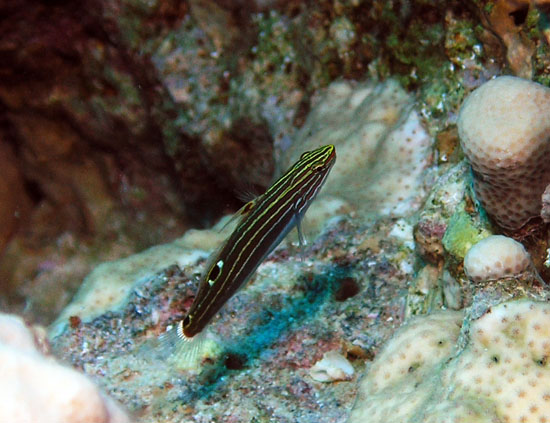
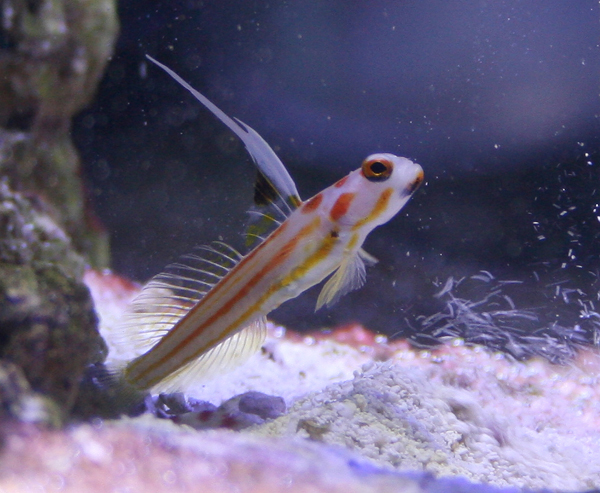
    The Hector’s Goby is a fantastic addition to any reef system. It is a very peaceful fish and it will not bother any fish or invertebrate. It will graze on hair algae that grow in the aquarium and also feast on small worms in the fish tank.

    This goby maxes out at about 3″ in length and it will be perfectly happy living in an aquarium that is a minimum of 10 gallons. They do require a fair amount of live rock with plenty of crevices and hiding spots. They will seamlessly weave in and out of rock looking for food and algae to graze on.

    Image by Rob on Wikimedia

    Their pattern work and coloration are beautiful! They have alternating red/black and yellow stripes running down from head to tail, they have round blotches of black along their dorsal fins and hints of orange around their fins as well.

    They are omnivorous so providing a variation of algae based food and meaty food such as mysis shrimp is important. They will spend much of their time looking for food in rocks and sand. As a final note, Hector’s Gobies are completely reef safe!

    2. Ocellaris Clownfish

    Everyone knows about the clownfish due to the movie Finding Nemo. Since the release of the movie, clownfish were ferociously taken out of the oceans because many parents wanted “Nemo” at home for their kids. Luckily, the reef-keeping community has successfully found ways to breed clownfish and they are tank-bred to help prevent plucking them out of the ocean.

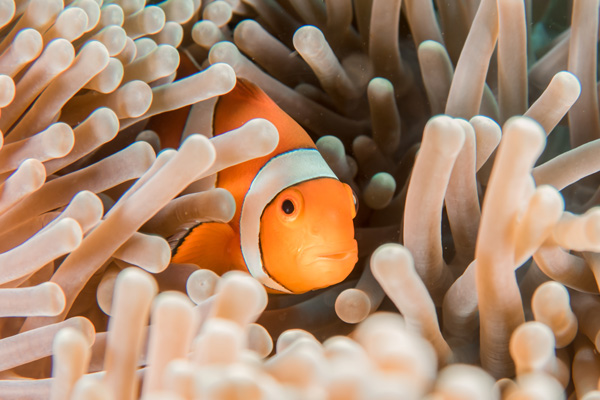
    Ocellaris clowns, like the Hector’s Goby, max out at around 3″ in length. Having a pair of clownfish is great! The female clownfish (dominant) will be a bit larger than the male. Ocellaris clownfish are perfect for nano reefs because they happily live in aquariums of 20 gallons or larger.

    Besides the common orange clownfish, there are many different variations of ocellaris clownfish due to the extensive breeding that has exploded in the hobby. There are now black & white, snowflake, platnium, and many other clownfish that can be picked up from retailers and online breeders. Also, many captive bred clowns will not willingly host in anemones but can be trained to do so. Check out this guide for tips on how to get a clownfish in an anemone.

    Like many marine fish, the clownfish is omnivorous and will happily take any food provided. A rounded diet of veggies and meaty foods is recommended. They will happily take pellet, flakes, and frozen meat foods. These are incredibly hardy fish and excellent for a new marine hobbyist.

    3. Yellow Clown Goby

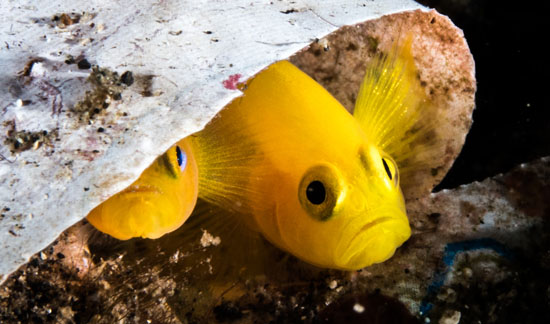
    Yellow Clown Gobies are oddly shaped but very enjoyable fish. They always seem to perch themselves in weird positions on rocks, glass, and corals. They’re a very fun and unique fish but great for a nano reef tank. Although they are small, their yellow vibrant bodies makes them pop in any reef system.

    Image by Rickard Zerpe on Wikimedia

    These fish are small, and they stay small. They max out at about 1.5 inches and are content with calling an aquarium that is 10 gallons or larger home. Clown Gobies are reef safe with most polyp corals but be mindful with keeping them SPS corals because there is a possibility of them nipping at them. They should not bother any other fish except other clown gobies in small enclosures.

    Yellow Clown Gobies are carnivorous fish. It is important to provide them with a variation of mysis shrimp, brine shrimp, and other meaty foods. Learn more about this fish by checking out the Yellow Clown Goby – Complete Care Guide.

    4. Firefish

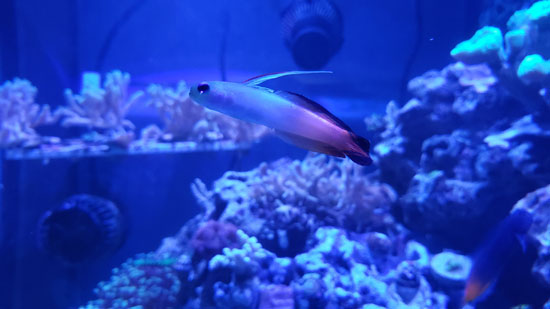
    The Firefish is a fantastic fish to add to a reef aquarium. Their vibrant white, red, and purple coloration is gorgeous! They have an enlarged dorsal fin which looks like a sabre which adds to their awesomeness!

    The Firefish will be around 3″ when they are fully grown. They are perfectly content with living in an aquarium that is 20 gallons or larger. They are completely reef-safe and will spend a good portion of the day hovering above the live rock waiting for food. It is recommended to provide them with a nice porous rock because they will dart into the holes when startled. They are known to be jumpers so a lid over the tank is also a good idea to have.

    Firefish are carnivorous. So providing a mixture of different types of meaty food is recommended. They will love brine shrimp (live or frozen) and mysis shrimp. Providing frozen food is much easier for fish but feeding them live brine shrimp is always a fun activity.

    5. Two Spot Goby

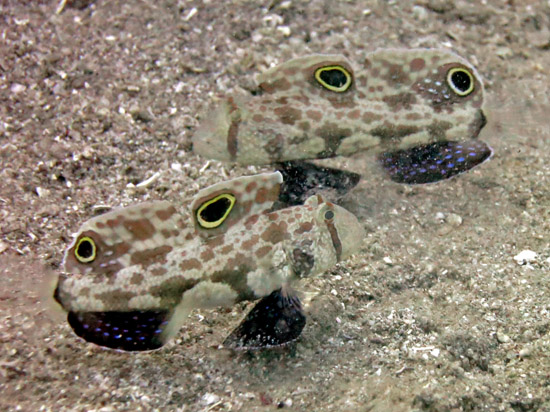
    This isn’t a very common goby that is kept in a reef aquarium but I believe this is a great fish to own. Two Spot Gobies have a very unique coloration and body shape. They are primarily white with blotches of brown, black, and yellow to help camouflage into sand. They have an incredibly large jaw and do a fantastic job sifting through sand.

    These fish get to be about 3″ in length when they are fully grown. They do well in aquariums 10 gallons or larger. It is very important to provide them with a nice deep sand bed because they will burrow into it. They also require lots of sand to sift through.

    Image by Lakshmi Sawitri on Wikimedia

    The Two Spot Goby is carnivorous so like many other fish on this list, it’s important to feed them meaty food. It is also a good idea to supplement your aquarium with live copepods to help give them more options if they are picky eaters. Take a look at the Two Spot Goby – Complete Care Guide for more information on this fish.

    Final Thoughts

    All of these are fantastic for a reef aquarium. Some are more common than others and there are plenty more that will do great that aren’t listed. Keep in mind that these fish should not all be crammed together into a nano aquarium. It is recommended to pick one or two depending on the appropriate aquarium size. Adding too many fish will cause water parameters to swing more often and aggression may be seen due to the lack of space. Hopefully, this guide has provided to insight into great nano fish for small reefs.

  • The Cleanup Crew in Reef Aquariums

    The Cleanup Crew in Reef Aquariums

    The backbone of many saltwater systems is a good cleanup crew. Algae will opportunistically try to use the nutrients in your water body. A saltwater aquarium can be plagued with quite a bit of algae if water parameters are high. It is impossible to have an aquarium without algae due to the feeding and production of fish waste. Invertebrates and fish are used to help prevent algal blooms. Invertebrates such as snails and crabs can wedge themselves into areas many fish cannot and eat food that has fallen into these crevices. The main goal is to enjoy this hobby and not suffer from algal blooms’ hands. A good cleanup crew can help!

    Cleanup Crew for Reef Aquariums

    Reef aquariums can have a large assortment of critters to help maintain your aquarium and keep your algae at bay. I will do my best to list the best ones for the job and will provide information on the potential flaws of each. Before adding any new invertebrate or fish test out your salinity and water parameters with an Aquarium Salinity Refractometer and an API Reef Master Test Kit! Make sure your water parameters are in check before adding any new wildlife.

    Snails

    There is a large variety of saltwater snails that can be thrown into your reef aquarium. They help clean up algae, eat food that is left behind by fish, and help clear up your sand bed. The biggest problem with snails is that they can be quite clumsy and will sometimes fall upside down and not be able to flip back over. This can become a nuisance because we as hobbyists have to come to the rescue. The most common snail to do this (in my opinion) is the Mexican Turbo Snail. They somehow always seem to end up flipped and require a little assistance from us. Snails will sometimes climb out of an aquarium with an open top and fall to their deaths. Lastly, like many inverts, snails can and will knock over coral and move rock that is not placed well. I will go a little more in-depth on which snails are great to have in your reef system!

    Zebra/Mexican Turbo Snail

    I like to call these snails the “tanks.” They grow large and are remarkable at cleaning up an aquarium with algae. They are specialists at decimating hair algae but will also eat many other types of algae. As stated above, they commonly flip themselves and cannot flip back so pay close attention to that. Due to their size, these large snails have the power to move rock and coral that are not properly placed/glued down. They’re a great addition to larger reef systems but may need supplemental food if no algae are present. Omega One Seaweed Sheets are commonly used to feed this snail and fish when no algae are present.

    Bumblebee Snails

    The bumblebee snail is not as commonly found but they’re a great addition if you can find them. They’re especially a good add-on because of their tiny size. These little invertebrates can crawl into the smallest nooks and crannies of your aquarium and find detritus and uneaten food. This is great because they are carnivorous and will happily eat uneaten meaty food such as frozen Mysis shrimp. If food is scarce for this little snail, it may turn and attempt to eat other slow-moving snails! They will occasionally burrow in the sand which will help aerate it. The black and yellow coloring on these snails resembles a bumblebee which is where the name comes from.

    Nassarius Snails

    Nassarius snails sometimes called zombie snails are exceptionally great snails that will help aerate your sand bed. These snails are carnivorous so they will happily eat any meaty food that is uneaten. They also spend most of their time in the sand and will rise from the depths when fish feeding is occurring. They should be introduced into an established aquarium because they require a sufficient amount of detritus and other food. Like many invertebrates, they are very sensitive to water parameter differences when introduced so a drip acclimation is recommended.

    Tiger/Fighting Conch

    The conch is a wonderful addition to a larger reef system. These critters spend all of their time grazing on the surface of your sand bed. They are omnivores and will consume just about any food they can find. They do a great job of keeping your sand nice and clean and will burrow partly into the sand once it is done grazing. The biggest problem with the fighting conch is that it will reach about 4″ in length at full size.

    Trochus, Astrea, Nerite Snails

    These snails are different but I clumped them together because they have very similar jobs. They are all fantastic at consuming hair algae on live rock and also nibble on cyanobacteria that may be present in your aquarium. These three snails do not get as large as the Mexican and zebra turbo snails but can still pack a punch! They’re also a little showier because of their coloring and shell shapes. They’re great for all types of hobbyists.

    Fish

    There is a handful of fish that happily assist in keeping your aquarium clean and free of algae. There are a few more requirements to keeping certain fish such as aquarium size and experience levels but I will go into more detail below.

    Tangs/Rabbitfish

    I love having tangs and rabbitfish in my reef aquarium. They’re remarkable grazers and just a joy to have around. The problem with these fish is they need a large aquarium due to their size, feeding habits, and active personalities. Except for the Tomini tang, I would not recommend keeping tangs in an aquarium smaller than 125 gallons. Yellow Tangs spend much of their day grazing and actively swimming around so having quite a bit of space for them is a must.

    Certain species of rabbitfish will be fine in 75 gallon aquariums but I would also not keep most of them in an aquarium smaller than 125 gallons. Rabbitfish also have a venomous barb in their dorsal fin. So please be mindful of their ability to sting you! Lastly, the rabbitfish can occasionally eat LPS as well as soft coral so be mindful of keeping them with those types of corals. Otherwise, they are fantastic to have and a thrill in an aquarium.

    Gobies

    Gobies are great at keeping a sand bed spotless! Due to their varying sizes, certain species are great for large aquariums but others can be put into Nano fish tanks. For example, a large sleeper goby would be great for a big reef tank and a Yasha goby is fantastic for a much smaller system. Keep in mind that a sandy substrate such as CaribSea Arag-Alive Sand and a deep sand bed should be used if keeping gobies. Also, these fish are notorious jumpers. A closed lid is recommended for these fish because of their ability to launch out of the fish tank.

    Photo by Sushi Girl1995 on wikimedia

    Blennies

    The main species of blenny I will mention is the lawnmower blenny. If there is an algae problem in your system, these fish will clear it up quite quickly. I would normally recommend only one blenny per aquarium unless your fish tank is incredibly large. These fish are usually quite peaceful but will fight with other fish that are similar in shape. They can occasionally nip on stony coral and clams so please be mindful of that! They will grow to approximately 5″ when they are fully grown and should be kept in aquariums of 30 gallons or more!

    Crabs/Shrimp

    This category of inverts can go be talked about for quite some time. I will provide as much information without adding too much unnecessary detail.

    Scarlet skunk cleaner shrimp are fantastic at cleaning your fish. They will hang out on rocks and wait for fish to stop in for quick cleaning. Many fish will allow this shrimp to climb on their body to find dead skin. They’re especially fantastic for larger fish. The only downside is they may try to snatch food from coral when feeding.

    Photo by Chris Moody on wikimedia

    Peppermint/camel shrimps are incredible at removing nuisance aiptasia from your reef tank. Give them enough time and the pests will be gone. Be careful though because once the aiptasia is gone, this invert may turn and eat up some of your coral! I personally do not add these into my system unless I have a big aiptasia infestation.

    Emerald crabs are very good inverts at removing bubble algae. They are normally green in color and lay pretty flat with the rocks and spend most of their day grazing on bubble and hair algae. Just like peppermint shrimp, be mindful because they can cause damage to coral!

    Hermit crabs are great because they will spend all day grazing and looking for food. They will eat just about anything offered. Remember that not all hermit crabs are reef-safe! They will fight one another as well as kill snails for their shells. It is recommended to have different-sized empty shells available for your hermit crabs to use.

    Final Thoughts

    Many different types of cleanup crews can be used in a reef aquarium. Do your best to fill every niche to maximize the efficiency of your cleaning squad! It will help make the healthiest and most stable aquarium. Living cleanup crews, water changes, and things such as Chemi-Pure Elite, media pads, and protein skimmers such as the Reef Octopus Classic 110 can help keep reef systems spotless!

  • Yellow Tangs For an Aquarium

    Yellow Tangs For an Aquarium

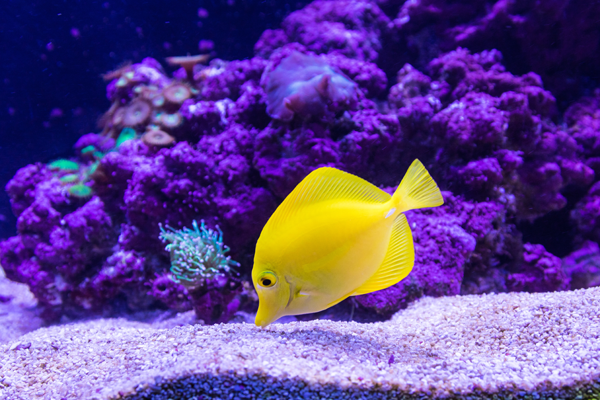
    Yellow tangs are a fairly common fish in the saltwater hobby. They fall under the category of surgeonfish due to their very sharp scalpel-like appendage right before their tail. They use this to fight other tangs or in self-defense against predators. Their vibrant yellow coloring makes them pop in any home aquarium. They’re very intelligent fish with a large assortment of personalities.

    As herbivorous fish, yellow tangs spend their day grazing algae and seaweed in the wild. In the aquarium, there is normally not enough algae growing to sustain their grazing diet. As owners, it is necessary to feed and give the tang enough grazing material (algae sheets) to help keep it full and happy. This fish will happily feed on meaty foods as well but the bulk of its diet should be herbivorous. They can grow up to roughly 8″ and are very active swimmers. It is not recommended to keep them in an aquarium smaller than 100 gallons, and it is preferred to keep only one in an aquarium unless they are introduced together. They do become territorial and will fight other tangs. Their aggression will not only be between themselves and other yellow tangs but other tangs too. They will fight other fish that are very similar in shape and color to themselves. It is especially not recommended to mix yellow tangs with purple tangs or sailfin tangs due to their similarities in shape.

    These gorgeous fish should only be added to an aquarium once it is well established. They should not be one of the first fish introduced into the aquarium. They are very prone to getting diseases such as marine ich so having a stable and well-established aquarium will help prevent them from getting infections.

    Yellow tangs are reef safe and they should not bother coral. If algae are present in the aquarium, they may graze on the algae growing around the coral. Unfortunately, they will be more than happy to mow down any macro algae put into the aquarium so keep that in mind.

    Yellow tangs are very wonderful fish to have in a home aquarium. They’re vibrant and stand out very well from the background and are always the center of attention for visitors. They’re highly intelligent and a pleasure to observe. The one in my aquarium always acts tough but runs into the rocks once my hand is in the aquarium for coral spot feeding. Learn about more saltwater fish by checking out other articles and care guides by following this link.

  • Ocellaris Clownfish for beginners

    Ocellaris Clownfish for beginners

    Clownfish Information

    The ocellaris clownfish is one of the first fish saltwater hobbyists add to their aquarium. They’re hardy, easy to care for, and popular beyond belief but sometimes go by another name (Nemo). They can become territorial so if a hand is in the aquarium, don’t be surprised to feel a pinching bite from a clown.

    There is a pretty common fact that some may not know. Clownfish are born male and the dominant one in the pair becomes the female. Another interesting bit of info is that female clowns become larger than males. If a female passes away, the male will pair with another female or find another male and will fight for dominance to become a female. If/when a male turns into a female it cannot transform back into a male. Only one pair of clowns is recommended for a fish tank. Any more and there will most likely be quite a bit of fighting which stresses the fish out or can cause harm to them. If one of the fish passes away, it is best to replace it with one of a similar size. For example, try not to introduce a 4″ clown with a 1.5″ clown and hope they pair.

    Many new hobbyists begin their saltwater journey with the common ocellaris clown. Once experience is gained and saltwater aquarium knowledge grows, people find interest in the rarer species of clownfish. Such as snowflake clowns or black ocellaris. There are many other variants of ocellaris clowns to choose from. This guide was made to provide a complete care guide to keeping clownfish.

    Aquarium Requirements

    Ocellaris Clownfish can grow to a size of roughly three inches. It’s not recommended to keep clowns in aquariums smaller than 20 gallons, due to their length at adulthood. Clownfish have very similar water parameters to most other saltwater fish which are:

    • Temperatures between 72 and 78 degrees Fahrenheit
    • dKH levels between 8 and 12
    • pH between 8.0 and 8.4
    • Salinity levels between 1.020 and 1.025 sg.

    Providing these water parameters is key to keeping a clown happy but keeping them stable is also important for their long-term health.

    It is beneficial to provide live rock in the aquarium so your fish has places to hide when stressed. An anemone is a fantastic addition but it is not mandatory to have for your clownfish.

    Anemone Hosting

    Be aware that many tank-raised clownfish will not automatically go into an anemone and host In it. Sometimes it is quite tricky to get them to do so. There are a few things to try to get them to host in an anemone.

    First, if the fish is already in the aquarium, place a video or image of clownfish swimming in anemones against the glass. This may give them the urge to try and do the same. They may see other clowns safely swimming through anemones and instinctively be drawn to them.

    clownfish in anemone

    Second, if the anemone is in an established aquarium, and new clownfish are being introduced, try to put the netted clownfish into a translucent tube. Make sure the tube is wide enough so the clowns can safely travel through it. Also, be sure the end of the tube is almost touching the anemone. When the fish make their way down, it will force them to come into contact with the anemone which may cause them to host in it.


    Third, give it time. Sometimes clownfish will naturally make it’s way to an anemone and host it. I have had them a host in many other things such as frogspawns, torch coral, and green star polyps. Clowns are oddballs but they figure it out eventually.


    Lastly, it’s ok if the clowns don’t host in an anemone. It is remarkable to see them spend all day rubbing against the anemone’s tentacles, feeding it, and just doing their thing but if they are being very stubborn and won’t host, it is not worth stressing them out more than necessary.

    Clownfish Food & Diet

    They should readily eat any type of food offered such as flakes, pellets, or frozen food. Providing different types of food will assist in giving your fish a well-rounded diet! If for some reason your clownfish does not want to eat, try mixing your food with garlic or garlic extract. You can read about feeding garlic to your fish here.

    Tank Mates

    Clownfish do well with most saltwater fish but do not keep them with fish that will try to eat them such as eels, groupers, lionfish, and most other predatory fish. Instead, try to keep clownfish with more peaceful fish such as:

    • Dwarf Angelfish
    • Tang
    • Gobies
    • Chromis
    • Wrasse

    Most types of marine fish are compatible with clowns. Clownfish are also completely reef safe and will not bother coral or invertebrates! They may occasionally attempt to host euphyllia or other coral with tentacles.

    Breeding Clownfish

    If a bonded pair finds an aquarium suitable there is a chance of them laying eggs and producing offspring. Eggs are commonly eaten by other animals in the aquarium without human intervention. Clownfish will often breed in a display tank with no additional work required.

    Building clownfish breeding tanks are pretty straightforward. Many breeders use a 10-gallon aquarium for a pair of clowns. Connect the breeding tank to a sump for filtration. The aquarium itself should be bare bottom with only a clay pot (3 – 5 inches) or pieces of clay tile. The sump should have a heater, protein skimmer, and live rock.

    Keeping water parameters pristine is very important. Also, feed your clownfish a variety of foods at least twice a day to increase their body size to prepare them for breeding. Temperatures can sit around 78 to 80 degrees to motivate your clownfish to breed.

    Egg Care

    It will take roughly 6 to 8 days for your eggs to hatch! Before eggs hatch prepare live food to give them something to eat right after hatching. Feed live rotifers when eggs first hatch then baby brine shrimp after a few days of growth. Setting up a hatching tank will make it easier to care for your eggs and fry. Clownfish eggs will always hatch at night and require total darkness.

    Set up your hatch tank with a heater, sponge filter, and air stone. Seed your sponge in the breeding tank a few weeks before putting it into the hatching tank. Also, be certain that the aquarium, heater, and air stone are cleaned well with hot water before setting up.

    Place the aquarium in a dark location and completely cover all sides with black construction paper or anything that will block out the light. Cover the light that’s on the heater with black electrical tape. Provide a light but be sure to have it incredibly dim because too bright light can kill newly hatched fry.

    Hatch Day

    On hatch day, remove the eggs from the breeding tank and place them into the hatching tank. Before that, make sure the heater’s temperature is the same as the breeding tank. Keep your hatch tank light schedule the same as the breeding tank schedule.

    Place the eggs into the breeding tank and adjust the air stone so that air is flowing over the eggs. This is crucial because eggs need movement to stay alive. A few hours after the lights go out, the eggs should hatch. A very dim flashlight can be used to check.

    Begin feeding live rotifers many times a day and check the water parameters to make sure that ammonia, nitrates, and phosphates do not spike. Fry are very sensitive to water parameter changes so keeping things low and stable is important!

    Final Notes

    Clowns are very fun fish with unique personalities. They’re great as introductory fish into saltwater aquariums but also amazing animal companions in the long term. They can get territorial but the little nibbles are worth dealing with. If you’re looking to learn about other saltwater fish, check out the growing list of care guides for saltwater fish.

  • The Vastness of Aquatic Enclosures!

    The Vastness of Aquatic Enclosures!

    Aquarium Hobby at a Glance

    There are many different types of aquarium-like enclosures a person can have in their home.  They range in all sorts of sizes and levels of difficulty but they are all unique in their own way. From micro enclosures like jarrariums to enormous saltwater aquariums and ponds, there is a niche for everyone! We will broadly talk about many different enclosures for aquatic animals and the level of difficulty of maintaining these enclosures. We will also talk about basic designs and variety in setups.

    Aquatic Jarrariums

    One of the easiest and probably cheapest enclosures for aquatic critters is what is called a jarrarium. A jarrarium can be very simple but also very complex. There are two main types of jarrarium, open or closed. One requires the lid to remain open for oxygen to exchange with water, allowing you to feed the inhabitants, clean the glass, and change the water if it becomes overgrown with algae. The closed jarrarium is filled with inhabitants and sealed in hopes that it will become a self-sustaining system. If built correctly closed systems can be self-sustaining for a few years.

    Eco-Sphere

    The most important and expensive item needed for these types of setups is good glass containers that can hold water. For the most barebone jarrarium, a glass container is needed but the only additional material needed is a scoop of water and substrate from your local pond or lake. These water bodies usually are fully loaded with tiny critters such as dragonfly nymphs and snails. This type of jarrarium is called an eco-sphere. Once the water is scooped out, it’ll be quite murky in appearance, but give the loose substrate time to settle at the bottom of the container and it should clear up. Most people do not add any critters into an eco-sphere but instead observe what type of wildlife comes out of the substrate. Eco-spheres help give an insight into many different critters that are in a person’s local water systems. Many of these eco-spheres are short-lived but a great educational piece for kids and adults.

    Open Jarrarium

    A regular jarrarium usually consists of a soil part, a substrate part, and then the decor that is placed on top. This type of jarrarium usually takes a bit more planning. The use of live plants and mosses is almost a necessity to help intake nutrients in the water, help prevent algal blooms, and provide oxygen for the animals within. Also, live plants are far more beautiful than their plastic counterparts (in my opinion). The livestock is pretty limited for jarrariums. It is usually limited to shrimp, snails, and possibly a betta fish if the jar is large enough. Shrimp come in many gorgeous colors, varieties, and sizes but on the other hand, be careful with snails because some can infest your newly built jarrarium. The jarrarium placement is very important. Changing room temperatures can harm the critters in their enclosure. Most aquatic animals prefer stable water parameters, such as stable temperatures, otherwise, they can be stressed which can lead to death. The amount of light is also a factor to think about. Too much direct sunlight will cause algal blooms and also raise water temperatures and too little will cause your plants to wither away and die. Consider using an artificial light source such as a CFL light above the jarrarium.

    In my opinion, jarrariums are a very fun, easy, and cheap way to get into the world of aquarium keeping. The cost could be as little as just needing to purchase a glass container, but it can still become a very diverse and unique ecosystem. Some jarrariums look like works of art and are gorgeous pieces of decor in a person’s home or office.

    Freshwater

    Next along the lines is freshwater keeping. There are hundreds of different types of freshwater systems a person can put together and it can get a little overwhelming to think about. Different critters require different pH levels, water temperatures, and so on. Also, thinking about live plants will determine the species of fish you can keep. In my opinion, the most important factor to determine the type of fish that can be kept together is the size of the aquarium, and once the size is determined, you can get into deciding what species of fish will be comfortable in that size of an enclosure. I have been in this hobby for ages and worked in the industry. It is terrible seeing fish brought into the store that has damaged or misshapen bodies because they were forced to live in an aquarium that was too small for them.

    From experience, a fish won’t stop growing because of the size of the aquarium. The fish’s growth will be stunted and it will cause its overall health to decline. Anyway, once the aquarium size is chosen the next step is to decide on the fish and decor. To start, many choose the simple route of plastic plants and rocky decor which is perfectly fine, but others will decide on getting more in-depth and setting up an aquarium with live plants and mosses. Putting live plants into an aquarium opens up a new can of worms and potentially increases in difficulty of keeping the aquarium running successfully.

    For ease and simplicity, many fish keepers begin their freshwater journey with fake plants, decor, substrate, hang on the back filter, and a simple LED light. This is the standard aquarium and the easiest route that can be taken. Once interest in the hobby continues, things can branch into more unique niches. Instead of a hang-on-the-back filter, maybe use a canister filter or no filter at all! Instead of a regular old light, a person can try using more intense lights that will give the ability to sustain plant life in the aquarium. The unique alterations that can be made are limitless but we will not be getting into the elaborate details in this article.

    Paludariums

    Paludariums are a little different from a standard aquarium. A paludarium has both a land mass and a water body inside of a glass box. This opens up many doors for hobbyists because now animals such as semi-terrestrial crabs, frogs, or other critters can be added into an enclosure. This type of setup requires a little more knowledge and work to put together. There is quite a bit of planning that must be done before creating a paludarium.

    Unfortunately, the limited size of the paludariums does not allow for species mixing. For example, mixing fiddler crabs with fire-belly toads. There is a great chance they may become territorial in such a small space, see one another as potential food, or just compete for food within the enclosure. This could lead to stressful situations for the animals and possibly put them in dangerous situations.

    There are many things to consider when setting up a paludarium such as: What animal will you be keeping? Do you want water filtration? Do you want a waterfall setup? How deep do you want the water body? How much landmass? What plants do you want to keep? What kind of fish? The questions go on and on, but I am trying to get your mind thinking of some of the considerations that need to be taken for a paludarium.

    Setting up and keeping a paludarium running is more difficult than setting up a freshwater aquarium. It takes far more planning to get the design right and deciding what terrestrial and aquatic animals to put it can be a challenge.

    Terrarium/Vivarium

    Many people use these terms interchangeably but there is a difference between the two. A terrarium is designed to primarily raise plants and a vivarium is used to house an animal. A terrarium can have animals but it can just be a glass enclosure filled with unique and exotic plants. On the other hand, a vivarium is designed to house and recreate an animal’s habitat. Common animals that are placed in vivariums are Dart frogs, geckos, and frogs. Vivariums and terrariums do not have a water body to house fish and other aquatic animals but a vivarium may have a water dish for the critters to drink from. They can be microhabitats or enormous enclosures that fill a whole room’s wall. Terrariums and vivariums are easier to set up and maintain than a paludarium but are a little harder to keep than a freshwater aquarium.

    Saltwater

    There is a lot of intimidation for aquarists that are thinking of transitioning into keeping saltwater aquariums. I would not set up a saltwater aquarium as a beginner hobbyist. I would gain knowledge about a freshwater aquariums, dip my toes in live plants, and research saltwater aquarium setups and keeping. Once all that experience and knowledge is gained, only then would I consider setting up a saltwater aquarium. Keeping a saltwater aquarium is not that hard. Keeping it well is where the challenge is and the cost of setup and maintaining it is what scares many away. Try freshwater and if you enjoy fish keeping consider setting up a saltwater aquarium.

    The two primary niches of keeping saltwater aquariums are reef tanks or fish only. Many who set up reef aquariums are doing it to end up growing coral in their aquarium. There are many critters in the saltwater hobby that are not compatible with reef aquariums. For example, pufferfish wholeheartedly love devouring hermits and snails that would normally be found in a reef. Parrot fish will graze down your stony coral with ease. There are starfish and urchins that will also destroy a reef system. These are just a few examples of incompatibilities between animals. Decide what fish you would like in your aquarium and that will determine whether a reef tank is good for you.

    Fish Only Aquarium Setup

    Fish-only aquariums will not have corals and may or may not do well with crustaceans. Predatory aquariums are usually why hobbyists do not build a reef aquariums. Common critters that are put into fish only systems are angelfish, lionfish, eels, pufferfish, parrotfish, wrasses, stingrays, and many more. This type of setup will need a large filter because of the dietary needs of most of the animals. A sump system is recommended with a very good protein skimmer. Usually predatory aquariums and fish only setups are large (125+ gallons). This is because many of your predatory fish get very large.

    Reef Aquarium Setup

    Reef aquariums are quite different. They need good lights for corals, they will have crustaceans, and they can be very small or very big. I would still recommend a sump system with a protein skimmer for reefs but I would also look into setting up a refugium in your sump for additional filtration. Larger systems are easier to maintain but there is quite a fondness for nano reefs as well.

    There are many different types of coral which broaden the spectrum even more. SPS corals need pristine water conditions so are usually kept in an SPS reef aquarium, while other corals like zoas and leathers do need specific parameters and can be put into a mixed reef or a species-specific aquarium of their own.

    There are hundreds of different reef-compatible fish and crustaceans. I will not be going into the details of this because there are so many. Think of the type of fish you would like and research what size fish tank it requires and whether it is reef safe. Also, check the temperament of the fish. Many are very peaceful but others will get territorial. These are the main parameters for these fish.

    Saltwater aquariums will easily cost an aquarists hundreds to thousands of dollars to set up. Reef systems are especially costly due to the lighting needs and the addition of quite a bit of live rock. That is why making sure this hobby is for you is important before walking down this path. Saltwater aquariums are for hobbyists who know a thing or two about aquariums and understand how water systems work.

    Ponds

    Ponds are not as common in the hobby as the others. Many people do not have a yard large enough for a pond. Regardless, they are a great place to relax. The primary fish kept in a pond is a koi fish. They are very similar to goldfish but are usually longer and grow larger. Their colors are magnificent! Other animals that may naturally come around ponds are frogs and turtles.

    Ponds also can have different plant matter growing in them. Lillies and floating water lettuce are two that come to mind that is quite commonly found in home ponds. They are a nice addition and provide cover for your fish from predators such as raccoons and herons. Also adding a little bit of green color never hurt.

    There are many things to consider when setting up a pond. They can get quite expensive. Picking a location is important. More sunlight will lead to more algae growth in your pond but also too much shade may cause other plants from flourishing inside. During the initial setup, choosing a pond liner is very important. A durable liner may cost more at first but will hopefully prevent leaks from happening which will save you money and stress in the long run. A waterfall feature will add great aeration to the pond but a pond pump costs a lot of money! Think about other aerating fixtures to get oxygen into your system.

    The following is more dependent on where you live. In the United States, the Midwest goes through four seasons. Pumps need to be shut off for the winter, koi need to be either taken inside or fattened up for the winter, springtime will lead to pond cleaning, and so on. The pond needs to be deep enough for fish to be kept in there through winter. These are obstacles that need to be overcome in the Midwest but it’s not as big of a problem in warm states like Florida or Arizona.

    Ponds are wonderful! They are a great place just to cool down and enjoy nature in your backyard but they are quite difficult to maintain and can be costly. The chance of losing a fish to predators is unfortunate but it’s a risk that is taken by pond keepers due to its beauty! Quite a bit of research and preparation should be conducted before setting up a pond!