Tag: shrimp

  • Putting Together Your First Freshwater Jarrarium!

    Putting Together Your First Freshwater Jarrarium!

    Putting together a jarrarium, as simple as it may seem, can be intimidating at first. Luckily, once all the material is collected it becomes really simple. It seems to be a growing hobby and it is quite a lot of fun to put together. This is a step-by-step jarrarium guide that will hopefully give you a good idea of how to put together an eye-catching jar.

    Due to their small footprint, a jarrarium will begin to look quite cluttered when adding equipment. A preset heater is highly recommended to help keep a stable water temperature, but it is not required if your residence is consistently at a set temperature. Adding filtration is not too common. Many jarrariums rely on water changes to maintain good water quality.

    Step 1: Finding a Container

    We of course need to begin with acquiring a jar for the new jarrarium. Glass containers are most commonly used. I have seen old glass bottles, vases, ice buckets, and so many more things used as a jarrarium. I do my best to have my jar be at least 1 gallon but smaller or larger is always a possibility.

    The most important thing is to make sure that the container is clean! DO NOT use soap when cleaning. At most use vinegar and then thoroughly rinse the container. Once the container is ready we can move on to the next step.

    Step 2: Adding Soil

    Once we have the glass ready it is time to add some soil! I would recommend adding organic soil with compost into your jar. Avoid soils with fertilizer because it may add undesirable nutrients to your jarrarium. Also, certain soils with fertilizers may not be good for the inhabitants of your new jar. While adding the soil be sure to compact it down in an attempt to remove any air bubbles. About an inch of soil should be present once it is compacted.
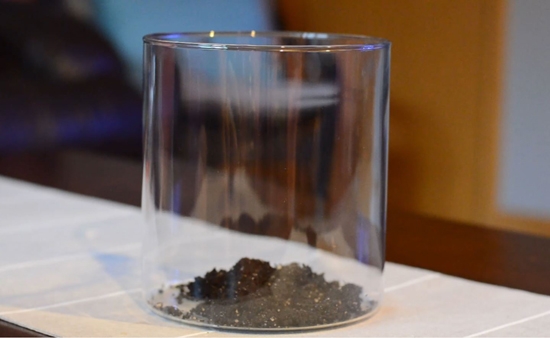
    Once the jar is up and running it is highly recommended not to disturb the soil portion of your setup. In a few steps we will be adding a “seal” to prevent the soil from getting out but for now, let’s move onto adding the hardscape.

    Step 3: Adding the Hardscape

    Many different types of hardscapes can be used for a jarrarium. I used a piece of driftwood when I was putting together this one. Be mindful that it is preferred to boil or soak your driftwood before adding it into an aquarium or jarrarium otherwise, it runs the risk of releasing tannins into the enclosure. The tannin is not dangerous but it causes the water to look yellow or brown for a long period. Large pieces of driftwood can be used or spindly spider wood can be used.

    Rocks are also commonly used for an enclosure. Be mindful, because rocks that are made of limestone will raise your pH and water hardness levels, which may be undesirable when keeping live plants. Common rocks that are used are river rocks or lava rocks. Check out local fish stores for rock options.

    Lastly, a jarrarium can have any aquarium decor that will fit into it for decoration. A tiny pirate ship, skulls, pillars, etc. are fair game but make sure that it will fit or at least not crowd the whole enclosure. With any of the decorations, make sure that it is firmly touching the bottom of the jar for stability.

    Step 4: Adding the Seal

    Now is the time to add substrate to seal the soil. I recommend adding 1″ of a substrate on top of the soil. In this jar, I used Fluval Stratum, but other substrates can be added such as the Eco-Complete planted aquarium substrate!
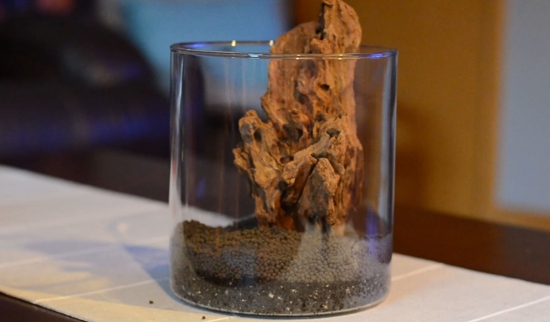
    The substrate will seal the soil in place to help prevent it from floating up and leaching nutrients but it will also allow plant roots to reach down there and use what nutrients are in the soil. We will have to be careful when adding water to not disturb the soil and substrate!

    Step 5: Adding a Portion of Water

    Steps 5 and 6 can honestly be interchanged. I chose to add roughly a third of water into the jarrarium before adding plants. I did this to see whether my substrate sealed the soil correctly and I also wanted to have some water in the jar before adding plants. As stated above, be sure not to allow your substrate to be disturbed! You do not want the soil to get kicked up.
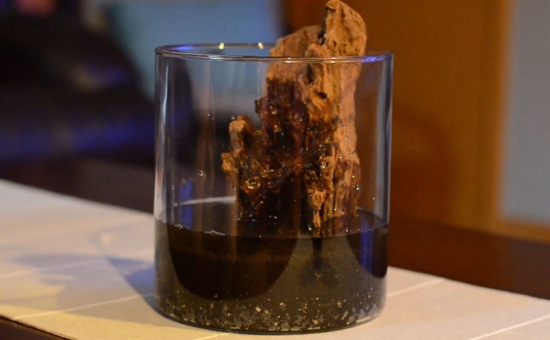
    Allow the water to run down your decoration or create a strainer to let the water trickle down. A cheap way to make a strainer is to poke holes in the bottom of a plastic bottle and pour the water into there. The water will probably get a little murky. After a few days, most of the murkiness should settle.

    Step 6: Planting

    Adding plants is probably my favorite part of putting together a jarrarium. It brings the enclosure to life! You can always experiment with many different plants but to start I would recommend adding a low light Anubias, some riccia for the foreground, and perhaps some java moss. This is a great way to dip your toes into keeping live plants in an aquarium-type setting.

    In this enclosure, I have dwarf hair grass and moss but I am only experimenting to see how well they do. If they do not grow well I may swap out the dwarf hair grass with an easier-to-keep plant.

    Step 7: Filling to the Top

    Now it is time to finally fill this jarrarium to the top! Use your strainer or piece of decoration and slowly and gently fill it with water. Once the water has reached your desired height, you are done with setting up your new jarrarium!
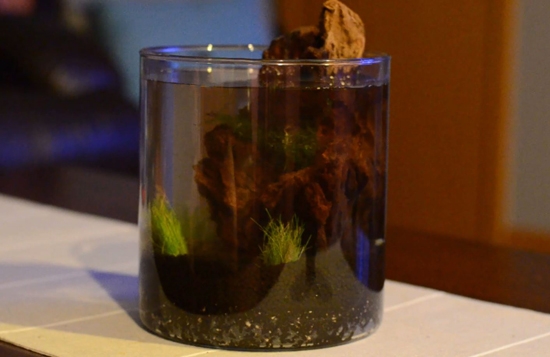
    The jar may be murky or discolored. Give this a few days to pass. The substrate and the tiny soil particles will settle and the coloration should clear up! Throw in a few pieces of fish food to begin the nitrogen cycle and begin considering what livestock to add to the enclosure. Also, consider adding an artificial light source and avoid having your jar too close to a window. A light fixture with a CFL bulb will suffice. There isn’t a need to go out and spend hundreds of dollars on a light fixture. Being so small with the potential of having swinging water parameters we will be limited to what can be added to the jar. I would only recommend small shrimp and snails for anything smaller than 5 gallons. At 5 gallons a betta fish could be added with a heater.

    Final Notes

    There are a few things I would highly recommend purchasing when setting up a jarrarium or any aquarium for that matter. An API Freshwater Master Test Kit can be used to keep track of ammonia levels, nitrates, and so on. This is important for really small enclosures such as this. It is also important to have while your jarrarium is going through the nitrogen cycle which takes roughly 6 weeks. During this time we will allow the food we threw in to decompose and we will not add any livestock. Only top off the water as it evaporates and do not replace any water during the cycle. The nitrogen cycle is completed when your test kits read 0 ammonia, 0 nitrites, and a hint of nitrates (10 ppm).

    A water conditioner, like the API Tap Water Conditioner, is recommended if using tap water to remove unwanted chlorine from your water. This will help make the water stable for your little critters. Other than that, just a few things like shrimp food, nets, and buckets should be kept. Lastly, enjoy experimenting with your new jarrarium! Hopefully, this guide gave a good idea of how to put one together!

    Check out this video of me putting together this jarrarium:

  • 4 Unique Saltwater Animals to Consider For a 30 gallon aquarium

    4 Unique Saltwater Animals to Consider For a 30 gallon aquarium

    Filling a 30-gallon saltwater aquarium with animals can be a stressful task. There are just so many options to choose from. This guide will go over a few unique fish and crustaceans that can be kept in a saltwater aquarium. There are many others out there but these are a few that really stand out to me that aren’t incredibly hard to keep.

    1. Yellow Assessor

    The Yellow Assessor, otherwise known as the Golden Assessor Basslet, is not a very common fish in a reef aquarium but it is fantastic! They can get a little territorial like other basslets but overall are quite a peaceful fish that will not bother invertebrates. It is perfect for reef aquariums! Provide quite a bit of hiding spots and rockwork to dull the aggression towards other fish. This fish is carnivorous so providing meaty food such as mysis shrimp or brine shrimp is a must! It will max out around 3″ in size and is an excellent addition for aquariums that are 30 gallons or larger. They have a gorgeous yellow body with a touch of red on its fins. A unique feature of this fish is that at times it will swim along rocks sideways or upside down. It usually gives new fish owners a scare but it is perfectly normal!

    2. Geometric Pygmy Perchlet

    The Geometric Pygmy Perchlet is a grumpy-looking fish with red and white coloration on its body. It has a much higher dorsal fin than many other fish. It can be a little territorial to other tank mates but it normally minds its own business. This fish is carnivorous so providing meaty food is very important!

    Pygmy Hawkfish

    It will max out at 2 inches in size and will do very well in a 30-gallon reef aquarium. One unique attribute of this fish is that it will actually perch on rockwork and sit there very still waiting for food.

    3. Watchman Goby + Pistol Shrimp

    Now a watchman goby is not very unique but there is a great possibility that if a pistol shrimp (otherwise known as a snapping shrimp) is also introduced into the aquarium, the two will pair up, share a burrow, and live life together. The goby will keep a watch out and protect the shrimp and they will at times share food. It is really interesting to observe these two working together and protecting their burrow. The pistol shrimp is also able to use its claw to create a “snapping” sound that can be heard outside of the aquarium. This sound is used to scare off predators and the pistol shrimp uses the claw as a weapon to catch prey.

    Image by Haplochromis on Wikimedia

    Both of these creatures are great for aquariums because the watchman goby will help keep your sand bed clean sifting for plankton while the shrimp will collect uneaten food that falls to the bottom of the aquarium. For the most part, the snapping shrimp is harmless except with small shrimp. The watchman goby will max out at a size of 4″ and this duo is a perfect combination for a reef aquarium. Check out the Watchman Goby – Complete Care Guide to learn more about this fish.

    4. Mantis Shrimp

    The mantis shrimp should be kept alone in a species tank. They are highly intelligent and very aggressive. Due to their aggression, only one mantis shrimp should be kept in an aquarium. Their very colorful bodies are truly fascinating and their hunting tactic is even more so. They primarily use their club-like appendage to hunt and can attack crustaceans, fish, and other unsuspecting animals with their powerful strike. They have enough power to crush snail and crab shells. This is why they should be kept alone in an aquarium. Crustaceans are recommended to throw in from time to time as a quick snack for the mantis shrimp. Otherwise, the mantis shrimp should be fed live feeder fish, frozen scallops, shrimp, and other meaty food.

    Image by prilfish on Wikimedia

    A mantis shrimp can use its claws which are as powerful as a .22 caliber bullet to break the glass of its enclosure. I would highly recommend using acrylic instead of glass for the mantis shrimp’s enclosure. Other than that, it is quite easy to set up their aquarium, and are fairly easy to care for.

    Final Thoughts

    Hopefully, this list gives a good idea for hobbyists who are looking for something different in their aquarium or are looking for a very niche animal to keep. Marine animals are very unique and have great personalities so keeping them is always a great time! Some require precaution before keeping but after that saltwater systems are quite enjoyable.

  • The Cleanup Crew in Reef Aquariums

    The Cleanup Crew in Reef Aquariums

    The backbone of many saltwater systems is a good cleanup crew. Algae will opportunistically try to use the nutrients in your water body. A saltwater aquarium can be plagued with quite a bit of algae if water parameters are high. It is impossible to have an aquarium without algae due to the feeding and production of fish waste. Invertebrates and fish are used to help prevent algal blooms. Invertebrates such as snails and crabs can wedge themselves into areas many fish cannot and eat food that has fallen into these crevices. The main goal is to enjoy this hobby and not suffer from algal blooms’ hands. A good cleanup crew can help!

    Cleanup Crew for Reef Aquariums

    Reef aquariums can have a large assortment of critters to help maintain your aquarium and keep your algae at bay. I will do my best to list the best ones for the job and will provide information on the potential flaws of each. Before adding any new invertebrate or fish test out your salinity and water parameters with an Aquarium Salinity Refractometer and an API Reef Master Test Kit! Make sure your water parameters are in check before adding any new wildlife.

    Snails

    There is a large variety of saltwater snails that can be thrown into your reef aquarium. They help clean up algae, eat food that is left behind by fish, and help clear up your sand bed. The biggest problem with snails is that they can be quite clumsy and will sometimes fall upside down and not be able to flip back over. This can become a nuisance because we as hobbyists have to come to the rescue. The most common snail to do this (in my opinion) is the Mexican Turbo Snail. They somehow always seem to end up flipped and require a little assistance from us. Snails will sometimes climb out of an aquarium with an open top and fall to their deaths. Lastly, like many inverts, snails can and will knock over coral and move rock that is not placed well. I will go a little more in-depth on which snails are great to have in your reef system!

    Zebra/Mexican Turbo Snail

    I like to call these snails the “tanks.” They grow large and are remarkable at cleaning up an aquarium with algae. They are specialists at decimating hair algae but will also eat many other types of algae. As stated above, they commonly flip themselves and cannot flip back so pay close attention to that. Due to their size, these large snails have the power to move rock and coral that are not properly placed/glued down. They’re a great addition to larger reef systems but may need supplemental food if no algae are present. Omega One Seaweed Sheets are commonly used to feed this snail and fish when no algae are present.

    Bumblebee Snails

    The bumblebee snail is not as commonly found but they’re a great addition if you can find them. They’re especially a good add-on because of their tiny size. These little invertebrates can crawl into the smallest nooks and crannies of your aquarium and find detritus and uneaten food. This is great because they are carnivorous and will happily eat uneaten meaty food such as frozen Mysis shrimp. If food is scarce for this little snail, it may turn and attempt to eat other slow-moving snails! They will occasionally burrow in the sand which will help aerate it. The black and yellow coloring on these snails resembles a bumblebee which is where the name comes from.

    Nassarius Snails

    Nassarius snails sometimes called zombie snails are exceptionally great snails that will help aerate your sand bed. These snails are carnivorous so they will happily eat any meaty food that is uneaten. They also spend most of their time in the sand and will rise from the depths when fish feeding is occurring. They should be introduced into an established aquarium because they require a sufficient amount of detritus and other food. Like many invertebrates, they are very sensitive to water parameter differences when introduced so a drip acclimation is recommended.

    Tiger/Fighting Conch

    The conch is a wonderful addition to a larger reef system. These critters spend all of their time grazing on the surface of your sand bed. They are omnivores and will consume just about any food they can find. They do a great job of keeping your sand nice and clean and will burrow partly into the sand once it is done grazing. The biggest problem with the fighting conch is that it will reach about 4″ in length at full size.

    Trochus, Astrea, Nerite Snails

    These snails are different but I clumped them together because they have very similar jobs. They are all fantastic at consuming hair algae on live rock and also nibble on cyanobacteria that may be present in your aquarium. These three snails do not get as large as the Mexican and zebra turbo snails but can still pack a punch! They’re also a little showier because of their coloring and shell shapes. They’re great for all types of hobbyists.

    Fish

    There is a handful of fish that happily assist in keeping your aquarium clean and free of algae. There are a few more requirements to keeping certain fish such as aquarium size and experience levels but I will go into more detail below.

    Tangs/Rabbitfish

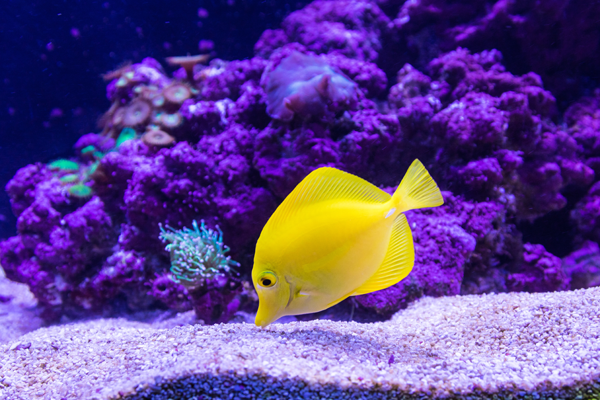
    I love having tangs and rabbitfish in my reef aquarium. They’re remarkable grazers and just a joy to have around. The problem with these fish is they need a large aquarium due to their size, feeding habits, and active personalities. Except for the Tomini tang, I would not recommend keeping tangs in an aquarium smaller than 125 gallons. Yellow Tangs spend much of their day grazing and actively swimming around so having quite a bit of space for them is a must.

    Certain species of rabbitfish will be fine in 75 gallon aquariums but I would also not keep most of them in an aquarium smaller than 125 gallons. Rabbitfish also have a venomous barb in their dorsal fin. So please be mindful of their ability to sting you! Lastly, the rabbitfish can occasionally eat LPS as well as soft coral so be mindful of keeping them with those types of corals. Otherwise, they are fantastic to have and a thrill in an aquarium.

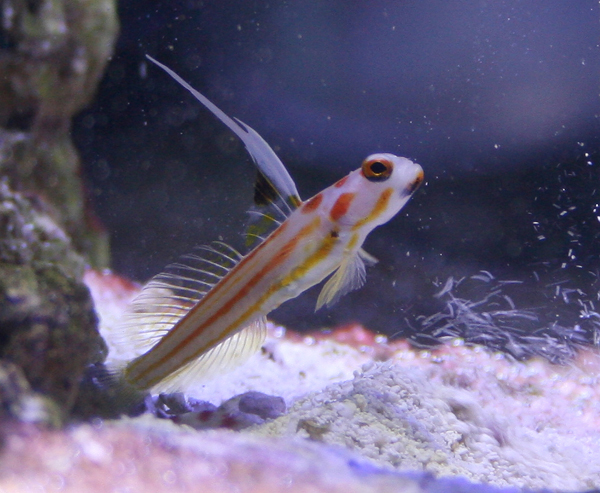
    Gobies

    Gobies are great at keeping a sand bed spotless! Due to their varying sizes, certain species are great for large aquariums but others can be put into Nano fish tanks. For example, a large sleeper goby would be great for a big reef tank and a Yasha goby is fantastic for a much smaller system. Keep in mind that a sandy substrate such as CaribSea Arag-Alive Sand and a deep sand bed should be used if keeping gobies. Also, these fish are notorious jumpers. A closed lid is recommended for these fish because of their ability to launch out of the fish tank.

    Photo by Sushi Girl1995 on wikimedia

    Blennies

    The main species of blenny I will mention is the lawnmower blenny. If there is an algae problem in your system, these fish will clear it up quite quickly. I would normally recommend only one blenny per aquarium unless your fish tank is incredibly large. These fish are usually quite peaceful but will fight with other fish that are similar in shape. They can occasionally nip on stony coral and clams so please be mindful of that! They will grow to approximately 5″ when they are fully grown and should be kept in aquariums of 30 gallons or more!

    Crabs/Shrimp

    This category of inverts can go be talked about for quite some time. I will provide as much information without adding too much unnecessary detail.

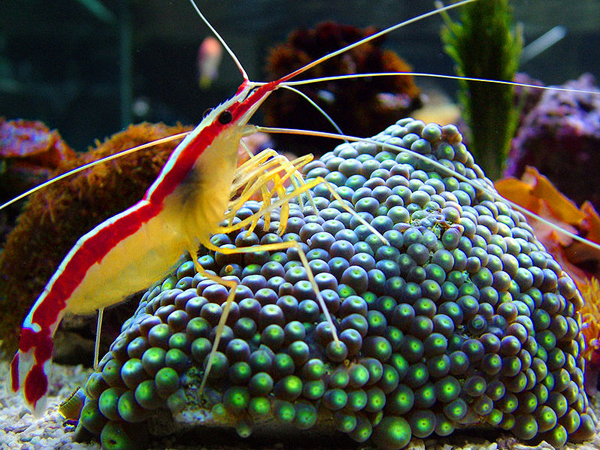
    Scarlet skunk cleaner shrimp are fantastic at cleaning your fish. They will hang out on rocks and wait for fish to stop in for quick cleaning. Many fish will allow this shrimp to climb on their body to find dead skin. They’re especially fantastic for larger fish. The only downside is they may try to snatch food from coral when feeding.

    Photo by Chris Moody on wikimedia

    Peppermint/camel shrimps are incredible at removing nuisance aiptasia from your reef tank. Give them enough time and the pests will be gone. Be careful though because once the aiptasia is gone, this invert may turn and eat up some of your coral! I personally do not add these into my system unless I have a big aiptasia infestation.

    Emerald crabs are very good inverts at removing bubble algae. They are normally green in color and lay pretty flat with the rocks and spend most of their day grazing on bubble and hair algae. Just like peppermint shrimp, be mindful because they can cause damage to coral!

    Hermit crabs are great because they will spend all day grazing and looking for food. They will eat just about anything offered. Remember that not all hermit crabs are reef-safe! They will fight one another as well as kill snails for their shells. It is recommended to have different-sized empty shells available for your hermit crabs to use.

    Final Thoughts

    Many different types of cleanup crews can be used in a reef aquarium. Do your best to fill every niche to maximize the efficiency of your cleaning squad! It will help make the healthiest and most stable aquarium. Living cleanup crews, water changes, and things such as Chemi-Pure Elite, media pads, and protein skimmers such as the Reef Octopus Classic 110 can help keep reef systems spotless!