Tag: two spot goby

  • Two Spot Goby – Complete Care Guide

    Two Spot Goby – Complete Care Guide

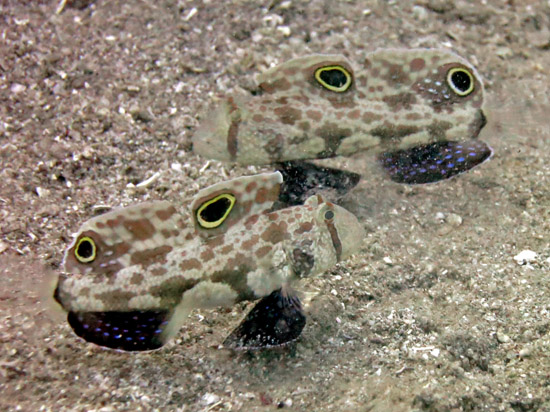
    The Two Spot Goby, sometimes called the Twin Spot Goby, Crabeye Goby, or Signal Goby, is a beautiful sand-sifting saltwater fish. It is predominately white, brown, and tan. It gets its name from the two vibrant yellow rings on its dorsal fin. The Twin Spot Goby is a fairly peaceful fish that keeps to itself, but it is more than happy to defend its territory.

    The Twin Spot Goby is considered a difficult fish to keep. This is primarily due to their finicky and niche diet and feeding requirements. Consider getting a different species of goby, like a watchman goby, if you’re looking for something easier to keep. This guide will cover Two Spot Goby’s aquarium requirements, food & diet needs, tank mates, and breeding.

    Aquarium Requirements

    The Two Spot Goby grows to about 3″, so it will do well in a 10-gallon aquarium or larger. Due to their dietary needs, I would recommend a much larger fish tank. If you choose to keep them in this size fish tank, it is recommended to also have a well-established refugium, with a large population of microfauna. The micro fauna will likely be their main source of food, especially when first introduced. Twin Spot Gobies sift through sand in search of food, so will require a sand bed between 1″ – 2″ deep. I recommend fine sand, such as the CaribSea Fiji Pink Sand. It is fine, but not as fine as the CaribSea Bahama Oolite Sand which gets stirred up very easily.

    Live rock is also recommended for your goby fish tank. Gobies may occasionally hide in live rock when stressed or startled. It also provides a lot of surface area where beneficial bacteria will colonize. Live rock should be either touching the bottom of your glass or very close to it to guarantee the goby does not burrow under and create a rock slide. Unsecured rock is asking to be knocked over, which can hit the glass and break the fish tank.

    Lastly, a well-fitted lid is recommended because most types of gobies are known to jump. Somehow fish always manage to find the smallest opening to jump out of.

    Water Parameter

    Keeping water parameters in check is incredibly important. The following are the water parameter requirements for the Two Spot Goby. Most saltwater fish have similar water parameter needs but there are a few exceptions.

    • Water Temperature: 72°-78° F
    • dKH: 8 – 12
    • pH: 8.1 – 8.4
    • Salinity: 1.020 – 1.025 sg

    Consider getting a High Range pH and KH test kit to test for pH & dKH. Keeping your temperature between 72° and 78° can be accomplished with a heater. Take a look at my guide which showcases some great aquarium heaters. Lastly, I would pick up a Refractometer from Amazon to keep an eye on your salinity levels. If calibrated correctly, refractometers are much more accurate compared to a hydrometer which loses accuracy due to salt buildup on the dial. Check out Different Salinity Reading Tools For Saltwater Fish Tanks to get an idea of other salinity testing devices available.

    Is the Two Spot Goby Reef Safe?

    Yes, the Two Spot Goby is reef safe. It should not pick on any of your coral because it is too busy sifting the sand for food. Keep in mind that any coral that is growing at the bottom of your aquarium or in the rock may have sand dropped on it due to the goby.

    Food & Diet

    The Twin Spot Goby will spend most of its time sifting through sand in search of microscopic organisms in the sand. As stated earlier, an established aquarium, a highly productive refugium, and a sand bed will help keep your fish fed and happy. Sometimes Two Spot Gobies are stubborn and refuse to eat prepared food, but with time and patience, they may decide to eat food provided to other fish.

    This fish species is carnivorous and will require a protein-rich diet. I recommend trying to feed the Two Spot Goby a variety of foods such as Mysis Shrimp, Brine Shrimp, and pellet food rich in protein. The New Life Spectrum Marine Formula has 36% Crude Protein. It’s a good choice of pellet food to supplement with other protein-rich foods.

    Tricks for Feeding

    A stubborn Two Spot Goby that refuses to eat prepared food may become a headache but, there are ways to help keep it alive while you attempt to train it to eat prepared food. First, you will need a long feeder syringe, and any coral food (Polyp Lab Reef-Roids, Reef Chili, Coral Feast, etc.). Next, you will have to find where your Two Spot Goby has its burrow. Lastly, mix coral food with water, suck it into the syringe, and dispense it very close to and in the sand near the goby’s burrow. This will help keep your fish fed, while attempting to train it to consume other foods.

    I would also recommend turning off or cutting down on the flow of water during feeding. This will give the food a chance to settle which may help your goby eat.

    Tank Mates

    Most peaceful saltwater fish should do well with the Two Spot Goby. It should do great with fish such as Anthias, Dwarf Angels, Basslets, Chromis, Dottybacks, Wrasses, Foxfaces, Tangs, and many others. It doesn’t use the same space as most other fish. It spends most of its time at the bottom of the aquarium sifting through the sand. With that in mind, there may be territorial disputes between this goby and other gobies and/or jawfish. I would make sure the aquarium is appropriately sized if you plan on keeping more than one goby.

    Two Spot Goby and Pistol Shrimp

    The Two Spot Goby does not mix well with a Pistol Shrimp. I would recommend keeping a Pistol Shrimp with a Yellow Watchman Goby. They will readily pair and become excellent partners in an aquarium.

    Breeding

    If purchased small, a pair of Two Spot Gobies may become a breeding pair. However, I have personally never attempted to breed this fish but, it is possible to do so in captivity.

    Final Notes

    The Two Spot Goby is a gorgeous reef safe goby that could make an excellent addition to your saltwater fish tank. Keeping them may be a challenge, and is not recommended for a beginner, but with experience and patience may become a great choice. If you’re newer to saltwater fish, consider getting an easier to care for goby like a watchman.

    Image by Rickard Zerpe on wikiMedia

  • 5 Great Saltwater Fish for a Nano Reef!

    5 Great Saltwater Fish for a Nano Reef!

    A nano reef is typically considered to be 30 gallons or less. The smaller the aquarium the larger the possibility of swinging water parameters. It is not recommended to add large fish or too many fish in a nano aquarium. Nano reef systems are a challenge but a rewarding experience. This guide will list 5 fish species that will do great in small reef aquariums.

    1. Hector’s Goby

    The Hector’s Goby is a fantastic addition to any reef system. It is a very peaceful fish and it will not bother any fish or invertebrate. It will graze on hair algae that grow in the aquarium and also feast on small worms in the fish tank.

    This goby maxes out at about 3″ in length and it will be perfectly happy living in an aquarium that is a minimum of 10 gallons. They do require a fair amount of live rock with plenty of crevices and hiding spots. They will seamlessly weave in and out of rock looking for food and algae to graze on.

    Image by Rob on Wikimedia

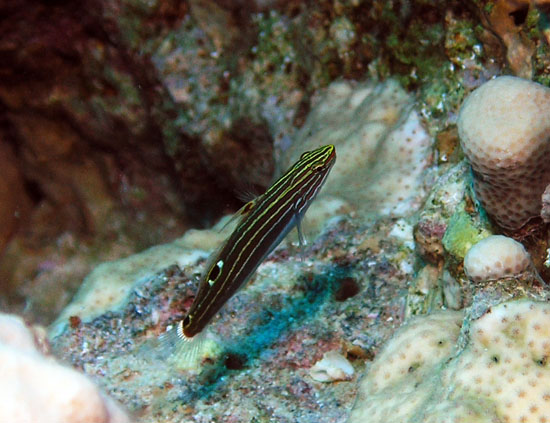
    Their pattern work and coloration are beautiful! They have alternating red/black and yellow stripes running down from head to tail, they have round blotches of black along their dorsal fins and hints of orange around their fins as well.

    They are omnivorous so providing a variation of algae based food and meaty food such as mysis shrimp is important. They will spend much of their time looking for food in rocks and sand. As a final note, Hector’s Gobies are completely reef safe!

    2. Ocellaris Clownfish

    Everyone knows about the clownfish due to the movie Finding Nemo. Since the release of the movie, clownfish were ferociously taken out of the oceans because many parents wanted “Nemo” at home for their kids. Luckily, the reef-keeping community has successfully found ways to breed clownfish and they are tank-bred to help prevent plucking them out of the ocean.

    Ocellaris clowns, like the Hector’s Goby, max out at around 3″ in length. Having a pair of clownfish is great! The female clownfish (dominant) will be a bit larger than the male. Ocellaris clownfish are perfect for nano reefs because they happily live in aquariums of 20 gallons or larger.

    Besides the common orange clownfish, there are many different variations of ocellaris clownfish due to the extensive breeding that has exploded in the hobby. There are now black & white, snowflake, platnium, and many other clownfish that can be picked up from retailers and online breeders. Also, many captive bred clowns will not willingly host in anemones but can be trained to do so. Check out this guide for tips on how to get a clownfish in an anemone.

    Like many marine fish, the clownfish is omnivorous and will happily take any food provided. A rounded diet of veggies and meaty foods is recommended. They will happily take pellet, flakes, and frozen meat foods. These are incredibly hardy fish and excellent for a new marine hobbyist.

    3. Yellow Clown Goby

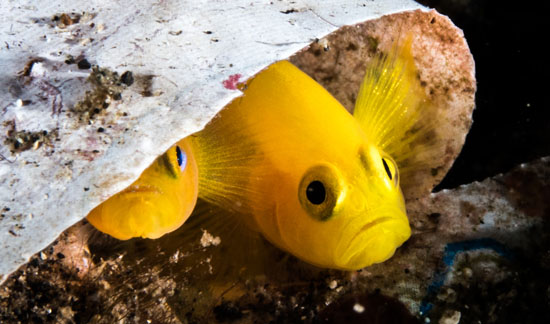
    Yellow Clown Gobies are oddly shaped but very enjoyable fish. They always seem to perch themselves in weird positions on rocks, glass, and corals. They’re a very fun and unique fish but great for a nano reef tank. Although they are small, their yellow vibrant bodies makes them pop in any reef system.

    Image by Rickard Zerpe on Wikimedia

    These fish are small, and they stay small. They max out at about 1.5 inches and are content with calling an aquarium that is 10 gallons or larger home. Clown Gobies are reef safe with most polyp corals but be mindful with keeping them SPS corals because there is a possibility of them nipping at them. They should not bother any other fish except other clown gobies in small enclosures.

    Yellow Clown Gobies are carnivorous fish. It is important to provide them with a variation of mysis shrimp, brine shrimp, and other meaty foods. Learn more about this fish by checking out the Yellow Clown Goby – Complete Care Guide.

    4. Firefish

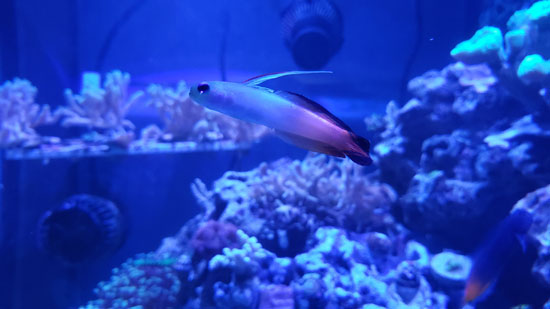
    The Firefish is a fantastic fish to add to a reef aquarium. Their vibrant white, red, and purple coloration is gorgeous! They have an enlarged dorsal fin which looks like a sabre which adds to their awesomeness!

    The Firefish will be around 3″ when they are fully grown. They are perfectly content with living in an aquarium that is 20 gallons or larger. They are completely reef-safe and will spend a good portion of the day hovering above the live rock waiting for food. It is recommended to provide them with a nice porous rock because they will dart into the holes when startled. They are known to be jumpers so a lid over the tank is also a good idea to have.

    Firefish are carnivorous. So providing a mixture of different types of meaty food is recommended. They will love brine shrimp (live or frozen) and mysis shrimp. Providing frozen food is much easier for fish but feeding them live brine shrimp is always a fun activity.

    5. Two Spot Goby

    This isn’t a very common goby that is kept in a reef aquarium but I believe this is a great fish to own. Two Spot Gobies have a very unique coloration and body shape. They are primarily white with blotches of brown, black, and yellow to help camouflage into sand. They have an incredibly large jaw and do a fantastic job sifting through sand.

    These fish get to be about 3″ in length when they are fully grown. They do well in aquariums 10 gallons or larger. It is very important to provide them with a nice deep sand bed because they will burrow into it. They also require lots of sand to sift through.

    Image by Lakshmi Sawitri on Wikimedia

    The Two Spot Goby is carnivorous so like many other fish on this list, it’s important to feed them meaty food. It is also a good idea to supplement your aquarium with live copepods to help give them more options if they are picky eaters. Take a look at the Two Spot Goby – Complete Care Guide for more information on this fish.

    Final Thoughts

    All of these are fantastic for a reef aquarium. Some are more common than others and there are plenty more that will do great that aren’t listed. Keep in mind that these fish should not all be crammed together into a nano aquarium. It is recommended to pick one or two depending on the appropriate aquarium size. Adding too many fish will cause water parameters to swing more often and aggression may be seen due to the lack of space. Hopefully, this guide has provided to insight into great nano fish for small reefs.