
Goldfish Information
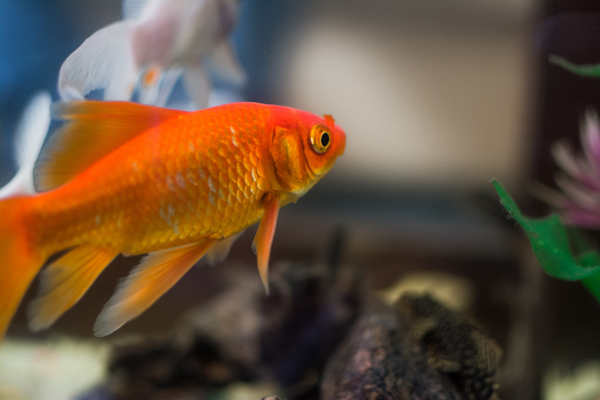
Carnival season always brings an influx of goldfish into the house. They’re a hot prize; as a kid, I have fallen victim to bringing one home. Not to say there is anything wrong with goldfish, but the care was not what I expected. Many believe a goldfish will do fine in any old fish bowl. Humans have done this for decades, but it’s not good for the goldfish and will cause headaches over time. Goldfish are messy and create lots of waste. They are also vibrant orange with great personalities and a thrill to keep as pets.
To start, goldfish do not have a stomach to store food. What does not get digested pretty much comes out of the body as waste. This can cause problems in a small enclosure such as a fish bowl. The smaller the body of water the more prone it is to parameter changes, especially in a bowl that most likely does not have a filter. A pooping goldfish will increase the levels of ammonia, phosphates, nitrates, and other unwanted chemicals in a small enclosure.
Goldfish can get fairly large and the idea that a fish will only grow to the size of its enclosure is just a myth. The truth is, a fish’s growth will be stunted, leading to stress, possible bodily deformities, and a shortened life span. A goldfish can grow larger than 12″ (30.48 cm).
Goldfish Fish Tank Requirements
When it is fairly small, starting a goldfish in a 20-gallon aquarium is alright, but be mindful that it will grow, and upgrading the aquarium will be necessary, eventually. Goldfish should have a good filtration system such as a canister filter but a larger hang-on-the-back filter may suffice. If you’re in the market for a hang-on-the-back filter check out 7 Best Hang On the Back Power Filters for Freshwater Aquariums. Luckily goldfish are perfectly happy at room temperature so a heater is likely, not necessary to keep them thriving. The water parameters needed for goldfish are:
- Water Temperature 65°-75° F
- KH: 4-20
- pH: 6.5- 7.5
Goldfish Food & Diet
Goldfish are a species of carp and are omnivores that will try to eat just about anything that fits into their mouths. They also have the potential of eating plants in an aquarium. There are a few plant species that should survive being in an aquarium with goldfish, such as java fern due to its bitter-tasting leaves. Check out some easy-to-care-for plants, which will likely be fine with goldfish. Some goldfish will still do their best to destroy or uproot live plants in their enclosure. It’s great if you find plants that do well with goldfish, but if you cannot, plastic plants should suffice. They also love to spend a part of their day sifting through the gravel looking for leftover food or algae that may be building up down there. Lastly, goldfish should easily accept pellet and flake food.
Tank Mates for Goldfish
Due to their aquarium requirements, slow movements, and ability to inhale many small fish, goldfish are rarely recommended to be kept with anything besides goldfish or koi. Besides eating smaller fish or getting picked on by more aggressive fish, goldfish also prefer being in cooler water, unlike many other tropical fish species. Koi are an exception because they both have similar aquarium requirements. You can easily find goldfish for sale online or in a pet store.
Breeding Goldfish
Goldfish can be a little harder to breed compared to fish such as livebearers. They need specific water parameters and an excellent diet before breeding. To help the goldfish begin breeding, gradually change its diet from pellet or flake food to a more meaty diet with brine shrimp and bloodworms. This mimics the start of spring which is their mating season.
The next step is dependent on already existing water temperatures but the fish tank needs to gradually increase in water temperature. The end goal is to reach a water temperature between 68 and 74 degrees Fahrenheit. A gradual increase is important because quickly swinging temperatures can be dangerous for fish.
To identify a female goldfish, look at her overall shape which should be smaller and rounder than males. Also, a female’s pectoral fins should be smaller and rounder than males. A male’s pectoral fins should normally be longer and pointier.
Once mated, the female will most likely lay her eggs on something solid such as a rock or decoration. Do your best to provide different types of hard surfaces so your female goldfish has many options for where to lay her eggs.
Final Notes
Overall, goldfish are immensely hardy fish with great personalities. There are quite a few people that enjoy keeping them as pets as well as breeding them with other goldfish. They come in many different shapes and colors so there may be a goldfish out there for anyone! Take a look at ATParium, you can find guides and more information on fish, fish tanks, paludariums, and more!