GloFish are genetically modified fish that have found their way into the aquarium hobby. The original goal was to modify the fish’s gene so its florescence sparks up when it comes in contact with pollutants in water systems. The fish ended up in the aquarium business and now GloFish can be purchased for your aquarium!
Types of GloFish
At the time of this writing, four different species of fish have a pronounced fluorescent gene: Zebra Danio, White skirt Tetra, Tiger Barb, and Red-Tailed Shark. These fish come in a variety of colors and can be found at most pet stores.
GloFish can be added to a normal aquarium or be in their own “GloFish tank.” I think the effect of their florescence is much cooler in their fish tank. The brightly colored fish, decorations that glow under blue light, and black gravel are a great combination for a GloFish Setup. Keep in mind that research should be conducted on the requirements of each fish before purchase. For example, the Zebra Danio and White Skirt Tetra Glofish are peaceful and perfect for a community tank but the Tiger Barb and Red-Tailed Shark GloFish are considered semi-aggressive and should be in a larger aquarium with different types of fish that can handle aggression.
GloFish Aquarium Setup Requirements
For the most part GloFish aquariums can be setup like any old fish tank. They will need gravel, decorations, heaters, a filter and light. As mentioned before, if setting up a GloFish specific aquarium, it is recommended to have decorations that will glow under a blue light. They will add an “out of this world” feeling. LED lights that have a blue light setting are perfect for this type of aquarium build. The blue light is what will give the fish their glow. Other than the lighting and decorations, you would setup a GloFish tank like any other freshwater aquarium. Most keepers do not add live plants because they do not do well under blue lighting. For more information on how to setup a freshwater aquarium, check out this guide.
Maintenance & Feeding
GloFish are kept almost like any other fish. The main difference is the lighting that is used to enjoy them. Feeding should be just like any aquarium fish. They should be fed once or twice a day and should be given a variety of food such as pellet food, flakes, and frozen meats.
Maintenance should also be similar to a normal aquarium. A gravel vacuum should be used to siphon the gravel and about 10% of the water should be replaced weekly to keep the water refreshed and to remove nitrates and phosphates. Having a freshwater test kit handy and testing the water will help guide you to proper aquarium care.
Final Thoughts
Every aquarium is unique and GloFish aquariums are a new branch of the hobby with a very quirky style to them. The fish themselves have been around for years and the company behind them keeps adding more fish species and colors for consumers to enjoy.
Danios are quite well known with experienced aquarium keepers but sometimes fall under the radar for newer aquarists. These fish are quite hardy and are excellent for new hobbyists. Although I do not recommend cycling a fish tank with just fish, many people turn to Danios to do just that. They’re cheap and like I said before, very hardy.
Danio Information
Many different types of danio can be kept in an aquarium. My personal favorites are the zebra danio and pearl danio. They maintain a smaller size but for being such a cheap fish have a little bit of color to them. Other types of danio that can be purchased are the large giant danio which should be kept in an aquarium with a minimum of 30 gallons, glowlight danio which stays quite small and does well in a 10-gallon aquarium, many longfin forms of a few of these fish, and lastly the GloFish variants of the zebra danio for anyone interested in GloFish. These fish enjoy being in groups of 5 or more so keep that in mind when purchasing them.
Many hobbyists build aquariums for tranquility and calmness. The one downside to Danios is that they provide just the opposite. These fish are highly active and zip around the fish tank constantly. They have an endless supply of energy it seems. They love heavily planted aquariums that also have open spaces for them to swim through. For the most part, they do find in faster moving water as well as very still water.
From experience, danios are quite aggressive eaters and will dart up to the water’s surface to grab food that is given to them. They are not picky eaters and will gladly eat bloodworms, flake food, or pellets. Giant Danios especially have quite an appetite.
The water parameters range for each species but for the most part, they all range and do well in temperatures ranging 70 – 75 degrees Fahrenheit and pH levels ranging from 6.5 – 7.0. Some Danio species do quite well in temperatures as warm as 78 degrees Fahrenheit and pH as low as 6.0. Be sure to check what is right for the species you are interested in.
Final Thoughts
Danio fish are quite wonderful for new aquarium hobbyists and also fish keepers who are looking for movement in their aquarium. I prefer the smaller Danio species because they do not dominate the aquarium as much as the giant danio. These are peaceful fish and are perfect for a community aquarium but their active personalities and aggressive feeding behaviors may get in the way of other fish.
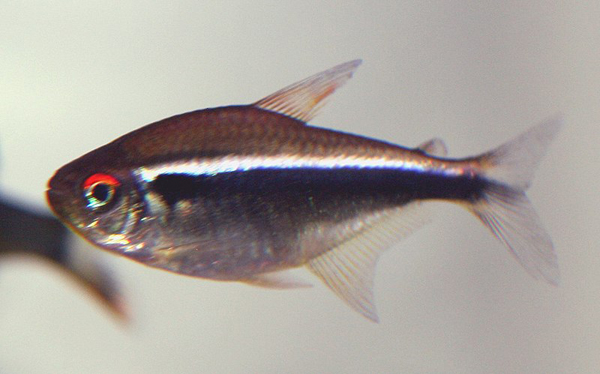
Black neon tetras are usually overshadowed by the more well-known Neon Tetra. These fish should catch the eye of aquarium keepers though. They may not have that vibrant blue and red coloring but instead have a black and white bar running down their body which is quite remarkable itself. These fish look fantastic in a well-planted aquarium. If you’re ever browsing through a fish store be sure to check them out!
Black Neon Tetra Requirements
Black neon tetras are much more hardy than neon tetras. They are more resilient to changing water parameters such as increased levels of nitrates and pH, but remember that not providing stable parameters can lower the health or possibly kill any fish over time.
These fish are quite easy to keep happy in an established aquarium. They are community fish and should be kept in a school of a minimum of six other black neon tetras. They have been seen schooling with other similarly shaped tetras so mixing may be a possibility. Black Neons max out at 1.5″ which is a little bit bigger than a neon tetra. They do well in an aquarium that is a minimum of 10 gallons.
The black neon tetra are not picky to food. They will happily eat flake food, pellets, and or frozen meaty food such bloodworms, brine shrimp, or Mysis Shrimp. They are omnivorous so providing a wide range of food is beneficial to their health. They will not eat live plants in an aquarium! Remember to only feed your fish enough so the food does not end up at the bottom of the aquarium. Uneaten food can become a big problem for an aquarium if left unchecked because it will raise the phosphate and nitrate levels.
Black neon tetras are best kept in water that is between 72 and 77 degrees Fahrenheit. They also do perfectly well in water with a pH between 5.5 and 7.0. They have quite a large range of water conditions they can live in so they will do well with many other tropical fish.
Final Thoughts
Black neon tetras are a great addition to most community tanks. They are peaceful, and small, but have a unique color pattern to them. They are quite abundant in the hobby and can be found at most pet stores. These fish are quite inexpensive as well, usually costing between $1.49 and $1.99.
With the large variety of fish that can inhabit a fish tank, it can become overwhelming trying to decide the right ones to put inside to inhabit the enclosure. Especially when hearing about barbs (more specifically) tiger barbs have a reputation for being brutes and aggressive in an aquarium. There are more barbs that are also aggressive but there are some that are nice and gentle. Specifically, the Denison Barb.
Temperment& Size
Denison barbs sometimes known as Rose Line sharks look like a dominating force inside of an aquarium but they are one of the most beautiful and gentle animals you can keep. It is of course not recommended to keep them with little fish like neon tetras or ember tetras because they will become lunch, but they’re perfectly welcome in a community aquarium filled with larger peaceful fish.
These fish love to be in larger groups preferably 5 or more fish. Also, do not forget to keep a good lid on your aquarium because these fish are known to be jumpers! Because of their love for being in groups and active personalities, I would not recommend putting this fish in anything smaller than 50 gallons of water.
The Denison Barb is different from your typical barb. This fish is far longer and more streamlined. They are normally found in fast-moving streams in the wild and appreciate higher oxygen levels in an aquarium. They also grow to be about 4 to 6 inches when they are full-grown.
Feeding & Aquarium Requirements
The Roseline Shark will happily take most foods and giving them a large variety of food only benefits them. They will gladly eat bloodworms, fish flakes, pellet food, and algae flakes/wafers/pellets. They are safe to keep with live plants and will not go out of their way to eat them! They’re omnivorous fish so giving them many options will keep them happy!
They enjoy an enclosure with a pH between 6.8 – 7.8 and temperatures ranging from 60 – 77 degrees Fahrenheit. They should be right at home with other tropical fish because for the most part, their water parameter needs are quite similar. Overall, they are quite easy to care for as long as they are introduced into an established aquarium.
Final Thoughts
Denison barbs are incredibly active fish and are insanely beautiful with their gray black and red coloring. They will make any aquarium seem more vibrant and bring new life to the setup. Keep them in nice groups and feed them a variety of food and they should be happy for quite some time!
Tiger barbs are quite a gorgeous little fish. They have beautiful vibrant black, orange, and tan coloration! This is the perfect Halloween-themed fish. They’re also a wonderful centerpiece for many other aquariums because of the dominating presence of swimming in large shoals. Unfortunately, caution must be taken when keeping tiger barbs because they are fin nippers. Male tiger barbs are the primary nippers because they constantly battle with one another to assert dominance. They are considered semi-aggressive fish which may limit which fish they can be mixed with. This guide will try and give some useful information on helping tiger barbs thrive as well as help the fin-nipping problem in your aquarium.
Tiger Barb Requirements
Tiger barbs can grow to a size of about 4 inches long. A 30-gallon aquarium is the minimum requirement to keep a tiger barb happy, but anything larger is always appreciated. Setting up a larger aquarium for them will allow them to fade into the background and not be the dominating aspect of the fish tank.
Keep in mind that they are shoaling fish so they do best in groups of 6 or more. Anything smaller will cause them to be more aggressive than they already are. If they are in a large enough shoal they usually keep to themselves and do not bother fish of a different species.
It is perfectly fine keeping these fish in temperatures around 76 – 78 degrees Fahrenheit which allows them to be mixed with most other tropical fish. They also do wonderfully in a planted aquarium and are a great addition to one because they like slightly acidic water. Also, having a heavily planted aquarium will help create barriers and hiding places for other fish if the tiger barbs start becoming a little nippy.
These colorful fish are not very picky when it comes to eating! They are perfectly fine eating flake food, pellet food, blood worms, brine shrimp, and other foods that are introduced into the aquarium. They should normally be fed once a day.
Although there are quite a few ways to alleviate a tiger barb’s fin-nipping habit still take precautions if you want to add them to a community tank. To reiterate what was said before: Do not add less than 6 tiger barbs into an aquarium, be sure they are fed, and try to load up your aquarium with decorations to provide barriers and hiding spots. Remember, these barbs are used to fighting for dominance, it is in their nature, so add more tiger barbs and let them keep to their species and pick on one another. These fish should do quite well in a semi-aggressive aquarium but can be problematic in a peaceful, community tank. They’re wonderful to have because of their vibrant colors and active nature but also can become troublesome for new and even knowledgeable aquarists if precautions aren’t taken.
Neon Tetras are probably one of the most well-known freshwater fish in the hobby. Their vibrant colors pop and stand out from the green background of a planted aquarium. They’re straightforward to acquire and on the cheaper end regarding cost. They’re gorgeous little fish that love to be in schools. This article will provide general information for Neon Tetras.
Requirements
Neon tetras are small and stay that way. They max out at a size of around 1.25″. They are perfectly comfortable in an aquarium of 10 or more gallons. Having a large school for them is a requirement. They do not do well alone. A minimum of six neon tetras are recommended but even more, are preferred! They are not picky eaters, but small food must be considered that will fit into their mouths. They will happily eat micro pellets, flake food, or bloodworms. They can live in waters with a temperature between 68° and 78° Fahrenheit but do best at temperatures between 76° and 78° Fahrenheit. These fish are very peaceful and will not bother other fish in an aquarium. Having a well-established aquarium will help these little aquatic animals thrive!
Due to their smaller size and docile personality, these fish should be kept with other peaceful fish. It is not recommended at all to keep them with larger Cichlids, predatory fish, or aggressive fish. If they are, they will become a quick meal for the larger fish or be beaten up and pushed around by the aggressive fish. Other peaceful and smaller fish are the best neighbors for Neon Tetras.
After working at a pet store for many years I noticed that many people would like Neon Tetras to be the first fish in their aquarium. From experience, this is usually a death sentence for this fish. Neon tetras are not hardy at all. They’re not expensive so it’s an attractive choice for a first fish. Many hobbyists use the first fish in the aquarium to jump-start their nitrogen cycle.
To quickly sum it up, a new aquarium cycles through three stages. An ammonia stage, a nitrite stage, and ends at the nitrate stage. Fish produce ammonia through their waste and it gets converted to nitrates by bacteria. At low levels, nitrates are less toxic to fish than ammonia and nitrites. The nitrogen cycle transitions through each stage which is very hard on neon tetras. Once, the aquarium runs through this cycle it is safer to introduce the neon tetras. There is plenty of fish that do much better through the cycle such as a smaller species of danio, red phantom tetra, Serpae Tetra, and many others. It is preferred to use a hardy fish for the nitrogen cycle.
Final Thoughts
Having a school of Neon Tetras weaving in-between plants, driftwood, and other decorations is a wonderful sight. They’re peaceful and easy to care for once in an established aquarium. Mixing them with other peaceful animals is wonderful and they will do well with shrimp and snails. If you’re looking for other blue colored fish for your fish tank, check out 11 Blue Freshwater Fish for Your Aquarium.
Betta fish, also known as the Siamese Fighting Fish, has been in the fish-keeping hobby for quite some time. They are colorful, beautiful, but highly territorial fish with outstanding personalities. They’re a great introductory fish for children and adults due to their ease of keeping. They do not require too much space, have gorgeous colors, and have wonderful personalities. They also have a nice long life of 3 – 5 years when living under healthy conditions. There are also so many more varieties of betta fish compared to 10-15 years ago. You can find betta fish for sale both online and in person. They are very common fish sold at pet stores.
Betta fish may seem dull at a pet store but are very charismatic fish! They will recognize their owner and often swim up to the glass to greet you. With practice, they can even learn tricks. They’re wonderful animals and we will continue this article by going over different requirements for keeping betta fish.
Aquarium Requirements
There are a few misconceptions about a betta fish aquarium. People think bettas do perfectly fine living in a cup of water. That is not the case. Although they are fairly easy to care for they should be kept in something larger than a cup! Our recommendation to keep a betta happy and healthy is to keep it in an aquarium or fish bowl of 5 gallons or more. This will provide enough swimming space. I always recommend more space if you can provide it. Betta fish accessories and decorations can be used to provide your betta fish with a refuge when stressed.
Betta fish do best with a filtration system in the fish tank. Usually, an aquarium with a hang on the back filter should suffice. If they are being kept in a round bowl, look into providing a sponge filter for their filtration. Check out 7 Best Hang On the Back Power Filters for Freshwater Aquariums to get an idea of great hang on the back filters for your betta.
This beautiful fish will thrive with a large range of water parameters:
Temperature: 75° – 86° F
KH: 0 – 25
pH: 6.0 – 8.0
Bettas are very versatile fish that thrive in a nice range of water parameters. It is important to provide good filtration and a heater to try and keep parameters as stable as possible. Stability in water is very important to keep fish alive. Help keep nitrates and phosphates down by adding live plants! There are many great starter plants for new fish keepers such as Anubias, crypts, and java fern. Check out 3 Easy To Care for Aquatic Plants for more information.
Betta Food & Diet
Betta fish aren’t very picky with food. Most importantly, monitor how much you feed your fish to prevent overfeeding. Extra food that falls to the bottom of your aquarium will break down and may cause spikes in nitrates and phosphates. Betta fish will happily eat flake food, pellet food, and an occasional treat of bloodworms and/or brine shrimp. Watching a betta eat their food is always the best part of keeping them.
Tank Mates for a Betta Fish
Most people know this but still needs to be mentioned. There should only be one male betta in an aquarium. Males will most likely fight until one dies. From experience, it is not wise to keep male and female bettas in a small enclosure unless they are breeding. On the other hand, although female bettas are not as vibrant and colorful, they should be able to coexist with one another in the same fish tank.
Betta fish should be ok with other peaceful such as tetras, rasboras, and cory cats in aquariums that are 20 gallons or larger. The fish that are kept with bettas should not have flashy colorations. Besides showing aggression towards other bettas and fish that look similar to it. I would also avoid keeping bettas with fish that are known to be fin nippers.
Betta fish and snails should peacefully co-exist in an aquarium. Bettas may try to eat baby snails but larger ones should do well. They will spend their day cleaning algae off decorations, and glass, and munching on leftover food that may fall to the bottom of the aquarium. These invertebrates are perfect for aquariums with limited space.
Keeping Betta fish and shrimp is a little risky. Bettas should do fine with larger shrimp, such as the Amano Shrimp. However, small shrimp such as Neocaridina may become a meal for your betta. It all comes down to the temperament of your betta.
Betta Breeding
Breeding betta fish in a freshwater aquarium is very possible but will still require quite a bit of work. First, you must set up two aquariums that will house the male in one and the female in the other. Give your fish time to settle into their new home for a few months. Once preparations to breed begin, a breeding tank should be set up with a divider installed to begin introducing the male and female. The fish tanks should be cycled before introducing the breeding pair.
The breeding tank should be roughly 80 degrees Fahrenheit with a sponge filter installed and a handful of places for the bettas to hide. It is not recommended to add gravel because the eggs may be lost in the substrate.
Feed foods that are very nutritious for a week or so before adding them into the breeding tank. The best foods are live bloodworms but you may be able to get away with frozen foods such as bloodworms and brine shrimp. At the same time start raising food for the baby bettas if breeding is successful. Live baby brine shrimp is recommended to feed betta fry.
Prepping for the Act
After that, it’s time to introduce the male and female into the breeding tank. Keep the divider in place and place the male on one side and the female on the other. Observe their interactions for a few days to make sure they are interested in one another. The male will show off his colorations and fins while the female will sort of look like she is bowing down. If there is interest, the male should begin building a bubble nest that may take a couple of days to complete.
Turn off the filtration and remove the divider separating the two fish. Once together, the male will most likely show a little completely normal aggression. Observe their behavior and make sure the male isn’t seriously hurting the female. Once settled, they will swim under the nest and move very close to each other. The female will begin releasing eggs which will drop to the bottom of the aquarium. The male will pick the eggs from the bottom of the fish tank and place them into the bubbles.
Once the female stops releasing eggs, it is recommended to remove her because the male will most likely begin attacking her. The male will care for the eggs until they hatch. Do not turn the filtration on because the betta babies will most likely get sucked into it. Once the fry begins swimming around in the fish tank, the male can be removed and it’s ok to begin feeding fry baby brine shrimp. It is recommended to feed the fry twice a day.
Filtration can be turned back on around two weeks after the fry hatch but restrict the flow of the filter if possible. Once males begin fighting, separate the fighters and place each one in its own aquarium.
Final Notes
Overall, bettas are a great starter fish for anyone who is looking to dip their toes into the aquarium-keeping hobby. They are fairly easy to maintain and can live a nice long life and create a bond with their keeper. Their variety of shapes and sizes add to their already remarkable personalities! They have attitude but are great fish. Take a look at our article on setting up a very straightforward freshwater aquarium here.
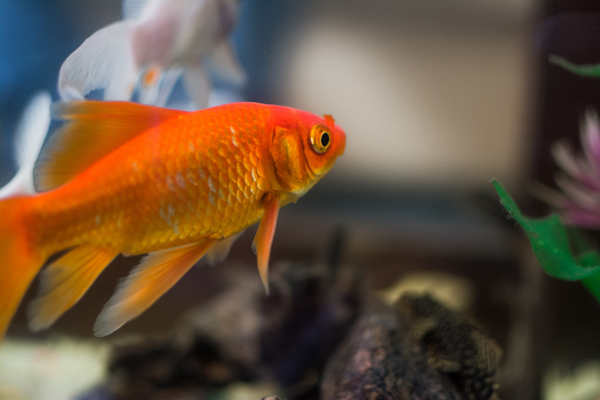
Carnival season always brings an influx of goldfish into the house. They’re a hot prize; as a kid, I have fallen victim to bringing one home. Not to say there is anything wrong with goldfish, but the care was not what I expected. Many believe a goldfish will do fine in any old fish bowl. Humans have done this for decades, but it’s not good for the goldfish and will cause headaches over time. Goldfish are messy and create lots of waste. They are also vibrant orange with great personalities and a thrill to keep as pets.
To start, goldfish do not have a stomach to store food. What does not get digested pretty much comes out of the body as waste. This can cause problems in a small enclosure such as a fish bowl. The smaller the body of water the more prone it is to parameter changes, especially in a bowl that most likely does not have a filter. A pooping goldfish will increase the levels of ammonia, phosphates, nitrates, and other unwanted chemicals in a small enclosure.
Goldfish can get fairly large and the idea that a fish will only grow to the size of its enclosure is just a myth. The truth is, a fish’s growth will be stunted, leading to stress, possible bodily deformities, and a shortened life span. A goldfish can grow larger than 12″ (30.48 cm).
Goldfish Fish Tank Requirements
When it is fairly small, starting a goldfish in a 20-gallon aquarium is alright, but be mindful that it will grow, and upgrading the aquarium will be necessary, eventually. Goldfish should have a good filtration system such as a canister filter but a larger hang-on-the-back filter may suffice. If you’re in the market for a hang-on-the-back filter check out 7 Best Hang On the Back Power Filters for Freshwater Aquariums. Luckily goldfish are perfectly happy at room temperature so a heater is likely, not necessary to keep them thriving. The water parameters needed for goldfish are:
Water Temperature 65°-75° F
KH: 4-20
pH: 6.5- 7.5
Goldfish Food & Diet
Goldfish are a species of carp and are omnivores that will try to eat just about anything that fits into their mouths. They also have the potential of eating plants in an aquarium. There are a few plant species that should survive being in an aquarium with goldfish, such as java fern due to its bitter-tasting leaves. Check out some easy-to-care-for plants, which will likely be fine with goldfish. Some goldfish will still do their best to destroy or uproot live plants in their enclosure. It’s great if you find plants that do well with goldfish, but if you cannot, plastic plants should suffice. They also love to spend a part of their day sifting through the gravel looking for leftover food or algae that may be building up down there. Lastly, goldfish should easily accept pellet and flake food.
Tank Mates for Goldfish
Due to their aquarium requirements, slow movements, and ability to inhale many small fish, goldfish are rarely recommended to be kept with anything besides goldfish or koi. Besides eating smaller fish or getting picked on by more aggressive fish, goldfish also prefer being in cooler water, unlike many other tropical fish species. Koi are an exception because they both have similar aquarium requirements. You can easily find goldfish for sale online or in a pet store.
Breeding Goldfish
Goldfish can be a little harder to breed compared to fish such as livebearers. They need specific water parameters and an excellent diet before breeding. To help the goldfish begin breeding, gradually change its diet from pellet or flake food to a more meaty diet with brine shrimp and bloodworms. This mimics the start of spring which is their mating season.
The next step is dependent on already existing water temperatures but the fish tank needs to gradually increase in water temperature. The end goal is to reach a water temperature between 68 and 74 degrees Fahrenheit. A gradual increase is important because quickly swinging temperatures can be dangerous for fish.
To identify a female goldfish, look at her overall shape which should be smaller and rounder than males. Also, a female’s pectoral fins should be smaller and rounder than males. A male’s pectoral fins should normally be longer and pointier.
Once mated, the female will most likely lay her eggs on something solid such as a rock or decoration. Do your best to provide different types of hard surfaces so your female goldfish has many options for where to lay her eggs.
Final Notes
Overall, goldfish are immensely hardy fish with great personalities. There are quite a few people that enjoy keeping them as pets as well as breeding them with other goldfish. They come in many different shapes and colors so there may be a goldfish out there for anyone! Take a look at ATParium, you can find guides and more information on fish, fish tanks, paludariums, and more!
Manage Consent
To provide the best experiences, we use technologies like cookies to store and/or access device information. Consenting to these technologies will allow us to process data such as browsing behavior or unique IDs on this site. Not consenting or withdrawing consent, may adversely affect certain features and functions.
Functional Always active
The technical storage or access is strictly necessary for the legitimate purpose of enabling the use of a specific service explicitly requested by the subscriber or user, or for the sole purpose of carrying out the transmission of a communication over an electronic communications network.
Preferences
The technical storage or access is necessary for the legitimate purpose of storing preferences that are not requested by the subscriber or user.
Statistics
The technical storage or access that is used exclusively for statistical purposes.The technical storage or access that is used exclusively for anonymous statistical purposes. Without a subpoena, voluntary compliance on the part of your Internet Service Provider, or additional records from a third party, information stored or retrieved for this purpose alone cannot usually be used to identify you.
Marketing
The technical storage or access is required to create user profiles to send advertising, or to track the user on a website or across several websites for similar marketing purposes.