Category: Saltwater

  • 4 Tricks To Feed Stubborn Gobies & Jawfish

    4 Tricks To Feed Stubborn Gobies & Jawfish

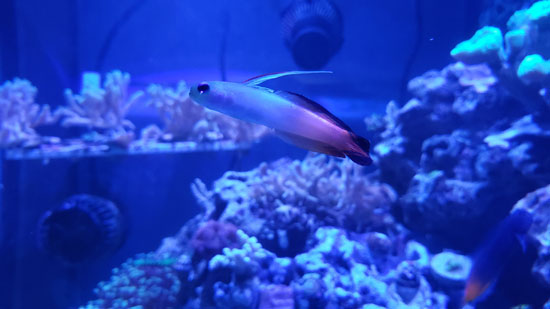
    Feeding gobies and jawfish can be a challenge. They stay very low in aquariums and tend to get outcompeted for food because of their skittish personalities. If they are reluctant, there are a handful of tricks to entice both types of fish into consuming processed food. This article will discuss some of the ways we can encourage our goby to eat or help a skittish goby get food before more aggressive eaters steal it.

    This process is not guaranteed to work, but I have had success with them in the past. As a disclaimer, this article focuses on sand-sifting gobies and jawfish. It is not a good reference for Mandarin Gobies and Scooter Blennies.

    1. Distract Other Fish With Food

    As stated above, gobies and jawfish are often outcompeted for food because of how low they are in fish tanks. All the food is usually gone before it gets close to them. One thing I have done is to simply drop some food in a different part of the aquarium to distract free swimming fish, and then drop food near the goby’s territory. I recommend turning off circulation pumps to prevent food from getting pushed away from the goby.

    If your goby is confident enough, you’ll see it dart out, grab some food, and go back into its burrow. This trick is simple and can easily be tried. However, it may be harder to accomplish in deeper fish tanks because it will take food longer to fall.

    2. Feed Goby With Tools

    If your fish are too fast and get through your distraction, you can try to feed your goby with tools. I have used Coral Feeder Tubes (affiliate link) to suck up some Mysis Shrimp, Brine Shrimp, or pellet food. I then squirt the food close to the goby’s burrow. Other fish may need to be distracted during this process, but feeding your goby more directly increases the chance of food successfully reaching it.

    This method may require a bit more patience. If you move the feeder tube a little too fast towards the burrow, you may startle your fish and it may hide.

    3. Try Different Foods

    Some fish are picky eaters. Gobies especially may only eat live foods that are already in the fish tank. It’s a good idea to at least offer multiple food options. Mysis Shrimp, Brine Shrimp, and pellet foods are usually the first things I offer new fish. They’re usually a hit but not every fish readily accepts processed food.

    If my fish is stubborn and refuses to eat any processed foods, my next move is to offer live baby brine shrimp, so I know it’s getting some food. Hopefully, over time I can ween the goby/jawfish into eating processed foods.

    4. Soak Food in Garlic

    If your goby or any fish for that matter, refuses to eat the foods provided, you may want to consider soaking your food in garlic, garlic extract, or Selcon Concentrate. I have cut up garlic, put it into a cup with aquarium water, and let pellets and frozen foods soak in it. A more potent alternative to this is Brightwell Aquatics Garlic Power (affiliate link) or Corallife Garlic Xtreme (affiliate link). You can often smell the concentrated smell without opening the bottle. Fish often go crazy over these supplements, and they will hopefully encourage your goby or jawfish to eat as well.

    I have used Selcon Concentrate (affiliate link) as a supplement for fish that are finicky eaters. It has helped to encourage finicky eaters to go after food for me. This is speculation, but I think the fish really go after the smell that Selcon gives off. Selcon is a food booster loaded with fatty acids, vitamin C, and vitamin B12. Whether your fish are finicky eaters or you want to provide them with more nutrients/vitamins, it might be worth your while to try Selcon.

    Final Notes

    If you have other tricks to get food to your goby or jawfish, please let me know. I want to share information with aquarists of all experience levels to help this hobby thrive. It can be very frustrating dealing with a fish that will not accept food. It’s not a great sight to see your gobies with sunken bellies. I hope this information helps someone who may be struggling with this.

  • How To Remove Green Hair Algae in Saltwater Aquariums

    How To Remove Green Hair Algae in Saltwater Aquariums

    Green Hair Algae removal can be one of the most frustrating experiences in this hobby. Unfortunately, there is no cure-all solution to remove hair algae from your fish tank. The “cure-all” methods often band-aid the problem temporarily, but it will return if not removed at the source. Removing hair algae takes time. You’ll likely not see a change overnight, but with time, patience, and persistence, Green Hair Algae can mostly be eradicated from an aquarium. A combination of manually removing the hair algae and following the steps below will help remove it.

    This article will discuss some of the common reasons Green Hair Algae may wreak havoc on your saltwater fish tank, and once the problem is diagnosed, solutions will be provided to prevent it from coming back. This article should help to remove hair algae from a reef tank or fish-only saltwater aquarium.

    How Old Is Your Aquarium?

    Before continuing consider this. Many new(ish) saltwater aquariums go through a phase. Aquarists may experience this phase between 3 and 6 months, but it can happen sooner or not at all. During this phase, a large algal bloom may occur throughout the aquarium. The intensity of the algae growth varies but I have seen some very green aquariums, completely covered in hair algae or other species of algae.

    If you’re at this stage, the only thing to do is try to manually remove as much Green Hair Algae as possible. I do not recommend removing or cleaning rocks. Leave the rocks alone and use your hands to remove the hair algae. I have managed to use a turkey baster to help suck up algae off rockwork. As long as you do not feed the algae with many more nutrients, it should choke itself out and die out on its own.

    Nutrient Imbalanced Aquarium

    An imbalance of nutrients can be the cause of your algal issues. Green Hair Algae will use whatever free nutrients are in the water and can dominate the aquarium because of it. Algae is also very efficient at consuming nutrients. It’s important to keep an eye on the nitrate and phosphate levels in your fish tank. Focus more on eradicating phosphate levels, because Green Hair Algae uses that more for growth. You feed your aquarium, and your fish poop it’s expected to have trace amounts of both nitrates and phosphates but you do not want high levels of either.

    If you have an aquarium full of hair algae or a refugium with macroalgae, you may read 0 nitrates and 0 phosphates when you test your water. This could be because the algae consumes the nutrients before they become testable. I recommend testing your water with the API Reef Master Test Kit (Affiliate Link). It gives you test solutions for nitrates, phosphates, calcium, and carbonate hardness. If you cannot get your phosphate levels under control, consider looking into a Media Reactor, like the Aquatop Media Reactor (Affiliate Link). You can place different filter media such as PhosBan, PhosGuard, or GFO Phosphate Reducers to help get your phosphates to more manageable levels. Follow the instructions, and slowly lower your phosphate levels.

    How Much Are You Feeding?

    The more we feed, the more nutrients that are introduced into the water. It’s very important to not overfeed your aquarium. We are all guilty of doing so because it’s one of the most exciting aspects of keeping fish. Keep an eye on the portions you give your fish. Guarantee that what you give them is being eaten and not lost in the live rock or sucked up by the filtration system. The best solution to removing nutrients from your aquarium is through water changes. You can easily remove nitrates, phosphates, and food debris by changing the dirty aquarium water and introducing fresh saltwater.

    What Type of Water Are You Using?

    This can be very important for the types of nutrients that are introduced into your aquarium. If you’re using tap water for your water changes, you may be adding a cocktail of nutrients that help promote algae growth. You don’t really know how clean your tap water is. Providing clean water during water changes and water top-offs guarantees you are not introducing nitrates, phosphates, copper, or other contaminants that may be in tap water.

    If possible, I recommend doing water changes and topping off your aquarium with RO water. Small RO units are fairly cheap. For example, the AQUATICLIFE RO Buddie can be purchased from Amazon. You’ll only need a sink that can accept a screw-on adapter and to change the unit’s filters every few months. If you do not have access to RO water or don’t want to buy an RO unit, many stores and fish stores sell RO or distilled water.

    Are You Changing The Water Too Much?

    Again, changing water, especially with tap water can add too many new nutrients into your fish tank that algae will soak up. If you test your nitrates and phosphates, and the results aren’t at dangerous levels, consider taking a step back and cutting down on water changes for a couple of weeks to see if your tap water is introducing unwanted contaminants. You can also test your tap water for nitrates and phosphates with the API test kit suggested above the same way you test aquarium water.

    Does Your Filter Need Cleaning?

    The filter is the place where debris, excess food, and other gunk go to rest. Think back to the last time your sponges and media have been replaced. Physically look at the sponges to see if there is a build-up of brown sludge on them. If so, it might be time to give your filter a cleaning. I’ll often rinse off dirty sponges in old aquarium water instead of replacing them outright. I do this to remove the sludge and gunk from the sponge. However, I can put the sponge back into the aquarium to not lose the beneficial bacteria growing on it. Unfortunately, some sponges are too far gone and need replacing.

    Light Schedule and Intensity

    The next thing I recommend looking at is your lighting schedule. The duration and intensity of your light schedule will affect photosynthetic opportunities for corals and algae. We want to provide plenty of light for our coral, but not too much light that encourages algae to take over. It might be a good idea to cut down on your photoperiod. There is no way to exactly determine what light schedule you should be on. This will be determined by the type of light you have, the strength of the light system, and the type of coral you are growing.

    Light From Window

    Sometimes an aquarium gets set up a little too close to a window. Aquariums close to a window may be getting too much ambient light causing algae to grow. The best solution for this is to hang up a blackout curtain over the window so light doesn’t reach the fish tank. This is the most practical solution for this unless you opt-in to moving the aquarium to a space with little to no ambient lighting.

    Not Enough Clean-Up Crew

    Check to see how much clean-up crew you have hanging around in the aquarium. If your water parameters are in a safe range, consider leveling up your clean-up crew. Their population will drop over time in a saltwater fish tank, so they’ll likely need to be replenished at some point. Maybe that time is now for your aquarium.

    A healthy clean-up crew can mean the difference between a thriving aquarium, and one that may be consumed with algal issues. A clean-up crew can consist of a variety of critters. Utilizing each is important because everything has a niche that needs filling. There are many options to choose from, you can check out my article Saltwater Aquarium Clean-up Crew for some ideas.

    Final Notes

    This guide is meant to discuss how to remove green hair algae from your aquarium. I have provided the most common reasons you’ll see hair algae blooming in your fish tank, and a handful of solutions to help eradicate it. I try to find the cheapest and most natural route to eradicate nuisance algae. These solutions will also help you continue good husbandry of your saltwater aquarium. I do not like using chemicals in fish tanks unless I really have to. If I can’t tackle the problem at the source, it’s likely the algae will come back over time. Hopefully, this guide helps you recover from a green-haired algae takeover. Remember to be patient and expect to fight this until you find the root of the problem.

  • Black Neon Dottyback – Complete Care Guide

    The Black Neon Dottyback (Pseudochromis aldabraensis x Psuedochromis springeri) is a hybrid fish bred from the Springeri Dottyback and Neon Dottyback. This hybrid fish is semi-aggressive and grows to 3″ in size as an adult. Don’t let their small size fool you, because this fish can hold its own in an aquarium. Black Neon Dottybacks have a beautiful blend of colors from both parents. The black body of the Springeri Dottyback mixes with the yellow body of the Neon Dottyback, to form a gorgeous orange/brown on the Black Neon Dottyback. They also have vibrant blue streaks that run horizontally throughout their face and fins. This guide will discuss aquarium requirements, food & dietary needs, Black Neon Dottyback compatibility with other fish, and more.

    Aquarium Requirements

    Black Neon Dottybacks will do best in 30-gallon or larger aquariums. Due to their semi-aggressive personalities, they may claim an aquarium area as theirs and will do their best to protect their home. That’s also why it’s important to provide plenty of live rock. The live rock allows this fish to explore and claim its own space. Providing a lot of live rock will also give other fish their own space, hopefully preventing aggression between fish.

    Like many other fish, the Black Neon Dottyback can jump out of the aquarium. I recommend providing a well-fitted lid on your aquarium to help prevent that from happening. They mostly hang out around rocks, but can easily dart up when spooked and jump out of your fish tank.

    Water Parameters

    Keeping water parameters in appropriate ranges for your fish’s needs is important for the overall health of the fish. Luckily, most fish have a fair range of parameters they will do well under. The following are the water parameters your Black Neon Dottyback does best with.

    • Water Temperature: 72°-78° F
    • dKH: 8 – 12
    • pH: 8.1 – 8.4
    • Salinity: 1.020 – 1.025 sg

    Consider getting a High Range pH and KH test kit to test for pH & dKH. Keeping your temperature between 72° and 78° can be accomplished with a heater. Take a look at my guide which showcases some great aquarium heaters. Lastly, I would pick up a Refractometer from Amazon to keep an eye on your salinity levels. If calibrated correctly, refractometers are much more accurate compared to a hydrometer which loses accuracy due to salt buildup on the dial. Check out Different Salinity Reading Tools For Saltwater Fish Tanks to get an idea of other salinity testing devices available.

    Is the Black Neon Dottyback Reef Safe?

    Black Neon Dottybacks are reef-safe. They will not bother corals and most invertebrates. You may see them pick on rocks or grab something out of the water. They’re likely picking off microorganisms such as copepods of the rock. There is a lot of back-and-forth on whether this fish is safe with shrimp, and I recommend being cautious when keeping them together. Small shrimp, like Sexy Shrimp, will likely become an expensive snack. Larger shrimp often have more luck, but can become targets for the fish. If you’re inclined to try to keep these two together, I recommend providing a lot of rock with plenty of ledges and hiding spaces for the shrimp.

    Food & Diet

    This fish, like most other dottybacks, is carnivorous by nature. Their diet should primarily be rich in protein. I recommend feeding them foods such as Mysis Shrimp, Brine Shrimp, Krill, and other meaty foods. I enjoy using Hikari frozen fish food to provide protein for this species of fish. Black Neon Dottybacks should also readily accept pellet food as supplemental food.

    If your fish is hiding or being stubborn about eating, consider feeding live baby brine shrimp so it doesn’t starve. It may prefer hunting for its meal. Another tip is to turn off your powerheads and drop frozen food near the Black Neon Dottyback’s den. This will give it a chance to slowly creep out of its hiding space and grab food. Lastly, try mixing your food with garlic or fish-safe garlic extract, like Brightwell Aquatics Garlic Power. Many fish cannot resist the aroma of the extract, and it is generally good for them, in moderation.

    Tank Mates

    Dottybacks are territorial and aggressive by default. If you want to keep one, I recommend adding them last into the aquarium, to give other fish a chance to settle in and establish their territories. If you’re trying to keep a very peaceful fish tank, maybe look to other fish that won’t bother others. Besides Orchid Dottybacks most dottybacks are considered aggressive and may pick on other fish.

    Fish that have the most success with dottybacks are Cardinals, Chromis, Clownfish, sand-sifting gobies, foxfaces, tangs, dwarf angels, and damsels. Most of these fish either occupy a different part of the aquariums, don’t look like a territorial threat to the dottyback, or are tough enough to hold their own against an aggressive species of fish. I would recommend not keeping them with large-mouth fish and predatory fish. Anything that can fit into a fish’s mouth has a strong chance of becoming food.

    Black Neon Dottyback and Peppermint Shrimp

    I covered most of this earlier, but I would be cautious about keeping a Black Neon Dottyback and Peppermint Shrimp. They can do perfectly fine together, but I have heard cases where the dottyback destroys the population of shrimp in the aquarium. The personality of the individual fish is likely to play a large role whether it’ll mess with shrimp or not.

    Breeding

    Due to their aggression, I do not recommend mixing dottybacks, unless you own an incredibly large fish tank. These fish will likely battle it out relentlessly which will make successful breeding impossible.

    Final Notes

    The Black Neon Dottyback is a very cool-looking hybrid fish that may be an excellent choice for your saltwater fish tank. You’re always taking a gamble on keeping them with their territorial personalities, but the colors they bring to an aquarium make them a very tempting choice. If you’re shopping around for dottybacks, check out the many other species out there by following this link.

  • Do I Need a Protein Skimmer For a Saltwater Tank?

    Do I Need a Protein Skimmer For a Saltwater Tank?

    Saltwater aquariums come in many different sizes, and shapes, and they all have their quirks and needs. When questions such as, “Do I Need a Protein Skimmer” pop up, it’s hard to give a perfect answer. At the end of the day, it comes down to the aquarium’s specific needs and style of fishkeeping, but I will share my point of view on the topic. To start, this article will cover what is a protein skimmer for fish tanks and then I will discuss whether your saltwater aquarium might need one.

    What is a Protein Skimmer?

    Before we continue the discussion of whether a protein skimmer is a necessity or not, let’s talk about what it is. A protein skimmer is a piece of equipment used in saltwater aquariums that removes waste from your water. A pump creates air bubbles and the bubbles push up through a cylindrical housing. Proteins and other organic wastes are attached to these bubbles which dispense into a collection cup. The collection cup will fill with a slurry of water and waste, which will need to be cleaned out from time to time. In nature, the foam you see on the beach is similar to the end product of what a protein skimmer does to remove waste from the water.

    Protein skimmers are wonderful tools to use in a saltwater aquarium when they are dialed in just right. Besides removing waste from the water, they also help produce large amounts of oxygen, which is overall beneficial for a saltwater aquarium.

    Are Protein Skimmers Required?

    To keep it as simple as possible, I highly recommend setting up a protein skimmer if it logistically makes sense for your system. If you have a saltwater aquarium with a sump system, you’ll likely want a protein skimmer. The skimmer will help remove undesirable waste from your fish tank, which will decrease the likelihood of larger increases in nitrates and phosphates. The size of the protein skimmer should be rated equal to or larger than your aquarium’s water volume. If you own a 75-gallon reef tank with a 20-gallon sump, You’re safe to use something like the Reef Octopus Classic 110-INT, which is rated for aquariums up to 100 gallons.

    If you’re running a smaller saltwater fish tank, such as a nano tank, you can likely get away without using a protein skimmer. Frequent water changes will remove proteins and waste from the water column. Water changes in a nano reef tank won’t be as costly compared to large aquariums that require larger quantities of saltwater. Internal protein skimmers will also take up a lot of space in the fish tank can ruin the aesthetic. However, if you’re still interested in a protein skimmer for your nano fish tank, consider checking out the AquaticLife Mini Internal Protein Skimmer.

    How To Setup Refugium in Saltwater Tank

    Learn the importance of a refugium and how to set one up for different types of aquariums

    If you have an All-in-One nano aquarium, there are small protein skimmers that may fit in one of the compartments of your filtration system. The Coralife Biocube Protein Skimmer is a great example of a skimmer made for All-in-One fish tanks. The hardest part of this is finding a skimmer that will fit correctly into your filtration system. You may have to do some research and digging to find out which one will be best for you.

    Final Notes

    Protein skimmers are just another tool we use to create a pristine environment for our fish, coral, and invertebrates. When tuned correctly, a skimmer works incredibly well at removing wastes from the water column. Combining the filtration of a protein skimmer and setting up a refugium are two things you can do to make your saltwater aquarium filtering easier.

    Image by Skimz on wikiMedia

  • Helfrichi Firefish – Complete Care Guide

    The Helfrichi Firefish, sometimes called the Helfrichi Dartfish, is a species of fish that is incredibly peaceful, with gorgeous purple, lavender, and yellow colorations throughout its body. Although their dorsal fin does not grow as long as other Firefish species, they are still fantastic fish to keep in a saltwater fish tank. The cost of this fish may scare away some potential buyers, but this could be just the right fish for a certain person. This guide will cover the aquarium needs, food & dietary requirements, and tank mate suggestions for the Helfrichi Dartfish.

    Aquarium Requirements

    Helfrichi Firefish grow to 2.5″ and will do great in saltwater fish tanks that are 20 gallons or larger. They will spend most of their time hovering near and around live rock. I recommend providing them with plenty of rockwork, with different-sized holes so they can choose which crevice to call home.

    Like many species of dartfish, the Helfrichi Firefish is known to jump out of fish tanks when frightened. Something as basic as the lights turning on can cause this fish to dart up and out of the aquarium. I recommend providing a well-fitted lid to help prevent this fish from jumping out of the aquarium.

    Water Parameters

    Keeping water parameters in check is very important to maintaining a healthy ecosystem in a glass/acrylic box. Whether it’s coral or fish, they will not do well if their parameters are swinging constantly, or are out of their normal range. The following are the water parameters that the Helfrichi Firefish will thrive under.

    • Water Temperature: 72°-78° F
    • dKH: 8 – 12
    • pH: 8.1 – 8.4
    • Salinity: 1.020 – 1.025 sg

    Consider getting a High Range pH and KH test kit to test for pH & dKH. Keeping your temperature between 72° and 78° can be accomplished with a heater. Take a look at my guide which showcases some great aquarium heaters. Lastly, I would pick up a Refractometer from Amazon to keep an eye on your salinity levels. If calibrated correctly, refractometers are much more accurate compared to a hydrometer which loses accuracy due to salt buildup on the dial. Check out Different Salinity Reading Tools For Saltwater Fish Tanks to get an idea of other salinity testing devices available.

    Are Helfrichi Firefish Reef Safe?

    Yes, the Helfrichi Firefish is reef-safe. It is a carnivore that consumes microorganisms in rockwork or that are free-floating, but it will not bother coral or other desirable invertebrates.

    Food & Diet

    Due to its carnivorous diet, the Helfrichi Dartfish should be fed an assortment of protein-rich foods. They should readily take Brine Shrimp, Mysis Shrimp, and other frozen fish food. I suggest also feeding them the NewLife Spectrum Marine Formula. Providing a variety of foods gives them a wider range of nutrients, which will aid in keeping them healthy.

    Tank Mates

    Helfrichi Firefish are generally very peaceful fish. They do best with other peaceful fish. They will do great with Chromis, Dwarf Angels, Blennies, Clownfish, Sand Sifting Gobies, Tangs, and many other species of fish. I would be careful when keeping them with fish that use the same space in the aquarium. So I would be a little cautious with Dottybacks, Wrasses, and other similar types of fish. Also, I would not recommend keeping them with aggressive fish or fish that can eat them. So fish such as Eels, Groupers, Triggers, Lionfish, and large Angelfish.

    You can also keep Helfrichi Firefish alone or as a pair. Due to their cost, I would not recommend buying groups and trying to have them “sort it out” amongst themselves.

    Breeding

    Successfully breeding and raising young is either incredibly hard or impossible in a typical home reef tank or saltwater aquarium. I do not have experience breeding Helfrichi Firefish. However, there are plenty of discussions available among fish keepers. Here is a great forum post on reef2reef that discusses how to distinguish between males and females so you can find a pair.

    Final Notes

    There are many different species of Firefish available. The Helfrichi is the most expensive, but some might say it’s the most beautiful. They are gorgeous fish and could be an excellent addition to many reef tanks. If you have any experience with this fish, please don’t hesitate to share it with me.

  • How To Setup a Refugium in a Saltwater Aquarium

    How To Setup a Refugium in a Saltwater Aquarium

    Creating a refugium in a saltwater aquarium can be a fantastic way to add extra filtration, more beneficial bacteria, and a space for microorganisms to flourish in your saltwater aquarium. You can create a refugium in many different ways, and this guide will cover some of the most common ways to do so. With aquarium keeping, there is no single solution that works best, especially when discussing such a broad topic as how to set up a refugium. There are a million and a half opinions, that come from a good place, but it can be challenging for new hobbyists to find solid ground in an ocean of different experiences. This article is designed to make setting up a refugium a little less stressful.

    What is a Saltwater Refugium?

    We are always battling nutrient levels in aquariums thanks to our feeding regime. A refugium is a section in your aquarium system that is dedicated to growing macroalgae and a haven for microorganisms such as copepods. Macroalgae uptakes nutrients such as nitrates and phosphates which come from food and animal waste. Just like how plants in a freshwater aquarium use nutrients to grow, the macroalgae do the same except in a marine environment. The macroalgae “holds” the nutrients and we remove them by trimming the macroalgae and physically removing it from the aquarium. Just like freshwater plants, macroalgae will require light to grow, which we will discuss later in this article.

    Copepods are very small invertebrates that are often food for fish and other animals in our display tanks. A refugium is a place in your aquarium that is safe from predation because fish don’t have access to it. Copepods and other small invertebrates use this space as a refuge and this allows their populations to multiply and grow without fear of getting eaten. Eventually, these populations of microorganisms will make their way back into the display aquarium, where they become food for fish such as gobies, blennies, wrasses, and many others.

    Other Refugium Benefits

    Besides nutrient intake, a refugium that has a light interval opposite to the aquarium’s display section will keep your pH levels more stable. pH rises throughout the day due to plants and algae photosynthesizing and creating more oxygen. Photosynthesis does not happen at night, and you will likely see a drop in pH during this time. If you run a refugium on a lighting interval opposite to your display aquarium, there will always be a light period, which means there will always be photosynthesis occurring, and increased levels of oxygen, which will raise your pH level.

    Many aquarists use this method in an attempt to keep their pH levels from swinging. However, pH levels swing naturally through the day and night cycle so it’s not a mandatory thing to do. You are more than welcome to run your refugium on the same lighting cycle as your display tank.

    Do I Need a Refugium?

    No, you do not need a refugium to successfully run a saltwater fish tank or a reef tank. However, the benefits of keeping a refugium make it a very attractive addition to your fish tank. I still recommend conducting water changes to remove excess nutrients, detritus, and to supplement your aquarium with fresh minerals. A refugium is an additional tool we can use to help keep our water parameters in line and as an additional source of food for your fish. It is not a complete package solution to get out of conducting water changes.

    How to Make a Refugium for Saltwater Aquarium

    Before we dive into the specifics of setting up a refugium, I want to emphasize that it’s best to hold off on adding lights and macroalgae into the refugium before the aquarium is established with fish and coral. Likely, the macroalgae will not be able to sustain itself if the aquarium is too “new” and there are not enough nutrients for it to consume. I recommend setting up and having all the components of the refugium ready to go and adding your macroalgae once there are signs of increased levels of nitrates and phosphates.

    You can make a refugium as complex or as simple as you want. I prefer keeping things as simple as possible.

    Refugium in Sump System

    If you have a sump system, you may want to use or convert your second chamber into a refugium. If you are just starting a fish tank, it’ll be easy to insert everything you need to get started. However, if you are thinking of converting the second chamber, you will likely need to turn off your return pump before adding sand and keeping it off to give the sand time to settle. The supplies needed for a sump refugium aren’t very complex. The following are what I choose when setting up a refugium in a sump:

    Live Sand for Refugium (optional)

    There is a lot of back and forth on what is important in a refugium. From the amount of reading that I have done on the topic, I have learned that the safest route to avoid creating a detritus trap or other problems later on is to set up your refugium with live rock, macroalgae, and lighting, but without adding any live sand. Detritus will likely settle somewhere in your sump, and it’ll be much easier to clean out if there isn’t any sand present. If you would like to have sand in your refugium, I would recommend having no less than 3″ to provide more space for bacteria to colonize and break down detritus. I have used CaribSea Fiji Pink Sand in my refugium, and it hasn’t caused any problems for me.

    Live Rock

    I recommend adding appropriately sized pieces of live rock into your refugium. The live rock will provide more space for beneficial bacteria and will be a home for all the tiny invertebrates and other critters. I would avoid pieces that are too large because they will inhibit the growth of your macroalgae. I would also avoid adding rock rubble because detritus will enjoy settling around the rock rubble.

    Lighting

    I provided three different lighting options that should work for your refugium. The first is the Kolem COB LED Grow Light. This should do incredibly well in aiding the growth of green macroalgae such as chaetomorpha. Chaeto absorbs the red coloration, which is what this light provides. The Kessil H80 Tuna Flora Light does something very similar, except is a more well-known brand in the aquarium trade. Lastly, I added the Relassy Waterproof Plant Light which provides a more well-rounded spectrum of lighting. If you’re looking to grow red-colored macroalgae such as the PomPom Macroalgae, you will do better with cool colored lights.

    Circulation Pump

    Chaetomorpha and a few other macro species benefit from tumbling in a refugium. A circulation pump may or may not be needed depending on the size and shape of your sump system’s second chamber and the amount of flow going through it. If you see that the bottom portion of your chaeto is dying out or you’re getting a buildup of gunk within the chaeto, you may want to encourage it to tumble, which a circulation pump can assist with.

    Refugium For Hang On Back Filter

    If you’re working with a smaller reef tank or saltwater aquarium, you’re likely not working with a sump system. As of this writing, I am running a small reef tank with a hang-on back refugium. For this to be successful, I am running an AquaClear 70 Hang-on Back Power Filter as my main source of water flow and filtration. I have the main compartment of the power filter filled with smaller pieces of live rock and chaetomorpha growing above it. A small 5W UPETTOOLS Aquarium Light provides the light needed for the chaeto.

    I chose the AquaClear Power Filter for this, mainly because of the size of the main chamber. I like being able to gut just about everything from the filter and customize it to my needs. Other Power Filters can work, but I have always had a soft spot for this brand. You can check out other AquaClear Power Filters, their specs, sizes, and GPH ratings by clicking the link provided.

    In Tank Refugium

    You can setup a refugium inside of your display tank. It might end up being the most interesting part of your display. The first thing you will need for something like this is a container. The CPR Aquatic in Tank Refugium may be just what you are looking for, but I have also heard people using something as simple as a plastic breeder box to set this up. Be mindful that the suction cups on the CPR Aquatic in Tank Refugium are not incredibly strong.

    Once you have your container, you’ll probably be limited to only using small live rock pieces and macroalgae for this type of refugium. Some might even call this a glorified algae reactor instead of a refugium. For the sake of this article, let’s say it’s a fuge because it will still be a haven for microorganisms. You may get away with adding sand into this, but I would be worried about too much weight and sand sneaking out through the grates.

    Lastly we need to think about lighting. It’s possible that this type of refugium will get all the lighting it needs from the display light. I would probably avoid adding an external light because that will likely bleed into the aquarium. If too much light bleeds into your aquarium, you’ll likely see algal blooms forming in your display.

    Final Notes

    There are plenty of options when it comes to setting up a refugium. You can get one set up in a sump, hang on the back filter, or even in your display tank. The options are there. Do you need a refugium for a reef tank? No, of course not but they are incredibly fun to work with and it’s very rewarding to say you grew live plants in a saltwater environment. One thing we have not covered is cryptic refugiums. These are unique because they use zero lighting, and instead use different sponges and other filter feeders to aid in cleaning your water.

    Image by Coughdrop12 on wikiMedia

  • Sleeper Blue Dot Goby – Complete Care Guide

    The Sleeper Blue Dot Goby (Valenciennea sexguttata) is a large sand-sifting species of goby that is often kept in saltwater aquariums. This goby is predominantly white, with small blue dots around its face and gills. Blue Dot Gobies will grow to about 5.5″ inches when fully grown. These heavy-duty excavators are fantastic at helping you get a nice clean sand bed.This article will cover the aquarium requirements, dietary needs, tank mate suggestions, and more for the Blue Spotted Goby.

    Aquarium Requirements

    Due to its size, Blue Dot Sleeper Gobies could be kept in aquariums that are 30 gallons or larger. However, I recommend keeping them in something even bigger. I suggest choosing a smaller species of goby for a 30-gallon fish tank. My top picks are Yellow Watchman, Two Spot, or Yasha White Ray Gobies. These species don’t grow as large as the Blue Dot Goby, so their food requirements will not be as demanding.

    Sand sifting gobies, sift through sand in search of micro-organisms like copepods. Many gobies will likely consume processed fish food, but there may be some that are incredibly picky. Regardless of aquarium size, it is recommended to set up a refugium, which will be a great place for copepods to grow, reproduce, and supplement the aquarium with live foods. Sumps are great places for refugium, but for smaller saltwater aquariums, many people convert a Hang-On Back Filter into a refuge. A Hang-On refugium can also be purchased, such as the CPR Aquatic Tank Refugium.

    Sleeper Gobies can jump, like many other goby species. Anything can spook them and cause them to dart up and out of the aquarium. I recommend providing a well-fitted lid on your fish tank to avoid this.

    Rock & Sand

    The Blue Dot Sleeper Goby will need live sand, like Carib Sea Fiji Pink. In my opinion, this is one of the better sands because it is not too fine and not too coarse. You’ll want to avoid crushed coral sand or sand that is incredibly fine. Crushed coral sand will be a little too coarse, and the goby will not be able to sift through it. Sand that is incredibly fine will constantly be stirred up and may get all over your aquarium.

    I recommend using live rock for your saltwater aquarium as well. Blue Dot Gobies will create their burrows in the sand bed along the rockwork. Live rock is also beneficial for your reef tank because it provides quite a bit of surface area for beneficial bacteria to grow.

    Water Parameters

    Keeping stable water parameters is very important in keeping your fish, coral, and whole aquarium system in check. Most saltwater fish will have the same water parameter requirements. The following water parameter ranges are what the Blue Dot Sleeper Goby does best with.

    • Water Temperature: 72°-78° F
    • dKH: 8 – 12
    • pH: 8.1 – 8.4
    • Salinity: 1.020 – 1.025 sg

    Consider getting a High Range pH and KH test kit to test for pH & dKH. Keeping your temperature between 72° and 78° can be accomplished with a heater. Take a look at my guide which showcases some great aquarium heaters. Lastly, I would pick up a Refractometer from Amazon to keep an eye on your salinity levels. If calibrated correctly, refractometers are much more accurate compared to a hydrometer which loses accuracy due to salt buildup on the dial. Check out Different Salinity Reading Tools For Saltwater Fish Tanks to get an idea of other salinity testing devices available.

    Is the Blue Dot Sleeper Goby Reef Safe?

    Yes, the Blue Dot Sleeper Goby is reef safe. It should not bother any coral or invertebrate in your aquarium. However, if you keep clams and other coral in your sand bed, the Sleeper Goby may accidently bury parts or all of them, when it is sifting for food.

    Food & Diet

    This fish species is carnivorous. They will spend most of their time sifting through the sand bed looking for microorganisms. Many individual fish in this species will readily consume Mysis Shrimp, Brine Shrimp, and protein-rich pellet food, but there may be some picky ones. Your system needs to be large enough and established enough to be home to many different microorganisms found in the sand. As stated above, a refugium with macroalgae and live rock is an excellent nursery for these microorganisms.

    Tank Mates

    Blue Dot Gobies are generally peaceful and should keep to their territory. They should not really bother any other fish, besides other gobies and jawfish that may encroach on their territory. This fish species should do well with most other peaceful marine fish. They’re great to keep with Anthias, Basslets, Blennies, Butterflies, Chromis, Clownfish, Dwarf Angels, Foxfaces, Tangs, Wrasses, and much more. Avoid keeping them with aggressive fish, and fish that can easily swallow the Blue Dot Goby.

    It is possible to keep a pair of Blue Dot Sleeper Gobies in an appropriately sized aquarium together. Unfortunately, I do not have information on how to sex this fish.

    diamond goby vs sleeper blue dot goby fish

    Is a Citron Goby and Sleeper Blue Dot Goby Compatible?

    The Citron Goby and Sleeper Goby should generally be good tank mates. The Citron Goby does not spend time in the sand bed but instead is a rock-dwelling species of fish. On the other hand, the Blue Dot Goby spends most of its day sifting through the sand bed. The two fish should rarely interact with one another.

    Breeding

    I do not have any other breeding information to provide for this species.

    Final Notes

    Blue Dot Sleeper Gobies are powerhouses in regards to keeping a good portion of your sand bed clean. Their incredibly large mouths will churn through sand in search of food. Although they are not the most vibrant species of fish, their white colorations and gentle blue spots still make them fantastic options for a reef tank. If you are not convinced in keeping the Blue Dot Goby, you’re welcome to check out many other goby species.

  • White Banded Possum Wrasse- Complete Care Guide

    White Banded Possum Wrasse- Complete Care Guide

    The White Banded Possum Wrasse (Wetmorella albofasciata) is an elusive but incredibly fun fish you can keep in a saltwater fish tank. They are predominately red with patches of black throughout, and vertical white bands spread across its body. It is a small species of wrasse but also very eye-catching. This guide will discuss White Banded Possum Wrasse’s aquarium needs, dietary requirements, tank mate compatibility, and more.

    Aquarium Requirements

    This fish will grow to only 2.5 inches in length which makes it a great choice for a nano reef tank, like a 10-gallon. They do best with varying-sized pieces of live rock for it to explore. As stated above, they are elusive and very shy. They will hide in and out of the rockwork when scared, stressed, and when searching for food. Possum Wrasses do not bury themselves in the sand at night, so they do not necessarily require sand in the aquarium. However, live sand is beneficial for the overall health of your fish tank.

    Wrasses are notorious for jumping out of fish tanks, that’s no different for the Possum Wrasse. I recommend covering your aquarium with a well-fitted lid to prevent this from happening.

    Water Parameters

    Keeping water parameters in check is one thing you should strive to do. This is especially true for saltwater fish, because they are a little more sensitive to water fluctuations than freshwater fish. The following are water parameters needed by the White Banded Possum Wrasse.

    • Water Temperature: 72°-78° F
    • dKH: 8 – 12
    • pH: 8.1 – 8.4
    • Salinity: 1.020 – 1.025 sg

    Consider getting a High Range pH and KH test kit to test for pH & dKH. Keeping your temperature between 72° and 78° can be accomplished with a heater. Take a look at my guide which showcases some great aquarium heaters. Lastly, I would pick up a Refractometer from Amazon to keep an eye on your salinity levels. If calibrated correctly, refractometers are much more accurate compared to a hydrometer which loses accuracy due to salt buildup on the dial. Check out Different Salinity Reading Tools For Saltwater Fish Tanks to get an idea of other salinity testing devices available.

    Is the White Banded Possum Wrasse Reef Safe?

    The White Banded Possum Wrasse is reef safe. It will not bother any coral or invertebrates, such as crabs, snails, and shrimp. It will be a benefit for your reef because it will consume nuisance inverts like bristleworms and flatworms, that can irritate coral if populations aren’t kept under control.

    Food & Diet

    Possum Wrasses are carnivorous and require a protein-rich diet. They will find a lot of food on their own in the aquarium, but should also be fed at least once a day. I recommend providing them with a variation of Mysis Shrimp, Brine Shrimp, and other meaty foods. They may also consume pellet food, and my go-to pellet food is New Life Spectrum – Marine Formula.

    Tank Mates

    White Banded Possum Wrasses are incredibly peaceful fish. They are much more docile and elusive than many other Wrasse species. They will do well with most other peaceful marine fish. The list is long but some of the fish they will do great with are:

    • Dwarf Angels
    • Anthias
    • Basslets
    • Blennies
    • Butterflies
    • Cardinals
    • Chromis
    • Clownfish
    • Foxfaces
    • Gobies
    • Tangs

    There are plenty of other fish species that are compatible with Possum Wrasses. When picking out tank mates, consider the space in the aquarium the fish will use. There may be territorial disputes if two or more fish utilize the same space. Also, consider the size of your aquarium. If your fish tank is too small, you’re just asking for fights to break out between fish. If possible, I would avoid keeping The White Banded Possum Wrasse with other Wrasses, just to avoid aggression and fighting. They will not do well with large-mouth fish, such as Anglers, Groupers, Eels, and many other large fish.

    Breeding

    I have never attempted to breed White Banded Possum Wrasses, and there is not much information available on whether it’s even possible. Saltwater fish in general are incredibly hard or impossible to breed in captivity, with a few exceptions of course. If anyone has information on breeding this fish, please let me know!

    Final Notes

    White Banded Possum Wrasses are very unique fish with an arrowhead shaped body, and interesting color patterns. They’re very elusive and shy when introduced into the aquarium. With time and patience they will warm-up to you and their surroundings. The White Banded Possum Wrasse is harder to find compared to the Yellow Banded Possum Wrasse, but either species is an excellent choice for a saltwater reef tank. If this wrasse is not for you, check out other Reef Safe Wrasses available.

    Image by Mark Rosenstein on wikiMedia

  • Yasha White Shrimp Goby – Complete Care Guide

    Yasha White Shrimp Goby – Complete Care Guide

    The Yasha White Shrimp Goby (Stonogobiops yasha), often called the Yasha Goby, is a unique but also hard-to-find saltwater fish. It is a sand-sifting goby that is excellent for nano tanks. It has a mainly white body with red, orange, and yellow markings throughout its body. Yasha Gobies also have an elongated dorsal fin which adds to its uniqueness. This guide will discuss this goby’s aquarium requirements, food and dietary needs, tank mate compatibility, and more.

    Aquarium Requirements

    Yasha Gobies stay very small compared to many other goby species. They only grow to about 2.5″ fully grown. This makes them fantastic candidates for nano reef tanks. Yasha Gobies can be kept in aquariums as small as 10 gallons. They will spend their days sifting for micro-organisms and will create burrows in sand along live rock. So it’s important to provide a deep sand bed and a fair amount of rock for them to use.

    Like many other gobies, Yasha Shrimp Gobies should have a well-fitted lid on their aquarium. When they are spooked or stressed, they often dart from danger and may jump out of the fish tank as a result. You can likely purchase pre-made aquarium lids, or you can create your own using glass, acrylic, screen kits, or many different types of material.

    Water Parameters

    Water parameters are incredibly important to keeping an aquarium successfully. Swinging parameters, or water parameters that do not match the requirements of fish, invertebrates, and coral will cause you to struggle in this hobby. Some fish can tolerate parameters that do not match their needs, but we want our fish to thrive. The following are water parameters needed for Yasha Gobies to thrive.

    • Water Temperature: 72°-78° F
    • dKH: 8 – 12
    • pH: 8.1 – 8.4
    • Salinity: 1.020 – 1.025 sg

    Consider getting a High Range pH and KH test kit to test for pH & dKH. Keeping your temperature between 72° and 78° can be accomplished with a heater. Take a look at my guide which showcases some great aquarium heaters. Lastly, I would pick up a Refractometer from Amazon to keep an eye on your salinity levels. If calibrated correctly, refractometers are much more accurate compared to a hydrometer which loses accuracy due to salt buildup on the dial. Check out Different Salinity Reading Tools For Saltwater Fish Tanks to get an idea of other salinity testing devices available.

    Is the Yasha Goby Reef Safe?

    Yes, the Yasha Goby is reef-safe. It will not actively damage coral or consume invertebrates. However, be cautious because coral kept on your sand bed can be buried since this species of fish spends its day sifting sand in search of food. I would recommend keeping as much coral as you can on your live rock to avoid it getting buried by gobies.

    Food & Diet

    Yasha Shrimp Gobies are carnivorous fish and sift through sand in search of micro-organisms. The food you provide should mimic their diet in nature. The best foods for this goby are Mysis Shrimp and Brine Shrimp. Foods like Krill may be a little large for Yasha Gobies. I would also recommend feeding a protein-rich pellet food to your goby. One of my favorites is the New Life Spectrum Marine Formula.

    Tank Mates

    Yasha Gobies are generally very peaceful fish. They do best with other peaceful fish. They’ll do great with fish such as Anthias, Blennies, Butterflies, Clownfish, Dwarf Angels, Foxface, rock-dwelling Gobies, Tangs, and Wrasses. I would be cautious when keeping Yasha Gobies with other sand-sifting Gobies or Jawfish because they spend most of their time in and around the sand bed. The Yasha Goby should be one of the first bottom-dwelling fish added to your aquarium. They may get bullied out of their burrow by other goby species, so it’s best to introduce them first to give them a chance to establish their territory. I would not recommend keeping them with large and more aggressive fish.

    In appropriately sized aquariums, Yasha Shrimp Gobies can be kept in pairs. You can distinguish a male from a female fairly easily. The males have a black spot on their pelvic fin, while females do not.

    Yasha Goby and Pistol Shrimp

    The Yasha Shrimp Goby will pair with a pistol shrimp. There are many different types of Pistol Shrimp available, and some pair better than others. The one many reefkeepers seem to suggest is the Candy Stripe Pistol Shrimp, which is sometimes called the Randall’s Pistol Shrimp. Tiger Pistol Shrimp pair better with larger gobies like the Watchman Goby. You’re welcome to check out the Yellow Watchman Goby – Complete Care Guide for more information on them.

    Breeding

    There has been success in breeding Yasha White Gobies in captivity. Many you see on sale online are captive bred. However, I do not have any information on how to breed Yasha Gobies. You can check out the success story of breeding this fish on Reef Builders by Rising Tide Conservation.

    Final Notes

    There are many different species of sand sifting goby available in this hobby. Some are heavy-duty sifters, like the Sleeper Gobies, and others are less so. The Yasha Goby is a great fish if you’re looking for a pop of color and a fish that will not rearrange your aquarium like other goby species.

  • Pink Streaked Wrasse – Complete Care Guide

    The Pink Streaked Wrasse (Pseudocheilinops ataenia) is a beautiful species of wrasse with various pink, orange, and blue colorations. As its name suggests, the Pink Streak Wrasse has horizontal “streaks” throughout its body. They’re a very peaceful fish species and are generally easy to care for. This guide will dive deeper into the Pink Streak Wrasse’s aquarium requirements, dietary needs, tank mate compatibility, and breeding.

    Aquarium Requirements

    Sometimes called the Pink Streaked Pygmy Wrasse, this fish species is an excellent choice for many different saltwater aquariums, including nano fish tanks because they only grow to 2.5 inches. I recommend keeping them in 20 gallons or larger aquariums, but if you have plenty of saltwater experience, they can thrive in reef tanks as small as 10 gallons. I also recommend providing them with plenty of live rock of different sizes because they are often very shy when first introduced into the aquarium.

    Many wrasses are known to jump out of the fish tank. That’s no different with the Pink Streaked Wrasse. I recommend a well-fitted lid to prevent this from happening.

    Water Paremeters

    Having stable water parameters is an important aspect of keeping a successful saltwater aquarium. The following are water parameters this species does best under.

    • Water Temperature: 72°-78° F
    • dKH: 8 – 12
    • pH: 8.1 – 8.4
    • Salinity: 1.020 – 1.025 sg

    Consider getting a High Range pH and KH test kit to test for pH & dKH. Keeping your temperature between 72° and 78° can be accomplished with a heater. Take a look at my guide which showcases some great aquarium heaters. Lastly, I would pick up a Refractometer from Amazon to keep an eye on your salinity levels. If calibrated correctly, refractometers are much more accurate compared to a hydrometer which loses accuracy due to salt buildup on the dial. Check out Different Salinity Reading Tools For Saltwater Fish Tanks to get an idea of other salinity testing devices available.

    Are Pink Streaked Wrasse Reef Safe?

    Pink Streaked Wrasses are reef safe. They should not bother any desirable coral or invertebrate in the aquarium. You will often see this species of fish weave in between different kinds of coral, but it will not bother them. They may nibble on nuisance inverts like bristleworms and flatworms.

    Food & Diet

    This species is carnivorous, so they will need a protein-rich diet. A good source of protein will be Mysis Shrimp, Brine Shrimp, and other meaty foods found at fish stores. I recommend giving them pellet food as well, to provide a well-rounded diet. For pellet food, the New Life Spectrum Marine Formula is a good choice, but many different brands can be used. Lastly, it never hurts to provide flake food for this wrasse.

    Tank Mates

    Pink Streak Wrasses are very peaceful. They will mostly mind to themselves and are more likely to be picked on by other fish due to their docile nature. They’re amazing for community saltwater fish tanks. They will do great with fish like Clownfish, Chromis, Gobies, Cardinalfish, Butterflies, Jawfish, Dwarf Angels, Tangs, and Blennies. I would be a little cautious when adding them with fish that use the same space in the aquarium, like Dottybacks and other Wrasses.

    I would not recommend them with predatory fish or fish that get incredibly large. Keep them away from Eels, Triggers, Groupers, Large Angels, Anglers, and many other types of large aggressive fish. They will either get picked on or become food for the large fish.

    Breeding

    I have never bred this species of fish before, but I have read that fish keepers have kept them in small groups. There is not much information on successfully breeding Pink Streaked Wrasses, but you can distinguish between males and females fairly easily because they are sexually dichromatic. Males will have more vibrant streaks of yellow and the females will have a blue coloring over their gills. Regardless, of being able to distinguish between male and female, I feel like the Pink Streaked Wrasse, like many other saltwater fish will be incredibly difficult to breed successfully in a home aquarium.

    Final Notes

    There are a lot of different species of Wrasses available in this hobby. The Pink Streak Wrasse is considered one of the best for reef aquariums. They have gorgeous colorations and are incredibly peaceful. If you’re setting up a nano reef, consider getting a Pink Streaked Wrasse. If you are not sold on this species, check out other reef-safe Wrasses available in this hobby. It is a growing list of species, so stay tuned for future updates.

  • 11 Best Saltwater Fish for 20 Gallon Tank

    Many different species of fish are available to keep in a saltwater aquarium. Searching the internet to find the perfect fish can be an incredible challenge. The amount of information out there can make your head spin. This guide will help you get closer to finding the right fish for your saltwater fish tank. Although many of these fish will not be compatible with one another in such a small fish tank, you’ll at least get an idea of the many fish to choose from.

    1. Firefish

    firefish swimming

    Firefish are relatively common and a more popular fish found in saltwater aquariums. They are peaceful fish that hang out above live rock and will dart into the rockwork when startled. They are generally timid fish and choose to hide when stressed. They are known to be jumpers, so keeping a well-fitted lid on your fish tank is highly recommended.

    There are a few different species of Firefish, the most common ones are the Firefish (Nemateleotris magnifica) and Purple Firefish (Nemateleotris decora). Less common species of Firefish are the Helfrichi Firefish (Nemateleotris helfrichi) and the Exquisite Firefish (Nemateleotris exquisita). Generally, each species will have similar water parameter requirements and grow to similar sizes.

    2. Clown Goby

    citrin clown goby

    The Clown Goby is an interesting fish and is often found resting on corals and rockwork for minutes to hours at a time. They are generally very docile and should not bother other fish in the aquarium. However, they may battle it out amongst themselves in smaller fish tanks. They are generally reef-safe but will nip and bother many stony corals such as Acropora, and possibly others.

    There are a few different types of Clown Gobies available. The Citrinis Clown Goby (Gobiodon citrinus), is also known as the Citrin Goby or the Yellow Clown Goby. This species, as the name suggests has a yellow coloration to it. Next, is the Green Clown Goby (Gobiodon atrangulatus), which has a mosaic of green, orange, and yellow colors on its body. There is also the Black Clown Goby (Gobiodon strangulatus). This species has a black/blue color to it. Last, is the Panda Goby (Paragobius lacunicolus), which has a yellow and orange body with black fins. You can click on any of their names to check out their complete care guides.

    3. Neon Goby

    Neon Gobies (Elactinus oceanops) are incredibly small saltwater fish that would do great in a 20-gallon aquarium. They have black, white, and vibrant blue horizontal stripes on their body. They will generally not bother other species of fish in an aquarium, but they become territorial and will likely pick fights with their own species.

    In the wild, they pick parasites off other fish, but that’s not always possible in an aquarium. Because of this, the Blue Neon Goby should be fed a variety of Mysis Shrimp, Brine Shrimp, and other frozen foods made for carnivores. They should also be fed at least once a day, but twice a day is optimal.

    4. Mexican Barnacle Blenny

    Mexican Barnacle Blennies (Acanthemblemaria macrospilus) are communal saltwater fish and a great choice for a 20-gallon saltwater aquarium. Although they are not as active as most other fish, they’re still a fantastic option. Mexican Barnacle Blennies spend most of their time poking their heads out of crevices in rocks, waiting for food to be put into the aquarium. They will then quickly dart out of the rock and grab the food. The fun part about keeping this fish species is trying to find where they are hiding.

    5. Possum Wrasse

    The Possum Wrasse, sometimes called the Pygmy Wrasse, is an excellent choice for a 20-gallon aquarium because of their unique shape, coloration, and peaceful nature. On top of that, they will hunt for nuisance worms and other microorganisms that may be problematic in your aquarium. They should not bother coral in the aquarium.

    There are two types of Possum Wrasse available. The Yellow Banded Possum Wrasse (Wetmorella nigropinnata) and White Banded Possum Wrasse (Wetmorella albofasciata). Both have similar temperaments and dietary needs. However, the coloration and patterns of both species are different. Check out the Yellow Banded Possum Wrasse – Complete Care Guide for more information on this fish.

    6. Yasha White Shrimp Goby

    Yasha White Ray Shrimp Goby

    The Yasha Goby (Stonogobiops yasha) is an excellent sand-sifting fish for a 20-gallon saltwater aquarium. They have beautiful white, orange, and red colors throughout their bodies and they only grow to about 2.5″. As a bonus, similar to a Watchman Goby, you can pair a Yasha Goby and Pistol Shrimp together to create a symbiotic relationship. There’s nothing better than watching a goby standing guard, while the pistol shrimp is working hard excavating.

    Unfortunately, this goby isn’t as common in the hobby as many other species of goby. With patience, you’re likely to find one for sale from time to time.

    7. Yellow Watchman Goby

    Watchman Goby

    Yellow Watchman Gobies (Cryptocentrus cinctus) are fantastic sand sifters for 20-gallon aquariums. They create burrows along rockwork and spend most of their time excavating and protecting them. The Yellow Watchman Goby is a great fish to pair with a pistol shrimp, but beware because this fish is known to jump out of aquariums. You’re welcome to learn more about this fish by taking a look at the Yellow Watchman Goby – Complete Care Guide.

    8. Pink Streaked Wrasse

    The Pink Streaked Wrasse (Pseudocheilinops ataenia) is another gorgeous fish that is a great choice for a saltwater aquarium. It is reef-safe and only grows to 2.5″. This species of wrasse has blue, red, and yellow colorations with horizontal streaks spread across its body. Unlike similarly looking Sixline Wrasses, this species should not be aggressive towards other fish. You can learn more about this fish by checking out the Pink Streak Wrasse – Complete Care Guide.

    9. Deepwater Candy Basslet

    If you have deep pockets and a cool water aquarium, check out the Deepwater Candy Basslet (Liopropoma carmabi). This gorgeous fish has predominately yellow and pink/lavender horizontal streaks. It will grow to about 2.5″ in length and will do best with varying pieces of live rock to use for cover. It is generally peaceful and is mostly reef-safe, but crustaceans that fit into its mouth may become a meal for this fish.

    10. Swissguard Basslet

    The Swissguard Basslet (Liopropoma rubre) is a gorgeous red, black, and orange saltwater fish with horizontal stripes throughout its body. It grows to about 3″ at full size when it is fully grown. It does best with live rock with plenty of caves and crevices to hide in because this species is known to be fairly shy. It is generally reef safe but may pick on smaller crustaceans.

    11. Royal Gramma Basslet

    The Royal Gramma Basslet (Gramma loreto) is a vibrant purple and yellow saltwater fish that will do great in a 20 gallon reef tank. It is considered a great beginner fish due to its hardy nature. This species of fish does best in aquariums with an assortment of live rock that it can use for cover. It will protect its territory from other fish.

    Final Notes

    Hopefully, this list gives you a good idea of the assortment of fish that can be kept in a 20-gallon saltwater aquarium. As a disclaimer, you cannot cram all these fish into a single 20-gallon fish tank. Many of them will not do well together in such a small fish tank, because of potential territorial disputes. This list is made to showcase what’s out there, and more research is needed to figure out what will do well together. If you already have your saltwater fish tank stocked with fish, check out some fantastic Clean Up Crew Options for Saltwater Aquariums!

  • Black Clown Goby – Complete Care Guide

    The Black Clown Goby (Gobiodon strangulatus) as the name suggest, is an all black saltwater fish. It is generally a peaceful fish that spends its time perched on rocks, coral, glass, or equipment in the aquarium. It does not sift through sand like other species of goby. This carnivorous fish is fairly easy to care for, and this guide will cover the Black Clown Goby’s aquarium requirements, food and dietary needs, compatible tank mates, and more.

    Aquarium Requirements

    Black Clown Gobies only grow to a max size of 1.5 inches. It is possible to keep them in a 10 gallon aquarium or larger. I usually recommend at least a 20 gallon aquarium for beginners due to the sensitivity of saltwater fish and water parameters swings. The aquarium should be full of varying sized live rock that the fish can perch on. I would recommend keeping a lid on the fish tank because this species can jump out.

    Water Parameters

    Water parameters and keeping them stable is very important to having a healthy fish tank. Most saltwater fish have similar water parameter requirements, but there are some exceptions to this. The following are the parameters that the Black Clown Goby will need.

    • Water Temperature: 72°-78° F
    • dKH: 8 – 12
    • pH: 8.1 – 8.4
    • Salinity: 1.020 – 1.025 sg

    Consider getting a High Range pH and KH test kit to test for pH & dKH. Keeping your temperature between 72° and 78° can be accomplished with a heater. Take a look at my guide which showcases some great aquarium heaters. Lastly, I would pick up a Refractometer from Amazon to keep an eye on your salinity levels. If calibrated correctly, refractometers are much more accurate compared to a hydrometer which loses accuracy due to salt buildup on the dial. Check out Different Salinity Reading Tools For Saltwater Fish Tanks to get an idea of other salinity testing devices available.

    Is the Black Clown Goby Reef Safe?

    Just like other species of Clown Goby, Black Clown Gobies are mostly reef safe. A single Clown Goby may not disturb SPS coral, but a breeding pair likely will. This species may lay eggs under branching stony coral, like Acropora, which may recede the skin of the coral. The only other note is that they will likely rest on coral which could cause the polyps to close, which could stress the coral out. They should not bother invertebrates in the aquarium.

    Food & Diet

    I mentioned earlier that this fish species is carnivorous. In the home aquarium they should be fed a variety of protein rich foods. I recommend providing them with Mysis Shrimp, Brine Shrimp, and other types of meaty foods that can be found online and at pet stores. Black Clown Gobies will also benefit from getting supplemented with a high quality flake food and a high quality pellet food. I enjoy using the New Life Spectrum All Purpose Flake Food and the New Life Spectrum Marine Pellet Formula for my saltwater aquariums.

    Tank Mates

    The Black Clown Goby is a peaceful fish and should not bother others in the aquarium. They will be perfectly fine with Dwarf Angels, Clownfish, Wrasses, Tangs, Foxfaces, Rabbitfish, Butterflys, Basslets, other gobies, and many other fish. However, be cautious when adding them with other rock dwelling fish. Other species may bully Black Clown Gobies away from their rocky territory.

    Black Clown Gobies can also be kept in pairs, if you have an appropriately sized aquarium. Up to four individuals should work in a 40 gallon or larger aquarium. Do not keep an odd number of fish because one of the three will likely be picked on quite a bit.

    Breeding

    It is likely that Black Clown Gobies will breed in the aquarium. They will lay eggs on different surfaces like cables, rock, and glass, to name a few. I have not personally bred this species before, but there is a fantastic forum post on Marine Breeding Initiative, that discusses the process in great detail, mentioning things that went well, and areas that did not succeed.

    Final Notes

    There are many different species of goby in this hobby. Most of us are looking for a sand sifting species to help maintain a clean sand bed. If you’re looking for something different, really consider the Black Clown Goby. If this species doesn’t catch your attention, there are plenty of other saltwater fish available for you.

  • Green Clown Goby – Complete Care Guide

    Green Clown Goby – Complete Care Guide

    The Green Clown Goby (Gobiodon atrangulatus), sometimes called the Green Warpaint Clown Goby, is a gorgeous green and red saltwater fish. Similar to other species of clown goby, this one does not sift through sand but instead spends its day perched on rocks and corals waiting for food to come its way. A full grown Green Clown Goby will be about 1.75 inches, which makes them an excellent choice for a nano aquarium. This Clown Goby care guide will discuss aquarium requirements, dietary needs, tank mates, breeding, and more about the Green Clown Goby.

    Aquarium Requirements

    As stated earlier, this species of fish only grows to about 1.75″ when fully grown. They can be kept in saltwater fish tanks that are 10 gallons or larger. Green Clown Gobies love to perch on rocks and corals, so their aquarium should have plenty of live rock of varying sizes for them to rest on. If you can’t find any at your local fish store, consider taking a look at the Live Rock on Amazon. They will also use this rock as cover when startled or stressed. Besides live rock, I would also recommend a lid for your aquarium to prevent this fish from jumping out.

    Water Parameters

    The Green Warpaint Goby has similar water parameter requirements to most saltwater fish in this hobby. It is important to keep these water parameters stable and within range to keep your fish, invertebrates, and coral happy. The following parameters are what this species of fish thrive in.

    • Water Temperature: 72°-78° F
    • dKH: 8 – 12
    • pH: 8.1 – 8.4
    • Salinity: 1.020 – 1.025 sg

    Consider getting a High Range pH and KH test kit to test for pH & dKH. Keeping your temperature between 72° and 78° can be accomplished with a heater. Take a look at my guide which showcases some great aquarium heaters. Lastly, I would pick up a Refractometer from Amazon to keep an eye on your salinity levels. If calibrated correctly, refractometers are much more accurate compared to a hydrometer which loses accuracy due to salt buildup on the dial. Check out Different Salinity Reading Tools For Saltwater Fish Tanks to get an idea of other salinity testing devices available.

    Is the Green Clown Goby Reef Safe?

    The Green Clown Goby is generally reef safe. I say generally because they can cause damage to SPS coral, especially Acropora when they are breeding. In the wild, they lay their eggs on the underside of SPS coral. This will cause the coral tissue to recede. They will likely do the same to your SPS coral in the aquarium. Otherwise, they should not bother any soft coral, zoanthids, or invertebrates.

    Food & Diet

    This species of fish requires a protein-heavy diet because it is carnivorous. It is up to you whether you feed these fish frozen foods or freeze-dried foods but I recommend providing them with Brine Shrimp, Mysis Shrimp, and many other types of meaty foods. They should easily accept other types of food like flake food and pellet food. I recommend feeding them New Life Spectrum All Purpose Flake Food and New Life Spectrum Marine Formula Pellet Food. Your Clown Goby and most other saltwater fish will benefit from these foods.

    Tank Mates

    Green Clown Gobies are very peaceful fish and should not bother anyone else in the aquarium. I recommend keeping them with many different types of fish such as Dwarf Angels, Tangs, Foxfaces, Clownfish, Rabbitfish, Basslets, Blennies, Chromis, and much more. You have to be careful with fish that use the same space of the aquarium, like Blennies, Basslets, and other rock-dwelling fish. It shouldn’t be a problem in a large enough fish tank.

    They may become territorial with other Clown Gobies in smaller aquariums, but pairs can be kept together if you’re fine with them possibly breeding in the aquarium. I would not keep odd numbers of this fish species because there will likely be a lot of fighting between the three. In a 40 gallon aquarium, you could likely get away with keeping up to 4 individuals.

    Breeding

    Clown Gobies will likely breed in your saltwater fish tank if you keep a pair. I have not personally bred them, but there is a great forum post on Marine Breeding Initiative that discusses the process of successfully breeding your Clown Goby from egg to adulthood.

    Final Notes

    The Warpaint Goby is a fantastic and uniquely colored fish to add to a saltwater aquarium. They have a very docile nature and can sit on rocks and corals for minutes to hours. It’s very entertaining to observe them move about their day. It’s also not very common to see a green fish like this. However, if this fish isn’t for you, consider taking a look at many other saltwater fish available in this hobby.

    Image by Dr. Oliver Schneider on wikiMedia

  • Citrinis Clown Goby – Complete Care Guide

    Citrinis Clown Goby – Complete Care Guide

    The Citron Goby, sometimes called the Citrinis Clown Goby, or Citrin Goby, is a beautiful yellow and blue saltwater fish. They’re small fish that will only grow to about 2 inches. They are generally very peaceful and should not bother other fish in the aquarium, but they may fight amongst themselves. Citrin Gobies will often sit motionless on rocks, glass, and sand beds for minutes to hours. This article will go deeper into this Clown Goby’s aquarium requirements, dietary needs, tank mates, and more.

    Aquarium Requirements

    Due to their small size, a Citrin Goby can be kept in a 10-gallon aquarium, but I would recommend at least a 20-gallon aquarium. Unlike many species of goby, this one does not sift sand but instead hangs out on rockwork, coral, glass, and other hard surfaces. A lot of live rock of varying sizes is recommended for keeping these fish. Sometimes it is hard to find at your local fish store, so consider checking some out Live Rock on Amazon. I also recommend purchasing a well-fitted lid for your aquarium because Clown Gobies can jump out.

    Water Paramaters

    Most animals kept in captivity, do best when you mimic their natural habitat in their enclosure. The same stands for the Clown Goby. Providing them with proper water parameters will help them live a long and happy life. Their water parameters are similar to most saltwater fish, which are listed below.

    • Water Temperature: 72°-78° F
    • dKH: 8 – 12
    • pH: 8.1 – 8.4
    • Salinity: 1.020 – 1.025 sg

    Consider getting a High Range pH and KH test kit to test for pH & dKH. Keeping your temperature between 72° and 78° can be accomplished with a heater. Take a look at my guide which showcases some great aquarium heaters. Lastly, I would pick up a Refractometer from Amazon to keep an eye on your salinity levels. If calibrated correctly, refractometers are much more accurate compared to a hydrometer which loses accuracy due to salt buildup on the dial. Check out Different Salinity Reading Tools For Saltwater Fish Tanks to get an idea of other salinity testing devices available.

    Is The Citrin Goby Reef Safe?

    For the most part, the Citrin Goby is reef safe. However, stony coral can be in danger of this fish when it is breeding. This goby species lay its eggs on the underside of branches of SPS coral. This can cause the tissue of the SPS coral to recede. Their favorite to do this with is Acropora, but many species of stony coral are not safe. They should be fine with soft coral and most invertebrates.

    Food & Diet

    This species of fish is carnivorous. Their diet should match what they consume in the wild. It is best to feed Citrin Gobies Brine Shrimp, Mysis Shrimp, and other types of protein-rich foods. My personal preference is thawed frozen fish food, but freeze-dried food can work as well. Also, I recommend providing Clown Gobies with high-quality flake food such as the New Life Spectrum All Purpose Flakes, and protein-rich pellet food like the New Life Spectrum Marine Formula, to provide a variety and cover more nutritional bases.

    Tank Mates

    The Citrin Goby will do well with most friendly saltwater fish species. I would recommend them with Dwarf Angels, Tangs, Foxfaces, Clownfish, Rabbitfish, Basslets, Blennies, Chromis, and much more. I would be weary of keeping them with large fish, and fish with large mouths, like Anglers, Groupers, Eels, and others. They can make lunch out of this fish very easily. Also, Citrin Gobies are often peaceful, but other fish may be territorial around rockwork. Be aware that they may get picked on when entering other fish’s territory.

    In appropriately sized aquariums (minimum 40 gallons), small groups of Clown Gobies can be kept together. If you’re keeping the same species, I would recommend 2 or 4 individuals so they can pair off. I do not recommend odd numbers because one of the groups will likely get bullied, stressed, and even killed. Keep in mind that if you keep more than one in your aquarium, there’s a chance that they will breed and wreak havoc on your SPS coral.

    Breeding

    If you have a breeding pair of Clown Gobies in your aquarium, they may spawn on their own without any human intervention. However, getting the eggs to successfully hatch and grow into adulthood will be the bigger challenge. Especially when many other opportunistic fish are waiting to eat the eggs. I do not personally have experience breeding this species, but here is a forum post on Marine Breeding Initiative that archives the process someone took to get eggs to hatch.

    Final Notes

    Citrinis Clown Gobies are unique-looking fish with an interesting personality. It’s incredibly fun watching them perch on rocks and corals waiting for food to come their way. Their leisurely and peaceful personalities make them excellent candidates for community saltwater fish tanks. However, be cautious because they may mess with your Acroporas and other SPS corals. If you’re not sold on the Citrinis Clown Goby, check out other species of saltwater fish for your aquarium.

  • Two Spot Goby – Complete Care Guide

    Two Spot Goby – Complete Care Guide

    The Two Spot Goby, sometimes called the Twin Spot Goby, Crabeye Goby, or Signal Goby, is a beautiful sand-sifting saltwater fish. It is predominately white, brown, and tan. It gets its name from the two vibrant yellow rings on its dorsal fin. The Twin Spot Goby is a fairly peaceful fish that keeps to itself, but it is more than happy to defend its territory.

    The Twin Spot Goby is considered a difficult fish to keep. This is primarily due to their finicky and niche diet and feeding requirements. Consider getting a different species of goby, like a watchman goby, if you’re looking for something easier to keep. This guide will cover Two Spot Goby’s aquarium requirements, food & diet needs, tank mates, and breeding.

    Aquarium Requirements

    The Two Spot Goby grows to about 3″, so it will do well in a 10-gallon aquarium or larger. Due to their dietary needs, I would recommend a much larger fish tank. If you choose to keep them in this size fish tank, it is recommended to also have a well-established refugium, with a large population of microfauna. The micro fauna will likely be their main source of food, especially when first introduced. Twin Spot Gobies sift through sand in search of food, so will require a sand bed between 1″ – 2″ deep. I recommend fine sand, such as the CaribSea Fiji Pink Sand. It is fine, but not as fine as the CaribSea Bahama Oolite Sand which gets stirred up very easily.

    Live rock is also recommended for your goby fish tank. Gobies may occasionally hide in live rock when stressed or startled. It also provides a lot of surface area where beneficial bacteria will colonize. Live rock should be either touching the bottom of your glass or very close to it to guarantee the goby does not burrow under and create a rock slide. Unsecured rock is asking to be knocked over, which can hit the glass and break the fish tank.

    Lastly, a well-fitted lid is recommended because most types of gobies are known to jump. Somehow fish always manage to find the smallest opening to jump out of.

    Water Parameter

    Keeping water parameters in check is incredibly important. The following are the water parameter requirements for the Two Spot Goby. Most saltwater fish have similar water parameter needs but there are a few exceptions.

    • Water Temperature: 72°-78° F
    • dKH: 8 – 12
    • pH: 8.1 – 8.4
    • Salinity: 1.020 – 1.025 sg

    Consider getting a High Range pH and KH test kit to test for pH & dKH. Keeping your temperature between 72° and 78° can be accomplished with a heater. Take a look at my guide which showcases some great aquarium heaters. Lastly, I would pick up a Refractometer from Amazon to keep an eye on your salinity levels. If calibrated correctly, refractometers are much more accurate compared to a hydrometer which loses accuracy due to salt buildup on the dial. Check out Different Salinity Reading Tools For Saltwater Fish Tanks to get an idea of other salinity testing devices available.

    Is the Two Spot Goby Reef Safe?

    Yes, the Two Spot Goby is reef safe. It should not pick on any of your coral because it is too busy sifting the sand for food. Keep in mind that any coral that is growing at the bottom of your aquarium or in the rock may have sand dropped on it due to the goby.

    Food & Diet

    The Twin Spot Goby will spend most of its time sifting through sand in search of microscopic organisms in the sand. As stated earlier, an established aquarium, a highly productive refugium, and a sand bed will help keep your fish fed and happy. Sometimes Two Spot Gobies are stubborn and refuse to eat prepared food, but with time and patience, they may decide to eat food provided to other fish.

    This fish species is carnivorous and will require a protein-rich diet. I recommend trying to feed the Two Spot Goby a variety of foods such as Mysis Shrimp, Brine Shrimp, and pellet food rich in protein. The New Life Spectrum Marine Formula has 36% Crude Protein. It’s a good choice of pellet food to supplement with other protein-rich foods.

    Tricks for Feeding

    A stubborn Two Spot Goby that refuses to eat prepared food may become a headache but, there are ways to help keep it alive while you attempt to train it to eat prepared food. First, you will need a long feeder syringe, and any coral food (Polyp Lab Reef-Roids, Reef Chili, Coral Feast, etc.). Next, you will have to find where your Two Spot Goby has its burrow. Lastly, mix coral food with water, suck it into the syringe, and dispense it very close to and in the sand near the goby’s burrow. This will help keep your fish fed, while attempting to train it to consume other foods.

    I would also recommend turning off or cutting down on the flow of water during feeding. This will give the food a chance to settle which may help your goby eat.

    Tank Mates

    Most peaceful saltwater fish should do well with the Two Spot Goby. It should do great with fish such as Anthias, Dwarf Angels, Basslets, Chromis, Dottybacks, Wrasses, Foxfaces, Tangs, and many others. It doesn’t use the same space as most other fish. It spends most of its time at the bottom of the aquarium sifting through the sand. With that in mind, there may be territorial disputes between this goby and other gobies and/or jawfish. I would make sure the aquarium is appropriately sized if you plan on keeping more than one goby.

    Two Spot Goby and Pistol Shrimp

    The Two Spot Goby does not mix well with a Pistol Shrimp. I would recommend keeping a Pistol Shrimp with a Yellow Watchman Goby. They will readily pair and become excellent partners in an aquarium.

    Breeding

    If purchased small, a pair of Two Spot Gobies may become a breeding pair. However, I have personally never attempted to breed this fish but, it is possible to do so in captivity.

    Final Notes

    The Two Spot Goby is a gorgeous reef safe goby that could make an excellent addition to your saltwater fish tank. Keeping them may be a challenge, and is not recommended for a beginner, but with experience and patience may become a great choice. If you’re newer to saltwater fish, consider getting an easier to care for goby like a watchman.

    Image by Rickard Zerpe on wikiMedia

  • Splendid Dottyback – Complete Care Guide

    Splendid Dottyback – Complete Care Guide

    Splendid Dottyback Facts

    The Splendid Dottyback (Manonichthys splendens) sometimes called the Splendid Pseudochromis is a gorgeous saltwater fish with blue, yellow, and pink colorations throughout its body. There are many types of dottybacks and if you’re looking for a more peaceful one, take a look at the Orchid Dottyback. Otherwise, this article will discuss Splendid Dottyback aquarium requirements, food & diet, tank mates, and more.

    Aquarium Requirements

    Splendid Dottybacks grow to about 3″ in size, and will likely be more aggressive the smaller the aquarium is. With this knowledge, they should not be kept in anything smaller than 30 gallons, but bigger is always better. The aquarium should have live rock with different-sized crevices to provide cover and territory options for this fish and many others.

    I highly recommend providing a well fitted lid for your aquarium This will help prevent any possibility of a fish jumping out.

    Water Parameters

    Splendid Dottybacks have very similar water parameter requirements to most saltwater fish kept in this hobby. Keeping them within range and stable is important to keep your aquarium system and fish happy and healthy. The following are the water parameters needed by this fish species.

    • Water Temperature: 72°-78° F
    • dKH: 8 – 12
    • pH: 8.1 – 8.4
    • Salinity: 1.020 – 1.025 sg

    Is the Splendid Dottyback Reef Safe?

    The Splendid Dottyback is reef safe. The only thing they are a danger to is ornamental shrimp like the Sexy Shrimp or others that it can eat. This fish should not mess with other invertebrates or corals.

    Food & Diet

    This species of fish has a similar diet to other types of dottyback. They are carnivorous fish so do best being fed Mysis Shrimp, Brine Shrimp, Krill, and other meaty foods. I would also provide them with protein-rich pellet food as a supplemental addition to their diet. Splendid Dottybacks should readily take food because they generally are not picky eaters.

    Tank Mates

    Due to their semi-aggressive tendencies, Splendid Dottybacks should be introduced into the aquarium later. Doing so will hopefully allow other fish to establish themselves before adding one that may become aggressive/territorial. The problem with finding good tank mates for this fish is that they won’t hesitate to defend themselves against fish that are 3 or 4 times larger.

    They should do well with Clownfish, Damselfish, Cardinals, Dwarf Angels, Foxfaces, Gobies, and more. Just be aware that each fish has a different temperament. Some Splendid Dottybacks may be model citizens but also many fishkeepers claim this species can be very aggressive.

    I would avoid keeping this fish species with others that are similar in shape and color. They will likely be aggressive towards other Dottybacks, Blennies, and Basslets.

    Breeding

    You can purchase captive-bred Splendid Dottybacks but I do not have experience with breeding this fish. I feel it will be generally impossible in most aquarium settings because of their aggression.

    Final Notes

    Splendid Dottybacks could be a great addition to your saltwater fish tank. Their aggression may get them into trouble, but their colors make up for their temperament. If you have experience with the Splendid Dottyback, let me know. Also, learn more about saltwater fish by following the link.

    Image by Jenny (JennyHuang) on wikiMedia

  • Yellow Watchman Goby – Complete Care Guide

    Yellow Watchman Goby – Complete Care Guide

    Yellow Watchman Facts

    Yellow Watchman Gobies, also known as the Yellow Shrimp Goby, are relatively easy-to-keep and peaceful fish that are often kept in saltwater aquariums. Their vibrant yellow coloration and light speckles make them fascinating fish to keep in fish tanks. Yellow Watchman Gobies get to be about 4 inches (10.16 cm) in length when in adulthood, which is a nice medium-sized goby species. This article will go into the care required to keep a Watchman Goby.

    Aquarium Requirements

    The Yellow Watchman Goby spends most of its time in the sand bed or inside of its burrow. You will rarely see it come up. I only really see them leave the sand bed when chasing food or chasing fish away from their territory. Because of this, a nice deep sand bed is incredibly important for this fish. I would push to have a sand bed at least 3 inches deep. Make sure your live rock is also touching the glass or sitting on a piece of egg crate. This is recommended so that when the Watchman Goby digs, the rock does not fall on it.

    This fish species is known to dart up and jump out of aquariums when startled. It is recommended to place a well-fitting lid on top of your aquarium. Somehow fish always manage to find the smallest holes to jump out of, so a good lid will help prevent that.

    • Water Temperature: 72°-78° F
    • dKH: 8 – 12
    • pH: 8.1 – 8.4
    • Salinity: 1.020 – 1.025 sg

    Consider getting a High Range pH and KH test kit to test for pH & dKH. Keeping your temperature between 72° and 78° can be accomplished with a heater. Take a look at my guide which showcases some great aquarium heaters. Lastly, I would pick up a Refractometer from Amazon to keep an eye on your salinity levels. If calibrated correctly, refractometers are much more accurate compared to a hydrometer which loses accuracy due to salt buildup on the dial. Check out Different Salinity Reading Tools For Saltwater Fish Tanks to get an idea of other salinity testing devices available.

    Do Watchman Gobies sift Sand?

    Watchman Gobies sift sand around their burrow. They do a great job of keeping the sand around their burrows clean through sifting. Areas out of their territory will likely not be touched.

    Is the Yellow Watchman Goby Reef Safe?

    The Yellow Watchman Goby is reef safe. It normally keeps to itself and should not bother coral, shrimp or crabs. However, coral laying in the sand may get shifted around or could be slightly buried by this fish.

    What Do Watchman Gobies Eat?

    Yellow Watchman Gobies are carnivorous by nature. In an aquarium, they are not incredibly picky eaters and will eat food such as Mysis Shrimp, Brine Shrimp, and many other meaty foods. From experience, I have also seen them eat Pellet Food such as New Life Spectrum Marine Formula but they will gladly eat most that are offered. It is recommended to observe and make sure your goby eats food that is put into the fish tank. Because it is a bottom-dwelling fish, it is often outcompeted for food.

    It will also consume food while it is sifting through the sand. There are often really small copepods in the sand or algae growing which the Watchman Goby will consume.

    Tank Mates

    The Yellow Watchman Goby should do well with most other peaceful saltwater fish. They should do great with Clownfish, Wrasses, Dwarf Angels, Chromis, and many other species of fish. They will be fine with even larger fish like Tangs, Foxfaces, and Rabbitfish. Trouble may arise if you introduce other gobies or jawfish into the aquarium. The Watchman Goby will compete with these fish for territory which is stressful on both parties.

    I would recommend adding a Pistol Shrimp into your aquarium with your Watchman Goby. The Goby and Shrimp have a symbiotic relationship and it is incredibly to observe in an aquarium.

    Breeding

    It is possible to breed Watchman Gobies in an aquarium. However, I do not have any experience with it so cannot provide information on this topic. It is almost impossible to distinguish between males and females, but if you’re lucky, you may get a breeding pair!

    Final Notes

    Watchman Gobies are excellent additions to both fish-only and reef aquariums. They usually keep to themselves but are willing to defend their territory from invaders. If you are looking for a little burst of yellow, consider adding this goby to your aquarium. If not, check out more saltwater fish by following this link.

    Image by Haplochromis on wikiMedia

  • Beautiful Puffer Fish for Saltwater Aquariums

    Beautiful Puffer Fish for Saltwater Aquariums

    Saltwater Pufferfish are sought after in the aquarium-keeping hobby because of their amazing personalities. They’re incredibly curious and intelligent animals and are often centerpieces of saltwater aquariums because of it. Some puffers will do well in a peaceful aquarium, while others will get into mischief if kept with smaller, peaceful fish. This article is meant to be an archive of all types of saltwater puffers. This list is not complete and is expected to grow as I continue to write care guides for each puffer species.

    Do Puffer Fish Have Teeth?

    Before getting into each pufferfish species, I wanted to answer a very common question: Do Puffer fish have teeth? Yes, they do have teeth that are fused which creates something that resembles a beak. The teeth grow indefinitely and require hard shells, shrimp tails, clam shells, and other hard foods to help grind them down. Not providing something hard to bite on will cause the teeth to grow over their mouth over time, inevitably preventing them from eating.

    Blue Spotted Puffer Fish

    blue spot puffer
    Image by Nhobgood Nick Hobgood on wikiMedia
    TemperamentPeaceful
    Reef CompatibleWith Caution
    Max Size4.5 inches
    Minimum Fish Tank Size55 Gallons

    Blue Spot Puffer Fish also known as the Blue Dot Toby Puffer are often brown, and yellow, in color with vibrant blue spots speckled throughout its body. They are a smaller species of puffer fish and will do well in 55 gallons or larger aquariums. They are generally peaceful but take caution when keeping them in a reef tank because they can bring trouble to coral and invertebrates. Check out the Blue Spot Puffer Complete Care Guide for more information on this fish.

    Porcupine Puffer Fish

    porcupine pufferfish
    TemperamentSemi-Aggressive
    Reef CompatibleNo
    Max Size1 Foot
    Minimum Fish Tank Size180 Gallons

    Porcupine Puffers are seen primarily as tan in color with brown and black patches throughout its body. One of my favorite features of this species is the vibrant blue/green eyes it has. They are known to nip on other fish and will grow to be over a foot long. A Porcupine Puffer tank size should be at least 180 gallons or larger when it is fully grown. I would also not recommend keeping this species in a reef tank because it’ll decimate invertebrate populations and will likely nip on corals. If you’re interested in learning more about this fish, check out the Porcupine Puffer Complete Care Guide.

    Valentini Puffer Fish

    valentini puffer
    Image by Rickard Zerpe on wikiMedia
    TemperamentPeaceful
    Reef CompatibleWith Caution
    Max Size4 Inches
    Minimum Fish Tank Size30 Gallons

    Valentini Puffer Fish also known as the Saddle Valentini Puffer are a mixture of black, white, and yellow colors with brown dots speckling their body. They are fairly peaceful fish that grows to be about 4 inches in length. This allows them to do well in aquariums that are 30 gallons or larger. I would be cautious in keeping them in reef tanks because they can nip on coral and will likely pick on all types of invertebrates. Learn more about the Valentini Puffer by checking out its complete care guide.

    Dogface Puffer Fish

    Dogface Puffer
    TemperamentSemi-Aggressive
    Reef CompatibleNo
    Max Size1 Foot+
    Minimum Fish Tank Size180 Gallons

    Dogface Puffers are often seen in gray with dark spots scattered around the body. They can sometimes be found with yellow colorations as well. This species of fish grows more than a foot in length and will require a 180 gallon or larger fish tank. They can also be semi-aggressive and do best in aquariums with larger fish. Dogfaced Puffer Fish will likely pick on both coral and invertebrates so they are not recommended for a reef tank. Check out the Dogface Puffer Complete Care Guide to learn more about this fish.

    Final Notes

    As stated above, this list is not yet completed. I will continue to update it as I release more care guides for saltwater puffers. The species presented currently are some of the most commonly found and most popular in the hobby. I hope to add more species soon such as the Stars and Stripes Puffer or Spiny Box Puffer.

  • Orchid Dottyback – Complete Care Guide

    Orchid Dottyback Facts

    Orchid Dottybacks (Pseudochromis fridmani) are beautiful vibrant purple/lavender fish kept in saltwater aquariums. Their long and slender bodies allow them to wiggle in and out of live rock which they treat as their home. The Orchid Dottyback is a fairly common fish found in the hobby and is a great addition to many saltwater fish tanks.

    Aquarium Requirements

    Orchid Dottybacks grow to a max size of 3 inches. This makes them great fish for aquariums that are 30 gallons or larger. This fish species do best in fish tanks with plenty of live rock. They will find a suitable cave in the rock to call home and will defend it. Like many other saltwater fish, the Orchid Dottyback can jump out so a tight-fitting lid is recommended to help prevent this.

    Water Parameters

    Keeping your water parameters in check and stable is incredibly important. This fish will require the following parameters:

    • Water Temperature: 72°-78° F
    • dKH: 8 – 12
    • pH: 8.1 – 8.4
    • Salinity: 1.020 – 1.025 sg

    I would consider picking up a High Range pH and KH test kit to test for pH & dKH. API makes pretty accurate liquid test kits. A heater will be needed to reach the desired temperature. Check out my guide that shows off some great water heaters available for aquariums. Keep an eye on your salinity with a Refractometer from Amazon. Refractometers are much more accurate (if calibrated correctly) than hydrometers that lose accuracy due to salt buildup on the dial.

    Are Orchid Dottybacks Reef Safe?

    Yes, Orchid Dottybacks are reef safe. The only things that are in danger of this fish are small, ornamental shrimp like the Sexy Shrimp. They should not bother corals or other invertebrates like starfish, snails, or hermit crabs. They may also consume pest critters in the fish tank such as flatworms and bristleworms. This makes them beneficial for the reef if you’re being plagued by either type of worm.

    Food & Diet

    Orchid Dottybacks are carnivorous fish. As stated earlier, they should eat pests such as bristleworms and flatworms in the fish tank. The Orchid Dottyback should also be fed Mysis Shrimp, Brine Shrimp, and pellet/flake food that is high in protein. Overall, they are not picky eaters and should readily take anything introduced to them.

    Orchid Dottyback Tank Mates

    Before we discuss potential tank mates for the Orchid Dottyback, it is important to know that they may show some aggression mainly because they are territorial fish. In a large enough aquarium with plenty of hiding places, this fish species should mostly keep to itself. However, I can never guarantee that because each fish has its own personality and temperament.

    If you introduce them into a large enough fish tank, and when they are incredibly small, you may be able to keep two Orchid Dottybacks together. They should pair up when they mature, creating a male/female pair and live in peace together. I would not recommend mixing Dottyback species due to others having more aggression. Once again, I can’t guarantee this will work but it is possible with this species under the proper conditions.

    Otherwise, Orchid Dottybacks should do well with gobies, clownfish, cardinalfish, dwarf angels, and other smaller fish that do not have a similar shape or utilize the same spaces as this fish species. I would stay away from other pseudochromis, damsels, firefish, and large predatory fish that will make a meal out of the Orchid Dottyback.

    Breeding

    Because Orchid Dottybacks can pair in a fish tank, they can breed. However, I do not have experience with successfully breeding this fish species. This fish is one of few saltwater fish that can breed in captivity.

    Final Notes

    Orchid Dottybacks are fantastic fish to keep if you love a vibrant flash of purple in your aquarium. They can be territorial which leads to aggression so keep in mind, that by Pseudochromis standards, they are fairly peaceful. If these do not catch your eye, check out other dottybacks by clicking this link.

    Image Credit: freeimageslive.co.uk

  • Bicolor Dottyback – Complete Care Guide

    Bicolor Dottyback Facts

    The Bicolor Dottyback (Pictichromis paccagnellae) is a beautiful saltwater fish that is half yellow and half purple. The vibrant coloration of this dottyback species makes it an excellent candidate for an aquarium. Try not to misidentify this fish with the Royal Gramma (Gramma loreto). They both have a similar shape and a fairly similar color pattern.

    Sometimes called the Bicolor Pseudochromis, this fish is fairly easy to care for but can be territorial once it establishes its territory. This article will go into more depth on aquarium requirements, diet, tank mates, and breeding of the Bicolor Dottyback.

    Aquarium Requirements

    The Bicolor Dottyback fish will grow to around 3 inches when it reaches full size. It does best in fish tanks that are 30 gallons or larger. A larger fish tank with plenty of live rock is recommended due to its territorial personality. They aren’t outright aggressive but they are more than happy to defend their territory against larger fish.

    This species of fish will also benefit from having a well-fitted lid covering the aquarium because they could potentially jump out. It’s heartbreaking losing a fish, especially one that’s expensive as a saltwater fish, so it’s best to take the precaution and cover it (if possible).

    Water Parameters

    The following are water parameters needed to help keep the Bicolor Pseudochromis happy:

    • Water Temperature: 72°-78° F
    • dKH: 8 – 12
    • pH: 8.1 – 8.4
    • Salinity: 1.020 – 1.025 sg

    Although I cannot guarantee the fish’s survival strictly based on water parameters, keeping your parameters stable and within range will help provide a better chance of success when introducing your fish into the aquarium.

    Is The Bicolor Dottyback Reef Safe?

    Bicolor Psuedochromis are reef safe. They should not harm and coral and the only types of invertebrates they may target are ornamental shrimp. Clams, hermit crabs, snails, and many other types of invertebrates should do perfectly fine with your dottyback.

    Food & Diet

    This species of fish is carnivorous. They will require a healthy mixture of protein-rich food such as Mysis Shrimp, Brine Shrimp, Krill, and others that can be found at your local fish store or online. Also, the Bicolor Dottyback may hunt bristleworms that are crawling around your fish tank. They should readily take pellet food such as New Life Spectrum Marine Formula and flake food. I enjoy using the Marine Formula because it has 36% Crude Protein and some of its main ingredients include: Antarctic Krill, Giant Squid, Seaweed, and Kelp.

    Tank Mates

    After providing a proper environment for your Bicolor Dottyback, it should do well with an assortment of fish such as Dwarf Angelfish, Anthias, Blennies, Chromis, Clownfish, Tangs, Foxfaces, and much more. They are relatively well adapted to living with different fish species. I would take caution and avoid keeping your Pseudochromis with fish that can easily eat it. Fish such as Groupers, Lionfish, Puffers, and other predatory fish are bad tank mates.

    Breeding

    Due to their aggression and territorial behavior, the Bicolor Pseudochromis is not a good candidate for breeding in an aquarium.

    Final Notes

    If you’re looking for a flash of color in your reef tank or fish-only saltwater aquarium, really consider picking up a Bicolor Dottyback. They have very cool behaviors and interesting personalities after you look passed their aggression. If the Bicolor Dottyback isn’t catching your eye, take a look at other dottyback fish here.

    Image by Großkopf, J. on wikiMedia