Category: Dottyback

  • Black Neon Dottyback – Complete Care Guide

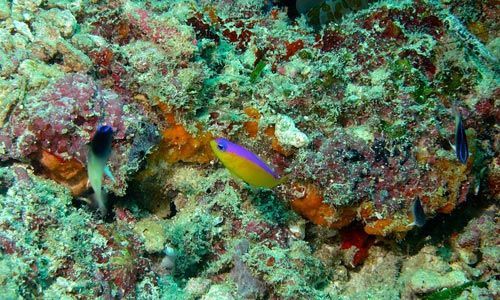
    The Black Neon Dottyback (Pseudochromis aldabraensis x Psuedochromis springeri) is a hybrid fish bred from the Springeri Dottyback and Neon Dottyback. This hybrid fish is semi-aggressive and grows to 3″ in size as an adult. Don’t let their small size fool you, because this fish can hold its own in an aquarium. Black Neon Dottybacks have a beautiful blend of colors from both parents. The black body of the Springeri Dottyback mixes with the yellow body of the Neon Dottyback, to form a gorgeous orange/brown on the Black Neon Dottyback. They also have vibrant blue streaks that run horizontally throughout their face and fins. This guide will discuss aquarium requirements, food & dietary needs, Black Neon Dottyback compatibility with other fish, and more.

    Aquarium Requirements

    Black Neon Dottybacks will do best in 30-gallon or larger aquariums. Due to their semi-aggressive personalities, they may claim an aquarium area as theirs and will do their best to protect their home. That’s also why it’s important to provide plenty of live rock. The live rock allows this fish to explore and claim its own space. Providing a lot of live rock will also give other fish their own space, hopefully preventing aggression between fish.

    Like many other fish, the Black Neon Dottyback can jump out of the aquarium. I recommend providing a well-fitted lid on your aquarium to help prevent that from happening. They mostly hang out around rocks, but can easily dart up when spooked and jump out of your fish tank.

    Water Parameters

    Keeping water parameters in appropriate ranges for your fish’s needs is important for the overall health of the fish. Luckily, most fish have a fair range of parameters they will do well under. The following are the water parameters your Black Neon Dottyback does best with.

    • Water Temperature: 72°-78° F
    • dKH: 8 – 12
    • pH: 8.1 – 8.4
    • Salinity: 1.020 – 1.025 sg

    Consider getting a High Range pH and KH test kit to test for pH & dKH. Keeping your temperature between 72° and 78° can be accomplished with a heater. Take a look at my guide which showcases some great aquarium heaters. Lastly, I would pick up a Refractometer from Amazon to keep an eye on your salinity levels. If calibrated correctly, refractometers are much more accurate compared to a hydrometer which loses accuracy due to salt buildup on the dial. Check out Different Salinity Reading Tools For Saltwater Fish Tanks to get an idea of other salinity testing devices available.

    Is the Black Neon Dottyback Reef Safe?

    Black Neon Dottybacks are reef-safe. They will not bother corals and most invertebrates. You may see them pick on rocks or grab something out of the water. They’re likely picking off microorganisms such as copepods of the rock. There is a lot of back-and-forth on whether this fish is safe with shrimp, and I recommend being cautious when keeping them together. Small shrimp, like Sexy Shrimp, will likely become an expensive snack. Larger shrimp often have more luck, but can become targets for the fish. If you’re inclined to try to keep these two together, I recommend providing a lot of rock with plenty of ledges and hiding spaces for the shrimp.

    Food & Diet

    This fish, like most other dottybacks, is carnivorous by nature. Their diet should primarily be rich in protein. I recommend feeding them foods such as Mysis Shrimp, Brine Shrimp, Krill, and other meaty foods. I enjoy using Hikari frozen fish food to provide protein for this species of fish. Black Neon Dottybacks should also readily accept pellet food as supplemental food.

    If your fish is hiding or being stubborn about eating, consider feeding live baby brine shrimp so it doesn’t starve. It may prefer hunting for its meal. Another tip is to turn off your powerheads and drop frozen food near the Black Neon Dottyback’s den. This will give it a chance to slowly creep out of its hiding space and grab food. Lastly, try mixing your food with garlic or fish-safe garlic extract, like Brightwell Aquatics Garlic Power. Many fish cannot resist the aroma of the extract, and it is generally good for them, in moderation.

    Tank Mates

    Dottybacks are territorial and aggressive by default. If you want to keep one, I recommend adding them last into the aquarium, to give other fish a chance to settle in and establish their territories. If you’re trying to keep a very peaceful fish tank, maybe look to other fish that won’t bother others. Besides Orchid Dottybacks most dottybacks are considered aggressive and may pick on other fish.

    Fish that have the most success with dottybacks are Cardinals, Chromis, Clownfish, sand-sifting gobies, foxfaces, tangs, dwarf angels, and damsels. Most of these fish either occupy a different part of the aquariums, don’t look like a territorial threat to the dottyback, or are tough enough to hold their own against an aggressive species of fish. I would recommend not keeping them with large-mouth fish and predatory fish. Anything that can fit into a fish’s mouth has a strong chance of becoming food.

    Black Neon Dottyback and Peppermint Shrimp

    I covered most of this earlier, but I would be cautious about keeping a Black Neon Dottyback and Peppermint Shrimp. They can do perfectly fine together, but I have heard cases where the dottyback destroys the population of shrimp in the aquarium. The personality of the individual fish is likely to play a large role whether it’ll mess with shrimp or not.

    Breeding

    Due to their aggression, I do not recommend mixing dottybacks, unless you own an incredibly large fish tank. These fish will likely battle it out relentlessly which will make successful breeding impossible.

    Final Notes

    The Black Neon Dottyback is a very cool-looking hybrid fish that may be an excellent choice for your saltwater fish tank. You’re always taking a gamble on keeping them with their territorial personalities, but the colors they bring to an aquarium make them a very tempting choice. If you’re shopping around for dottybacks, check out the many other species out there by following this link.
  • Splendid Dottyback – Complete Care Guide

    Splendid Dottyback – Complete Care Guide

    Splendid Dottyback Facts

    The Splendid Dottyback (Manonichthys splendens) sometimes called the Splendid Pseudochromis is a gorgeous saltwater fish with blue, yellow, and pink colorations throughout its body. There are many types of dottybacks and if you’re looking for a more peaceful one, take a look at the Orchid Dottyback. Otherwise, this article will discuss Splendid Dottyback aquarium requirements, food & diet, tank mates, and more.

    Aquarium Requirements

    Splendid Dottybacks grow to about 3″ in size, and will likely be more aggressive the smaller the aquarium is. With this knowledge, they should not be kept in anything smaller than 30 gallons, but bigger is always better. The aquarium should have live rock with different-sized crevices to provide cover and territory options for this fish and many others.

    I highly recommend providing a well fitted lid for your aquarium This will help prevent any possibility of a fish jumping out.

    Water Parameters

    Splendid Dottybacks have very similar water parameter requirements to most saltwater fish kept in this hobby. Keeping them within range and stable is important to keep your aquarium system and fish happy and healthy. The following are the water parameters needed by this fish species.

    • Water Temperature: 72°-78° F
    • dKH: 8 – 12
    • pH: 8.1 – 8.4
    • Salinity: 1.020 – 1.025 sg

    Is the Splendid Dottyback Reef Safe?

    The Splendid Dottyback is reef safe. The only thing they are a danger to is ornamental shrimp like the Sexy Shrimp or others that it can eat. This fish should not mess with other invertebrates or corals.

    Food & Diet

    This species of fish has a similar diet to other types of dottyback. They are carnivorous fish so do best being fed Mysis Shrimp, Brine Shrimp, Krill, and other meaty foods. I would also provide them with protein-rich pellet food as a supplemental addition to their diet. Splendid Dottybacks should readily take food because they generally are not picky eaters.

    Tank Mates

    Due to their semi-aggressive tendencies, Splendid Dottybacks should be introduced into the aquarium later. Doing so will hopefully allow other fish to establish themselves before adding one that may become aggressive/territorial. The problem with finding good tank mates for this fish is that they won’t hesitate to defend themselves against fish that are 3 or 4 times larger.

    They should do well with Clownfish, Damselfish, Cardinals, Dwarf Angels, Foxfaces, Gobies, and more. Just be aware that each fish has a different temperament. Some Splendid Dottybacks may be model citizens but also many fishkeepers claim this species can be very aggressive.

    I would avoid keeping this fish species with others that are similar in shape and color. They will likely be aggressive towards other Dottybacks, Blennies, and Basslets.

    Breeding

    You can purchase captive-bred Splendid Dottybacks but I do not have experience with breeding this fish. I feel it will be generally impossible in most aquarium settings because of their aggression.

    Final Notes

    Splendid Dottybacks could be a great addition to your saltwater fish tank. Their aggression may get them into trouble, but their colors make up for their temperament. If you have experience with the Splendid Dottyback, let me know. Also, learn more about saltwater fish by following the link.

    Image by Jenny (JennyHuang) on wikiMedia

  • Orchid Dottyback – Complete Care Guide

    Orchid Dottyback Facts

    Orchid Dottybacks (Pseudochromis fridmani) are beautiful vibrant purple/lavender fish kept in saltwater aquariums. Their long and slender bodies allow them to wiggle in and out of live rock which they treat as their home. The Orchid Dottyback is a fairly common fish found in the hobby and is a great addition to many saltwater fish tanks.

    Aquarium Requirements

    Orchid Dottybacks grow to a max size of 3 inches. This makes them great fish for aquariums that are 30 gallons or larger. This fish species do best in fish tanks with plenty of live rock. They will find a suitable cave in the rock to call home and will defend it. Like many other saltwater fish, the Orchid Dottyback can jump out so a tight-fitting lid is recommended to help prevent this.

    Water Parameters

    Keeping your water parameters in check and stable is incredibly important. This fish will require the following parameters:

    • Water Temperature: 72°-78° F
    • dKH: 8 – 12
    • pH: 8.1 – 8.4
    • Salinity: 1.020 – 1.025 sg

    I would consider picking up a High Range pH and KH test kit to test for pH & dKH. API makes pretty accurate liquid test kits. A heater will be needed to reach the desired temperature. Check out my guide that shows off some great water heaters available for aquariums. Keep an eye on your salinity with a Refractometer from Amazon. Refractometers are much more accurate (if calibrated correctly) than hydrometers that lose accuracy due to salt buildup on the dial.

    Are Orchid Dottybacks Reef Safe?

    Yes, Orchid Dottybacks are reef safe. The only things that are in danger of this fish are small, ornamental shrimp like the Sexy Shrimp. They should not bother corals or other invertebrates like starfish, snails, or hermit crabs. They may also consume pest critters in the fish tank such as flatworms and bristleworms. This makes them beneficial for the reef if you’re being plagued by either type of worm.

    Food & Diet

    Orchid Dottybacks are carnivorous fish. As stated earlier, they should eat pests such as bristleworms and flatworms in the fish tank. The Orchid Dottyback should also be fed Mysis Shrimp, Brine Shrimp, and pellet/flake food that is high in protein. Overall, they are not picky eaters and should readily take anything introduced to them.

    Orchid Dottyback Tank Mates

    Before we discuss potential tank mates for the Orchid Dottyback, it is important to know that they may show some aggression mainly because they are territorial fish. In a large enough aquarium with plenty of hiding places, this fish species should mostly keep to itself. However, I can never guarantee that because each fish has its own personality and temperament.

    If you introduce them into a large enough fish tank, and when they are incredibly small, you may be able to keep two Orchid Dottybacks together. They should pair up when they mature, creating a male/female pair and live in peace together. I would not recommend mixing Dottyback species due to others having more aggression. Once again, I can’t guarantee this will work but it is possible with this species under the proper conditions.

    Otherwise, Orchid Dottybacks should do well with gobies, clownfish, cardinalfish, dwarf angels, and other smaller fish that do not have a similar shape or utilize the same spaces as this fish species. I would stay away from other pseudochromis, damsels, firefish, and large predatory fish that will make a meal out of the Orchid Dottyback.

    Breeding

    Because Orchid Dottybacks can pair in a fish tank, they can breed. However, I do not have experience with successfully breeding this fish species. This fish is one of few saltwater fish that can breed in captivity.

    Final Notes

    Orchid Dottybacks are fantastic fish to keep if you love a vibrant flash of purple in your aquarium. They can be territorial which leads to aggression so keep in mind, that by Pseudochromis standards, they are fairly peaceful. If these do not catch your eye, check out other dottybacks by clicking this link.

    Image Credit: freeimageslive.co.uk

  • Bicolor Dottyback – Complete Care Guide

    Bicolor Dottyback Facts

    The Bicolor Dottyback (Pictichromis paccagnellae) is a beautiful saltwater fish that is half yellow and half purple. The vibrant coloration of this dottyback species makes it an excellent candidate for an aquarium. Try not to misidentify this fish with the Royal Gramma (Gramma loreto). They both have a similar shape and a fairly similar color pattern.

    Sometimes called the Bicolor Pseudochromis, this fish is fairly easy to care for but can be territorial once it establishes its territory. This article will go into more depth on aquarium requirements, diet, tank mates, and breeding of the Bicolor Dottyback.

    Aquarium Requirements

    The Bicolor Dottyback fish will grow to around 3 inches when it reaches full size. It does best in fish tanks that are 30 gallons or larger. A larger fish tank with plenty of live rock is recommended due to its territorial personality. They aren’t outright aggressive but they are more than happy to defend their territory against larger fish.

    This species of fish will also benefit from having a well-fitted lid covering the aquarium because they could potentially jump out. It’s heartbreaking losing a fish, especially one that’s expensive as a saltwater fish, so it’s best to take the precaution and cover it (if possible).

    Water Parameters

    The following are water parameters needed to help keep the Bicolor Pseudochromis happy:

    • Water Temperature: 72°-78° F
    • dKH: 8 – 12
    • pH: 8.1 – 8.4
    • Salinity: 1.020 – 1.025 sg

    Although I cannot guarantee the fish’s survival strictly based on water parameters, keeping your parameters stable and within range will help provide a better chance of success when introducing your fish into the aquarium.

    Is The Bicolor Dottyback Reef Safe?

    Bicolor Psuedochromis are reef safe. They should not harm and coral and the only types of invertebrates they may target are ornamental shrimp. Clams, hermit crabs, snails, and many other types of invertebrates should do perfectly fine with your dottyback.

    Food & Diet

    This species of fish is carnivorous. They will require a healthy mixture of protein-rich food such as Mysis Shrimp, Brine Shrimp, Krill, and others that can be found at your local fish store or online. Also, the Bicolor Dottyback may hunt bristleworms that are crawling around your fish tank. They should readily take pellet food such as New Life Spectrum Marine Formula and flake food. I enjoy using the Marine Formula because it has 36% Crude Protein and some of its main ingredients include: Antarctic Krill, Giant Squid, Seaweed, and Kelp.

    Tank Mates

    After providing a proper environment for your Bicolor Dottyback, it should do well with an assortment of fish such as Dwarf Angelfish, Anthias, Blennies, Chromis, Clownfish, Tangs, Foxfaces, and much more. They are relatively well adapted to living with different fish species. I would take caution and avoid keeping your Pseudochromis with fish that can easily eat it. Fish such as Groupers, Lionfish, Puffers, and other predatory fish are bad tank mates.

    Breeding

    Due to their aggression and territorial behavior, the Bicolor Pseudochromis is not a good candidate for breeding in an aquarium.

    Final Notes

    If you’re looking for a flash of color in your reef tank or fish-only saltwater aquarium, really consider picking up a Bicolor Dottyback. They have very cool behaviors and interesting personalities after you look passed their aggression. If the Bicolor Dottyback isn’t catching your eye, take a look at other dottyback fish here.

    Image by Großkopf, J. on wikiMedia

  • Neon Dottyback – Complete Care Guide

    Neon Dottyback – Complete Care Guide

    Neon Dottyback Facts

    Neon Dottybacks (Pseudochromis aldabraensis) are gorgeous saltwater fish with orange, yellow, blue, and black colorations on its body. Their vibrant colors make them an excellent addition to a saltwater fish tank.

    The Neon Dottyback will spend much of its time hanging around live rock it calls its home. They are known to be semi-aggressive fish and will likely defend their territory from most fish. I will go into more depth on this later. This guide will go over aquarium requirements, dietary needs, tank mates, and more for the Neon Dottyback.

    Aquarium Requirements

    A Neon Dottyback will grow to about 4 inches when it is fully grown. They should do well in fish tanks that are 30 gallons or larger. It is recommended to keep varying-sized live rock in your fish tank to provide different-sized nooks for this species of fish. Also, more hiding spaces will provide more spaces to establish territory and refuge for other fish, because the Neon Dottyback can be semi-aggressive.

    I recommend providing a well-fitted lid on your fish tank because Neon Dottybacks may jump out of the aquarium when spooked. Fish somehow manage to squeeze through the smallest hole when they decide to jump.

    Water Parameters

    Keeping water parameters in check is incredibly important for fish, crustaceans, corals, and all things in the water. It’s no different for the Neon Dottyback. The following are water parameters to keep your fish happy:

    • Water Temperature: 72°-78° F
    • dKH: 8 – 12
    • pH: 8.1 – 8.4
    • Salinity: 1.020 – 1.025 sg

    Besides these water parameters, you will need to do your best to keep other water parameters such as nitrates and phosphates down. High levels of nitrates and phosphates will cause algae growth, stress your fish, and potentially shorten their life span. One of the best and easiest ways to bring down nitrates and phosphates is through water changes. I spoil my fish with Red Sea Coral Pro Salt but many different brands will suffice for your fish.

    Is the Neon Dottyback Reef Safe?

    Yes, Neon Dottybacks are considered reef safe. They are safe with coral, but they will likely eat very small shrimp such as Sexy Shrimp. Cleaner Shimp and Fire Shrimp should do well with this fish.

    Food & Diet

    These fish are carnivorous. They will require a diet that provides a lot of protein. They will enjoy foods such as Mysis Shrimp, Brine Shrimp, Krill, and more. I would also recommend providing them with pellet food that contains higher levels of protein such as New Life Spectrum Thera A pellet food. Bonus points because this pellet food has included garlic in it which should help boost the fish’s immune system.

    Neon Dottyback Tank Mates

    If you’re looking to add a Neon Dottyback to your fish tank, consider adding it last. They are known to be territorial and may defend their space relentlessly. Neon Dottybacks will especially chase after fish similarly shaped to themselves. Other Dottybacks and Wrasses may have a hard time with this fish, especially in smaller aquariums. Larger aquariums and extra live rock will help spread out territories.

    They should do well in fish tanks with Clownfish, Dwarf Angelfish, Tangs, Foxface/Rabbitfish, and Gobies. Again, I would recommend adding them later due to their temperament.

    Breeding

    Due to their vibrant personalities, it is not recommended to keep this fish with other Dottybacks. That makes breeding nearly impossible in most home aquarium settings.

    Final Notes

    Neon Dottybacks are great fish to keep if you understand how aggressive they may be. Their coloration makes them a very interesting addition to a reef tank or saltwater aquarium. Consider picking them up, they are commonly found in fish stores and can be purchased online.

    Image by Haplochromis on wikiMedia

  • Purple Dottyback – Complete Care Guide

    Purple Dottyback – Complete Care Guide

    Purple Dottyback Facts

    The Purple Dottyback (Pseudochromis porphyreus) often called the Magenta Dottyback, or Purple Pseudochromis is a beautiful purple/magenta fish that can be kept in a saltwater aquarium. This vibrant fish will often be seen floating very close to its home. It will spend a lot of time making sure its territory is secure. Although it stays relatively small, the Purple Pseudochromis will fight tooth and nail for its territory. This article will discuss aggression levels, aquarium requirements, diet, and tank mates of the Purple Dottyback.

    Is the Purple Dottyback aggressive?

    Purple Dottybacks are considered semi-aggressive. They usually keep to themselves until they have to protect their territory. I would consider introducing this fish species a little later so your more peaceful fish can establish their territories first. Although it’s not guaranteed, doing this should help alleviate some aggression.

    Aquarium Requirements

    The Purple Dottyback will grow to be about 3 inches in length. They will do best in saltwater fish tanks that are 30 gallons or larger. The aquarium should also be full of live rock with different-sized caves and crevices to provide cover for this fish.

    Like many saltwater fish, the Magenta Dottyback could jump out of the fish tank. It is important to provide a well-fitted lid to help alleviate the potential of your fish jumping out.

    Water Parameters

    Keeping water parameters in check is important for fish, crustaceans, coral, etc. The following are the water parameters needed to keep your Purple Dottyback comfortable in the aquarium.

    • Water Temperature: 72°-78° F
    • dKH: 8 – 12
    • pH: 8.1 – 8.4
    • Salinity: 1.020 – 1.025 sg

    One of the easiest ways to achieve proper dKH and pH levels is through water changes. Conducting water changes with a good salt mix will help provide proper and stable water parameters for your aquarium’s inhabitants.

    The salt mix that works best for you will depend on what you keep in your aquarium. I usually use the Red Sea Coral Pro Salt. You can follow the link to pick it up from Amazon but it’s usually cheaper at Bulk Reef Supply.

    Is The Purple Dottyback Reef Safe?

    The Purple Dottyback is reef safe. It is not a danger to any coral. However, small shrimp such as Sexy Shrimp may be not safe with this fish. Other small shrimp may become a snack for the Purple Dottyback.

    Food & Diet

    This species of fish require a very meaty diet because they are carnivorous. You should provide them with a protein-heavy diet of Mysis Shrimp, Brine Shrimp, and krill when they are fully grown. The Purple Dottyback will also benefit from given protein-rich pellet food, and flake food. You may also see this fish consume copepods that live in and around live rock.

    Tank Mates

    The Purple Pseudochromis should do well with most other fish that won’t readily try to eat it. This species of fish should do well with Clownfish, Damsels, Wrasses, Dwarf Angels, Chromis, and even larger fish such as tangs, foxfaces, and rabbitfish.

    If possible I would avoid keeping them with large and predatory fish such as Groupers, Lionfish, Eels, and pretty much anything that may mistake the Purple Dottyback for food. Lastly, aggression levels will likely increase if more than one dottyback is kept in a fish tank. I would avoid keeping this fish with other dottybacks such as the Purple Striped Dottyback, Splendid Dottyback, and many others.

    Breeding

    Because of their territorial and semi-aggressive temperament, breeding Purple Dottybacks in an aquarium setting will be impossible.

    Final Notes

    The Purple Dottyback is a great fish to keep in a saltwater fish tank or reef tank. As stated above, they are perfectly safe with coral, and many fish will understand to avoid their territory once they are settled in. In an appropriately sized aquarium with plenty of hiding spots and rockwork, the Purple Pseudochromis should thrive! If you’re curious about other dottyback species, check out the Dottyback information page by following the link.

    Image by Rickard Zerpe on wikiMedia

  • Purple Striped Dottyback – Complete Care Guide

    Purple Striped Dottyback – Complete Care Guide

    Purple Striped Dottyback Facts

    The Purple Striped Dottyback (Pseudochromis diadema), also known as the Diadem Pseudochromis, or Diadem Dottyback, is a beautiful saltwater fish primarily yellow in color with a horizontal purple stripe running across its body. It is a fairly hardy fish that is quite easy to care for. Beware because the Purple Striped Dottyback can be a territorial fish and can be aggressive toward other tank mates. It is a gorgeous and vibrant fish that would be a good addition to many saltwater aquariums.

    You can find the Purple Striped Dottyback for sale at many brick-and-mortar stores and online on Liveaquaria. This guide will cover aquarium requirements, food & diet, tank mates, and breeding habits of the Purple Striped Dottyback.

    Aquarium Requirements

    Purple Striped Dottybacks will grow to a max size of about 3″. Due to their adult size, I would recommend keeping them in fish tanks that are 30 gallons or larger. Keep in mind that they can dominate smaller fish tanks because of their temperament. Your fish tank should be decorated with live rock with varying-sized caves for your dottyback to explore and create its territory. If you cannot find live rock at your local fish store, consider picking some up from Amazon.

    I would also consider adding a well-fitted lid to your aquarium because dottybacks and other fish may decide to jump out.

    • Water Temperature: 72°-78° F
    • dKH: 8 – 12
    • pH: 8.1 – 8.4
    • Salinity: 1.020 – 1.025 sg

    Consider getting a High Range pH and KH test kit to test for pH & dKH. Keeping your temperature between 72° and 78° can be accomplished with a heater. Take a look at my guide which showcases some great aquarium heaters. Lastly, I would pick up a Refractometer from Amazon to keep an eye on your salinity levels. If calibrated correctly, refractometers are much more accurate compared to a hydrometer which loses accuracy due to salt buildup on the dial. Check out Different Salinity Reading Tools For Saltwater Fish Tanks to get an idea of other salinity testing devices available.

    Is The Purple Striped Dottyback Reef Safe?

    The Purple Striped is reef safe and can be kept with coral and invertebrates. The only invertebrates that will be in danger are copepods and small ornamental shrimp (sexy shrimp), and other very small crustaceans. They may live amongst coral but they should not eat any.

    Food & Diet

    This species of fish is carnivorous. They should not be picky eaters and will consume Pellets, Flakes, Mysis Shrimp, Brine Shrimp, and other meaty foods. They may be given Krill as well once they are fully grown.

    Tank Mates

    Because of their potentially aggressive nature, I would recommend adding Purple Striped Dottybacks later. It is good to allow other fish to establish a territory before adding this fish. They should do well with fish such as Clownfish, Dwarf Angelfish, Wrasses, Damsels, Hawkfish, Gobies, and other fish that get a little larger than the Purple Striped Dottyback. I do not recommend adding other Pseudochromis with this fish because you will likely see constant fighting between the two.

    Breeding

    Because of their aggressive and territorial nature, breeding this fish species is practically impossible.

    Final Notes

    The Purple Striped Dottyback is a vibrant fish. Although it doesn’t have the best personality, it is a great starter fish and provides unique behavior for hours of enjoyment. Overall, they are great fish, especially if you understand their temperament. If you have any comments or information on this fish, please let me know! Also, if you’re interested in other dottyback species, check out the dottyback information page by following the link.

    Image by Bernard DUPONT on wikiMedia