Banggai Cardinals also known as the Kaudern’s Cardinalfish are fairly common saltwater fish with a very unique body shape and color pattern. These hardy fish are usually some of the first fish purchased for a saltwater aquarium because they are fairly inexpensive and not too finicky. They will grow to be around 3 inches in length when they are fully grown but should be kept alone or in pairs when keeping them in smaller aquariums. This guide will go into detail about the needs of this fish.
Aquarium Requirements
Kaudern’s Cardinalfish do not require an incredible amount of space and a pair (male/female) will do well in saltwater fish tanks that are 30 gallons or larger. They may become aggressive if two males are kept together. It is possible to keep them in small groups when the aquarium is 100 gallons or larger but be mindful of potential aggression. The Banggai Cardinal has similar water parameter requirements to most other saltwater fish which are:
Temperatures (72-78 degrees Fahrenheit)
dKH levels between 8 and 12
salinity levels between 1.020 and 1.025 sg
pH levels between 8.1 and 8.4
Just like most other fish in an aquarium, the Kaudern’s Cardinal prefers having quite a bit of live rock with holes and caves of varying size. This will give the fish spots to hide when it stressed and also a place to go when the lights are off. More hiding spaces will help settle some territorial disputes as well.
Food & Diet
The Banggai Cardinalfish is a carnivore so providing meaty food such as mysis shrimp is a must. There are many other feeding options such as, spirulina brine shrimp, pellet food and flake food. This fish may be a little picky when it comes to feeding on pellets and flakes so pay close attention to what the Banggai Cardinal eats.
Tank Mates
Banggai Cardinals are fairly peaceful and will primarily fight over territories with others of its species or similarly shaped fish like pajama cardinals. They are slow moving fish so sharing a tank with other peaceful fish is the best route to successfully keep this fish. They normally do well with:
Clownfish
Dwarf Angels
Anthias
Basslets
Blennies
Gobies
Tangs
The Kaudern’s Cardinalfish is completely reef safe. It should not bother any coral or invertebrate in the aquarium. Also, like stated earlier, they will do well as a male and female pair in smaller fish tanks but should be fine in small groups when fish tanks become 100 gallons or larger.
Breeding
Banggai Cardinalfish are fairly easy to breed but some work must be done in order to keep the fry alive. To begin, a pair must be found in order to breed successfully. It is hard to find the sex of males and females because they look very similar. When hunting for a pair of cardinals, observe their behavior in the fish tank. In a group, the dominant male will push away any competition and spend a lot of time with one other fish, the female. Keep an eye out for that when looking for a pair.
Once paired, keeping the male and female happy and fed will increase your chances of acquiring babies. Providing an urchin in the aquarium is not mandatory but it is beneficial to giving them the feeling of being in the wild.
The male will hold the babies in his mouth so making sure the male is well fed before holding the brood in his mouth is very important. The male will not eat as it is holding the offspring. The female will be the primary defense for the male when he is in this vulnerable state.
Once the fry leave the male they may spend their time in-between an urchin’s spines. They will most likely perish if there are other fish in the aquarium. Also, it is very important to have live baby brine shrimp ready to feed the offspring once they leave the males mouth. It is important to feed the babies multiple times a day.
Final Notes
Banggai Cardinalfish are very interesting and easy to care for fish. They may not be for everyone but they’re fantastic for anyone who loves their unique shape and color pattern. It is one of the few fish in the saltwater hobby that can quite easily breed in captivity and growing a brood to adulthood is always exciting!
Predatory fish tanks are both fun and rewarding without the hassle of attempting to keep coral alive. Most saltwater fish have vibrant colors with remarkable personalities that will keep you entertained for years! This guide will showcase 5 unique and interesting saltwater fish that may do well in a predatory aquarium.
1. Harlequin Tuskfish
The Harlequin Tusk comes from two different bodies of water. One can be found in the Indian Ocean and the other in Australia. Regardless, it is one of the most beautifully colored fish available to purchase in this hobby. The Australian’s coloration is just a tad more vibrant and pronounced.
This fish will become around 10″ when it is fully sized. It requires an aquarium that is 125 gallons or larger. Provide a lot of rock so it has places to hide and to allow it to set up its territory. It has very similar water parameter needs to most other saltwater fish which are:
Water Temperature between 72 – 78 degrees Fahrenheit
dKH levels between 8 and 12
pH levels between 8.1 and 8.4
salinity levels between 1.020 and 1.025 sg
When first introduced into a fish tank, the Harlequin Tusk may be very shy and hide in rock work. Once it becomes acclimated into the aquarium it will begin to show their true character. Harlequin Tusks are wonderful fish to have in a FOWLR (Fish only with live rock) aquariums with similarly sized fish. They do very well with Large angelfish, tangs, foxfaces, small triggers and larger wrasses. Only one Harlequin Tusk should be kept in an aquarium!
The Harlequin Tusk will not bother coral but invertebrates such as shrimp, snails, crabs, and many others will become lunch. Small fish may also become lunch for this fish due to its carnivorous tastes. Check out the Harlequin Tusk Complete Care Guide for more information on this fish!
2. Porcupine Pufferfish
Have you ever seen a fish with colored eyes? If you haven’t, check out the Porcupine Puffer! This fish is unique because it doesn’t have pelvic fins so its body shape is much different from other fish. It also takes on the characteristics of a curious toddler and playful puppy. The highly curious, intelligent and gorgeous Porcupine Pufferfish is a fantastic predator fish to keep in a FOWLR aquarium.
When it is fully grown it will be roughly one foot in length. It should be housed in a 180 gallon aquarium when it becomes this size with a well running protein skimmer. Its water parameters are nearly identical to the Harlequin Tusk.
Water Temperature between 72 – 78 degrees Fahrenheit
dKH levels between 8 and 12
pH levels between 8.1 and 8.4
salinity levels between 1.020 and 1.025 sg
The Porcupine Puffer does well with many other predators in an aquarium. Similar to the Harlequin Tusk, the Porcupine Pufferfish will do well with large tangs, foxface, large angelfish, triggers, large wrasses and eels! They may nip on tank mates, so be prepared to see round holes in other fish’s fins. I personally would not recommend a pufferfish in a reef tank because crustaceans like shrimp, crabs, clams and snails are their natural prey and they will spend their time foraging for them. The Porcupine Puffers beak constantly grows so they may nip on coral and live rock to try to grind down their beaks.
Food such as snails, crabs, shrimp and clams will help help grind down this fish’s teeth. It will also happily feed on krill, mysis shrimp, and possibly silversides. For more information, check out the Porcupine Puffer Complete Care Guide.
3. Volitan Lionfish
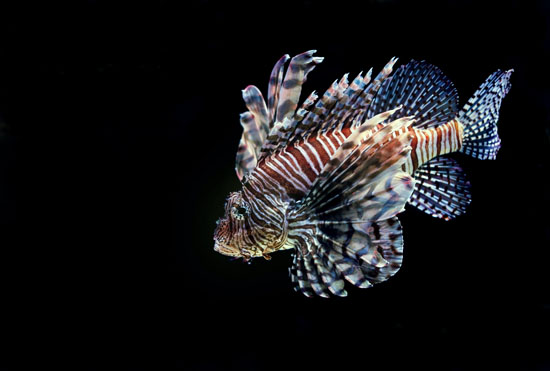
The Volitan Lionfish may seem like a decile and elegant fish but they are incredible predators that will consume just about any fish that will fit into its mouth. Also known as the Turkeyfish, this animal has many very pronounced fins all over its body that gives it a very unique appearance. Its very powerful colorations make it a visual spectacle! First they’re very shy and hide in aquariums but once acclimated, they become more active and swim in the open.
The Volitan Lionfish grows to be over a foot in length and it will require a fish tank that is a minimum of 120 gallons in size with plenty of hiding spots to keep it happy. They have similar water parameter requirements as the Harlequin Tusk and Porcupine Pufferfish with the exception being that they prefer salinity ranging between 1.021 and 1.023.
This species of lionfish becomes incredibly large so finding tank mates that will do well with it may be a bit more challenging. Fish that are at least 75% of the lionfish’s size are recommended. The Volitan Lionfish will try to eat anything and everything that can fit into its mouth. Tangs, butterflyfish, eels, groupers and triggers are all candidates that will usually do well with a lionfish. Unfortunately, most crustaceans become food for a lionfish.
Lionfish can be fed an assortment of live and frozen foods. The goal is to feed your Lionfish frozen food and occasionally feed something live. Many hobbyists feed Volitan Lionfish silversides, frozen squid, uncooked shrimp and pre-made frozen foods found at pet stores.
A lionfish has spines that are quite venomous and are far more painful than a bee sting. The venom is not normally lethal but precaution should be taken especially if you are sensitive to stings from animals. If stung, remove any spines that have broken into your skin, and place the affected body part into hot but tolerable water. Keep your appendage in this water for roughly 30 to 45 minutes. We recommend seeing medical attention for extra precaution.
4. Bluestreak Cleaner Wrasse
The Bluestreak Cleaner Wrasse is not your normal predator. This one does not get insanely large like many others but it is an excellent fish for a predator aquarium. This fish does not have a big appetite, it does not swallow prey whole, but it does enjoy removing parasites off fish!
This fish reaches roughly 5.5 inches in length when full size. It also has a very active personality so should be kept in aquariums that are 90 gallons or larger to provide adequate swimming space. This wrasse’s water parameters are the same as the Porcupine Puffer and Harlequin Tusk. We encourage using a tightly sealed lid because of this fish’s jumping tendency. Unlike the rest of the fish on this list, the Bluestreak Cleaner Wrasse is reef safe!
A big fish tank with large fish are great for the Bluestreak Cleaner Wrasse because it can be a finicky eater at times and only consume what can be found in the fish tank. Its primary diet consists of parasites that attach to fish’s mouths, gills and scales but it can also eat meaty foods such as:
Mysis Shrimp
Brine Shrimp
Small Pellet Food
Flake Food
If your fish is being a finicky eater try feeding with garlic or garlic extract. Be sure to check out this article for information on garlic and feeding fish!
The Bluestreak Cleaner Wrasse will do perfectly well with fish such as tangs, angels, groupers, foxface, eels, triggers and pufferfish! Be careful because the cleaner wrasse may fight with other wrasses and they are a hit or miss with lionfish.
5. Blue Throat Triggerfish
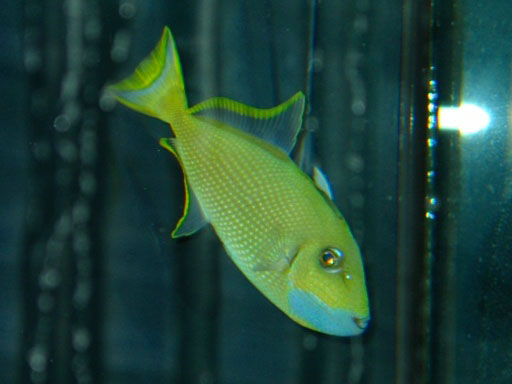
The Blue Throat Trigger is a gorgeous fish that finds a home in many predator tanks. It has a couple of unique features that differ from all the other fish on this list. First, the Blue Throat Trigger has different color patterns depending on whether it is male or female! The male will be a darker color with a blue throat and a female will normally be much lighter in color without the blue coloration. This fish also has the capability to grunt under water which is quite a funny thing to listen for.
The Blue Throat Trigger will grow to around 9 inches in length and requires a minimum of 125 gallons of water. The fish tank should provide quite a bit of live rock so the trigger can hide. Live rock needs to be very large or placed securely because Blue Throat Triggers move them. The water parameters of a Blue Throat Trigger are identical to the Porcupine Puffer, Harlequin Tusk and Bluestreak Cleaner Wrasse.
Like many other triggers, the Blue Throat’s teeth continuously grow and it will require foods that help grind down the teeth. Snails, hard shelled shrimp, and clams are all excellent foods to give your trigger to help grind down its teeth. It can also be fed squid, krill and mysis if it is incredibly small. The Blue Throat is considered to not be 100% reef safe because it will most likely destroy a clean up crew population. Although less common, it has the potential to nip on coral and knock things over when it decides to break rocks and move things around to find prey.
This fish does well with eels, squirrelfish, lionfish, groupers, hawkfish, large angels, tangs and pufferfish. They have incredibly sharp teeth and can provide a nasty bite when threatened but overall they are a fantastic fish to have in a predator aquarium!
Final Notes
There are so many different predatory fish available on the market but these 5 have some unique features. They are all gorgeous and may be fantastic additions to an already established fish tank! If you do not know your fish tanks size but want to figure out the volume of water before adding any of these fish be sure to check out the aquarium volume calculator here!
Snowflake Eels (Echidna nebulosa) otherwise known as Starry Moray or Snowflake Moray Eel, are interesting animals kept in aquariums. They are commonly found in predatory tanks but are occasionally added into reef tanks! This guide will give insight on Snowflake Eel aquarium requirements, feeding, and other information for anyone interested in this fish.
Fish Information
Snowflake Eels are incredibly easy to care for. They are very hardy and an excellent introductory eel for new hobbyists. They are considered semi-aggressive and are nocturnal predators usually hunting and ambushing crustaceans such as shrimp and crabs. In an aquarium, it is common to see them poke their heads out of rocks during feedings. They use two sets of jaws to grab prey and drag it down into their gullet during feeding. Be cautious when keeping this fish in a reef tank because it consumes crustaceans. It may knock corals over since it stays inside and very close to live rock. The Snowflake Eel will be roughly 2 feet (60cm) in length when it is grown in captivity. It is possible for them to be larger in the wild.
Aquarium Requirements
When fully sized, the Snowflake Eel should be kept in fish tanks that are 50 gallons or larger. A well covered top is needed because this fish is known to be one of the best escape artists. Because of its size and temperament, the eel should have quite a bit of live rock with varying hole sizes. This will give it room to move around, hide when threatened, and provide similar habitat it experience in the wild.
Snowflake Eels do best in water temperatures ranging from 72 – 78 degrees Fahrenheit, dKH levels between 8 and 12, pH levels ranging between 8.1 and 8.4 and lastly salinity levels between 1.020 and 1.025 sg. As stated before, they are quite hardy and have a nice range of water parameters they can tolerate.
Food & Diet
Snowflake Eels are carnivorous animals and require a nice range of foods. There is a wide variety of food that it can eat such as:
A Snowflake Eel can also be handfed but caution must be taken because they can give a powerful bite! It is best to start handfeeding when the moray is small to minimize risk of getting bitten or at least to receive a smaller bite. It is a predator so it may mistaken your fingers for a quick snack!
Tank Mates
The Snowflake Moray Eel can be kept with fish that are larger in size and that won’t easily fit into the eel’s mouth. They should do fine with coral, snails, anemones and sea urchins, but not crustaceans such as crabs, lobsters and shrimp. Keep in mind that this species of eel will become quite large so fish that are larger than its mouth at first, may not be in the future.
Eels are commonly kept in larger aquariums with bigger and sometimes more aggressive fish. They are commonly kept with tangs, large angelfish, lionfish, foxface, groupers and large wrasses.
It is possible to keep 2 Snowflake Eels in a marine tank together. The eels should be introduced at the same time and they should also be similar in size. Snowflake Eels are cannibals and if the opportunity to eat a much smaller eel arises, it will do so! I would personally not keep 2 Snowflake Eels in a fish tank together unless it is 150 gallons or larger. They are quite territorial and larger aquariums will give them more room to create their own territory.
Breeding
Breeding Snowflake Eels has not really been conducted in captivity because of their mating rituals, inability to distinguish between male and female, and rarity in acquiring a mating pair.
Final Comments
Snowflake Eels are a fantastic fish for a saltwater aquarium. They all have very unique personalities and are quite active moving within the live rock scaping of your aquarium. Be mindful of the fact that eels are escape artists and if a well sealed lid is not provided there is a high possibility of them jumping out!
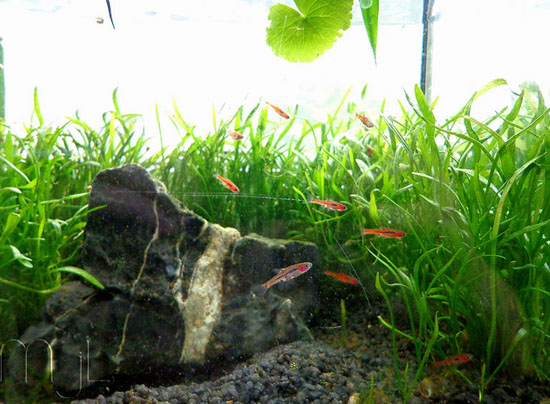
The Chili Rasbora (Boraras brigittae), sometimes called the Mosquito Rasbora, is a incredibly small fish, with vibrant colors, that enjoy schooling in large groups. Originally found in Indonesia, it has swept through the aquarium hobby and is loved by many fish keepers. Primarily red and orange in color, this little fish strikingly pops in well planted aquariums. This guide will provide information on Chili Rasbora care and breeding habits.
Fish Information
Chilli Rasbora do not get larger than .8 inches (2 cm). It is the perfect fish for aquariums that are 5 gallons or larger. A school should contain 6 individual fish or more. 6 to 10 Chili Rasbora should do well in a 5 gallon fish tank. Although the Chili Rasbora remains incredibly small, its colorful body and habit of schooling create beautiful movement and liveliness in a densely planted aquarium.
Like many other rasbora species, this one primarily spends its time in the middle and top of the aquarium. It will occasionally swim at the bottom of the fish tank.
Aquarium Requirements
The Chili Rasbora is a tropical fish that does well in a large temperature range. It can survive in water temperatures between 68 and 82 degrees Fahrenheit, but 75 and 78 degrees Fahrenheit is the ideal range where it will thrive. It enjoys KH levels between 3 and 12 dKH and lastly does great in acidic water that has pH levels ranging between 4.0 and 7.0.
This species of fish suffers terribly in new aquariums so only add them into already well established fish tanks. Once introduced and settled, they are quite hardy.
Because of its small size, keep this fish in slow moving waters. They will be thrown around the aquarium when caught in fast moving currents. Providing many live plants and great filtration is ideal for this fish.
Food & Diet
The Chili Rasbora is small and remains small its whole life. It is very important to feed it food that it will be able to fit into its mouth. There are many options to offer this fish to provide it with a varied diet. Flake food can be taken and crushed into powder which makes it small enough for this fish to consume. Micropellets can be fed with little problems because they are designed for tiny fish like Chili Rasbora. Also, feeding daphnia, brine shrimp, and cutting up bloodworms are fantastic options to give this fish a varied diet. Providing many different food options will keep this fish vibrant and healthy.
Tank Mates
Chili Rasbora are easily outcompeted for food. Take pre-caution when choosing tank mates. The Chili Rasbora do exceptionally well with other small and peaceful fish in the aquarium. Do not keep them with larger or more dominate fish such as:
Platys
Mollies
Swordtails
Betta Fish
Angelfish
Large Mouthed Fish (Cichlids, Goldfish)
Keeping Chili Rasbora in larger fish tanks is more than possible. They will thrive with fantastic fish such as:
Tetras (ember, neon, cardinal, green neon)
Rasboras (harlequin, green kubotai)
Endler’s Livebearers
Guppies
Celestial Pearl Danios
Corycats
Dwarf Gouramis
The amount of fish that can be kept in an aquarium are determined by the number of plants in the fish tank, filtration, and physical size of the aquarium. A densely planted aquarium will be able to keep more fish happy over a sparsely planted one. A stronger and better filter will go a long way in allowing you to keep more fish in the enclosure. Larger aquariums aid in keeping water parameters stable when a fish tank is heavily populated. Regardless, do not cram too many fish in a fish tank.
Shrimp and snails should do perfectly fine with Chili Rasboras even in 5 gallon aquariums. In fish tanks this small it is important to closely monitor water parameters because they are more prone to swinging which can be detrimental to both fish and invertebrates.
Breeding
Chili Rasbora will openly breed and produce offspring in aquariums. The males may become a bit more territorial during breeding periods and will also deepen its red and black coloring. After successfully breeding a female will appear rounder than the male and not pregnant females.
Eggs will be laid on plants and decorations and will not be cared for by either parent. The best chance for survival for the fry are in heavily planted aquariums. The plants will provide the much needed cover the fry will need to reach adulthood. The parents are sometimes observed to eat the fry once they hatch from their egg.
Final Comments
The Chili Rasbora is fantastic for aquariums both large and small but fill the micro aquarium niche very well for keepers that do not have the space or money to spend on large aquariums. Their vibrant colors stand out in aquariums so they will always be able to be observed. Check them out if you get a chance!
With all the different and unique freshwater fish to choose from, the red tail shark is sometimes overlooked. Regardless, this fish is remarkably beautiful and highly recommended for fish tanks that will tolerate its lively personality. The black body and red tail are always a sight to see because this color pattern is not very common in fish. The red tail shark has a nice long lifespan of 5 – 6 years.
Aquarium Requirements & Fish Compatibility
The red tail shark will be around 6″ in length when it is full size. Although they do not get incredibly large, a fish tank that is 50 gallons or more is highly recommended when it is fully grown due to its aggressive nature. It should be the only red tail shark in the fish tank because it becomes highly territorial. Having other bottom dwelling fish such as plecos, rainbow sharks, and cichlids is also not recommended due to this fish’s aggression. The red tail shark does well with fish such as:
It is encouraged to provide a lot of places for this fish to hide. The fish tank should be full of decorations, driftwood, rocks, and plants (live or plastic) to help curb the previously mentioned aggression. Adding many decor breaks the line of sight for this fish which can help mellow it out. They love hiding in caves and crevices and will fight for the ability to do so.
The red tail shark does very well in temperatures ranging from 72 to 78 degrees Fahrenheit, KH levels between 10 and 15 and pH levels ranging from 6.5 to 7.5. Due to its aggressive personality the red tail shark’s care level is little more challenging compared to peaceful community fish.
Feeding
The red tail shark is an omnivorous animal so it will consume just about anything offered to it including vegetables such as cucumber and zucchini. Please remember to thoroughly rinse the vegetables before placing them into a fish tank and do not keep the vegetables inside of the aquarium for long periods of time because doing so may cause an increase in phosphate and nitrate levels. Besides vegetables, the red tail shark will go around the aquarium consuming algae that grows on rocks, plants, and glass.
Other foods that are commonly given to red tail sharks are flake food and frozen fish food. The flake food is meant to provide the nutrients a red tail shark would acquire from algae in the wild and the frozen bloodworms will provide the protein required for the red tail shark. Using these will help provide a well rounded diet for your shark. Other fish will also happily consume these foods! They are not limited to just these two types of food. Flake food can be substituted with pellet food and bloodworms can be substituted with brine shrimp or krill. Krill is normally given to larger red tail sharks.
Breeding
Breeding is an incredible challenge for red tail sharks in an aquarium setting. This is mainly because they are intolerable of one another in aquariums at home due to the aquarium’s size limitation and the fish’s territorial personality. Large aquariums may be able to keep more but it is still quite a challenge to get these fish to breed.
The only physical difference between a male shark and a female is that when matured, the female red tail shark will have an larger abdomen compared to the male. Otherwise the male and female sharks are identical.
Final Notes
The red tail shark is a fantastic fish to keep in fish tanks where the other fish swim in the middle to upper parts. Although they are not normally advertised as algae eaters, the red tail shark will remove some algae from aquarium decorations. Adding a few snails to help will be beneficial. Overall, this is a fantastic fish with very unique colors that are great for planted and regular freshwater fish tanks!
Filling a 30-gallon saltwater aquarium with animals can be a stressful task. There are just so many options to choose from. This guide will go over a few unique fish and crustaceans that can be kept in a saltwater aquarium. There are many others out there but these are a few that really stand out to me that aren’t incredibly hard to keep.
1. Yellow Assessor
The Yellow Assessor, otherwise known as the Golden Assessor Basslet, is not a very common fish in a reef aquarium but it is fantastic! They can get a little territorial like other basslets but overall are quite a peaceful fish that will not bother invertebrates. It is perfect for reef aquariums! Provide quite a bit of hiding spots and rockwork to dull the aggression towards other fish. This fish is carnivorous so providing meaty food such as mysis shrimp or brine shrimp is a must! It will max out around 3″ in size and is an excellent addition for aquariums that are 30 gallons or larger. They have a gorgeous yellow body with a touch of red on its fins. A unique feature of this fish is that at times it will swim along rocks sideways or upside down. It usually gives new fish owners a scare but it is perfectly normal!
2. Geometric Pygmy Perchlet
The Geometric Pygmy Perchlet is a grumpy-looking fish with red and white coloration on its body. It has a much higher dorsal fin than many other fish. It can be a little territorial to other tank mates but it normally minds its own business. This fish is carnivorous so providing meaty food is very important!
It will max out at 2 inches in size and will do very well in a 30-gallon reef aquarium. One unique attribute of this fish is that it will actually perch on rockwork and sit there very still waiting for food.
3. Watchman Goby + Pistol Shrimp
Now a watchman goby is not very unique but there is a great possibility that if a pistol shrimp (otherwise known as a snapping shrimp) is also introduced into the aquarium, the two will pair up, share a burrow, and live life together. The goby will keep a watch out and protect the shrimp and they will at times share food. It is really interesting to observe these two working together and protecting their burrow. The pistol shrimp is also able to use its claw to create a “snapping” sound that can be heard outside of the aquarium. This sound is used to scare off predators and the pistol shrimp uses the claw as a weapon to catch prey.
Both of these creatures are great for aquariums because the watchman goby will help keep your sand bed clean sifting for plankton while the shrimp will collect uneaten food that falls to the bottom of the aquarium. For the most part, the snapping shrimp is harmless except with small shrimp. The watchman goby will max out at a size of 4″ and this duo is a perfect combination for a reef aquarium. Check out the Watchman Goby – Complete Care Guide to learn more about this fish.
4. Mantis Shrimp
The mantis shrimp should be kept alone in a species tank. They are highly intelligent and very aggressive. Due to their aggression, only one mantis shrimp should be kept in an aquarium. Their very colorful bodies are truly fascinating and their hunting tactic is even more so. They primarily use their club-like appendage to hunt and can attack crustaceans, fish, and other unsuspecting animals with their powerful strike. They have enough power to crush snail and crab shells. This is why they should be kept alone in an aquarium. Crustaceans are recommended to throw in from time to time as a quick snack for the mantis shrimp. Otherwise, the mantis shrimp should be fed live feeder fish, frozen scallops, shrimp, and other meaty food.
A mantis shrimp can use its claws which are as powerful as a .22 caliber bullet to break the glass of its enclosure. I would highly recommend using acrylic instead of glass for the mantis shrimp’s enclosure. Other than that, it is quite easy to set up their aquarium, and are fairly easy to care for.
Final Thoughts
Hopefully, this list gives a good idea for hobbyists who are looking for something different in their aquarium or are looking for a very niche animal to keep. Marine animals are very unique and have great personalities so keeping them is always a great time! Some require precaution before keeping but after that saltwater systems are quite enjoyable.
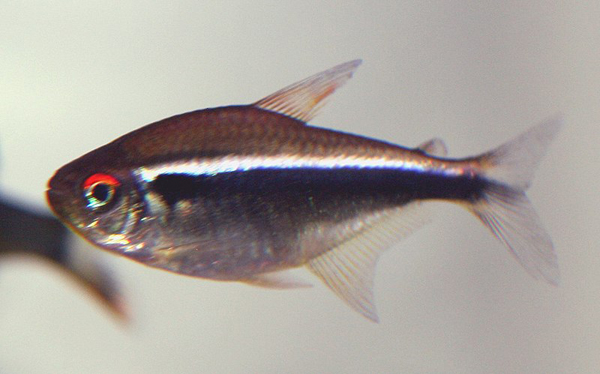
Black neon tetras are usually overshadowed by the more well-known Neon Tetra. These fish should catch the eye of aquarium keepers though. They may not have that vibrant blue and red coloring but instead have a black and white bar running down their body which is quite remarkable itself. These fish look fantastic in a well-planted aquarium. If you’re ever browsing through a fish store be sure to check them out!
Black Neon Tetra Requirements
Black neon tetras are much more hardy than neon tetras. They are more resilient to changing water parameters such as increased levels of nitrates and pH, but remember that not providing stable parameters can lower the health or possibly kill any fish over time.
These fish are quite easy to keep happy in an established aquarium. They are community fish and should be kept in a school of a minimum of six other black neon tetras. They have been seen schooling with other similarly shaped tetras so mixing may be a possibility. Black Neons max out at 1.5″ which is a little bit bigger than a neon tetra. They do well in an aquarium that is a minimum of 10 gallons.
The black neon tetra are not picky to food. They will happily eat flake food, pellets, and or frozen meaty food such bloodworms, brine shrimp, or Mysis Shrimp. They are omnivorous so providing a wide range of food is beneficial to their health. They will not eat live plants in an aquarium! Remember to only feed your fish enough so the food does not end up at the bottom of the aquarium. Uneaten food can become a big problem for an aquarium if left unchecked because it will raise the phosphate and nitrate levels.
Black neon tetras are best kept in water that is between 72 and 77 degrees Fahrenheit. They also do perfectly well in water with a pH between 5.5 and 7.0. They have quite a large range of water conditions they can live in so they will do well with many other tropical fish.
Final Thoughts
Black neon tetras are a great addition to most community tanks. They are peaceful, and small, but have a unique color pattern to them. They are quite abundant in the hobby and can be found at most pet stores. These fish are quite inexpensive as well, usually costing between $1.49 and $1.99.
With the large variety of fish that can inhabit a fish tank, it can become overwhelming trying to decide the right ones to put inside to inhabit the enclosure. Especially when hearing about barbs (more specifically) tiger barbs have a reputation for being brutes and aggressive in an aquarium. There are more barbs that are also aggressive but there are some that are nice and gentle. Specifically, the Denison Barb.
Temperment& Size
Denison barbs sometimes known as Rose Line sharks look like a dominating force inside of an aquarium but they are one of the most beautiful and gentle animals you can keep. It is of course not recommended to keep them with little fish like neon tetras or ember tetras because they will become lunch, but they’re perfectly welcome in a community aquarium filled with larger peaceful fish.
These fish love to be in larger groups preferably 5 or more fish. Also, do not forget to keep a good lid on your aquarium because these fish are known to be jumpers! Because of their love for being in groups and active personalities, I would not recommend putting this fish in anything smaller than 50 gallons of water.
The Denison Barb is different from your typical barb. This fish is far longer and more streamlined. They are normally found in fast-moving streams in the wild and appreciate higher oxygen levels in an aquarium. They also grow to be about 4 to 6 inches when they are full-grown.
Feeding & Aquarium Requirements
The Roseline Shark will happily take most foods and giving them a large variety of food only benefits them. They will gladly eat bloodworms, fish flakes, pellet food, and algae flakes/wafers/pellets. They are safe to keep with live plants and will not go out of their way to eat them! They’re omnivorous fish so giving them many options will keep them happy!
They enjoy an enclosure with a pH between 6.8 – 7.8 and temperatures ranging from 60 – 77 degrees Fahrenheit. They should be right at home with other tropical fish because for the most part, their water parameter needs are quite similar. Overall, they are quite easy to care for as long as they are introduced into an established aquarium.
Final Thoughts
Denison barbs are incredibly active fish and are insanely beautiful with their gray black and red coloring. They will make any aquarium seem more vibrant and bring new life to the setup. Keep them in nice groups and feed them a variety of food and they should be happy for quite some time!
Tiger barbs are quite a gorgeous little fish. They have beautiful vibrant black, orange, and tan coloration! This is the perfect Halloween-themed fish. They’re also a wonderful centerpiece for many other aquariums because of the dominating presence of swimming in large shoals. Unfortunately, caution must be taken when keeping tiger barbs because they are fin nippers. Male tiger barbs are the primary nippers because they constantly battle with one another to assert dominance. They are considered semi-aggressive fish which may limit which fish they can be mixed with. This guide will try and give some useful information on helping tiger barbs thrive as well as help the fin-nipping problem in your aquarium.
Tiger Barb Requirements
Tiger barbs can grow to a size of about 4 inches long. A 30-gallon aquarium is the minimum requirement to keep a tiger barb happy, but anything larger is always appreciated. Setting up a larger aquarium for them will allow them to fade into the background and not be the dominating aspect of the fish tank.
Keep in mind that they are shoaling fish so they do best in groups of 6 or more. Anything smaller will cause them to be more aggressive than they already are. If they are in a large enough shoal they usually keep to themselves and do not bother fish of a different species.
It is perfectly fine keeping these fish in temperatures around 76 – 78 degrees Fahrenheit which allows them to be mixed with most other tropical fish. They also do wonderfully in a planted aquarium and are a great addition to one because they like slightly acidic water. Also, having a heavily planted aquarium will help create barriers and hiding places for other fish if the tiger barbs start becoming a little nippy.
These colorful fish are not very picky when it comes to eating! They are perfectly fine eating flake food, pellet food, blood worms, brine shrimp, and other foods that are introduced into the aquarium. They should normally be fed once a day.
Although there are quite a few ways to alleviate a tiger barb’s fin-nipping habit still take precautions if you want to add them to a community tank. To reiterate what was said before: Do not add less than 6 tiger barbs into an aquarium, be sure they are fed, and try to load up your aquarium with decorations to provide barriers and hiding spots. Remember, these barbs are used to fighting for dominance, it is in their nature, so add more tiger barbs and let them keep to their species and pick on one another. These fish should do quite well in a semi-aggressive aquarium but can be problematic in a peaceful, community tank. They’re wonderful to have because of their vibrant colors and active nature but also can become troublesome for new and even knowledgeable aquarists if precautions aren’t taken.
Bearded dragons are one of the most iconic reptiles that are kept as pets. For the most part they are pretty easy to take care of, have incredibly docile personalities, and are very fun to handle. These wonderful creatures come from Australia and can live up to about 14 years and this guide has been created to inform potential beardie keepers on how to properly keep a bearded dragon at home.
Enclosure Requirements
A 40 breeder (36″ x 18″ x 18″) is a great size for a beardie until it grows over 12″ long. Once it exceeds a foot in length it is recommended to upgrade its habitat to a 120 gallon enclosure (48″ x 24″ x 24″). This will provide plenty of room for your companion. Bearded dragons should have an area to bask and an area to cool down. The basking location should average between 90 to 95 degrees Fahrenheit throughout the day. On the other hand the cool down location should be around 80 to 90 degrees Fahrenheit. Reptiles are cold blooded animals so they cannot regulate their body temperature. This requires for them to have warm and cool areas in the enclosure. The lights can be shut off during the night and the temperature can safely decrease to around 70 to 75 degrees Fahrenheit. Temperature and humidity gauges should be present in both warm and cool parts of the enclosure. The humidity should roughly be between 30 and 40 percent. Supplemental heat emitters should be provided if temperatures in the enclosure fall below 70 degrees Fahrenheit. Bearded dragons should receive enough UVA from the basking light but they will require another light fixture that gives off UVB lighting. UVB is needed in order for a bearded dragon to be able to produce Vitamin D. A wire mesh covering for the enclosure is required because UVB does not penetrate through glass. This dual fixture is great for this type of enclosure and it comes included with both a UVB bulb and basking light.
There are different substrate types that can be used for a bearded dragon enclosure. There is sand matting that can be placed at the bottom of the enclosure. It is like a carpet that can be removed and easily cleaned so it is recommended to have two on hand to swap out and clean. It is also the safest type of bottom for the enclosure because it cannot be ingested. There is sand that can be used as substrate as well. Some people are against sand due to possible impaction and accidental ingestion. This substrate helps imitate a bearded dragon’s natural habitat and may help motivate it to burrow. If sand is purchased, it is a great idea to also purchase a scooper to pick up some fresh poop. The sand substrate is recommended to be replaced every at least every three months. Each substrate has its own perks and downfalls. Some are more ascetically pleasing while others have better reliability.
Decorations can include an assortment of rocks, driftwood and anything for them to lounge on. A nice piece of driftwood is great to put under the basking lamp because it does a great job to hold heat which will help keep your beardie warm!
Feeding Time
Bearded dragons do not really require a water dish to be present in their enclosure. They acquire all of their fluids from food. Their diet will primarily consist of live food such as: crickets and meal worms, vegetables, and very sparsely fed fruit. Some people shy away from keeping bearded dragons because they do not want to drive to acquire crickets or they just do not like insects in general.
Crickets should be fed everyday and be appropriately sized to fit into the mouth of a bearded dragon. The size of the cricket should not be bigger than the area in between the eyes of your bearded dragon. They should also be dusted with a calcium supplement at least twice a week to ensure your new reptile companion acquires the necessary supplements to help build a strong bone system. An improper enclosure and not enough supplements could lead your animal to become diseased. A common disease that reptiles can acquire the metabolic bone disease. Also, pay attention to how many crickets stay in the enclosure because they can irritate and stress your animal companion if not eaten. Mealworms should only be given to your bearded dragon as a treat.
Bearded dragons should be fed veggies such as kale and broccoli to help give them important nutrients and a more varied diet. Veggies should be fed daily. It is recommended to give youngsters veggies first and then once they eat their veggies to feed them their crickets. Just like little kids, baby bearded dragons prefer not to eat veggies. An assortment of collard greens and mustard greens should be given to your bearded dragon. Do not feed your new pet avocado, rhubarb because it is toxic to the animal and avoid lettuce because it does not provide any nutritional value and can lead to diarrhea.
Fruits can be fed to your bearded dragon very sparsely. More or less once or twice a month as a treat for being a great pet! The main fruits to feed beardies are mango and papaya. Strawberries, peaches, raspberries and watermelon are great to feed occasionally, but stay away from feeding them fruit with a lot of citrus.
Bearded dragon handling
Bearded dragons in general are quite easy to tame. Their very docile nature makes them quite a good pet for younger children or anyone who is new to keeping a reptile. They’re a wonderful introductory pet. The little ones can be squirmy, especially to a new keeper but with training and patience they will become like a dog with scales. I have heard many stories of bearded dragon keepers keeping their pets on their chest while sitting on the couch watching TV, or letting the bearded dragon cling onto their shirt while walking around the house. I have seen them nip but it doesn’t hurt and it usually happens when they think they’re getting fed and they mistaken your finger for lunch. Otherwise, they’re a very mellow animal.
Final Thoughts
With proper care and husbandry, bearded dragons can be a great pet for kids and adults alike. They’re very docile and usually just hang around. With proper training and a great diet they can be wonderful companions to anyone. Acquiring and feeding them live crickets is a turn off but other than that they’re a sweet reptilian pet!
Neon Tetras are probably one of the most well-known freshwater fish in the hobby. Their vibrant colors pop and stand out from the green background of a planted aquarium. They’re straightforward to acquire and on the cheaper end regarding cost. They’re gorgeous little fish that love to be in schools. This article will provide general information for Neon Tetras.
Requirements
Neon tetras are small and stay that way. They max out at a size of around 1.25″. They are perfectly comfortable in an aquarium of 10 or more gallons. Having a large school for them is a requirement. They do not do well alone. A minimum of six neon tetras are recommended but even more, are preferred! They are not picky eaters, but small food must be considered that will fit into their mouths. They will happily eat micro pellets, flake food, or bloodworms. They can live in waters with a temperature between 68° and 78° Fahrenheit but do best at temperatures between 76° and 78° Fahrenheit. These fish are very peaceful and will not bother other fish in an aquarium. Having a well-established aquarium will help these little aquatic animals thrive!
Due to their smaller size and docile personality, these fish should be kept with other peaceful fish. It is not recommended at all to keep them with larger Cichlids, predatory fish, or aggressive fish. If they are, they will become a quick meal for the larger fish or be beaten up and pushed around by the aggressive fish. Other peaceful and smaller fish are the best neighbors for Neon Tetras.
After working at a pet store for many years I noticed that many people would like Neon Tetras to be the first fish in their aquarium. From experience, this is usually a death sentence for this fish. Neon tetras are not hardy at all. They’re not expensive so it’s an attractive choice for a first fish. Many hobbyists use the first fish in the aquarium to jump-start their nitrogen cycle.
To quickly sum it up, a new aquarium cycles through three stages. An ammonia stage, a nitrite stage, and ends at the nitrate stage. Fish produce ammonia through their waste and it gets converted to nitrates by bacteria. At low levels, nitrates are less toxic to fish than ammonia and nitrites. The nitrogen cycle transitions through each stage which is very hard on neon tetras. Once, the aquarium runs through this cycle it is safer to introduce the neon tetras. There is plenty of fish that do much better through the cycle such as a smaller species of danio, red phantom tetra, Serpae Tetra, and many others. It is preferred to use a hardy fish for the nitrogen cycle.
Final Thoughts
Having a school of Neon Tetras weaving in-between plants, driftwood, and other decorations is a wonderful sight. They’re peaceful and easy to care for once in an established aquarium. Mixing them with other peaceful animals is wonderful and they will do well with shrimp and snails. If you’re looking for other blue colored fish for your fish tank, check out 11 Blue Freshwater Fish for Your Aquarium.
To provide the best experiences, we use technologies like cookies to store and/or access device information. Consenting to these technologies will allow us to process data such as browsing behavior or unique IDs on this site. Not consenting or withdrawing consent, may adversely affect certain features and functions.
Functional Always active
The technical storage or access is strictly necessary for the legitimate purpose of enabling the use of a specific service explicitly requested by the subscriber or user, or for the sole purpose of carrying out the transmission of a communication over an electronic communications network.
Preferences
The technical storage or access is necessary for the legitimate purpose of storing preferences that are not requested by the subscriber or user.
Statistics
The technical storage or access that is used exclusively for statistical purposes.The technical storage or access that is used exclusively for anonymous statistical purposes. Without a subpoena, voluntary compliance on the part of your Internet Service Provider, or additional records from a third party, information stored or retrieved for this purpose alone cannot usually be used to identify you.
Marketing
The technical storage or access is required to create user profiles to send advertising, or to track the user on a website or across several websites for similar marketing purposes.