Category: Algae Removal

  • Why is my Aquarium Water Green?

    Why is my Aquarium Water Green?

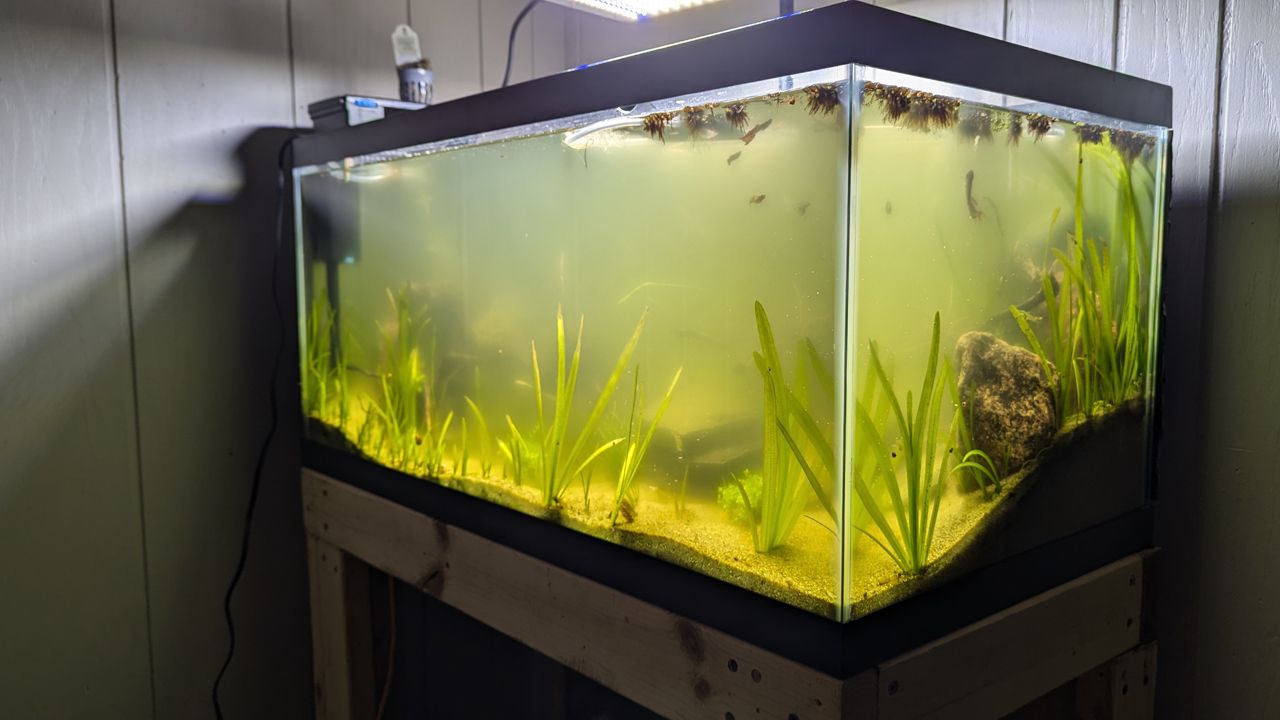
    Most of us in this hobby have at least witnessed an aquarium with green water. I have seen it plenty and even experienced it a fair amount in my aquariums. It sometimes occurs out of nowhere or from a water change. The green water you see plaguing your aquarium is a population explosion of critters in your water column. Those little animals are called phytoplankton. In most cases, green aquarium water is not dangerous to any aquarium inhabitants, it just looks awful. This article will discuss many ways to remove green water from your aquarium.

    Before trying to make too many drastic changes to your aquarium, take a step back and give your aquarium a few days to “breathe”. Consider cutting down on feeding, cutting down or stopping fertilization, and taking a few days without water changes. The green water may go away on its own if you just let your fish tank work itself out. If this doesn’t work, the following are things you can try to alleviate your green aquarium water.

    Light Entering the Aquarium

    The first thing I would recommend is to evaluate how much light is getting into your aquarium. Throughout the day, check to see if there is ambient light entering your aquarium through a window. Next, look to see if someone keeps a light on in the room at all hours of the day. Lastly, reflect on how long you keep your aquarium’s lights on. Most planted freshwater aquariums only need light between 6 and 8 hours a day. I know I am terrible at tracking when lights need to go on and off in my aquariums. I bought a simple and cheap BN-LINK Indoor Timer (affiliate link) to plug my light into, so I don’t have to think about it. It saves me the headache of keeping my lights on too long if I get busy or will be away from home and miss the 6 to 8-hour photoperiod schedule. If you’re more tech-savvy than me the Govee Smart Plug (affiliate link) or any other smart plug may also be a better option for you.

    If your aquarium is near a window or your fish tank gets a lot of indirect sunlight from a window, I highly recommend either purchasing blackout curtains or moving your fish tank to a darker area. If the light source getting into your fish tank is not removed, you’ll likely continue to get green pea soup water.

    Nutrients in the Aquarium

    Water changes, liquid fertilizers, and too much feeding can introduce a large influx of nutrients into the water. This can be the spark that causes a population explosion of phytoplankton. Think about what you may have done recently to your water that could be the root of this problem. At the minimum, I recommend having a nitrate, ammonia, and phosphate test kit handy to keep an eye on the parameters that may closely affect algae and phytoplankton growth. The API Freshwater Master Test Kit (affiliate link) contains tests for nitrates, nitrites, ammonia, pH, and high-range pH. The API Phosphate Test Kit (affiliate link) will need to be purchased separately. If your test results have elevated levels of nitrates and phosphates, it may be time to conduct some water changes.

    I would suggest at the minimum checking your tap water and your aquarium water for things like ammonia, nitrates, and phosphates. Algae and phytoplankton use these nutrients (among others) to grow. Also, the problem will not go away unless you physically remove the nutrients from the fish tank or have an abundance of plants that consume the nutrients. Phytoplankton are fantastic food sources for many different animals in the wild but are incredibly irritating in a fish tank. If you’re interested you can learn more about “What are Phytoplankton?” by checking out the EarthObservatory website.


    Ways To Remove Phytoplankton

    Besides changing your light or your light schedule and reducing the amount of nutrients in the aquarium, there are a few other things you can do to combat the plague such as pea soup water. If possible, I would recommend adding all sorts of plants to remove nutrients from the water column. Floating plants are great at creating a barrier between light and water and they do a fantastic job at removing nutrients from the fish tank. Crypts, Vals, and Java Ferns are a few other species of plants that are easy to keep.

    If you test your water parameters, and everything seems normal, you can see if there is an Aquarium UV Sterilizer that can help eradicate the nuisance.

    Final Notes

    When combatting things like algae outbreaks, I try to avoid using chemicals if possible. Many chemicals only band-aid the problem. What we have to do is remove the problem at its source. If you can figure out the source, whether it’s lights, nutrients, or something else, you can isolate it and make changes to your aquarium to remove it. If you’re also dealing with hair algae in your fish tank, consider checking out 8 Great Ways to Help Remove Hair Algae in Aquariums.

  • How To Remove Green Hair Algae in Saltwater Aquariums

    How To Remove Green Hair Algae in Saltwater Aquariums

    Green Hair Algae removal can be one of the most frustrating experiences in this hobby. Unfortunately, there is no cure-all solution to remove hair algae from your fish tank. The “cure-all” methods often band-aid the problem temporarily, but it will return if not removed at the source. Removing hair algae takes time. You’ll likely not see a change overnight, but with time, patience, and persistence, Green Hair Algae can mostly be eradicated from an aquarium. A combination of manually removing the hair algae and following the steps below will help remove it.

    This article will discuss some of the common reasons Green Hair Algae may wreak havoc on your saltwater fish tank, and once the problem is diagnosed, solutions will be provided to prevent it from coming back. This article should help to remove hair algae from a reef tank or fish-only saltwater aquarium.

    How Old Is Your Aquarium?

    Before continuing consider this. Many new(ish) saltwater aquariums go through a phase. Aquarists may experience this phase between 3 and 6 months, but it can happen sooner or not at all. During this phase, a large algal bloom may occur throughout the aquarium. The intensity of the algae growth varies but I have seen some very green aquariums, completely covered in hair algae or other species of algae.

    If you’re at this stage, the only thing to do is try to manually remove as much Green Hair Algae as possible. I do not recommend removing or cleaning rocks. Leave the rocks alone and use your hands to remove the hair algae. I have managed to use a turkey baster to help suck up algae off rockwork. As long as you do not feed the algae with many more nutrients, it should choke itself out and die out on its own.

    Nutrient Imbalanced Aquarium

    An imbalance of nutrients can be the cause of your algal issues. Green Hair Algae will use whatever free nutrients are in the water and can dominate the aquarium because of it. Algae is also very efficient at consuming nutrients. It’s important to keep an eye on the nitrate and phosphate levels in your fish tank. Focus more on eradicating phosphate levels, because Green Hair Algae uses that more for growth. You feed your aquarium, and your fish poop it’s expected to have trace amounts of both nitrates and phosphates but you do not want high levels of either.

    If you have an aquarium full of hair algae or a refugium with macroalgae, you may read 0 nitrates and 0 phosphates when you test your water. This could be because the algae consumes the nutrients before they become testable. I recommend testing your water with the API Reef Master Test Kit (Affiliate Link). It gives you test solutions for nitrates, phosphates, calcium, and carbonate hardness. If you cannot get your phosphate levels under control, consider looking into a Media Reactor, like the Aquatop Media Reactor (Affiliate Link). You can place different filter media such as PhosBan, PhosGuard, or GFO Phosphate Reducers to help get your phosphates to more manageable levels. Follow the instructions, and slowly lower your phosphate levels.

    How Much Are You Feeding?

    The more we feed, the more nutrients that are introduced into the water. It’s very important to not overfeed your aquarium. We are all guilty of doing so because it’s one of the most exciting aspects of keeping fish. Keep an eye on the portions you give your fish. Guarantee that what you give them is being eaten and not lost in the live rock or sucked up by the filtration system. The best solution to removing nutrients from your aquarium is through water changes. You can easily remove nitrates, phosphates, and food debris by changing the dirty aquarium water and introducing fresh saltwater.

    What Type of Water Are You Using?

    This can be very important for the types of nutrients that are introduced into your aquarium. If you’re using tap water for your water changes, you may be adding a cocktail of nutrients that help promote algae growth. You don’t really know how clean your tap water is. Providing clean water during water changes and water top-offs guarantees you are not introducing nitrates, phosphates, copper, or other contaminants that may be in tap water.

    If possible, I recommend doing water changes and topping off your aquarium with RO water. Small RO units are fairly cheap. For example, the AQUATICLIFE RO Buddie can be purchased from Amazon. You’ll only need a sink that can accept a screw-on adapter and to change the unit’s filters every few months. If you do not have access to RO water or don’t want to buy an RO unit, many stores and fish stores sell RO or distilled water.

    Are You Changing The Water Too Much?

    Again, changing water, especially with tap water can add too many new nutrients into your fish tank that algae will soak up. If you test your nitrates and phosphates, and the results aren’t at dangerous levels, consider taking a step back and cutting down on water changes for a couple of weeks to see if your tap water is introducing unwanted contaminants. You can also test your tap water for nitrates and phosphates with the API test kit suggested above the same way you test aquarium water.

    Does Your Filter Need Cleaning?

    The filter is the place where debris, excess food, and other gunk go to rest. Think back to the last time your sponges and media have been replaced. Physically look at the sponges to see if there is a build-up of brown sludge on them. If so, it might be time to give your filter a cleaning. I’ll often rinse off dirty sponges in old aquarium water instead of replacing them outright. I do this to remove the sludge and gunk from the sponge. However, I can put the sponge back into the aquarium to not lose the beneficial bacteria growing on it. Unfortunately, some sponges are too far gone and need replacing.

    Light Schedule and Intensity

    The next thing I recommend looking at is your lighting schedule. The duration and intensity of your light schedule will affect photosynthetic opportunities for corals and algae. We want to provide plenty of light for our coral, but not too much light that encourages algae to take over. It might be a good idea to cut down on your photoperiod. There is no way to exactly determine what light schedule you should be on. This will be determined by the type of light you have, the strength of the light system, and the type of coral you are growing.

    Light From Window

    Sometimes an aquarium gets set up a little too close to a window. Aquariums close to a window may be getting too much ambient light causing algae to grow. The best solution for this is to hang up a blackout curtain over the window so light doesn’t reach the fish tank. This is the most practical solution for this unless you opt-in to moving the aquarium to a space with little to no ambient lighting.

    Not Enough Clean-Up Crew

    Check to see how much clean-up crew you have hanging around in the aquarium. If your water parameters are in a safe range, consider leveling up your clean-up crew. Their population will drop over time in a saltwater fish tank, so they’ll likely need to be replenished at some point. Maybe that time is now for your aquarium.

    A healthy clean-up crew can mean the difference between a thriving aquarium, and one that may be consumed with algal issues. A clean-up crew can consist of a variety of critters. Utilizing each is important because everything has a niche that needs filling. There are many options to choose from, you can check out my article Saltwater Aquarium Clean-up Crew for some ideas.

    Final Notes

    This guide is meant to discuss how to remove green hair algae from your aquarium. I have provided the most common reasons you’ll see hair algae blooming in your fish tank, and a handful of solutions to help eradicate it. I try to find the cheapest and most natural route to eradicate nuisance algae. These solutions will also help you continue good husbandry of your saltwater aquarium. I do not like using chemicals in fish tanks unless I really have to. If I can’t tackle the problem at the source, it’s likely the algae will come back over time. Hopefully, this guide helps you recover from a green-haired algae takeover. Remember to be patient and expect to fight this until you find the root of the problem.