
Jumping into the realm of fishkeeping and planted aquariums can be quite intimidating. Many plant species do best under high-light, CO2, and fertilizer-supplemented aquarium systems. Luckily, plenty of plant species do not require more than decent light above the aquarium to succeed. This article will discuss a handful of plant species that are very beginner-friendly and are what I would consider the best aquarium plants for beginners. This list is in no particular order. Each of these plants has a great chance of success, even for fishkeepers just starting to dip their toes in aquarium plants.
1. Anubias
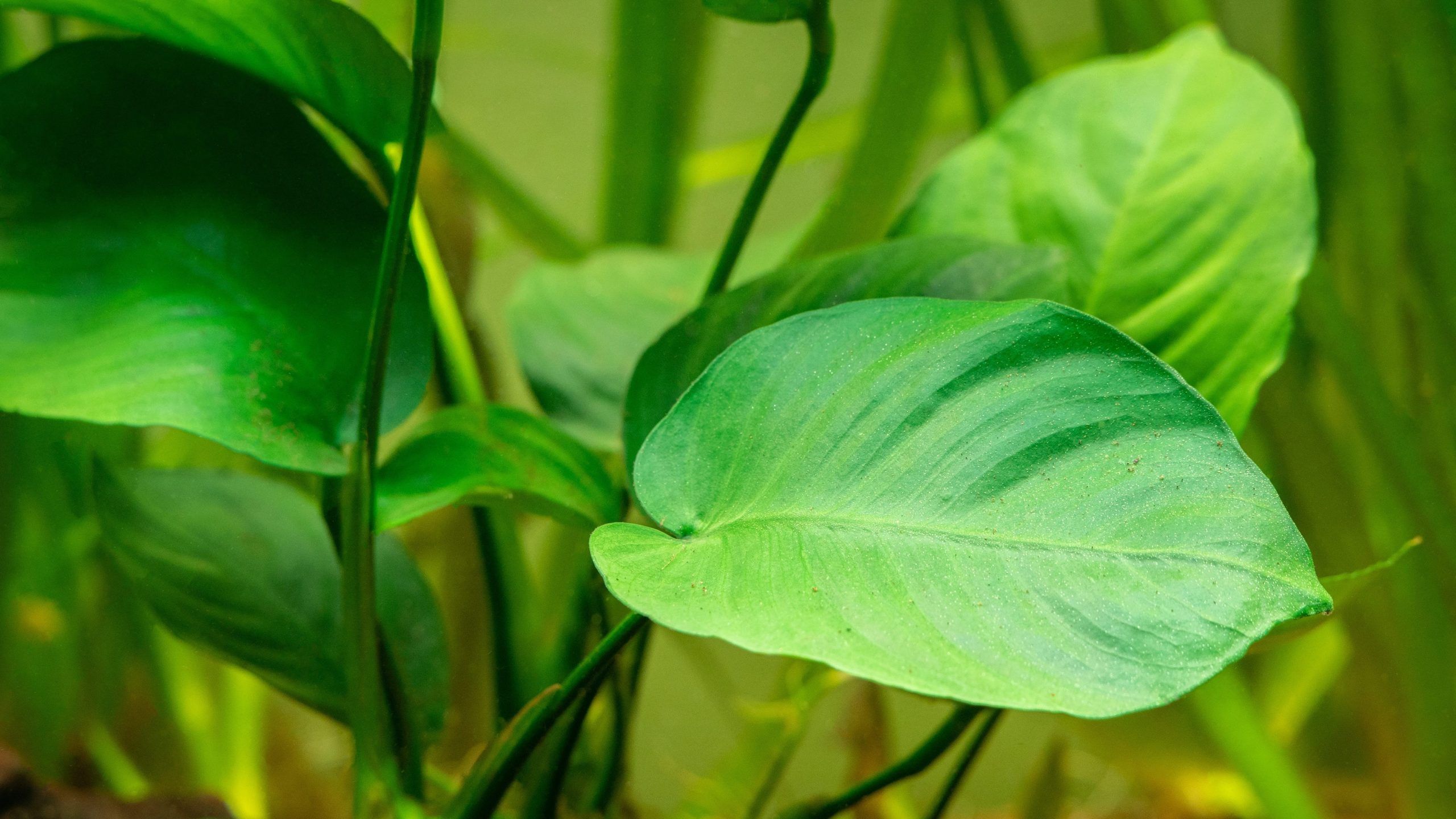
Anubias is one of those plants that just works. There are many species of Anubias, and most are tolerant of low to moderate light conditions, requiring neither fertilizers nor CO2 supplementation to grow. They’re incredibly hardy plants and an excellent choice for beginner aquarium keepers. If you’re looking for a fast-growing plant, you might want to look elsewhere. Anubias are slow-growing plants. They are in no rush to grow and spread throughout your aquarium.
These are plants that you do not want to bury in a substrate. They do best wedged between rocks, driftwood, or other surfaces. You’ll have a plant that will slowly whither away if the rhizome gets buried. A buried rhizome will lead to a rotting rhizome, which will eventually cause the demise of your Anubias.
Anubias should be readily available at most fish stores that sell plants. If you’re shopping online, consider purchasing your Anubias from TheShrimpFarm. They have many different species, but the Anubias Barteri (affiliate link) and Anubias Nana petite (affiliate link) are two species that I enjoy keeping.
2. Java Fern
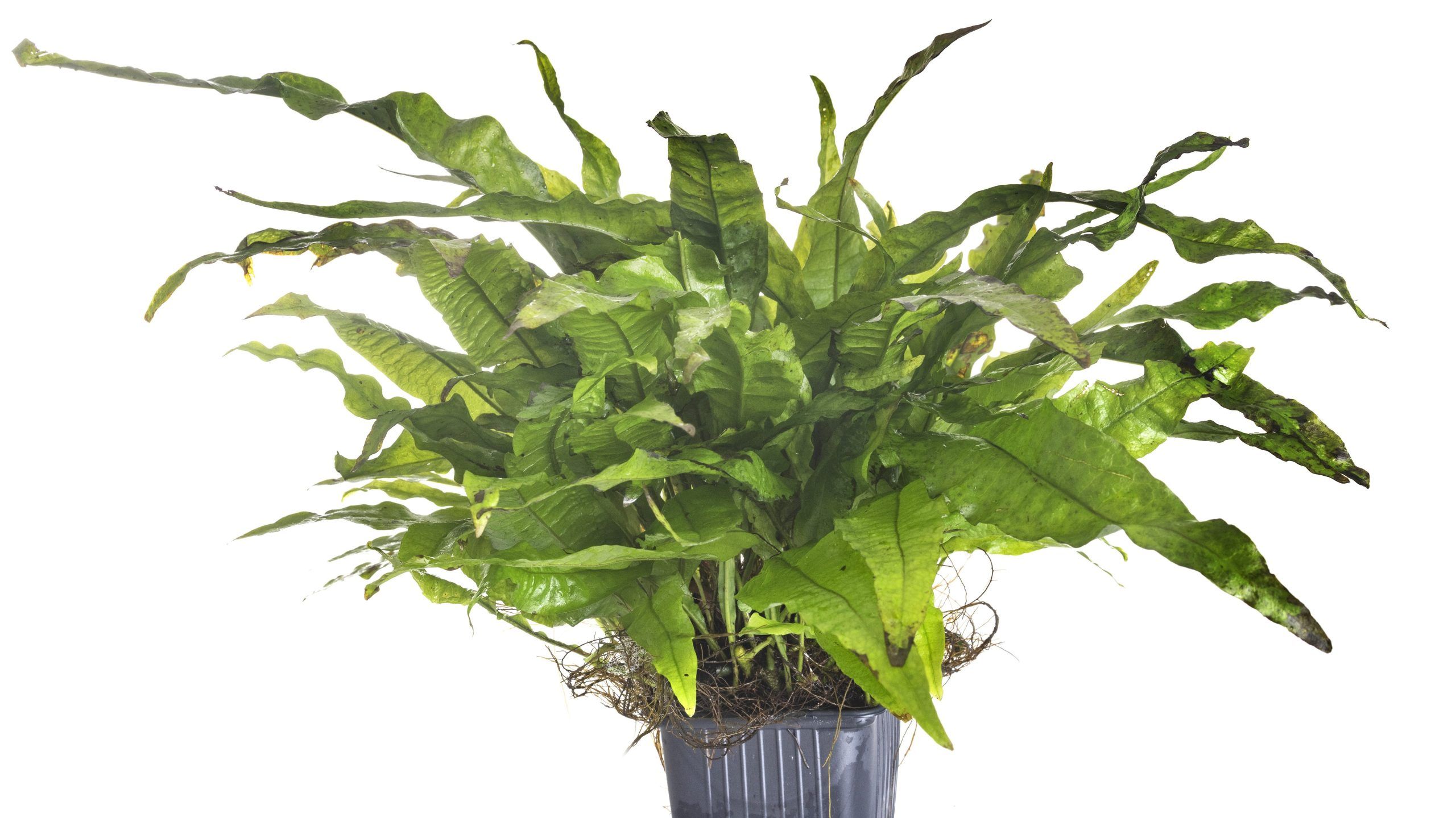
Java Fern is another species of aquatic plants that is an excellent option for beginners. They have a beautiful lance-shaped leaf that pops in an aquarium. Similar to Anubias, the Java Fern is a slow-growing plant that tolerates low to moderate light conditions. They also should have no issues living in conditions without CO2 supplements and fertilization. This plant species is fine being planted in substrate, but it can also be attached to driftwood, rockwork, or other surfaces. Just like Anubias, you should not bury the rhizome, or it will rot away over time. The roots are the only part of the plant that should be buried.
This plant species should be easily found at fish stores. It is one of the most popular plant species added to a freshwater planted fish tank. However, if you’re shopping around online, consider purchasing Java Fern (affiliate link) from TheShrimpFarm.
3. Moss
Many species of mosses can be added to an aquarium. The easiest and likely most common moss species added into a fish tank is the Java Moss. There are also Christmas Moss, Willow Moss, and Flame Moss, to name a few others. Each moss should grow in an aquarium under low light conditions, without fertilization and CO2. All you have to do with moss is attach it to a piece of driftwood or rock and watch it grow. Some fishkeepers attach moss with fishing line, and remove the line once the moss attaches to the surface permanently. Others will superglue moss to a surface and let it grow from there.
TheShrimpFarm has Java Moss (affiliate link) and Christmas Moss (affiliate link) for sale. You may find some at fish stores, but the best source of different moss species will likely be online.
4. Vallisneria

Vallisneria, or Val for short, are long, elongated grass-like plants that are excellent options for beginners. These plants are often used for the backgrounds of fish tanks because they will likely utilize all the vertical space available. They do great under moderate to high light conditions, do not require CO2, but may benefit from being supplemented with aquarium plant fertilizer. These plants are quite hardy and, once established, will spread quickly throughout an aquarium.
The Vallisneria species I often use in my aquariums are the Jungle Val (affiliate link) and Corkscrew Val (affiliate link). Both of these have similar care requirements. The Corkscrew Vallisneria has a nice charm to it with a gentle twisting leaf blade. The affiliate links for these plants will take you to TheShrimpFarm product page.
5. Duckweed

I wasn’t sure if I should have added this plant to the list, but I decided to do so because it is incredibly easy to grow. Duckweed, a floating plant, is the bane of many fish keepers’ existence. Once introduced, it often will take over the surface of an aquarium. One small piece of Duckweed can turn into hundreds, thousands, and probably millions of individual pieces. I do not recommend adding Duckweed into your aquarium on purpose, but if you choose to try it, know that it may be tough to impossible to remove. You can probably find them in most freshwater bodies of water, but if you’re shopping online, TheShrimpFarm sells Duckweed (affiliate link). Duckweed may not be the best option for your aquarium, but it is one of the easiest and best-growing plants available.
6. Water Sprite
Water Sprite is an easy-to-grow aquatic plant with character to it. This plant has lace-like leaves that give it a dense, bushy appearance. This makes it an excellent plant for aquariums with fry, shrimp, and small fish. Water Sprites are tolerant of low to medium light intensities, can be planted or left floating, do not require CO2, but appreciate aquarium-safe fertilizers. Water Sprite is easily planted in the substrate, but one of my favorite features of this plant is that it has no issue being dropped in the aquarium to float and let it grow from there.
Lace Leaf Water Sprite (affiliate link) can be purchased on TheShrimpFarm or from many other online retailers. You may also find it at your local fish store.
7. Wisteria
Wisteria is another very easy-to-grow plant that can either be buried in substrate or left floating to grow in the top portion of your aquarium. It has broad leaves that provide excellent cover for fry, shrimp, and other small fish. Wisteria does best in the background or mid-ground of your aquarium. They tolerate low to medium light, do not require CO2, but may benefit from some fertilization.
Water Wisteria may be available for purchase at your local fish store, but online options are always available for this plant species. TheShrimpFarm sells Water Wisteria (affiliate link) if you’re looking for an online retailer. There are many other online options as well.
8. Cryptocoryne
Crypts are fantastic plants for beginners. They grow without issue in most aquarium settings. I have added Cryptocoryne into an aquarium with moderate light, and after about a few months, it had roots running across the full length of the aquarium. There are many different species of Crypts. Cryptocoryne wendtii and Cryptocoryne spiralis are two of my favorites of the bunch. Highly recommend that you give these a chance if you’re a beginner setting up a planted fish tank.
9. Guppy Grass
I just recently gave Guppy Grass a try to see just how easy it is to grow. All I had to do to have this plant succeed was to drop it into the fish tank. I did not plant it or do anything special with it. After a couple of days, the Guppy Grass began releasing roots. These roots shot down to get hold of some substrate. Guppy Grass should do perfectly fine, either planted or left to float, and I recommend giving it a try as a beginner.
10. Water Spangles
Water Spangles, also known as Salvinia minima, are the preferred floating plant for beginners. They aren’t as annoying to grow and keep in a planted fish tank, and are much more manageable compared to Duckweed. They do best in fish tanks with minimal to almost zero water movement. Water Spangles will suffer severely in fish tanks with heavy flowing water. This plant does a fantastic job of pulling nitrates out of the water. Check out TheShrimpFarm for some Salvinia minima (affiliate link).
Final Notes
For those new to freshwater aquariums, incorporating live plants can be a rewarding and manageable step toward creating a vibrant, healthy aquatic environment. Beginner-friendly species like Java fern, Anubias, Cryptocoryne, and Guppy Grass are hardy, low-maintenance, and adaptable to a range of tank conditions, making them ideal choices. These plants not only enhance the aesthetic appeal of the aquarium but also support the ecosystem by improving water quality and offering natural shelter for fish. With just a bit of care and attention, even novice aquarists can enjoy the lush, thriving underwater world that live plants help bring to life.