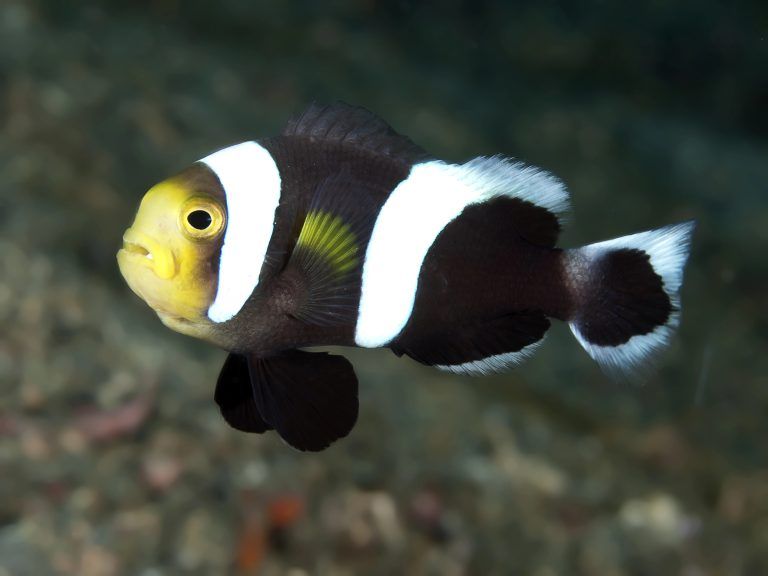

Maroon Clownfish (Premnas biaculeatus) are a gorgeous species of Clownfish with a reputation behind them. They are often considered the most aggressive species of Clownfish found in this hobby. It’s easy to look past that due to their beautiful deep colorations and white stripes. They are not as commonly kept in aquariums and are less likely to be selectively bred compared to Ocellaris Clownfish. However, the Maroon Clownfish still has some amazing variants due to selective breeding. The Lightning Maroon Clownfish is a perfect example of this.
Besides their temperament, Maroon Clowns grow a little larger than most other Clownfish. They will max out at about six inches when fully grown. The female Maroon Clownfish grows to be larger than the male and is the more dominant of the two. This article will discuss the aquarium requirements, dietary needs, compatible tank mates, and more of the Maroon Clownfish.
Aquarium Requirements
Maroon Clownfish grow to be quite big due to their size. Many sources recommend keeping them in at least a 30-gallon aquarium. I would personally feel more comfortable keeping them in at least a 40-gallon breeder due to their size and possible aggression. A larger aquarium gives more space for other fish and also provides more room for the Maroon Clownfish as it grows. This fish species may become incredibly territorial of its anemone if it decides to be hosted by one and will defend it fiercely. Besides providing a larger aquarium, I also recommend keeping a well-fitted lid on your aquarium for your Clownfish. They don’t jump as commonly as Blennies, Gobies, and Jawfish, but they can jump out of the aquarium regardless. Lastly, I highly recommend providing a variety of live rock in your fish tank. Live rock provides structure, filtration, and a place for fish to hide.
Is the Maroon Clownfish Reef Safe?
This has been mentioned in other articles regarding the care of Clownfish, but generally speaking, Maroon Clownfish and other Clownfish are reef safe. I have never seen them bother invertebrates, and they normally do not bother coral. The only time I have seen them bother coral is when they are looking to be hosted by something. They will sometimes try to be hosted by coral if an anemone isn’t present, or even when one is in the aquarium. Clownfish swimming through coral can stress the coral out, which may cause the coral to close up.
Water Parameters
Maroon Clownfish thrive in stable, well-maintained marine environments with water parameters that closely mimic their natural habitat. Ideal conditions include a water temperature between 72°F and 78°F, a pH level ranging from 8.0 to 8.4, and carbonate hardness (KH) between 8 and 12 dKH. Salinity should be maintained between 1.020 and 1.025 specific gravity. These parameters not only support the health of the Maroon Clownfish but also encourage natural behaviors and reduce stress-related issues.
While these numbers provide a solid guideline, the key to keeping Maroon Clownfish healthy lies in stability. Fluctuations in temperature, pH, or salinity can cause significant stress, leaving the fish more susceptible to illness. Regular monitoring is essential, and aquarists have a range of tools at their disposal to help with this, especially when it comes to checking salinity levels. If you’re interested in learning more about those, check out our guide, “Different Salinity Reading Tools for Saltwater Fish Tanks,” for a breakdown of the most reliable testing tools.
Food & Diet
Similar to the other species of Clownfish kept in aquariums, Maroon Clownfish are omnivores. They also should take most types of food with little to no hesitation. I have fed them flake food, pellet food, and frozen foods. Being omnivores, it is a great idea to feed them a variety of foods. Different foods provide different nutrients, which will benefit fish’s health.
Tank Mates
Maroon Clownfish have a much more dominant temperament compared to other species of Clownfish. Although they can often be kept with small peaceful fish that use different spaces of the aquarium, they are better suited for aquariums with larger, more dominant fish. I recommend keeping them with Cardinalfish, Damsels, Dwarf Angels, Foxfaces, Hawkfish, Tangs, and Wrasses. They may pick on smaller peaceful fish, but they are also prone to getting bullied by more aggressive tank mates. At the end of the day, each specimen will have a different personality. Some may do great in a peaceful fish tank, while others may be trouble for everyone. You’ll learn more about your fish over time.
Because of their potentially aggressive habits, I do not recommend keeping more than two Maroon Clownfish in a fish tank. They will likely pick on other species of Clownfish in the fish tank, and if more than two Maroon Clowns are in the aquarium, you’ll likely see one of the three getting picked on relentlessly.
Maroon Clownfish and Anemone
There are quite a few species of anemone that a Maroon Clownfish can easily be hosted with. One of the most popular anemones is the Bubble Tip Anemone. They will also be hosted by Long Tentacle Anemones, Carpet Anemones, and Sebae Anemones. Fishlore has a fantastic compatibility list of Clownfish and Anemones. I consider checking the list out to see if yours is compatible.
Breeding
It’s completely possible to get Maroon Clownfish breeding in an aquarium. I have personally done it? No. However, many fishkeepers have dove into this world with great success. Selectively breeding Maroon Clownfish is how we have gotten some interesting color pattern variations. Look no further than Reef2Reef, where someone discusses how to get started on breeding Maroon Clownfish.
Final Notes
Caring for Maroon Clownfish goes beyond just maintaining water quality. They also need the right environment and diet to truly thrive. These fish can be territorial, especially as they mature, so it’s important to provide plenty of space and hiding spots within the aquarium. Live rock structures not only create a natural setting but also help establish territories and reduce aggression. Maroon Clownfish are known to host anemones in the wild, though this isn’t a requirement in captivity. If you do choose to add an anemone, be sure it is compatible and well-established before introducing your clownfish.
In terms of diet, Maroon Clownfish are relatively easy to feed. They accept a variety of foods, including high-quality marine pellets, frozen mysis shrimp, brine shrimp, and flake food. A varied diet helps maintain their vibrant coloration and supports overall health. With consistent care, a stable environment, and a little attention to their social behavior, Maroon Clownfish can be hardy, long-lived, and engaging additions to a saltwater aquarium.
Thanks for clicking this tab, this is planned for a future feature of this website!