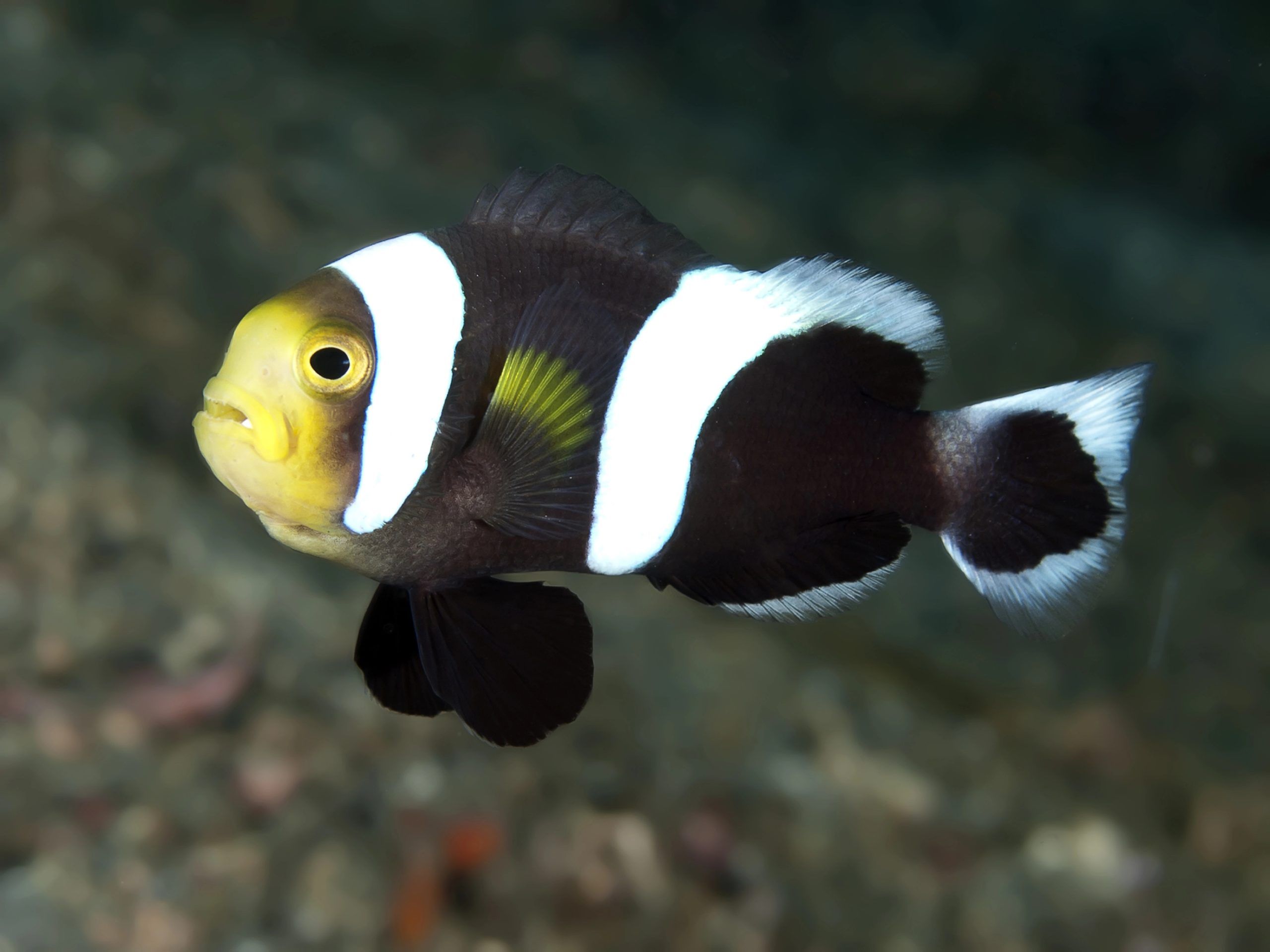
The Saddleback Clownfish (Amphiprion polymnus) is a species of clownfish that is not often talked about. Recognized by its bold coloration and the signature white “saddle” marking stretching across its midsection, this species has gained popularity among aquarists who appreciate unique patterns in clownfish. Unfortunately, Ocellaris, Percula, Maroon, and other more common clownfish species steal the spotlight from this fish. Regardless, if you’re looking for something a little different, take a look at this Saddleback Clownfish. They’re fairly easy to care for, like most other clownfish, and max out at around 4-5 inches when fully grown. This article will discuss the general care of the Saddleback Clownfish.
Aquarium Requirements
A minimum tank size of 30 gallons is recommended for a pair of fish. However, a 40–55 gallon aquarium provides a more comfortable environment and is especially advisable if you plan to keep an anemone. These fish appreciate an aquascape that includes open sandy areas along with moderate rock formations where they can retreat if startled. Moderate lighting is generally sufficient for the fish themselves, though any hosting anemone will require more intense illumination. Water flow should be steady but not overly strong, as extreme currents can stress both the fish and potential anemone hosts.
I have seen clownfish jump out of aquariums, so a well-fitted lid is highly recommended for your fish tank. For whatever reason, fish can find the smallest hole to jump through, so it’s important that the lid is well fitted on the fish tank.
Is the Saddleback Clownfish Reef Safe?
Yes, Saddleback Clownfish are, for the most part, reef safe. They will not bother invertebrates and corals. However, they may stress corals out if they are looking for a host when an anemone is not present. They may decide to be hosted by a coral, such as a Toadstool, and stress it out by swimming in and out of it. This can be dangerous for the coral if it gets overstimulated by the clownfish. This may cause the coral to close up more often, or close entirely.
Water Parameters
Stable water parameters are crucial to the long-term health of Saddleback Clownfish. They thrive in temperatures between 72 and 78°F, a salinity of 1.020 to 1.024, and a pH between 8.1 and 8.4. Like most marine species, they do not tolerate ammonia or nitrite, and nitrates should be kept below 20 ppm. Because Saddlebacks and other marine animals can be sensitive to fluctuations in water chemistry, maintaining consistent, reef-like conditions is especially beneficial.
These water parameters will help keep your fish happy and healthy. The most important thing with water parameters is stability. Swinging water parameters can be detrimental to a fish. Did you know there are many tools used to test salinity levels? You can learn about them by checking out “Different Salinity Reading Tools for Saltwater Fish Tanks”.
Food & Diet
Saddleback Clownfish are omnivorous and readily accept a varied menu that includes high-quality marine pellets, frozen mysis shrimp, algae-based foods, and occasional treats such as enriched brine shrimp. Offering a diverse diet once or twice daily helps promote strong coloration, energy levels, and immune health. I often do not have issues with clownfish accepting food, which is great for newer fishkeepers.
Tank Mates
Saddlebacks can be kept singly or as a bonded pair. Like all clownfish, the larger individual becomes the female, while the smaller one develops as the male. Keeping more than two is generally discouraged unless the aquarium is very large, as social hierarchies can become aggressive. In general, Saddlebacks coexist well with peaceful tankmates such as gobies, blennies, cardinalfish, certain wrasses, and other peaceful fish. They should also have no issue with tangs and foxfaces.
Anemones and Saddleback Clownfish
There are a handful of anemones that you’ll more than likely see Saddleback Clownfish host. Carpet (Stichodactyla sp.), Sebae (Heteractis crispa), or Ritteri (Heteractis magnifica) are the main ones. I recommend adding an anemone, letting it establish itself and grow a bit before adding a Saddleback into the aquarium. Always be sure that your aquarium and lighting system will support the needs of the host anemone before incorporating one into the aquarium.
Breeding
In the right conditions, Saddleback Clownfish may spawn in captivity. Pairs typically lay eggs on flat surfaces near their chosen host or shelter. The eggs hatch within roughly one week, depending on temperature, but raising the larvae requires specialized equipment and live food cultures such as rotifers.
Final Notes
Aquarists who have kept Saddlebacks often describe them as charming but occasionally timid fish that reward patient caretakers. Their beauty, distinct markings, and fascinating behaviors make them a standout species for those looking to add character and personality to a marine aquarium. With proper care and a stable, well-structured environment, Saddleback Clownfish can thrive and become a captivating centerpiece for years to come. If you’re looking for a more peaceful species of clownfish, look into Skunk Clownfish. They are considered one of the most peaceful species of clown.
Thanks for clicking this tab, this is planned for a future feature of this website!
Geometric Pygmy Hawkfish – Complete Care Guide
The Geometric Pygmy Hawkfish is a unique-looking saltwater fish. It is bulky, has a long…

Rusty Angelfish – Complete Care Guide
Cherub (Pygmy) Angelfish – Complete Care Guide