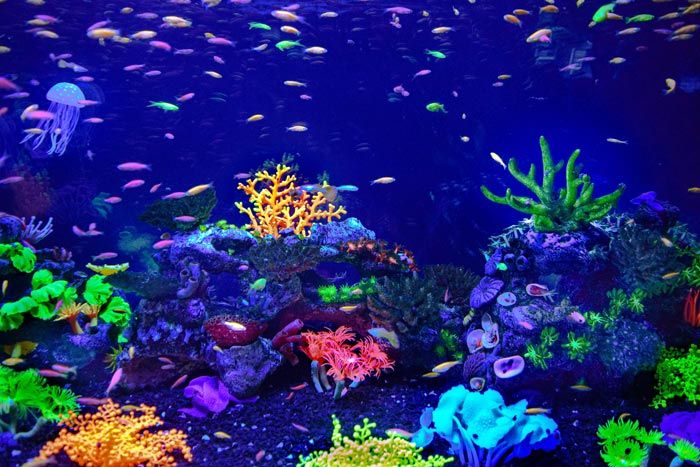
There is a lot that goes into setting up an aquarium. Saltwater fish tanks are especially demanding when you first get them started in regard to water chemistry and equipment costs. Once everything gets going, keeping a successful saltwater fish tank is not too much harder than freshwater. However, things can go wrong quickly and the effects can be costly. Filtration systems are an important aspect of successfully keeping a saltwater aquarium and this article will focus on answering whether you can use a hang on back filter for saltwater fish tanks.
To put it simply, of course, you can use a hang on back filter for your saltwater fish tank. This goes both for fish-only and reef tanks. At the time of this writing, I am running a successful reef tank using a hang on back filter. However, the answer isn’t black and white. It’s more important to ask, when is the best time to use a hang on back filter compared to another type of filtration.
When Should You Use a Hang On Back Filter?
In my opinion, the best time to use this type of filtration is when working with small fish tanks. Hang on back filters are great, but at a certain point, they bottleneck to how much filtering they can provide. For example, I have an AquaClear 70 (affiliate link) running on a 10 gallon reef tank. I felt this size filter best suits the aquarium because it provides plenty of water flow for the fish tank and the filter itself is large, which has more space for filter media and/or bio-media to help keep my aquarium running successfully. Take a look at the 7 Best Hang On Back Power Filters to see different types of hang on back filters available.
To maximize the effects of the filtration system, I use the media tray to keep a combination of sponges, filter floss, ceramic media, and chaetomorpha (with a light above). The sponges and filter floss will trap solid waste, the ceramic media provide surface area for beneficial bacteria to grow, and the chaeto with light soak up nitrates and phosphate out of the water. This hopefully will maximize the filtering capacity of my hang on back filter. Check out How To Setup a Refugium in a Saltwater Aquarium to learn about refugium systems.
The space in the filter is limited, and that’s why it eventually bottlenecks and will not provide enough media and space to successfully filter your water if you’re setting up a larger aquarium. At a certain aquarium size you’ll need to add more hang on back filters or you’re better off using a sump system for a filter.
What is the Best Hang On Back Filter?
Which filter is best, is completely up to you. I enjoy using the AquaClear series filters because the media tray is large and it allows me to gut it and add whatever media suits my needs. There can be better types of power filters that work well for you. If you’re looking for a specific dimension for AquaClear filters, take a look at Fluval AquaClear HOB – Specs, Dimensions, Etc. to give yourself an idea of the options out there.
Final Notes
The filter that works best for you will be determined by the bio-load of your fish tank, the space you have available, and the size of the aquarium itself. What works incredibly well for me, may not be your style or it may not suit what you want out of a filter system. Regardless, it is perfectly safe to use a hang on back filter for a saltwater fish tank. It’s a fairly inexpensive tool, that may be all you need to run a successful nano fish tank.
Hang on back filters have been a part of this hobby for a long time. They have done great providing filtration and they continue to help clean our aquariums. Many curious aquarists want to know whether hang on back filters provide oxygen. The simple answer is yes they do provide oxygen to your aquarium. I’ll go into detail how it accomplishes this.
Where Does the Oxygen Come From?
Your filter system helps move water around your fish tank. Every hang on back aquarium filter I have seen creates a waterfall that outputs water back into your aquarium. This is the source of where oxygen is produced. The water formed by the waterfall comes in contact with the air. While it’s flowing into your aquarium, it “catches” small oxygen particles out of the air, which then go into your aquarium. Oxygen exchange does not stop there either. When the water from the filter comes in contact with your aquarium water, it creates a ripple. Just like the waterfall, these ripples grab oxygen out of the air and add them to your aquarium.
To get oxygen into your fish tank, it is important to have something whether it’s a filter, air pump, or circulation pump breaking the water’s surface. You will get the most oxygen exchange there.
What About Air Pumps?
The bubbles formed by air pumps do not produce high amounts of oxygen for your fish tank. Most are simply to big to be absorbed by the water. Just like a hang on back filter, the air pump creates ripples in the water when the bubbles reach the surface. The ripples will catch oxygen out of the air and add it into the water. Generally, you do not need an air pump for your aquarium if you have other equipment breaking the water’s surface. However, most aquariums benefit from more oxygen, and an air pump is a great way to accomplish that.
Final Notes
A hang on back aquarium filter is a versatile piece of equipment that does many things. They provide filtration, water circulation, and assist in adding oxygen to the aquarium. I have enjoyed using HOB filters in many of my aquariums, and will continue to do so. If you are on the hunt for a HOB filter, check out 7 Best Hang On Back Filters for Freshwater Aquariums.
Saltwater aquariums come in many different sizes, and shapes, and they all have their quirks and needs. When questions such as, “Do I Need a Protein Skimmer” pop up, it’s hard to give a perfect answer. At the end of the day, it comes down to the aquarium’s specific needs and style of fishkeeping, but I will share my point of view on the topic. To start, this article will cover what is a protein skimmer for fish tanks and then I will discuss whether your saltwater aquarium might need one.
What is a Protein Skimmer?
Before we continue the discussion of whether a protein skimmer is a necessity or not, let’s talk about what it is. A protein skimmer is a piece of equipment used in saltwater aquariums that removes waste from your water. A pump creates air bubbles and the bubbles push up through a cylindrical housing. Proteins and other organic wastes are attached to these bubbles which dispense into a collection cup. The collection cup will fill with a slurry of water and waste, which will need to be cleaned out from time to time. In nature, the foam you see on the beach is similar to the end product of what a protein skimmer does to remove waste from the water.
Protein skimmers are wonderful tools to use in a saltwater aquarium when they are dialed in just right. Besides removing waste from the water, they also help produce large amounts of oxygen, which is overall beneficial for a saltwater aquarium.
Are Protein Skimmers Required?
To keep it as simple as possible, I highly recommend setting up a protein skimmer if it logistically makes sense for your system. If you have a saltwater aquarium with a sump system, you’ll likely want a protein skimmer. The skimmer will help remove undesirable waste from your fish tank, which will decrease the likelihood of larger increases in nitrates and phosphates. The size of the protein skimmer should be rated equal to or larger than your aquarium’s water volume. If you own a 75-gallon reef tank with a 20-gallon sump, You’re safe to use something like the Reef Octopus Classic 110-INT, which is rated for aquariums up to 100 gallons.
If you’re running a smaller saltwater fish tank, such as a nano tank, you can likely get away without using a protein skimmer. Frequent water changes will remove proteins and waste from the water column. Water changes in a nano reef tank won’t be as costly compared to large aquariums that require larger quantities of saltwater. Internal protein skimmers will also take up a lot of space in the fish tank can ruin the aesthetic. However, if you’re still interested in a protein skimmer for your nano fish tank, consider checking out the AquaticLife Mini Internal Protein Skimmer.
How To Setup Refugium in Saltwater Tank
Learn the importance of a refugium and how to set one up for different types of aquariums
If you have an All-in-One nano aquarium, there are small protein skimmers that may fit in one of the compartments of your filtration system. The Coralife Biocube Protein Skimmer is a great example of a skimmer made for All-in-One fish tanks. The hardest part of this is finding a skimmer that will fit correctly into your filtration system. You may have to do some research and digging to find out which one will be best for you.
Final Notes
Protein skimmers are just another tool we use to create a pristine environment for our fish, coral, and invertebrates. When tuned correctly, a skimmer works incredibly well at removing wastes from the water column. Combining the filtration of a protein skimmer and setting up a refugium are two things you can do to make your saltwater aquarium filtering easier.
Saltwater aquariums are one of the many branches within the fishkeeping hobby. Most of the animals kept in these types of fish tanks do best in water temperatures ranging between 72°F and 80°F. You could be even more specific and say that they will do best in water temperatures between 76°F and 78°F. Although a lot of aquarium equipment gives off heat, reaching the appropriate temperature is often impossible without the assistance of something like an aquarium heater.
Another thing that heaters provide is stability in water temperature, which is important to keeping a successful aquarium. In the oceans, temperatures can swing quickly for short periods. However, we are not working in the ocean, instead we are keeping an ecosystem in a glass box, and want to provide the best for the inhabitants. Small swings in temperature will probably occur in your fish tank, but we are trying to avoid that. Stable water temperatures will help lower the amount of stress brought on your fish, coral, and invertebrates.
So yes, generally you will want to provide your saltwater aquarium with a heater. There are of course exceptions to the rule, which will be covered in this article but I recommend keeping a heater running on your saltwater fish tank. If you’re looking for ideas on which heater may work best for you, check out 6 Best Aquarium Heaters for Freshwater & Saltwater Fish Tanks.
Disclaimer for Heaters
Unfortunately, heaters are not picture-perfect pieces of equipment. They use large amounts of electricity in short bursts to warm your fish tank. Because of this, heaters are prone to being equipment that is likely to break, compared to other equipment. If you put your hand in your aquarium and feel a shock, it’s likely the heater is the culprit. If you feel a shock from your aquarium, it’s very important to remove the source of that electrical current. Take a look at How to Check For and Remove Electrical Current in a Fish Tank for information on the subject.
There are two things I recommend purchasing to help protect yourself and your fish from a potentially faulty aquarium heater. First, I would recommend purchasing a Titanium Grounding Probe. This probe is made to “send” electrical current out of your aquarium, which will help protect you and your fish. You can purchase the Rio RV2735 Titanium Grounding Probe or if you have 2 aquariums, consider getting Encompass Titanium Grounding Probe (2-Pack).
Your heater can malfunction in a way that it turns on and never turns back off. This can cause catastrophic damage to your aquarium by cooking whatever is inside. A great way to protect yourself from this is with the Inkbird Aquarium Heater Probe. This probe has a built-in over-temperature sensor fault alarm. This is an additional way to protect your aquarium from a potentially faulty heater.
If you’re in the market for a new heater, check out the Innovative Marine Helio PTC Smart Heater. It’s a little pricey but could be well worth the investment. It comes with a smart controller, temperature sensors, an alarm when temperatures get a little too high, and a boatload of other features.
Exceptions to Requiring a Heater
There are only two reasons I could see someone not needing to run a heater on their saltwater aquarium. Both situations are not very common but I wanted to state them regardless. First, if you keep your home anywhere between 76°F and 80°F continuously, you probably do not need an aquarium heater. Many of us live in climates with swinging temperatures which prevents us from doing this. One could still be kept in the aquarium as a fail safe, incase the home temperature ever dropped to lower temperature, but that’s completely up to you.
Also, if you enter the world of cold-water marine fish, you will not be using an aquarium heater. Instead, you’ll likely have to set up a chiller on your fish tank to maintain the proper temperature for those species of fish. These two scenarios are few and far between, but they do occur.
Final Notes
Saltwater aquariums can get very expensive. It’s best to create habits to lower the risk of your investment and to provide a great environment for the fish, coral, and invertebrates you choose to add to your aquarium. A heater is a fantastic way to raise your aquarium’s temperature and keep it at a stable level. Unfortunately, they are known to malfunction, but that’s why we have tools to lower the risk and danger when that does happen. If you have a heater set up that works great for you, please let me know! I love to learn from fish keeper’s personal experiences.
Creating a refugium in a saltwater aquarium can be a fantastic way to add extra filtration, more beneficial bacteria, and a space for microorganisms to flourish in your saltwater aquarium. You can create a refugium in many different ways, and this guide will cover some of the most common ways to do so. With aquarium keeping, there is no single solution that works best, especially when discussing such a broad topic as how to set up a refugium. There are a million and a half opinions, that come from a good place, but it can be challenging for new hobbyists to find solid ground in an ocean of different experiences. This article is designed to make setting up a refugium a little less stressful.
What is a Saltwater Refugium?
We are always battling nutrient levels in aquariums thanks to our feeding regime. A refugium is a section in your aquarium system that is dedicated to growing macroalgae and a haven for microorganisms such as copepods. Macroalgae uptakes nutrients such as nitrates and phosphates which come from food and animal waste. Just like how plants in a freshwater aquarium use nutrients to grow, the macroalgae do the same except in a marine environment. The macroalgae “holds” the nutrients and we remove them by trimming the macroalgae and physically removing it from the aquarium. Just like freshwater plants, macroalgae will require light to grow, which we will discuss later in this article.
Copepods are very small invertebrates that are often food for fish and other animals in our display tanks. A refugium is a place in your aquarium that is safe from predation because fish don’t have access to it. Copepods and other small invertebrates use this space as a refuge and this allows their populations to multiply and grow without fear of getting eaten. Eventually, these populations of microorganisms will make their way back into the display aquarium, where they become food for fish such as gobies, blennies, wrasses, and many others.
Other Refugium Benefits
Besides nutrient intake, a refugium that has a light interval opposite to the aquarium’s display section will keep your pH levels more stable. pH rises throughout the day due to plants and algae photosynthesizing and creating more oxygen. Photosynthesis does not happen at night, and you will likely see a drop in pH during this time. If you run a refugium on a lighting interval opposite to your display aquarium, there will always be a light period, which means there will always be photosynthesis occurring, and increased levels of oxygen, which will raise your pH level.
Many aquarists use this method in an attempt to keep their pH levels from swinging. However, pH levels swing naturally through the day and night cycle so it’s not a mandatory thing to do. You are more than welcome to run your refugium on the same lighting cycle as your display tank.
Do I Need a Refugium?
No, you do not need a refugium to successfully run a saltwater fish tank or a reef tank. However, the benefits of keeping a refugium make it a very attractive addition to your fish tank. I still recommend conducting water changes to remove excess nutrients, detritus, and to supplement your aquarium with fresh minerals. A refugium is an additional tool we can use to help keep our water parameters in line and as an additional source of food for your fish. It is not a complete package solution to get out of conducting water changes.
How to Make a Refugium for Saltwater Aquarium
Before we dive into the specifics of setting up a refugium, I want to emphasize that it’s best to hold off on adding lights and macroalgae into the refugium before the aquarium is established with fish and coral. Likely, the macroalgae will not be able to sustain itself if the aquarium is too “new” and there are not enough nutrients for it to consume. I recommend setting up and having all the components of the refugium ready to go and adding your macroalgae once there are signs of increased levels of nitrates and phosphates.
You can make a refugium as complex or as simple as you want. I prefer keeping things as simple as possible.
Refugium in Sump System
If you have a sump system, you may want to use or convert your second chamber into a refugium. If you are just starting a fish tank, it’ll be easy to insert everything you need to get started. However, if you are thinking of converting the second chamber, you will likely need to turn off your return pump before adding sand and keeping it off to give the sand time to settle. The supplies needed for a sump refugium aren’t very complex. The following are what I choose when setting up a refugium in a sump:
There is a lot of back and forth on what is important in a refugium. From the amount of reading that I have done on the topic, I have learned that the safest route to avoid creating a detritus trap or other problems later on is to set up your refugium with live rock, macroalgae, and lighting, but without adding any live sand. Detritus will likely settle somewhere in your sump, and it’ll be much easier to clean out if there isn’t any sand present. If you would like to have sand in your refugium, I would recommend having no less than 3″ to provide more space for bacteria to colonize and break down detritus. I have used CaribSea Fiji Pink Sand in my refugium, and it hasn’t caused any problems for me.
Live Rock
I recommend adding appropriately sized pieces of live rock into your refugium. The live rock will provide more space for beneficial bacteria and will be a home for all the tiny invertebrates and other critters. I would avoid pieces that are too large because they will inhibit the growth of your macroalgae. I would also avoid adding rock rubble because detritus will enjoy settling around the rock rubble.
Lighting
I provided three different lighting options that should work for your refugium. The first is the Kolem COB LED Grow Light. This should do incredibly well in aiding the growth of green macroalgae such as chaetomorpha. Chaeto absorbs the red coloration, which is what this light provides. The Kessil H80 Tuna Flora Light does something very similar, except is a more well-known brand in the aquarium trade. Lastly, I added the Relassy Waterproof Plant Light which provides a more well-rounded spectrum of lighting. If you’re looking to grow red-colored macroalgae such as the PomPom Macroalgae, you will do better with cool colored lights.
Circulation Pump
Chaetomorpha and a few other macro species benefit from tumbling in a refugium. A circulation pump may or may not be needed depending on the size and shape of your sump system’s second chamber and the amount of flow going through it. If you see that the bottom portion of your chaeto is dying out or you’re getting a buildup of gunk within the chaeto, you may want to encourage it to tumble, which a circulation pump can assist with.
Refugium For Hang On Back Filter
If you’re working with a smaller reef tank or saltwater aquarium, you’re likely not working with a sump system. As of this writing, I am running a small reef tank with a hang-on back refugium. For this to be successful, I am running an AquaClear 70 Hang-on Back Power Filter as my main source of water flow and filtration. I have the main compartment of the power filter filled with smaller pieces of live rock and chaetomorpha growing above it. A small 5W UPETTOOLS Aquarium Light provides the light needed for the chaeto.
I chose the AquaClear Power Filter for this, mainly because of the size of the main chamber. I like being able to gut just about everything from the filter and customize it to my needs. Other Power Filters can work, but I have always had a soft spot for this brand. You can check out other AquaClear Power Filters, their specs, sizes, and GPH ratings by clicking the link provided.
In Tank Refugium
You can setup a refugium inside of your display tank. It might end up being the most interesting part of your display. The first thing you will need for something like this is a container. The CPR Aquatic in Tank Refugium may be just what you are looking for, but I have also heard people using something as simple as a plastic breeder box to set this up. Be mindful that the suction cups on the CPR Aquatic in Tank Refugium are not incredibly strong.
Once you have your container, you’ll probably be limited to only using small live rock pieces and macroalgae for this type of refugium. Some might even call this a glorified algae reactor instead of a refugium. For the sake of this article, let’s say it’s a fuge because it will still be a haven for microorganisms. You may get away with adding sand into this, but I would be worried about too much weight and sand sneaking out through the grates.
Lastly we need to think about lighting. It’s possible that this type of refugium will get all the lighting it needs from the display light. I would probably avoid adding an external light because that will likely bleed into the aquarium. If too much light bleeds into your aquarium, you’ll likely see algal blooms forming in your display.
Final Notes
There are plenty of options when it comes to setting up a refugium. You can get one set up in a sump, hang on the back filter, or even in your display tank. The options are there. Do you need a refugium for a reef tank? No, of course not but they are incredibly fun to work with and it’s very rewarding to say you grew live plants in a saltwater environment. One thing we have not covered is cryptic refugiums. These are unique because they use zero lighting, and instead use different sponges and other filter feeders to aid in cleaning your water.
Keeping tabs on your salinity is important to successfully maintain a brackish water or saltwater aquarium. Salinity is the measure of dissolved salts in water for those who don’t know. Brackish water and saltwater aquariums require a specific range of dissolved salts. Brackish water environments have specific gravity levels between 1.005 and 1.012. Saltwater aquariums can have specific gravity ranges between 1.023 and 1.028 sg. However, saltwater aquariums are usually kept between 1.024 and 1.026 sg.
There are many different tools available to measure salinity, and of course, everyone has their opinion on which is best to use. This list is not a “best salinity reader” article, but instead, it will provide a list of different salinity reading tools and discuss some of the pros and cons of each.
1. Hydrometer
Let’s start with the tool that everyone is usually first introduced to, the hydrometer. There are different kinds of hydrometers, The most common type of aquarium hydrometer requires you to pour water into the device and a swinging arm moves to where the specific gravity/salinity level is. A good example of this is the Hygger Salinity Tester. It’s a fairly straightforward device, and can generally provide you with an accurate salinity reading.
Pros of Swinging Arm Hydrometer
One of the pros of this device is that it is incredibly cheap. For example, the Hygger Salinity Tester is only $9.99. It can test any type of aquarium from freshwater, brackish water, and saltwater, and it has both specific gravity and salinity readings.
Cons of Swinging Arm Hydrometer
First, this device is very sensitive to temperature. Many are calibrated to work best at a specific temperature. You have to check what temperature your hydrometer is calibrated to and match that temperature to get an accurate reading. I have also read that the readings may become inaccurate because of salt crystal build-up on the device if it is not properly cleaned after use. Be sure to clean the device with RO water thoroughly after every use.
Floating Hydrometer
Floating hydrometers are next on the list. A great example of a floating hydrometer is the Tropic Marin – High Precision Hydrometer. This one is even easier to use than the swinging arm hydrometer. It is made out of glass, with a scale at the top that shows different levels of specific gravity. You simply drop it into your aquarium, bucket, etc., and the device will rise or drop depending on the amount of salt in the aquarium. The specific gravity is where the scale meets the water. The Tropic Marin – High Precision Hydrometer has a scale of 1.021 – 1.031, so it will only work for saltwater aquariums.
Pros of Floating Hydrometer
One of the perks of this device is that it is very simple to use. All you need to do is drop it into your aquarium, a bucket, a graduated cylinder, or anything else that will allow you to read off the scale. There is also zero calibration needed.
Cons of Floating Hydrometer
This device is fairly fragile because it is made out of glass. If not properly handled, it can easily hit something and break. It also is calibrated to work best at 77°F. It is important to match this temperature to get proper readings. You may have to clean the device thoroughly with RO water from time to time. Salt crystals can form on the glass and weigh it down, which can give false readings. Lastly, this device needs very calm water to provide an accurate reading, otherwise, it will bob and move around and will likely provide inaccurate results.
2. Refractometer
There are two different kinds of refractometers we will discuss in this article. An analog refractometer, which requires you to look through a lens to get your salinity reading, and a digital refractometer which has a screen that displays the salinity level before your eyes. Both are great tools to use, analog refractometers are usually what hobbyists move to from swinging arm hydrometers, but digital refractometers are great for anyone who just can’t see those little numbers well.
Analog Refractometer
Just a few years ago, it seemed like many analog refractometers cost an arm and a leg. Now, the price has gone down significantly and you can pick one up for around 16$ – 20$. The Agriculture Solutions Store has Salinity Refractometers on sale for $18.99, which is much better than the prices many years ago.
The device is fairly easy to use, First, you must calibrate the device to “0”. Use distilled water or RO water to do this. Simply place a few drops of distilled water on the blue prism, and use the provided screwdriver to turn the calibration screw until it reaches “0”. There should be instructions that take you through this process in the box.
Once calibrated, wipe the prism to remove the distilled water. Once you do that, you can place your saltwater on the prism to test your salinity and/or specific gravity.
Pros of Analog Refractomers
Once calibrated, this refractometer is very accurate. You may need to check its accuracy from time to time, but it should bode you well for a few months without re-calibration. I use analog refractometers as my go-to salinity checker. The one linked above also provides automatic temperature compensation (ATC). This pretty much means that you don’t have to worry about the temperature of the water to get accurate salinity readings.
Cons of Analog Refractometers
The biggest con of this device is that it may be harder to see the numbers when looking through the lens for anyone people with vision impairments. Also, now you have to remember to keep an eye on the calibration of the device. Over time, it may need to be re-calibrated, and if you forget, your salinity levels may be higher or lower than usual.
Digital Refractometer
Digital refractometers are similar to analog refractometers, in the way that you place water on a prism. However, a digital refractometer uses an LED to determine the amount of refraction occurring, or the angle of refraction. The bend in light due to the particles suspended in water will determine the salinity/specific gravity. A fairly popular digital refractometer is the Milwaukee MA887. The link provided will take you to its Amazon store page. You can also go into a deep dive into all its components and how it works by checking out the Milwaukee MA887 manual.
Pros of Digital Refractometer
One of the biggest pros of this device is its ease of use. You don’t have to look through lenses or try to determine where the salinity line falls under. You simply place your water on the prism and let the device do the rest. The Milwaukee MA887 will give you results in around 1.5 seconds. On top of that, you will get results in specific gravity, salinity, or practical salinity unit (PSU).
Cons of Digital Refractometer
This thing is expensive, and not many of us are ready to dish out $100+ for a device that reads salt levels. Also, from my understanding, this device isn’t perfect in regards to accuracy. If we are specifically looking at the Milwaukee MA887, it has an accuracy range of +/- .002. If that’s true, then you may get results of 1.026, but in reality, your salt content could be sitting at either 1.024 or 1.026 sg.
Salinity can be tested with a conductivity tester. Saltwater is more conductive than freshwater. The more minerals there is in water, the more conductive it will be. Saltwater has a lot of dissolved salt, which makes it more conductive. The Hanna Salinity Tester (HI98319) is a perfect example of a tool that uses conductivity to determine salinity, PSU, or specific gravity of your aquarium water. There are many other types of conductivity tools out there, but after doing some research, this one is fairly popular.
Pros of Conductivity Testers
Speaking specifically about the Hanna Salinity Tester, the machine is very easy to use. You can go into detail on how it works, by checking out the Hanna Salinity Tester manual. Once calibrated, all you’ll have to do is dip the tester into your aquarium to get a reading. Another pro of this device is that it will also provide you with a temperature reading of your aquarium.
Cons of Conductivity Testers
Not everyone wants to think about calibrating their devices. The Hanna Salinity Tester will also need re-calibration from time to time. Hanna Instruments makes it a little easier, with their 35 PPT Salinity Calibration Solution (HI70024P). You can read through the manual to see how to properly calibrate this device. Also, this device is a little more expensive compared to hydrometers or manual refractometers, but the work it puts in could make it worthwhile.
Final Notes
Finding the perfect salinity tester is up for debate. What works great for some, may not work well for others. Whether a hydrometer or refractometer is more accurate, is completely dependent on the person using it. All these tools work well, but some may be better for an individual than others. If I had to choose two products from this list to add to my arsenal, I would pick the Topic Marin Floating Hydrometer and Hanna Salinity Tester. I love the ease of use of the Topic Marin Hydrometer, and I think it’s a great idea to use conductivity to determine salinity levels with the Hanna Salinity Tester. If you have a personal favorite tool that you use to test your salinity, don’t hesitate to share your experience! Check out more aquarium resources to continue your fishkeeping journey!
Setting up a reef tank may be intimidating for some, but it is a fun and rewarding process, especially if you already have experience with fish keeping. Starting a reef tank, especially larger ones, will have a high upfront cost, but running one successfully should not cost too much more than a freshwater aquarium. This article will discuss the supplies that are either needed and/or optional for setting up a 20-gallon saltwater fish tank. The list will be similar to supplies necessary for a 10-gallon tank, with a few additions.
Before we begin the list, check out this list of very cool fish that can be kept in a 20-gallon nano reef tank. Not every fish on the list is compatible with one another but it is great to see the variety of fish species available.
List of Supplies Needed for Aquarium
If you’re looking to make life easier for yourself, consider picking up an all-in-one aquarium, like the JBJ AIO Rimless 20-gallon, Red Sea Max NANO Cube Complete Reef System, or Waterbox Cube 25 Peninsula Nano AIO Aquarium, to name a few. These three are made to be all in one saltwater fish tanks, but can also be used for freshwater. Prices will vary on all in one fish tanks because each will give you varying amounts of supplies and equipment. For example, the Red Sea Max Nano comes with just about everything hardware-wise to build an aquarium, with a stand included. The Waterbox Cube is a little more barebones and only comes with the aquarium glass and built-in sump filtration system.
Whether you decide on an all in one aquarium, or purchase an open-top fish tank, I will still cover everything you need to get started. I’ll cover the following equipment and supplies, and let you know whether they are a necessity or optional for your fish tank.
Filtration
Lighting
Hardscape (live rock and sand)
Aquarium
Water changing
Misc. Supplies
Filtration (needed)
Filtration will help stabilize your water parameters as well as add necessary flow into your reef tank. With the combination of proper husbandry, your aquarium can thrive for years. On an aquarium this size, you should be able to get away with using a hang on back filter. I would recommend an Aquaclear 70 or larger. Fluval Aquaclear filters are my choice for HOB filters because of their large chamber which is almost entirely customizable. Check out Fluval Aquaclear HOB Filter – Specs, Dimensions, etc. for more information on these filters.
At a minimum, I would have your filter loaded with AQUANEAT Bio Sponge Filter Pads and Aquaclear BioMax. The filter pads will trap debris and other waste products, and the BioMax provides ample surface area for beneficial bacteria to colonize and grow.
Filtration (recommended)
If possible, I would recommend converting the large chamber into a refugium. A refugium is a space in the aquarium that allows algae to grow. It’s a little more work at first because you will need a separate light fixture to grow algae, but long term it’ll help a lot once you get macroalgae, like chaeto, growing in there. Macro algae will consume waste like nitrates and phosphates.
If you’re not interested in setting up a small refugium in your HOB filter, I recommend Chemi-pure Blue or some form of Activated Carbon media to help remove undesirable contaminants from your water. I would also include the Bio Sponge Filter Media Pad and BioMax listed above. This media and weekly water changes will help keep your water in excellent condition.
Protein Skimmer (optional)
At this point, a protein skimmer is likely not needed for your 20 gallon reef tank. I wanted to add it to the list because it is an option. Protein skimmers are great at removing a lot of excess nutrients from the water, but this can be replaced with larger water changes. On a nano fish tank, like a 20 gallon, you’ll only be replacing an extra couple of gallons when conducting water changes. A Protein skimmer is fantastic for larger fish tanks, since you may need to change out anywhere between 10 and 20 gallons per water change. If you’re interested in protein skimmers, there are some internal protein skimmers, like the AQUATICLIFE 115 Mini Internal Protein Skimmer that should get the job done.
Lighting (needed)
If you’re looking to grow coral, you will need some type of lighting designed for coral. You do not need a high-end light to grow many different types of coral. There are plenty of budget-friendly lights that will successfully grow coral, but many species of coral, like SPS will require more intense lighting to thrive. You’re welcome to go all out with the Radion G6, which is one of the best LED lighting for reef tanks, or go with something easier on the wallet.
The NICREW 150W Aquarium LED Reef Light should do very well with a 20-gallon long due to its long spread. It has a max spread of 30″ x 30″ at a depth of 28″. It’s plenty of lighting for a 20-gallon fish tank. I recommend purchasing the NICREW Controller with this light fixture so you can easily program your lights to ramp up and down on their own.
Heater (needed)
Most saltwater critters will do best in aquariums with a temperature range between 72°F – 78°F. I would recommend going even further and keeping the water temperature between 76°F and 78°F. It is the heater’s job to get it to that temperature and keep it there. My recommendation for heaters is the Aqueon Pro Heater, it has some of the best quality and its overall build and design are what make it stand out. If you’re shopping around for aquarium heaters, check out the 6 Best Heaters for Freshwater and Saltwater Fish Tanks. If there is anything that will malfunction in an aquarium, it’ll likely be a heater. So It’s good to keep an eye on it and guarantee it is working as it should. I would purchase a thermometer to do so.
Hardscaping With Live Rock & Live Sand (needed)
Some sort of hardscape is needed for your 20 gallon reef aquarium. Some fish keepers enjoy an aquarium with more open space while others love to load their reef tank with live rock. I usually recommend about 20 lbs. of live rock for a 20-gallon reef tank. At the end of the day, it’s your choice how much you decide to use. Just remember that live rock is an important part of your aquarium, it houses countless amounts of beneficial bacteria. It also is the home for your fish and the surface your coral will use to grow and spread. If you don’t have a local fish store near you with live rock, check out the Carib Sea Base Rock and/or Nature Ocean Base Rock for live rock.
Aquarium (needed)
You will need an aquarium to house all of your rock, sand, fish, and coral. If you’re purchasing an Aqueon or Marineland open-top aquarium, you can choose either a 20 20-gallon high or 20 20-gallon long aquarium. I would choose a 20-gallon long because it’s shallower, which will require less intense lighting for your coral. Also, you get more length out of the aquarium, which could theoretically give you more space for corals and frags. At the end of the day, it’s all about your preference and available space. You can check out the dimensions of these aquariums and many other fish tanks here.
Water Changing (needed)
Conducting water changes will be a standard practice with your reef tank. Depending on your system, stocking, and feeding regime, you may need to conduct water changes weekly or every other week. Every system is a little different so it’s important to learn about the nuances and needs of yours. The following are a list of cleaning supplies that I recommend for your 20 gallon reef tank.
Clean Water
For the most part, tap water is not going to cut it for a reef tank. If you use tap water, you’re likely going to contaminate your tank with extra nutrients that will cause algal blooms and lower the success of your coral. If possible to set up, I recommend setting up an RO System for your aquarium. A very common and popular brand is the RO Buddie. It’s nice and compact and will create 50 gallons of water per day. You will not need this much daily but it’s nice to have the capacity. If you cannot set up an RO Unit for your fish tank, the next best thing is to purchase distilled water from your local grocery store.
Saltwater Reef Salt (needed)
Marine aquariums require a “special” kind of salt. You cannot use table salt or regular aquarium salt for your saltwater fish tank. You will need something like Instant Ocean Reef Crystals, Red Sea – Coral Pro Salt, or many other marine aquarium salts out there. There are a lot of different brands available, I currently use the Red Sea – Coral Pro Salt for my reef, but it’s all about preference. I also recommend purchasing a measuring cup to accurately measure the amount of salt needed when you’re conducting water changes.
Refractometer (needed)
We will use a refractometer to verify the proper amount of salt is mixed and that your aquarium has the correct salinity. A well-calibrated refractometer, like this one from Amazon. This tool is very simple to use. You place a little bit of water on the end and look through the eyepiece. You’ll see a color change when looking through the eyepiece, likely a change from blue to white. Where the two colors meet is where your salinity is. You will want your aquarium to be between 1.024 and 1.028 sg. Do your best to keep the salinity stable in your aquarium.
I would avoid hydrometers for reef tanks. They’re great and easy to use at first, but if they are not properly cleaned and rinsed, calcium deposits build up on them and will lead to inaccurate salinity readings.
Siphon Hose & Bucket (needed)
A siphon hose will be great to remove water from your aquarium. You can get a simple Aqueon Aquarium Siphon, a fancy Laifoo Aquarium Siphon, or any other gravel siphon available out there. Besides siphon hoses, you will need buckets to conduct water changes. I recommend having a few 5-gallon buckets and 2-gallon buckets on hand, especially ones with measurements labeled on the side.
Other Supplies
Coral Food (recommended)
Coral are animals, some benefit from getting fed, while others need to be fed to thrive. I recommend feeding corals a variety of foods. My personal favorites are Polyp Lab Reef-Roids and Reef Chili. I will also supplement the coral with the Red Sea Reef Energy Plus AB+. You can make life a little easier by mixing the food with aquarium water in a cup and using a Coral Feeder Syringe to suck up the food then spot feeding the coral. This will help you successfully target feed your coral, to make sure they are getting the food you provide.
Coral Rx (recommended)
Parasites and nuisance microorganisms will likely be growing within coral. It’s good to dip your coral to remove parasites before adding them to your reef tank. There are many different types of coral dips available. Here is a great guide from some pro reef keepers on different dips and dosages used.
Coral Fragging Tools & Frag Plugs (optional)
Coral grow in many different ways. Some will branch out, others slowly encroach onto surrounding rocks. Regardless, having a coral frag kit around will help you frag the coral. Fragging consists of cutting chunks of rock that hold your coral, splitting coral up by cutting them, or breaking off pieces of coral and transplanting them onto frag plugs. The DDP Coral Frag Kit may come in handy when this time comes. Many stony corals will likely need a more heavy-duty tool like a band saw to create clean cuts and prevent excess damage. Once corals are fragged they will need to be placed on a piece of rock or frag plug to keep them from floating away.
Super Glue (recommended)
When you are fragging plugs, you will have to adhere them to something hard, like a rock or frag plug. Super Glue can be used to stick the coral onto these types of surfaces. There are many types of Super Glues on the market, but I recommend Gorilla Glue Super Glue Gel for this task because it runs less and seems less messy than many other glues.
Water Test Kits (needed)
All brand-new fish tanks will have to go through the Nitrogen Cycle. If your aquarium is seeded with filter media from an already established fish tank, your Nitrogen Cycle may be very short. Keeping an eye on the Nitrogen Cycle is very important. You will want to test for ammonia, nitrites, and nitrates throughout your cycle. Coral and marine fish are expensive, so it’s important to complete the nitrogen cycle before adding any livestock into the fish tank. After your cycle is complete you will want to continue testing for nitrates, phosphates, carbonate hardness, and pH.
You’ll be able to check your pH, Ammonia, Nitrites, and Nitrate levels using the API Saltwater Master Test Kit. This kit will help you keep an eye on your water parameters while your aquarium goes through the Nitrogen Cycle. API has made these tests very easy to follow with the instructions. Sometimes the colored results are a little hard to distinguish, but you’ll get a good idea of your water parameter levels. Once you gain some experience and start working with coral, you’ll want to test for things like magnesium which will require more elaborate test kits. Red Sea and Salifert are two companies that make excellent magnesium test kits for aquariums.
Final Notes
There is a lot to digest from this article. Startup costs for saltwater aquariums are fairly high, but it becomes easier once you get the ball rolling. There are a million different ways to setup an aquarium. Certain equipment and supplies are must haves and others, like the fragging kit, can be held off on. The reef tank supply list shown in the article is what has worked for me, and I hope it is a good resource for you as well. This hobby is an investment and patience is also a necessity when working with aquariums. The process of setting up a reef tank is shown below to give you an idea of what to expect.
Most people that venture into this hobby start with a freshwater aquarium filled with colorful gravel and plastic plants. From here, after countless hours of research, many of us venture into planted aquariums or more niche types of fish tanks. The final step for many aquarium keepers is dipping their toes into saltwater fish tanks. This is usually the final step due to the challenges and costs that saltwater aquariums can bring. It is very rewarding setting up a successful saltwater fish tank, and with today’s equipment and technology, it has become much easier than years before.
This article will focus on equipment and supplies needed to setup a 10-gallon reef tank, but much of what will be discussed can be scaled up to 15 – 20 gallon aquariums.
Disclaimer Before Continuing
Before diving into the long list of supplies for saltwater aquariums, there are a few things I want to bring up. First, I would not recommend setting up something this small if it’s your first time creating a saltwater setup. If you’re new to saltwater, I would recommend setting up at least a 25 – 30 gallon aquarium. The easier route is to set up an All-in-One type of aquarium, like the Coralife Biocube, Waterbox Cube 25, or SC Aquariums 24 Gallon AIO. This is mostly because a larger aquarium holds more water volume and more water volume helps keep your water parameters a little more stable.
My second disclaimer for small reef tanks is that I would personally not recommend adding fish into a 10-gallon saltwater fish tank, especially if you’re new to this. You may be able to get away with a small species of goby like the Yasha Goby or Jester Goby but I would not recommend other fish such as Clownfish, Blennies, or most other species. The space they need and the bio-load they have will make your aquarium harder to maintain. For this aquarium, I would stick to just corals and invertebrates.
Lastly, if you run this aquarium as an open top, you will likely need to top off your water daily. I have to add about a half cup to a full cup of RO water daily to keep my salinity at 1.024 sg. On top of that, I would recommend also changing about a gallon of water once a week to help remove any nitrates, phosphates, and waste from the aquarium.
List of Supplies Needed for Aquarium
There are many different supplies and equipment that can be recommended for your saltwater reef tank. I will provide you a list of things that I have purchased for mine, and that have continued to work for me. I will split the supplies/equipment into 2 categories, things I highly recommend/are needed and supplies/equipment that are optional. I will cover the following in a little more detail:
Filtration
Lighting
Hardscape (live rock and sand)
Aquarium
Water changing
Misc. Supplies
Filtration (needed)
For my 10-gallon saltwater reef tank, I decided to use an Aquaclear 70. The intake tube of the Aquaclear 70 may be too long if you choose to have a deep sand bed but I made it work for my setup. It provides a large chamber for filter media and also provides plenty of flow for an aquarium this size. If you’re curious about the other types of Aquaclear HOB filters, check out Fluval Aquaclear HOB Filter – Specs, Dimensions, etc. My goal is to use the large chamber as a refugium in the future, but for now, I have it filled with AQUANEAT Bio Sponge Filter Pad and Aquaclear BioMax. So far, running these two have helped keep my water crystal clear and there is plenty of surface area for bacteria to colonize the filter media.
Filtration (recommended)
If you’re not interested in setting up a small refugium in your HOB filter, I recommend Chemi-pure Blue or some form of Activated Carbon media to help remove undesirable contaminants from your water. I would also include the Bio Sponge Filter Media Pad and BioMax listed above. This media and weekly water changes will help keep your water in excellent condition.
Lighting (needed)
If you’re looking to grow coral, you will need some type of lighting designed for coral. You do not need a high-end light to grow many different types of coral. I currently run a NICREW LED Light which is a very budget-friendly light, but I also understand the limitations of the light that I am using. You’re welcome to go all out with the Radion G6 LED Light, which has all the bells and whistles, or catch it in between with the NICREW 100 Watts Aquarium LED Reef Light. There are so many different lighting options out there, you just have to find the one that will work best for you and your coral.
Heater (needed)
Most marine animals will require aquarium temperatures between 72°F – 78°F. I usually keep my marine aquariums between 76°F and 78°F. A heater will not only raise your temperature to your desired degree, but it will help prevent fluctuations. Stability in water parameters is one of the things you should always strive to have. If you’re looking for suggestions on heaters, check out 6 Best Heaters for Freshwater and Saltwater Fish Tanks. I would also purchase a thermometer for aquariums as a safety check that your heater is working properly.
Hardscaping With Live Rock & Live Sand (needed)
Your hardscape is what you will be looking at every day. It’s important to make it look exactly how you want it. In my opinion, live rock and live sand are important additions to an aquarium this small because they create the surface area for bacterial colonies to settle. If possible, I would recommend going to your local fish store to see if they have live rock or dry rock for sale. If they do, ask to simulate the scaping in-store and find the best pieces for you. If you do not have access to live rock at a local fish store, you can find some on Amazon, like the Carib Sea Base Rock or Nature Ocean Base Rock. You’ll likely only need between 10 and 20 lbs. of rock for a 10-gallon aquarium.
Another thing to keep an eye out for at your local fish store is live sand. CaribSea is often the go-to brand for live sand. I usually try to choose either CaribSea Reef Sand or CaribSea Fiji Pink Sand. Some very fine sands look incredible in reef tanks, but I usually avoid them because of how easily they get stirred up. Similar to live rock, you’ll only really need anywhere between 5 and 15 lbs. of sand for your reef tank.
Aquarium (needed)
An aquarium will be needed realistically for any type of setup that requires water. What type of aquarium you choose is completely up to you. My 10-gallon is made by Aqueon. Many other brands make this size aquarium so choose which is available for you. Petco often has discounted aquariums, so you may be able to pick one up for cheap.
Water Changing (needed)
Water changes will be the backbone of keeping this aquarium up and running. It’s important to get all the supplies needed for water changes. Everyone has a preference for what equipment and supplies are a necessity, but the following are mine.
Clean Water
The first thing that you will need is clean water. As easy as it might be to get water from the tap, it will unfortunately not work well for a reef tank. A saltwater aquarium will do best if you use distilled water or RO water. If you have the money and space to set up an RO unit, I highly recommend it. The RO Buddie is a nice compact Reverse Osmosis Unit that creates roughly 50 gallons of clean water per day. However, there are much larger units you can purchase if needed. It will save you from taking trips to the store. Otherwise, most distilled water jugs from stores provide nearly as good water as RO water.
Saltwater Reef Salt (needed)
You can’t use table salt or aquarium salt to create a marine saltwater habitat. You need reef salt. When I first started working with saltwater aquariums I would always use Instant Ocean Reef Crystals. Since then, I have decided to change it up and have moved to Red Sea – Coral Pro Salt. It’s more expensive than Instant Ocean Reef Crystals, but I prefer using the Red Sea Salt. There are many different marine salts available, it will be your personal preference as to which works best. Also, either purchase a measuring cup online or run to your nearest dollar store for a cheap measuring cup. This will be used to measure the amount of salt needed for your aquarium.
Refractometer
A well-calibrated refractometer, like this one from Amazon, will be your best friend when it comes to gauging the proper salt level in your fish tank. Avoid purchasing hydrometers if you can, their accuracy diminishes significantly over time because salt particles will stick to the meter and provide an inaccurate reading.
Siphon Hose & Bucket
Siphon hoses will be a great tool to have to remove water and/or vacuum your sand bed. You can get a simple Aqueon Aquarium Siphon, a fancy Laifoo Aquarium Siphon, or any other gravel siphon available out there. On top of that, I would recommend purchasing at least two 5-gallon or 2-gallon buckets, preferably with measurements displayed on the side for easy measuring. It’ll make life easier to have a bucket for clean water and a bucket for dirty water.
Other Supplies
Coral Food (recommended)
Once you start adding coral into your fish tank, you’re going to want to feed them. I usually feed mine 2-3 times a week with different types of food. My go-to foods for coral are Polyp Lab Reef-Roids and Reef Chili. I also supplement them with Red Sea Reef Energy Plus AB+. If you’re going this route I would suggest that you also purchase disposable pipettes or a Coral Feeder Syringe. This will help you successfully target feed your coral, to make sure they are getting the food you provide.
Coral Rx (recommended)
Coral from different pet stores, online shops, or even the same pet store can be full of different nuisance critters and parasites. Coral Rx is a concentrated coral dip, and giving your coral a dip in Coral Rx will help eradicate the parasites before you place them into your reef tank. Coral Rx is the one I commonly use, but there are a multitude of dips out there. Here is a great guide from some pro reefkeepers on different dips and dosages used.
Coral Fragging Tools & Frag Plugs (optional)
If your aquarium is running successfully, your coral will likely grow into surrounding rocks. A time may come when you need to frag your coral. Fragging consists of you cutting chunks of rock that hold your coral, or breaking off pieces of coral and transplanting them onto frag plugs. The DDP Coral Frag Kit may come in handy when this time comes. Many stony corals will likely need a more heavy-duty tool like a band saw to create clean cuts and to prevent excess damage. Once corals are fragged they will need to be placed on a piece of rock or frag plug to keep them from floating away.
Super Glue (recommended)
When you are fragging plugs, you will have to adhere them to something hard, like a rock or frag plug. Super Glue can be used to stick the coral onto these types of surfaces. There are many types of Super Glues on the market, but I recommend Gorilla Glue Super Glue Gel for this task because it runs less and seems less messy than many other glues.
Water Test Kits (needed)
When you set up a fish tank of any kind, it will go through a nitrogen cycle. It could last anywhere between a couple of weeks to over a month. If you seed your aquarium with bacteria from a well-established fish tank, the cycle should be much shorter. Regardless, it’s very important to monitor the progress of your nitrogen cycle, as well as monitor water parameters afterward. You will want to test for ammonia, nitrites, and nitrates throughout your cycle. After your cycle is complete you should test for nitrates, phosphates, carbonate hardness, and pH in your reef tank, but I would at least start with nitrates, phosphates, and calcium.
An API Saltwater Master Test Kit provides the kits needed to test for pH, Ammonia, Nitrites, and Nitrates, which will get you through that nitrogen cycle. API makes fairly easy-to-follow test kits, which are very beginner friendly. There are other things to test for like magnesium which will require more elaborate test kits, like Red Sea’s Marine Care Test Kits, and Salifert test kits. I highly recommend checking them all out.
Final Notes
This is an incredibly long list of supplies I believe is important to your reef-keeping journey. These are simply recommendations. Not everyone will agree with my choices, but there are a million ways of doing one thing correctly. I left out equipment like protein skimmers and UV sterilizers from this list because I do not think they are necessary for a setup this small. You will replace both those pieces of equipment with water changes. If you have any comments or suggestions on more guides, please send me an email at atparium@gmail.com. I will have an article ready soon on the steps to setup a reef tank, but for now I have attached a video of the process below!
Aqueon Pro Aquarium Heaters are some of the most popular heaters available on the market for freshwater and saltwater aquariums. They’re sought after due to their tough build and durability. They come in five different sizes, which provide a different output of wattage. The smallest of these heaters will warm aquariums up to 20 gallons, and the largest will warm your fish tank up to 100 gallons. This article will dive deeper into each model, and I intend to provide the specs, dimensions, and many other features of these heaters. Before I jump into the details of each model, I will discuss some features that each heater shares.
Adjustable Heat Setting Dial
Each Aqueon Pro Heater comes included with a dial at the top that allows you to adjust the temperature to your needs. For this heater model, you can adjust the heating setting from 68°F to 88°F. From fish that tolerate cool water like Zebra Danios to fish that need incredibly warm water like the Discus Fish, this heater model will cover your bases.
Shatterproof Build, Fully Submersible, & Auto Shut-Off
This is a shatterproof aquarium heater because it is not made out of the glass like many others. Also, because of the material used for the build, the heater itself is nearly indestructible. It can take a beating from large fish such as Oscars. The Aqueon Pro Heater Series is also fully submersible. This allows you to put it into your fish tank at different angles to hide it behind decorations, plants, or rockwork. However, do not tilt the heater top below the bottom. This will cause the heater to shut off for what I assume are safety reasons.
The Aqueon Pro Heater has a nice feature that forces it to auto-shutoff when it overheats. It’s a nice safety feature that will help protect your aquarium from cooking if the heater were to fault out. As an extra bit of protection, I do recommend purchasing a temperature controller, like the Inkbird Aquarium Probe Thermostat. The controller has an over-temperature sensor with a fault alarm, which should help prevent a fish tank from overheating.
Aqueon Pro 50
The Aqueon Pro 50 Submersible Aquarium Heater is the first and smallest of the series. It is rated for fish tanks up to 20 gallons and uses 50 watts of electricity. This heater measures 1.5″ x 1.75″ x 9″. Ideally it will be great for 10 gallon, 15 gallon, or 20 gallon aquariums. You may need a smaller heater for 5 gallon fish tanks. You can buy the Aqueon Pro 50 watt Heater on Amazon by clicking the link, or you can find this heater in other online shops or at your local fish store.
Aqueon Pro 100
The Aqueon Pro 100 Heater is slightly larger than the Pro 50 in size and wattage. This is a 100 watt aquarium heater and is rated for fish tanks up to 40 gallons. It also measures to be 1.5″ x 1.75″ x 10.5″. This heater is 1.5″ longer than the previous model in this series. The Aqueon Pro 100 Submersible Aquarium Heater is a fantastic choice for 29-gallon, 30-gallon, and 40-gallon aquariums. You can check this heater out at Amazon by following the link.
Aqueon Pro 150
The next jump up is to the Aqueon Pro 150 Submersible Aquarium Heater. This model uses 150 watts to warm your fish tank water and measures 1.5″ x 1.75″ x 12.75″. It is recommended to be used for aquariums that are up to 55 gallons. I would even recommend using this heater for 40- or 30-gallon aquariums. This is only if you can comfortably fit it into the fish tank. Take a look at this heater on Amazon by following the link above!
Aqueon Pro 200
The Aqueon Pro 200 Heater is the second largest model in this series of submersible heaters. It uses 200 watts to warm your aquarium and measures 1.5″ x 1.75″ x 12.75″. It shares the same measurement as the Aqueon Pro 150 but has a little more power than the previous model. This heater is rated for fish tanks up to 75 gallons. Consider picking up one of these at Amazon by clicking on the link above.
Aqueon Pro 300
The final and largest heater in this series is the Aqueon Pro 300 Submersible Aquarium Heater. This behemoth of a heater will use 300 watts of electricity and measures 1.5″ x 1.75″ x 15″. It is also rated to warm aquariums up to 100 gallons. It should also do incredibly well warming 75 gallon and 90 gallon fish tanks. Don’t forget to pick this one up on Amazon by following the link.
Final Notes
Aquarium heaters come in all shapes and sizes. Not many of them have as beefy of a build as the Aqueon Pro Submersible Heaters. These heaters are built to last and know how to handle a beating from larger fish. If you need a heater that can hold its own against large fish, really consider picking up one of these. If you’re looking for other types of aquarium heaters, check out the 6 Best Aquarium Heaters for Freshwater & Saltwater Aquariums. That guide will discuss the various and many popular heaters available in the hobby.
Fluval is one of many companies that provide heaters, aquariums, lighting, and other products for the aquarium keeping hobby. The company has been around since 1975 and continues to release products for all to enjoy. This article will specifically discuss the many different-sized M Series Heaters made by Fluval. We will begin with the small Fluval M50 Heater, and make our way to the largest of the series, which is the Fluval M300 Heater.
General Fluval M Series Heater Information
Before we move onto the details of each heater, let’s discuss some of the features that the heaters share between them. The following are features that this heater series contains.
Mirrored Finish & Fully Submersible Design
A very interesting feature that can be seen with each of these filters is that they all have a mirrored finish. The goal of this mirrored finish is to allow the heater itself to blend into the surroundings. It does this by reflecting the aquarium’s colors to camouflage itself.
Fluval M Series Heaters are designed to allow full submersion. This is a fantastic feature because it allows you to hide them behind decor a bit easier. An added bonus to this is that you can also position this heater series horizontally. The only flaw to fully submerging your heater is that you’ll have to dip your hand into your aquarium to change the temperature.
Computer Calibrated Thermostat & Temperature Control Dial
This heater series comes equipped with a computer-calibrated thermostat. This makes fish-keeping a little easier because the thermostat should sense when the water hits the desired temperature and shut off. Once the water temperature drops, the heater should fire back up and bring the temp. up again.
The Fluval M Series heaters come with a fairly straightforward control dial that allows you to adjust your temperature to your needs. You can adjust and turn your dial to a wide range of temperatures. On the low end, you can set your temperature to 66° F, and 86°F on the high end. This provides you with a large range of fish of different species.
Fluval M50 A781
The Fluval M50 Submersible Heater is the smallest in this series of heaters. It is a 50 watt heater that is made to be used for aquariums up to 15 gallons (57 Liters). This heater has a fairly small footprint. It has a footprint of 11″ x 1″ x 1″. This may be a little large for Nano-fish tanks but should work very well for 10-gallon aquariums. Be sure to check out the Fluval M50 on Amazon!
Fluval M100 A782
Next, regarding size is the Fluval M100 Submersible Heater. This 100 W aquarium heater is an excellent choice for fish tanks up to 30 gallons (100 Liters). Although it uses twice as much wattage and can heat more aquarium water, Fluval M100 Heaters still has the same footprint as the M50. The M100 footprint is 11″ x 1″ x 1″. If you can afford a larger heater, I would recommend picking this one up over the Fluval M50 Heater. Before we move ahead, consider checking out the Fluval M100 on Amazon!
Fluval M150 A783
The Fluval M150 Submersible Heater is rated for aquariums up to 45 gallons (150 Liters). This model in particular uses 150 watts which is a bit more than the M50 and M100. The M150 Heater is also the first that is a little larger. It has a footprint of 13″ x 1″ x 1″. Not much larger, but it can make a difference. Overall, it is a good heater but you will likely need to get the larger M200 for something like a 55-gallon fish tank. You can pick up the Fluval M150 on Amazon!
Fluval M200 A784
The next heater on this list is the Fluval M200 Submersible Heater. This heater is rated for fish tanks up to 65 gallons (245 Liters). This is a 200 W heater that shares the same dimensions as the Fluval M150. Those dimensions are 13″ x 1″ x 1″. This heater is an excellent candidate for 55 gallons aquariums but falls short as a recommendation for 75-gallon aquariums or larger. For larger aquariums, I recommend the Fluval M300. Be sure to check out the Fluval M200 Heater on Amazon!
Fluval M300 A787
The final and largest heater in this series is the Fluval M300. This submersible heater is rated for aquariums up to 80 gallons (302 Liters). This heater uses 300 W to warm your fish tank so it packs a punch. As stated above, this is the largest of the M Series heaters in both wattage and length. The Fluval M300 Submersible Heater measures 15″ x 1″ x 1″. Large aquariums should easily hide this heater regardless of size. At the time of writing this, the Fluval M300 is not available on Amazon, but be sure to check it out on the FluvalAquatics website!
Final Notes
The Fluval M Series Submersible Heaters are just one of many types of heaters available to purchase. I have personally used these heaters for both freshwater and saltwater aquarium and am consistently happy with the results. If you have any experiences or comments about this heater series please share them with me! If you’re looking for heaters from different brands, take a look at the 6 Best Aquarium Heaters for Freshwater & Saltwater Fish Tanks!
Halloween is an exciting time of the year. Decorating your house with spooky skeletons and jack-o-lanterns is a fun activity. What is stopping us from decorating or even creating a Halloween themed fish tank? After all, some of us like to celebrate Halloween year-round. From skulls to plants, there are plenty of options out there to build a Halloween themed aquarium. This article will go over some of the best spooky fish tank decor that can be found online!
1. Skulls
Halloween skulls are an obvious choice for our horror themed fish tank. They come in all shapes and sizes. From human skulls to dinosaur skulls, the options are out there! Many aquatic animals are shy and like to hide away in unseen places. Fish are no exception. Many fish tank skull decorations have holes and crevices in which fish can seek refuge. Some skulls have larger openings that can house larger fish!
When looking for decorations to add to your fish tanks, consider looking at the reviews. Some decorations can be made with material that is not safe for fish. Reading through reviews will help you weed out products that may be poor quality or dangerous for your pets.
2. Tombstones & Skeletons
A graveyard themed fish tank is something unique and that would also be incredibly fun to design. There are many different decoration options for a graveyard theme but one stood out the most for me. That would be the Yookeer 8 Pieces Tombstones Figurine set. This set comes with 4 tombstone pieces, 1 coffin piece, and 3 small skulls of an ape, rhino, and goat. If you’re interested in this Halloween Decoration click on the image that will direct you to its store page on Amazon. Another great thing about this set is that it is very versatile.
While it’s perfect for a graveyard theme fish tank, you can also use it for other purposes. For example, you can use the tombstones in Spooky Terrariums, Paludariums, or even just use them as small tabletop decorations.
3. Glow in the Dark Plants
Plants that glow under blue lights give off very extraterrestrial vibes. Halloween and Aliens go hand in hand, so why not build a fish tank that takes us out of this world? Bonus points if you include Glofish into your Alien planet-themed fish tank. I understand that plastic plants do not benefit fish tanks like live plants do, but it’s always cool to see fish tanks glow under blue lights. Consider creating a mosaic of live plants and plastic plants for your aquarium.
4. Sunken Ships
Sunken Ships and pirates are some of the most iconic aspects of Halloween. I may have dressed as a Pirate for Halloween once or twice. Anyway, aquariums and sunken ships are probably the most normal thing on this list so far. Decorations of Sunken Ships are great because they are often the centerpiece of the fish tank. They also help provide refuge for your fish, if there are openings. They also look cool! Finding Sunken Ship decorations for fish tanks is incredibly easy. I made it even easier for you by providing a link to the Sunken Ship page on Amazon!
5. Rocks
There are many different rocks that can be worked with to give off a Halloween or eerie feel. The few that come to mind are Lava Rock, Slate Rock, and Ohko Dragon Stone. These rocks give off a certain feeling. I would use the rocks and combine them with other Halloween Decorations to create a very vibrant Halloween scene in my fish tank.
If you have a fish store nearby, consider checking them out before purchasing rocks online. They are often a lot more expensive when ordered through the internet. There are sellers on Amazon that sell each of these stones, you can check them out by following this link!
Final Notes
There are plenty of decorations to build us a Halloween Themed aquarium. We can also fill our aquariums with “spooky” fish to complete the theme. Take a look at 5 Halloween Themed Freshwater Fish to get an idea of some of this fish you can add. Please be mindful that the health and safety of the fish is what’s important. Research the requirements of each fish to make sure the home you create is compatible. How you decorate your fish tank is entirely up to you but creating a good home for your animal is what matters the most.
Betta fish are some of the most iconic freshwater fish available to keep at home. These fish are a staple in this hobby with their long flowing fins and variable colorations. The betta, sometimes called the Siamese Fighting Fish, is an incredibly intelligent fish with interesting personalities. Once you own this fish, you will learn all of its quirks and emotions.
Many newcomers in this hobby believe that bettas will do fine in small bowls but that is not the case. Betta fish do best in at least 5-gallon aquariums but more is always better! You can keep them in fish tanks as small as 2 gallons however, the smaller the aquarium the higher the odds of water parameter fluctuations. This guide will cover practically everything you will need to set up a betta fish tank!
If you want to do it right, a Betta tank setup will likely run you anywhere between $75 and $200. You are more than welcome to go all out and buy any and all supplies for your betta or you can keep things a little more simple. The choice is yours and I hope to cover all of the necessities in this guide. I will break down the supplies that are needed to keep a Betta Fish. Regardless, once your betta tank is set up, you will more than likely begin spoiling your new friend.
1. Aquariums for Bettas
The first thing we need on our betta supplies list is an aquarium. We can go a few different routes when shopping around for a betta fish aquarium. We can get a simple aquarium kit, a more “stylish” aquarium kit, or start with an empty glass aquarium and build it from there. If you have an aquarium at home and do not know its water volume, measure the dimensions and input them into the Aquarium Volume Calculator to get an estimated gallon. Let’s start covering the different options out there.
Aquarium Kits
Aquarium kits and their stylish counterparts function almost the same but are different in appearance and design. That is the main reason I chose to separate them. An aquarium kit usually comes with everything you need equipment-wise to start your fishkeeping journey. If you’re tight on space check out the Aqueon LED MiniBow Kit. This kit comes in either 2.5 gallons or 5 gallons. It comes included with the acrylic aquarium, hood (with built-in light), power filter, and other small things to get you started. You will have to purchase a heater separately but I will discuss heaters further down in this article.
If you’re looking for something a little larger, check out the Aqueon Aquarium Starter Kit with LED Lighting. This fish tank kit is 10 gallons and will come included with the glass aquarium, LED hood, QuietFlow Power Filter, Preset Heater, and many other small things like a water conditioner and a fishnet to start you off. I would personally scrap the included thermometer and swap it with an internal one, such as the Marina Floating Thermometer. These kits are a great way to get into keeping a betta fish without the hassle of shopping for lights and filters.
Stylish Aquarium Kits
What I call a stylish aquarium kit functions the same as any other type of kit. Their design and filtration system may be different but overall they provide a home for your fish. I use the word stylish for a lack of better words but also because these aquariums usually look sleeker and packaged to make your fish tank look like a piece of art. Many aquarium keepers enjoy setting up these fish tanks in offices, desktops and countertops because of their appearance. At the end of the day, it is all personal preference. You can make any fish tank look like a work of art but what matters is that it provides a happy home for your fish.
Fluval SPEC & Aquatop Pisces
The Fluval SPEC and the Aquatop Pisces are two aquarium kits that come to mind. They both have a sleek look to them. The Fluval SPEC is an Aquarium Kit that comes included with the glass aquarium, cover, circulation pump, and LED light. The beauty of this little fish tank is that the filter system is built into the aquarium. You do not have a hanging power filter on the back. All your filter media sits inside which saves you a little space.
The Aquatop Pisces has a few different models. One specifically looks similar to the Fluval SPEC but the front of the glass is rounded. The Aquatop Pisces comes included with a glass aquarium, lid, LED light, and a filter system that slides into the aquarium. I think the internal but detachable filter is a cool idea, in case you ever want to swap it or replace it with a sponge filter or a different filtration system. Both of these fish tanks will require a heater which we will talk about in the next section.
Fluval Betta Premium Aquarium Kit
Fluval has designed an aquarium kits specifically designed to tailor to betta fish. The Fluval Betta Premium Aquarium Kit comes included with a 2.65 gallon glass aquarium, aquarium cover, an LED light, a Fluval pre-set heater, and a filter built into the glass aquarium. This kit is nicely designed and has all the equipment needed for your betta fish. If you’re looking for a professional and a kit that comes included with all the equipment, consider picking up this one.
Glass/Acrylic Aquarium
Glass aquariums can be purchased at just about any pet store. They vary in size from 5 gallons and up. If you’re curious, you can check out the list of standard aquariums available. The most common glass aquarium brands in my general area are Aqueon and Marineland. Either will work very well for bettas and I am quite familiar with both brands. There are countless other aquarium brands out there, just find the one that works best for you. If you purchase just the glass aquarium, you will have to buy the equipment separately. Buying a bare aquarium is nice because you can customize it to your heart’s desire. The next few sections will discuss all the equipment you will need if you go this route.
2. Filter for Betta Fish
This section will cover filtration systems if you purchased a glass/acrylic aquarium. If you plan on purchasing an aquarium kit, you can skip the next few sections. For small fish tanks, such as the 5 or 10 gallon, the best filters will likely be the sponge filter or the power filter. The sponge filter is great because it creates an excellent environment for beneficial bacteria to flourish. Sponge filters will provide mechanical and biological filtration. It lacks chemical filtration. You may have to make up for the lack of chemical filtration with more frequent water changes and/or with the addition of live plants. Sponge filters are fantastic filtration systems and I encourage you to check out this Sponge Filter How To article.
Power Filters are also an excellent choice for smaller aquariums. One of the big perks in my opinion for power filters is that they add a little bit more water volume. This is important because nano aquariums are susceptible to larger swings in water parameters due to the lack of water volume. Power filters also provide biological, chemical, and mechanical filtration. I still recommend performing water changes to keep water parameters down and live plants are always a bonus! I will talk a little more about plants later in this article. If you’re shopping for power filters consider taking a look at some of the Best Power Filters available for fish keeping!
3. Heater for Betta Fish
If you’re planning on purchasing an aquarium kit with a heater included, you are more than welcome to skip this section. If you keep your house, apartment, office, etc. above 75° Fahrenheit (23.89° Celsius) you can also skip this section. A betta will do best in water temperatures between 75° Fahrenheit and 80° Fahrenheit (26.67° Celsius). For smaller fish tanks like a 5 gallon aquarium, you can consider adding a pre-set heater with your betta. There is no shame in buying a larger heater either. A larger heater is beneficial because when (not if) you decide to upgrade your fish tank, you can use the old heater for the new aquarium. For information and different heater options, take a look at some of the Best Heaters for Freshwater and Saltwater Aquariums.
If you have one of those external thermometers that stick to the outside of your aquarium, I suggest throwing that out. I do not find those as reliable as something like the Marina Deluxe Floating Thermometer. The biggest perk of this thermometer is that it is inside your fish tank, checking the temperature of the actual water. A digital thermometer may be a little overkill for this setup, but to each their own!
4. Lighting for a Betta Tank
If you’re not buying a kit for your Betta fish, you will want to add a light into the aquarium. Luckily there are nice and cheap lighting options on Amazon like the NiCrew light. If you want to build your own light fixture you can also purchase an Incandescent Light Fixture with a clamp from any hardware store. I would combine that with a 5000K – 5500K PAR 38 bulb. Any light 5000K – 5500K light bulb should work, I enjoy using the PAR38 bulbs.
5. Other Supplies Needed for a Betta Fish Tank
Substrate
The world is your oyster when it comes to choosing your substrate. You can choose a vibrant rainbow-colored substrate, sand, or something more natural looking. When purchasing substrate, be sure it is aquarium safe and give it a good rinse before using it. Only use water when rinsing substrate. Do not use any cleaning solutions like soap, bleach, or anything similar.
Decorations
Decorations are incredibly important, whether you want a natural look to your betta tank or something out of this world. Decorations provide hiding spots for your betta when it is stressed or wants to get away from the world. I have seen bettas hide in little caves or rest on top of leaves. I love creating natural-looking setups so when setting up a fish tank, I usually add rocks, driftwood, and live plants. Check out some easy to grow plants in aquariums, to give you some ideas if you’re new to this hobby.
The decorations you choose for your aquarium are completely up to you! However, make sure whatever decor or material you use is fish safe! I would also give everything a good rinsing before adding them into your fish tank, but do not use soaps or bleach to clean anything in your aquarium. Water should be enough for most things.
Water Conditioner
A water conditioner is something I use in my freshwater fish tanks, especially since I live closer to the city. Our water is filtered so chemicals are added to it to make it safe. What is safe for us, is not the same for fish. A tap water conditioner such as the API Tap Water Conditioner will neutralize chlorine, chloramines, and other chemicals to make tap water safe for your fish. Every time you add water into your aquarium, you should add some tap water conditioner.
Fish Nets
I have many different sized fishnets on hand for emergencies. You never know when you might need it so it’s good to keep a fishnet on hand. I never go out of my way to take fish out of my fish tanks. However, a fish can get sick or start getting picked on by others, which forces me to scoop it out and isolate it. You’ll likely never catch a fish by hand so that’s where a net comes into play.
Food for Betta Fish
Having an assortment of food is a fantastic way to provide a balanced diet for your Betta Fish. I like to provide different food options for my fish. I feed my Betta pellet food such as the New Life Spectrum Tropical Fish Food. I also feed different flakes foods to my betta. You can feed yours any kind of brand, but consider looking at the Omega One Betta Flake Food. Betta fish will happily eat frozen bloodworms, brine shrimp, and Mysis shrimp. I feed frozen food to my Betta as a treat. As a first time betta fish keeper, consider starting your betta off with flake and/or pellet food.
Test Kits for Freshwater Fish Tanks
Test kits for freshwater aquariums are used to monitor the water parameters in your fish tank. There are different tests that can be conducted. Knowing what is going on in your water is important because you do not want to add your fish into unsafe water conditions. For freshwater aquariums, I really enjoy using The API Freshwater Master Test Kit. This test kit allows you to test for Nitrates, Nitrites, Ammonia and pH. Ammonia, Nitrite and Nitrates will be seen during the aquarium’s Nitrogen Cycle. After the cycle, you will likely only see Nitrates in the water. It’s good to have ammonia and nitrite tests on hand just in case. It is good to keep an eye on your pH and I would also purchase a GH & KH test kit. These tests give you an idea of what the general hardness and carbonate hardness is in your fish tank.
Final Notes
There are plenty of other supplies that can be purchased for Betta Fishkeeping. I wanted to provide a list of necessary things, especially if you are a beginner in this hobby. Betta Fish are incredibly intelligent fish and if you have patience, you can teach them a few tricks! If you have kept a Betta Fish, or are currently keeping one, don’t hesitate to share your experiences!
The Aquaclear Power Filter series is a fantastic filtration system with all shapes and sizes for most standard aquariums. It is one that I have used in the past and plan on using for future aquarium builds. It provides biological, chemical, and mechanical filtration for your fish tank and has an entirely customizable media basket. This article will go into detail about each Aquaclear HOB Filter. If you have used Aquaclear Filters and are interested in other brands, check out the 7 Best Hang-On Back Power Filters for Freshwater Aquariums, otherwise continue reading!
The Aquaclear 20 Power Filter is rated for fish tanks between 5 and 20 gallons. You can check it out on sale at Amazon by following this link. Out of the box, this power filter comes with foam sponges, activated carbon, and BioMax. The AquaClear 20 filter flow rate is roughly 100 gallons per hour (378 liters per hour) at its maximum. You can adjust the flow of this filtration system to fit your needs. The minimum flow rate is 33 gallons per hour (125 liters per hour). This HOB filter has a media basket that allows you to easily swap out filter media. AquaClear branded media is available to make switching out filter media incredibly simple. This model’s filter media will have a large 20 labeled on the box.
I would recommend purchasing bulk media such as activated carbon and foam sponges. Those are things that will more than likely need to be switched out over time. You may not require ammonia remover if you have an established fish tank. An established fish tank should not have increased levels of ammonia. If you own loose filter media, you can purchase AquaClear 20 Nylon Bags to add your filter media.
AquaClear 20 Dimensions
This filter is small and compact but still provides plenty of power to keep your fish tank clean! The AquaClear 20 dimensions are 4 7/8″ x 4″ x 5 3/4″ (LxWxH). If you’re using the metric system to measure the dimensions they are 11.75cm x 10.25cm x 14.75cm. Most of the filters will hang on the outside of the aquarium. The only piece inside the fish tank will be the intake tube. This allows you to have plenty of space for aquascaping!
How Much Electricity Does AquaClear 20 Use?
The AquaClear 20 does not use much electricity at all. When running this little filter will use 6W. This isn’t too much energy considering a filter is a fairly important tool we use in fishkeeping.
Fluval AquaClear 30 A-600
The AquaClear 30 Hang-on Filter is rated for aquariums up to 30 gallons. You can check out the Aquaclear 30 on Amazon. This model comes included with a Foam Sponge, Activated Carbon, and BioMax. The AquaClear 30 Power Filter has a little more power to it than its smaller counterpart. The AquaClear 30 flow rate will max out at 150 gallons (568 liters) per hour and has a minimum flow rate of 50 gallons (190 liters) per hour. Similar to other AquaClear filters this one has filter media specifically designed to fit its media basket. You will see a large 30 on filter media boxes rated for the AquaClear 30.
This HOB filter also has a media basket that allows you to mix and match different filter media. There are AquaClear branded media available to purchase to make your life easier. The filter media is appropriately sized to easily fit into your filter. This model’s filter media will have a large 30 labeled on the box.
AquaClear 30 Dimensions
This filter has a little larger footprint compared to the AquaClear 20. The only difference in size between AC20 and AC30 is the length. The AquaClear 30 dimensions are 6″ x 4″ x 5 3/4″ (LxWxH). For anyone using the metric system, that is 15.25 cm x 10.25 cm x 14.75 cm. This is a filter that is just a little larger but benefits from an increased flow rate and more space for filter media.
How Much Electricity Does AquaClear 30 Use?
It might be surprising, but like the AquaClear 20, the AquaClear 30 also only uses 6W of energy. With this filter, you get more surface area for biological, chemical, and mechanical filtration and more water flow.
Fluval AquaClear 50
The AquaClear 50 filter is designed for aquariums of up to 50 gallons. Check it out on Amazon here. This filter model will come included with AquaClear Foam Sponge, Activated Carbon, and BioMax. The AquaClear 50 flow rate will max out at 200 gallons (757 liters) per hour. On the other hand, it can be dialed down to have a minimum flow rate of 66 gallons (250 liters) per hour. So far each filter increases the max flow rate by intervals of 50 gallons per hour. The pump will intake water which will feed through the filter housing. Like the other AquaClear hang-on filters, the housing will have a media basket that will help provide mechanical, biological, and chemical filtration.
AquaClear 50 Dimensions
AquaClear 50 dimensions will remain roughly the same as the smaller models. The only thing larger with this model is the length. AquaClear 50 Power Filter is 7″ x 4″ 5 3/4″ (LxWxH). If you prefer seeing these measurements in centimeters, they are 17.75cm x 10.25cm x 14.75cm. Overall, it is not much larger than the AquaClear 30 but benefits from providing more flow and more surface area for filter media.
How Much Electricity Does AquaClear 50 Use?
Similar to the smaller hang-on-the-back models, the AquaClear only uses 6W of energy. This filter might be a little overkill for smaller fish tanks, but it may still be great for 20 or even 30-gallon aquariums.
Fluval AquaClear 70 A-615
The AquaClear 70 is rated for aquariums up to 70 gallons. Pick it up on Amazon by following this link. However, if I have an aquarium this large with a well-stocked fish tank I would consider using a canister filter and maybe supplement the fish tank with this filter. Heavily planted aquariums will probably get by with an AquaClear 70 but fish tanks with high-bioload fish will, in my opinion, require something more.
Anyway, the AquaClear 70 flow rate will max out at about 300 gallons (1135 liters) per hour. You can adjust the flow and at its minimum, this filter will pump water at about 100 gallons (380 liters) per hour. This filter increases the flow rate in the aquarium by 100 gallons per hour, compared to the AquaClear 50.
It comes included with Activated Carbon, Foam Sponges, and AquaClear BioMax. When hunting for filter media replacements look for AquaClear boxes with a large 70 labeled on them.
AquaClear 70 Dimensions
We see an increase in length, width, and height for the AquaClear 70 dimensions. The AquaClear 70 is 8 1/4″ x 6″ x 8″ (LxWxH). For our friends that use the metric system, the dimensions are 21cm x 15.25cm x 20.5cm. That is a fairly large increase in size which will help your aquarium become filtered successfully. Remember, you can’t over-filter your aquarium!
How Much Electricity Does AquaClear 70 Use?
The AquaClear 70 only uses 6W of energy. It’s a little much for smaller aquariums but great for 40, 55, or 75-gallon fish tanks. If the flow is adjusted, it may work on a 30-gallon aquarium.
Fluval AquaClear 110
We have finally gotten to the largest AquaClear Power filter. The AquaClear 110 Filter is a behemoth. You can pick up the AquaClear 110 Filter on Amazon! It is rated for aquariums up to 110 gallons. The AquaClear 110 flow rate will max out at 500 gallons (1890 liters) per hour! At its minimum, this power filter will output water at 166 gallons (630 liters) per hour. As stated above, I would personally choose a canister filter if I have a large bio-load over a power filter of this size. Luckily, in this hobby there is no single correct way of doing something right, so do what works best for you.
This power filter model will come included with Activated Cabon, BioMax, and Foam sponges. When shopping for filter media, replacements for the AquaClear 110 will have a large “110” label on the box.
AquaClear 110 Dimensions
The dimensions for the AquaClear 110, are larger than all of the other models. This hang on the back filter is 13 1/2″ x 6 3/4″ x 9″ (LxWxH). For metric system visitors that translates to 34.5cm x 17.25cm x 23cm. This provides plenty of space for filter media and plenty of surface area for beneficial bacteria.
How Much Electricity Does AquaClear 110 Use?
The AquaClear 110 power filter uses a little more electricity compared to the other models. This model uses 14W of energy. It is not incredibly more but just know that it does consume a little more electricity.
AquaClear Instructions & Installation
The AquaClear hang-on filter is incredibly easy to install. After opening the box, you can remove the filter media from inside the housing. Make sure that all plastic wrapping is removed. I have known new aquarium keepers that tried running the filter with media still wrapped in plastic packaging. You can start putting the filter together. Here is how I would recommend installing your AquaClear filter:
Prepare Filter Media inserts (rinse carbon, transfer BioMax, etc.)
Install filter media inserts in the media basket and place the media basket into filter
Attach the Intake U Tube to filter
Attach the Leveling device
Mount power filter onto aquarium & adjust leveling device
Add water into Power Filter Housing, and fill the housing with water
Plug the power cord into the electrical outlet
Here is an AquaClear manual that shows the specs, parts list, and instructions for AquaClear filters. The manual also provides a list of replacement parts and troubleshooting information at the end, including tips on what to do if your AquaClear filter is not working.
Final Notes
Hopefully, this article helps give you a rundown on the different AquaClear models and you can decide which will work best for you. Overall, I think the AquaClear brand is fantastic and very reliable. I love the media basket because it gives you a little more versatility and control over what you can add and use. If you have any experience with AquaClear filters let me know! Already have a filter and looking for a heater? Check out this guide that discusses some of the best heaters available in this hobby!
Keeping freshwater or saltwater fish can become incredibly expensive. Not all of us have hundreds to thousands of dollars to spend on aquariums, equipment and livestock. College students can be especially strapped for cash while still wanting to enjoy having a fishkeeping hobby. Luckily, you do not have to have an incredible amount of cash for this hobby. As long as you realize you may have to settle for a 5, 10 or 20 gallon fish tank, you can create great aquariums on a budget! There are plenty of tips, tricks and “hacks” in this hobby to save money when you’re on a budget. This article will cover some ways that you can save money but still enjoy aspects of this hobby.
1. Freshwater vs. Saltwater Fish Tanks
I’ll start by saying, if you are not very experienced and/or also on a budget, avoid setting up saltwater a fish tank. They can become very expensive and they’re definitely not as forgiving as a freshwater aquarium. You will need to purchase items such as marine salt, refractometers, live rock, and much more, which increases the cost by a lot. Saltwater aquariums become even harder to maintain successfully if you’re working with a small aquarium. It’s best to start with a freshwater fish tank to get your toes wet, and grow into setting up saltwater once experience is gained and you have a larger budget.
2. Utilize Aquarium Sales & Buying Used Fish Tanks
You can often snag aquariums on sale at Petco if you’re looking to setup a fish tank for your dorm, apartment or home. Petco has $1 per gallon sales from time to time for many different fish tanks. You will more than likely have to purchase the aquarium in person during these sales and supply can become limited. Regardless, it’s a pretty sweet deal if you can buy a 20 gallon fish tank for 20$.
Purchasing Aquariums Online
You can also purchase used aquariums from sellers who are getting out of the hobby, upgrading their setups, or getting rid of unwanted fish tanks. I am always a little hesitant when purchasing used aquariums because you never really know what you’re getting from sellers. All we can do is hope they’re being honest about what they’re selling. If you’re a risk taker, you can always go online and try to snatch a deal on Facebook Marketplace, OfferUp, Craigslist and other websites/apps. I would highly recommend conducting a leak test if you go this route.
Conducting a Water Leak Test for Your Fish Tank
You can conduct a leak test in a few different ways. Physically inspect the silicone to guarantee there is no damage or peeling before starting. Next, you can fill the fish tank halfway with water. Wait a day, if you do not see any leaks add water to reach 75% capacity and wait another day. After that, raise it one more time until it reaches 100% capacity. I would wait at least 2 days at this capacity to see what the aquarium does. If you do not see any leaks or bowing of the glass you should be good to go.
The other way is fairly similar to the first method except we will skip a few steps. I would still inspect the silicone before starting but in this method we will simply fill the aquarium with water until it becomes 100% full. Let the fish tank sit like that for at least 4 days and inspect it from time to time for leakage. If there are no leaks, you should be ok to use the aquarium. If there are leaks, you can attempt to scrape and re-silicone the edges, but that’s an endeavor when you’re on a budget.
3. Setup a Jarrarium
Jarrariums are fantastic for someone who is on a strict budget. Most of us have a vase or empty jar laying around to create a jarrarium. If not, you more than likely have a thrift store or craft store near you that has both jars and vases to use for a jarrarium. There are two types of jarrariums. An open top or closed jarrarium. I will go into the details of each below. Both can be setup and kept successfully with minimal expenses.
Open Top Jarrarium
This type of jarrarium (like the name suggests) has an open top. This allows you to get into it to trim plants, do water changes, and more. Here is a setup guide for an open top Jarrarium. An open top jarrarium will require a little more work around it because water will evaporate overtime. You may be able to keep snails in this setup. It is not really suitable for fish or shrimp unless it is 5 gallons or larger. You can make a jarrarium as simple as elaborate as you would like.
Closed Jarrarium
A closed jarrarium can probably be one of the best things to keep when you’re on a tight budget. All you really need is a jar that has a lid. The only other step to take is to go to your nearest creek, stream, river or pond and take a scoop of water from it. Added bonus if you get some dirt, plant matter, and muck. Now simply close it up and put the jar somewhere with indirect sunlight. Once the muck inside settles and clears you will see different critters grow and move around overtime. These jars are fun to care for and are incredibly informational. They help show what lives in our waterways.
4. Equipment on Sale
You can purchase equipment such as filters and lights at stores, online, or from sellers trying to get rid of their aquarium equipment. Lights are easy to test if you meet with a seller who is trying to get rid of them but filtration systems may not be as easy. Being patient when shopping around is key. I personally would not recommend purchasing heaters secondhand. They are an equipment that can become faulty overtime, so I would purchase a brand new one. If you need guidance on heater systems, check out this article that discusses some of the best heaters for both freshwater and saltwater aquariums.
5. Equipment on a Budget
I am personally always window shopping for cool new equipment to use for my fish tanks. Unfortunately, I am not made of money so I cannot buy the nicest and feature rich pieces of equipment. In this hobby, great deals pop up from time to time. but there are alternatives to certain equipment for sale if you’re ok with not having the fanciest and the best.
Budget Lighting
Aquarium lights are important but you may not need to spend 100$+ on your aquarium light. Depending on the size of your fish tank and overall needs, you may be able to settle for a budget light. One that comes to mind that I personally use is the NICREW SkyLED Plus Aquarium Light. It doesn’t come with all of the bells and whistles some other lights may have, but it gets the job done. I like using this lights simple controller and it has a very nice low profile. Follow the link above to check the product out.
If you want to setup a jarrarium and a standard aquarium light won’t fit above it, why not “create” your own. You may even have some of the materials needed to build a light fixture for an aquarium. I have used something similar to a Tight Grip Clamp Lamp Light combined with a bulb from the Sunco Lighting 4 pack and made a light feature for a jar of mine. I would recommend taking a walk through your hardware store, where you might find these or something similar for cheaper.
Filtration on a Budget
Filtration systems for smaller fish tanks are not incredibly expensive. I personally would recommend using either a power filter or a sponge filter for your small fish tank. However, if you have an oddly shaped jar or vase you are using for a jarrarium, you may be limited to only using a sponge filter. If you’re looking for information on power filters, check out this article that talks about some of the best power filters for freshwater fish tanks. You can also learn or get a refresher on how to use a sponge filter. Both filter systems are incredibly easy to setup, maintain, and excellent for smaller budgets.
6. Aquarium Supplies on a Budget
There are hundreds of different types of supplies available for freshwater and saltwater aquariums. Some of them like de-chlorinators, fish nets, and fish food are very important. However, there are certain supplies we may be able to swap or replace altogether with something cheaper. The following section will discuss a few different supplies that have alternatives for someone on a budget.
Algae Scrapers and Glass Cleaners
You will often see aquarium hobbyists using magnetic glass cleaners and algae scrapers. Smaller ones are not incredibly expensive. but we can make the money go a little bit further by picking up Multi Functional Magic Sponge Erasers. These sponges are great for cleaning aquarium glass! Do NOT add any soaps or cleaning solutions if you’re using these sponges for your aquarium. A 50 pack will go a long way and you can also use some to clean around your house, dorm or apartment!
There are manual algae scrapers you can purchase to clean the glass in your fish tank. An easy way you might be able to save a few bucks is to use an old gift card instead. It’s made of plastic so it shouldn’t scratch your glass, and you probably have one sitting in your wallet that has no funds.
Aquarium Decorations & Substrate
Buying brand new aquarium decorations and substrate can become very expensive. If you’re not very picky about the specifics of your fish tank, consider looking on Craigslist, Reddit, Facebook Marketplace, or OfferUp for decorations and substrate. Reddit has a sub-reddit devoted to people selling and giving away all things for fish tanks. There are countless amounts of people getting out of the hobby or getting rid of old decorations, substrate and equipment. Why not capitalize on that and get yourself stuff for your fish tank, for cheap.
I would highly recommend cleaning everything you purchase that is used. Do not use cleaning solutions for anything that goes into your aquarium. I would clean decorations in a bucket with water and either vinegar or hydrogen peroxide. Be sure to give it a thorough rinse with water afterwards. I would also put used substrate into a bucket, add water, churn the substrate, drain the water, and then repeat 3-4 times. This will help get rid of a lot of built up gunk.
Final Notes
There are definitely more things out there that can be done to save a few dollars here and there when getting into this hobby. I wanted to name a few that are no-brainers or that can be easily achieved. If this is your first time considering getting into this hobby, do your research and plan before jumping in. It can save you plenty of cash in the long run.
An aquarium heater is used to warm a fish tank to provide ideal conditions for fish, invertebrates, and other animals. Fish tank heaters come in different shapes, sizes, and styles and it can get a little overwhelming deciding which is best for you. From personal experience, I prefer getting heaters that are one size above what is listed on the box. I feel the heater doesn’t work as hard and warms your fish tank faster when it’s a little larger. Regardless of my personal preference, this guide will discuss some of the best aquarium heaters available. After you’re done choosing a heater that works for you, check out some of the Best hang on the back filters available!
Before we begin, I want to answer this question because it comes up from time to time. The answer is, it depends. A heater is a nice piece of equipment to have because it helps maintain stable water temperatures. However, you may not need a heater if the temperature of the room your fish tank is kept in sits in the temperature range your fish does best at. If your home’s temperature is 76°F, you will probably be able to get away without keeping a heater for many tropical fish. Make sure the temperature matches the needs of your fish. Also, the only other real exception to the rule is if you’re keeping cold water fish like Goldfish, White Cloud Minnows, etc.
1. Aqueon Pro Aquarium Heater
I would like to start this list with the Aqueon Pro Aquarium Heater. It is made with thermal plastics and shatterproof housing. To put it lightly, this heater can take a beating from big fish. I would like to see Tiger Oscars or other large fish try to break this. The Aqueon Pro comes in 5 different sizes (listed below) with varying wattages for different sized aquariums. You can click the following link which will take you to the Aqueon Pro Aquarium Heater purchase page on Amazon.
Aqueon Pro 50 – (up to 20 gal.)
Aqueon Pro 100 – (up to 40 gal.)
Aqueon Pro 150 – (up to 55 gal.)
Aqueon Pro 200 – (up to 75 gal.)
Aqueon Pro 300 – (up to 100 gal.)
The Aqueon Pro Heater has a temperature adjuster knob that allows you to change the temperature setting from 68°F to 88°F. You can fully submerge this fish tank heater however, it will stop working if the top of the heater is lower than the bottom when placed horizontally. Lastly, this Pro Heater is great for both fresh and saltwater aquariums.
2. Fluval M50 Submersible Heater
Next on our list of fantastic heaters is the Fluval M Series heater. This heater is quite reliable (like many Fluval products). A very cool feature this Fluval heater has is its mirrored finish. This is done on purpose to help your heater blend into the surroundings. The mirrored finish will help hide your heater in your aquarium. Take a look at the different sizes of this filter and choose which is best for you. I included the following link, which will take you to the Fluval M Series purchase page on Amazon.
Fluval M50 – (up to 15 gal.)
Fluval M100 – (up to 30 gal.)
Fluval M150 – (up to 45 gal.)
Fluval M200 – (up to 65 gal.)
Fluval M300 – (up to 80 gal.)
Furthermore, this series of submersible heater has a control dial to easily adjust the temperature. Like many other heaters, you can submerge the Fluval M Series heaters. It can also be used for both fresh and saltwater aquariums.
3. Eheim Jager TruTemp Aquarium Heater
The Eheim Jager TruTemp Aquarium Heater is a powerhouse! It has one of the largest temperature ranges (65-93° F) when it comes to heaters. This Eheim Heater also has a dry protection control. That means the heater should shut off when it is not submerged. It’s a nice safety measure in case your aquarium ever decides to leak and drain all of its water. This series of heater can warm aquariums from 5 gallons to ~260 gallons. The list is provided below and you can this link will take you to the Eheim Jager TruTemp Aquarium Heater purchase page on Amazon.
Jager 25W – (up to 7 gal.)
Jager 50W – (up to 16 gal.)
Jager 75W – (up to 26 gal.)
Jager 100W – (up to 40 gal.)
Jager 125W – (up to 53 gal.)
Jager 150W – (up to 79 gal.)
Jager 200W – (up to 106 gal.)
Jager 250W – (up to 159 gal.)
Jager 300W – (up to 264 gal.)
The Eheim Jager Heater can be mounted horizontally with no problems. It also has a control knob so you can easily adjust the temperature. Lastly, the housing of this Eheim Heater is made from shatter-proof glass.
4. Hygger Titanium Aquarium Heater
The Hygger Titanium Aquarium Heater is awesome partly because it comes with a separate controller to aid in getting the ideal water temperature. You can fully submerge this heater as well as place it horizontally if needed. It is shatterproof while also being anti-corrosive so it is great for both freshwater and saltwater fish tanks. The Hygger Titanium Heater comes in a range of sizes which are listed below. Click on the following link which will take you to the Hygger Titanium Aquarium Heater purchase page on Amazon.
Hygger Titanium 50W – (up to 10 gal.)
Hygger Titanium 100W – (up to 25 gal.)
Hygger Titanium 200W – (up to 45 gal.)
Hygger Titanium 500W – (up to 120 gal.)
The controller is used to adjust the temperature of the heater. It is a nice feature because you will not have to get your hands wet if you want to adjust your fish tank’s temperature.
5. Fluval E Series Advanced Electronic Heater
The Fluval E Series Heater is the tool of the future. If you’re looking for a heater with all the bells and whistles, check this one out. The E Series Heaters use a VUETECH alert system. The VUETECH alert system uses a little screen to alert you when water temperatures are safe, too cool, or too warm. The screen will turn green when all is well, blue when the water temperature is cool, and red when the temperature goes too high. It comes in a variety of sizes and you can click on the following link which will take you to the Fluval E Series purchase page on Amazon.
Fluval E50 – (up to 15 gal.)
Fluval E100 – (up to 30 gal.)
Fluval E200 – (up to 65 gal.)
Fluval E300 – (up to 100 gal.)
That’s not all for this heater. It also has a microprocessor with dual sensors which help to provide very accurate temperature readings. Also, the Fluval E Series Heater has a protective housing to prevent decor, fish, and invertebrates from coming in contact with it.
6. Aqueon Mini Fish Tank Heater
Last on our list is a heater you may not expect. I wanted to add the Aqueon Mini Fish Tank Heater onto this list because it is specifically designed to heat nano fish tanks. It is rated for fish tanks up to 5 gallons so it is an excellent choice for desktop aquariums.
Also, this fish tank heater is incredibly compact and fully submersible. It has a thermal safety shut-off to prevent your aquarium from overheating. It’s a cool little heater and an option for anyone who loves setting up nano aquariums. Click on the following link which will take you to the Aqueon Mini Fish Tank Heater purchase page on Amazon.
Extra Aquarium Heater Tips
There are many questions regarding heaters. This next section is devoted to answering some that are commonly asked.
How do you heat up fish tank water quickly?
In a normal healthy environment, you do not want to heat fish tank water quickly. You will want to increase water temperatures gradually. However, if for whatever reason you need to heat your water quickly, you can do them in a variety of ways. You can add another heater and adjust the temperature to your needs.
Consider filling empty water bottles with warm water and placing the bottles into the fish tank. This will slowly release warm water into your tank. Do not pour warm/hot water directly into your fish tank because it can be dangerous for your fish!
How do I know if my aquarium heater is working?
To test whether your aquarium heater is working, start by filling a bucket with freshwater. You can either allow the water to sit to reach room temperature or you can start your test right away. Put a aquarium thermometer into the bucket and record the temperature. After the temperature is recorded place the heater you want to test into the bucket and see if it warms the water. I would recommend adjusting the heater’s dial to 80~ ° F to guarantee it warms passed room temperature.
How to keep a fish tank warm without a heater?
Long term, you can’t keep your fish tank warm without a heater unless you keep your house at the appropriate temperature. However, if your house temporarily lost electricity, there are ways to slow down your aquarium from cooling.
Wrap and cover your fish tank with towels for insulation
If possible, fill bottles with warm water and place bottles in fish tank
Remove some cool water and replace with warmer water
Purchase a gas powered generator to use during outage
There are probably other ways to heat your fish tank without power but there are the first that come to mind.
Final Notes
Aquarium Heaters are an incredibly important piece of equipment for most freshwater and saltwater fish tanks. Without them, it would be nearly impossible to keep many of the fish we enjoy. I hope this list of fish tank heaters gives you an idea of the many options available and allows you to choose which is best for you.
Electricity and water do not mix very well, especially when dealing with human and animal safety. Unfortunately, the equipment we use is not always perfect and can be faulty out of the box or become faulty overtime. If you have ever put your hand in your fish tank and gotten a tingling sensation, you most likely have stray voltage in your aquarium. This article will go over how to check, remove and prevent stray voltage from entering your fish tank.
How to Check for Electric Current in Fish Tank
The first thing we must do is to verify whether there is stray voltage in the fish tank. More than likely, it’s probably stray voltage if you get a tingling sensation when you put your hand in your fish tank. However, we can find out by using a multimeter. You may have one lying around or can purchase one, such as the AstroAI Digital Multimeter from Amazon. This multimeter can be used for your aquarium but it has plenty of other uses around the household. Once you set this equipment up, put one probe into your fish tank and the other into the round hole of an outlet. If you see numbers increase on the digital display, you have stray voltage in your aquarium and we will have to take steps to remove it.
Before we continue, remember we are dealing with electricity, which can be incredibly dangerous. I would recommend asking for help from a professional electrician. Removing stray voltage from an aquarium is important but it’s not worth risking your life if you try it without experience.
Removing Stray Voltage from Your Fish Tank
You have an electric current in your fish tank, what now? I would first recommend turning off each electrical component one by one in your aquatic system. I would start with checking whether your heater and/or UV sterilizer are releasing electrical currents into your aquarium. Next, I would go with filtration system, circulation pumps, etc. Hopefully, it’s only one piece of equipment causing trouble but there can also be more! Once you discover what is causing the stray voltage, it is important to remove it (when possible) and replace it with a new one.
Lowering Chances of Acquiring Voltage Leaks
Although any piece of equipment can become faulty and cause voltage leaks into a fish tank, we can do a few things to combat that from happening. First, I would recommend purchasing equipment from reputable sources. Dive deep into any equipment reviews before purchasing to see what problems they have. Second, be cautious about purchasing equipment secondhand. There may be a reason aquarium equipment is being given away or sitting on the side of the road. Be sure to test used equipment before adding them to your fish tank. Lastly, use the equipment for what they’re rated for. This recommendation is really important for heaters. You do not want your heater to be smaller than what is recommended. It will cause your heater to overwork itself which may cause the equipment to malfunction sooner than later.
Aquarium Grounding Probes
When I first experienced stray voltage in my aquarium, I began researching ways to “combat” it. I found aquarium grounding probes, such as the TAAM Titanium Grounding Probe. This grounding probe is safe for both freshwater and saltwater aquariums. You must insert the probe into your aquarium and the other side into a wall outlet. It’s really easy to use and adds a bit of protection from stray voltage.
Is the Aquarium Grounding Probe Good or Bad
An aquarium grounding probe is a tool that removes harmful voltage that’s released into the aquarium. This is great at keeping us and our aquarium inhabitants safe. A grounding probe is a great tool and I use it in my fish tanks as an extra bit of protection from electrical currents. The only downside I can think of is that this probe prevents you from discovering faulty equipment that may be releasing electricity into the water. Regardless, I rather have this probe in the aquarium instead of getting shocked by stray voltage.
Final Notes
Electrical components in an aquarium are not the best combination. Luckily, there are ways to remove and prevent future stray voltage from occurring in a fish tank. This is something not talked about often in this hobby. It’s a topic I like to bring up because keeping yourself and your pets safe is very important to me. If your heater is faulty and needs replacing, take a look at 6 Heaters for Freshwater & Saltwater Aquariums to get an idea of the options out there.
The hang on the back aquarium filter is probably one of the most commonly used filtration systems for freshwater aquariums. It is also used from time to time in nano saltwater fish tanks. This filtration system is easy to set up and as a bonus easy to maintain. They also provide most of what you need to keep your fish tank clean. There are many different hang on the back (HOB) filtration systems and each one excels something a little different. This article will discuss some of the best hang-on-the-back filters that can be used in this hobby! The filters are not listed in any particular order but I will discuss the features of some so you can choose which is best for you.
1. Aquaclear Power Filter
The Aquaclear Power Filter is a great filtration system for freshwater aquariums. It is very easy to maintain because it has a tray that holds all of the filter media. This tray also allows you to add biological, mechanical, and chemical filtration or you can customize it to your specific needs. You’re able to add or mix and match Aquaclear Activated Carbon, Aquaclear Foam Inserts, Aquaclear Biomax, and more! There are many different Aquaclear Power Filter sizes:
If I plan on setting up larger aquariums I begin considering setting up canister filters or sump systems instead of hang on back filters. Large fish tanks will most likely have more stock or larger fish so they will require a larger filtration system. Hang on the back filters are perfect for smaller to mid-sized aquariums. This is just personal preference. Do what works best for you.
2. Tetra Whisper Power Filter
If you’re not looking for as much customization as the Aquaclear has, take a look at the Tetra Whisper Power Filters. This filter system is fairly simple. It still gives you the option to utilize mechanical, biological and chemical filtering, but it is simplified. The Tetra Whisper has a bio-bag (mechanical filtering) and you can fill the bio-bag with activated carbon (chemical filtering). Bio-foam should also be provided to create biological filtering as well. Filter setup and maintenance is easy. Filter media simply slides into slots. Each filter requires a different-sized Bio-Bag. There are 3 different sizes: small, medium, and large. Be sure to match the bio-bag to the filter you have. The Tetra Whisper comes in a few different sizes:
Most of the Tetra Whisper Power Filters have flow-adjusting knobs however, the PF10 does not. I know that many users of this product are about adjusting the flow so I wanted to put it out there.
3. Aqueon Quiet Flow LED PRO Power Filter
Aqueon QuietFlow LED PRO Power Filter is a well-made hang on the back filter that does what it is made to do. Like the Tetra Whisper, the Aqueon QuietFlow HOB filters come with cartridges that can be replaced when needed. The nice and unique thing about the Aqueon hang on the back filter is its LED filter cartridge change indicator. The light will flash when the cartridge needs changing. It’s a unique feature that can help many of us who are forgetful and don’t always remember to change cartridges. There are many different sizes for this filter, they are:
QuietFlow 10 Filters require Small cartridges, the QuietFlow 20, 30, and 50 require medium, and the QuietFlow 90 requires 2 large cartridges. The filter will still provide mechanical, biological, and chemical filtration for your aquarium, which is great. The cartridge filled with carbon provides both chemical and mechanical filtration. Also, Aqueon’s HOB filters have Bioholsters that provide biological filtration. It’s not recommended to clean this when changing cartridges because the bioholster holds a lot of beneficial bacteria.
4. Marineland Penguin BIO-Wheel
The Marineland Penguin Power Filter is a unique filtration system because its biological filtering is done using a BIO-Wheel. Like the Tetra and Aqueon brands, the Marineland Penguin Power Filters also use cartridges filled with activated carbon to filter the aquarium chemically and mechanically. Like all the other power filters in this article, the Marineland Power Filters come in varying sizes for different aquarium needs, they are:
The Marineland Penguin BIO-Wheel Power Filters have different-sized cartridges. Be sure to keep your box around or keep track of your filter’s size. The Penguin 75 and 100 use A-sized cartridges, Penguin 150 uses B-sized cartridges, and the Penguin 200 and 300 use C-sized cartridges.
5. Fluval C Series Clip-On Filter
The Fluval C Series Power Filter is interesting. This HOB filter has different compartments for chemical, mechanical, and biological filtration. Each compartment can be individually removed to clean or swap out. This filter also has a pop-up cleaning indicator that tells you when your foam pads need replacing! It’s a well-loaded filter and may not be as commonly found as many others. It comes in varying sizes, they are:
This filter is more complex than many of the others. If you enjoy tinkering, and having control of individual compartments, check out the Fluval C Series Clip-on filters. Unless you’re well versed in DIY, Fluval makes filter media specifically for the C Series filters which will make your life easier.
6. Aquatop UV Power Filter
I couldn’t help but include the Aquatop UV power filter in this list. Mainly because, as the name states, this filter has a UV Sterilizer built into it. This may be useful for fish keepers who keep their fish tanks closer to windows which may create a bloom of algae in the water, giving the water a green tint. This filter will also come loaded to provide mechanical and chemical filtration as well as a self-adjusting surface skimmer. There are a few different models for different-sized aquariums, they are:
PF15-UV – (rated up to 15 gallons)
PF25-UV – (rated up to 25 gallons)
PF40-UV – (rated up to 40 gallons)
It’s unique to see UV Sterilization built into a hang on back filter. You may see it in a canister filter or as a stand-alone piece of equipment but it’s new to see on a HOB. If you’re interested in this sort of equipment, definitely consider checking out this power filter.
7. Seachem Tidal Power Filter
The Seachem Tidal Power Filter is a sleek-looking filtration system with some very cool features. The first that caught my eye off the bat is the Heater holder! Unfortunately, it is not included with the Tidal 35 units, but the larger units have this option. I would not put a heater into a hang-on-the-back filter, but it’s nice to have the option to attach it to the side of it. The Seachem Tidal Power Filters also have a self-priming pump, surface skimmer, dual water intakes, and a few other features. It is a nice-looking filter that comes in a few different sizes, which are:
This filter has a lot of features from other HOB filter systems and combines them into one to create a pretty solid piece of equipment. If you’re interested in a filter system with a lot of different features, check out the Seachem Tidal Power Filter line!
Final Notes
There are many unique HOB filters available to purchase. There isn’t a single best hang on the back power filter, it is all personal preference. I wanted to share a variety of them with many different features to see which will work best for you. Whether you prefer simplicity or customizations, there is a filter for you. If you’re working with nano fish tanks and want a different filtration system, check out this guide on How To Use and work With Sponge Filters!
There are vast amounts of freshwater crabs available for sale in the aquarium keeping hobby. Crabs can be found all over the world and each crab has different requirements to keep it happy and healthy. Keeping freshwater crabs in a glass enclosure at home is growing in popularity but it’s important to know what habitat they require. Crabs fall into many different categories and this article will discuss freshwater crabs that are either aquatic, semi-terrestrial or completely terrestrial.
1. Freshwater Pom Pom Crab
The Freshwater Pom Pom Crab are relatively small crabs that are fantastic scavengers. They’re unique and great for aquariums because they’re one of few species of crab that are fully aquatic. These crabs do not require any land in there enclosure! Do not mistaken freshwater and saltwater Pom Pom Crabs. They are two different crabs that go by the same common name. I personally have not seen these in stores but you can find Freshwater Pom Pom Crabs for sale online at many different sources.
Pom Pom Crab Habitat & Enclosure
The Freshwater Pom Pom Crab will do great in planted aquariums and will spend most of its day scavenging for food. This species of crab stays smaller than 2″ in length so will do great in aquariums 5 gallons or larger. Beware, because there is a possibility of this crab to try and hunt dwarf shrimp. Also, because of their incredibly small size, they may become a meal for other fish. They are best kept with smaller fish like tetras, rasboras, guppies, and other small fish.
2. Panther Crab
Panther Crabs are another species of crab that are technically fully aquatic. They can be seen climbing out of the water from time to time but they do not necessarily need it. These crabs are primarily orange with black spots all over. It’s a unique color pattern but a very wonderful one! They are great additions to freshwater aquariums but prefer higher temperatures (78-86F) and pH levels (7.8-8.4) to keep them happy. I have not seen Panther Crabs for sale at stores and are also uncommon online. With a little digging you are sure to find a supplier.
Panther Crab Habitat & Enclosure
This species of crab should be kept in aquariums that are 10 gallons or larger. You should be able to keep roughly 5 in a fish tank this size. It is recommended to provide this crab with plenty of places to hide. I would advise to use a variation of wood and rocks to create caves and crevices for this crab to hide in when stressed. Once again, Panther Crabs are fully aquatic. They could use land but it is not a requirement.
3. Vampire Crab
Vampire Crabs are an incredibly popular species of crab that are continuing to gain traction in this hobby. They are commonly seen with black, purple and yellow colorations but come in many other varying morphs. They’re a species of crab that spends a lot of time on land but can often be seen in water. You can usually find Vampire Crabs for sale online but not very often in store. Check out the Complete Care Guide to keeping Vampire Crabs for more information.
Vampire Crab Habitat & Enclosure
Like stated above, Vampire Crabs are not a fully aquatic species of crab. They need roughly 70% land and 30% water to be happy. They use the land portion to burrow and hide as well as to graze and feed on plant matter and whatever you feed it. They will often go in water to graze on algae and potentially hunt fish, shrimp and other smaller critters it can grab. This species of crab needs only freshwater and not brackish water which makes keeping it a little easier. In my opinion you will rarely find Vampire Crabs for sale at pet stores so you may have to search online for these beautiful invertebrates.
The Vampire Crab is a social crab and enjoys being with others of the same species. I would not keep them in paludariums smaller than 10 gallons and I would only keep 1 male and 3 females in an enclosure that small. You will need a larger fish tank to keep more males and to help prevent aggression.
4. Red Devil Crab
Red Devil Crabs are very similar to Vampire Crabs in regards to fish tank setup, size and land to water ratios. However, I would not recommend keeping two different species of crabs together because you may see quite a bit of aggression between them. Just like the Vampire Crab, Red Devil Crabs are very social animals and I would recommend keeping 1 male and 3 females in a 10 gallon enclosure. If you’re interested in more information on Red Devil Crabs, check out their complete care guide! In my opinion, you can find Red Devil Crabs for sale more commonly than Vampire Crabs. They are often found online and every so often will pop up in pet stores.
5. Halloween Moon Crab
The Halloween Moon Crab is a large and unique species of crab that can be purchased in this hobby. They are often shades of orange, purple and white/yellow. The top of the Halloween Moon Crabs shell has to dots that resemble eyes. It gives the crab a very unique look. They are some of the larger crab species you can keep. Take a look at the complete care guide of the Halloween Moon Crab if it interests you! You may (rarely) find Halloween Crabs for sale at niche pet stores otherwise the best place to find them is online.
Halloween Moon Crab Habitat & Enclosure
Halloween Crabs are fully terrestrial crabs. They only require enough water to dip their gills in but it’s also important to provide both clean freshwater and marine saltwater. This species of crab loves to burrow. In the wild they dig down up to few feet deep. Providing as much substrate to burrow into is important for Halloween Moon Crabs. I recommend at least 6 inches of substrate.
6. Thai Micro Crab
Thai Micro Crabs are a species of crab that are small and stay small! They should not get larger than half an inch! They are also fully aquatic crabs and will do very well in peaceful freshwater aquariums with small fish. You will have a hard time finding the Thai Micro Crab for sale in stores and even online. They are still fairly new and hard to come by. Regardless, if you can find them consider picking them up!
7. Freshwater Hermit Crab
Freshwater Hermit Crabs are one of the most common crabs that are kept in this hobby. They are often purchased as an easy to care for animal for younger kids dipping their toes into animal care. However, adult supervision is always a must when allowing kids to have pets. Also, just because they are fairly easy to care for, they still have requirements that need to be fulfilled. Freshwater Hermit Crabs are social but may fight for shells as they grow. As keepers you should be provided with varying shells of different sizes so the crab can choose the best one.
Freshwater Hermit Crab Habitat & Enclosure
Freshwater Hermit Crabs are actually terrestrial and only need small amounts of water to keep hydrated. I would provide a dish of clean freshwater and a dish filled with marine salt so the crab can enter and soak itself. Additional misting is highly recommended. A variety of food is helpful for this crab species as well. Good substrate like sand or coco fiber will allow for this crab to burrow when needed. Also, it is important to provide “caves” for this crab to hide in when stressed. This is not really an animal that should be handled often. They should spend most of their time on their own.
8. Fiddler Crab
Fiddler Crabs are a gorgeous species of crab that can be kept as a pet. The males of this species normally have one very large claw and one small one. They perform unique dances when mating which is exciting to see. Fiddler Crabs should be kept in small groups with usually one male and multiple females. You can often times find Fiddler Crabs for sale at niche pet shops. From personal experience, I rarely found them in chain stores like Petco or Petsmart. They are also commonly found for sale online! They’re on the cheaper end for pet crabs. If you’re interested in keeping Fiddler Crabs, check out this complete care guide that will provide just about all the information you need to keep these invertebrates.
Fiddler Crab Habitat and Enclosure
Fiddler Crabs are not fully aquatic crabs. Although they spend most of their time in the water they do require dry land to burrow. In the wild they are often found in brackish water marshes and shorelines. Replicating this habitat is ideal. I would recommend providing a pet safe soil and/or sand substrate for your Fiddler Crabs. This will allow them to burrow like they would in the wild. Also, Fiddler Crabs require brackish water, so a little marine salt is needed to keep this crustacean happy! Do not use table salt to create brackish water conditions. The two salts are not the same!
Fiddler Crabs should not be kept in anything smaller than 10 gallons. This will allow you to keep one male and 3-4 females. They’re not incredibly hard to keep but need things like brackish water and some land for burrowing to keep happy.
9. Red Apple Crab
The Red Apple Crab is a semi-terrestrial species of crab that spends most of its days scavenging for decaying leaf litter. These crabs spend most of their time on land but will occasionally enter the water to potentially graze on algae and search for other food items. It is important to provide supplemental food for the Red Apple Crab such as invertebrate pellet food, crickets and more. Although not very common you should be able to find Red Apple Crabs for sale online. I have rarely seen them in stores.
Red Apple Crab Habitat & Enclosure
This species of crab is social, so keeping 1 male and 2 females in a 10 gallon fish tank should be fine. Like most other crabs providing high humidity and lots of leaf litter to hide under is beneficial! This crab should be provided anywhere between 70-90% land and only 30-10% water in its enclosure. It does not require much at all! They’re a vibrantly red crab and I highly consider checking them out!
Final Notes
Crabs are a very unique and growing niche in this pet keeping world. They have very unique personalities and have very interesting shapes, movements and colorations. If you love animals that are more passive and may be seen from time to time, consider keeping crabs for pets! Beware, because most crabs are excellent climbers and escape artists. Make sure whatever enclosure you keep them in have a tightly fitted lid!
Sponge filters are one of the many different types of filtration systems used in aquariums. They are often used for breeding fish tanks, oddly shaped aquariums that cannot use other filters, low tech tanks, hospital/quarantine tanks and much more. They’re a great filter system with just a few limitations. They will take up space in the fish tank, so you will need to consider where you want to place your sponge filter. Also, the sponge filter provides mechanical and biological filtration for your aquarium. Overall, this filter type is great to use but if you’re looking for more customizable filters check out hang on the back filters, canister filters, and/or sump systems.
An aquarium sponge filter is more commonly used in freshwater but it can also be used as a supplemental form of water movement in smaller saltwater fish tanks. They are often used as living spaces for beneficial bacteria and are fairly cheap and easy to maintain. This article will discuss how a sponge filter works in a fish tank, cleaning, and it will recommend sponge filters for different fish tanks.
How Does a Sponge Filter Work in a Fish Tank?
A sponge filter for a fish tank will consist of an air pump, airline tubing, and sponge as a filter. The air pump is connected to the sponge through tubing. Air flows from the pump, through the tube, and up through the center of the sponge. This causes water to flow through the sponge which traps debris, food, and fish waste. The air floats up to the top of the aquarium and breaks the surface of the water which provides oxygen for the fish tank.
Sponge Filter Use Advice
There are a few things I will cover which may be redundant for more experienced aquarium keepers but beneficial for newcomers. Certain air pumps will come with check valves. These valves prevent water from coming back through the tube and into the air pump. If your pump does not come included with this, I highly recommend purchasing one. You can follow this link to purchase a check valve off Amazon. It’s a good safety feature. Also, the air pump does NOT belong on the water. It stays on the outside of the fish tank. The tube and sponge are the only things that should touch water. Also, be mindful of the different size pumps because many are rated for different sized aquariums. Air pumps almost always must be purchased separately from the sponge. Adjustable air pumps, like this one from Amazon, are some of my favorite to use because you can change the flow that goes through the tube.
How to Clean a Filter Sponge in Fish Tank
Cleaning a fish tank filter sponge is fairly simple but not everyone does it correctly. A lot of people will take it to the sink and rinse the sponge thoroughly with tap water. This is something I do not recommend because it will strip the sponge of all the built up beneficial bacteria living within. The best and probably easiest way to clean an aquarium sponge filter is to kill two birds with one stone and clean it during your water changes.
Water changes require you to remove water from your fish tank. We normally take the water out and drain it into a bucket. Once the water is in the bucket, use that to clean the sponge filter. All you have to do is disconnect the sponge from the airline tubing, put it in the bucket water, squeeze it a few times, and shake it around to remove debris that may be built up in there. Once that is completed, reconnect the sponge to the airline tubing and place it back into your fish tank. This will prevent losing all of your beneficial bacteria but still does a good job of removing debris from the sponge.
Aquarium Sponge Filter Sizes
Sponge filters and air pumps come in different sizes, shapes and styles. The table below has provides information on different sized sponge filters, air pumps and tubing (if needed). Different sponges and air pump brands can be purchased and used but this is a general list of each you can use. There are also accessories that may not come included with your sponge filter kit. As stated above, check valves are highly recommended. If you’re using your air pump to simply provide water movement and oxygenation, you can use an air stone instead of a sponge.
Sponge filters are a very versatile and useful form of filtration for fish tanks. Although they are not often used with larger fish, they’re a great way to filter water with fish, shrimp, and other inverts that have a low bioload. They’re also fantastic for providing additional oxygen and water movement into an aquarium. If you’re looking to setup a new fish tank consider an aquarium sponge filter!
I have recently purchased the Hygger Quick Water Change Aquarium Pump and I am really enjoying this product. I was curious on how this product runs so I purchased two. The first ways the Hygger 215 GPH pump and the other is the Hygger 400 GPH pump. I have been using the smaller pump exclusively for water changes and the larger pump has been running a reactor for my reef tank. I have been using these products for the passed few months and I will go over some of my experiences from using these aquarium pumps.
Hygger 215 GPH Water Change Aquarium Pump
I tried using the Hygger 215 GPH pump for my reactor but it was not giving me the flow I needed. I converted this into strictly being my aquarium water change pump. So far, I do not have any complaints for the amount of work this little water pump puts in. This is strictly personal opinion but, for the price, this is one of if not the best pump for aquarium water changes I have used so far. It does quite a bit of work with ease. On top of that, it is only $18.99 on Amazon, so be sure to check it out! I’ll go over some of the perks of this submersible water pump.
Removes Nasty Gunk
Although it cannot fit into the smallest nooks and crannies of a fish tank, this little Hygger pump can still clean up some gunk. If there are small pockets of built up detritus in your fish tank, this pump can get small pieces and remove them from your fish tank. Larger pieces do clog the pump so keep that in mind. However, this is great for deep tanks where gravel vacuuming may become challenging.
At the end of the day, this pump is a bit different than a gravel vacuum. It does not get into gravel but it can skim the surface and pick up some things that like to linger in your tank. Clean fish tank gravel without vacuuming is a dream but this pump can help a little. This doesn’t replace a gravel vacuum but it’s a great tool to use alongside to get your fish tank in top shape.
Drains to the Last Drop
Maybe not to the last drop, but when you drop this aquarium water change pump into a bucket to refill your fish tank, you’ll get almost to the bottom. You will have about 1/4″ of water left in your bucket! I think that is incredible! It’s great to use when you are trying to add water or top off sump systems with little overhead space. Using a pump for aquarium water changes has become incredibly easy with this tool. It has helped keep me from spilling water all over the place, made water changes quicker, and overall saved me some time.
Cost!
Again, check this pump out on Amazon to see what to expect. I have stated this above but I’ll say it again, you can’t go wrong with a pump that costs $18.99. It’s nice and fairly compact and it works hard for its size. It comes with 2 different adapters (1/2″ and 5/8″) but unfortunately, it does not come with any tubing. Luckily, I always have some tubing lying around that fit this pump.
Hygger 400 GPH Water Change Aquarium Pump
The 400 GPH pump has not been used as extensively as the 215 GPH pump. This one was setup for my reactor and has been running without a hitch for about 2 months now. This pump might be better suited for things such as paludarium waterfalls, bird baths, and other things. It could be great for water changes if you’re working with larger aquariums and higher amounts of water. For a smaller aquarium or Nano fish tanks, it’ll definitely be overkill.
Furthermore, this pump is a little larger. It could be great for skimming through large open substrate areas but it could be a little too much for smaller fish tanks. It never hurts to try this Hygger Aquarium cleaner because it can be found on Amazon for $24.99. I do a lot of research before pulling the trigger on tools and equipment and most reviews for these pumps are positive!
Final Notes
No matter what you decide to use these water pumps for, they’re great tools to add to your arsenal for fish tank maintenance. They’re incredibly affordable and will (hopefully) make your life a little easier when it comes to water changes. Hopefully this little insight into Hygger pumps is beneficial and you consider checking them out. If you’re looking for more tools to make your life easier, check out these inexpensive tools to help your saltwater fishkeeping.
Manage Consent
To provide the best experiences, we use technologies like cookies to store and/or access device information. Consenting to these technologies will allow us to process data such as browsing behavior or unique IDs on this site. Not consenting or withdrawing consent, may adversely affect certain features and functions.
Functional Always active
The technical storage or access is strictly necessary for the legitimate purpose of enabling the use of a specific service explicitly requested by the subscriber or user, or for the sole purpose of carrying out the transmission of a communication over an electronic communications network.
Preferences
The technical storage or access is necessary for the legitimate purpose of storing preferences that are not requested by the subscriber or user.
Statistics
The technical storage or access that is used exclusively for statistical purposes.The technical storage or access that is used exclusively for anonymous statistical purposes. Without a subpoena, voluntary compliance on the part of your Internet Service Provider, or additional records from a third party, information stored or retrieved for this purpose alone cannot usually be used to identify you.
Marketing
The technical storage or access is required to create user profiles to send advertising, or to track the user on a website or across several websites for similar marketing purposes.