Category: Resources

  • Choosing the Best Fish For Aquaponics Systems

    Choosing the Best Fish For Aquaponics Systems

    Choosing the best fish for aquaponics systems is a challenge. There are many factors that we will have to consider before deciding what aquaponic fish is best for you. The biggest questions that need to be answered are, “Do I have enough space in my aquaponics fish tank”? The other big question is, “Do I plan on consuming the fish from my fish tank garden”? This article will cover some of the best freshwater fish that are suitable for your aquaponic system depending on space, size and desire to consume the animal.

    Best Fish For Small Aquaponics Systems

    There are hundreds of different species of freshwater fish available for purchase at pet stores. You can find aquarium fish for sale in person and/or online. The challenge is choosing the right one for you and your system. We will be looking for low maintenance fish that can tolerate water conditions that may not be ideal. We will be discussing some of the best freshwater fish for aquaponic systems that don’t plan on being consumed.

    Guppies and Endlers Livebearers

    The first fish we will talk about will not be grown for food. Guppies and Endler’s Livebearers are fantastic fish for smaller aquaponic systems that you may have indoors. They stay small, readily reproduce and are fairly hardy. This species of fish will require certain parameters to keep them happy in aquaponic systems.

    • Temperature Range: 74 to 82°F (23-28°C)
    • pH Range: 7 to 8

    More than likely, you will need a heater keeping this fish species warm. A Fluval M100 Submersible Heater, 100-Watt Heater might be a perfect choice depending on the size and dimensions of the aquaponics fish tank. If you have male and female guppies in your fish tank, they will easily breed with one another to repopulate the system.

    Tetra Fish

    There are hundreds of different species of tetras out on the market. Just like the guppies, you can find tetras for sale online and in most pet stores. Choosing the best tetra species for an aquaponic system might be overwhelming. I cannot go over each species but I will name a few that are very hardy and others that may be less so. Just like the guppies, this fish species will be used in an indoor aquaponics system and will need both heating and specific water parameters to keep them happy. These Tetra species are also going to be inedible. They will be more for display and waste producing purposes only. They will require the following for success:

    • Temperature Range: 73 to 78°F (22-25°C)
    • pH Range: 6.7 to 8.6

    Each tetra species will have specific requirements, so you will need to read up on the species that interests you. There are a few excellent tetras for beginners that should work in an aquaponics system. They are:

    These fish should be more tolerant of changing water parameters. Unfortunately, they are not as vibrant and colorful as some of the other species. If you are looking for tetra fish that are less hardy but cool fish because of their more vibrant colorations, check out the following:

    Fish like Neon Tetras and especially Cardinal Tetras are more prone to having adverse effects to fluctuating water conditions. Make sure you fine tune your aquaponic system before you introduce these species.

    Best Fish for Large Aquaponics Systems

    This next section will discuss freshwater aquaponics fish that will require larger fish tanks. I will make note of the minimum fish tank size for each but with these fish, larger fish tanks are better. Also, not all of these fish species will be edible but are excellent candidates for an aquaponics garden.

    Goldfish

    Goldfish are an amazing choice for an aquaponic system because they do a few things. First, they do not have a stomach so they produce a lot of waste which is great fertilizer for your plants. Second, they are a cooler species of freshwater fish so are more tolerable in room temperature water. This my cut a heater out of the equation when setting up an aquaponics system. Lastly, depending on the species they can be incredibly cheap. Feeder goldfish are only a few cents at fish store. Even more exotic goldfish such as Oranda or Ryukin Goldfish aren’t too expensive. You can find goldfish for sale almost anywhere. Goldfish will require a few things:

    • Minimum Tank Size: 30 Gallons (larger is better though)
    • Temperature Range: 65-75° F
    • pH Range: 6.5-7.5
    Goldfish on black background

    The more water that a goldfish has the more stable its water parameters will be. Goldfish are technically edible but I personally would not recommend eating them. If you are looking for fish to eat, check out the next set of fish.

    Tilapia

    The Tilapia is an excellent fish species for your fish tank garden. They are fairly hardy, eat many different foods, and are edible! Overall, for a fish the Tilapia grows fairly quickly. They should be ready for harvest after about half a year. It is recommended to have them weigh around a 1 pound or more. The amount of Tilapia you keep will be determined by the size of the fish tank and also size of the garden. If you have too much fish and not enough plants, the water parameters will go out of whack which may cause your fish to become diseased. Finding the right balance between number of Tilapia and size of garden/aquarium is key. I would make sure the fish tank for Tilapia is not smaller than 125 gallons. In a tank this size, you should be able to keep between 20 and 30. The following are requirements for your Tilapia:

    • Temperature Range: 70-85° F
    • pH Range: 6-9
    • Extra Aeration

    Tilapia will more than likely need a large heater in their fish tank to keep the temperature at the proper level. They will probably need a form of addition aeration because warmer water does not hold as much oxygen. Otherwise, Tilapia are incredibly hardy and breed very easily. It should do well in a well setup aquaponic system. I have not seen Tilapia for sale at fish store but you should be able to find them online.

    Bluegill

    Native to North America, the Bluegill is often used for Aquaponic systems. Overall, they are a smaller fish and max at about 16 inches in length. You will see them more commonly at about 8 inches in length. They’re fairly hardy fish and will eat different algae and vegetation that may grow in the aquaponics system. I personally would not keep them in anything smaller than a 75 gallon fish tank but larger is always better. They do best with the following water parameters:

    Temperature Range: 70-75° F

    pH Range: 6.5-8.5

    The temperature window for Bluegill is not incredibly wide. Having a larger heater in the aquarium will help keep water temperatures stable and within range. This fish species is not commonly sold at pet stores but you can find Bluegill for sale online. Lastly, many skilled fisherman will harvest live Bluegill from local waterways and add them to their aquaponics system.

    Final Notes

    There are many fish and invertebrates that can be added into an aquaponic garden. These are some of the best fish for aquaponics systems. If you are setting up an aquaponic system, check out the differences between vertical and horizontal systems and decide which is the best size for you! Whether you choose Tilapia, Bluegill or small tetras, your aquaponic system could be very successful if done correctly!

  • Difference between Vertical Aquaponics & Horizontal

    Difference between Vertical Aquaponics & Horizontal

    Aquaponics Systems are a great way for you to begin growing your own food sustainably and at home! With an aquaponics system you combine aquaculture and hydroponics to create a system that allows you to grow crops and if applicable, fish for food. You will feed the fish and the fish “feed” the plants with their waste product. The plants will grow and become ready for harvest. If a proper fish species is chosen, the fish itself can be harvested and eaten. This type of system creates an aquaponics veggie & fish farm. This article will discuss the differences between a vertical aquaponics system and a horizontal one.

    Vertical Aquaponic System

    Vertical aquaponics systems are sometimes called aquaponics towers. These setups are common outdoors but it is more than possible to have one indoors. This vertical fish tank garden can have a footprint as small as a 1 gallon fish tank but you’ll see even larger setups indoors and outdoors. Small aquariums will not allow you to house fish for consumption but will still allow you to create a small garden with the bonus of owning a fish like a betta fish! Betta fish are one of the best fish for aquaponics in small spaces. Check out this really small aquaponics system created for indoor use.

    https://youtu.be/Lqe3IqPisns

    Aquaponics systems do not have to be incredibly expensive. If you are handy with some tools, you are more than capable of creating DIY aquaponics systems. However, if you’re not handy or you’re not comfortable with your DIY skills, check out this small Aquaponics kit on Amazon. Minus the fish and water, this aquaponics kit has just about everything you need to start your vertical aquaponics journey. If you do purchase that aquaponic kit, be sure to provide your fish with plenty of decorations and places to hide!

    Horizontal Aquaponics Systems

    The horizontal aquaponic system is not as common indoors because of the amount of space it can potentially use. You’ll often see larger tubs connected to tubes that run horizontally across large areas in this type of setup. The tubs will usually hold fish for aquaponics that are strictly ornamental or good to eat! The tubes will have holes drilled into them which will house the plants. Check out this video on how to build an aquaponics system.

    https://www.youtube.com/watch?v=dAeJ5RwqPFQ&ab_channel=OutdoorLife

    Once again, if you’re handy and want to test out your DIY skills, it should not take much to put together a nice and simple aquaponics system. However, if you need a little help, consider looking into purchasing predrilled tubes for a hydroponics setup like this one on Amazon and customize it to house an aquarium.

    Final Notes

    Large or small, aquaponic systems are a great way to enter the realm of growing your own food. You are essentially combing farming and fish keeping to create a fish tank garden! Aquaponic farming is a growing industry. Vertical & horizontal aquaponic systems will continue to grow as humans continue to run out of space for traditional farming. Growing your own food can save you a lot of money in the long run, so why not give this a shot?

  • 8 Great Ways to Help Remove Hair Algae in Aquariums

    8 Great Ways to Help Remove Hair Algae in Aquariums

    For some, hair algae is one of the worst nightmares someone can go through in this hobby. It can very quickly take over a fish tank if not kept in check. Once it is around, it can be fairly challenging to remove. Luckily, there are different ways to help eradicate this plant. The tips and tricks in this article should work for both fresh and saltwater aquariums.

    One of the most biggest reasons hair algae takes over, is not ideal water parameters. It will also keep coming back very quickly if water parameters are not maintained at the proper levels. There is no set in stone way on “How to get rid of hair algae”. You will more than likely use each of the following tips. If you want to learn about common reasons algae takes over an aquarium, check out this guide!

    Water Testing & Water Changes

    Whether you are working with a reef tank, freshwater aquarium, cichlid tank or other aquariums, the first thing you should do is check your water parameters. I would really test to see what your nitrate and phosphate levels are. Algae feeds off of these nutrients. Removing hair algae from a reef tank or freshwater aquarium will be much easier once our nitrates and phosphates read zero! One of the main reasons these parameters spike is overfeeding. Consider cutting down on how much you feed your fish and begin conducting more frequent water changes.

    I normally recommend smaller water changes and almost never do more than 25% at a time. Larger water changes could be dangerous for aquariums with high nitrate and phosphate levels. The sudden change in water quality may be bad for your fish, so I normally recommend smaller but more frequent water changes until your parameters reach ideal conditions.

    You can test your water using API Freshwater or Reef Master Test Kits. If you pickup the Freshwater Master Test Kit you will also have to purchase the Phosphate Test Kit separately. If you don’t want the Master Test Kits you can snag the Phosphate Test Kit & Nitrate Test Kit by following the links.

    Physically Remove Hair Algae

    While you are conducting your water changes, it might be a good idea to also take out some of your decorations and give them a good scrub. I usually have a system to avoid removing beneficial bacteria from your aquarium.

    • First: Have two buckets and fill them with aquarium water from your water change
    • Second: Place decorations in the first bucket and use a clean toothbrush to scrub off any hair algae
    • Third: Once most or all hair algae is removed, splash your decoration in the 2nd bucket to give it a good rinse
    • Fourth: Reinsert your decoration into your aquarium

    This method is usually easier to conduct in freshwater aquariums because decorations are more easily moved around. Live rock in saltwater aquariums normally doesn’t get moved around. For Live Rock, I will normally turn off my circulation pumps for a few minutes and physically pluck whatever hair algae I can. Do your best to grab every piece of algae floating around before turning on your circulation pumps! Dispose of whatever algae you remove.

    Add More Cleanup Crew into Your Aquarium

    Once your water parameters are in check, it’s time to introduce and/or add more cleanup crew into your aquarium. You want to wait to add these because cleanup crew such as snails and hermit crabs are far more sensitive to higher nitrates and phosphates compared to fish. I personally would not add fish either until the water is ideal. There are many different animals you can add into both fresh and saltwater aquariums to fight hair algae. For freshwater aquariums consider adding:

    • Snails (nerite, mystery, ramshorn)
    • Shrimp (amano, Neocaridina)
    • Plecos (bristlenose, clown)
    • Otocinclus (great for nano aquariums)
    • Live-bearers (guppies, mollies, swordtails)

    Make sure that whatever you add is compatible with your other fish and water parameters. You wouldn’t want to add shrimp into a cichlid tank because they will quickly become food! Also, certain invertebrates (mostly snails) have a possibility of breeding and taking over the aquarium. Mystery & Ramshorn snail breeding is very common in the aquarium. Nerite snails can breed but their offspring will not be viable in freshwater. You can check out this guide to see some fantastic freshwater algae eaters.

    Saltwater aquariums can have a large assortment of invertebrates and fish that will help remove algae. The following animals might help remove hair algae from your saltwater aquarium:

    • Blennies
    • Tangs
    • Rabbitfish/Foxface
    • Snails (Trochus, Turbo Snails)
    • Crabs (Emerald, hermit)

    There are definitely more algae eating fish & animals available in the hobby. I am listing some of the most common. Make sure the animals you choose to help clean algae are compatible with one another and compatible with the aquarium size! If you want to see some really great algae eaters for a reef aquarium check out this guide.

    Turn Down the Lights

    We love looking at our aquariums, and we may or may not leave our lights on for a little too long. Algae thrives on longer light periods. Consider cutting down you photoperiod to combat hair algae. Your fish tank should go through a day and night cycle. This gives your aquarium time to “rest”. Overall, your aquarium’s health should benefit from a more natural photoperiod. If you cannot keep with a set on/off cycle consider getting a timer for your fish tank. This removes the hassle and gives a consistent day/night cycle for your fish tank.

    Cut Down on Feeding

    Overfeeding will cause nitrate and phosphate levels to spike. Sometimes to very high levels. Cutting down on feeding will help stop water parameters from worsening. If you combine minimizing feeding and increasing water changes, you should be able to slowly bring down nitrate and phosphate levels! You can continue to feed your fish daily, just lower the amount of food that’s added into the fish tank. Once things are under control, you can test increasing feeding regimes. Also, closely monitor how much food you give your fish. Guarantee that what you put in is eaten. Otherwise, remove any extra food!

    Replenish Your Carbon & GFO

    Another way on how to get rid of green hair algae is to update your carbon and GFO. Standard carbon usually lasts a month and should be replaced afterwards. I know sometimes we can forget to swap it but it is definitely a great way to lower nitrate and phosphate levels. GFO (Granular Ferric Oxide) is more commonly used in saltwater aquariums but it can be used in freshwater aquariums as well if you have a reactor. GFO helps remove phosphates in the aquarium, which is important because we want to cut off the algae’s nutrient supply. You can also use Phosguard by Seachem instead of GFO to help remove phosphates in your aquarium.

    Add Plants into the Aquarium

    You can add plants into freshwater aquariums and macroalgae into saltwater aquariums to help keep the aquarium from getting overrun by nuisance algae once again. Macroalgae & freshwater plants will compete with hair algae for nutrients which will overall drive down nutrient levels in the aquarium. This may not work if you do not want plants in your fish tank or have animals that will eat your plants. Macroalgae is also normally kept in a refugium, so it’s not always possible to grow macroalgae due to space limitations.

    Treat your Aquarium with Chemicals

    This is usually my last resort. I do my best to avoid using chemicals in my aquariums. Usually chemicals are a Band-Aid to a much deeper problem. It is better to identify why the algae is growing and remove the source of the problem instead of using chemicals as a quick fix. A chemical called Algaefix can help with removing algae from an aquarium but I have read very polar opinions on it. Many hobbyists have stated that it has caused their fish to act weird and others believe it also killed their fish. This could be because Algaefix depletes the amount of oxygen in the fish tank but I cannot say for sure. Use chemicals with caution and really monitor your aquarium’s behavior if you use it.

    Final Notes

    There is no ideal way on how to deal with hair algae. Every aquarium is unique and will require finessing to get it right. Using a combination of these suggestions should really help combat hair algae and prevent it from coming back. Remember, in this hobby patience is key, so take your time and remove the hair algae correctly instead of trying to find the easy way out!

  • Different Aquarium Water Flow Rate Requirements

    Different Aquarium Water Flow Rate Requirements

    Fish tank water movement is a very important aspect of each aquarium system. Many different animals and plants have different water movement requirements and it is important to appeal to each one. For example, seahorses require fish tanks with a slower flow rate because of their sluggish eating habits and very slow, gentle movements. Also, plants require slower flow in freshwater aquarium systems because too high a flow can damage the plants. This article will discuss different flow rate requirements for common aquarium systems. It will also discuss different ways to introduce water flow in an aquarium.

    Standard Aquariums

    It is common for beginner aquarium keepers to set up a “standard” styled aquarium. Many of these aquariums are filled with plastic, clay, and ceramic decorations to beautify the fish tank. Regardless of what decor is added, this type of fish tank still requires water flow and water movement for it to prosper. It is recommended to turn over your water through your filter at least four times every hour. For example, if you own a 10-gallon tank, at the minimum, 40 gallons of water should flow through your filter every hour. Luckily, equipment that moves water will also provide a gallons per hour (GPH) rate, so usually no calculations are needed.

    Hang on Back Filter

    Standard-styled aquariums can reach proper water flow and water movement rates in different ways. One of the most common equipment used for smaller aquariums is hang on back (HOB) filters. As its name suggests, this filter sits on the rim of your aquarium and filters water. Most hang on back filter vendors will provide a GPH turnover rate, which is often labeled on the box.

    If the appropriate filter is chosen, it should provide the proper amount of oxygenation and flow for the aquarium. As a reminder, GPH rates labeled on the box are tested at optimum conditions. The filters are likely tested without any filter media and at full speed. In an aquarium setting, these conditions will probably not be met because you will probably fill your filter with different types of media. I personally almost always recommend a hang on back filter for new aquarium keepers because it provides Mechanical, Bacterial, and chemical filtration all in one. If you’re shopping around for different hang on back filters, check out 7 Best Hang on Back Power Filters for Freshwater Aquariums.

    Sponge Filter

    The main limitation of sponge filters is that they only provide bacterial filtration. However, you can still achieve proper water movement rates with a sponge filter. Sponge filters connect to air pumps through airline hosing. The air pump brings large oxygen bubbles into the aquarium. The bubbles float to the top of the aquarium and cause a disturbance on the water’s surface. The disturbance in water brings oxygen into the aquarium from the air. The movement of air and water creates water circulation throughout the whole tank. Using sponge filters, the proper water flow rate is easy to achieve in smaller aquariums but may be more challenging in larger fish tanks. You can learn more about sponge filters by taking a look at Sponge Filters Use, Cleaning, and Extra Tips!

    Other Ways To Acquire Good Flow Rates

    There are other ways to achieve proper flow rates not only in standard aquariums but other aquariums too. You can use powerheads (circulation pumps) to move water around the aquarium. These pumps do not provide filtration. They only move large amounts of water around. You can learn if your aquarium will benefit from having a circulation pump by checking out Do I Need a Circulation Pump For My Aquarium?

    Although these filter types are not very common, you can connect an air pump to an undergravel filter. This will provide water movement and filtration. You can also use canister filters, sumps systems, and submersible filters to filter your aquarium and provide water movement. Larger aquariums commonly use canister filters and/or sump systems.

    Planted Aquariums

    Like standard aquarium setups planted aquariums can use filtration systems such as hang on the back, sponge, and all the other types besides undergravel filters. However, larger planted aquariums will more than likely use a canister filter or a sump system to acquire proper water flow rates. Each has its advantages and disadvantages and I will go over both. If you’re setting up smaller aquariums, take a look at the information provided above to learn about sponge filters and hang on back filtration systems.

    Canister Filters

    Canister filters are an excellent way to filter and add water flow to your planted aquarium. Just like other filtration systems, the canister filter flow rate should be labeled on the packaging provided. As stated above, your fish tank should have a water turnover rate of roughly 4x the total gallon amount every hour. To continue, canister filters provide chemical, biological, and mechanical filtration. Each of these is important for a successful aquarium setup. However, canister filters are a little different than other filtrations. This filter minimizes the contact water has with surface air.

    This is great for planted aquariums because there is less oxygen exchange between water and air. Something like a sump system increases oxygen exchange with air and water and might require you to supplement more carbon dioxide. Also, canister filters are usually nice and compact. You can fit quite a bit of filter media, sponges, and more. They’re great for aquarium keepers with little space.

    Disadvantages of Canister Filters

    One of the main disadvantages of canister filters is the maintenance around it. Overall, maintenance is not too terrible and filter technology has made maintenance easier but it can be a chore. You have to remove the canister filter, drain the water, open it up, remove the media, replace it, and then put it back together again. Moving a big bulky filter can be challenging so keep that in mind when choosing filtration systems. Also, when choosing filters, make sure the brand you use is reliable. Although it’s not common, like any piece of equipment, canister filters can malfunction and leak water. Buying canister filters from a reliable brand like Fluval helps decrease the chance of leaking.

    One of the main disadvantages of canister filters is the maintenance around it. Overall, maintenance is not too terrible and filter technology has made maintenance easier but it can be a chore. You have to remove the canister filter, drain the water, open it up remove the media, replace it, and then put it back together again. Moving a big bulky filter can be challenging so keep that in mind when choosing filtration systems. Also, when choosing filters, make sure the brand you use is reliable. Although it’s not common, like any piece of equipment, canister filters can malfunction and leak water. Buying canister filters from a reliable brand like Fluval, helps decrease the chance of leaking.

    Do not let this deter you from considering canister filters as your filtration system. They’re an excellent type of filtration that packs a punch in keeping your fish tank clear and clean. If you feel canister filters aren’t for you, consider setting up a sump system for larger planted tanks. I will discuss the pros and cons of sump systems in the saltwater aquarium section.

    Saltwater Aquariums

    Smaller saltwater aquariums will commonly use HOB and/or sponge filters providing flow and filtration. An addition of powerheads/circulation pumps is almost required in saltwater fish tanks. Overall, saltwater aquariums are unique because of the vast differences in animals that live in these systems. Most saltwater fish tanks should have at least 10x the turnover rate of the aquarium’s total volume. For example, if you have a 75-gallon fish tank, you should have at least 750 gallons of water turning over every hour. Many saltwater fishkeepers believe that a higher turnover rate is better for the overall system. Your water’s flow rate should be changed based on the species of animal kept in the aquarium.

    A few outliers

    Certain corals, like SPS coral, enjoy faster-moving waters over leather corals. Seahorses and pipefish require slower-moving waters compared to tangs, clownfish, and others. I cannot list all the fish requirements in this article but before purchasing any animal, make sure that the setup you have is compatible with it. Saltwater-related mistakes are costly to your wallet and potentially the aquarium. You want to go into everything with an arsenal of information before making any moves.

    Sump Systems

    One of the most common filtration systems for larger saltwater (and a lot of freshwater) aquariums are sump system. To put it simply, a sump is a “fish tank” under a fish tank. They are usually set up in the aquarium stand. Sumps differ from fish tanks because they are usually set up or purchased with baffles. Baffles create separations often called chambers. Each chamber can hold different things such as protein skimmers, refugiums, and return pumps. There is a vast amount of things that can be done with sump systems to help keep your aquarium clean.

    One of the main benefits of sump systems is that you can put just about everything in it. They’re also excellent for saltwater aquariums because they add more water volume and increase oxygen exchange between the water and air. Furthermore, sumps are much easier to clean and it’s easier to remove/replace filter media when needed.

    Disadvantages of Sumps

    Even with all the advantages of sump systems, there are disadvantages. Sump systems overall, may cost you more money upfront. If you’re not a DIY type of person, purchasing an already plumbed sump will cost you some cash. You may need to plumb your aquarium and sump. You will also need to research and purchase a return pump that returns water into your aquarium at an appropriate rate. If your return pump is not strong enough, your sump can potentially overflow and flood your house. Also, purchase and/or build a sump that will not cause flooding when the power goes out. Water will siphon from your fish tank into the sump, so having a large enough sump should prevent any flooding.

    Quick Setup Information

    I am just skimming over the surface by setting up a saltwater aquarium with a sump. I would recommend doing more research on the topic. The easiest route to take is to purchase a drilled aquarium. Most drilled aquariums will come with a plumbing kit. Plumbing kits will provide you with the overflow piping and bulkheads. The only thing you’ll need to do is pipe the bulkhead down into the sump with PVC piping, choose the correctly sized return pump, and purchase/build a sump system. When plumbing, remember that elbows in piping can drastically slow down the flow. Also, make sure your piping is primed and sealed. This link will direct you to Amazon’s store page where you can purchase PVC cement.

    Final Notes

    There is a lot that goes into flow rates in every aquarium setup. It expands even more when you begin keeping unique animals such as coral and seahorses. Think about what you want to keep at home and plan your aquarium accordingly. Check out ATParium for more information on fish, invertebrates and more!

  • 5 Fantastic Tools For Saltwater Aquariums

    Aquarium keeping continues to grow and keeps bringing in new hobbyists. There are many different items and tools that can be used to make the hobby easier but there are also many items that are a waste of money. This guide was created to provide information on tools I think are beneficial to making fishkeeping easier. Clicking on the image of an item will take you to the item’s product page.

    1. Maxi-Jet

    One of my all-time favorite tools to use in my aquarium is the Maxi-Jet 1200. It is a submersible, multi-use water pump that can be used for many different things. I use the Maxi-Jet while conducting water changes on my reef tank.

    I remove water from the aquarium with a tube and gravity. However, putting clean water back into the aquarium was always a challenge with only a tube. Now, I connect a 1/2 inch tube to the Maxi-Jet’s outlet, put the pump into a bucket of clean saltwater, place the end of the tube into my sump, and turn on the Maxi-Jet to begin refilling the aquarium.

    Make sure your sump does not overflow when refilling the aquarium. Also, make sure the tube does not move and begin flooding around your aquarium. There are many different pumps out there to use for water changes, another one that does not hurt the wallet is the VIVOSUN 480GPH Submersible Pump.

    2. Battery Powered Air Pump

    If you are moving and are taking your fish with you or live in an area commonly plagued with power outages, a battery-powered air pump, like MAKERELE Mini Aquarium Portable Battery Air Pump, may be a lifesaver. This little piece of machinery will make storms and outages a little less stressful.

    Saltwater aquariums are especially prone to damage without water agitation/movement. A saltwater fish tank may potentially get by without water movement for a few hours. However, that is not worth risking and a battery-powered air pump will help prevent you from constantly having to create agitation manually.

    Moving long distances with fish is stressful for the keeper and the fish. Anything can happen during travel but providing oxygen for your fish can help make their journey a little less stressful. This air pump is perfect for that!

    3. Refractometer

    The refractometer is a must-have tool for marine aquariums. They are now very affordable pieces of equipment. Test the salinity levels in your saltwater & brackish water aquarium with the refractometer. This is especially important to monitor in nano aquariums where fluctuations are more extreme.

    The refractometer is more accurate and easier to use than the hydrometer. The hydrometer requires much more water to test properly. Also, if the hydrometer is not properly rinsed, salt crystals will build up which can lead to inaccurate readings. With proper calibration and care the refractometer is a tool that can be used for years without issues. It pays for itself in a very short amount of time. You can purchase a refractometer for fishkeeping on Amazon!

    4. Hanna Instruments Calcium Checker

    Water parameter testing continues to change and evolve as the fish-keeping hobby grows. Calcium in the water may be the reason an aquarium has high levels of water hardness. Also, calcium levels are important for coral growth and fish bones. A great way to accurately test calcium levels is using the Hanna Instruments Marine Calcium Checker.

    When used correctly, this little instrument will successfully test your calcium levels with a plus or minus 6% accuracy, when aquarium waters are 77 degrees Fahrenheit (25 degrees Celsius). There are other ways to test calcium levels but the Hanna checker is growing in popularity. It provides a clear reading on a LCD screen. As a result, you don’t have to estimate your calcium level results using other test kits.

    5. Scaping and Feeding Tongs

    Having sensitive skin is the worst when keeping a saltwater aquarium. Dipping your arm into a deep fish tank to save a frag plug can lead to a day of itching and scratching. Extra long tongs are great for anyone who wants to tinker with their aquarium without having to get their hands too wet. This tool is also excellent when feeding predatory fish such as eels. The fear of getting a good bite from an eel rings in everyone’s head but fear no more with the JBJ Lighting Aquarium Tongs! They can easily grab silversides or other meaty foods.

    Final Notes

    Some of these tools are must-haves but others just make fish keeping a little bit easier. It may make an annoying task less stressful. But others, like the Hanna calcium checker, may be a new technology that you are interested in trying. Regardless, all of these tools are beneficial in one way or another. If you’re just starting out with saltwater aquariums, check out the Supply List to Setup a 10 gallon Reef Tank!

  • 10 Gallon Freshwater Equipment List For Beginners

    10 Gallon Freshwater Equipment List For Beginners

    The 10 gallon aquarium is the starting point for many fish hobbyists. It’s a fish tank that will fit a handful of fish and also visually appealing without breaking the wallet. It’s the perfect size for smaller bedrooms, countertops and large enough where it should not be as challenging as smaller fish tanks. This guide will provide information on equipment and items needed to setup a 10 gallon aquarium. Each image has a link attached which will take you to the product’s sale page.

    Aquarium Glass

    First, we must start with the 10 gallon aquarium. For this guide, we chose the Aqueon 10 Gallon Aquarium with clear silicone. Aqueon is a great company and makes great fish tanks.

    Needing the aquarium is pretty self explanatory, we need it to hold the water and give your future fish a home! This aquarium is 14 x 23.75 x 16.5 inches.

    Filtration

    Filtration makes aquarium keeping a little bit easier by sucking up extra food and fish waste. There are two different types of filters we recommend for this type of setup. We recommend either using a hang on the back filter or a sponge filter. They both function differently and each have their ups and downs and we will give a little information about both.

    The Aquaclear 30 is our preferred filtration system for a small nano aquarium such as the 10 gallon. This hang on the back filter is quite easy to install and it provides mechanical, chemical and biological filtration.

    This filter achieves mechanical filtration using water flow and running it through filter pads or filter floss. It also reaches chemical filtration by running water through activated carbon. Lastly, biological filtration is present because beneficial bacteria forms colonies in the filter.. The Aquaclear filter is compact. Also, the majority of its housing is out of the aquarium which leaves more space inside for decorations and swimming space for fish. The flow is adjustable and the Aquaclear 30 is rated up to 30 gallon of water so perfect if you ever decide to upgrade.

    The sponge filter has the capability of reaching the mechanical and biological filtration but not the chemical. It is a big sponge and quite a bit of beneficial bacteria will find home in it.

    Besides lacking chemical filtration, the only other downside is that an aquarium air pump and air line tubing must be purchased with a sponge filter. The air pump sits out of the aquarium with a tube that goes into the fish tank and gets inserted into the sponge filter.

    Whichever is chosen is determined by personal preference. Both sponge filter and HOB filter will aid in keeping your nano tank clean.

    Heaters

    Our preference for heaters is the Fluval M50. It is rated for fish tanks up to 15 gallons and has an adjustable control dial which is convenient.

    This heater is fully submersible, wires and all. The only thing that should not be submerged of course is the outlet plug. It’s a sturdy heater and we personally have had great success in using this one.

    It also has a mirrored finish to help blend it to the environment surrounding it.

    Lighting

    A great budget light for your aquarium is the Finnex Planted+ 24/7 LED Light. This fixture will illuminate your nano aquarium with customizable & controllable green, red, blue, and daylights.

    Furthermore, the Finnex light fixture will give you the right amount of light to potentially grow plants in your 10 gallon fish tank. A remote is also included with the light fixture to program your lights to your needs. This light fixture can handle medium to high light demanding plants.

    An even bigger budget light fixture is the NICREW ClassicLED aquarium light. The NICREW light does not carry the same bells and whistles as the Finnex fixture but still can pack a punch for the price.

    This light fixture has a nice low profile and extendable legs but unfortunately does not have a controller to program the light for your desires. This light fixture should be able to handle medium to high light demanding plants.

    Final Notes

    Hopefully this guide will provide you enough information to setup the skeleton of your fish tank. There is still much to add such as gravel, decorations and things like fish food and extra filter media. For information on items needed for your fish tank take a look at our setup guide here. The guide will provide a good foothold to starting and setting up your fish tank.

  • 5 Inexpensive Tools Recommended for a Reef Tank

    5 Inexpensive Tools Recommended for a Reef Tank

    Reef aquarium maintenance is going to be a necessity for every build in the hobby. We all know the basic tools that are used but there are others that aren’t as common which may be missed by new hobbyists. This guide will provide information on 5 different types of instruments and gadgets that are highly recommended to use in your reef tank.

    Ground Probe

    Have you ever dipped your hand or finger into your aquarium and received what feels like a good shock? That could be caused by stray voltage running through your fish tank. The cause of this is usually a defective piece of equipment such as a heater, protein skimmer, circulation pump, return pump and so on. Ideally, the best practice is to search for and remove the equipment that is causing stray voltage in your aquarium. Stray voltage is dangerous to fish, coral, shrimp, as well as you! It is important to remove the problematic piece of equipment as quickly as possible.

    The grounding probe will help alleviate the effects of stray voltage in an aquarium. It is a temporary fix until you, the fish keeper, find the source of the problem and replace it. It also provides piece of mind that if there is stray current in the fish tank, it will quickly become grounded by the grounding probe. This tool plugs into a wall outlet or power strip except it only has a grounding prong. The other end of this instrument (probe) gets put into your fish tank. Electrical currents will travel to the probe and out of the fish tank. The shocking feeling should almost immediately go away.

    In order to find where the stray voltage is coming from, we will need a multimeter. This equipment detects electrical current. Once we have the multimeter, turn off all of the equipment that is inside of the aquarium and remove the grounding probe. Turn on your equipment one at a time and test to see if there is an electrical current in your fish tank by using the multimeter. Once electrical current is detected, remove whichever equipment is causing it and replace it with a new one. Keep testing the equipment to make sure there aren’t any others that are causing electricity to run through your fish tank. Once that is all completed, plug the grounding probe back into the outlet. The ground probe is a safety feature to prevents damage, stress, and possibly death to fish and other wildlife within your aquarium until you can find the source of the problem.

    V2O Aquarium Foods Wide Point Coral Feeder II

    There are two common ways to feed the coral in your reef tank, target and broadcast feeding. With target feeding a tool is used such as the V20 Coral Feeder, in order to get very close to the mouth of a coral to ensure it receives food. With broadcast feeding you simply take coral food, mix with water and pour it into your aquarium. Target feeding is far more precise, prevents a lot of food from being wasted, and overall may minimize increased levels of phosphates and nitrates in your aquarium. On the other hand, with broadcast feeding not every coral is guaranteed to acquire food, a lot of food can be wasted, and phosphate/nitrate levels may be more susceptible to spikes because of the unused food that will be broken down.

    The V20 Wide Point Coral Feeder is an excellent way to keep your hands dry and still precisely feed your coral to help maximize their growth. When feeding with this tool, it is recommended to turn off circulation pumps before feeding. Once that is done siphon food into this tool and begin feeding your coral. Try not to touch the coral because doing so may cause them to close up. Wait 3-5 minutes after feeding and then turn your circulation pumps back on. It is a very easy to use piece of equipment and great for precision feeding.

    Innovative Marine AUQA Gadget AccuDrip Acclimator

    There are many fish, coral, and invertebrates that are very finicky and sensitive to changing water parameters. When introducing new livestock into a fish tank, it is very important to properly acclimate the animal before adding it into an aquarium. The Innovative Marine AccuDrip Acclimator is an excellent tool to use to carefully acclimate our delicate friends. New fish will be gradually introduced to your fish tank’s water using this drip acclimator which can prevent or lessen stress levels and lower the risk of diseases arising in your new fish, coral, or invert.

    This tool will require a bucket to pour fish, coral, and invertebrates in to begin the acclimation process. For more information and directions on use, follow this link to the AccuDrip Acclimator page.

    Hamilton Technology Dual Outlet Programmable Analog Timer

    Running your system on a schedule is important to keep your aquarium stable. A timer such as the Hamilton Technology Programmable Timer is a definite way to help accomplish that. The timer can help control lighting schedules so there is no worries on getting home to turn the lights on or off. Timers are also great at completely removing tedious tasks such as turning on light fixtures. The less you have to worry about little things such as lights, the more you can enjoy your fish tank! Many light fixtures have built in timers but for those that don’t this is an excellent alternative. I personally run all of my aquarium, terrarium, and paludarium lights on timers in order to keep a consistent lighting period. I try my best to mimic natural light patterns.

    Mag-Float

    Keeping your hands out of a fish tank is one of the hardest things to accomplish. I personally love tinkering and working on my aquariums and its hard not to get down and dunk my hands in to save a flipped snail or move some coral around. We produce oils on our skin, get our hands dirty, have soap and/or lotion on our hands, so constantly dipping your hands into your reef isn’t the best thing to do. It is always recommended to wash your hands (without soap) before putting them into your fish tanks but we can never get them 100% clean.

    If you can’t resist constantly working on your fish tank there are a few things you can do to help keep your hands out! A mag-float is a very good way to clean your glass or acrylic aquariums without having to dip your hands in water. Be sure to purchase the appropriate sized and type of mag-float for your aquarium. The following list shows many different mag-float options:

    • For Glass
      • Mag-Float 30 – Small (Up to 30 gal. & glass thickness of 3/16″)
      • Mag-Float 125 – Medium (Up to 125 gal. & glass thickness of 3/8″)
      • Mag-Float 350 – Large (Up to 350 gal. & glass thickness of 5/8″)
      • Mag-Float – Large+ (For glass thickness b/w 3/4″ and 1 1/4″)
      • Mag-Float – X-Large (For glass thickness b/w 3/4″ and 1 1/4″)
    • For Acrylic
      • Mag-Float 25A – Mini (Up to 10 gal. & acrylic thickness of 3/16″)
      • Mag-Float 35A – Small (Up to 30 gal. & acrylic thickness of 3/16″)
      • Mag-Float 130A – Medium (Up to 125 gal. & acrylic thickness of 3/8″ )
      • Mag-Float 360A (Up to 350 gal. & acrylic thickness of 5/8″)
      • Mag-Float – Large+ (For acrylic thickness b/w 3/4″ – 1 1/4″)
      • Mag-Float 510A – Extra Large (For acrylic thickness b/w 3/4″ – 1 1/4″)

    As a side note, always inspect your mag-float or any other glass cleaning tool before and during use. You run the risk of scratching your glass or acrylic if debris is wedged between the glass and glass cleaner. This commonly happens when the mag-float sits in an aquarium for long periods of time without use or when it is being used close to the sand bed. The kicked up sand may get attached and then scratch your glass/acrylic while cleaning.

    Final Notes

    There are many other tools and equipment that can make fish keeping easier. Hopefully the 5 items listed in this article will help make your fish keeping journey easier, more enjoyable, and safer!

  • Standard Glass Aquarium Sizes

    Standard Glass Aquarium Sizes

    Different aquarium tank sizes are purchasable in stores and online. The larger the aquarium becomes, the thicker the glass needs to be to hold in the aquarium’s pressure. Simultaneously, the weight also increases due to the amount of water inside. This chart provides information on the dimensions, empty weight, and roughly estimated full weight of the most common standard glass aquariums available. Fish tank sizes will determine what species of fish, reptile or, amphibian you’ll be able to keep. If you own a fish tank and do not know its dimensions, check out the Aquarium Volume Calculator which will help show you how many gallons your aquarium is.

    Small Aquariums

    Small aquariums are quite commonly kept on office desks, countertops, aquarium stands, and many other surfaces. Regardless, furniture weight limitations should always be considered when setting up an aquarium. Small aquariums should not have a problem being kept on the second story of a house because they are not incredibly heavy when full.

    The challenge with keeping smaller aquariums, especially for newer hobbyists, is that the aquarium is more prone to swinging water parameters. For example, feeding a little too much food or keeping to many fish that produce a lot of waste can cause nitrates and phosphates to skyrocket which interrupts the aquarium’s balance. It is very important to monitor the water parameters of smaller aquariums closely. The incredibly small 5 gallon aquarium is great for counters and small spaces but will be the hardest to maintain due to its small size. The larger the aquarium is, the more resilient it is to swinging parameters because of the increased volume of water inside.

    In fish tanks on this scale, it is normally recommended to also keep only smaller species of fish. Tetras, betta fish, pea puffers and rasboras are a few freshwater fish that can be kept in fish tanks of this size. Also, marine animals such as; gobies, coral, anemones and much more can also thrive in small aquariums. Great amounts of fish keeping experience is recommended before attempting to keep saltwater fish in these nano systems.

    Aquarium SizeDimensionsEmpty WeightFull Weight
    5 Gallons16″x8″x10″7 lbs~62 lbs
    10 Gallons20″x10″x12″11 lbs~111 lbs
    15 Gallons24″x12″x12″21 lbs~170 lbs
    15 Gallons (tall)20″x10″x18″22 lbs~170 lbs
    20 Gallons24″x12″x16″25 lbs~225 lbs
    20 Gallons (long)30″x12″x12″25 lbs~225 lbs

    Medium Aquariums

    Medium sized aquariums may be a bit harder to place on countertops or tables. They will most likely need a designated aquarium stand in order to be stable. Fish tanks between 29 and 40 gallons are excellent sizes for new hobbyists. They’re not incredibly large which may cost quite a lot of money, they don’t take up an incredible amount of space unlike a 150 gallon aquarium, and swinging water parameters are much smaller as compared to a small 5 gallon aquarium.

    The weight of 55 and 65 gallon aquariums should not be taken lightly. Weight should be really considered when placing these larger sized fish tanks in older homes and on upper stories of homes. Most homes should be able to sustain the weight of these fish tanks but it is definitely better to double check rather than have a fish tank crashing through your ceiling.

    Fish tanks at this size can house larger freshwater fish, like larger species of gourami, goldfish, and medium sized cichlids. Clownfish, dwarf angels, and wrasses are a few examples of marine fish that would do well in saltwater aquariums at this size.

    29 Gallons“30×12″x18”40 lbs~330 lbs
    30 Gallons36″x12″x16″48 lbs~350 lbs
    40 Gallons36″x18″x17″58 lbs~458 lbs
    55 Gallons48″x12″x21″78 lbs~625 lbs
    65 Gallons36″x18″x25″126 lbs~772 lbs

    Large Aquariums

    75 Gallons“48×18″x21”140 lbs~850 lbs
    90 Gallons48″x18″x25″160 lbs~1050 lbs
    125 Gallons72″x18″x23″206 lbs~1400 lbs
    150 Gallons72″x18″x29″308 lbs~1800 lbs
    180 Gallons72″x24″x25″338 lbs~1900 lbs
    210 Gallons72″x24″x29″343 lbs~2180 lbs

    Last, are the large aquariums. It is not recommended to keep these aquariums on the upper story of houses due to their immense weight. Fish tanks that are 125 gallons or larger may also need additional reinforcement on floors in order to be safely placed inside of a home. Water parameters are much easier to control in fish tanks this size and these aquatic enclosures will also allow fish keepers to house fish of many different sizes.

    Large freshwater animals such as oscars, peacock cichlids, and eels can be housed in fish tanks this large. There are many more types of marine fish that can be kept in aquariums this large, such as: tangs, rabbitfish, and puffers. There are many more fresh and saltwater creatures that can be considered. I only wanted to name a few to give an idea as to what can happily thrive in fish tanks of this caliber.

    Big aquariums unfortunately come with a cost. The glass itself will cost more because of its thickness and size. Also, aquariums of this size will most likely require more lighting, different filtration, and circulation of some sort. All of this will lead to larger water and electric bills. Please take that into consideration when setting up aquariums of this size.

    Final Notes

    Medium sized aquariums are a great place for new aquarists to dip their toes in the hobby. Even fish tanks that are 20 gallons are a safe bet for starter fish keepers. Anything smaller may get a little more challenging because of swinging water parameters and anything larger may become overwhelming with cost, especially for anyone just starting their first fish tank. At the end of the day, jumping in and enjoying the hobby is all that matters!

  • 5 Wonderful Aquariums to visit in the United States!

    5 Wonderful Aquariums to visit in the United States!

    Aquariums are a great place to explore the underwater world without needing scuba gear and being able to stay dry. A lot can be learned at an aquarium such as conservation efforts being conducted to help save aquatic habitats and information about fish and where they are originate from. Aquarists can find inspirations for their aquariums at home, jobs to provide professional experience in fish husbandry and animal keeping, and some aquariums provide courses for professional development in the field. In this article, we will go over 5 fantastic aquariums that can be visited in the United States.

    Monterey Bay Aquarium

    Located in Monterey, California, the Monterey Bay Aquarium sits right on the Pacific Ocean’s doorstep. The main goal of this aquarium is to inspire conservation of our oceans! There are 2.3 million gallons of water here that house roughly 35,000 animals from over 550 different species.

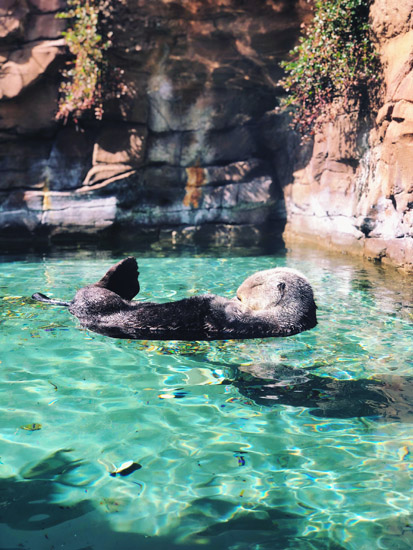
    One hot attraction to check out at the Monterey Bay Aquarium is the sea otter exhibit. This exhibit can be viewed above ground and underwater. So sea otters can be observed swimming and playing in the water and also lounging on the surface enjoying the sun’s rays! The sea otters at the Monterey Bay Aquarium are all rescued and without rescue they would have not survived in the wild. If you cannot make your way to see these otters in person, check out the live cam footage of the sea otters at the Monterey Bay Aquarium.

    There are many other animals and exhibits to explore at this aquarium. Green sea turtles can be seen swimming in the Open Sea exhibit where they are surrounded by many other marine wildlife. Hammerhead sharks, Tufted Puffins and many other wildlife can also be found inside this exhibit. There are other exhibits that show off kelp forests, coral reefs, wharfs, and the ocean sandy floor!

    If you’re in the Monterey Bay area, check out this aquarium and become 1 of over 2 million annual visitors! This is a great aquarium with a lot to offer. Hours and closures are subject to change due to the ongoing Covid-19 pandemic.

    Shedd Aquarium

    The Shedd Aquarium sits along side Lake Michigan in Chicago, Illinois. It is the second aquarium we will talk about in this article. The Shedd has roughly 5 million gallons of water with about 32,000 animals inhabiting the aquarium. Although it sits nowhere near saltwater, the Shedd Aquarium has a vast collection of saltwater animals including beluga whales, white sided dolphins, stingrays, and much more. The Shedd supports research to help save the critically endangered beluga whale population in Alaska.

    One of Shedd Aquarium’s most iconic exhibits is the Caribbean Reef. This enormous 90,000 gallon aquarium is cylindrical in shape and able to be viewed almost completely around. This giant fish tank shows off some wonderful creatures that can be found in the Caribbean such as stingrays, sharks, and angelfish! There is always motion in this aquarium and from time to time a scuba diver can be seen cleaning the enclosure to help visitors enjoy the view.

    There are many other animals and exhibits that can be seen at the Shedd Aquarium. The Abbott Oceanarium houses beluga whales, pacific white-sided dolphins, and sea otters. The Wild Reef exhibit is home to many different reef dwelling creatures, lurking sharks swimming in an enormous aquarium, and so much more! Other exhibits such as the Amazon Rising, Ricers, and Oceans can be found very close to the entrance. Follow this link to check out all other exhibits available!

    If you’re in Chicago, the Shedd Aquarium, Planetarium, and Field Museum should be visited on the Museum Campus along Lake Michigan. Due to the Covid-19 pandemic hours and closures are expected to change!

    Georgia Aquarium

    The Georgia Aquarium located in Atlanta Georgia is probably the most iconic and well known aquarium in the United States. Being the largest in the country, this aquarium has over 10 million gallons of fresh and saltwater that holds thousands of animals such as whale sharks, manta rays, hammerhead sharks and so much more! The largest tank in the Georgia Aquarium is roughly 6.3 million US gallons and holds the largest fish in the world!

    The whales sharks can be viewed in the Ocean Voyager exhibit. There are over 50 other species of fish that are housed with these giants. This exhibit allows you to walk through a 100 foot tunnel that is completely surrounded by water to fully get immersed. There will be plenty of opportunities to see all the marine fish that reside in this exhibit.

    Another fantastic exhibit is the Dolphin Coast, where guests can sit and observe a presentation where dolphins do tricks while trainers educate the crowd with marine facts. Although there are many more exhibits at the Georgia Aquarium the last that will be highlighted is the Tropical Diver exhibit that has roughly 164,000 gallons of water and houses over 200 different coral species.

    Check out the Georgia Aquarium website to see other exhibits and animals that can be seen during your visit. Hours and closures may vary due to the Covid-19 pandemic!

    National Aquarium

    The National Aquarium located in Baltimore, Maryland is a non-profit aquarium that holds over 2.2 million gallons of water and over 20,000 animals residing in these waters. The goal of the National Aquarium is to inspire conservation of the world’s aquatic treasures. The National Aquarium showcases many different types of exhibits that have freshwater, saltwater, and enclosed habitats for wildlife like pythons and birds.

    The National Aquarium contains exhibits devoted to the Atlantic bottlenose dolphin. This dolphin exhibit gives visitors the opportunity to observe feeding and training of the animals! The dolphins will hopefully be moved to a 50 million gallon sanctuary in fall 2020. Another wonderful exhibit is the Atlantic Coral Reef. This exhibit is roughly 335,000 US gallons that houses many different species of animal like stingrays, sharks, and groupers.

    There are many other exhibits that can be found here, on the National Aquarium website. The Blacktip Reef, Upland Tropical Rain Forest and Australia: Wild Extremes are a few more exhibits guests can visit when visiting this beautiful aquarium. Poison dart frogs, blue-crowned motmot, and various marine fish are a few animals that can be found throughout these exhibits. Openings and hours may vary due to the Covid-19 pandemic so please check the National Aquarium website for more information!

    New England Aquarium

    The New England Aquarium located in Boston, Massachusetts was originally opened in June 20, 1969. After a few changes and updates, it has become the aquarium you see today. Not having the monstrous 1 million gallon plus aquariums that others have does not stop the New England Aquarium from being remarkably interesting. It still manages to cater to roughly 1.3 million guests that come from all over. Many of these guests come to visit to see a very remarkable fish tank.

    The fish tank in question is the Giant Ocean Tank that is a whopping 200,000 gallons. Where it lacks in gallons it surely makes up for in size. This fish tank is 40 feet wide and four-stories tall! You definitely get your exercise in visiting this aquarium. The main attraction in this exhibit is Myrtle the green sea turtle. This sea turtle enjoys life in this aquarium with many other marine fish, eels, and other sea turtles! This fish tank is themed after the Caribbean coral reef. It is a very unique and very tall fish tank and a must-see when visiting Boston.

    Other exhibits at this aquarium include a 9,000 gallon Indo-Pacific Coral Reef that reaches far up from the floor to ceiling and houses many different marine fish such as yellow tangs, butterflyfish, foxface, and many more. Another exhibit is the Amazon Rainforest that holds many different tropical fish like the neon tetra, anacondas, and poison dart frogs! The Amazon Rainforest contains over 4,500 gallons of water! If you are interested in learning about other exhibits at this aquarium check out their website here.

    The hours of opening and closures may change due to the Covid-19 pandemic so please check the New England Aquarium website for information on the matter.

    Final Notes

    There are many different aquariums around the United States and the world. This list is only to showcase a few of the many out there. They are all very unique and all have their own twist in the aquarium keeping world. Regardless, it is highly recommended to visit these aquariums!

  • 5 Wonderful Algae Eaters for Freshwater Aquariums

    5 Wonderful Algae Eaters for Freshwater Aquariums

    Finding the right algae removing crew can be hard, especially for aquariums that are smaller. This guide will focus on a broad spectrum of algae eaters. There will be information on fish, snails, and invertebrates. In my opinion these critters are some of the best at removing algae. Before continuing reading through this guide, check out common causes for algae growth in freshwater aquariums here.

    1. Bristlenose Pleco

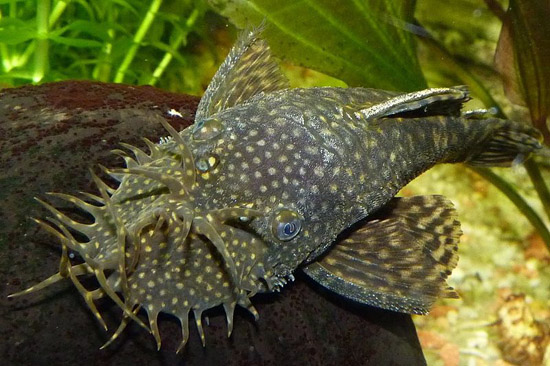
    There are many different plecos that can be purchased for a freshwater aquarium but I feel the bristlenose pleco is one that is an excellent algae eater and it also doesn’t get incredibly large.

    The bristlenose pleco, also known as the bushy nose pleco, is a fantastic algae eater for aquariums that are 30 gallons or larger. They should not get any larger than 5″ in length unlike the common pleco that can reach sizes over a foot in length. Providing places to hide is important for this pleco to give it some privacy. A piece of driftwood is a good choice in decor that will provide cover for this fish.

    This fish is omnivorous and not a picky eater at all. The bristlenose pleco should easily sniff out food that falls onto the substrate and slurp it up quickly. Otherwise, they will most likely be clinging onto decor and plants eating algae that may be growing on them.

    They are quite easy to breed in captivity. Males when grown will have large bristles between its eyes and tip of its mouth. On the other hand, females will have small whiskers near her mouth. When mating the female will dispense her eggs on driftwood or other flat surfaces and the male will guard the eggs. It will take roughly 10 days for the fish to emerge from the eggs. Once the babies begin to swim it is highly recommended to move them into a separate aquarium so they can mature.

    The bushy nose pleco does best in aquarium temperatures ranging from 75 – 79 degrees Farenheit, KH levels between 6 and 10, and pH levels between 6.5 and 7.5. They’re a fantastic fish to have that works hard to keep algae at bay!
    2. Amano Shrimp

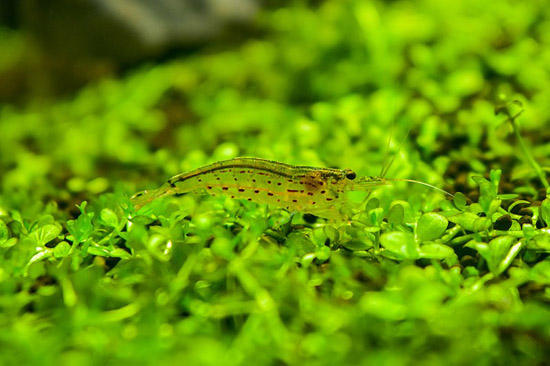
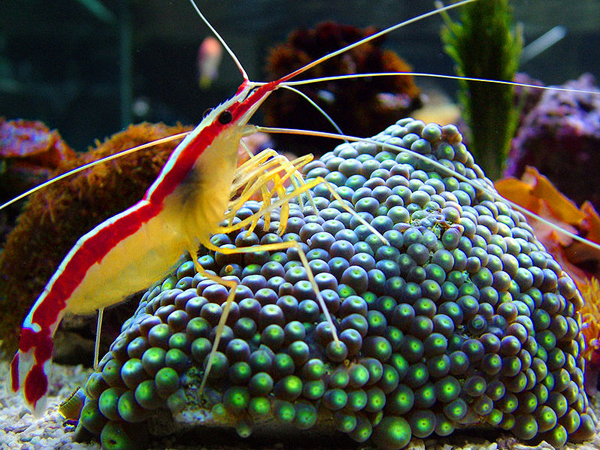
    Amano shrimp, for freshwater shrimp standards, are the tanks of algae eating. They do an excellent job rummaging through different areas of the aquarium eating algae that is growing and also consuming leftover food that fish may not catch during feeding times. They’re not the most colorful of animals but they’re great to look for and observe in the aquarium. They’re gaining more and more popularity in the freshwater hobby due to their size and ability to eat algae in smaller aquariums where plecos may be too large.

    Image by Atulbhats on wikiMedia

    Amanos are beasts! They grow to be about 2″ in size when they’re fully grown. Regardless for their size, they are recommended for aquariums 10 gallons or larger. Like stated above, they’re great for aquariums that are just too small for larger plecos. Providing plenty of hiding spaces is great for Amano Shrimp. and be sure to have a well established aquarium because invertebrates are far more intolerant of unstable water conditions compared to fish.

    This species of shrimp is omnivorous. They will happily nibble on algae, flakes or any other food that comes their way. They’re not picky at all when it comes to eating.

    Amano shrimp are incredibly hard to breed in captivity. It is not common at all for it to happen. It is quite a challenge to bring up young amano shrimp from egg to adulthood so we will not get into that in this article.

    These beautiful shrimp are fantastic for freshwater aquariums and they are also tolerant of aquariums with a little bit of salt in them. They should do perfectly fine in brackish water aquariums. Please only house them with peaceful fish that will not bother or try to eat amano shrimp. These fish are very versatile and do well in water temperatures ranging between 60 and 80 degrees Fahrenheit, KH levels between 3 and 10, as well as pH levels ranging from 6.0 – 7.5. They’re quite hardy for a species of shrimp and live a long life of 2 – 3 years!

    3. Nerite Snail

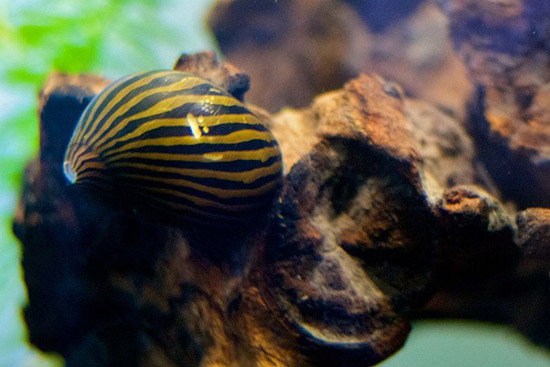
    Nerite snails are a remarkable species of snail to add into a freshwater aquarium. For the amount of algae removal a snail can achieve, the nerite snail probably does it the best. They will help remove algae from glass, substrate, plants, and everything in between. They come in very nice tiger striped or dotted patterns so they’re a nice looking snail to add into a fish tank.

    This species of snail will not be seen larger than 1 inch in size. They stay very small and are very easy to care for. An established aquarium is a good idea to have and remember copper is lethal to them and all other invertebrates. Most snails are great for aquariums as small as one gallon or larger. This species of snail like to wander so there is a chance that they will make their way out of the aquarium if the opportunity arises.

    Nerite snails are herbivorous and if on the rare occasion your fish tank does not have any algae in it, providing algae based food to keep your snail fed should be considered. Feeding nerite snails is not a very common occurrence but keep in mind they may need some food if your fish tank is spotless!

    The nice things about nerite snails is that they will not infest your aquarium with millions upon millions of spawns. They only successfully produce offspring in brackish water. They are perfectly fine being kept in freshwater as adults. The young benefit from having higher pH levels and more calcium in the water levels to promote shell growth.

    Nerite snails are pretty hardy for invertebrates. They do great in water temperatures ranging from 65 to 80 degrees, KH levels that float between 12 and 18, and pH levels between 6.5 and 8.3. They will not tolerate high levels of nitrates and as stated above, copper is lethal to them. Overall, they are fantastic for freshwater aquariums, brackish water fish tanks, and planted tanks.

    4. Siamese Algae Eater (Flying Fox)

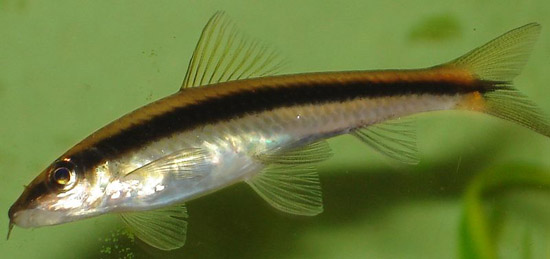
    The Siamese Algae Eater sometimes known as the flying fox is an excellent algae eater for many different planted tanks. What they lack in vibrant color is definitely made up by its ability to eat large amounts of algae in an aquarium. This fish species is primarily gray/silver with a long black strip that runs the length of its body. The flying fox are recommended to be kept in small groups. They do much better together than alone.

    It is rare to find a flying fox that reaches its full length of 6″. It is more commonly found at a max length of 4.5 inches. Because of their size and desire for algae the siamese algae eater should be kept in aquariums that are 30 gallons or larger. This will give them more space for forage for algae and once grown provide plenty of space for them to explore and swim. Driftwood, rocks and broad leaf plants are recommended to have in the aquarium because this fish will perch on top of them and also graze on the algae growing there.

    Image by Ark on wikiMedia

    This fish is omnivorous so it will take in just about any food offered but it does an excellent job removing algae from aquariums. It should be fed bloodworms, flakes food, and pellet food.

    There is very little to no information on breeding habits of the flying fox.

    This fish is a little more sensitive to higher nitrate levels so a well established and stable fish tank should be available before introducing this fish. They do great in water temperatures ranging from 75 to 79 degrees Fahrenheit, KH levels between 5 and 10, and pH levels between 6.5 and 7.0. They’re an excellent fish to have and are very interesting to observe.

    5. Otocinclus

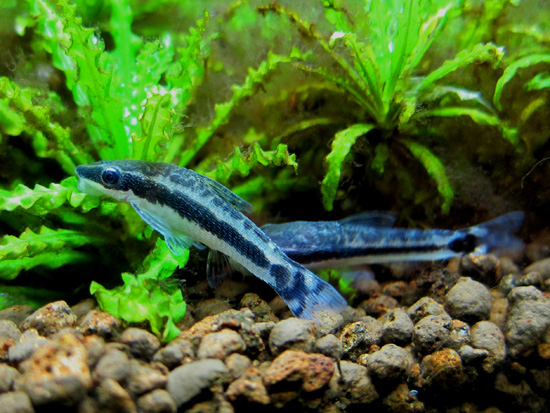
    Otocinclus is a very small algae eater that is sometimes overlooked when on the hunt for something that can help maintain an aquarium. These little fish are small, but in large numbers are great at helping maintain smaller aquariums. They will cling onto many different surfaces with their black and white bodies and go about their day munching on algae.

    Ottos are incredibly small and they will not normally grow larger than 2 inches in length. They’re an excellent little fish for nano aquariums. They do perfectly well in aquariums 10 gallons or larger. Keeping a little school of 6 or more ottos is highly recommended. Providing rock work and driftwood will create surfaces for algae to grow to give this fish something to graze on. It will also create places for this fish to hide in times of stress.

    Image by Cisamarc on wikiMedia

    It can be easily concluded that this fish is herbivorous. It will primarily feed on the algae that is growing in the aquarium but if none is available it is recommended to throw algae wafers or algae flakes into the fish tank for this fish to nibble on.

    Otocinclus does not normally breed in captivity. A varied and diet full of nutrients will be required to even consider having these fish breed. Rising water temperatures are a common occurrence to influence fish to begin mating. You can consider very slowly raising the water temperature to around 79 degrees Fahrenheit to help motivate this fish to mate. After providing this fish with nutrient rich foods, raising water temperatures, and having perfect water parameters the fish may breed!

    Ottos are very peaceful fish and should not bother any other fish in an aquarium. They will thrive in aquariums with water temperatures ranging from 74 to 79 degrees Fahrenheit, KH levels between 6 and 10, and pH levels between 6.8 and 7.5. They’re a fun fish to observe and great when kept in schools!

    Final Thoughts

    Choosing the best algae eaters for your aquarium could be a challenge and hopefully this guide will give you a little insight on 5 fantastic critters that are great for cleaning up algae in freshwater aquariums. I would even recommend having a mixture of some of these if your aquarium has the space. There are definitely other fish that will destroy algae but I believe these are some of the best!

  • Common Causes of Algae Blooms in Freshwater Aquariums

    Common Causes of Algae Blooms in Freshwater Aquariums

    Freshwater aquariums are usually the first step for anyone entering the fish-keeping hobby. It is quite rewarding setting up an aquarium and watching it thrive. Unfortunately, sometimes things don’t go our way and the fish tank experiences a rise in algae growth. This guide will talk about common reasons why algae overtake your aquarium and some remedies for it. Besides changing out carbon, this guide will help teach algae management without using chemicals.

    High Nutrient Levels

    One of the first things to do when trying to figure out why there algae is taking over your aquarium is to test your water parameters. Assuming this is an established aquarium, we will primarily be testing for phosphates and nitrates. I would recommend using API’s Freshwater Master Test Kit for nitrates and other parameters and API’s Phosphate Test Kit for phosphates.

    High levels of nitrates and phosphates can cause algae to grow out of control and it can become dangerous for fish as well. To remedy high levels of nutrients in your water there are a few things that can be done.

    First, make sure you are not over-feeding your fish. If you see food reaching the substrate, you are most likely overfeeding your fish. I normally feed my fish once a day and rarely twice a day.

    Second, to remove the nutrients out of your aquarium we will be required to do water changes. If your nitrate levels and phosphate levels are very high, I would recommend doing smaller water changes over a longer period of time. This will help prevent your system from going into shock. Instead of doing a 25% water change in one day, do 10% or less every other day until your water parameters stabilize. Doing so will hopefully gradually drop your nitrate and phosphate levels.

    Make sure your filter media is also renewed. It is normally recommended to change out activated carbon once a month or (if applicable) Chemi-Pure every 3 months. All this will help lower your nutrient levels to help prevent algae growth.

    Cut Down on Lighting

    Too much light can also be a big problem in aquariums. I would not recommend more than 8 hours of lighting per day in a freshwater aquarium. If there is an algae problem and your water parameters are not the problem, lighting might be the cause of the algae growth. When setting up your fish tank, it should be far away from windows to prevent sunlight from reaching the aquarium. Too much natural and artificial light will cause algae to flourish!

    Cut your light schedule to 6 hours for a few days to see if that changes anything. The fish won’t be bothered by the change in lighting so don’t worry about that. Keep an eye on any live plants that may be growing in the aquarium. I would recommend testing water parameters before trying this.

    Not Enough Cleanup Crew to Manage

    Another problem freshwater aquariums have is not having enough clean-up crew to combat the naturally growing algae and eventually, it overwhelms the system.

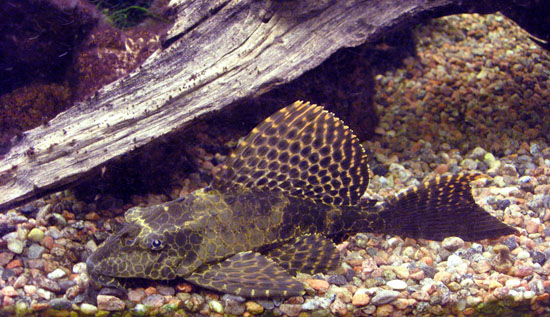
    As long as your water parameters are stable and at a healthy level you can counteract the algae that will eventually grow in your aquarium by adding snails, shrimp, and plecos. For large amounts of algae, plecos are usually the go-to due to their size and eating habits compared to a snail. Unless a freshwater predatory tank is being kept, it is recommended to have all three types of algae grazers. In a predatory setting, plecos are usually kept and will most likely not be eaten.

    Image by Soulkeeper on Wikimedia

    For smaller aquariums, a clown pleco or a handful of Ottocinclus are usually the preferred species, and in larger aquariums Bristlenose Plecos are commonly used. Bear in mind common plecos can get to be about 2 feet in length!

    I normally recommend Mystery Snails or Nerite Snails. Nerite Snails will not be able to successfully reproduce in freshwater so they are the perfect choice if you are afraid of a potential snail infestation.

    For heavy-duty algae grazing Amano Shrimp are a great choice due to their size but many hobbyists add smaller shrimp such as the cherry shrimp due to their wonderful coloring. Many shrimp are required to help combat algae blooms.

    Bare in mind that in order to successfully keep invertebrates such as shrimp and snails, your water parameters should be quite stable. Inverts are very sensitive to fluctuations in water parameters.

    Final Thoughts

    High nutrient levels, overfeeding, too much lighting, and not enough algae eaters are a few very common reasons why algae can take over an aquarium. One could be the root of the problem, or a combination can be causing algae to thrive. Chemicals will only band-aid the problem, it is important to get to the source of the problem and correct it. Only use chemicals to remove algae as a last resort! Hopefully, this guide has helped point you in the right direction to removing algae. Take a look at 8 Great Ways to Help Remove Hair Algae to learn of some tips and tricks on how to get algae from thriving in your aquarium.

  • Putting Together Your First Freshwater Jarrarium!

    Putting Together Your First Freshwater Jarrarium!

    Putting together a jarrarium, as simple as it may seem, can be intimidating at first. Luckily, once all the material is collected it becomes really simple. It seems to be a growing hobby and it is quite a lot of fun to put together. This is a step-by-step jarrarium guide that will hopefully give you a good idea of how to put together an eye-catching jar.

    Due to their small footprint, a jarrarium will begin to look quite cluttered when adding equipment. A preset heater is highly recommended to help keep a stable water temperature, but it is not required if your residence is consistently at a set temperature. Adding filtration is not too common. Many jarrariums rely on water changes to maintain good water quality.

    Step 1: Finding a Container

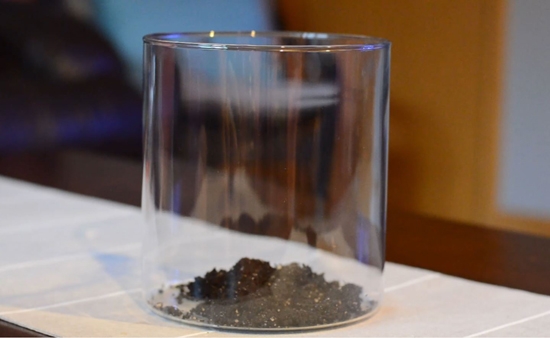
    We of course need to begin with acquiring a jar for the new jarrarium. Glass containers are most commonly used. I have seen old glass bottles, vases, ice buckets, and so many more things used as a jarrarium. I do my best to have my jar be at least 1 gallon but smaller or larger is always a possibility.

    The most important thing is to make sure that the container is clean! DO NOT use soap when cleaning. At most use vinegar and then thoroughly rinse the container. Once the container is ready we can move on to the next step.

    Step 2: Adding Soil

    Once we have the glass ready it is time to add some soil! I would recommend adding organic soil with compost into your jar. Avoid soils with fertilizer because it may add undesirable nutrients to your jarrarium. Also, certain soils with fertilizers may not be good for the inhabitants of your new jar. While adding the soil be sure to compact it down in an attempt to remove any air bubbles. About an inch of soil should be present once it is compacted.

    Once the jar is up and running it is highly recommended not to disturb the soil portion of your setup. In a few steps we will be adding a “seal” to prevent the soil from getting out but for now, let’s move onto adding the hardscape.

    Step 3: Adding the Hardscape

    Many different types of hardscapes can be used for a jarrarium. I used a piece of driftwood when I was putting together this one. Be mindful that it is preferred to boil or soak your driftwood before adding it into an aquarium or jarrarium otherwise, it runs the risk of releasing tannins into the enclosure. The tannin is not dangerous but it causes the water to look yellow or brown for a long period. Large pieces of driftwood can be used or spindly spider wood can be used.

    Rocks are also commonly used for an enclosure. Be mindful, because rocks that are made of limestone will raise your pH and water hardness levels, which may be undesirable when keeping live plants. Common rocks that are used are river rocks or lava rocks. Check out local fish stores for rock options.

    Lastly, a jarrarium can have any aquarium decor that will fit into it for decoration. A tiny pirate ship, skulls, pillars, etc. are fair game but make sure that it will fit or at least not crowd the whole enclosure. With any of the decorations, make sure that it is firmly touching the bottom of the jar for stability.

    Step 4: Adding the Seal

    Now is the time to add substrate to seal the soil. I recommend adding 1″ of a substrate on top of the soil. In this jar, I used Fluval Stratum, but other substrates can be added such as the Eco-Complete planted aquarium substrate!

    The substrate will seal the soil in place to help prevent it from floating up and leaching nutrients but it will also allow plant roots to reach down there and use what nutrients are in the soil. We will have to be careful when adding water to not disturb the soil and substrate!

    Step 5: Adding a Portion of Water

    Steps 5 and 6 can honestly be interchanged. I chose to add roughly a third of water into the jarrarium before adding plants. I did this to see whether my substrate sealed the soil correctly and I also wanted to have some water in the jar before adding plants. As stated above, be sure not to allow your substrate to be disturbed! You do not want the soil to get kicked up.

    Allow the water to run down your decoration or create a strainer to let the water trickle down. A cheap way to make a strainer is to poke holes in the bottom of a plastic bottle and pour the water into there. The water will probably get a little murky. After a few days, most of the murkiness should settle.

    Step 6: Planting

    Adding plants is probably my favorite part of putting together a jarrarium. It brings the enclosure to life! You can always experiment with many different plants but to start I would recommend adding a low light Anubias, some riccia for the foreground, and perhaps some java moss. This is a great way to dip your toes into keeping live plants in an aquarium-type setting.

    In this enclosure, I have dwarf hair grass and moss but I am only experimenting to see how well they do. If they do not grow well I may swap out the dwarf hair grass with an easier-to-keep plant.

    Step 7: Filling to the Top

    Now it is time to finally fill this jarrarium to the top! Use your strainer or piece of decoration and slowly and gently fill it with water. Once the water has reached your desired height, you are done with setting up your new jarrarium!

    The jar may be murky or discolored. Give this a few days to pass. The substrate and the tiny soil particles will settle and the coloration should clear up! Throw in a few pieces of fish food to begin the nitrogen cycle and begin considering what livestock to add to the enclosure. Also, consider adding an artificial light source and avoid having your jar too close to a window. A light fixture with a CFL bulb will suffice. There isn’t a need to go out and spend hundreds of dollars on a light fixture. Being so small with the potential of having swinging water parameters we will be limited to what can be added to the jar. I would only recommend small shrimp and snails for anything smaller than 5 gallons. At 5 gallons a betta fish could be added with a heater.

    Final Notes

    There are a few things I would highly recommend purchasing when setting up a jarrarium or any aquarium for that matter. An API Freshwater Master Test Kit can be used to keep track of ammonia levels, nitrates, and so on. This is important for really small enclosures such as this. It is also important to have while your jarrarium is going through the nitrogen cycle which takes roughly 6 weeks. During this time we will allow the food we threw in to decompose and we will not add any livestock. Only top off the water as it evaporates and do not replace any water during the cycle. The nitrogen cycle is completed when your test kits read 0 ammonia, 0 nitrites, and a hint of nitrates (10 ppm).

    A water conditioner, like the API Tap Water Conditioner, is recommended if using tap water to remove unwanted chlorine from your water. This will help make the water stable for your little critters. Other than that, just a few things like shrimp food, nets, and buckets should be kept. Lastly, enjoy experimenting with your new jarrarium! Hopefully, this guide gave a good idea of how to put one together!

    Check out this video of me putting together this jarrarium:

  • Setting Up a GloFish Specific Aquarium

    Setting Up a GloFish Specific Aquarium

    Setting up an aquarium can be as simple or as complicated as you would like to make it. This will be an in-depth guide on how to set up a fish tank specifically for Glofish Tetras and/or Glofish Danios. This guide is primarily for beginner aquarists who are dipping their toes into the hobby or for parents who need guidance on setting up an aquarium for their children. For some quick information on GloFish check out this guide!

    We will be using a 20-gallon aquarium as a point of reference for this setup guide. A fish tank this large will allow you to keep a few more fish and a larger water volume will help keep water parameters stable. Under normal circumstances, an inch of full-grown fish per gallon is the recommended ratio for keeping fish in an aquarium. GloFish Tetras and GloFish Danios max out at 2.5 inches. This will allow you to keep either 8 tetras or danios. This is great because both are schooling fish and it’s recommended to keep at least 6 to consider it a school.

    Equipment Required

    No matter what type of aquarium you set up, you’ll likely need at least one piece of equipment to keep it running. Once you become a pro, you are welcome to change things up and tweak the equipment to your liking. However, if you’re new to fish tank keeping, I recommend following along to learn about the equipment I recommend for your fish tank.

    Aquarium Heaters

    We will need a heater. The 75-watt Eheim fully submersible heater or the Fluval M100 Submersible Heater are great choices. These heaters are fully submersible so you can easily hide them behind the decor. Also, they can be calibrated to the desired temperature using the dial at the top. As with any piece of equipment, it can come faulty or become faulty over time. I highly recommend purchasing something like the Penn-Plax Therma Temp Floating Thermometer to keep an eye on the temperature in case your heater decides to fault out. If you need more heater suggestions, take a look at some of the Best Heaters for Freshwater & Saltwater Fish Tanks!

    Filtration System

    A good filter is always recommended. My preferred filter for a setup like this is the Aquaclear 30 Power Filter. I like this one because it has three different compartments where filter media can be added. It comes included with a sponge, carbon, and biomax. First, the sponge catches debris. The sponge will require replacement eventually but rinsing it in aquarium water during water changes will keep it going for a while.

    Second, the carbon absorbs nutrients and will need to be changed once a month. Lastly, the biomax creates a bacteria haven which is important to aid in keeping a stable aquarium. These can be swapped out with other filter media but they are also perfectly fine to use for your Glofish aquarium. Unlike other filters, this one maximizes the space to assist in keeping your water clean!

    Aquarium Lighting

    Blue lights are what will make your Glofish pop in color. We will need a light that can be set to just blue lights to make your fish glow! Fancy lights can get expensive. Luckily there are budget lights that should do the trick for this kind of setup. The Hygger 18w Aquarium LED Light will provide you with both normal lights (to help live plants grow) and a setting to let only the blue lights shine.

    If you want to go all out and splurge on a more elaborate light the Current USA Satellite Plus Pro LED Fixture is a great choice. It comes with a controller which allows you to program the lights and also use preset settings to create different effects like cloud cover and storms. Purchasing this light will also give you the ability to grow more difficult plants in your aquarium if you ever decide to go that route.

    Optional Equipment

    Aquarium Air Pump

    An air pump is not a requirement but it adds a cool effect to the aquarium. Connecting it to compatible decorations or creating an enormous bubble wall creates a more unique aquarium experience.

    Auto Feeders

    Auto feeders are not usually something I recommend but they are also an option for anyone who travels and isn’t always home to feed the fish. I don’t normally recommend them because they will at times overfeed or dump most of the food at once which can create terrible spikes in phosphates and nitrates in your aquarium which can be terrible for your fish.

    Decorations for GloFish Aquarium

    The next thing on the list for setting up a GloFish tank is the decorations. My recommendation for a GloFish aquarium is dark gravel with little hints of coloring. Either completely black gravel or one with a little bit of color. If you plan on keeping plants, a deeper gravel bed will be needed, but otherwise, an inch-deep gravel bed should do just fine. For a 20-gallon fish tank, you’ll probably need anywhere between 10 and 20 lbs. of gravel.

    Image by Jim Zamichieli on wikimedia

    Since we are putting an aquarium together specifically for GloFish having fake plants that will glow under blue lights is recommended. These plants will give the aquarium an “out of this world” feeling. Loading the aquarium with quite a few fake plants is great!

    Adding some hardscape into your aquarium is important. Adding just plants won’t give structure to your fish tank. It is important to have something solid to create a nice structure and shape. Things like rocks, driftwood, sunken ships, and others are fantastic ways to bring your fish tank to life.

    Other Must Have Items

    There are a handful of items that I would recommend having ready to go while setting up your aquarium.

    Test Kits

    The API Ammonia Test Kit and API Freshwater Master Test Kit are important because your new aquarium will be going through the nitrogen cycle. The cycle goes through and once completed will provide the bacteria required to keep your fish safe. The cycle begins with a spike of ammonia. Then that converts to nitrites and lastly, the nitrites get converted to nitrates. You’ll likely know the Nitrogen Cycle is completed when you test for 0 Ammonia and Nitrites and you’ll likely see a hint of Nitrates. The nitrogen cycle normally lasts 6 weeks but the process can be sped up to about two weeks by using a bacteria starter, or media of some sort from an established aquarium.

    Aquarium Water Conditioner

    A water conditioner, like API’s Tap Water Conditioner, is useful to remove chlorine from the water before adding it to the aquarium. Large amounts of chlorine are bad for your aquarium’s inhabitants. API’s water conditioner is fairly straightforward. You will only need to add water conditioner to the water being added. If you change out 5 gallons of water, you only need to add water conditioner for 5 gallons worth of water. You do not need to add water conditioner for the full 20 gallons of aquarium water.

    Gravel Vacuum

    A gravel vacuum, like the Laifoo Aquarium Siphon, will be a must-have when water changes are conducted. The gravel vacuum is probably one of the easiest ways to remove water and clean your gravel. This one specifically is nice because it has a siphon ball which will help create a siphon. This will help you avoid getting a mouthful of water if you decide to start a siphon manually.

    Net, Food, Glass Cleaner

    A net and food are pretty self-explanatory. The net is to make adding the fish into the aquarium easier and the food of course is to feed the fish. Lastly, the glass cleaner will be very useful for cleaning the glass! Algae will form on the glass over time so having an aquarium-safe sponge is beneficial. I sometimes use an old gift card to clean my glass, or I treat myself by using a Melamine Sponge to clean hard-to-reach spots in the fish tank.

    Setup Process

    To begin, place your aquarium in its desired location. Gently begin adding gravel into the aquarium. Be sure not to drop the gravel from great heights because the glass could shatter.

    Since the fish tank is empty, it’s okay to add water conditioner before or after the water is put into the fish tank. While filling the aquarium to about 30% of the water capacity begin brainstorming where to put your aquarium decorations and heater. Once 30% water capacity is reached, begin placing your decorations, and be sure to wedge your hardscape decor a little bit so it is firmly in its place.

    After your decorations are in place fill your aquarium with water to about 90% capacity and place your power filter in the center back of the fish tank. Having it in the center will provide the best performance and circulation. Also, now would be the time to add the heater. Turn the dial to the desired temperature (76 – 78 degrees Fahrenheit) place it and angle it to your preference but be sure it is submerged underwater. Test out the filter and make sure it runs correctly. Once the filter begins to work continue filling the water until the fish tank is filled. Then turn on the heater and set up the light fixture.

    I normally recommend allowing the aquarium to run for at least 24 hours. I do this to make sure all of the equipment is running properly and also just to make sure there are no leaks in the aquarium. I would add API Quick Start to your aquarium. This contains nitrifying bacteria that will be necessary for your new aquarium. It will hopefully speed up the nitrogen cycle and will make your aquarium safer for new arrivals.

    Final Thoughts

    API Quick Start should help you get through your Nitrogen Cycle quickly. I would recommend looking into the Nitrogen Cycle before beginning any sort of aquarium setup. You are working with live animals, so it is important to conduct the proper research before deciding whether to keep them in your home. Unfortunately, many people forget that.

    Lastly, look into adding some snails and/or shrimp to add a clean-up crew after your Nitrogen Cycle has completed. They’re great at eating algae and uneaten food! Otherwise, I hope this guide helps with setting up a brand-new GloFish aquarium!

    Image by Robert Kamalov on wikimedia

  • The Cleanup Crew in Reef Aquariums

    The Cleanup Crew in Reef Aquariums

    The backbone of many saltwater systems is a good cleanup crew. Algae will opportunistically try to use the nutrients in your water body. A saltwater aquarium can be plagued with quite a bit of algae if water parameters are high. It is impossible to have an aquarium without algae due to the feeding and production of fish waste. Invertebrates and fish are used to help prevent algal blooms. Invertebrates such as snails and crabs can wedge themselves into areas many fish cannot and eat food that has fallen into these crevices. The main goal is to enjoy this hobby and not suffer from algal blooms’ hands. A good cleanup crew can help!

    Cleanup Crew for Reef Aquariums

    Reef aquariums can have a large assortment of critters to help maintain your aquarium and keep your algae at bay. I will do my best to list the best ones for the job and will provide information on the potential flaws of each. Before adding any new invertebrate or fish test out your salinity and water parameters with an Aquarium Salinity Refractometer and an API Reef Master Test Kit! Make sure your water parameters are in check before adding any new wildlife.

    Snails

    There is a large variety of saltwater snails that can be thrown into your reef aquarium. They help clean up algae, eat food that is left behind by fish, and help clear up your sand bed. The biggest problem with snails is that they can be quite clumsy and will sometimes fall upside down and not be able to flip back over. This can become a nuisance because we as hobbyists have to come to the rescue. The most common snail to do this (in my opinion) is the Mexican Turbo Snail. They somehow always seem to end up flipped and require a little assistance from us. Snails will sometimes climb out of an aquarium with an open top and fall to their deaths. Lastly, like many inverts, snails can and will knock over coral and move rock that is not placed well. I will go a little more in-depth on which snails are great to have in your reef system!

    Zebra/Mexican Turbo Snail

    I like to call these snails the “tanks.” They grow large and are remarkable at cleaning up an aquarium with algae. They are specialists at decimating hair algae but will also eat many other types of algae. As stated above, they commonly flip themselves and cannot flip back so pay close attention to that. Due to their size, these large snails have the power to move rock and coral that are not properly placed/glued down. They’re a great addition to larger reef systems but may need supplemental food if no algae are present. Omega One Seaweed Sheets are commonly used to feed this snail and fish when no algae are present.

    Bumblebee Snails

    The bumblebee snail is not as commonly found but they’re a great addition if you can find them. They’re especially a good add-on because of their tiny size. These little invertebrates can crawl into the smallest nooks and crannies of your aquarium and find detritus and uneaten food. This is great because they are carnivorous and will happily eat uneaten meaty food such as frozen Mysis shrimp. If food is scarce for this little snail, it may turn and attempt to eat other slow-moving snails! They will occasionally burrow in the sand which will help aerate it. The black and yellow coloring on these snails resembles a bumblebee which is where the name comes from.

    Nassarius Snails

    Nassarius snails sometimes called zombie snails are exceptionally great snails that will help aerate your sand bed. These snails are carnivorous so they will happily eat any meaty food that is uneaten. They also spend most of their time in the sand and will rise from the depths when fish feeding is occurring. They should be introduced into an established aquarium because they require a sufficient amount of detritus and other food. Like many invertebrates, they are very sensitive to water parameter differences when introduced so a drip acclimation is recommended.

    Tiger/Fighting Conch

    The conch is a wonderful addition to a larger reef system. These critters spend all of their time grazing on the surface of your sand bed. They are omnivores and will consume just about any food they can find. They do a great job of keeping your sand nice and clean and will burrow partly into the sand once it is done grazing. The biggest problem with the fighting conch is that it will reach about 4″ in length at full size.

    Trochus, Astrea, Nerite Snails

    These snails are different but I clumped them together because they have very similar jobs. They are all fantastic at consuming hair algae on live rock and also nibble on cyanobacteria that may be present in your aquarium. These three snails do not get as large as the Mexican and zebra turbo snails but can still pack a punch! They’re also a little showier because of their coloring and shell shapes. They’re great for all types of hobbyists.

    Fish

    There is a handful of fish that happily assist in keeping your aquarium clean and free of algae. There are a few more requirements to keeping certain fish such as aquarium size and experience levels but I will go into more detail below.

    Tangs/Rabbitfish

    I love having tangs and rabbitfish in my reef aquarium. They’re remarkable grazers and just a joy to have around. The problem with these fish is they need a large aquarium due to their size, feeding habits, and active personalities. Except for the Tomini tang, I would not recommend keeping tangs in an aquarium smaller than 125 gallons. Yellow Tangs spend much of their day grazing and actively swimming around so having quite a bit of space for them is a must.

    Certain species of rabbitfish will be fine in 75 gallon aquariums but I would also not keep most of them in an aquarium smaller than 125 gallons. Rabbitfish also have a venomous barb in their dorsal fin. So please be mindful of their ability to sting you! Lastly, the rabbitfish can occasionally eat LPS as well as soft coral so be mindful of keeping them with those types of corals. Otherwise, they are fantastic to have and a thrill in an aquarium.

    Gobies

    Gobies are great at keeping a sand bed spotless! Due to their varying sizes, certain species are great for large aquariums but others can be put into Nano fish tanks. For example, a large sleeper goby would be great for a big reef tank and a Yasha goby is fantastic for a much smaller system. Keep in mind that a sandy substrate such as CaribSea Arag-Alive Sand and a deep sand bed should be used if keeping gobies. Also, these fish are notorious jumpers. A closed lid is recommended for these fish because of their ability to launch out of the fish tank.

    Photo by Sushi Girl1995 on wikimedia

    Blennies

    The main species of blenny I will mention is the lawnmower blenny. If there is an algae problem in your system, these fish will clear it up quite quickly. I would normally recommend only one blenny per aquarium unless your fish tank is incredibly large. These fish are usually quite peaceful but will fight with other fish that are similar in shape. They can occasionally nip on stony coral and clams so please be mindful of that! They will grow to approximately 5″ when they are fully grown and should be kept in aquariums of 30 gallons or more!

    Crabs/Shrimp

    This category of inverts can go be talked about for quite some time. I will provide as much information without adding too much unnecessary detail.

    Scarlet skunk cleaner shrimp are fantastic at cleaning your fish. They will hang out on rocks and wait for fish to stop in for quick cleaning. Many fish will allow this shrimp to climb on their body to find dead skin. They’re especially fantastic for larger fish. The only downside is they may try to snatch food from coral when feeding.

    Photo by Chris Moody on wikimedia

    Peppermint/camel shrimps are incredible at removing nuisance aiptasia from your reef tank. Give them enough time and the pests will be gone. Be careful though because once the aiptasia is gone, this invert may turn and eat up some of your coral! I personally do not add these into my system unless I have a big aiptasia infestation.

    Emerald crabs are very good inverts at removing bubble algae. They are normally green in color and lay pretty flat with the rocks and spend most of their day grazing on bubble and hair algae. Just like peppermint shrimp, be mindful because they can cause damage to coral!

    Hermit crabs are great because they will spend all day grazing and looking for food. They will eat just about anything offered. Remember that not all hermit crabs are reef-safe! They will fight one another as well as kill snails for their shells. It is recommended to have different-sized empty shells available for your hermit crabs to use.

    Final Thoughts

    Many different types of cleanup crews can be used in a reef aquarium. Do your best to fill every niche to maximize the efficiency of your cleaning squad! It will help make the healthiest and most stable aquarium. Living cleanup crews, water changes, and things such as Chemi-Pure Elite, media pads, and protein skimmers such as the Reef Octopus Classic 110 can help keep reef systems spotless!

  • Garlic and Feeding Fish

    Garlic and Feeding Fish

    Every so often aquarium keepers find themselves in the dilemma of having a fish that just won’t eat food. This can be due to them being a new fish in the aquarium, stressed out for whatever reason, sick or recovering from a sickness, or just a finicky eater by nature. One thing to consider doing to get your fish back on track is to feed it garlic.

    Garlic is a wonderful tool that I have personally used to help motivate a fish to eat once again that was under an ich outbreak. They would not eat at all and after the second day, I decided to mix its food with garlic. I simply took a clove of garlic, cut it up into pieces that would fit into the fish’s mouth, and mixed it in a small container with pellet and frozen mysis shrimp. I usually add a little aquarium water into the container so the food can “marinate” in garlic for around 10 – 15 minutes. Once the food has soaked up enough garlic juice I feed the fish little bits at a time and observe. I usually put the cloves of garlic and food in. Luckily for me, my fish decided the smell of garlic was appetizing enough and began eating again. These are great steps forward towards recovery if it’s sick and great progress if it’s a finicky eater.

    Garlic has a large amount of amino acids that leak into the water when dropped in and fish love that! It is good for humans to eat and also great for fish to give them a little health boost. Garlic can be fed to perfectly healthy fish. It is rich in vitamins and amino acids that benefit both humans and aquatic life.

    Some aquarists do not want to deal with the messiness of cutting garlic and having it possibly alter their water parameters if it’s not eaten. Simply using garlic juice or a garlic extract made for aquarium fish can mitigate possible elevations in nitrates or phosphates. The extract is potent! The smell leaks out of the bottle without even opening it. All it needs is 1 or 2 drops of the food and it is ready to go. It’s a powerful and effective way to try and get your fish to eat but also a good way to boost your fish’s health and immune system. 

    Unfortunately, some fish are still just too stubborn to begin eating again. Feeding fish garlic or garlic-covered food is a great tool but it does not always work out. If a fish still does not show any interest in eating, attempt to mix garlic with brine shrimp. Brine shrimp is a wonderful treat to give your fish and mixed with garlic may give that extra nudge that it needs. I usually try not to feed my fish brine shrimp often because it is not as nutritious as Mysis Shrimp or other meaty foods, but when a finicky fish won’t eat I will try just about anything.

    If a fish still will not eat, observe it. It may come around and begin eating on its own. This hobby requires patience and sometimes that is exactly what a fish needs. Check your water parameters, and temperature, and see if there are electric currents in your aquarium because all of this can lead to a fish not eating. Also, check if there is anything physically wrong with your fish. If there is, attempt to figure out what that problem is and treat it accordingly. Another thing to do is observe to see how other fish are interacting with your finicky eater. The non eating fish may be getting bullied or the other fish may eat the food too quickly and your finicky eater just cannot keep up.

    Final Thoughts

    Garlic is a wonderful tool to use to try and sway a fish into eating food. It is not always a guarantee that it will work, but it is handy in a pinch. If your fish are not eating observe and research the cause to why. Check your parameters, temperatures, possible physical issues, etc., and work from there. If the source of the problem is not fixed, the problems will persist over time.

  • Setting Up a Simple Freshwater Aquarium

    Setting Up a Simple Freshwater Aquarium

    This guide will help brand-new aquarists set up their first freshwater aquarium. This article is relevant for aquariums that are 10 – 30 gallons in size. Aquariums come in all shapes and sizes, with different decorations, plants, filtration systems, and more. This will be a very basic setup guide to help new fish keepers get started. We will cover the steps needed for the actual setup and equipment that can be used for the aquarium.

    Equipment Needed

    To begin, the main equipment needed to keep an aquatic system running are the glass enclosure, heater, filter, and light. These are must-haves, especially if you are just starting. An air pump adds more oxygen but it should not be necessary for this type of setup because the filter will provide enough oxygen for fish to thrive.

    • A submersible heater, like the Aqueon Pro Series Heater, is an excellent option for heating your aquarium because it is made by a very popular brand and is built incredibly well. If you’re not interested in the Aqueon Pro Series Heater, check out some of the Best Submersible Heaters for Freshwater and saltwater Aquariums.
    • A hang-on-the-back filter, such as the Aquaclear Series (power filter) is also a great choice for a filtration system because it allows for chemical, mechanical, and biological filtration. You can check out other Hang-on-back Filters by following the link.
    • LED lights, such as the NICREW ClassLED Aquarium Lights are a good budget light that will open the door for aquatic plants in the future. They provide great lighting, usually last years, and don’t use too much electricity. Make sure the size of the LED light matches the length of your fish tank.

    Decorating & Jump Starting Your Aquarium

    Having a nice gravel bed is a great way to make your fish tank pop! I prefer dark gravel, like this one on Amazon, because that will make the colors of the fish tank stand out more. For first-time aquarists, I usually recommend black aquarium gravel. Just remember to rinse the gravel before putting it into your fish tank. Do not use soap, just water. Adding 1 lb. of gravel for every gallon of water will create a nice deep gravel bed, adding a nice look to an aquarium. However, it’s not necessary to add that much.

    Purchasing decorations is a great idea! There are many different types of decorations such as plastic plants, driftwood, pirate ships, and so on. If you enjoy Halloween, take a look at some Halloween-inspired aquarium decorations. The types of decorations are limitless. I recommend Easy to Care for Live Plants and driftwood to give a natural look, but to each their own.

    A few other things needed for a new aquarium are an API Freshwater Master Test Kit, water conditioner, gravel vacuum, net, and fish food (flake food and pellets), and glass cleaner (sponge or magnetic).

    Setup Process

    The setup process is the fun part of it all. Once you have all your tools and equipment, it’s time to finally put together your new aquarium. I will continue by discussing aquarium placement and decoration recommendations below.

    Aquarium Placement

    Once everything is purchased and ready to go it is time to start setting up the aquarium. Find a location in the house away from windows and air/heating vents. Windows provide more sunlight than needed which will cause algal blooms to occur and air/heating vents may cause temperature fluctuations in the aquarium which is not desirable.

    Adding Gravel & Water

    Gravel and decorations should be rinsed before placing into the enclosure. Once that is done begin by gently putting the gravel at the bottom of the aquarium. Place the water into a bucket and add water conditioner to remove chlorine from it. Usually, 1 drop of water conditioner is added per gallon of water but it may vary so double-check the instructions on the bottle you are using. The water temperature does not matter so much right now but try to eyeball the temperature to be around 74° – 78° Fahrenheit. Fish will not be added yet so an exact temperature isn’t necessary. Repeat these steps until the aquarium is roughly 50 – 75% full and begin adding the decorations.

    Placing Decorations, Equipment & Final Touches

    Push the base of the decorations to the bottom of the gravel bed. This will give it a solid foundation and will help prevent it from moving when cleaning the enclosure. Place the heater and set the temperature to around 76 -78 degrees Fahrenheit. Place the filter in its proper location. Continue to fill up the aquarium to about 90% and test to see if the filter runs. I usually recommend letting the aquarium run for about 12 – 24 hours just to make sure all the equipment runs properly and to ensure there are no leaks. Before adding fish, read up on the Nitrogen Cycle, and the highly recommended fishless cycle.

    Purpose of API Freshwater Master Test Kit

    I will explain the reasoning behind purchasing the other items for your aquarium. The API Freshwater Test Kit is important. The aquarium will go through the nitrogen cycle. The cycle will help create a safe environment for fish and invertebrates. The cycle begins with a spike of ammonia (from waste). The ammonia will convert to nitrites after a week or two. You will use the test kit to follow along. Visible signs of nitrites will appear. After 5-6 weeks, the nitrites should convert to nitrates. When using the test kit, the ideal spot to be in is to test for 0 ammonia and nitrites and have just a hint of nitrates. The nitrogen cycle normally lasts 6 weeks but the process can be sped up to about two weeks by using a bacteria starter.

    Use of Water Conditioner

    A water conditioner is useful to remove the chlorine from the water before adding it to the aquarium. Large amounts of chlorine are not good for fish or invertebrates so removing them is a bonus. Some people allow their water to sit in a bucket for 24 hours before adding it to their fish tank but to be safe the water conditioner is the way to go!

    Supplies For Aquarium Maintenance

    The gravel vacuum will be a must-have when doing maintenance on your aquarium. After creating a siphon, the gravel vacuum will allow water to flow down the tube and into an external bucket. The flow is slow enough to help collect food particles and fish waste but it should not suck up the gravel that was recommended earlier in the article. Using a gravel vacuum makes water changes a breeze.

    The net and food are pretty self-explanatory. The net is to make adding the fish into the aquarium easier and the food of course is to feed the fish.

    Lastly, the glass cleaner will be very useful for cleaning the glass! Algae will form on the glass over time so having an aquarium-safe sponge is beneficial.

    Final Notes

    Aquarium building can be fun while still keeping it simple. Once experience levels increase the hobby can branch out to far reaches. Starting with an easy-to-care-for 10-gallon aquarium creates a good foundation for what could be a lifelong hobby in the future.

  • The Vastness of Aquatic Enclosures!

    The Vastness of Aquatic Enclosures!

    Aquarium Hobby at a Glance

    There are many different types of aquarium-like enclosures a person can have in their home.  They range in all sorts of sizes and levels of difficulty but they are all unique in their own way. From micro enclosures like jarrariums to enormous saltwater aquariums and ponds, there is a niche for everyone! We will broadly talk about many different enclosures for aquatic animals and the level of difficulty of maintaining these enclosures. We will also talk about basic designs and variety in setups.

    Aquatic Jarrariums

    One of the easiest and probably cheapest enclosures for aquatic critters is what is called a jarrarium. A jarrarium can be very simple but also very complex. There are two main types of jarrarium, open or closed. One requires the lid to remain open for oxygen to exchange with water, allowing you to feed the inhabitants, clean the glass, and change the water if it becomes overgrown with algae. The closed jarrarium is filled with inhabitants and sealed in hopes that it will become a self-sustaining system. If built correctly closed systems can be self-sustaining for a few years.

    Eco-Sphere

    The most important and expensive item needed for these types of setups is good glass containers that can hold water. For the most barebone jarrarium, a glass container is needed but the only additional material needed is a scoop of water and substrate from your local pond or lake. These water bodies usually are fully loaded with tiny critters such as dragonfly nymphs and snails. This type of jarrarium is called an eco-sphere. Once the water is scooped out, it’ll be quite murky in appearance, but give the loose substrate time to settle at the bottom of the container and it should clear up. Most people do not add any critters into an eco-sphere but instead observe what type of wildlife comes out of the substrate. Eco-spheres help give an insight into many different critters that are in a person’s local water systems. Many of these eco-spheres are short-lived but a great educational piece for kids and adults.

    Open Jarrarium

    A regular jarrarium usually consists of a soil part, a substrate part, and then the decor that is placed on top. This type of jarrarium usually takes a bit more planning. The use of live plants and mosses is almost a necessity to help intake nutrients in the water, help prevent algal blooms, and provide oxygen for the animals within. Also, live plants are far more beautiful than their plastic counterparts (in my opinion). The livestock is pretty limited for jarrariums. It is usually limited to shrimp, snails, and possibly a betta fish if the jar is large enough. Shrimp come in many gorgeous colors, varieties, and sizes but on the other hand, be careful with snails because some can infest your newly built jarrarium. The jarrarium placement is very important. Changing room temperatures can harm the critters in their enclosure. Most aquatic animals prefer stable water parameters, such as stable temperatures, otherwise, they can be stressed which can lead to death. The amount of light is also a factor to think about. Too much direct sunlight will cause algal blooms and also raise water temperatures and too little will cause your plants to wither away and die. Consider using an artificial light source such as a CFL light above the jarrarium.

    In my opinion, jarrariums are a very fun, easy, and cheap way to get into the world of aquarium keeping. The cost could be as little as just needing to purchase a glass container, but it can still become a very diverse and unique ecosystem. Some jarrariums look like works of art and are gorgeous pieces of decor in a person’s home or office.

    Freshwater

    Next along the lines is freshwater keeping. There are hundreds of different types of freshwater systems a person can put together and it can get a little overwhelming to think about. Different critters require different pH levels, water temperatures, and so on. Also, thinking about live plants will determine the species of fish you can keep. In my opinion, the most important factor to determine the type of fish that can be kept together is the size of the aquarium, and once the size is determined, you can get into deciding what species of fish will be comfortable in that size of an enclosure. I have been in this hobby for ages and worked in the industry. It is terrible seeing fish brought into the store that has damaged or misshapen bodies because they were forced to live in an aquarium that was too small for them.

    From experience, a fish won’t stop growing because of the size of the aquarium. The fish’s growth will be stunted and it will cause its overall health to decline. Anyway, once the aquarium size is chosen the next step is to decide on the fish and decor. To start, many choose the simple route of plastic plants and rocky decor which is perfectly fine, but others will decide on getting more in-depth and setting up an aquarium with live plants and mosses. Putting live plants into an aquarium opens up a new can of worms and potentially increases in difficulty of keeping the aquarium running successfully.

    For ease and simplicity, many fish keepers begin their freshwater journey with fake plants, decor, substrate, hang on the back filter, and a simple LED light. This is the standard aquarium and the easiest route that can be taken. Once interest in the hobby continues, things can branch into more unique niches. Instead of a hang-on-the-back filter, maybe use a canister filter or no filter at all! Instead of a regular old light, a person can try using more intense lights that will give the ability to sustain plant life in the aquarium. The unique alterations that can be made are limitless but we will not be getting into the elaborate details in this article.

    Paludariums

    Paludariums are a little different from a standard aquarium. A paludarium has both a land mass and a water body inside of a glass box. This opens up many doors for hobbyists because now animals such as semi-terrestrial crabs, frogs, or other critters can be added into an enclosure. This type of setup requires a little more knowledge and work to put together. There is quite a bit of planning that must be done before creating a paludarium.

    Unfortunately, the limited size of the paludariums does not allow for species mixing. For example, mixing fiddler crabs with fire-belly toads. There is a great chance they may become territorial in such a small space, see one another as potential food, or just compete for food within the enclosure. This could lead to stressful situations for the animals and possibly put them in dangerous situations.

    There are many things to consider when setting up a paludarium such as: What animal will you be keeping? Do you want water filtration? Do you want a waterfall setup? How deep do you want the water body? How much landmass? What plants do you want to keep? What kind of fish? The questions go on and on, but I am trying to get your mind thinking of some of the considerations that need to be taken for a paludarium.

    Setting up and keeping a paludarium running is more difficult than setting up a freshwater aquarium. It takes far more planning to get the design right and deciding what terrestrial and aquatic animals to put it can be a challenge.

    Terrarium/Vivarium

    Many people use these terms interchangeably but there is a difference between the two. A terrarium is designed to primarily raise plants and a vivarium is used to house an animal. A terrarium can have animals but it can just be a glass enclosure filled with unique and exotic plants. On the other hand, a vivarium is designed to house and recreate an animal’s habitat. Common animals that are placed in vivariums are Dart frogs, geckos, and frogs. Vivariums and terrariums do not have a water body to house fish and other aquatic animals but a vivarium may have a water dish for the critters to drink from. They can be microhabitats or enormous enclosures that fill a whole room’s wall. Terrariums and vivariums are easier to set up and maintain than a paludarium but are a little harder to keep than a freshwater aquarium.

    Saltwater

    There is a lot of intimidation for aquarists that are thinking of transitioning into keeping saltwater aquariums. I would not set up a saltwater aquarium as a beginner hobbyist. I would gain knowledge about a freshwater aquariums, dip my toes in live plants, and research saltwater aquarium setups and keeping. Once all that experience and knowledge is gained, only then would I consider setting up a saltwater aquarium. Keeping a saltwater aquarium is not that hard. Keeping it well is where the challenge is and the cost of setup and maintaining it is what scares many away. Try freshwater and if you enjoy fish keeping consider setting up a saltwater aquarium.

    The two primary niches of keeping saltwater aquariums are reef tanks or fish only. Many who set up reef aquariums are doing it to end up growing coral in their aquarium. There are many critters in the saltwater hobby that are not compatible with reef aquariums. For example, pufferfish wholeheartedly love devouring hermits and snails that would normally be found in a reef. Parrot fish will graze down your stony coral with ease. There are starfish and urchins that will also destroy a reef system. These are just a few examples of incompatibilities between animals. Decide what fish you would like in your aquarium and that will determine whether a reef tank is good for you.

    Fish Only Aquarium Setup

    Fish-only aquariums will not have corals and may or may not do well with crustaceans. Predatory aquariums are usually why hobbyists do not build a reef aquariums. Common critters that are put into fish only systems are angelfish, lionfish, eels, pufferfish, parrotfish, wrasses, stingrays, and many more. This type of setup will need a large filter because of the dietary needs of most of the animals. A sump system is recommended with a very good protein skimmer. Usually predatory aquariums and fish only setups are large (125+ gallons). This is because many of your predatory fish get very large.

    Reef Aquarium Setup

    Reef aquariums are quite different. They need good lights for corals, they will have crustaceans, and they can be very small or very big. I would still recommend a sump system with a protein skimmer for reefs but I would also look into setting up a refugium in your sump for additional filtration. Larger systems are easier to maintain but there is quite a fondness for nano reefs as well.

    There are many different types of coral which broaden the spectrum even more. SPS corals need pristine water conditions so are usually kept in an SPS reef aquarium, while other corals like zoas and leathers do need specific parameters and can be put into a mixed reef or a species-specific aquarium of their own.

    There are hundreds of different reef-compatible fish and crustaceans. I will not be going into the details of this because there are so many. Think of the type of fish you would like and research what size fish tank it requires and whether it is reef safe. Also, check the temperament of the fish. Many are very peaceful but others will get territorial. These are the main parameters for these fish.

    Saltwater aquariums will easily cost an aquarists hundreds to thousands of dollars to set up. Reef systems are especially costly due to the lighting needs and the addition of quite a bit of live rock. That is why making sure this hobby is for you is important before walking down this path. Saltwater aquariums are for hobbyists who know a thing or two about aquariums and understand how water systems work.

    Ponds

    Ponds are not as common in the hobby as the others. Many people do not have a yard large enough for a pond. Regardless, they are a great place to relax. The primary fish kept in a pond is a koi fish. They are very similar to goldfish but are usually longer and grow larger. Their colors are magnificent! Other animals that may naturally come around ponds are frogs and turtles.

    Ponds also can have different plant matter growing in them. Lillies and floating water lettuce are two that come to mind that is quite commonly found in home ponds. They are a nice addition and provide cover for your fish from predators such as raccoons and herons. Also adding a little bit of green color never hurt.

    There are many things to consider when setting up a pond. They can get quite expensive. Picking a location is important. More sunlight will lead to more algae growth in your pond but also too much shade may cause other plants from flourishing inside. During the initial setup, choosing a pond liner is very important. A durable liner may cost more at first but will hopefully prevent leaks from happening which will save you money and stress in the long run. A waterfall feature will add great aeration to the pond but a pond pump costs a lot of money! Think about other aerating fixtures to get oxygen into your system.

    The following is more dependent on where you live. In the United States, the Midwest goes through four seasons. Pumps need to be shut off for the winter, koi need to be either taken inside or fattened up for the winter, springtime will lead to pond cleaning, and so on. The pond needs to be deep enough for fish to be kept in there through winter. These are obstacles that need to be overcome in the Midwest but it’s not as big of a problem in warm states like Florida or Arizona.

    Ponds are wonderful! They are a great place just to cool down and enjoy nature in your backyard but they are quite difficult to maintain and can be costly. The chance of losing a fish to predators is unfortunate but it’s a risk that is taken by pond keepers due to its beauty! Quite a bit of research and preparation should be conducted before setting up a pond!