Author: BiomesInaBox

  • 5 Great Aquarium Plants for Low Light Aquariums

    5 Great Aquarium Plants for Low Light Aquariums

    With so many plant options in the aquarium keeping hobby it can become challenging deciding which plants are great for different types of aquariums. Each plant has its own requirements but there are a few that are fantastic for light aquariums. Before we dive into the list we should consider what else a plant needs. Aquarium lights that release a kelvin rate between 5000k and 6500k is what is usually recommended for planted fish tanks. Also consider the compatibility of fish with your plants. Some fish will nibble or tear up your plants so it’s important to know what you have. Water parameters should be considered. Soft and acidic water are important criteria that need to be met in order for your plants to thrive. Lastly, providing artificial CO2 and fertilizing your aquarium with supplemental nutrients may be important factors at keeping your plants alive.

    Once all livestock, lighting type, and water parameters are up to par for plant needs, it is time to start looking at plants to keep in a low light aquarium. This guide will give insight on 5 plants that are great for these type of aquariums.

    Anubias

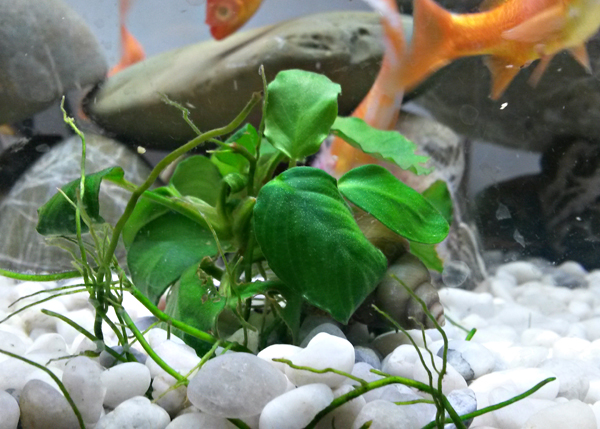
    This plant is usually my go to for low light tanks, aquatic jarrariums, and tall paludariums. It is such a cool plant. Anubias does not need to be planted! It can be wedged into gaps in driftwood or placed in between rocks. Try not to crush the roots and bulb when placing this plants between rocks.

    Image by Colamc on wikimedia

    Anubias barteri, Anubias coffeefolia, and Anubias nana are probably some of the most common species in this genus. Out of the three, Anubias nana remains the smallest and is more commonly used as a foreground plant. Given enough time, these plants will grow in what look like bushes all over the aquarium with their broad leaves. They’re a fantastic plant to have and excellent for beginner plant keepers. For a more in depth guide to keeping anubias happy follow this link.

    Java Fern

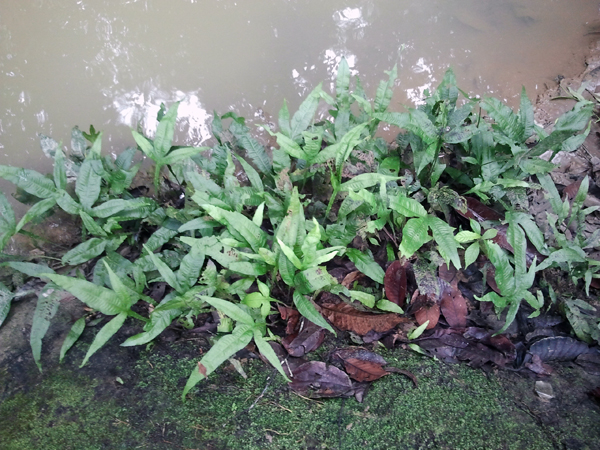
    Java fern is a fantastic low light requiring plant. Its long broad leaves are excellent for the background/midground for low maintenance and low light fish tanks. Java fern care is quite similar to the care of anubias. It does not require to be planted and fairs well being wedged into rocks and driftwood. It can stick out of the water because it is amphibious plant and it will primarily spread through rhizomes. The rhizomes themselves should not be buried because they will recede and rot away over time. It is recommended to keep the rhizomes just above the substrate and just bury the roots.

    Image by Fhurzan on wikimedia

    There are two common types of java fern. The regular java fern and java fern windelov. The normal java fern plant has very broad leaves while windelov has far more wispy and laced leaves. Otherwise they are quite similar plants. Both do well in aquarium temperatures around 60 and 80 degrees Fahrenheit, grow well in pH levels ranging from 5.5 and 8.0, and do well in low to moderate light!

    One final bonus of java fern is that it is one of few plants that can handle being in an aquarium with brutes like South American cichlids. Like with most cichlids its never a guarantee plants will make it but they fare the best in an aquarium with large cichlids.

    Java Moss

    Java moss is remarkable for low light aquariums. It is probably the most hardy moss species that is kept in the aquarium hobby. Java moss carpets decor like rock work and driftwood but it does not normally carpet the substrate in your fish tank. This is excellent to use in aquascapes and grows fairly easily under low light conditions.

    Image by Buchling on wikimedia

    To grow java moss, a string can be used to attach it to a piece of decoration or if it’s possible, it can be wedged into cracks or gaps in decor. It will very quickly attach and begin spreading. It is great to have because some fish will lay eggs in it, it’s a haven for shrimp, and it adds a different kind of life to rocks and other aquarium decor.

    Java moss does well in temperatures ranging between 60 and 80 degrees Fahrenheit and pH levels between 5.5 and 8.0.

    Crypts

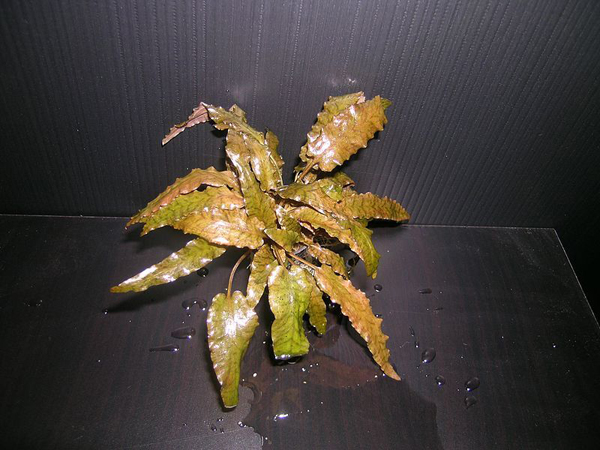
    What would a low light aquarium list be without crypts. Specifically, I like to point out Crpytocoryne wendtii and Cryptocoryne beckettii. Both of these plants do very well in low to moderate light aquariums. Their leaf colors will both depend on the amount of lighting that is provided as well as nutrients available in the water. Stable water parameters are a must for this plant because it is possible to rotting at the roots if water conditions are not stable. Under healthy water conditions, this plant will release runners in the substrate and spread to different parts of the aquarium. Overall, this plant is quite hardy and grows very well in the mid-ground of an aquarium.

    Image by S. Tanaka on wikimedia

    This plant enjoys being in water temperatures ranging between 75 and 80 degrees Fahrenheit, KH levels between 3 and 8, and lastly pH levels around 6.0 and 8.0. This is quite a versatile plant and excellent for low light aquariums as well as for anyone new to aquarium keeping.

    Moss Balls

    Moss balls aka marimo balls are very easy to care for in aquariums. They thoroughly enjoy low to moderate lighting and normally dwell at the bottom of an aquarium. It is not desirable to keep them in very bright areas of the aquarium. Marimo balls grow incredibly slow, it may take a few years before you see any difference in size.

    When introducing into an aquarium, marimo balls should be rinsed in aquarium water before being added. There is a possibility of them floating once placed into the aquarium. They will naturally fall to the bottom of the aquarium eventually but the process could be sped up a little by giving them a squeeze under water.

    Image by bryan on wikimedia

    If shrimp and other invertebrates are in the aquarium, do not be surprised if you see them gathered on the marimo ball from time to time. They enjoy eating any leftover food that may get caught within. Propagating this moss ball is incredibly easy. Simply take it out of the aquarium and cut it in half. To help maintain the shape, wrap cotton thread around the ball.

    Marimo balls enjoy being in aquariums with temperatures ranging from 70 to 80 degrees Fahrenheit, KH levels floating between 3 and 8, and pH levels between 6.8 and 7.5.

    Amazon Sword

    Amazon swords are a popular plant in the aquarium hobby. They grow incredibly large and dominate the aquarium with this size. This plant should be kept in the background of the aquarium. Amazon swords are not as easy to care for compared to java fern, crypts, marimo balls, or anubias but they are still a fantastic plant to keep in an aquarium. Normally seen in taller aquarium this plant does great alone or in groups. I personally would not keep this plant in a 10 gallon aquarium or even aquariums that are not taller than 18 inches.

    To keep them happy and healthy amazon swords should receive iron rich supplements. They do best in water temperatures between 72 and 80 degrees Fahrenheit, KH levels between 3 and 8, and pH levels between 6.5 and 7.5.

    Final Notes

    Low light aquarium plants are a great starting point for new hobbyists looking to dip their toes in live plants. From easiest to hardest to care for (in my opinion) is the marimo ball, java moss, anubias, java fern, crypt, and lastly the amazon sword. Start with the easiest like the low light aquarium moss stated in the list and move on to anubias and so on. Aquarium keeping requires patience and taking your time will save you a lot of headaches in the long run.

  • 5 Wonderful Algae Eaters for Freshwater Aquariums

    5 Wonderful Algae Eaters for Freshwater Aquariums

    Finding the right algae removing crew can be hard, especially for aquariums that are smaller. This guide will focus on a broad spectrum of algae eaters. There will be information on fish, snails, and invertebrates. In my opinion these critters are some of the best at removing algae. Before continuing reading through this guide, check out common causes for algae growth in freshwater aquariums here.

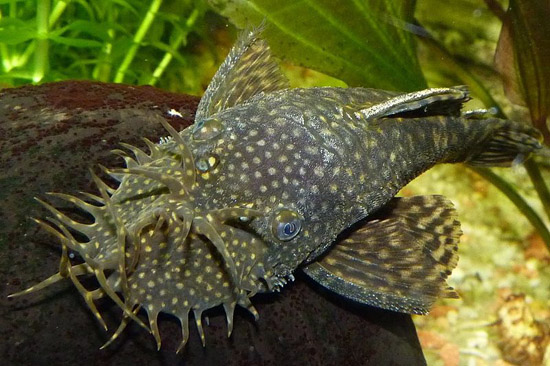
    1. Bristlenose Pleco

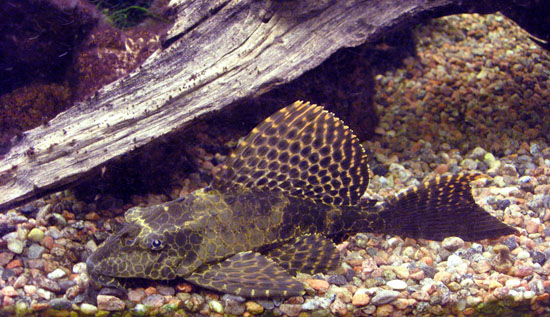
    There are many different plecos that can be purchased for a freshwater aquarium but I feel the bristlenose pleco is one that is an excellent algae eater and it also doesn’t get incredibly large.

    The bristlenose pleco, also known as the bushy nose pleco, is a fantastic algae eater for aquariums that are 30 gallons or larger. They should not get any larger than 5″ in length unlike the common pleco that can reach sizes over a foot in length. Providing places to hide is important for this pleco to give it some privacy. A piece of driftwood is a good choice in decor that will provide cover for this fish.

    This fish is omnivorous and not a picky eater at all. The bristlenose pleco should easily sniff out food that falls onto the substrate and slurp it up quickly. Otherwise, they will most likely be clinging onto decor and plants eating algae that may be growing on them.

    They are quite easy to breed in captivity. Males when grown will have large bristles between its eyes and tip of its mouth. On the other hand, females will have small whiskers near her mouth. When mating the female will dispense her eggs on driftwood or other flat surfaces and the male will guard the eggs. It will take roughly 10 days for the fish to emerge from the eggs. Once the babies begin to swim it is highly recommended to move them into a separate aquarium so they can mature.

    The bushy nose pleco does best in aquarium temperatures ranging from 75 – 79 degrees Farenheit, KH levels between 6 and 10, and pH levels between 6.5 and 7.5. They’re a fantastic fish to have that works hard to keep algae at bay!

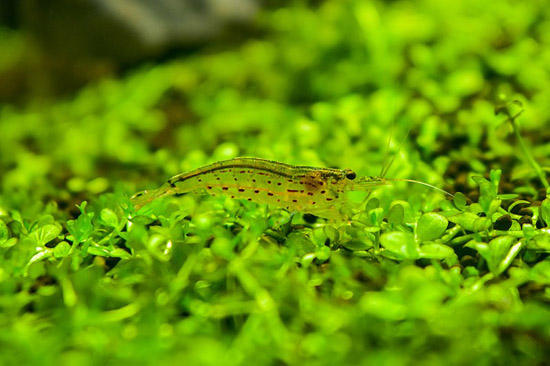
    2. Amano Shrimp

    Amano shrimp, for freshwater shrimp standards, are the tanks of algae eating. They do an excellent job rummaging through different areas of the aquarium eating algae that is growing and also consuming leftover food that fish may not catch during feeding times. They’re not the most colorful of animals but they’re great to look for and observe in the aquarium. They’re gaining more and more popularity in the freshwater hobby due to their size and ability to eat algae in smaller aquariums where plecos may be too large.

    Image by Atulbhats on wikiMedia

    Amanos are beasts! They grow to be about 2″ in size when they’re fully grown. Regardless for their size, they are recommended for aquariums 10 gallons or larger. Like stated above, they’re great for aquariums that are just too small for larger plecos. Providing plenty of hiding spaces is great for Amano Shrimp. and be sure to have a well established aquarium because invertebrates are far more intolerant of unstable water conditions compared to fish.
    This species of shrimp is omnivorous. They will happily nibble on algae, flakes or any other food that comes their way. They’re not picky at all when it comes to eating.

    Amano shrimp are incredibly hard to breed in captivity. It is not common at all for it to happen. It is quite a challenge to bring up young amano shrimp from egg to adulthood so we will not get into that in this article.

    These beautiful shrimp are fantastic for freshwater aquariums and they are also tolerant of aquariums with a little bit of salt in them. They should do perfectly fine in brackish water aquariums. Please only house them with peaceful fish that will not bother or try to eat amano shrimp. These fish are very versatile and do well in water temperatures ranging between 60 and 80 degrees Fahrenheit, KH levels between 3 and 10, as well as pH levels ranging from 6.0 – 7.5. They’re quite hardy for a species of shrimp and live a long life of 2 – 3 years!

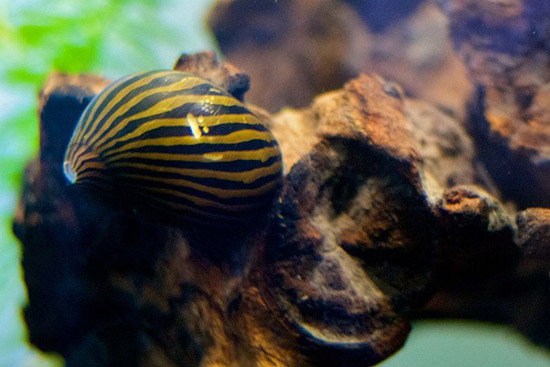
    3. Nerite Snail

    Nerite snails are a remarkable species of snail to add into a freshwater aquarium. For the amount of algae removal a snail can achieve, the nerite snail probably does it the best. They will help remove algae from glass, substrate, plants, and everything in between. They come in very nice tiger striped or dotted patterns so they’re a nice looking snail to add into a fish tank.

    This species of snail will not be seen larger than 1 inch in size. They stay very small and are very easy to care for. An established aquarium is a good idea to have and remember copper is lethal to them and all other invertebrates. Most snails are great for aquariums as small as one gallon or larger. This species of snail like to wander so there is a chance that they will make their way out of the aquarium if the opportunity arises.

    Nerite snails are herbivorous and if on the rare occasion your fish tank does not have any algae in it, providing algae based food to keep your snail fed should be considered. Feeding nerite snails is not a very common occurrence but keep in mind they may need some food if your fish tank is spotless!

    The nice things about nerite snails is that they will not infest your aquarium with millions upon millions of spawns. They only successfully produce offspring in brackish water. They are perfectly fine being kept in freshwater as adults. The young benefit from having higher pH levels and more calcium in the water levels to promote shell growth.

    Nerite snails are pretty hardy for invertebrates. They do great in water temperatures ranging from 65 to 80 degrees, KH levels that float between 12 and 18, and pH levels between 6.5 and 8.3. They will not tolerate high levels of nitrates and as stated above, copper is lethal to them. Overall, they are fantastic for freshwater aquariums, brackish water fish tanks, and planted tanks.

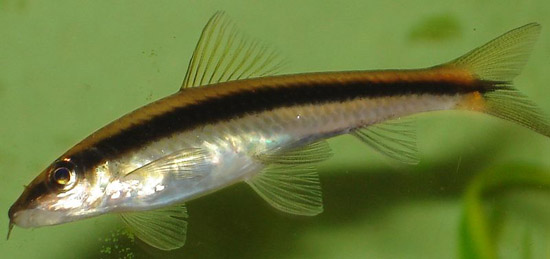
    4. Siamese Algae Eater (Flying Fox)

    The Siamese Algae Eater sometimes known as the flying fox is an excellent algae eater for many different planted tanks. What they lack in vibrant color is definitely made up by its ability to eat large amounts of algae in an aquarium. This fish species is primarily gray/silver with a long black strip that runs the length of its body. The flying fox are recommended to be kept in small groups. They do much better together than alone.

    It is rare to find a flying fox that reaches its full length of 6″. It is more commonly found at a max length of 4.5 inches. Because of their size and desire for algae the siamese algae eater should be kept in aquariums that are 30 gallons or larger. This will give them more space for forage for algae and once grown provide plenty of space for them to explore and swim. Driftwood, rocks and broad leaf plants are recommended to have in the aquarium because this fish will perch on top of them and also graze on the algae growing there.

    Image by Ark on wikiMedia

    This fish is omnivorous so it will take in just about any food offered but it does an excellent job removing algae from aquariums. It should be fed bloodworms, flakes food, and pellet food.

    There is very little to no information on breeding habits of the flying fox.

    This fish is a little more sensitive to higher nitrate levels so a well established and stable fish tank should be available before introducing this fish. They do great in water temperatures ranging from 75 to 79 degrees Fahrenheit, KH levels between 5 and 10, and pH levels between 6.5 and 7.0. They’re an excellent fish to have and are very interesting to observe.

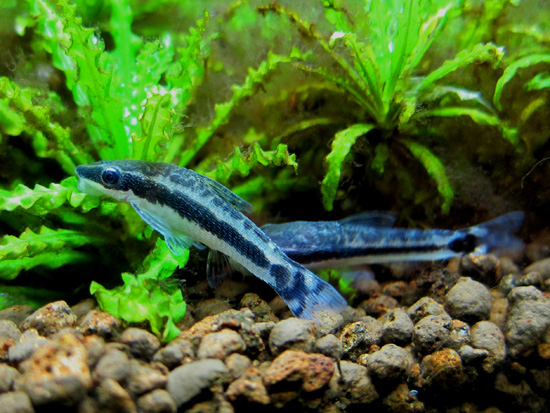
    5. Otocinclus

    Otocinclus is a very small algae eater that is sometimes overlooked when on the hunt for something that can help maintain an aquarium. These little fish are small, but in large numbers are great at helping maintain smaller aquariums. They will cling onto many different surfaces with their black and white bodies and go about their day munching on algae.

    Ottos are incredibly small and they will not normally grow larger than 2 inches in length. They’re an excellent little fish for nano aquariums. They do perfectly well in aquariums 10 gallons or larger. Keeping a little school of 6 or more ottos is highly recommended. Providing rock work and driftwood will create surfaces for algae to grow to give this fish something to graze on. It will also create places for this fish to hide in times of stress.

    Image by Cisamarc on wikiMedia

    It can be easily concluded that this fish is herbivorous. It will primarily feed on the algae that is growing in the aquarium but if none is available it is recommended to throw algae wafers or algae flakes into the fish tank for this fish to nibble on.

    Otocinclus does not normally breed in captivity. A varied and diet full of nutrients will be required to even consider having these fish breed. Rising water temperatures are a common occurrence to influence fish to begin mating. You can consider very slowly raising the water temperature to around 79 degrees Fahrenheit to help motivate this fish to mate. After providing this fish with nutrient rich foods, raising water temperatures, and having perfect water parameters the fish may breed!

    Ottos are very peaceful fish and should not bother any other fish in an aquarium. They will thrive in aquariums with water temperatures ranging from 74 to 79 degrees Fahrenheit, KH levels between 6 and 10, and pH levels between 6.8 and 7.5. They’re a fun fish to observe and great when kept in schools!

    Final Thoughts

    Choosing the best algae eaters for your aquarium could be a challenge and hopefully this guide will give you a little insight on 5 fantastic critters that are great for cleaning up algae in freshwater aquariums. I would even recommend having a mixture of some of these if your aquarium has the space. There are definitely other fish that will destroy algae but I believe these are some of the best!

  • 5 Fantastic Freshwater Fish for 10 Gallon Aquarium

    5 Fantastic Freshwater Fish for 10 Gallon Aquarium

    Setting up a fish tank is a very fun and rewarding process. Making it your own work of art is definitely a long term endeavor. Deciding what fish to introduce into your aquarium is part of the process and probably the most exciting part of it all. This guide will help showcase some of the many freshwater fish that can happily reside in a 10 gallon aquarium. If you haven’t already setup a freshwater aquarium, check out this guide.

    Harlequin Rasbora

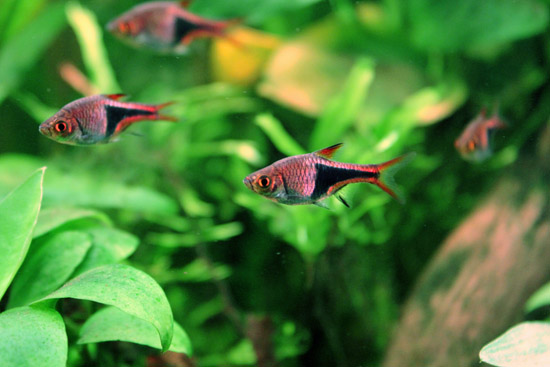
    To begin, I would like to introduce you to the harlequin rasbora, sometimes known as the t-bone rasbora. This rasbora has the iconic black pork chop shape displaying from the middle to the back of its body. Besides that, it has a beautiful copper/red toned body that stands out in an aquarium.

    This fish is small and will be around 2″ in size when it is fully grown. Due to its schooling habits, it is recommended to have around 8 – 10 beautiful rasboras in an aquarium together. They normally do a great job closely schooling together and will fill the middle to top of your aquarium with life!

    Male and females can be distinguished from one another by observing the bottom part of their “pork chop” pattern. The males will have a straight tip at the bottom and females will have a more rounded tip. Females will also be a little bit larger than the males. These fish will successfully breed inside of a well planted aquarium. They require broad leaved plants in order to do so. Plants like the Anubias are excellent option to have in the aquarium. If one or many are available, the rasbora will potentially lay eggs on the underside of the broad leaf.

    This species of fish are omnivorous. Providing a nicely ranged diet of pellet, flake, and frozen meat foods will keep this fish happy. They enjoy temperatures ranging from 72 – 78 degrees Fahrenheit, KH levels around 6 – 10, and pH levels in between 6.0 and 6.5. These fish are excellent choices for heavily planted aquariums.

    Threadfin Rainbowfish

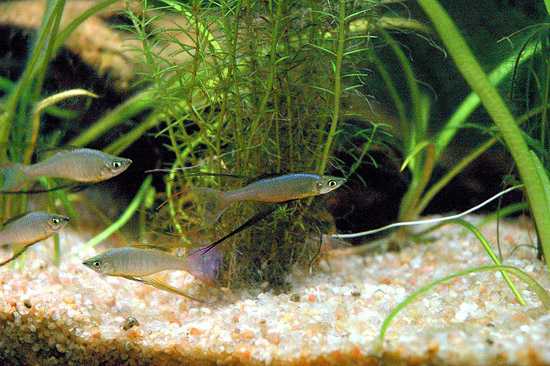
    Threadfin Rainbowfish may not be as common as the harlequin rasbora but regardless it is an interesting fish to add into a freshwater 10 gallon aquarium. Their colors aren’t as vibrant as fish like the neon tetra but they can get a beautiful blue, gray, red, and black coloration on them. Males will have long threadlike appendages that reach out from their anal and dorsal fins. If you think their colors are lacking, the fins and shape surely make up for it.

    This fish species maxes at 2″ in size and are perfect for a planted aquarium 10 gallons or larger. They enjoy being in schools and I would recommend 5 to 8 individuals in a 10 gallon aquarium. 5 in an aquarium that is fairly open without too many decorations and 8 in a heavily planted aquarium.

    Like stated before the males will have the long threadlike appendages protruding out of their dorsal and anal fins. The females will not. This is the easiest way to distinguish the two. Also, males will most likely be far more vibrant in color compared to the females. These fish have the possibility of laying eggs in an aquarium.

    Threadfin rainbows are omnivorous creatures and benefit from having a large range of food. Due to their small mouth sizes it is recommended to feed them smaller pellets and meaty food. Flake food will work as well! This species of fish do well in water temperatures ranging 72 – 78 degrees Fahrenheit, KH levels between 7 and 10 and pH levels between 6.0 – 7.2.

    Male Betta Fish

    Male betta fish are very common fish in the freshwater aquarium hobby. They are often kept in large bowls without filtration due to their ability to acquire their own oxygen. They can and should be kept in larger aquariums than a bowl to keep them even happier. The betta fish has a fantastic personality and interacts well with humans. You can’t take it out and play with it but they know when it’s dinner time and will swim up to the glass to greet you. They have many different colors and a wide variation in fin shapes. I will be broadly providing information about bettas here.

    Most betta species reach a max size of 2.5 inches. There may be a little variation dependent on their fin lengths. They should be the only betta kept in an enclosure. They may be kept with other fish but be sure the others will not nip at the betta’s fins and because the betta could nip at fish with long fins as well. Female bettas can be kept in an aquarium together but they do not have as pronounced fins.

    blue male betta fish

    Males and females should only be housed temporarily if they are breeding. The male will build a bubble nest and the female will lay her eggs in it. Once that occurs, the female should be removed. The male will tend to the eggs until they hatch. Once hatched very small food should be given to the newly hatched fry. Foods such as baby brine shrimp and crushed flakes should be provided.

    Betta fish are carnivorous fish. Their diets should consist mostly of protein rich foods such as bloodworms, brine shrimp, or protein heavy pellet food. Due to their diets the aquarium might see spikes in undesirable water parameters so testing the water should be a common occurrence. The betta fish also thrives in water temperatures between 75 and 80 degrees Fahrenheit, KH between 0 and 25, and pH levels ranging from 6.0 – 8.0.

    Endler’s Livebearers

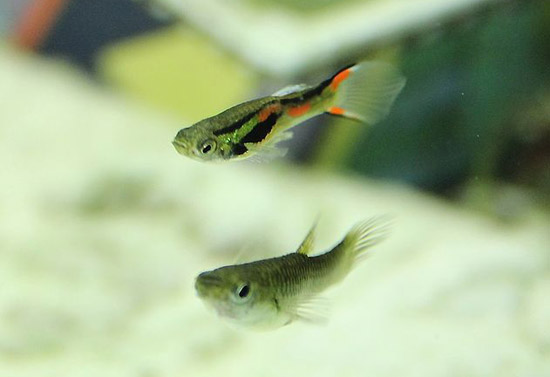
    Endler’s Livebearers continue to gain traction and popularity in the freshwater aquarium keeping hobby. Their vibrant assortment of colors make them a wonderful addition to any aquarium. They are fantastic to add if you are looking for lively fish for the middle to top of the aquarium.

    endler's livebearers in fish tank
    Image by Usien on Wikimedia

    These fish normally start off very small, usually purchased when they are less than an inch in length. They will grow to be roughly 2 inches in sizes when they are fully grown. Keeping around 6 – 8 in a 10 gallon fish tank is suitable with the understanding that this species of fish breeds like no tomorrow and 6 fish can easily turn into 20 then 50 and so on. Proper housing for the new offspring will be required.

    Endler’s livebearers are as their name suggests, live bearers. They do not lay eggs but instead their offspring come out of their womb very well and alive. Treat them like any other platy, guppy, or swordtail when for breeding purposes. They do not require anything special.

    This species of fish is omnivorous and would love a nice variety of foods. Like stated above, pellet, flake, and frozen meat foods will provide all the variety this fish needs to obtain its nutrients. Keep in mind they are usually sold very small so flake food might need to be crushed a little for them to enjoy it. They do best in water temperatures ranging from 75 – 80 degrees, KH levels ranging between 10 and 30, and pH levels with a wide range of 5.5 – 8.0.

    Cardinal Tetra

    Last but not least on this guide is the beautiful cardinal tetra. Do not mistaken this fish with the neon tetra. They look incredibly similar but the cardinal tetra’s red stripe runs from its eyes to tail and it lacks that white area near its stomach. This fish is more for expert fish keepers because they’re a little more finicky than other fish.

    cardinal tetra in planted tank
    Image by Elma on Wikimedia

    When they are full grown, cardinal tetras reach a size of 2 inches. They are perfect for densely planted aquariums of 10 gallons or larger. I would keep a school of 6 to 8 cardinal tetras in a 10 gallon aquarium. They are quite an active little fish and their vibrant colors add to their beauty.

    It is possible to breed cardinal tetras in an aquarium but it is not very common. They require very specific water parameters to successfully breed. Specifically dH levels between 1 and 2 and pH levels as low as 5 and 6.

    Just like many of the other fish in this list, cardinal tetras are omnivores and benefit from a range of food. Starting off with flake food is a good idea until this fish is able to consume larger pellets. Brine shrimp is always recommended as well as bloodworms! This is a fantastic fish with colors that can drop jaws!

    Final Thoughts

    This is just a small list of fish that will do well in 10 gallon aquariums. I wanted to choose fish with vibrant colors or very unique fin shapes and designs. Hopefully this list helps provide information needed to help choose some cool freshwater fish for 10 gallon fish tanks. If you already have the fish, check out information on low light freshwater plants you can add to your fish tank!

  • 5 Great Saltwater Fish for a Nano Reef!

    5 Great Saltwater Fish for a Nano Reef!

    A nano reef is typically considered to be 30 gallons or less. The smaller the aquarium the larger the possibility of swinging water parameters. It is not recommended to add large fish or too many fish in a nano aquarium. Nano reef systems are a challenge but a rewarding experience. This guide will list 5 fish species that will do great in small reef aquariums.

    1. Hector’s Goby

    The Hector’s Goby is a fantastic addition to any reef system. It is a very peaceful fish and it will not bother any fish or invertebrate. It will graze on hair algae that grow in the aquarium and also feast on small worms in the fish tank.

    This goby maxes out at about 3″ in length and it will be perfectly happy living in an aquarium that is a minimum of 10 gallons. They do require a fair amount of live rock with plenty of crevices and hiding spots. They will seamlessly weave in and out of rock looking for food and algae to graze on.

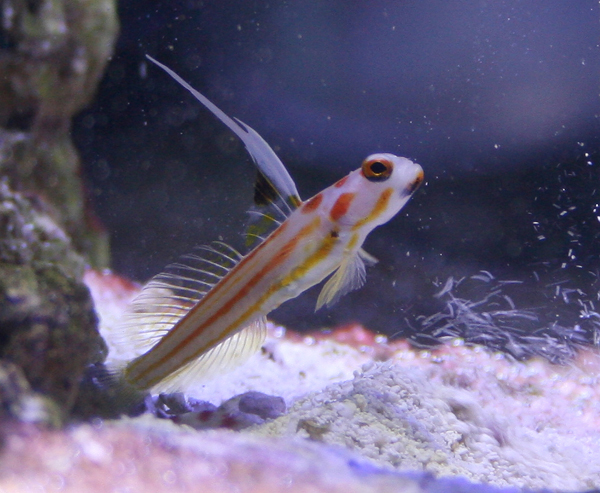
    Image by Rob on Wikimedia

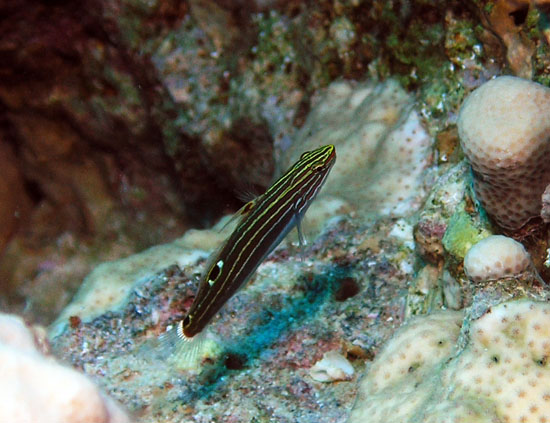
    Their pattern work and coloration are beautiful! They have alternating red/black and yellow stripes running down from head to tail, they have round blotches of black along their dorsal fins and hints of orange around their fins as well.

    They are omnivorous so providing a variation of algae based food and meaty food such as mysis shrimp is important. They will spend much of their time looking for food in rocks and sand. As a final note, Hector’s Gobies are completely reef safe!

    2. Ocellaris Clownfish

    Everyone knows about the clownfish due to the movie Finding Nemo. Since the release of the movie, clownfish were ferociously taken out of the oceans because many parents wanted “Nemo” at home for their kids. Luckily, the reef-keeping community has successfully found ways to breed clownfish and they are tank-bred to help prevent plucking them out of the ocean.

    Ocellaris clowns, like the Hector’s Goby, max out at around 3″ in length. Having a pair of clownfish is great! The female clownfish (dominant) will be a bit larger than the male. Ocellaris clownfish are perfect for nano reefs because they happily live in aquariums of 20 gallons or larger.

    Besides the common orange clownfish, there are many different variations of ocellaris clownfish due to the extensive breeding that has exploded in the hobby. There are now black & white, snowflake, platnium, and many other clownfish that can be picked up from retailers and online breeders. Also, many captive bred clowns will not willingly host in anemones but can be trained to do so. Check out this guide for tips on how to get a clownfish in an anemone.

    Like many marine fish, the clownfish is omnivorous and will happily take any food provided. A rounded diet of veggies and meaty foods is recommended. They will happily take pellet, flakes, and frozen meat foods. These are incredibly hardy fish and excellent for a new marine hobbyist.

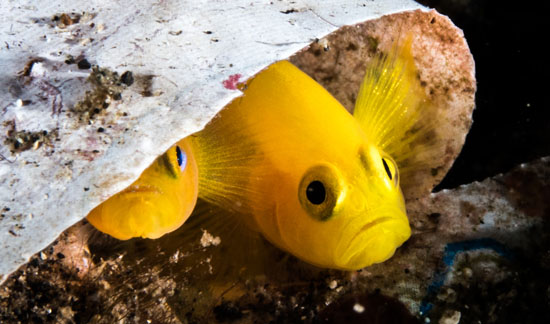
    3. Yellow Clown Goby

    Yellow Clown Gobies are oddly shaped but very enjoyable fish. They always seem to perch themselves in weird positions on rocks, glass, and corals. They’re a very fun and unique fish but great for a nano reef tank. Although they are small, their yellow vibrant bodies makes them pop in any reef system.

    Image by Rickard Zerpe on Wikimedia

    These fish are small, and they stay small. They max out at about 1.5 inches and are content with calling an aquarium that is 10 gallons or larger home. Clown Gobies are reef safe with most polyp corals but be mindful with keeping them SPS corals because there is a possibility of them nipping at them. They should not bother any other fish except other clown gobies in small enclosures.

    Yellow Clown Gobies are carnivorous fish. It is important to provide them with a variation of mysis shrimp, brine shrimp, and other meaty foods. Learn more about this fish by checking out the Yellow Clown Goby – Complete Care Guide.

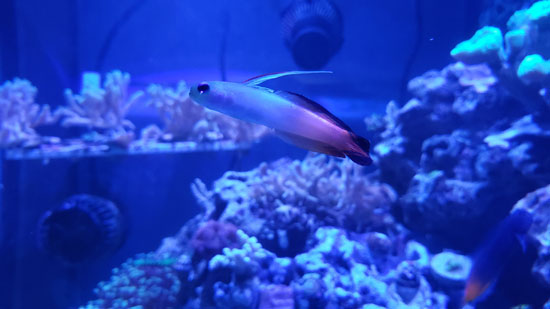
    4. Firefish

    The Firefish is a fantastic fish to add to a reef aquarium. Their vibrant white, red, and purple coloration is gorgeous! They have an enlarged dorsal fin which looks like a sabre which adds to their awesomeness!

    The Firefish will be around 3″ when they are fully grown. They are perfectly content with living in an aquarium that is 20 gallons or larger. They are completely reef-safe and will spend a good portion of the day hovering above the live rock waiting for food. It is recommended to provide them with a nice porous rock because they will dart into the holes when startled. They are known to be jumpers so a lid over the tank is also a good idea to have.

    Firefish are carnivorous. So providing a mixture of different types of meaty food is recommended. They will love brine shrimp (live or frozen) and mysis shrimp. Providing frozen food is much easier for fish but feeding them live brine shrimp is always a fun activity.

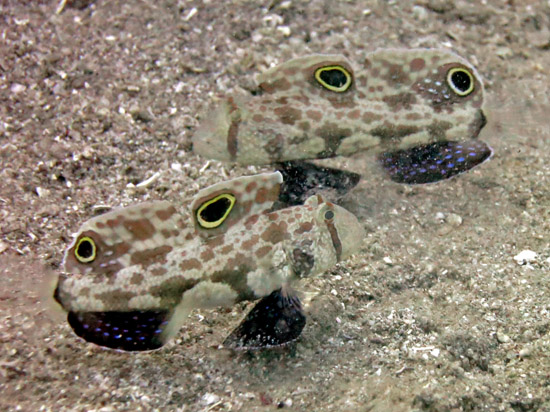
    5. Two Spot Goby

    This isn’t a very common goby that is kept in a reef aquarium but I believe this is a great fish to own. Two Spot Gobies have a very unique coloration and body shape. They are primarily white with blotches of brown, black, and yellow to help camouflage into sand. They have an incredibly large jaw and do a fantastic job sifting through sand.

    These fish get to be about 3″ in length when they are fully grown. They do well in aquariums 10 gallons or larger. It is very important to provide them with a nice deep sand bed because they will burrow into it. They also require lots of sand to sift through.

    Image by Lakshmi Sawitri on Wikimedia

    The Two Spot Goby is carnivorous so like many other fish on this list, it’s important to feed them meaty food. It is also a good idea to supplement your aquarium with live copepods to help give them more options if they are picky eaters. Take a look at the Two Spot Goby – Complete Care Guide for more information on this fish.

    Final Thoughts

    All of these are fantastic for a reef aquarium. Some are more common than others and there are plenty more that will do great that aren’t listed. Keep in mind that these fish should not all be crammed together into a nano aquarium. It is recommended to pick one or two depending on the appropriate aquarium size. Adding too many fish will cause water parameters to swing more often and aggression may be seen due to the lack of space. Hopefully, this guide has provided to insight into great nano fish for small reefs.

  • Freshwater Angelfish – Complete Care Guide

    Freshwater Angelfish – Complete Care Guide

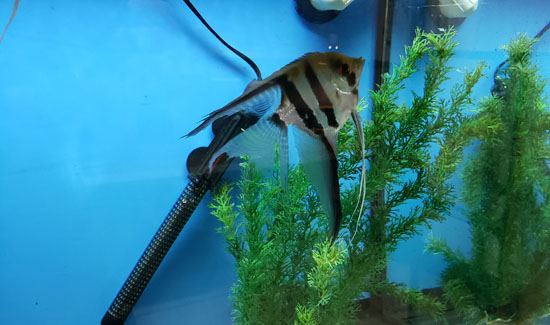
    Freshwater Angelfish, sometimes called tropical angelfish are quite a popular and common fish in the freshwater fishkeeping hobby. They become large and can be the centerpiece of many fish tanks. There is nothing like a mated pair of angelfish swimming side-by-side in a fish tank. They are part of the cichlid family but look a little different with their unique arrow shaped bodies. You can find Freshwater Angelfish for sale at most pet stores and online. This guide will help provide more information on freshwater angelfish and the proper care to keep these fish happy.

    Aquarium Requirements

    There are fish in the saltwater hobby that are also called Angelfish. They have a much different shape from this species and aren’t related. I wanted to point that out for newer fish keepers. Technically speaking, there are both freshwater and saltwater angelfish but these Angelfish live ONLY in freshwater.

    How Big do Angelfish Get?

    Due to its unique body size an Angelfish should be kept in an aquarium no smaller than 30 gallons but a 55-gallon tank is even better for their size. Taller aquariums are preferred because these fish can grow to be roughly 8″ tall and 6″ long. They need plenty of room to turn and maneuver and anything smaller just doesn’t cut it.

    Aquarium Decorations

    Angelfish love having driftwood in their enclosure which helps soften and acidify the water. These fish also love heavily planted aquariums with quite a bit of open space for them to swim. They have long, showy, and delicate fins so it is important to find a balance of open swimming space and decorations.

    Water Parameters

    Freshwater Angelfish are quite hardy and easy to care for. They can handle a nice range of water parameters. The following are ranges that Angelfish are typically kept in:

    • Temperature Range: 75-82° F
    • KH Range: KH 1-5
    • pH Range: pH 5.8-7.0

    These fish do best in waters that are little more acidic. That is partly why they do very well in planted aquariums. Make sure fish kept with angelfish have the same or similar water parameter requirements.

    Veil Angelfish Swimming

    What do Freshwater Angelfish Eat?

    The Angelfish is not a very picky eater but they should be given a variety of foods. They are omnivorous so providing both algae and meaty food will be very beneficial to them. Remember to adjust the food size appropriately depending on the size of the fish. Also, like many other fish, an angelfish will attempt to eat anything that will fit into its mouth. Be mindful of keeping small fish and shrimp with a full-grown angel because they can become a quick snack. Freshwater snails and larger fish should be perfectly fine around angelfish.

    Tank Mates for Angelfish

    Freshwater Angelfish types vary in color, shape, and size. There are Zebra Veil Angelfish, Blue Angelfish, Koi Angelfish, and much more. Each should do just fine with one another, it all depends on your preference in color.

    Angelfish are considered semi-aggressive but are a more peaceful cichlid species. They usually will become aggressive when fighting for territory and mates. As stated above, they have the potential of eating smaller fish and shrimp but do fine with larger fish. Other than that, they don’t usually bother with anything else. They do great with Discus fish, Parrotfish, larger tetras, Denison Barbs, and many other fish.

    When angelfish are small they are commonly kept in larger groups. Once they become larger and mature, they will begin to pair off from one another. It is important to identify a pair and house them together in their aquarium because once they decide to lay their eggs, the pair will bully and fight any other fish to protect the eggs. It is possible to purchase a pair directly from a store, or just have one or two angelfish in an aquarium together but once it is time for them to breed no more than 2 should be housed in a fish tank.

    How to Breed Freshwater Angelfish

    Angelfish are quite commonly bred in the aquarium hobby. They will lay quite a bit of eggs and will defend them with their lives! To breed angels, you first need a pair. Once they are paired up, it is important to provide a flat piece of decor for them to drop their eggs on. The piece can be something like a piece of slate. It should be placed in an area with moderate flow. The eggs require flow to help prevent fungus growth which can ruin the batch. If everything is suitable for the angelfish, the female will drop the eggs and they will adhere to the piece of slate, and the male will follow behind and fertilize the eggs.

    There are many opportunistic fish in the aquarium lurking and waiting. Once they spot eggs they may try and eat them. The angelfish will do their best to protect their brood. After hatching it is important to feed the fry baby brine shrimp until they can eat crushed flake food.

    Final Notes

    Angelfish are wonderful fish that are pretty easy to care for. A pair can be a gorgeous centerpiece for many large aquariums. Their long fins and gentle movement give them a majestic appearance. They are quite easy to breed and for a cichlid are pretty docile. There are many breeders out there with many different variations available such as the Veil Angelfish, Koi Angelfish, Marble Angelfish, and more! Check them out and consider picking up a pair of your favorite!

  • Common Causes of Algae Blooms in Freshwater Aquariums

    Common Causes of Algae Blooms in Freshwater Aquariums

    Freshwater aquariums are usually the first step for anyone entering the fish-keeping hobby. It is quite rewarding setting up an aquarium and watching it thrive. Unfortunately, sometimes things don’t go our way and the fish tank experiences a rise in algae growth. This guide will talk about common reasons why algae overtake your aquarium and some remedies for it. Besides changing out carbon, this guide will help teach algae management without using chemicals.

    High Nutrient Levels

    One of the first things to do when trying to figure out why there algae is taking over your aquarium is to test your water parameters. Assuming this is an established aquarium, we will primarily be testing for phosphates and nitrates. I would recommend using API’s Freshwater Master Test Kit for nitrates and other parameters and API’s Phosphate Test Kit for phosphates.

    High levels of nitrates and phosphates can cause algae to grow out of control and it can become dangerous for fish as well. To remedy high levels of nutrients in your water there are a few things that can be done.

    First, make sure you are not over-feeding your fish. If you see food reaching the substrate, you are most likely overfeeding your fish. I normally feed my fish once a day and rarely twice a day.

    Second, to remove the nutrients out of your aquarium we will be required to do water changes. If your nitrate levels and phosphate levels are very high, I would recommend doing smaller water changes over a longer period of time. This will help prevent your system from going into shock. Instead of doing a 25% water change in one day, do 10% or less every other day until your water parameters stabilize. Doing so will hopefully gradually drop your nitrate and phosphate levels.

    Make sure your filter media is also renewed. It is normally recommended to change out activated carbon once a month or (if applicable) Chemi-Pure every 3 months. All this will help lower your nutrient levels to help prevent algae growth.

    Cut Down on Lighting

    Too much light can also be a big problem in aquariums. I would not recommend more than 8 hours of lighting per day in a freshwater aquarium. If there is an algae problem and your water parameters are not the problem, lighting might be the cause of the algae growth. When setting up your fish tank, it should be far away from windows to prevent sunlight from reaching the aquarium. Too much natural and artificial light will cause algae to flourish!

    Cut your light schedule to 6 hours for a few days to see if that changes anything. The fish won’t be bothered by the change in lighting so don’t worry about that. Keep an eye on any live plants that may be growing in the aquarium. I would recommend testing water parameters before trying this.

    Not Enough Cleanup Crew to Manage

    Another problem freshwater aquariums have is not having enough clean-up crew to combat the naturally growing algae and eventually, it overwhelms the system.

    As long as your water parameters are stable and at a healthy level you can counteract the algae that will eventually grow in your aquarium by adding snails, shrimp, and plecos. For large amounts of algae, plecos are usually the go-to due to their size and eating habits compared to a snail. Unless a freshwater predatory tank is being kept, it is recommended to have all three types of algae grazers. In a predatory setting, plecos are usually kept and will most likely not be eaten.

    Image by Soulkeeper on Wikimedia

    For smaller aquariums, a clown pleco or a handful of Ottocinclus are usually the preferred species, and in larger aquariums Bristlenose Plecos are commonly used. Bear in mind common plecos can get to be about 2 feet in length!

    I normally recommend Mystery Snails or Nerite Snails. Nerite Snails will not be able to successfully reproduce in freshwater so they are the perfect choice if you are afraid of a potential snail infestation.

    For heavy-duty algae grazing Amano Shrimp are a great choice due to their size but many hobbyists add smaller shrimp such as the cherry shrimp due to their wonderful coloring. Many shrimp are required to help combat algae blooms.

    Bare in mind that in order to successfully keep invertebrates such as shrimp and snails, your water parameters should be quite stable. Inverts are very sensitive to fluctuations in water parameters.

    Final Thoughts

    High nutrient levels, overfeeding, too much lighting, and not enough algae eaters are a few very common reasons why algae can take over an aquarium. One could be the root of the problem, or a combination can be causing algae to thrive. Chemicals will only band-aid the problem, it is important to get to the source of the problem and correct it. Only use chemicals to remove algae as a last resort! Hopefully, this guide has helped point you in the right direction to removing algae. Take a look at 8 Great Ways to Help Remove Hair Algae to learn of some tips and tricks on how to get algae from thriving in your aquarium.

  • The Fish With Personality – Bicolor Blenny

    The Fish With Personality – Bicolor Blenny

    Reef aquariums are all very unique. The fish kept in these aquariums all have very interesting personalities and are a blast to observe. Their vibrant colors pop and are adored by many. Bicolor blennies are fantastic fish to keep in a reef aquarium. What they may lack in “vibrant” color they make up for in personality. These fish are common in the marine hobby and are sometimes overlooked as a new aquatic companion. Their very simple dark blue and orange coloring gives them an interesting appearance. One fantastic trait that they have is they will poke their heads out of rocks or perch on rocks just scoping out the surrounding area.

    Bicolor Blenny Keeping Requirements

    Luckily for us, these fish are not very hard to keep. I would not keep a bicolor blenny in an aquarium smaller than 30 gallons. Also, having a lot of live rock and crevices where this fish can hide and perch is a must! Their perching and environment scanning is a large portion of their personality! They max out at about 4″ in length so having holes and crevices of varying sizes is beneficial for them.

    Bicolor blennies are primarily herbivorous so should be fed greens such as algae pellets, flakes, and algae sheets. They should also be given frozen fish food like mysis shrimp and/or brine shrimp from time to time. They are not picky eaters so they will easily accept a variety of foods. Although this is not very common, if underfed, these fish can sometimes pick on corals such as fleshy clams and stony corals. Be mindful of that when keeping this fish. They will help assist in controlling hair algae that may grow on live rock.

    These fantastic fish are normally quite peaceful and keep to themselves. At the time of this writing, the one I have at home does not think my hand is friendly so will nip and attack from time to time, otherwise, it does not bother anything else. On occasion, they may go into battle with other blennies and gobies. If the aquarium is large enough each fish will find its territory and things should settle. I would not normally keep more than one type of blenny of similar size, shape, and color to help deter any aggression.

    Final Thoughts

    Bicolor blennies are excellent fish for any reef system. As long as they are fed well, they will do remarkably in your aquarium. They’re not the best algae eaters, for that look into getting a lawnmower blenny, but they will help cut down what’s in the fish tank already. They are hardy fish with great personalities!

  • Putting Together Your First Freshwater Jarrarium!

    Putting Together Your First Freshwater Jarrarium!

    Putting together a jarrarium, as simple as it may seem, can be intimidating at first. Luckily, once all the material is collected it becomes really simple. It seems to be a growing hobby and it is quite a lot of fun to put together. This is a step-by-step jarrarium guide that will hopefully give you a good idea of how to put together an eye-catching jar.

    Due to their small footprint, a jarrarium will begin to look quite cluttered when adding equipment. A preset heater is highly recommended to help keep a stable water temperature, but it is not required if your residence is consistently at a set temperature. Adding filtration is not too common. Many jarrariums rely on water changes to maintain good water quality.

    Step 1: Finding a Container

    We of course need to begin with acquiring a jar for the new jarrarium. Glass containers are most commonly used. I have seen old glass bottles, vases, ice buckets, and so many more things used as a jarrarium. I do my best to have my jar be at least 1 gallon but smaller or larger is always a possibility.

    The most important thing is to make sure that the container is clean! DO NOT use soap when cleaning. At most use vinegar and then thoroughly rinse the container. Once the container is ready we can move on to the next step.

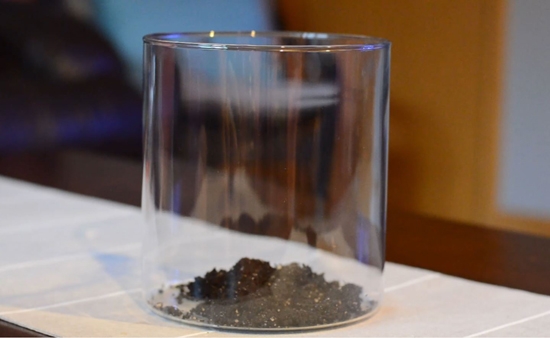
    Step 2: Adding Soil

    Once we have the glass ready it is time to add some soil! I would recommend adding organic soil with compost into your jar. Avoid soils with fertilizer because it may add undesirable nutrients to your jarrarium. Also, certain soils with fertilizers may not be good for the inhabitants of your new jar. While adding the soil be sure to compact it down in an attempt to remove any air bubbles. About an inch of soil should be present once it is compacted.

    Once the jar is up and running it is highly recommended not to disturb the soil portion of your setup. In a few steps we will be adding a “seal” to prevent the soil from getting out but for now, let’s move onto adding the hardscape.

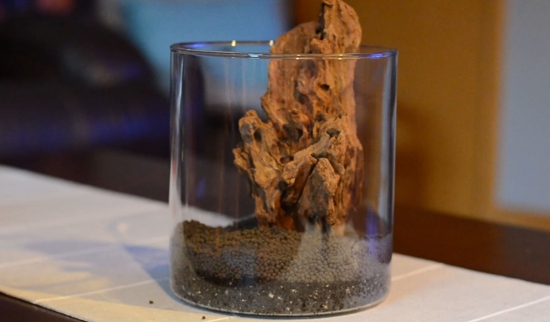
    Step 3: Adding the Hardscape

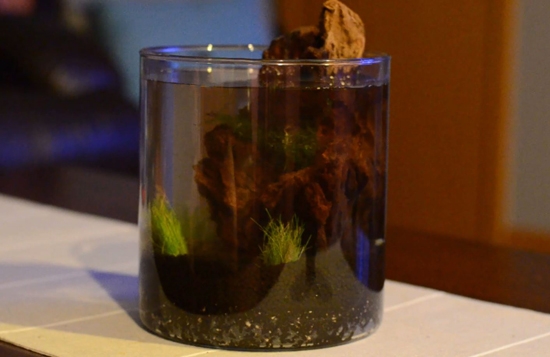
    Many different types of hardscapes can be used for a jarrarium. I used a piece of driftwood when I was putting together this one. Be mindful that it is preferred to boil or soak your driftwood before adding it into an aquarium or jarrarium otherwise, it runs the risk of releasing tannins into the enclosure. The tannin is not dangerous but it causes the water to look yellow or brown for a long period. Large pieces of driftwood can be used or spindly spider wood can be used.

    Rocks are also commonly used for an enclosure. Be mindful, because rocks that are made of limestone will raise your pH and water hardness levels, which may be undesirable when keeping live plants. Common rocks that are used are river rocks or lava rocks. Check out local fish stores for rock options.

    Lastly, a jarrarium can have any aquarium decor that will fit into it for decoration. A tiny pirate ship, skulls, pillars, etc. are fair game but make sure that it will fit or at least not crowd the whole enclosure. With any of the decorations, make sure that it is firmly touching the bottom of the jar for stability.

    Step 4: Adding the Seal

    Now is the time to add substrate to seal the soil. I recommend adding 1″ of a substrate on top of the soil. In this jar, I used Fluval Stratum, but other substrates can be added such as the Eco-Complete planted aquarium substrate!

    The substrate will seal the soil in place to help prevent it from floating up and leaching nutrients but it will also allow plant roots to reach down there and use what nutrients are in the soil. We will have to be careful when adding water to not disturb the soil and substrate!

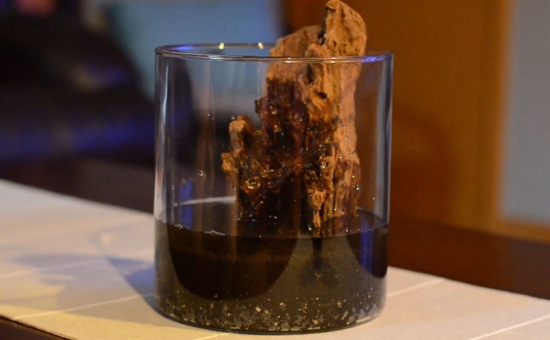
    Step 5: Adding a Portion of Water

    Steps 5 and 6 can honestly be interchanged. I chose to add roughly a third of water into the jarrarium before adding plants. I did this to see whether my substrate sealed the soil correctly and I also wanted to have some water in the jar before adding plants. As stated above, be sure not to allow your substrate to be disturbed! You do not want the soil to get kicked up.

    Allow the water to run down your decoration or create a strainer to let the water trickle down. A cheap way to make a strainer is to poke holes in the bottom of a plastic bottle and pour the water into there. The water will probably get a little murky. After a few days, most of the murkiness should settle.

    Step 6: Planting

    Adding plants is probably my favorite part of putting together a jarrarium. It brings the enclosure to life! You can always experiment with many different plants but to start I would recommend adding a low light Anubias, some riccia for the foreground, and perhaps some java moss. This is a great way to dip your toes into keeping live plants in an aquarium-type setting.

    In this enclosure, I have dwarf hair grass and moss but I am only experimenting to see how well they do. If they do not grow well I may swap out the dwarf hair grass with an easier-to-keep plant.

    Step 7: Filling to the Top

    Now it is time to finally fill this jarrarium to the top! Use your strainer or piece of decoration and slowly and gently fill it with water. Once the water has reached your desired height, you are done with setting up your new jarrarium!

    The jar may be murky or discolored. Give this a few days to pass. The substrate and the tiny soil particles will settle and the coloration should clear up! Throw in a few pieces of fish food to begin the nitrogen cycle and begin considering what livestock to add to the enclosure. Also, consider adding an artificial light source and avoid having your jar too close to a window. A light fixture with a CFL bulb will suffice. There isn’t a need to go out and spend hundreds of dollars on a light fixture. Being so small with the potential of having swinging water parameters we will be limited to what can be added to the jar. I would only recommend small shrimp and snails for anything smaller than 5 gallons. At 5 gallons a betta fish could be added with a heater.

    Final Notes

    There are a few things I would highly recommend purchasing when setting up a jarrarium or any aquarium for that matter. An API Freshwater Master Test Kit can be used to keep track of ammonia levels, nitrates, and so on. This is important for really small enclosures such as this. It is also important to have while your jarrarium is going through the nitrogen cycle which takes roughly 6 weeks. During this time we will allow the food we threw in to decompose and we will not add any livestock. Only top off the water as it evaporates and do not replace any water during the cycle. The nitrogen cycle is completed when your test kits read 0 ammonia, 0 nitrites, and a hint of nitrates (10 ppm).

    A water conditioner, like the API Tap Water Conditioner, is recommended if using tap water to remove unwanted chlorine from your water. This will help make the water stable for your little critters. Other than that, just a few things like shrimp food, nets, and buckets should be kept. Lastly, enjoy experimenting with your new jarrarium! Hopefully, this guide gave a good idea of how to put one together!

    Check out this video of me putting together this jarrarium:

  • The Amazing Electric Blue Crayfish

    The Amazing Electric Blue Crayfish

    The Electric Blue Crayfish, sometimes known as the Florida Crayfish has popped into popularity in the freshwater aquarium keeping hobby. Their remarkable vibrant blue color sticks out like a sore thumb in any aquarium. They’re quite easy to care for as long as certain conditions are met. This guide will go into more detail on proper crayfish care.

    Water Parameter Requirements

    Like many invertebrates, these crayfish need good water conditions. Your water should not have any ammonia and nitrites. It is almost impossible to have a reading of 0 nitrates due to decomposing food and fish waste so having a nitrate reading of 10 or less shouldn’t be a problem. The goal is to keep very stable water conditions for your wonderful crayfish!

    A few other water parameters that should be mentioned are pH, water temperature, and water hardness. They are quite versatile animals and they do well in a wide range of water conditions. They will do just fine in pH levels ranging from 6.5 – 7.5. They shouldn’t have a problem with water temperatures ranging from 65 – 75 degrees Fahrenheit but catching the temperature in the middle is ideal. Lastly, a water hardness level ranging from 3 to 10 dkh is just fine for these large invertebrates. An API Freshwater Master Test Kit and an API GH & KH Test Kit are great to have on hand for any aquarium.

    Crayfish Care

    An electric blue crayfish is pretty easy to care for. I wouldn’t recommend keeping them in anything smaller than a 30-gallon aquarium because they will be 4″ – 6″ long when they are fully grown! They have a life span of 5 to 6 years as long as they are living under stable water conditions. Be mindful that these invertebrates will shed their exoskeleton as they grow out of it!

    Electric Blue Crayfish are not picky eaters. They will eat just about anything that comes their way whether it’s flake food, pellets, or anything else. I would recommend dropping a few algae wafers to keep them busy and fed. Be cautious as to what fish to add to the aquarium because a slow fish or fish that lingers at the bottom of the aquarium will become a quick meal for the crayfish.

    I would not keep them with live plants. I have heard quite a bit of horror stories of these invertebrates taking plants, uprooting them, and munching on the leaves. I would recommend keeping them with plastic plants and decorations with caves varying in size. In their natural habitat they burrow so imitating a “burrow” is ideal for this creature. Otherwise, they do not require much else.

    Animals that can be kept with Crayfish

    This is a gray area because a lot of things can become a meal for the crayfish but there are fish that do much better at staying alive in the same enclosure than others. I would not keep fish that dwell at the bottom of the aquarium or that are slow. For example, keep these guys away from slow-moving Goldfish and bottom-dwelling Cory Catfish.

    Fast-moving fish that spend most of their time in the center of the aquarium or at the top are ideal for a crayfish enclosure. Danios are great because they move incredibly fast. Certain rainbowfish are incredibly fast and hang out at the center of the aquarium. You cannot go wrong with hatchet fish because they stick to the top of the fish tank. Be mindful of the fish you add with a crayfish! Snails should be okay to have with crayfish and are useful for keeping algae away from your aquarium.

    Final Thoughts

    Electric Blue Crayfish are a fantastic animal to keep. Watching them move their legs, collect food, and dart away backward from time to time is a fun experience. They have a good personality and are easy to care for! If you’re thinking of setting up a new 30-gallon (or larger) aquarium, check these out!

  • 4 Unique Saltwater Animals to Consider For a 30 gallon aquarium

    4 Unique Saltwater Animals to Consider For a 30 gallon aquarium

    Filling a 30-gallon saltwater aquarium with animals can be a stressful task. There are just so many options to choose from. This guide will go over a few unique fish and crustaceans that can be kept in a saltwater aquarium. There are many others out there but these are a few that really stand out to me that aren’t incredibly hard to keep.

    1. Yellow Assessor

    The Yellow Assessor, otherwise known as the Golden Assessor Basslet, is not a very common fish in a reef aquarium but it is fantastic! They can get a little territorial like other basslets but overall are quite a peaceful fish that will not bother invertebrates. It is perfect for reef aquariums! Provide quite a bit of hiding spots and rockwork to dull the aggression towards other fish. This fish is carnivorous so providing meaty food such as mysis shrimp or brine shrimp is a must! It will max out around 3″ in size and is an excellent addition for aquariums that are 30 gallons or larger. They have a gorgeous yellow body with a touch of red on its fins. A unique feature of this fish is that at times it will swim along rocks sideways or upside down. It usually gives new fish owners a scare but it is perfectly normal!

    2. Geometric Pygmy Perchlet

    The Geometric Pygmy Perchlet is a grumpy-looking fish with red and white coloration on its body. It has a much higher dorsal fin than many other fish. It can be a little territorial to other tank mates but it normally minds its own business. This fish is carnivorous so providing meaty food is very important!

    Pygmy Hawkfish

    It will max out at 2 inches in size and will do very well in a 30-gallon reef aquarium. One unique attribute of this fish is that it will actually perch on rockwork and sit there very still waiting for food.

    3. Watchman Goby + Pistol Shrimp

    Now a watchman goby is not very unique but there is a great possibility that if a pistol shrimp (otherwise known as a snapping shrimp) is also introduced into the aquarium, the two will pair up, share a burrow, and live life together. The goby will keep a watch out and protect the shrimp and they will at times share food. It is really interesting to observe these two working together and protecting their burrow. The pistol shrimp is also able to use its claw to create a “snapping” sound that can be heard outside of the aquarium. This sound is used to scare off predators and the pistol shrimp uses the claw as a weapon to catch prey.

    Image by Haplochromis on Wikimedia

    Both of these creatures are great for aquariums because the watchman goby will help keep your sand bed clean sifting for plankton while the shrimp will collect uneaten food that falls to the bottom of the aquarium. For the most part, the snapping shrimp is harmless except with small shrimp. The watchman goby will max out at a size of 4″ and this duo is a perfect combination for a reef aquarium. Check out the Watchman Goby – Complete Care Guide to learn more about this fish.

    4. Mantis Shrimp

    The mantis shrimp should be kept alone in a species tank. They are highly intelligent and very aggressive. Due to their aggression, only one mantis shrimp should be kept in an aquarium. Their very colorful bodies are truly fascinating and their hunting tactic is even more so. They primarily use their club-like appendage to hunt and can attack crustaceans, fish, and other unsuspecting animals with their powerful strike. They have enough power to crush snail and crab shells. This is why they should be kept alone in an aquarium. Crustaceans are recommended to throw in from time to time as a quick snack for the mantis shrimp. Otherwise, the mantis shrimp should be fed live feeder fish, frozen scallops, shrimp, and other meaty food.

    Image by prilfish on Wikimedia

    A mantis shrimp can use its claws which are as powerful as a .22 caliber bullet to break the glass of its enclosure. I would highly recommend using acrylic instead of glass for the mantis shrimp’s enclosure. Other than that, it is quite easy to set up their aquarium, and are fairly easy to care for.

    Final Thoughts

    Hopefully, this list gives a good idea for hobbyists who are looking for something different in their aquarium or are looking for a very niche animal to keep. Marine animals are very unique and have great personalities so keeping them is always a great time! Some require precaution before keeping but after that saltwater systems are quite enjoyable.

  • 3 Easy to Care For Aquatic Plants for Freshwater Fish Tanks

    3 Easy to Care For Aquatic Plants for Freshwater Fish Tanks

    From Plastic To Live Plants

    Having a thriving freshwater-planted aquarium is what many hobbyists strive to achieve. It is an incredible learning curve from owning a fish tank with fake plants and decor to a lush underwater garden filled with live plants. Many different measures must be considered when adding live plants into an aquarium. Primarily lighting requirements and a plant’s supplementary needs. Before really diving into all the different aquatic plants that are available check out the 3 plants that I believe are excellent for beginner plant growers. If you’re a pro at keeping plants and want to test your skills, check out 4 Beautiful Expert-Level Plants.

    1. Anubias

    There are many different varieties of anubias out on the market ready to be scooped up by aquarium keepers. Most, if not all, are incredibly hardy and do well in mid to low-light fish tanks. The anubias usually does quite well without any special fertilization or CO2 systems. They don’t even need to be put into the substrate.

    Image by Colamc on wikimedia

    The anubias can easily be put into driftwood or wedged in between rocks. They’re excellent starter plants for beginner-planted tank keepers. The plant has very broad leaves and helps create a unique structure in an aquarium setting. Check out this guide on anubias care.

    2. Java Fern

    Java fern is an excellent starter plant for aquarium keepers. They are a great mid-ground plant that will do perfectly well living in moderate to low lighting, just like the anubias. Java fern is considered an “amphibious” plant because it can live partially or fully submerged. This plant spreads mainly through rhizomes and can happily take over parts of your aquarium if not managed properly.

    Image by Fhurzan on wikimedia

    Finding plants that do well with South American cichild’s lively personalities is sometimes hard but java fern should do alright with those gloriously tough fish. It can also be placed on driftwood or in between rocks although it is not as commonly done as with the anubias.

    3. Crypts

    Cryptocoryne otherwise known as crypts are also a fantastic and easy-to-grow plant for a beginner dipping their toes in planted fish tanks. Cryptocoryne Wendtii is more or less the one I am specifically talking about. This plant grows very well in low to medium lighting and it spreads wonderfully through rhizomes.

    Image by S. Tanaka on wikimedia

    I had one that spread rhizome from one side of the aquarium to the other. Its leaf coloration will range from green to red to brown which is dependent on how much light it receives and amount of nutrients in the water. It is a plant with a lot of variability and will add quite a bit of personality into your aquarium.

    Final Thoughts

    These 3 species of plants can do very well with as little as good lighting, a substrate, like Eco Complete Planted Substrate, and fish waste! If they are in your aquarium and they seem to not be doing well test your water with an API Freshwater Master Test Kit to make sure your water parameters fall within your plant’s range.

    Depending on the amount of fish in your aquarium, there may not be enough natural fertilizer (fish poop) to keep your plants happy so consider providing some liquid fertilizer such as Seachem Flourish which is an all-around supplement for plants, and Seachem Flourish Excel which is a CO2 supplement. There are many other fertilizers out there but this is a good start for supplementation. Read the instructions carefully because adding too much Flourish will cause algae blooms and too much Flourish Excel can cause harm to your fish because it is practically CO2 in a bottle!

    Image by úlfhams_víkingur on wikimedia

  • Setting Up a GloFish Specific Aquarium

    Setting Up a GloFish Specific Aquarium

    Setting up an aquarium can be as simple or as complicated as you would like to make it. This will be an in-depth guide on how to set up a fish tank specifically for Glofish Tetras and/or Glofish Danios. This guide is primarily for beginner aquarists who are dipping their toes into the hobby or for parents who need guidance on setting up an aquarium for their children. For some quick information on GloFish check out this guide!

    We will be using a 20-gallon aquarium as a point of reference for this setup guide. A fish tank this large will allow you to keep a few more fish and a larger water volume will help keep water parameters stable. Under normal circumstances, an inch of full-grown fish per gallon is the recommended ratio for keeping fish in an aquarium. GloFish Tetras and GloFish Danios max out at 2.5 inches. This will allow you to keep either 8 tetras or danios. This is great because both are schooling fish and it’s recommended to keep at least 6 to consider it a school.

    Equipment Required

    No matter what type of aquarium you set up, you’ll likely need at least one piece of equipment to keep it running. Once you become a pro, you are welcome to change things up and tweak the equipment to your liking. However, if you’re new to fish tank keeping, I recommend following along to learn about the equipment I recommend for your fish tank.

    Aquarium Heaters

    We will need a heater. The 75-watt Eheim fully submersible heater or the Fluval M100 Submersible Heater are great choices. These heaters are fully submersible so you can easily hide them behind the decor. Also, they can be calibrated to the desired temperature using the dial at the top. As with any piece of equipment, it can come faulty or become faulty over time. I highly recommend purchasing something like the Penn-Plax Therma Temp Floating Thermometer to keep an eye on the temperature in case your heater decides to fault out. If you need more heater suggestions, take a look at some of the Best Heaters for Freshwater & Saltwater Fish Tanks!

    Filtration System

    A good filter is always recommended. My preferred filter for a setup like this is the Aquaclear 30 Power Filter. I like this one because it has three different compartments where filter media can be added. It comes included with a sponge, carbon, and biomax. First, the sponge catches debris. The sponge will require replacement eventually but rinsing it in aquarium water during water changes will keep it going for a while.

    Second, the carbon absorbs nutrients and will need to be changed once a month. Lastly, the biomax creates a bacteria haven which is important to aid in keeping a stable aquarium. These can be swapped out with other filter media but they are also perfectly fine to use for your Glofish aquarium. Unlike other filters, this one maximizes the space to assist in keeping your water clean!

    Aquarium Lighting

    Blue lights are what will make your Glofish pop in color. We will need a light that can be set to just blue lights to make your fish glow! Fancy lights can get expensive. Luckily there are budget lights that should do the trick for this kind of setup. The Hygger 18w Aquarium LED Light will provide you with both normal lights (to help live plants grow) and a setting to let only the blue lights shine.

    If you want to go all out and splurge on a more elaborate light the Current USA Satellite Plus Pro LED Fixture is a great choice. It comes with a controller which allows you to program the lights and also use preset settings to create different effects like cloud cover and storms. Purchasing this light will also give you the ability to grow more difficult plants in your aquarium if you ever decide to go that route.

    Optional Equipment

    Aquarium Air Pump

    An air pump is not a requirement but it adds a cool effect to the aquarium. Connecting it to compatible decorations or creating an enormous bubble wall creates a more unique aquarium experience.

    Auto Feeders

    Auto feeders are not usually something I recommend but they are also an option for anyone who travels and isn’t always home to feed the fish. I don’t normally recommend them because they will at times overfeed or dump most of the food at once which can create terrible spikes in phosphates and nitrates in your aquarium which can be terrible for your fish.

    Decorations for GloFish Aquarium

    The next thing on the list for setting up a GloFish tank is the decorations. My recommendation for a GloFish aquarium is dark gravel with little hints of coloring. Either completely black gravel or one with a little bit of color. If you plan on keeping plants, a deeper gravel bed will be needed, but otherwise, an inch-deep gravel bed should do just fine. For a 20-gallon fish tank, you’ll probably need anywhere between 10 and 20 lbs. of gravel.

    Image by Jim Zamichieli on wikimedia

    Since we are putting an aquarium together specifically for GloFish having fake plants that will glow under blue lights is recommended. These plants will give the aquarium an “out of this world” feeling. Loading the aquarium with quite a few fake plants is great!

    Adding some hardscape into your aquarium is important. Adding just plants won’t give structure to your fish tank. It is important to have something solid to create a nice structure and shape. Things like rocks, driftwood, sunken ships, and others are fantastic ways to bring your fish tank to life.

    Other Must Have Items

    There are a handful of items that I would recommend having ready to go while setting up your aquarium.

    Test Kits

    The API Ammonia Test Kit and API Freshwater Master Test Kit are important because your new aquarium will be going through the nitrogen cycle. The cycle goes through and once completed will provide the bacteria required to keep your fish safe. The cycle begins with a spike of ammonia. Then that converts to nitrites and lastly, the nitrites get converted to nitrates. You’ll likely know the Nitrogen Cycle is completed when you test for 0 Ammonia and Nitrites and you’ll likely see a hint of Nitrates. The nitrogen cycle normally lasts 6 weeks but the process can be sped up to about two weeks by using a bacteria starter, or media of some sort from an established aquarium.

    Aquarium Water Conditioner

    A water conditioner, like API’s Tap Water Conditioner, is useful to remove chlorine from the water before adding it to the aquarium. Large amounts of chlorine are bad for your aquarium’s inhabitants. API’s water conditioner is fairly straightforward. You will only need to add water conditioner to the water being added. If you change out 5 gallons of water, you only need to add water conditioner for 5 gallons worth of water. You do not need to add water conditioner for the full 20 gallons of aquarium water.

    Gravel Vacuum

    A gravel vacuum, like the Laifoo Aquarium Siphon, will be a must-have when water changes are conducted. The gravel vacuum is probably one of the easiest ways to remove water and clean your gravel. This one specifically is nice because it has a siphon ball which will help create a siphon. This will help you avoid getting a mouthful of water if you decide to start a siphon manually.

    Net, Food, Glass Cleaner

    A net and food are pretty self-explanatory. The net is to make adding the fish into the aquarium easier and the food of course is to feed the fish. Lastly, the glass cleaner will be very useful for cleaning the glass! Algae will form on the glass over time so having an aquarium-safe sponge is beneficial. I sometimes use an old gift card to clean my glass, or I treat myself by using a Melamine Sponge to clean hard-to-reach spots in the fish tank.

    Setup Process

    To begin, place your aquarium in its desired location. Gently begin adding gravel into the aquarium. Be sure not to drop the gravel from great heights because the glass could shatter.

    Since the fish tank is empty, it’s okay to add water conditioner before or after the water is put into the fish tank. While filling the aquarium to about 30% of the water capacity begin brainstorming where to put your aquarium decorations and heater. Once 30% water capacity is reached, begin placing your decorations, and be sure to wedge your hardscape decor a little bit so it is firmly in its place.

    After your decorations are in place fill your aquarium with water to about 90% capacity and place your power filter in the center back of the fish tank. Having it in the center will provide the best performance and circulation. Also, now would be the time to add the heater. Turn the dial to the desired temperature (76 – 78 degrees Fahrenheit) place it and angle it to your preference but be sure it is submerged underwater. Test out the filter and make sure it runs correctly. Once the filter begins to work continue filling the water until the fish tank is filled. Then turn on the heater and set up the light fixture.

    I normally recommend allowing the aquarium to run for at least 24 hours. I do this to make sure all of the equipment is running properly and also just to make sure there are no leaks in the aquarium. I would add API Quick Start to your aquarium. This contains nitrifying bacteria that will be necessary for your new aquarium. It will hopefully speed up the nitrogen cycle and will make your aquarium safer for new arrivals.

    Final Thoughts

    API Quick Start should help you get through your Nitrogen Cycle quickly. I would recommend looking into the Nitrogen Cycle before beginning any sort of aquarium setup. You are working with live animals, so it is important to conduct the proper research before deciding whether to keep them in your home. Unfortunately, many people forget that.

    Lastly, look into adding some snails and/or shrimp to add a clean-up crew after your Nitrogen Cycle has completed. They’re great at eating algae and uneaten food! Otherwise, I hope this guide helps with setting up a brand-new GloFish aquarium!

    Image by Robert Kamalov on wikimedia

  • The Easy to Care for Anubias

    The Easy to Care for Anubias

    Anubias is a fairly easy-to-keep plant that can be found in many different freshwater aquariums. This is an excellent starter plant for most hobbyists dipping their toes into live-planted tanks. Personally keeping anubias in my aquarium has helped me realize how easy it is to keep. One of the most common of the anubias species is Anubias barteri. This guide is meant to cover anubias plant care in your freshwater fish tanks.

    Anubias Keeping Requirements

    As stated previously, this plant does not require much of anything to stay alive. Although they prefer moderate lighting they still do well in both low-light and high-light situations. They may grow incredibly slowly in low-light aquariums but shouldn’t perish. They will also grow quicker in brighter light fish tanks but they may be plagued with algae growth on their leaves. They should do fine with a light that ranges from 1 – 3 watts per gallon.

    These plants are excellent for your typical freshwater community tank because the water parameter anubias needs line up roughly with the aquarium requirements. They require a temperature ranging from 72° – 82° F, KH levels between 3 and 7, and pH levels between 6.5 and 7.5. It is quite a versatile plant that is accepting of a broad water parameter spectrum.

    Image by Colamc on wikimedia

    Fertilizer and CO2 systems are recommended for live plants but they are not a requirement for this one. Proper gravel such as Eco-Complete by CaribSea and fish waste should provide the supplements this plant needs. As a bonus aquarium inhabitants such as fish and invertebrates will provide much of the CO2 for this plant. Good gravel and decent lighting go a long way for anubias.

    Anubias Plant Placement

    Anubias is one species of aquatic plant that does excellent growing outside of substrate too. Many aquarists will wedge their anubias in between driftwood and/or rocks. The plant will snag most nutrients straight out of the water column. Personally, this is my preferred method of keeping this plant. It makes propagating easier and I feel this allows the rhizome and roots to breathe a little bit better. Be sure not to crush the roots under the rocks. A simple wedging should suffice. Many hobbyists use a rubber band to keep the plant attached to driftwood and then remove the band once it is attached.

    Propagating Anubias

    Propagation is quite easy as well! The easiest way to propagate is to verify the plant has at least 8 or more leaves. Using aquarium scissors from an Aquascaping Tool Kit, you can cut the rhizome in a way where half the leaves are on one cut rhizome and the rest are on the other. Then decide where to put the newly propagated anubias and the task is complete! It shouldn’t need much more than that.

    Final Thoughts

    Anubias plant care is fairly straightforward. This makes them an excellent plant for first-time keepers. I love using them for low-maintenance betta aquariums. They do not require much and the betta will use the leaves as a place to rest and it’s so much fun to observe. They’re excellent plants for the foreground, midground, and background of any aquarium. They’re a very appealing plant that is very rewarding to grow. If you are new to plant keeping, consider checking out 3 Easy to Care For Aquatic Plants for Freshwater Fish Tanks.

    Image by Ji-Elle on wikimedia

  • The Cleanup Crew in Reef Aquariums

    The Cleanup Crew in Reef Aquariums

    The backbone of many saltwater systems is a good cleanup crew. Algae will opportunistically try to use the nutrients in your water body. A saltwater aquarium can be plagued with quite a bit of algae if water parameters are high. It is impossible to have an aquarium without algae due to the feeding and production of fish waste. Invertebrates and fish are used to help prevent algal blooms. Invertebrates such as snails and crabs can wedge themselves into areas many fish cannot and eat food that has fallen into these crevices. The main goal is to enjoy this hobby and not suffer from algal blooms’ hands. A good cleanup crew can help!

    Cleanup Crew for Reef Aquariums

    Reef aquariums can have a large assortment of critters to help maintain your aquarium and keep your algae at bay. I will do my best to list the best ones for the job and will provide information on the potential flaws of each. Before adding any new invertebrate or fish test out your salinity and water parameters with an Aquarium Salinity Refractometer and an API Reef Master Test Kit! Make sure your water parameters are in check before adding any new wildlife.

    Snails

    There is a large variety of saltwater snails that can be thrown into your reef aquarium. They help clean up algae, eat food that is left behind by fish, and help clear up your sand bed. The biggest problem with snails is that they can be quite clumsy and will sometimes fall upside down and not be able to flip back over. This can become a nuisance because we as hobbyists have to come to the rescue. The most common snail to do this (in my opinion) is the Mexican Turbo Snail. They somehow always seem to end up flipped and require a little assistance from us. Snails will sometimes climb out of an aquarium with an open top and fall to their deaths. Lastly, like many inverts, snails can and will knock over coral and move rock that is not placed well. I will go a little more in-depth on which snails are great to have in your reef system!

    Zebra/Mexican Turbo Snail

    I like to call these snails the “tanks.” They grow large and are remarkable at cleaning up an aquarium with algae. They are specialists at decimating hair algae but will also eat many other types of algae. As stated above, they commonly flip themselves and cannot flip back so pay close attention to that. Due to their size, these large snails have the power to move rock and coral that are not properly placed/glued down. They’re a great addition to larger reef systems but may need supplemental food if no algae are present. Omega One Seaweed Sheets are commonly used to feed this snail and fish when no algae are present.

    Bumblebee Snails

    The bumblebee snail is not as commonly found but they’re a great addition if you can find them. They’re especially a good add-on because of their tiny size. These little invertebrates can crawl into the smallest nooks and crannies of your aquarium and find detritus and uneaten food. This is great because they are carnivorous and will happily eat uneaten meaty food such as frozen Mysis shrimp. If food is scarce for this little snail, it may turn and attempt to eat other slow-moving snails! They will occasionally burrow in the sand which will help aerate it. The black and yellow coloring on these snails resembles a bumblebee which is where the name comes from.

    Nassarius Snails

    Nassarius snails sometimes called zombie snails are exceptionally great snails that will help aerate your sand bed. These snails are carnivorous so they will happily eat any meaty food that is uneaten. They also spend most of their time in the sand and will rise from the depths when fish feeding is occurring. They should be introduced into an established aquarium because they require a sufficient amount of detritus and other food. Like many invertebrates, they are very sensitive to water parameter differences when introduced so a drip acclimation is recommended.

    Tiger/Fighting Conch

    The conch is a wonderful addition to a larger reef system. These critters spend all of their time grazing on the surface of your sand bed. They are omnivores and will consume just about any food they can find. They do a great job of keeping your sand nice and clean and will burrow partly into the sand once it is done grazing. The biggest problem with the fighting conch is that it will reach about 4″ in length at full size.

    Trochus, Astrea, Nerite Snails

    These snails are different but I clumped them together because they have very similar jobs. They are all fantastic at consuming hair algae on live rock and also nibble on cyanobacteria that may be present in your aquarium. These three snails do not get as large as the Mexican and zebra turbo snails but can still pack a punch! They’re also a little showier because of their coloring and shell shapes. They’re great for all types of hobbyists.

    Fish

    There is a handful of fish that happily assist in keeping your aquarium clean and free of algae. There are a few more requirements to keeping certain fish such as aquarium size and experience levels but I will go into more detail below.

    Tangs/Rabbitfish

    I love having tangs and rabbitfish in my reef aquarium. They’re remarkable grazers and just a joy to have around. The problem with these fish is they need a large aquarium due to their size, feeding habits, and active personalities. Except for the Tomini tang, I would not recommend keeping tangs in an aquarium smaller than 125 gallons. Yellow Tangs spend much of their day grazing and actively swimming around so having quite a bit of space for them is a must.

    Certain species of rabbitfish will be fine in 75 gallon aquariums but I would also not keep most of them in an aquarium smaller than 125 gallons. Rabbitfish also have a venomous barb in their dorsal fin. So please be mindful of their ability to sting you! Lastly, the rabbitfish can occasionally eat LPS as well as soft coral so be mindful of keeping them with those types of corals. Otherwise, they are fantastic to have and a thrill in an aquarium.

    Gobies

    Gobies are great at keeping a sand bed spotless! Due to their varying sizes, certain species are great for large aquariums but others can be put into Nano fish tanks. For example, a large sleeper goby would be great for a big reef tank and a Yasha goby is fantastic for a much smaller system. Keep in mind that a sandy substrate such as CaribSea Arag-Alive Sand and a deep sand bed should be used if keeping gobies. Also, these fish are notorious jumpers. A closed lid is recommended for these fish because of their ability to launch out of the fish tank.

    Photo by Sushi Girl1995 on wikimedia

    Blennies

    The main species of blenny I will mention is the lawnmower blenny. If there is an algae problem in your system, these fish will clear it up quite quickly. I would normally recommend only one blenny per aquarium unless your fish tank is incredibly large. These fish are usually quite peaceful but will fight with other fish that are similar in shape. They can occasionally nip on stony coral and clams so please be mindful of that! They will grow to approximately 5″ when they are fully grown and should be kept in aquariums of 30 gallons or more!

    Crabs/Shrimp

    This category of inverts can go be talked about for quite some time. I will provide as much information without adding too much unnecessary detail.

    Scarlet skunk cleaner shrimp are fantastic at cleaning your fish. They will hang out on rocks and wait for fish to stop in for quick cleaning. Many fish will allow this shrimp to climb on their body to find dead skin. They’re especially fantastic for larger fish. The only downside is they may try to snatch food from coral when feeding.

    Photo by Chris Moody on wikimedia

    Peppermint/camel shrimps are incredible at removing nuisance aiptasia from your reef tank. Give them enough time and the pests will be gone. Be careful though because once the aiptasia is gone, this invert may turn and eat up some of your coral! I personally do not add these into my system unless I have a big aiptasia infestation.

    Emerald crabs are very good inverts at removing bubble algae. They are normally green in color and lay pretty flat with the rocks and spend most of their day grazing on bubble and hair algae. Just like peppermint shrimp, be mindful because they can cause damage to coral!

    Hermit crabs are great because they will spend all day grazing and looking for food. They will eat just about anything offered. Remember that not all hermit crabs are reef-safe! They will fight one another as well as kill snails for their shells. It is recommended to have different-sized empty shells available for your hermit crabs to use.

    Final Thoughts

    Many different types of cleanup crews can be used in a reef aquarium. Do your best to fill every niche to maximize the efficiency of your cleaning squad! It will help make the healthiest and most stable aquarium. Living cleanup crews, water changes, and things such as Chemi-Pure Elite, media pads, and protein skimmers such as the Reef Octopus Classic 110 can help keep reef systems spotless!

  • Wonderful Coral Beauty Angelfish!

    Wonderful Coral Beauty Angelfish!

    There are many different types of angelfish in the saltwater & freshwater hobby. Most are at least labeled “with caution” when keeping with coral. In my opinion, some angelfish are more prone to nibbling on coral than others. Working in pet stores, I had the least amount of complaints from returning customers about coral beauty angelfish and their coral nipping habits over angels such as the Potter’s or Lemon peel. Take that information with a grain of salt especially if there are high-tier coral dwellings in your aquarium. At the end of the day, it’s a hit or miss with angelfish. I have a coral beauty angelfish that will nibble on fleshy open brain coral but will not bother anything else but who’s to say it won’t turn on my coral and eat away in the future?

    Coral Beauty Requirements

    The coral beauty will max out at a size of 4″ and is not recommended in aquariums that hold less than 75 gallons of water. They are very active fish and require plenty of space to graze on algae and sponges in the saltwater fish tank. Plenty of live rock and hiding spots should be given to this gorgeous fish.

    These fish should typically be the only dwarf angelfish in the aquarium and they should be one of the last fish added into the system due to their aggression. They are highly territorial and can fight with other angels as well as other fish.

    The coral beauty is an omnivore so providing marine algae, meaty food, as well as flake and pellet food will keep it happy and thriving! They are quite easy to care for and should happily eat any food provided to them.

    As stated previously, most if not all angel fish are either not reef safe or with caution in a reef system. They have a history of nipping corals. They can graze on coral right from the beginning or acquire a taste if no food is provided for a few hours. I once had an Eibli Angel that would sit next to Frag plugs and watch me watch it. It would swim around very innocently and once my head was turned away it would get closer and closer and begin nipping on the coral, so please be mindful about adding an angelfish into you’re reef aquarium.

    One final note about coral beauty and many other Dwarf Angelfish is that they can be shy, very very shy. The previously mentioned Eibli Angelfish took 6 months after introduction into the fish tank to finally come around and swim in open water. Otherwise, I was only able to see short glimpses of the fish. My coral beauty angel took about 3 weeks to get comfortable enough with me to swim in open water.

    Final thoughts

    Even With the coral nipping habits, these are incredible fish with wonderful and unique personalities. I can observe mine swimming and adventuring around my reef tank all day. The colors on this fish are remarkable, that gorgeous mixture of purple, blue, orange, and yellow just can’t be matched! Each one has a little bit of variation to it. If you’re jumping into a hobby and looking for an angelfish, consider a coral beauty! 

  • The Alien Like Pearly Jawfish

    The Alien Like Pearly Jawfish

    The pearly jawfish sometimes known as a Yellowhead Jawfish is a very unique marine fish. The white coloring on the body, yellow head, and enormous black/blue eyes make this fish a wonder in a saltwater aquarium. It acts a little different from a goby but is quite a wonderful sand-sifting animal.

    Jawfish Requirements

    Like many burrowing fish, the pearly jawfish tends to miraculously jump out of the saltwater aquarium. Having a well-sealed aquarium is recommended for this fish due to its acrobatic skills.

    When first introduced into the aquarium this fish is quite shy and may get out-competed for food. To guarantee it was eating, I used a long pipette to spot-feed the Yellowhead Jawfish in my home aquarium. At first was timid with the instrument but realized that food came out of it. A Jawfish that is eating is a good sign!

    A minimum of 30 gallons is recommended for this fish as well as having a deep sand bed because they love to burrow deep into the sand. The sand should be very fine so they can put it into their mouth to move around. It is also very recommended to have your live rock touching the bottom glass/acrylic of your display tank. This is important because depending on how the jawfish burrows it can cause the rock to shift which can lead it to fall or crushing the jawfish underneath.

    These fish are fairly hardy and should take to eating and will happily eat any food provided. A mixture of pellet food, flake food, and meaty food should be given. They will sometimes bolt out of their burrow, grab food, and swim back into their den. They have quite a unique personality.

    It will grow to be about a max size of 4″ which is why they require to have a deep sand bed of no less than 4″. This jawfish is a very passive fish and will not bother any other fish. It may get bullied by other burrowing fish so be aware.

    Pearly jawfish are perfectly reef safe and will not any coral. Be aware of any coral that may be in your sand bed because there is a chance this fish will completely cover it with sand. There have been many occasions where I had to dig out coral from a 1/2″ of sand because my jawfish decided sand belonged there.

    Jawfish Hi-jinx

    One funny thing this fish does is it will sometimes build a “fortress” around its burrow. It will collect small pebbles and snail shells and build a small wall. It will try to fight off hermit crabs and snails that may try to get into its home. It will take mouthfuls of sand, swim a few inches away from its burrow, and spit it all back out. They’re a very enjoyable fish to observe and a great addition to a reef aquarium.

    Final Thoughts

    This fish in my opinion is an incredible addition to anyone’s saltwater aquarium. They have a very unique appearance, they are pretty hardy, and they have incredible personalities. They will eat anything and do a pretty good job of keeping your sand clean because of their sand-tossing abilities. Besides keeping it from jumping and making sure it eats, you can’t go wrong with a pearly jawfish!

  • Wonders of GloFish

    Wonders of GloFish

    GloFish are genetically modified fish that have found their way into the aquarium hobby. The original goal was to modify the fish’s gene so its florescence sparks up when it comes in contact with pollutants in water systems. The fish ended up in the aquarium business and now GloFish can be purchased for your aquarium!

    Types of GloFish

    At the time of this writing, four different species of fish have a pronounced fluorescent gene: Zebra Danio, White skirt Tetra, Tiger Barb, and Red-Tailed Shark. These fish come in a variety of colors and can be found at most pet stores.

    GloFish can be added to a normal aquarium or be in their own “GloFish tank.” I think the effect of their florescence is much cooler in their fish tank. The brightly colored fish, decorations that glow under blue light, and black gravel are a great combination for a GloFish Setup. Keep in mind that research should be conducted on the requirements of each fish before purchase. For example, the Zebra Danio and White Skirt Tetra Glofish are peaceful and perfect for a community tank but the Tiger Barb and Red-Tailed Shark GloFish are considered semi-aggressive and should be in a larger aquarium with different types of fish that can handle aggression.

    GloFish Aquarium Setup Requirements

    For the most part GloFish aquariums can be setup like any old fish tank. They will need gravel, decorations, heaters, a filter and light. As mentioned before, if setting up a GloFish specific aquarium, it is recommended to have decorations that will glow under a blue light. They will add an “out of this world” feeling. LED lights that have a blue light setting are perfect for this type of aquarium build. The blue light is what will give the fish their glow. Other than the lighting and decorations, you would setup a GloFish tank like any other freshwater aquarium. Most keepers do not add live plants because they do not do well under blue lighting. For more information on how to setup a freshwater aquarium, check out this guide.

    Maintenance & Feeding

    GloFish are kept almost like any other fish. The main difference is the lighting that is used to enjoy them. Feeding should be just like any aquarium fish. They should be fed once or twice a day and should be given a variety of food such as pellet food, flakes, and frozen meats.

    Maintenance should also be similar to a normal aquarium. A gravel vacuum should be used to siphon the gravel and about 10% of the water should be replaced weekly to keep the water refreshed and to remove nitrates and phosphates. Having a freshwater test kit handy and testing the water will help guide you to proper aquarium care.

    Final Thoughts

    Every aquarium is unique and GloFish aquariums are a new branch of the hobby with a very quirky style to them. The fish themselves have been around for years and the company behind them keeps adding more fish species and colors for consumers to enjoy.

  • Garlic and Feeding Fish

    Garlic and Feeding Fish

    Every so often aquarium keepers find themselves in the dilemma of having a fish that just won’t eat food. This can be due to them being a new fish in the aquarium, stressed out for whatever reason, sick or recovering from a sickness, or just a finicky eater by nature. One thing to consider doing to get your fish back on track is to feed it garlic.

    Garlic is a wonderful tool that I have personally used to help motivate a fish to eat once again that was under an ich outbreak. They would not eat at all and after the second day, I decided to mix its food with garlic. I simply took a clove of garlic, cut it up into pieces that would fit into the fish’s mouth, and mixed it in a small container with pellet and frozen mysis shrimp. I usually add a little aquarium water into the container so the food can “marinate” in garlic for around 10 – 15 minutes. Once the food has soaked up enough garlic juice I feed the fish little bits at a time and observe. I usually put the cloves of garlic and food in. Luckily for me, my fish decided the smell of garlic was appetizing enough and began eating again. These are great steps forward towards recovery if it’s sick and great progress if it’s a finicky eater.

    Garlic has a large amount of amino acids that leak into the water when dropped in and fish love that! It is good for humans to eat and also great for fish to give them a little health boost. Garlic can be fed to perfectly healthy fish. It is rich in vitamins and amino acids that benefit both humans and aquatic life.

    Some aquarists do not want to deal with the messiness of cutting garlic and having it possibly alter their water parameters if it’s not eaten. Simply using garlic juice or a garlic extract made for aquarium fish can mitigate possible elevations in nitrates or phosphates. The extract is potent! The smell leaks out of the bottle without even opening it. All it needs is 1 or 2 drops of the food and it is ready to go. It’s a powerful and effective way to try and get your fish to eat but also a good way to boost your fish’s health and immune system. 

    Unfortunately, some fish are still just too stubborn to begin eating again. Feeding fish garlic or garlic-covered food is a great tool but it does not always work out. If a fish still does not show any interest in eating, attempt to mix garlic with brine shrimp. Brine shrimp is a wonderful treat to give your fish and mixed with garlic may give that extra nudge that it needs. I usually try not to feed my fish brine shrimp often because it is not as nutritious as Mysis Shrimp or other meaty foods, but when a finicky fish won’t eat I will try just about anything.

    If a fish still will not eat, observe it. It may come around and begin eating on its own. This hobby requires patience and sometimes that is exactly what a fish needs. Check your water parameters, and temperature, and see if there are electric currents in your aquarium because all of this can lead to a fish not eating. Also, check if there is anything physically wrong with your fish. If there is, attempt to figure out what that problem is and treat it accordingly. Another thing to do is observe to see how other fish are interacting with your finicky eater. The non eating fish may be getting bullied or the other fish may eat the food too quickly and your finicky eater just cannot keep up.

    Final Thoughts

    Garlic is a wonderful tool to use to try and sway a fish into eating food. It is not always a guarantee that it will work, but it is handy in a pinch. If your fish are not eating observe and research the cause to why. Check your parameters, temperatures, possible physical issues, etc., and work from there. If the source of the problem is not fixed, the problems will persist over time.

  • What’s The Deal with Danios?

    What’s The Deal with Danios?

    Danios are quite well known with experienced aquarium keepers but sometimes fall under the radar for newer aquarists. These fish are quite hardy and are excellent for new hobbyists. Although I do not recommend cycling a fish tank with just fish, many people turn to Danios to do just that. They’re cheap and like I said before, very hardy.

    Danio Information

    Many different types of danio can be kept in an aquarium. My personal favorites are the zebra danio and pearl danio. They maintain a smaller size but for being such a cheap fish have a little bit of color to them. Other types of danio that can be purchased are the large giant danio which should be kept in an aquarium with a minimum of 30 gallons, glowlight danio which stays quite small and does well in a 10-gallon aquarium, many longfin forms of a few of these fish, and lastly the GloFish variants of the zebra danio for anyone interested in GloFish. These fish enjoy being in groups of 5 or more so keep that in mind when purchasing them.

    Many hobbyists build aquariums for tranquility and calmness. The one downside to Danios is that they provide just the opposite. These fish are highly active and zip around the fish tank constantly. They have an endless supply of energy it seems. They love heavily planted aquariums that also have open spaces for them to swim through. For the most part, they do find in faster moving water as well as very still water.

    Longfin Zebra Danio by Marrabbio2 on wikimedia

    From experience, danios are quite aggressive eaters and will dart up to the water’s surface to grab food that is given to them. They are not picky eaters and will gladly eat bloodworms, flake food, or pellets. Giant Danios especially have quite an appetite.

    The water parameters range for each species but for the most part, they all range and do well in temperatures ranging 70 – 75 degrees Fahrenheit and pH levels ranging from 6.5 – 7.0. Some Danio species do quite well in temperatures as warm as 78 degrees Fahrenheit and pH as low as 6.0. Be sure to check what is right for the species you are interested in.

    Final Thoughts

    Danio fish are quite wonderful for new aquarium hobbyists and also fish keepers who are looking for movement in their aquarium. I prefer the smaller Danio species because they do not dominate the aquarium as much as the giant danio. These are peaceful fish and are perfect for a community aquarium but their active personalities and aggressive feeding behaviors may get in the way of other fish.

    Celestial Pearl Danio by Gedanken.welten on wikimedia

  • Some Information on Black Neon Tetras

    Some Information on Black Neon Tetras

    Black neon tetras are usually overshadowed by the more well-known Neon Tetra. These fish should catch the eye of aquarium keepers though. They may not have that vibrant blue and red coloring but instead have a black and white bar running down their body which is quite remarkable itself. These fish look fantastic in a well-planted aquarium. If you’re ever browsing through a fish store be sure to check them out!

    Black Neon Tetra Requirements

    Black neon tetras are much more hardy than neon tetras. They are more resilient to changing water parameters such as increased levels of nitrates and pH, but remember that not providing stable parameters can lower the health or possibly kill any fish over time.

    These fish are quite easy to keep happy in an established aquarium. They are community fish and should be kept in a school of a minimum of six other black neon tetras. They have been seen schooling with other similarly shaped tetras so mixing may be a possibility. Black Neons max out at 1.5″ which is a little bit bigger than a neon tetra. They do well in an aquarium that is a minimum of 10 gallons.

    Image by Debivort on wikimedia

    The black neon tetra are not picky to food. They will happily eat flake food, pellets, and or frozen meaty food such bloodworms, brine shrimp, or Mysis Shrimp. They are omnivorous so providing a wide range of food is beneficial to their health. They will not eat live plants in an aquarium! Remember to only feed your fish enough so the food does not end up at the bottom of the aquarium. Uneaten food can become a big problem for an aquarium if left unchecked because it will raise the phosphate and nitrate levels.

    Black neon tetras are best kept in water that is between 72 and 77 degrees Fahrenheit. They also do perfectly well in water with a pH between 5.5 and 7.0. They have quite a large range of water conditions they can live in so they will do well with many other tropical fish.

    Final Thoughts

    Black neon tetras are a great addition to most community tanks. They are peaceful, and small, but have a unique color pattern to them. They are quite abundant in the hobby and can be found at most pet stores. These fish are quite inexpensive as well, usually costing between $1.49 and $1.99.

    Image by Juan R. Lascorz on wikimedia